Tag

black history month

Browsing

Pollyanna Rodrigues De La Rosa sat in the back of a cab, on her way to her favourite Toronto Latin music club, El Rancho. To get herself in the mood for a Saturday night of salsa, bachata and reggaeton, she asked the driver for the auxiliary cord to play “Eres Mia” by Romeo Santos from her phone. The music filled the cab and she sang along, the lyrics flowing smoothly off her tongue in Spanish, the language she speaks at home with her family. The driver raised his voice over the music and asked Rodrigues De La Rosa about her background—but her answer wasn’t what he was expecting.

“I thought you were Black!” he said. Rodrigues De La Rosa, who is part Cuban and part Panamanian, is used to this type of reaction. She stands at just over five feet tall, with big, long, black curly hair. Her dark skin matches her brown eyes, and if you saw her on the street you’d probably have no doubts about her racial identity, either.

But what the cab driver didn’t understand was that while she is indeed Black, she is also Latina. To be fair, Rodrigues De La Rosa didn’t always understand the nuances of her racial identity, either. “For the longest time, I actually didn’t know I was Black,” she says. That’s because, growing up, her family considered themselves Latino.

Though they shared the same skin tone and hair texture, her family never talked about their African heritage—in fact, they preferred to pretend it didn’t exist. Rodrigues De La Rosa’s mother even pressed her about her romantic choices, questioning why she dated Black men instead of white men. And the anti-Black racism was present in her extended family, too. When she visited Cuba in 2015, many of her family members would ask her to straighten her hair for a “better” look.

Between her family’s Latino identity and the anti-Black rhetoric she internalized, Rodrigues De La Rosa questioned whether or not she identified as Black.

Then, in 2015, she discovered a term on social media that she truly felt described her: Afro-Latina. The broad definition is simple—someone who identifies as Afro-Latina, Afro-Latino or the more inclusive and gender-neutral Afro-Latinx is Black and from Latin America. But the term’s meaning is much more political.

In these communities, which have a deep history of anti-Black racism, Afro-Latinx refers to “someone [from the Latino community] who reclaims their Africanness and Blackness, which for so many years was erased,” explains Colombian-Canadian academic Andrea Vásquez Jiménez, the co-director of the Latinx, Afro-Latin-America, Abya Yala Education Network (LAEN). “Utilizing terms such as Hispanic erases our Blackness.”

While Rodrigues De La Rosa may have felt like she stood out among her peers, she is actually part of a large cultural community. A quarter of the Hispanic population in the U.S. identifies as Afro-Latino according to a 2014 study. (Similar data is not available in Canada in part because though the census includes Black and Latin American as visible minority categories, there is no category combining the two identities. Respondents can write in their own classification, or mark all the categories that apply, but the data is counted towards the Black and Latin American categories separately.)

“I get looked at all the time when I start speaking Spanish. It’s still a culture shock, especially to old farts. I quickly let them know that there are Black people in [Cuba and Panama],” says Rodrigues De La Rosa, adding that people often seem to think that it’s impossible to be both Black and a Spanish-speaking Latina.

“When I heard the term Afro-Latina, as sad as this is going to sound, it was the first time I thought I was considered Black,” says Rodrigues De La Rosa. “I loved it.”

Unlearning anti-Black racism as an Afro-Latina

People like Rodrigues De La Rosa are why Vásquez Jiménez started LAEN. She made sure the organization was a space for Afro-Latinx people to not only have a voice, but learn about their heritage.

“Blackness is global. An extremely high percentage of [people from Latin America] have African ancestry. The identities of Blackness, Africanness and being Latinx are not mutually exclusive,” says Vásquez Jiménez.

The African diaspora originated with the transatlantic slave trade, when European colonizers dispersed millions of people from Africa to North America, South America and the Caribbean. And regardless of where slaves were taken, sexual violence was common. “This is the most f-cked up part, I don’t know if my Spanish ancestor loved my great-great-great-grandma or raped her,” says Rodrigues De La Rosa.

The intersectionality of Afro-Latinx people can get even more complex, especially for people like CityNews reporter Ginella Massa, who wears a hijab and is from Panama.

“Often, in the realm of my work, my Muslim identity is discussed; my ethnicity or my heritage are rarely ever mentioned,” says Massa. When she made headlines in 2016 for being the first hijabi news anchor, the coverage described her as a Muslim Canadian, but the Afro-Latinx aspect of her identity took a back seat.

journalists self-care twitter: A portrait of Ginella Massa.

CityNews reporter Ginella Massa

Even within Canadian Afro-Latinx communities, positive discussions about embracing all aspects of this intersectional identity are rare.

“Because of anti-Black racism, many folks don’t necessarily speak nor highlight our Blackness within families,” says Vásquez Jiménez.

That’s especially true among older generations of Afro-Latinx people, who have internalized centuries of institutionalized anti-Black racism. Massa says her family’s Blackness was rarely discussed at home. Her family only focused on their Latin heritage.


Credit: flare.com
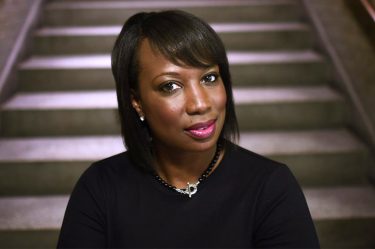
Liberal MP Celina Caesar-Chavannes kicked off Black History Month by writing a touching love letter to Black women.

“Even though we may have been distant, and I may seem far away, I love you and #ISeeYou,” Caesar-Chavannes writes in a HuffPost blog.

She starts the letter by admitting she hasn’t always been able to support her community the way she’s wanted — depression, anxiety and life have gotten in the way — but she wanted to thank those who held it down when she wasn’t able to.

The MP for Whitby, Ont. has been vocal about her challenges with mental illness in the past and went viral last year after giving a speech on body-shaming in the House of Commons.

“Body shaming of any woman in any form from the top of her head to the soles of her feet is wrong, irrespective of her hairstyle, the size of her thighs, the size of her hips, the size of her baby bump, the size of her breasts or the size of her lips, what makes us different is what makes us unique and beautiful,” she said last October.

And while Caesar-Chavannes touches on that theme again in her HuffPost essay, her focus in this letter is celebrating Black women and recognizing what they’re up against. She gives a shout-out to elders, entrepreneurs, activists and educators. Most heartbreaking was a reminder of what Black children face—“the streets, and the institutions that keep them down and funnel them into prisons and foster care”—and how much needs to change, as she lauds mothers for protecting their kids.

She ends off her note recognizing the toll it can take to be “twice as good”  and with a nod to Maya Angelou.

“Being twice as good, twice as fast, twice as everything, because that is what we were taught. That is the only way we can succeed. I also see that it comes at a cost. The wear and tear. The exhaustion. The mental drain. I see that you are tired. And yet, still you rise.”

You can read the full letter at Huffington Post Canada.


Credit: flare.com

Black History isn’t just reserved for the past, and it’s not just about celebrating those that have come and gone before us. Every day there are new accomplishments and achievements to celebrate and honor as proof that we can literally do anything we put our minds to. Our latest inspiration?

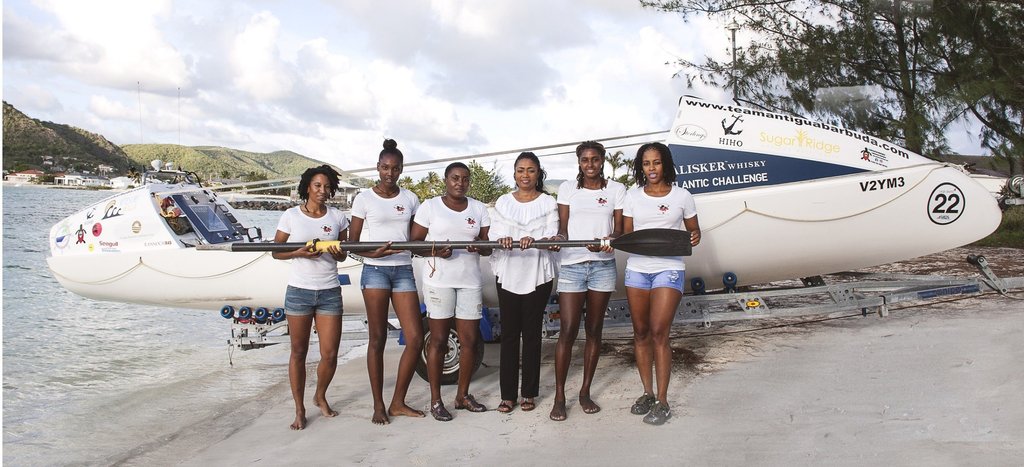
An all-Black women rowing team collectively known as the Team Antigua Island Girls.

Representing for the Caribbean, the team is comprised of women who have already made an impact in their own individual ways: Christal Clashing, the first female swimmer to represent Antigua and Barbuda at the Olympics; Elvira Bell, Level 2 Learn-to-swim Instructor and a certified health coach; Samara Emmanuel, the first Antiguan woman to become an RYA certified yacht captain; Kevinia Francis, the visionary of the group and a title-winning, all-around athlete who excels in basketball, cycling, martial arts and track-and-field; and Junella King, a sailing instructor, who, as the youngest member of the team, turned 18-years-old right before the race. While King did not participate in the historic race, she trained with the team and served as an alternate.

“Growing up, I know I used to look at certain sports and say, ‘Okay, I can’t do that because I’m not white. White people don’t do this sport and Black people don’t do this sport,’” Francis revealed to Essence. “So it’s about breaking down those misconceptions and those barriers. We can actually do any sport that we choose. You just need to have determination, dedication, practice, and get out there.”

Photo: Team Antigua Island Girls

Together, the team completed the Talisker Whisky Atlantic Challenge last month. Hailed as the world’s toughest rowing challenge, it involved a 3,000 mile trip from the Canary Islands to the team’s home in Antigua.

After battling seasickness, fatigue, a near capsize on Friday night, and other obstacles, the Antiqua Observer reported that as the women rowed into the country’s historic Nelson’s Dockyard, they became the first all-Black team to row across the Atlantic ocean.

Even more incredible? According to Essence, the crew had no previous rowing experience before 2018. The squad is also intentional about giving back to their communities and have a charity, Cottage of Hope, which offers short-and-long term residency to girls who are abused, neglected or orphaned.

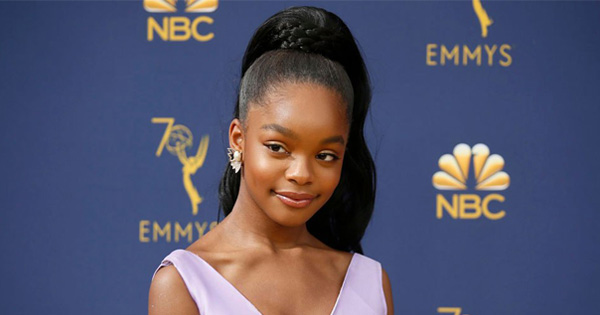
Marsai Martin, a 14-year-old African-American actress, is now a successful entrepreneur. She has recently signed a first-look production agreement with Universal Studios, making her the youngest person to do so!

Along with her own company Genius Productions, she partnered with the film studio giant where she will develop original content and hopefully provide opportunities for other young actors.

Martin, who was known for her role on ABC’s Black-ish, will serve as a writer for scripted projects alongside Genius Productions co-founder Joshua Martin, VP Carol Martin, and head of creative Prince Baggett.

The first film they will produce under the deal is entitled Step Monster, a comedy film about a teenage girl — that will be played by her — who is adjusting to life with a new stepmother.

Universal Pictures president Peter Cramer knew it was a great decision to partner with the young entrepreneur. He said in a statement, in part, “She is not only tremendously talented in front of the camera, but offers a unique perspective as a creator and producer that will resonate with all audiences.”

Martin couldn’t help her excitement in being a part of inspiring diverse and young ideas even behind the cameras.

“I am so excited for the magic I’ll be able to create and produce with Universal,” Martin said in a statement. “My goal is to show young women and girls that our voices and ideas matter and you are never too young to dream BIG!”