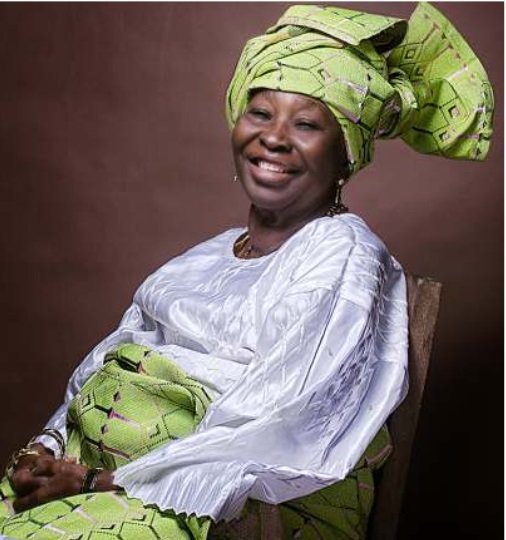
Adetola Salau is a global educator, Engineer and the author of more than eight books, one of which has been critically acclaimed as a roadmap for transforming our educational system; “Re-engineering minds for innovation”
She is the Founder and Director of Carisma4U Educational Foundation, a social innovation enterprise that focuses on the transformation of the educational system especially STEM education in Nigeria and Africa as a whole. She has a B. Sc in Chemistry from Fordham University, New York, with a medal as the best student in Chemistry. She later went on to get a M.Sc in Chemical Engineering and another in Engineering Management from Syracuse University in New York. She is currently working on a PhD in Chemical Engineering with a specialty in Environmental Engineering.
Adetola worked for the City of New York Board of Education as well as taught in California, South Carolina and North Carolina respectively. She has taught a variety of students from pupils in the 6th grades to teaching at Fordham University as an Adjunct Lecturer. She is passionate about education (STEM education especially) and is an advocate for education reform globally most especially in Africa.
She is driven by the desire to help students in Africa become future ready and innovate for their own economic prosperity (using STEM Education-STEM stands for Science Technology Engineering Mathematics.) Tola shares her story in this motivating interview
Being aware of environmental issues from childhood
I was raised by academic parents- Professors who were dedicated to giving back to the community and held education in high esteem. They believed that service was what each human owed other humans. I joined Red Cross as a pre-teen because I wanted to ease the suffering of others and when I was in college, I continued to volunteer to shelters and work as a mentor to young children. I learned that it was better to focus upon serving others than dwell upon my own life’s issues.
As a teenager, I was aware of environmental issues impacting the planet because my parents were environmentalists and also when I stared at the blackish water of Bonny as a teen. I was angry and sad at the same time at the pervasive pollution that was been inflicted upon our environment. I took it hard because I loved the land of Bonny, her people are my people (on my grandmother’s side) and from my parents dedication to environmental causes and gleaning from the materials strewn about our home, I knew that the damage was extensive.
I realized that if something wasn’t done about cleaning up the soil and rivers, cleaning up the oil spills being my motivation for desiring to study Chemical engineering.
I began to think like an advocate from an early age looking back, I have always been drawn to helping the underdog or rooting for them in stories that I read.
Meet Me
I am a Global Educator, a Speaker, Author, Social Entrepreneur, Innovator, and an Advocate of STEM Education. I am driven to push the revamping of our learning sector because of the horrible experiences I had in the STEM subjects when I was a young child in Nigeria and the opposite experience I had when my family and I relocated to America. I had a severe fear of math in my teenage years due to the horrible conditions I was taught in and how STEM subjects were made boring. Passionate educators made the difference for me which I wrote about in my book, “Re-engineering minds for innovation.” A huge part of my dedication in remaining a STEM student was due to the support of my enlightened parents; both Intellectuals- world renowned academicians of high repute who taught me to strive for excellence. My mother, Dr (Mrs) O.A. Salau is a climatologist and environmentalist who taught me to love STEM subjects fervently through application and my father, Prof A.T. Salau was an environmentalist with the United Nations, New York. He was the former Vice Chancellor of the University of Port-Harcourt.
I studied at Fordham University, New York, where I obtained a B.Sc in Chemistry with a medal as the best student in Chemistry. I went on to get a M.Sc in Chemical Engineering and another in Engineering Management from Syracuse University in New York. I am currently working on a PhD in Chemical Engineering.
Inspiration behind Carisma4U Educational Foundation
Carisma4U Educational Foundation is a social innovation enterprise that focuses on the transformation of the educational sector especially STEM education in Nigeria and Africa as a whole.
I founded Carisma4U educational foundation in 2015 to address this situation because I believe starting early in the educational system to create a lifelong love of STEM learning that will improve the probability that students will not become STEM adverse at the later stages of their tertiary education.
I am working on creating a new paradigm for the way we approach STEM education with a greater emphasis placed on practical real life application that will bridge the gap between theory and practical, so we can engage our youths in developing solutions to issues that plague us.
I am driven by the desire to help students in Africa become future ready and innovate for their own economic prosperity using STEM and I works towards the emergence of a strong vibrant Africa through the effective utilization of education.
We need to call for the promotion of STEM education in schools.

Challenges
The challenges are enormous! Raising money for our advocacy efforts can be daunting but we press on because we know how critical the work we are rooting for is essential to the economic development of Africa, especially for the future of our children. Obstacles by people in the status quo who like how things are and don’t want them to change. The biggest challenge is the reformatting the mindsets of our students, their parents and teachers from mediocrity to desiring excellence. Excellence is one of my core values because I have seen the difference it made to my life as an educator, scientist and engineer. I have seen excellence transform the destiny of nations from places that people looked down upon to being highly respected. I have written over ten books to aid in spreading the STEM revolution I desire for Nigeria and Africa as a whole.
Passion for STEM
STEM is an acronym that stands for Science Technology Engineering and Math.
Activities that are STEM-based integrate these four areas of learning. STEM is vital to our future—the future of our country, the future of our region and the future of our children. Besides, STEM is everywhere ; it shapes our everyday experiences.
Science is our natural world— sun, moon and stars…lands and oceans…weather, natural disasters, the diversity of nature, animals (large, small, microbial plants and food…the fuel that heats our homes and powers transportation…
Technology means computers and smartphones, but it goes back to television, radio, microscopes, telegraph, telescopes, the compass, and even the first wheel.
Engineering encompasses designing buildings, roads, and bridges, and tackling today’s challenges of transportation, global warming and environment friendly machines, appliances and systems.
Mathematics is everywhere at the retail store, the bank, on tax forms, in dealing with investments and the family budget. Math is the mother of all the other STEM subjects because they depend on it. STEM is critical because it permeates all aspects of our lives.
Now how does STEM affect our children; their future readiness? STEM is their future—the technological era in which they live, their best career options lie around it. STEM Education encourages and bolsters future readiness. Students learn to problem solve as they research and follow processes for investigations. Whether it’s the Engineering Design Process, the Design-Thinking Process, or the Scientific Method, our students learn to collaborate with others; asking pertinent questions; assume leadership roles periodically; and try out lots of ideas to reach a solution.
Benefit of STEM to Nigerian students
STEM Education is of vital to our Nigerian students because;
There’s a shortage of STEM Job Professionals for a Rapidly increasing STEM Job Market. There is huge gap between jobs that are in high demand and the skills required to fill them – and the gap is only going to get worse grow if we keep doing nothing to stem it (excuse the pun.)
Also, Innovation will revitalize our economy. We all see the technological boom happening around us and it’s sweeping all of us in it’s wave. There are constantly new gadgets being designed every minute it seems and it’s hard to keep up with the latest trends. Yet, these trends are essential for the economy; jobs are created and money flows in circulation
STEM careers are truly “helping” professions that build communities and transform nations.
Other project and activities
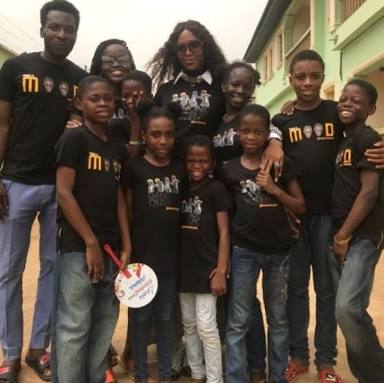
We had STEM Day awareness outreaches last year and ran a STEM Bootcamp in August 2017. We are running the STEM Bootcamp again on the mainland of Lagos. We will be having a larger program in August 2018 for 100 children and it will integrate a lot of amazing, fun activities for our children in Lagos. On April 21st 2018, we will be having our first Annual conference- STEM Power where our ultimate goal is to enhance teachers’ interest and performance in teaching STEM courses while fostering STEM skills for their students that are important prerequisites for engineering, medical, science and computer science careers. The main activities of our social enterprise is i) Advocacy on STEM education ii) Training of Teachers iii) Development of STEM learning iv)STEM Kits procurement v)STEM Curriculum development vi) Educational Technology programs vii)STEM Bootcamps viii) STEM workshops/conferences ix) Carisma4U STEM Innovators Club and x) Mentoring of students
Reward
The greatest reward I receive for what I do is when children approach me and tell me that I made STEM fun for them after their teacher made it loathsome to them.
Carisma4u in five years
Carisma4U will be positioned as innovative and reliable educational resource born out of dedicated and diligent approach for shaping the future intellectual human capital; aligning to emerging global trends and aspirations.
We are working in phases; first phase will influence the system by activism and awareness for priming it to create a favorable disposition for the adoption of the concept. In the second phase the much needed support and resources for the concept is to be accumulated for the implementation of the concept. In the third phase the actors to the concept will be influenced for the adoption of the concept.
Giving up
My tag line or personal motto is “Nuquam Cede” it means Never give up in Latin. Giving up isn’t an option that I give myself. I might need a break or encouragement in whatever form that it appears, but I don’t allow myself to think of resignation.
I add value, I am a Woman of Rubies
A woman of rubies is a woman who adds value to her family, her community and nation at large. She is concerned about the wellbeing of others and works tirelessly to contribute her quota to making the world a better place. I am tenacious about this being a driving tenet in my life; to make a difference with the gifts that I have been bestowed with. To help our children have a better world than the one that we currently inhabit.