Women of Rubies

Category

self development

Category
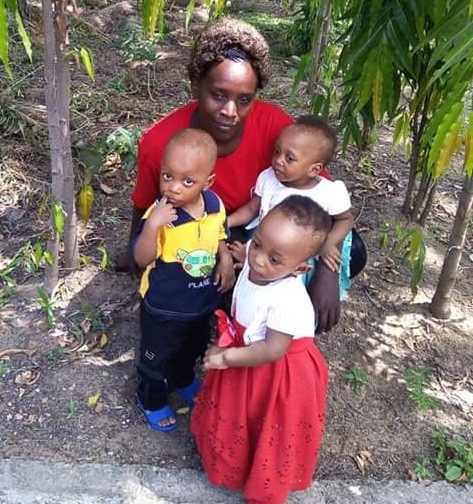
For 14 years, Gospel artist Nancy Masara and her husband, Abel Mokaya were looking for children. But today their home peals of laughter from their one-and-a-half-year-old triplets.
Speaking to People’s Daily this week, Masara beams with joy as she looks at the playful triplets – Patience Mokaya, Esther Kemunto and Samuel Elias– running around the house.
 "I can
To Masara and her husband, this is nothing short of a miracle.
“I sometimes look at the children and wonder whether they are really mine,” says Masara.
She recalls her struggle with childlessness, how she sought medical help from different hospitals and how at some point she avoided visiting their rural home in Riakuro, Nyamira county as a result of the open stigma and pressure that had begun to mount from relatives after clocking her fifth year in marriage without a child.
“I got married at 22 years and getting a child was never part of my concern. That is until I turned 30. I started visiting hospitals including herbal facilities to look for answers,” she says.
At the height of her desperation to get children, she advised her husband to marry another woman to fulfil his dream of becoming a father and save him the humiliation that comes with being childless. He rejected the offer.
“Deep in my heart, I had started giving up and I expected my husband to be cheating on me because all tests had shown that he was okay.
I had already allowed him although I would cry silently. I was surprised when he told me he was not ready to let me go. He repeatedly assured me he would be by my side forever. He even suggested that we adopt a child if God had not planned a biological child for us,” Masara says.
Years came and went and the couple traversed the country seeking solutions to her problem.
“The number of hospitals I visited in this country in search of a child are more than I can remember,” she says.
Her story changed when she bumped into a gynaecologist and fertility expert at Pandya Memorial Hospital in Mombasa who told her there was a 50-50 chance of becoming a mother.
The doctor then put her on medication and she would go for frequent check-ups to monitor the situation. December 2016 was the turning point of her life.
“I remember it was mid-morning when the doctor broke the most exciting news I have ever had in my life—that I had conceived… I was torn between crying and jumping in joy,” explained the mother of three a midst sobs and tears of joy.
The announcement would mark a new beginning full of hope, a complete departure from the trauma she has known in all her marriage life. But it came with financial strains.
“We would spend up to Sh20,000 per month just for antenatal clinic,” she says adding that her husband who works at a local clearing and forwarding agency was forced to borrow a Sh500,000 loan to enable them settle some of the growing hospital bills.
 "I can
On July 7, 2017 she delivered triplets through Caesarean section (CS). They were delivered in a space of two minutes apart and were put under special care as they were born prematurely.
“The firstborn weighed 1.1 kilogrammes, the second born was 1.8 kilogrammes and third born was 1.7 kilogrammes,” she says.
The family, however, had to contend with a Sh2 million hospital bill after the children were discharged. But nothing could dampen their joy.
 "I can
Taking to Facebook today, she shared a newspaper clippings of her interview with People’s Daily.

“In the sight of the lord I can’t hide my joy or what God has done to me, no challenge is permanent when God says yes no man can say no, maybe ure in situation where u feel like giving up, maybe u re asking God questions why he has not answered your prayers,maybe people re calling you names which u can’t understand, u have nowhere to hide your head don’t be tired or never give up the best  place to be is at the feet of Jesus, no prayer can be answered in Jesus name, one day, time, sec God will take away your shame and pain in Jesus name. Thanks God for triple joy..”


Credit: LIB
Women around the world are granted only three quarters of the legal rights enjoyed by men, often preventing them from getting jobs or opening businesses, the World Bank found in study published Wednesday.

South Asia made the biggest improvements in women’s rights in the past decade, while six countries including France and Sweden achieve perfect scores in the World Bank’s index

“If women have equal opportunities to reach their full potential, the world would not only be fairer, it would be more prosperous as well,” Kristalina Georgieva, the bank’s interim president, said in a statement.

While reforms in many countries are a step in the right direction, “2.7 billion women are still legally barred from having the same choice of jobs as men.”

The study included an index measuring gender disparities that was derived from data collected over a decade from 187 countries and using eight indicators to evaluate the balance of rights afforded to men and women.

The report showed progress over the past 10 years, with the index rising to 75 from 70, out of a possible 100, as 131 countries have agreed to enact 274 reforms, adopting laws or regulations allowing greater inclusion of women.

Among the improvements, 35 countries have proposed laws against sexual harassment in the workplace, granting protections to an additional 2 billion women, while 22 nations have abolished restrictions that kept women out of certain industrial sectors.

Six nations — Belgium, Denmark, France, Latvia and Sweden — scored a 100, “meaning they give women and men equal legal rights in the measured areas,” the World Bank said.

A decade ago, no economy had achieved a perfect score.

On the other hand, too many women still face discriminatory laws or regulations at every stage of their professional lives: 56 nations made no improvement over the last decade.

South Asia saw the greatest progress, although it still achieved a relatively low score of 58.36. It was followed by Southeast Asia and the Pacific, at 70.73 and 64.80, respectively.

Latin-America and the Caribbean recorded the second highest scores among emerging and developing economies at 79.09.

Conversely, the Middle-East and North Africa posted the lowest score for gender equality at 47.37. The World Bank nevertheless pointed to encouraging changes, such as the introduction of laws against domestic violence, in particular in Algeria and Lebanon.


Credit: Pulse

Pollyanna Rodrigues De La Rosa sat in the back of a cab, on her way to her favourite Toronto Latin music club, El Rancho. To get herself in the mood for a Saturday night of salsa, bachata and reggaeton, she asked the driver for the auxiliary cord to play “Eres Mia” by Romeo Santos from her phone. The music filled the cab and she sang along, the lyrics flowing smoothly off her tongue in Spanish, the language she speaks at home with her family. The driver raised his voice over the music and asked Rodrigues De La Rosa about her background—but her answer wasn’t what he was expecting.

“I thought you were Black!” he said. Rodrigues De La Rosa, who is part Cuban and part Panamanian, is used to this type of reaction. She stands at just over five feet tall, with big, long, black curly hair. Her dark skin matches her brown eyes, and if you saw her on the street you’d probably have no doubts about her racial identity, either.

But what the cab driver didn’t understand was that while she is indeed Black, she is also Latina. To be fair, Rodrigues De La Rosa didn’t always understand the nuances of her racial identity, either. “For the longest time, I actually didn’t know I was Black,” she says. That’s because, growing up, her family considered themselves Latino.

Though they shared the same skin tone and hair texture, her family never talked about their African heritage—in fact, they preferred to pretend it didn’t exist. Rodrigues De La Rosa’s mother even pressed her about her romantic choices, questioning why she dated Black men instead of white men. And the anti-Black racism was present in her extended family, too. When she visited Cuba in 2015, many of her family members would ask her to straighten her hair for a “better” look.

Between her family’s Latino identity and the anti-Black rhetoric she internalized, Rodrigues De La Rosa questioned whether or not she identified as Black.

Then, in 2015, she discovered a term on social media that she truly felt described her: Afro-Latina. The broad definition is simple—someone who identifies as Afro-Latina, Afro-Latino or the more inclusive and gender-neutral Afro-Latinx is Black and from Latin America. But the term’s meaning is much more political.

In these communities, which have a deep history of anti-Black racism, Afro-Latinx refers to “someone [from the Latino community] who reclaims their Africanness and Blackness, which for so many years was erased,” explains Colombian-Canadian academic Andrea Vásquez Jiménez, the co-director of the Latinx, Afro-Latin-America, Abya Yala Education Network (LAEN). “Utilizing terms such as Hispanic erases our Blackness.”

While Rodrigues De La Rosa may have felt like she stood out among her peers, she is actually part of a large cultural community. A quarter of the Hispanic population in the U.S. identifies as Afro-Latino according to a 2014 study. (Similar data is not available in Canada in part because though the census includes Black and Latin American as visible minority categories, there is no category combining the two identities. Respondents can write in their own classification, or mark all the categories that apply, but the data is counted towards the Black and Latin American categories separately.)

“I get looked at all the time when I start speaking Spanish. It’s still a culture shock, especially to old farts. I quickly let them know that there are Black people in [Cuba and Panama],” says Rodrigues De La Rosa, adding that people often seem to think that it’s impossible to be both Black and a Spanish-speaking Latina.

“When I heard the term Afro-Latina, as sad as this is going to sound, it was the first time I thought I was considered Black,” says Rodrigues De La Rosa. “I loved it.”

Unlearning anti-Black racism as an Afro-Latina

People like Rodrigues De La Rosa are why Vásquez Jiménez started LAEN. She made sure the organization was a space for Afro-Latinx people to not only have a voice, but learn about their heritage.

“Blackness is global. An extremely high percentage of [people from Latin America] have African ancestry. The identities of Blackness, Africanness and being Latinx are not mutually exclusive,” says Vásquez Jiménez.

The African diaspora originated with the transatlantic slave trade, when European colonizers dispersed millions of people from Africa to North America, South America and the Caribbean. And regardless of where slaves were taken, sexual violence was common. “This is the most f-cked up part, I don’t know if my Spanish ancestor loved my great-great-great-grandma or raped her,” says Rodrigues De La Rosa.

The intersectionality of Afro-Latinx people can get even more complex, especially for people like CityNews reporter Ginella Massa, who wears a hijab and is from Panama.

“Often, in the realm of my work, my Muslim identity is discussed; my ethnicity or my heritage are rarely ever mentioned,” says Massa. When she made headlines in 2016 for being the first hijabi news anchor, the coverage described her as a Muslim Canadian, but the Afro-Latinx aspect of her identity took a back seat.

journalists self-care twitter: A portrait of Ginella Massa.

CityNews reporter Ginella Massa

Even within Canadian Afro-Latinx communities, positive discussions about embracing all aspects of this intersectional identity are rare.

“Because of anti-Black racism, many folks don’t necessarily speak nor highlight our Blackness within families,” says Vásquez Jiménez.

That’s especially true among older generations of Afro-Latinx people, who have internalized centuries of institutionalized anti-Black racism. Massa says her family’s Blackness was rarely discussed at home. Her family only focused on their Latin heritage.


Credit: flare.com

Liberal MP Celina Caesar-Chavannes kicked off Black History Month by writing a touching love letter to Black women.

“Even though we may have been distant, and I may seem far away, I love you and #ISeeYou,” Caesar-Chavannes writes in a HuffPost blog.

She starts the letter by admitting she hasn’t always been able to support her community the way she’s wanted — depression, anxiety and life have gotten in the way — but she wanted to thank those who held it down when she wasn’t able to.

The MP for Whitby, Ont. has been vocal about her challenges with mental illness in the past and went viral last year after giving a speech on body-shaming in the House of Commons.

“Body shaming of any woman in any form from the top of her head to the soles of her feet is wrong, irrespective of her hairstyle, the size of her thighs, the size of her hips, the size of her baby bump, the size of her breasts or the size of her lips, what makes us different is what makes us unique and beautiful,” she said last October.

And while Caesar-Chavannes touches on that theme again in her HuffPost essay, her focus in this letter is celebrating Black women and recognizing what they’re up against. She gives a shout-out to elders, entrepreneurs, activists and educators. Most heartbreaking was a reminder of what Black children face—“the streets, and the institutions that keep them down and funnel them into prisons and foster care”—and how much needs to change, as she lauds mothers for protecting their kids.

She ends off her note recognizing the toll it can take to be “twice as good”  and with a nod to Maya Angelou.

“Being twice as good, twice as fast, twice as everything, because that is what we were taught. That is the only way we can succeed. I also see that it comes at a cost. The wear and tear. The exhaustion. The mental drain. I see that you are tired. And yet, still you rise.”

You can read the full letter at Huffington Post Canada.


Credit: flare.com

The one thing I hear women complain about in their relationships is the level of emotional labor that they render to their partners that is often never reciprocated. I have wondered why women were the ones who seemed to be plagued by these one-sided relationships until I came to a realization that women might be the ones guilty of enabling this behavior in their partners.


Lolo Cynthia Is a public health specialist, sexuality educator and founder of the social enterprise LoloTalks, that employs all forms of media (online and offline) to create awareness and sustainable solutions to our contemporary social and health issues in Africa.  She also doubles as a documentary and talk show producer and lends her voice on issues regarding interpersonal relationships, sexuality, gender, and social issues through her YouTube channel LoloTalks and her blog.

In recent times, particularly in 2018, there has been a stronger movement in favour of empowering women in the film industry. From gender pay gap uprisings with the highest paid actresses in the Hollywood demanding the same pay as men in equivalent roles, to sexual harassment claims which gave birth to the #MeToo movement, there are many areas in the industry addressing the need to empower its women. Some of these issues were harder to address in the past as even top actresses needed the work, and with fewer leading lady roles decided to stay silent until much later after any grievances they may have faced. Today, Anita Kouassigan shares her view that there is a need to invest in more women screenwriters and directors.

In this day and age, with the many digital distractions we face by overusing our mobile phones, I firmly believe that film – more than ever – will remain the most effective medium for catching – and keeping – one’s attention when a story is being told. There’s nothing that focuses my mind more than escaping into a movie -at least a decent one, with an engaging story. And the use of film as a tool for storytelling and engagement is a major part of our March event as with all our events.

“There will be screenings of short clips showcasing the messages our sponsors and partners want to deliver. It could be an internally produced documentary that contains footage of a school that’s just been built. Or a view of the first hospital commissioned in a rural area. Or interviews of a victim who’s able to tell their story after being freed from some form of bondage.

Women can certainly become more empowered with an increase in films created to tell even the most uncomfortable stories about their struggles, and this includes documentaries, such as The Uncondemned, possibly one of the most uncomfortable yet. It is a film about the first conviction of rape as a war crime and component of genocide (directed by Michele Mitchell and Nick Louvel-now late, sadly). They worked together as a great team, and I am not suggesting we have films made by women alone, we just need more input from women, which means that there is a need to invest in women in film. Women in film need more funding, in their various roles, including on set, but especially when it comes to screenwriting and directing.

Let us consider the argument in favour of more women having a seat at the table (in boardrooms) and the need for women to play more important roles in the decision-making process of a country (women in law and politics). Those arguments are from the same underlying principle of the need for women to have a voice.

Similarly, in film, more women need to partake in the story-telling process and in directing films, as that is what will ultimately determine how a story comes across. It’s an ongoing reality that not enough scripts are being written by women (perhaps they need more of an incentive?), and men cannot entirely understand the feminine experience. I am not saying we should leave men out; we just need more of a feminine input.

Oftentimes, not enough lines or screen time are dedicated to female roles to humanise a character and one of the most negative aspects still ongoing in the film industry is the objectification of women. It’s still common for female characters to be ridden with clichés and in order to really sell a movie, women may have to appear sexy in order to be viewed as powerful. Why does a woman have to be sexy to be powerful? Why can’t she just be smart and influential in order to be powerful?

Maggie Gyllenhaal recently remarked in an interview that the use of sex in films is used as a tool for female roles to capture the attention of the audience, then they’ll be heard. On screen, women are oftentimes treated as accessories expected to look beautiful, glamorous and extravagant. The key is finding ways to make filmmaking more progressive, giving more dimension to female characters and their stories.

Scripts are often written by men, and while I am not suggesting that male screenwriters set out demean women, they naturally lack certain knowledge that only a woman can have about the certain women-centric issues being addressed. On the other side of what’s deemed as entertaining, there’s the portrayal of bitchy or evil (both with negative connotations), far from empowering.

But things are changing – including in Nigeria. Isoken, directed by Jade Osiberu is a film that has pushed boundaries in terms of the story itself and the way the lead actress (Dakore Egbuson-Akande) depicts her role. She does so in an empowered expression of the issues and choices she’s facing, subjects that are normally deemed as taboo and that cause people (both men and women) to even disrespect a woman in Isoken’s position. But there is still a funding gap for films written and directed by women, and actress-turned-director is still a harder promotion, compared with the case of men.


Credit: Anita Kouassigan, Guardian Woman

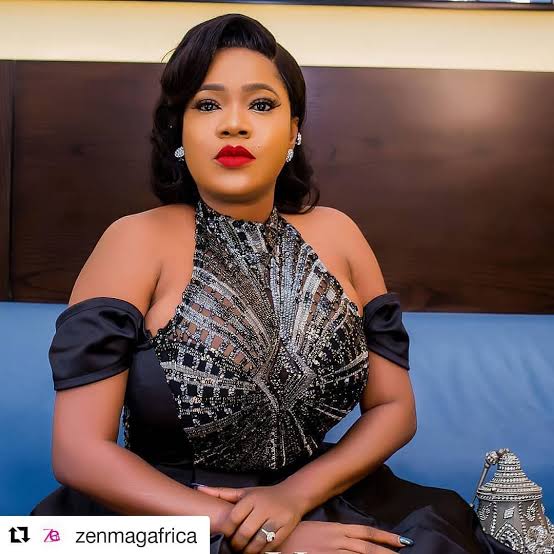
Few years ago, actress Foluke Daramola-Salako, revealed she was raped when she was much younger. In a new interview with Punch, the actress recounted how the experience made her become a better mother to her own daughter.

“I always enlighten my daughter about how some men can be when it comes to sex. Even when I am not around her, she always cautions men when they try to touch her in a way she is not comfortable with.  She tells me when she feels harassed by a man. She is out of the country at the moment, and people always call me to ask me how I trained her.

“In my days as a young woman, I couldn’t discuss sex with my mum. Even till now, I still cannot do that because of the orientation I had as a young girl. If my daughter should get deflowered today, she will tell me because we are friends. I started discussing sex education with my daughter when she was six. I didn’t feel it was too early because she had a rapid growth.

“I was raped by my tenant because he thought I was older than my actual age. I am comfortable with my daughter being around men because I have educated her,” she said.

Foluke went on to say that the Federal government needs to enact a law whereby rapists are killed once convicted.

“I believe the government should pass a law against rape; rapists should be killed when they are caught. I don’t call myself a rape victim, but a rape victor.  Rape victims become a shadow of themselves; they have no form of self-esteem, some of them even take their lives. When it happened to me, I thank God I had friends who helped me recover fast. “When I came out to say it, people were shocked, but I am happy that after my interview, people started coming out to talk about their experience. It has been happening; it is just that people don’t talk about it. An abuser is always a product of an abuse. I’ll advise parents to always pay attention to their children and listen to them,” she said


Credit: LIB

Kim Kardashian and Kanye West‘s daughter North West has landed her very first solo magazine cover, at age 5.

The cover is for WWD and the issue explores Generation Z and Generation Alpha, and their impact on the global beauty industry.

Talking about the cover, the magazine says:

She embodies the upcoming youthquake, having captivated the digital realm with her cross-generational appeal. Without a public Instagram or YouTube channel of her own, she’s too young to fully understand what a digital footprint is. And yet, hers is already wildly popular.

See the cover below.

For more of North, visit WWD.com.


Credit: Bella Naija

There are many myths surrounding the term “submission” in the world today, many look at submission as a point of weakness, a point of slavery, and a place of discomfort, hence it becomes one position many don’t want to be found in.Today we look at submission from a different angle, one which may help many women not to fall short nor prey to those ahead or above them.

Submission is defined as an action of accepting or yielding to a superior force, or the will or authority of another person. And with this definition, the world today uses a certain language and tone when addressing women about submission, it is said that submission takes away your voice and will power, in turn makes one a slave, this can’t entirely be blamed on the world or society at large .But due to the fact that we live in a male dominated world and 75% of decisions are made by men. Submission from a different perspective would help us as women have a respected voice and our plight heard. I recently finished reading Michelle Obamas, “Becoming”, and in her acknowledgements, she thanks Barack for continued support and companionship, and we read in her book how Barack plays a role in her becoming the woman she is today. Michelle Obama is a woman many young women and girls look up to, and want to emulate, and this brought me to a point of looking at submission in a way very different, a way of getting support, getting a push from another and having someone support your dreams and ambitions, while they hope you become the best version of yourself.

Growing up in urban Zambia, I have seen so many women move from being a house wife to getting an education through the support of their spouces,I for one was a junior accounts clerk reporting to a management accountant who through my submitting to his authority and instruction ,gave me an opportunity to learn and improve more in my work, I was trained and equipped to take up many accounting tasks and was made ready to deliver anywhere, yes there are tough days, days you feel the pressure, days you feel the teaching is tough, but the attitude used in the process of submission will either build or crush your growth, and it builds capacity in that you don’t only better yourself but rather you learn traits that the people who have gone ahead of you , only you can make them better and work to your own growth. Submission starts in our homes ,at an early age, we are taught how to walk, to eat, to clean wash and take care of ourselves, we receive guidance on how to make sound decisions, that will help us become better people, and because we submit to that counsel we grow in mind and soul. Secondly in our professional or rather the market place, we have our bosses or directors, and supervisors who at times, we feel push us too hard, especially at a time we feel we have done enough and our best, we tend to resist, but if we did our part with the right attitude and look at them as our teachers, as people that want to see us maximize our potential, not just for the organizations but for our personal growth, we will embrace these lessons. The third place where submission is mostly misinterpreted in a life of a woman is in a love relationship.be it in marriage or courtship. I am a newly married, and a working wife, my personal experience in terms, submission has taught me a lot, it has brought me to a point of knowing my strength and limits, through taking into consideration the needs of my husband and daily taking care of his needs, which in turn has given me a different kind of perspective, he supports my endeavors and pushes me to not hold back but rather go for my dreams. Lastly I sit under the training and mentorship of a great woman of God; she is a wife, a pastor, mother and mentor, not forgetting an entrepreneur.

She is a strong woman but submits to her husband and takes counsel from those who have gone ahead of her in spiritual and personal matters, I have learnt from her zeal and approach, I see how she becomes stronger and better. I each day look at the queen of England who runs the greatest Monarchy in the world, yet married for 70 years and heeds counsel from her husband, looking at all these amazing women, all the superiors I have come across in career ,social and spiritual circles brought me to a conclusion that a place of submission doesn’t take anything away from us as women, but rather can be used as a process to learn and improve, through the lessons and advice of our superiors and predecessors, My encouragement to a girl out there, a woman who seeks to grow, don’t always look at submission as a place of denial, but rather learn from those who are above you ,and use the lessons for your growth and empowerment.

About Nasilele

Nasilele is a Zambian writer and account assistant with a reputable company in her home country.

Photo credit: betrendsetter.com

I recently went out with a friend who had invited me for drinks with his other friends. They were all men, Igbo men to be precise.


Lolo Cynthia Is a public health specialist, sexuality educator and founder of the social enterprise LoloTalks, that employs all forms of media (online and offline) to create awareness and sustainable solutions to our contemporary social and health issues in Africa.  She also doubles as a documentary and talk show producer and lends her voice on issues regarding interpersonal relationships, sexuality, gender, and social issues through her YouTube channel LoloTalks and her blog.