Category

self development

Category

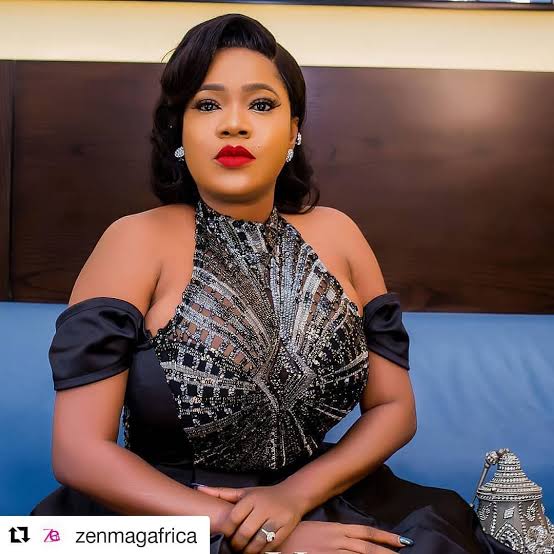
Nollywood actress and producer, Toyin Abraham has reacted to the report that Nigerian entertainer, MC Galaxy allegedly asked ladies to strip and touch themselves intimately on his Instagram live video in order to win the sum of #50,000 cash prize.

Reacting to this act, Toyin Abraham spared no words in criticizing the singer while condemning the act. In a lengthy letter, she described what he did as despicable, debasing of women and urged him to be more like other celebs who focus on helping people.

She wrote:

“Dear MC Galaxy, what you did asking girls to go naked for 50k is despicable, debasing, and bad in every way. You just further strengthen the believe that the easiest way women can get things is to sell their bodies. I sincerely can’t fathom what you need or gain from this despicable act when you could have checked in on p*rn sites.”

“I am not trying to be a moral judge, I am the least qualified to judge a fellow human, but just the way you used your influence and platform for this woman-debasing act, I am also using mine to stand against an act ridiculing women and further prove that some men are scum. See what people like LindaIkeji, KemiAdetiba, Chimamanda, (Even your friend, LauraIkeji), and other women are doing with their platforms, they lift other women by living, giving and not asking for n*des.”

“You can as well follow examples of young men like Davido, TundeEdnut, Wizkid, and Banky W. My message to those girls that went naked on your page is this -please let’s do better, let’s stop making men like Mr. Galaxy think everything about women is money. Don’t sell yourself short because of 50k, its the least of the money you will make in your lifetime. We are women, we are powerful, we are not cheap. With love always, Toyin Abraham.”

I know it’s a natural tendency for the mature single woman to cling to any semblance of love that comes her way-once loneliness sets in.“No relationship” remains better than “anyhow relationship” in my books. I am compelled to discuss this issue due to the alarming rate at which a lot of “mature single ladies” leave their emotional wellbeing/destiny in the hands of men-that do not deserve them.

There are so many reasons why the “mature single woman” should be careful about where and from whom she seeks love. At certain age, it becomes safer to date someone you are introduced to (by loved ones) or someone you operate in the same social circle with and have mutual friends with also.

Young men of this age can smell “loneliness” from afar and are usually quick to move in for the kill. There is nothing wrong with meeting a man elsewhere (the social media, etc.) but I take such relationships serious only when it is taken beyond such platforms and until you get to know more (via carrying out your own findings) about a man, please still consider yourself super single and searching…and you will find. Just don’t be desperate -lest you fall into the hands of “anybody” with a third leg.

One thing you must understand about life is that love does not elude anybody. There is always a lover for somebody. It’s just that most of us look in the wrong places and desperately so. Another thing is the tendency to give in to despair-too fast. How much can anybody truly achieve in life with a mentality of ‘my own is finished’?

At certain age, I encourage every single lady to “play big”…join elite recreational outfits (learn golf, tennis etc.) or certain humanitarian societies, where you meet and make friends with people: of substance/with reputation to protect (you should know what I mean).Stop giving every man that flashes the ‘L’ word at you powers over your emotional wellbeing. Any worthwhile relationship should be aimed at mutual fondness and respect, not one in which one party feels he is doing the other a favour by being in the relationship.

The best way to beat loneliness is to keep busy, go back to school if you have to, continually seek to improve yourself intellectually. If you don’t travel –please start doing so. Don’t limit your chances…love can be found anywhere. And what better way to find your love, than in the course of bettering your lot? If you are busy “getting better” with yourself, you will not be keen to entertain desperate measures towards love.

Cultivate good exercise regimen to take better care of yourself. Overhaul lots of things in your life-including unhealthy diet and social circle. A woman that takes good care of herself does not lack admirers-at any age…quote me.

Finally, keep a positive mind-set…it is everything!Marriage doesn’t really solve anyone’s problems because it comes with its own challenges, like every other phase of life. If you don’t lead a fulfilled life as a single, you are not likely to do so as a married person. While single, spend a lot of your time improving yourself and having fun while at it.

I don’t encourage anybody to get saddled with someone they are not down with because of societal pressure. It takes very little for such unions to pack up and when it does, you will be back to square one…being single is much more tolerable than being in a bad marriage. Marriage does not define anybody, “who” you are defines you!

Source: Guardian

The #MeToo movement has found its way to this part of the world, and the essence of it, is to remove the shame that’s typically associated with speaking out as a victim of sexual assault.

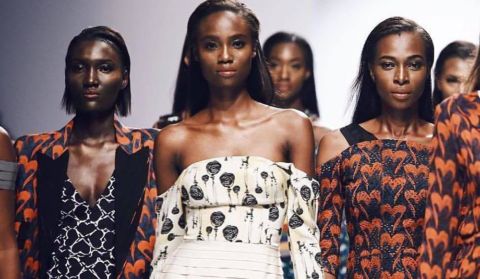
The end goal is to turn male-dominated and abusive power structures on their heads, and the Nigerian fashion industry has woken up to this, with models naming and shaming abusers they’ve come across in the past.

Nigerian models recently rallied together in a bid to stop the casual sexual violence they suffer, by calling out rampant perpetrators — specifically photographers and booking agents — as well as giving advice to young, aspiring models.

The success of a model’s career is largely dependent on the rooms her booking agent can get her into, and from the testaments shared on an Instagram page dedicated to this cause, it’s clear the men in these positions realised their power and used it to prey on these models.

Speaking to Konbini about this, top model Aduke Bey said:

“I’m lucky enough to never have experienced any sexual violence in fashion so far, but I know so many people who have. In fact, more people than not have been assaulted and it’s such a shame. 

First of all, we need more women in the industry as photographers, cinematographers etc, so that we can feel more comfortable around each other, and we won’t always be at the mercy of sometimes wicked men.

I’m glad that people are speaking up now, but we really need more people coming out and saying their stories. There’s still so much to uncover, and we’ve just scratched the surface. Silence gives these abusers more power”

Nigerians have a very limited understanding of a model’s importance in the fashion industry, and therefore cast the job aside as indecent and unserious. As a result, models sometimes feel pressure to entertain unwanted sexual advances in order to get ahead in their careers.

Models are actually crucial in fashion, as there would be no catwalk or runway shows without them. Designers need them to model their clothes in campaigns, and publications need them when creating their content. Given the importance of their role, they should be protected by those in power.


Credit: konbini.com

One grew up with the notion that certain ailments are more ‘age’ induced than anything else but in the last couple of years, ailments like cardiac arrest, stroke, and others, have killed more young people that I know than the aged folks.

I mean young men in their 40s!

So, when one sees aged folks in their 70s, 80s and even 90s still basking in good health-I am always compelled to ask WHAT IS THE SECRET OF THAT HEALTHY GENERATION?

Yes, I call their generation a healthy one because the advent of science and technology ought to enhance our chances at longevity, but the reverse seems to be the case.

These days…people die young-a direct opposite of what used to obtain in the days of our forebears.

I doubt if there were ailments like cancer, stroke, stress, hypertension, etc in those days and if there were-they were probably not as rampant as what obtains these days…making me suspect that the ‘health woes’ of this generation lies in our lifestyle.

A generation that is supposed to have an enhanced shot at longevity (what with our exposure to science and technology) is experiencing more deaths amongst its young than the supposed Stone Age generation.

In examining the impact of the lifestyle of this generation on our lifespan-we must not fail to look into issues like excessive pursuit of materialism(and its attendant stress),unhealthy consumptions and sexual perversion.

Is it not in this age that we hear of stuffs like anal, two/three-some sex?

I still question the reasoning of people who indulge in such…as if the ‘normal style’ is not risky enough!

I observed a few days retreat at a friend’s house-a few years back…a house that boasts of every modern ‘treats’-inside the fridge…ice cream, cake, chocolates, beverages, but not a single fruit!

In fact, the only cooked food I found in there was a frozen eba. Yet, he would be the first to tell you that he does not ‘swallow’ at night, does not consume red meat-plus other health dos and don’ts that he observes.

I think back to our aged folks in the villages who ‘swallow’ at any time of the day, eat all sorts of meat and still lived to a ripe old age.

Where could we have gone wrong then, if we are still dying young, despite our vast knowledge of modern health dos and don’ts?

A doctor friend once told me that a vast majority of young men (between the ages of 35-50) are impotent…according to some medical findings. And their type of impotence is such that they can’t even fertilise an egg without medical assistance or sustain an erection for more than a few minutes.

Again, one is forced to compare this dampening reality to seniors that are known to still ‘fire down’…even with off-springs, to show for their ‘labour.’

Think of what obtains now with female fertility and compare it to the time of our mothers-whose major headache was how to cater for the numerous brood they seemed to churn out with so much ease.

Their days even seemed to witness less complicated childbirths, despite the non- availability of sophisticated medical procedures.

This is a generation that seems to have it all when one considers how easy science and technology has made our existence…yet it would seem like the older generation had a better quality of life.

Does our modern lifestyle still accommodate communal existence like in the days of our fathers? Any wonder why there’s so much loneliness out there, despite claims of the world now being a global village?

I tell whoever cares to listen that boredom is a modern phenomenon-it never used to exist in the days of old because their setting had what I call THE HUMAN TOUCH-which our generation is losing at an alarming rate.

Science and Technology has inadvertently made us too ‘comfort-zoned’ for our own good. Easy life is what leads to boredom. We don’t go out of our way to do things for and with each other anymore.

These days, infusing the human touch in relationships becomes an inconvenience of sorts.

We send money and ‘technology toys’ to perform acts that require the human touch…why waste time and energy to go visit an ailing loved one when you can just Whatsapp “get well soon.’’

Ever wondered why people have so many friends on the social media but still feel lonely in real life?

Some of us even make more efforts with our ‘virtual relationships’-than we bother with our real-life relationships.

High time we realised that certain things cannot just take the place of the ‘human touch’ in life.

The human touch is what our forebears never joked with and that explains why issues like boredom, loneliness, suicide, depression, etc were alien to them!


Credit: Chukwuneta Oby, Guardian Woman

A Georgia teen has gone viral on social media after she was accepted to  31 colleges with almost a million dollars in scholarship offers.

Kayla Willis, a senior at Westlake High School in Atlanta, got accepted into 31 colleges and was offered almost $1 million in scholarships after applying to over 40 schools without paying costly application fees.

The excited lady took to Twitter to show off all the schools that accepted her and wrote: ‘I kinda didn’t want to post this, but someone said “the whole world needs to know how great you are” so here we go twitter!’

Black American teenager gets accepted to 31 Colleges with almost a million dollars in scholarship offers


Speaking with Fox 5, she said: “My goal was to have options. I didn’t want to limit myself. I also asked the question, how can I go to school for free?”

“I’m here to encourage. If you are proactive and persevere, you can achieve any goal,” she told Fox 5. In an interview with NBC affiliate 11 Alive, she said, “I really wanted people to see what they could do because a lot of people doubt their selves.”


Credit: LIB

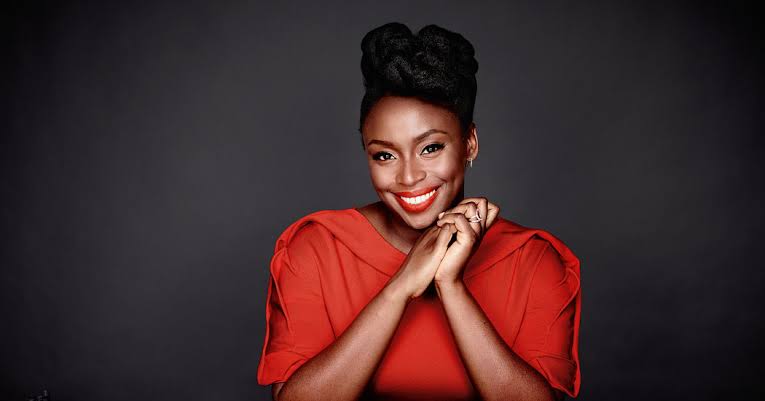
According to Yale Daily News and the Class Day Planning Committee member Shuyu Song, the writer was selected based on her ability to give a meaningful and memorable address to the class.

In recent years, most of the Class Day speakers have been politicians, including former US secretary of state John Kerry and former US VP Joe Biden.

“The committee cannot imagine a better speaker to commemorate our four years at Yale than Adichie,” members of the 2019 Class Day Committee wrote in an email on Sunday.

“She is an inspiring global citizen whose words, teaching and social activism have had an indelible impact on the diaspora and broader contemporary culture.”

Song also said:

“Given Adichie’s extraordinary experience and poignant literary commentary, we have no doubt that her participation in Class Day will be a memorable part of this day of celebration and address concerns that are relevant to our class as we reflect on the changes that we have witnessed on this campus in the past few years.

I once went to cosmopolitan shopping mall in my home town, in Lusaka Zambia, and as I
was window shopping, I stopped to look at jewellery in the American Swiss store, and while
in the store, my attention was caught by a pair of beautiful pearls and a necklace, my eyes
wide open and face glowing, all I thought of was “I need to get these”. I turned to the store
attendant to confirm the price I was looking at, (seemed expensive to me) and with a smile
she looked at me and said,” yes it is K5, 000($ 500).I smiled and said thank you, as I was
about to walk out the store, she said the value of pearls is like that of a woman, rare but well
deserved.

I walked away with a smile, but her words made a statement to my spirit. It brought me to
the realization of a woman’s true worth ,How it is mostly, underestimated, over looked,
taken for granted ,(even by herself),just as I thought the price of those pearls would have
been. Today ,many of us do not only know, but don’t realize the value that comes with being
a woman, Many today don’t realize that the value they carry can change not only their lives,
but our world, and that with our diverse values, color, stature, zeal and caliber, the value of
the pearls around your neck remains the same, as a woman, accept who and what you are
,and work towards preserving and improving that, if we as women value our worth, we will
create a platform for the opposite sex, and the feminist fighting for our voice to be heard. A
platform where a woman will be accepted as strong, intelligent, a decision maker, a worthy
human being to be heard, to be taken seriously, and for all this to come to reality, we need
as women to realize the our worth, we need to realize that we are deserving of rare pearls,
and because we are rare, our uniqueness stretches beyond clothes, weaves and designer shoes.

Ladies the value of pearls will never vary depending on the environment, whether
you are the richest woman on earth or an average woman, the pearls around your neck
have the same value, we should not be defined by society, by the environment around us,
nor the voices that constantly speak less of who we are. Pearls are preserved, they are
guarded jealously, and as women, we need to preserve our character even at the point we
fight for our rights, we need to constantly improve our selves through knowledge, upgrading
our skills, research and making sure we are well acquainted with our environments and see
where a hand is needed, and see where a voice is to be heard. Lastly, the value we have
within is and can be the push needed by another woman, a hand and support given to a
fellow woman will not reduce your worth and value, but rather improve your character and
there will be an increase in the number of confident women.

We all are deserving women.

About Nasilele

Nasilele is a Zambian writer and account assistant with a reputable company in her home country.

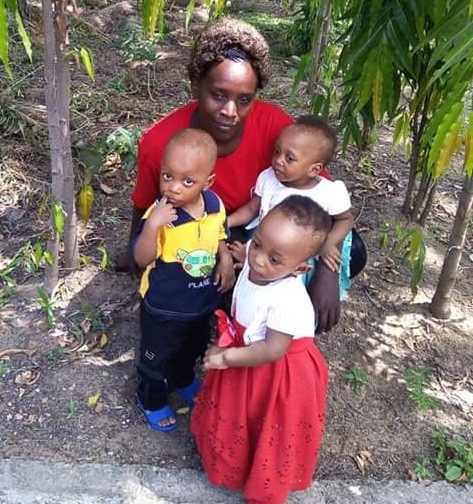
For 14 years, Gospel artist Nancy Masara and her husband, Abel Mokaya were looking for children. But today their home peals of laughter from their one-and-a-half-year-old triplets.
Speaking to People’s Daily this week, Masara beams with joy as she looks at the playful triplets – Patience Mokaya, Esther Kemunto and Samuel Elias– running around the house.
 "I can
To Masara and her husband, this is nothing short of a miracle.
“I sometimes look at the children and wonder whether they are really mine,” says Masara.
She recalls her struggle with childlessness, how she sought medical help from different hospitals and how at some point she avoided visiting their rural home in Riakuro, Nyamira county as a result of the open stigma and pressure that had begun to mount from relatives after clocking her fifth year in marriage without a child.
“I got married at 22 years and getting a child was never part of my concern. That is until I turned 30. I started visiting hospitals including herbal facilities to look for answers,” she says.
At the height of her desperation to get children, she advised her husband to marry another woman to fulfil his dream of becoming a father and save him the humiliation that comes with being childless. He rejected the offer.
“Deep in my heart, I had started giving up and I expected my husband to be cheating on me because all tests had shown that he was okay.
I had already allowed him although I would cry silently. I was surprised when he told me he was not ready to let me go. He repeatedly assured me he would be by my side forever. He even suggested that we adopt a child if God had not planned a biological child for us,” Masara says.
Years came and went and the couple traversed the country seeking solutions to her problem.
“The number of hospitals I visited in this country in search of a child are more than I can remember,” she says.
Her story changed when she bumped into a gynaecologist and fertility expert at Pandya Memorial Hospital in Mombasa who told her there was a 50-50 chance of becoming a mother.
The doctor then put her on medication and she would go for frequent check-ups to monitor the situation. December 2016 was the turning point of her life.
“I remember it was mid-morning when the doctor broke the most exciting news I have ever had in my life—that I had conceived… I was torn between crying and jumping in joy,” explained the mother of three a midst sobs and tears of joy.
The announcement would mark a new beginning full of hope, a complete departure from the trauma she has known in all her marriage life. But it came with financial strains.
“We would spend up to Sh20,000 per month just for antenatal clinic,” she says adding that her husband who works at a local clearing and forwarding agency was forced to borrow a Sh500,000 loan to enable them settle some of the growing hospital bills.
 "I can
On July 7, 2017 she delivered triplets through Caesarean section (CS). They were delivered in a space of two minutes apart and were put under special care as they were born prematurely.
“The firstborn weighed 1.1 kilogrammes, the second born was 1.8 kilogrammes and third born was 1.7 kilogrammes,” she says.
The family, however, had to contend with a Sh2 million hospital bill after the children were discharged. But nothing could dampen their joy.
 "I can
Taking to Facebook today, she shared a newspaper clippings of her interview with People’s Daily.

“In the sight of the lord I can’t hide my joy or what God has done to me, no challenge is permanent when God says yes no man can say no, maybe ure in situation where u feel like giving up, maybe u re asking God questions why he has not answered your prayers,maybe people re calling you names which u can’t understand, u have nowhere to hide your head don’t be tired or never give up the best  place to be is at the feet of Jesus, no prayer can be answered in Jesus name, one day, time, sec God will take away your shame and pain in Jesus name. Thanks God for triple joy..”


Credit: LIB

Women around the world are granted only three quarters of the legal rights enjoyed by men, often preventing them from getting jobs or opening businesses, the World Bank found in study published Wednesday.

South Asia made the biggest improvements in women’s rights in the past decade, while six countries including France and Sweden achieve perfect scores in the World Bank’s index

“If women have equal opportunities to reach their full potential, the world would not only be fairer, it would be more prosperous as well,” Kristalina Georgieva, the bank’s interim president, said in a statement.

While reforms in many countries are a step in the right direction, “2.7 billion women are still legally barred from having the same choice of jobs as men.”

The study included an index measuring gender disparities that was derived from data collected over a decade from 187 countries and using eight indicators to evaluate the balance of rights afforded to men and women.

The report showed progress over the past 10 years, with the index rising to 75 from 70, out of a possible 100, as 131 countries have agreed to enact 274 reforms, adopting laws or regulations allowing greater inclusion of women.

Among the improvements, 35 countries have proposed laws against sexual harassment in the workplace, granting protections to an additional 2 billion women, while 22 nations have abolished restrictions that kept women out of certain industrial sectors.

Six nations — Belgium, Denmark, France, Latvia and Sweden — scored a 100, “meaning they give women and men equal legal rights in the measured areas,” the World Bank said.

A decade ago, no economy had achieved a perfect score.

On the other hand, too many women still face discriminatory laws or regulations at every stage of their professional lives: 56 nations made no improvement over the last decade.

South Asia saw the greatest progress, although it still achieved a relatively low score of 58.36. It was followed by Southeast Asia and the Pacific, at 70.73 and 64.80, respectively.

Latin-America and the Caribbean recorded the second highest scores among emerging and developing economies at 79.09.

Conversely, the Middle-East and North Africa posted the lowest score for gender equality at 47.37. The World Bank nevertheless pointed to encouraging changes, such as the introduction of laws against domestic violence, in particular in Algeria and Lebanon.


Credit: Pulse

Pollyanna Rodrigues De La Rosa sat in the back of a cab, on her way to her favourite Toronto Latin music club, El Rancho. To get herself in the mood for a Saturday night of salsa, bachata and reggaeton, she asked the driver for the auxiliary cord to play “Eres Mia” by Romeo Santos from her phone. The music filled the cab and she sang along, the lyrics flowing smoothly off her tongue in Spanish, the language she speaks at home with her family. The driver raised his voice over the music and asked Rodrigues De La Rosa about her background—but her answer wasn’t what he was expecting.

“I thought you were Black!” he said. Rodrigues De La Rosa, who is part Cuban and part Panamanian, is used to this type of reaction. She stands at just over five feet tall, with big, long, black curly hair. Her dark skin matches her brown eyes, and if you saw her on the street you’d probably have no doubts about her racial identity, either.

But what the cab driver didn’t understand was that while she is indeed Black, she is also Latina. To be fair, Rodrigues De La Rosa didn’t always understand the nuances of her racial identity, either. “For the longest time, I actually didn’t know I was Black,” she says. That’s because, growing up, her family considered themselves Latino.

Though they shared the same skin tone and hair texture, her family never talked about their African heritage—in fact, they preferred to pretend it didn’t exist. Rodrigues De La Rosa’s mother even pressed her about her romantic choices, questioning why she dated Black men instead of white men. And the anti-Black racism was present in her extended family, too. When she visited Cuba in 2015, many of her family members would ask her to straighten her hair for a “better” look.

Between her family’s Latino identity and the anti-Black rhetoric she internalized, Rodrigues De La Rosa questioned whether or not she identified as Black.

Then, in 2015, she discovered a term on social media that she truly felt described her: Afro-Latina. The broad definition is simple—someone who identifies as Afro-Latina, Afro-Latino or the more inclusive and gender-neutral Afro-Latinx is Black and from Latin America. But the term’s meaning is much more political.

In these communities, which have a deep history of anti-Black racism, Afro-Latinx refers to “someone [from the Latino community] who reclaims their Africanness and Blackness, which for so many years was erased,” explains Colombian-Canadian academic Andrea Vásquez Jiménez, the co-director of the Latinx, Afro-Latin-America, Abya Yala Education Network (LAEN). “Utilizing terms such as Hispanic erases our Blackness.”

While Rodrigues De La Rosa may have felt like she stood out among her peers, she is actually part of a large cultural community. A quarter of the Hispanic population in the U.S. identifies as Afro-Latino according to a 2014 study. (Similar data is not available in Canada in part because though the census includes Black and Latin American as visible minority categories, there is no category combining the two identities. Respondents can write in their own classification, or mark all the categories that apply, but the data is counted towards the Black and Latin American categories separately.)

“I get looked at all the time when I start speaking Spanish. It’s still a culture shock, especially to old farts. I quickly let them know that there are Black people in [Cuba and Panama],” says Rodrigues De La Rosa, adding that people often seem to think that it’s impossible to be both Black and a Spanish-speaking Latina.

“When I heard the term Afro-Latina, as sad as this is going to sound, it was the first time I thought I was considered Black,” says Rodrigues De La Rosa. “I loved it.”

Unlearning anti-Black racism as an Afro-Latina

People like Rodrigues De La Rosa are why Vásquez Jiménez started LAEN. She made sure the organization was a space for Afro-Latinx people to not only have a voice, but learn about their heritage.

“Blackness is global. An extremely high percentage of [people from Latin America] have African ancestry. The identities of Blackness, Africanness and being Latinx are not mutually exclusive,” says Vásquez Jiménez.

The African diaspora originated with the transatlantic slave trade, when European colonizers dispersed millions of people from Africa to North America, South America and the Caribbean. And regardless of where slaves were taken, sexual violence was common. “This is the most f-cked up part, I don’t know if my Spanish ancestor loved my great-great-great-grandma or raped her,” says Rodrigues De La Rosa.

The intersectionality of Afro-Latinx people can get even more complex, especially for people like CityNews reporter Ginella Massa, who wears a hijab and is from Panama.

“Often, in the realm of my work, my Muslim identity is discussed; my ethnicity or my heritage are rarely ever mentioned,” says Massa. When she made headlines in 2016 for being the first hijabi news anchor, the coverage described her as a Muslim Canadian, but the Afro-Latinx aspect of her identity took a back seat.

journalists self-care twitter: A portrait of Ginella Massa.

CityNews reporter Ginella Massa

Even within Canadian Afro-Latinx communities, positive discussions about embracing all aspects of this intersectional identity are rare.

“Because of anti-Black racism, many folks don’t necessarily speak nor highlight our Blackness within families,” says Vásquez Jiménez.

That’s especially true among older generations of Afro-Latinx people, who have internalized centuries of institutionalized anti-Black racism. Massa says her family’s Blackness was rarely discussed at home. Her family only focused on their Latin heritage.


Credit: flare.com