Category

self development

Category

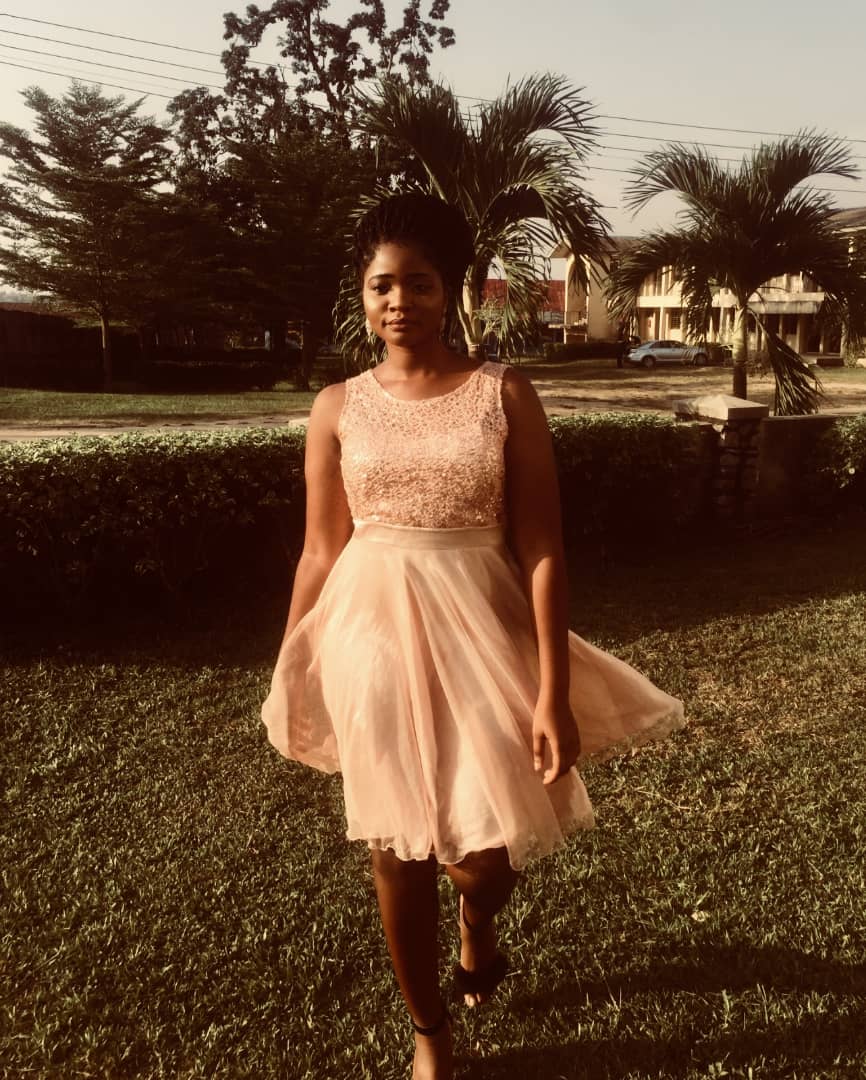
Adebanjo Aderinsola Abibat, a versatile young woman and entrepreneur is a graduate of Performing Arts, Olabisi Onabanjo University, (OOU). She is an indigene of Ogun State.
She is a hair stylist, a fashion designer, make up artist (including special effect) and an actor. She is also the CEO of Black doll and Rinsola Aesthetics and the Co-Founder of Costume Sisters.

Aderinsola shares her ‘Ruby Girl’ story in this interview.


MEET ME

My name is Adebanjo Aderinsola Abibat, popularly known as Rinsola. I am a graduate of Performing Arts, Olabisi Onabanjo University OOU. I am from Ogun State.

I’m an hair stylist, a fashion designer, make up artist (including special effect) and an actor. I am the CEO of Black doll and Rinsola Aesthetics and the Co-Founder of Costume Sisters.

HOBBIES

I am a freak when it comes to applying makeup and taking pictures. I also love dancing, drawing and standing in front of camera, either acting or making my short videos.

INSPIRATION

I am mostly inspired by my Milieu, especially when I have to express myself through drawing. I draw what I see, and I also do this sometimes when it comes to making a creative outfit. Social media is another source of my inspiration. When I see people’s work, I get motivated to do more than ever someone else has done, plus it’s a constant reminder not to relent and also improve to be the best. Hakeem Effects (Onilogbo Hakeem) inspires me more on the area of special effects or makeup fantasy.


ONE ACCESSORY I CAN’T LEAVE HOME WITHOUT

Earrings

BALANCING IT ALL…

Everything in life has its own season or time. Especially when it comes to hair and sewing. There are times when I get jobs for make up only or sewing e.t.c. So far, I haven’t been in a situation where I have to do all at the same time. It’s either two or three at most.

I remembered a situation where I had to dance, act, and was also the costumier and makeup artist for that production. It was actually stressful, but I was able to pull through because it was something I really enjoyed doing. I have passion for these things and also derive happiness from doing them.

BEST QUOTE

Make hay while the sun shine.


ONE THING I WILL LIKE TO CHANGE ABOUT ME

Low self esteem especially when it comes to competition or public speaking.

WHAT KEEPS ME UP AT NIGHT

Social media. I love feeding my eyes with things that are trending, especially things that have to do with fashion.

MOST MEMORABLE EXPERIENCE ON STAGE AS A THEATRE ARTS STUDENT…

My induction ( initiation to Theater Arts). Walking around the school bare footed with palm front in my mouth alongside my course mates and dancing on stage with public figures including the likes of Abbey Lanre, Yinka Quadri, Jide Kosoko, Shola Kosoko, Faithia Balogun, Toyosi Adesanya, and Victor Olaotan who was the chief priest of the occasion.


IF GIVEN THE CHANCE TO BE THE PRESIDENT FOR A DAY…

I would change the economy. It is one of the biggest problem that Nigeria is currently facing. The rate of buying and selling has drastically increased and is negatively affecting the citizens. Inflation in prices of goods and services is rising and our currency is depreciating. Income earned by workers can no longer sustain them, which is a threat in the lives of many people.

UPBRINGING

My upbringing didn’t prepare me for all that I am today. Maybe I would have been better than this if that was the case but I thank God for where I am today.


MY BRAND IN THE NEXT 5 YEARS

I see myself becoming the woman I have always dreamt of. A successful entrepreneur and a public figure.


WORDS OF ADVICE FOR GIRLS YOUNGER THAN ME

No matter how bad your background is, how broke you are, where you are today or what anyone else says about you, your life and your future matters. Hard work is the younger brother to miracle, put in effort and hard work in whatever you do, just be yourself and never follow anyone else path and the sky will be your starting point.

British actress Emilia Clarke who played Daenerys Targaryen in the popular HBO series ‘Game of Thrones’ has made an astonishing claim about the hit tv show producers.

Emilia, 33, who went nude and simulated sex scenes as Khaleesi in the first episodes of the Tv show, claims she was pressured by her bosses to perform the multiple nude scenes because according to her bosses she would be disappointing a lot of fans if she didn’t do them. She said she had to rely on a lot of alcohol to act those scenes.


Game of Thrones star Emilia Clarke alleges her producers
In an interview with Dax Shepard on his podcast Armchair Expert, the actress said she hadn’t agreed to the nude scenes in advance but felt she should do it anyway because she was new to the industry.

Emilia said: ‘I’m a lot more savvy [now] with what I’m comfortable with, and what I am okay with doing.

Game of Thrones star Emilia Clarke alleges her producers


‘I’ve had fights on set before where I’m like, “No, the sheet stays up”, and they’re like, “You don’t wanna disappoint your Game of Thrones fans”. And I’m like, “F**k you”.’

Season one filming began in July 2010, when Emilia was 23 and now admits the amount of nudity in the first season was ‘overwhelming’ and she had relied on alcohol to get through the scenes.

She said: ‘I took the job and then they sent me the scripts and I was reading them, and I was, like, “Oh, there’s the catch!”

‘But I’d come fresh from drama school, and I approached [it] as a job – if it’s in the script then it’s clearly needed, this is what this is and I’m gonna make sense of it. Everything’s gonna be cool.’

”So I came to terms with that beforehand, but then going in and doing it… I’m floating through this first season and I have no idea what I’m doing, I have no idea what any of this is.

‘I’ve never been on a film set like this before, I’d been on a film set twice before then, and I’m now on a film set completely naked with all of these people, and I don’t know what I’m meant to do and I don’t know what’s expected of me, and I don’t know what you want and I don’t know what I want.


Game of Thrones star Emilia Clarke alleges her producers


‘Regardless of there being nudity or not, I would have spent that first season thinking I’m not worthy of requiring anything, I’m not worthy of needing anything at all…

‘Whatever I’m feeling is wrong, I’m gonna cry in the bathroom and then I’m gonna come back and we’re gonna do the scene and it’s gonna be completely fine.’
In another scene, another of her love interests stripped for the camera, and she praised the show for that, but added that her love interest in season 1, Khal Drogo didn’t strip for the camera but she did..

She added: ‘No, I don’t know why. But I’d like to bring your memory back to Mr. Michiel Huisman and I copulating for the first time, which began with me saying, “Take off your clothes,” and then you got to see his perfect bottom.’

She explained: ‘I love that so many women watch the show. If you look at ‘Game of Thrones’ on face value — blood, t**s, dragons, swearwords — you’re like, “Oh, this must be for guys”.’

‘But if you take that away, the story lines are fascinating depictions of the struggle for power. And women are in on that conversation.’

She said about Khal Drogo: ‘Oh, I did. I saw his member’, she said. ‘But it was covered in a pink fluffy sock. Showing it would make people feel bad. It’s too fabulous.’


Credit: LIB

27-year-old Ofentse Pitse has set the bar in more ways than one with her groundbreaking orchestra, Anchored Sound.

Not only is Pitse the only conductor of an all-black orchestra, but the young black female owns the musical group as well.

SowetanLIVE reported that Anchored Sound is the first of its kind in the world and it’s heartwarming to note that it is the brainchild of a young South African woman.

Pitse has music flowing in her genes as her late grandfather, Otto Pitse, was known as a great trumpeter and orchestra conductor as well. Perhaps she was therefore destined for musical greatness, but the fact that she’s achieved so much without a formal qualification in music, still takes some doing.

Pitse shared some insight as to what it takes to become an orchestra conductor. She said,

“You have to walk in there with a certain kind of reverence and confidence.”

Pitse explained that part of the challenge is that she needs to lead people who almost expect to see an elderly male leading them during performances.

Briefly.co.za gathered that much of her success in the industry is due to the role played by her mentors Thami Zungu and Gerben Grooten, after she called on them for guidance.

Pitse has been slowly forming her ensemble since 2017 as she handpicked youngsters from Tembisa, Soweto, Pretoria and Katlehong. Thanks to her forward-thinking, talent and determination, the group grew from only eight members to a 40-piece symphony orchestra.

Pitse revealed her passion for empowering black youth as she said, “I’m a believer in the black narrative and a believer in the black child.” Anchored Sound is living proof of this, as all proceeds from performances are used to directly assist its members.


Source: Briefly.co.za

Katie Page went through a divorce in her early thirties, and the experience left her feeling quite alone in the world. The family and career that she dreamed of seemed to be a far off dream. Next, she would make a life-changing decision that would shape the lives of everyone involved.

The End Of A Life Together

Katie Page was born and raised in Alabama, and in her early thirties, she was confronted with an understandably trying challenge as her marriage was reaching its end. The heart-wrenching milestone left her feeling undeniably lost in her life as her dreams of a family were no longer a possibility for the near future. Katie was searching for something fulfilling and knew it was time to make a drastic change.

The Start Of A New Story

Jackie felt she needed to let go of the past and focus on a new chapter in her life, which led her to move to a new area despite everything she knew being in Alabama. Back in 2015, she decided soul-searching would help her find the right path, and she made exceptional changes in her life. She was lucky enough to find an excellent job as an integrated service manager for GE Johnson which seemed to solve many concerns she had with relocating to Denver in Colorado.

Optimism Becomes Her

With a new home and a great new job, Katie felt as though she had made the best decision to start over. The spacious 4-bedroom home she purchased may have needed some work although she planned to take on the projects by herself. “The house I bought would require extensive work to transform into my vision and most of which I would have to do myself in order to afford it,” Katie explained. She mentioned to a friend that she felt the home was actually meant for so much more.

So Much To Do

Renovating her new home would require a lot of money, and while many would feel intimidated by such a large project, Katie thought it was the perfect solution to keep herself busy and her mind occupied on bettering her life. However, she knew that she was missing something, and despite her marriage ending recently, Katie knew she would be able to stumble upon new opportunities soon enough.

In Search Of Something New

Despite some understandable hesitation, Katie knew there would be something out there that would give her the new outlook on life she so desperately wanted. After already experiencing heartbreaking fertility issues she had searched for other options and considered both adoption and fostering as appropriate options to finally have the family her heart was after.

Fostering Children In Need

After recently joining a church in the area, there was a discussion regarding an upcoming seminar for a fostering program. Katie was immediately interested as she felt this may have been the opportunity she was looking for all along.

The Decision Was Made

The church meeting was more than enough to convince Katie that fostering children in need was the right path for her and even though she felt somewhat nervous she was entirely enchanted by the idea of starting her own family with children who needed her most.

Maternal Instincts

Back in 2015 and on Mother’s Day, no less Katie filled out the application that would change her life forever. The decision would shape her future, and there would be no turning back. Regardless Katie was anticipating the exciting journey she was about to undertake.

Becoming A Single Foster Mom

Even though Katie was beyond thrilled about her decision, she would still need to consider all the aspects of the massive life-changing choice to foster children in need. She would be a single mom, and she was also new in the area. This meant that Katie would need to find her feet while discovering life as a single mother. Nonetheless, she was adamant that she would follow through with her decision.

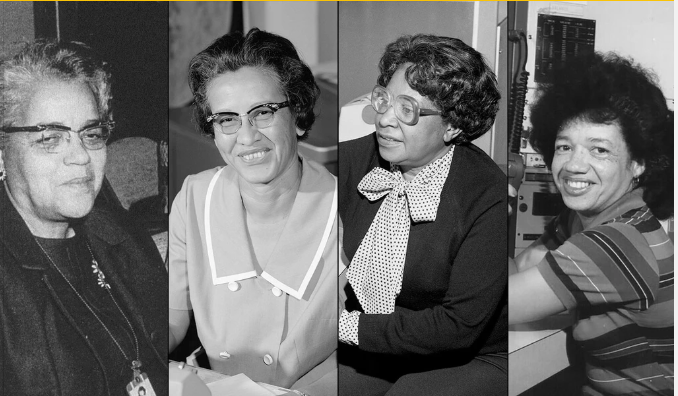
Hidden no more! The four women who worked at NASA and inspired the movie Hidden Figures are being awarded with the highest civilian honor in the United States, the Congressional Gold Medal award, reports CNN.

Engineers, Dr. Christine Darden and Mary Jackson, mathematician, Katherine Johnson, and computer programmer, Dorothy Vaughan, who were all instrumental during the NASA Space Race, will receive the award for their contributions, with Vaughan and Jackson receiving theirs posthumously. A fifth gold medal will also be issued in honor of all the women who worked at NASA during the Space Race. 

These women, referred to as “human computers” did the complex calculations necessary to make space travel possible. They helped with World War II aircraft testing, supersonic flight research, Voyager probes to explore the solar system, and were instrumental in helping with the moon man landing of 1969. 

Darden, age 77, began her career as a data analyst at NASA’s Langley Research Center prior to becoming an aerospace engineer. She has published over 50 articles on aeronautics which led to enormous breakthroughs and “revolutionized aerodynamics design.” Jackson, who passed in 2005, was NASA’s first Black female engineer. She worked as an engineer for over two decades before earning the title of “Federal Women’s Program Manager,” where she was tasked with advancing “the prospects of NASA’s female mathematicians, engineers, and scientists.”

Johnson, age 101, provided NASA with calculations that helped them with several missions including the famed Apollo missions. She was the first woman to be acknowledged “as an author of a report from the Flight Research Division.” Vaughan, who passed in 2008, was a computer programmer who led the then segregated West Area Computing unit at the National Advisory Committee for Aeronautics (NACA), now known as NASA. 

Senator Kamala Harris introduced the bill to honor the women calling them “pioneers and a beacon for Black women across the country, both young and old.” In a statement released to the press Harris said, “The groundbreaking accomplishments of these four women, and all of the women who contributed to the success of NASA, helped us win the space race but remained in the dark far too long. I am proud our bill to honor these remarkable women has passed Congress.”

It was Margot Lee Shetterly’s 2016 book “Hidden Figures: The American Dream and the Untold Story of the Black Women Mathematicians Who Helped Win the Space Race,” that shined a light on these women. The film adaptation starring Taraji P. Henson, Octavia Spencer and Janelle Monae further enhanced the women’s profiles and helped uncover their enormous contributions to the areas of science, math and technology. 

The Hidden Figures Congressional Gold Medal Act is endorsed by the American Institute of Aeronautics and Astronautics, the Association for Women in Science, the Thurgood Marshall College Fund, the United Negro College Fund, the Hampton Roads Association for the Study of African American Life and History, the National Congress of Black Women and many more. 

Channeling the trailblazer Bessie Coleman, , 16-year-old Sydney-Marie Flowers is scheduled to receive her private pilot’s license this school year. She’ll be cleared to fly the friendly skies before she receives her driver’s license, reports WKYC. 

Flowers is a student at Davis Aerospace and Maritime High School in Cleveland, Ohio. She received her student pilot certificate this summer and is now on track to get her license by the end of this school year. 

The high school student attended a local aviation camp where she received top honors. Flowers was then chosen to attend a national camp in Tuskegee, Alabama, sponsored by the U.S. Air Force. It was there, on the same field that the Tuskegee Airmen trained, that Flowers took her first solo flight. 

“They only pick 20 students out of the whole entire country. I just felt that it was a real accomplishment for me, and also a privilege to step on the same field the Tuskegee Airmen stepped on,” Flowers told WKYC. 

But the training was not without its fair share of challenges. Flowers said it was rigorous and she ran into some bumps during her final landing, but all in all, she did well and passed. Her mother, Marie-Lynn Ogletree said she shed a few tears watching her daughter take her final exam. 

“I am extremely proud of my daughter. She made goals and she’s pretty much aced every goal,” Ogletree said. 

Both mother and daughter said that none of this would be possible without Davis A&M High School and the nonprofit that helped launch the school, PHASTAR. The nonprofit partners with schools, government and other industries to provide maritime and aerospace experiences for high school students with the goal of “[arming] students and adults with the tools to break the cycle of poverty and achieve self-sufficiency.” 

Flowers is now one of an elite and tiny group of Black women pilots. Blavity reports that “only 4.4% of airline transport pilots are women and only 2.7% are Black according to the U.S. Federal Aviation Administration.”

Congratulations Sydney-Marie! You’re flying high now!

Photo Courtesy of WKYC/Blavity

Toluwani Eyitayo Adebayo is a Medical Doctor in training at Bowen University, Iwo. She is the second child of a family of seven. She has about two years experience of being a mental health advocate.

Currently, she is an ambassador of YOUTHLEAD TEAM, 2019 kectil colleague, 2019 AFRICAVE fellow, 2019 Yali Rlc West Africa fellow, an open source leader of the common purpose global leadership UK and a member of MHIN (Mental Health Innovative Network.)

Toluwani loves volunteering, reading, travelling and networking with great minds.

She shares her ‘Ruby Girl’ story in this interview.


MEET ME

TOLUWANI EYITAYO ADEBAYO is a Medical Doctor in training at Bowen University, Iwo. I am the second child of a family of seven. I have about two years experience of being a mental health advocate.

Currently, I am an ambassador of YOUTHLEAD TEAM, 2019 kectil colleague,2019 AFRICAVE fellow, 2019 Yali Rlc West Africa fellow, an open source leader of the common purpose global leadership UK and a member of MHIN(Mental Health Innovative Network.)

Toluwani is a student volunteer who believes in changing the world’s perspective about mental health.


HOBBIES

I enjoy volunteering, reading, travelling and networking with great minds.

INSPIRATION

God has been my greatest source of inspiration, my parents and great mentors like Ms Florence Olumodimu, Ms Tejiri Emuveyan, Dr. P.O peters, Dr Adewale Adeluyi have been inspiring me greatly and encouraging me to become a better version of myself

WHY I CHOSE TO SPECIALIZE IN MENTAL HEALTH

There has been an increase in the incidence of mental health condition, in Nigeria and the world at large and people with mental health conditions are commonly stigmatized.

As a result of this, I have developed a passion to change the view of mental healthcare in Nigeria in particular and in Africa as a whole. I am trying to change the perspective of people by using measurable actions in the aspects of sensitizing and caring for mental health patients.


ON GIVING UP

Well…. There have been times I felt like giving up on school,career and building myself but during those darkest moments, I pray to God and I remember the reason why I chose this path. This has helped me to come out stronger and better. Also, I continuously remind myself to never despise days of humble beginnings.


BEST QUOTE

“If your actions create a legacy that inspires others to dream more, learn more, do more and become more, then, you are an excellent leader.”
— Dolly Parton


WHAT I WILL LIKE TO CHANGE ABOUT MYSELF

Currently, I have been working on procrastination. Having discussed I procrastinate a lot, I have been actively doing things as they pop up as a corrective measure.


WHAT KEEPS ME UP AT NIGHT

The fear of failure has been one of the things that keeps up.
Fear of disappointing my parents and my self as well.


IF GIVEN THE CHANCE TO BECOME THE PRESIDENT OF NIGERIA FOR A DAY

I will focus more on health sector of the nation reason being I actively relate with Sustainable Development Goal 3 which is to ensure healthy lives and promote wellbeing for all at all ages.

1.This will reduce the maternal mortality ratio to less than 70 per 100 000 live births.

2. This will help in ending preventable deaths of newborns and children under 5 years of age.


ON DEPRESSION AND HOW TO OVERCOME IT…

Depression comes in different colours as it looks different on everyone. So Depression symptoms can vary from mild to severe and can include:

¶Feeling sad

¶Loss of interest or pleasure in activities once enjoyed

¶Changes in appetite — weight loss or gain unrelated to dieting

¶Trouble sleeping or sleeping too much

¶Loss of energy or increased fatigue

¶Increase in purposeless physical activity

¶Feeling worthless or guilty

¶Difficulty in thinking, concentrating or making decisions

And the common one
¶ Thoughts of death or suicide

Coping with depression:

∆Reach out and stay connected
Reaching out might seem impossible but to snap out of depression, one must do it

Tips

¶ Look for *support* from people who make you feel safe and cared for
Talk to others that matter to you

¶ Try to to keep up with social activities even if you don’t feel like it.

¶ Join a support group for depression

Improve Satisfaction

Satisfaction is a state of being, not a transient mood. Whereas cheerful emotions come and go, satisfaction is an appraisal that reflects the sum total of an experience more than a specific point in the experience.

∆ Plan to Get What You Want
Respond differently. Stop planning to be hurt and hopeless. First of all, delay thoughts of failed expectations. It is a simple refusal to think ahead about inevitable failure. Tell yourself instead that you will “face it when it happens.” If you are going to be disappointed, there will be time later to deal with it.

∆ End Isolation
Although self-care is an important part of recovery, in the short-term, getting back to social contact is highly useful. Relying on others may seem impractical or impossible in your particular situation, but taking small steps toward reliance on others, even if it is simply

∆ Most importantly,
*GET A PROFESSIONAL HELP*
SEE A DOCTOR, IF YOU DON’T FEEL BETTER AFTER TRYING ALL THESE..
You might need a pharmacological approaches.


GROWING UP…

Growing up in a Nigeria home was fun as well being stressful. My parents are academicians, so I have seen reading as a necessity to shapen myself. There are days where I would be sad or feel unhappy.

My parents have been my number one cheerleader, they have been supportive from the very start. Days of coming to watch me march during school’s inter house sports to reposting my e-fliers for online webinars. They have been amazing and this helped building my self esteem.I have 4 siblings and I am the second child/daughter, so I have had to take care of my younger siblings. This has helped in shaping me to be more compassionate.


MY BRAND IN THE NEXT 5 YEARS

In the next 5 years, the name TOLU ADEBAYO would have made significant impacts in positive social advocacy and in changing people’s perspective about mental health.


WORDS OF ADVICE TO GIRLS FIVE YEARS YOUNGER THAN ME

They should find what they are passionate about and start early.

Enkeshi El-Amin, a sociologist who studied at the University of Tennessee, was preparing for a career as a professor when a happy accident changed the course of her life.

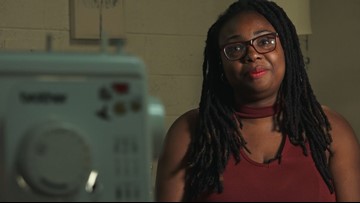
El-Amin said she was interviewing for a news article about her side job as a seamstress/designer when she casually mentioned the possibility of one day opening a summer camp for kids. When the article was published, so was the idea for the camp, and support from the community came rushing in before El-Amin even knew what she was doing.

“The support from the community was overwhelming. It came from everywhere,” El-Amin said, realizing her idea was pushing towards reality quicker than she expected. “It was really an idea that was able to come to fruition through support from the community.”

Enkeshi El-Amin
Photo by: WBIR
Enkeshi El-Amin plans to expand ‘Sew It, Sell It’ to an after-school program.

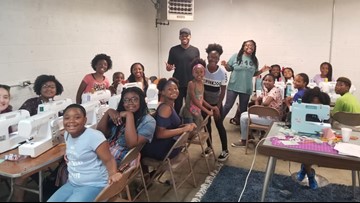
Marcus Hall, the owner of Marc Nelson Denim in East Knoxville, donated studio space, and people from around the area dropped off sewing machines, food, and furniture, so kids could attend the camp for free.

By mid-July, ‘Sew It,’ Sell It‘ was ready for its first campers.

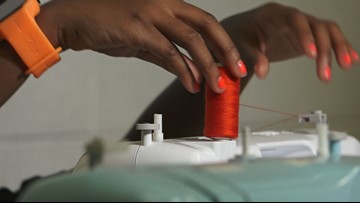
“The kids learned to sew in three days, actually make that two days. The first day was a lot of team building and getting to know each other, so they really learned to sew in two days,” El-Amin said. “I remember thinking I must be getting better or these kids are really good because they just caught on so quickly.”

When professionals like Randy Boyd or Chris Blue popped into Marc Nelson Denim to shop, Marcus Hall would bring them back to the studio, so they could meet with the campers.

Sew It Sell It
Photo by: Sew It, Sell It
Singer Chris Blue takes a moment to meet with kids at ‘Sew, It Sell It’ while he shops for a new outfit at Marc Nelson Denim.


A large portion of the camp included learning how to run a business. Participants had to come up with a product and pitch it to professionals in the community at the camp’s very own market day.

“When I say I was impressed, I’m not just saying that. I was super impressed by how well they presented, how well they knew their products, how well they were able to talk about it. The judges were so impressed, they said, ‘we can’t just have three winners.’ So, they went out and got gift cards for everyone,” El-Amin said.

Tiara Hill is a sixth-grader who created ‘Bonnets By T’ with the skills she learned at camp.

Bonnets By T. 43 likes. I create bonnets because African Americans 9 times more on hair care than other populations. Which is a big investment. So I make bonnets to protect that investment.


“I created a bonnet that would protect braids. I got this idea because I wear braids, and African Americans spend a lot of money on hair care. It’s a big investment, so I created something to protect that investment. I have a waterproof one too,” Hill said, and she already has a plan for her profits. “I’m going to take most of the money and reinvest it back into the business, and I’m going to open a bank account.”

Sew It, Sell It
Photo by: WBIR
“I didn’t’ really think of being a business owner this early,” said 5th-grader Ja’Shonna Bryant.


Her fellow camper, Ja’Shonna Bryant, was inspired by her dog to create her business, ‘Bow Wow Doggie Boutique.’

“I made a dog vest that’s comfortable for your dog,” Bryant said. ‘I made it out of cotton fabrics and silk fabrics, so it’s soft.”  Bryant said even if you don’t have a dog, you could purchase a vest, and she’ll donate it to Young Williams Animal Shelter.

Bow Wow Doggie Boutique, Knoxville, Tennessee. 25 likes. Comfortable canine fashion for your furry friend!


“It’s important for our kids, especially kids of color, to learn financial literacy and learn what it means to be an entrepreneur and how to manage your money and make your money work for you. It’s important to teach them these skills and to teach them that you have something to offer the world, even at eight or nine years old,” El-Amin said.

Enkeshi El-Amin
Photo by: Enkeshi El-Amin
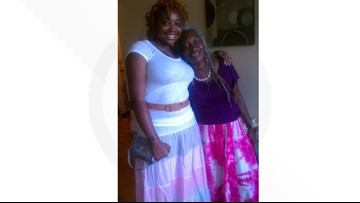
Enkeshi El-Amin (left) pictured with her grandmother.


“I grew up in a household where I saw a lot of entrepreneurs. My grandmother was a seamstress. Sewing was her primary income. I learned to do hair from my sisters who did hair. My sister is a hairstylist in Atlanta who has her own business. I was always around people who were starting their own business or tapping into their entrepreneur spirit,” El-Amin said, adding that she’s instilling that same spirit in a new generation of entrepreneurs.

El-Amin said she has plans to expand ‘Sew It, Sell It’ to an after-school program and exploring options to teach the same lessons to refugees as well.


Credit: https://www.wbir.com

Life is an uncertain roller coaster. You can choose to embrace it and enjoy the ride, joyfully learning from your experiences along the way; or you can choose to rebel against all of life’s challenges, resenting every moment of your journey. The latter robs you of any growth or development, while the former gives you the opportunity to learn from those challenges and become a better person for having experienced them.

While “better” may be relative, one thing is certain – “better” means improved. No matter where you find yourself, there is always room for improvement. Even a monk strives daily to improve himself, striving always to become a better person.

Challenges in life are a given, and they can be used to your advantage. Each one is an opportunity for personal growth and self-improvement. Ultimately, the goal is to use what you learn as you grow to become the best version of yourself.

Here are 6 common challenges in life you must overcome on your road to becoming a better person:

1. Loss

Whether you lose your job, an opportunity, or a relationship – loss is an inevitable part of life.

Regardless of how it happens, loss is one of the life’s biggest challenges. It can feel abrupt and disruptive. However, loss gives you the opportunity to reflect on what is truly important so that you to keep moving forward.

Losing something that you had, or really wanted, can be a welcome wake up call. Loss forces you to ask yourself, “What about what I lost was valuable to me?” and “What am I willing to do to get what I want?”

Choosing to examine your loss through the lens of these questions causes you to assess the true value of what you lost, as well as why you value it. Having a clear understanding of what you value and why you value it, is key to becoming a better person because it gives your words & actions integrity.

2. Failure

There is not a single person alive who hasn’t experienced failure. To grow, you must fail. Failure offers a natural checkpoint on your journey, one that allows you to evaluate your recent behavioral choices so that you can make improvements. When you fail, you get the chance to review your decisions and behaviors, like an athlete reviews the taped footage between games.

Reviewing the decisions and actions that lead you to fail is an invaluable exercise. Understanding how the decisions you made led to certain behaviors and actions can prevent you from making the same mistakes again. Such a review can also reveal important details you missed the first time that would allow you to take a better and more informed approach the next time.

The experience of failure causes you to develop compassion, empathy and sympathy. Your experience gives you a point of commonality with anyone who has had a similar experience. Those three emotions are essential tools on your journey to becoming a better person because they allow others to feel safe and seen around you.

3. Setbacks

They have many names: missteps, monkey wrenches, unforeseen circumstances. But setbacks are ever present on our journey to becoming a better person.

We have all experienced a slow in progress, hindrance or delay on our journey. The challenge is understanding why the delay happened. What caused our progress to slow down or plateau?

You can intellectually know all the right things to do or say, but there are those moments when your humanness gets the best of you. Despite your best efforts to be a better person, you suddenly do or say something you regret. Perhaps you react in a way that is negative or out of alignment with your desire to become a better person. ITS OKAY!

Setbacks are learning opportunities. Having a firm understanding of the types of things that slow your progress will allow you to both avoid and preempt them.

Resilience is one positive side effect of overcoming setbacks. The journey to becoming a better person requires that you be mentally tough. Setbacks are an organic way to build that mental toughness while still maintaining integrity in your actions, and a sense of emotional awareness that promotes a safe environment where others feel seen.

4. Establishing Your Moral Compass

Distinguishing right from wrong for yourself is an ever present life challenge. You may agree with one ideology today, and another tomorrow. Changing your mind is your right, and deciding where you stand is your responsibility. The two go hand in hand.

Deciding what you believe is important on your road to bcoming a better person. Self-improvement is anchored in your own personal sense of right and wrong.

Most people act in accordance with their values and beliefs. Giving yourself permission to grow as person means taking time to reexamine them both. It is possible you will discover that your values and beliefs are no longer in alignment with your end goal.

Thankfully, your assessment of the misalignment will lead you to do what is necessary to once again find your true north. The ability to self-correct will serve you on you journey.

5. Mastering Your Mind

Your mind can be a formidable opponent on your path to becoming a better person. It can pipe up with all kinds of negative commentary when things are not going well, and can have the power to derail you with doubt and fear – if you let it. Mastering your mind is one of the greatest life challenges of all.

Your mind controls your perspective, it informs how you receive and process your interactions with the world around you. Unlike other things you can claim mastery over after a finite amount of time, the mind can take some a lifetime to master. The challenge is showing up willing to do the work of mastering the mind everyday, while having a complete awareness of the infinite nature of this work.

Where ever you go, there you are; thus it’s impossible to hide from yourself. If your mind is unruly and unkind, then it will be hard for you to become a better person, primarily because you are not being better to yourself.

Luckily, there are a myriad of ways to begin the work of mastering you mind. The key is to create space for you to be with yourself in a healthy way that promotes growth. Some common methods to facilitate focused personal time are therapy, meditationself-reflection, prayer, intentional silence, journaling and being out in nature.

6. Overcoming Your Story

Everyone was once a child. There are things you experienced that were outside of your control, regardless of their severity those experiences stay with you. Those experiences become part of your story. Overcoming the story you tell yourself about your own experience can be quite the life challenge.

Whether you grew up poor, didn’t have a lot of love in your house, or didn’t feel seen, it affects the way you move through the world. There are the facts of these experiences and there are fuzzy edges where our minds fill in the blanks.

For Example: if you say “I grew up poor and I am always going to be poor,” that is an example of your story taking control.

Comparatively, if you said “I grew up poor, but I am working hard now. I’m doing whatever I can to make sure I have all the things I need and am comfortable”– even if it’s hard, that is still an example of overcoming your story.

Author: Awilda Rivera

We all know what anxiety can feel like; it can be utterly debilitating and soul-destroying. Many of us are familiar with the pounding chest where you feel your heart is about to explode. Your face flushes or goes suddenly quite pale. You can feel the blood draining from your face.

The panic inside you says: “People are going to notice you experiencing this. Get out of here!” And the stinging fear of embarrassment and humiliation can overwhelm you to the point of tears.

Such experiences can be completely terrifying. We often want to stop feeling these symptoms altogether, however we need to recognize that in many cases, experiencing anxiety actually serves us well.

Our brains are biologically wired to help us survive. What’s happening here however, is our innate fear response has become hyper vigilant in a way that no longer serves us. It’s working in overdrive when we perceive (often subconsciously) there is a threat to our safety but there may not actually be a physical and real threat.

There are strategies you can use to regain control but you will need to consciously learn how to manage anxiety and reduce the emotional, mental and physical experiences you’re suffering.

1. Work with a Professional to Identify and Get Familiar with Your Triggers

Your experience of anxiety will be different to the next person and the next person after that. It’s important to recognize that the specific prescription of tools and techniques that work for you will be different to how they work for someone else.

Spending time to recognize patterns and common features of your anxiety should be a primary step in your management and recovery plan.

Despite popular belief that we need to go back to the root cause of how and why your anxiety started, it’s important to know that sometimes significantly traumatic events and/or experiences are better contained in the box with the lid on. In other cases, accessing the catalyst can be a lengthy and experience and near impossible.

Working with a qualified and trained mental health professional can greatly help you to gently and safely assess and determine things which can derail you. Doing so will not only help you protect your emotional and mental health, but add a greater sense of control in mapping and identifying graduated steps to work through as a treatment plan.

Look to partner with a supportive, empathetic trained professional in your corner who can see risks and help you develop suitable tailored action plans to manage and reduce symptoms that trigger your symptoms. You’ll increase control of your own progress, and your growing confidence can exponentially increase your recovery than trying to go it alone.

If you can’t access face to face or group workshops, online therapy (e.g. Better Help or Talk Space) is becoming much more widely available. There are options available for everyone.

2. Have Breathing Techniques up Your Sleeve

The mistake often made by those in the throes of experiencing heightened symptoms, is trying to recall specific ‘helpful’ thoughts to eradicate the unhelpful ones in that moment. This doesn’t work very often. It’s like trying to open the door of a front loader washing machine just commencing a spin cycle to put more laundry inside!

If your symptoms are highly intense, such strategy is unlikely to succeed. Your mind is the washing machine, by the way.

The way we breathe has incredible power beyond simply inhaling oxygen and expelling it from our lungs. The rhythm, pace and depth all have significant calming and healing effects on us.

Neuroscience documents that by switching focus to managing your breath halts certain neurons sending panic signals throughout your body.[1] The result is calmer physiology.

Making it your job to calm your breath first helps reduce intensity of those tangible symptoms screaming at you.

We breathe in two ways: through our thoracic region and through our diaphragm. The latter is the one you want to focus your attention to:

  1. Place your non-dominant hand, palm down flat over your chest and place the other just under your ribs on your diaphragm.
  2. Either close your eyes or drop your gaze to a 45° angle and choose a spot to loosely focus on.
  3. Draw a breath in through your nose, gradual, slow and smooth as silk for three counts.
  4. Hold the breath for a split second.
  5. Purse your lips and expel your breath again for 4 or 5 counts, slow, smooth as silk. Control the exhalation.

The next breath cycle, you may want to breathe in for three counts and exhale for five counts. Practice this for at least 5 cycles or at least till you start to notice you are physically calmer in some respects.

If you suffer from panic disorder,[2] you can initially feel increased panic or anxiety doing this technique. Stop and practice again a little while later. You need to switch focus from thoracic (chest) breathing which is common during panic attacks, to diaphragmatic breathing.

Don’t wait until you’re in the heat of the moment to try putting the technique into effect. Practice during a time when you are calmer so your brain and body develop a familiarity of the process and what a reduction in your symptoms feels like.

Like a competitive sport, you practice off the court so that when you get on the court, you’re well familiar with what you need to do. You only need to press the proverbial button and let a more automatic, practiced process wield its magic. Practice.

3. Learn Grounding and Distraction Techniques Which Give Your Mind Something to Do

Such techniques are distractions. Do they get rid of your anxiety? Unlikely. Do they help to cope with and reduce the intensity of your symptoms? Yes, so that you can recalibrate yourself to a more organized mental state from which you can engage cognitive exercises that challenge and reframe unhelpful thoughts.

If you’re never thought games such as eye-spy would ever come in handy in your adult years, here is news for you!

Start with the letter ‘A’ and look to name everything you can see around you starting with ‘A’. Move on then to the letter ‘B’ then ‘C’ and so on. Search as far, wide and deep as you can looking for objects that start with your letter of focus.

Or, use colors. Work your way through the colors of the rainbow sequentially identifying as many things as you can that showcase that color. Fully immerse into the exercise and give your mind something to focus on. Spend a few minutes to do this.

A tangible grounding technique is to focus on what you have physical contact with. Pay attention to the sensations; how your bottom touches and squishes into the chair or your back muscles press into the back of your seat.

How do your feet feel in your shoes? How do your clothes feel against your skin? You’re tasking your mind with an activity which decreases capacity for it to focus on your present symptoms of anxiety.

4. Try Cognitive Behavioral Therapy (CBT)

Professor Jasper Smits and Professor Stefan Hofman have conducted extensive research into the most effective treatments for managing adult anxiety. They published findings in the Journal of Clinical Psychiatry from an extensive meta-analysis which revealed CBT to consistently have strong impact in the treatment and management of anxiety.[3]

CBT involves addressing, challenging and reframing negative thoughts and re-shaping unhelpful behavior. A task-based, practical approach is applied to help clients recognize maladaptive thinking and habits, learn more helpful and positive ways to behave and think; and in turn, transform their symptoms.

For individuals to really experience benefit, undertaking regular applications of doable homework exercises is most effective. CBT is highly effective but requires individuals’ regular commitment.

Expect to work with a mental health professional on a weekly basis for three to four months. Find someone who won’t just give you homework sheets (that’s lazy therapy) but is closely attuned to providing you with good education, comfortably assess any resistance to change, and be able to modify and adjust exercises that best enable you to do them.

You won’t just experience a reduction in your symptoms because you develop such strong self-awareness and self-monitoring skills. You’ll learn mental skills that will strengthen your resilience and propel you further forward toward goals of how you want to feel, think and behave.

5. Try the Emotional Freedom Technique (EFT)

EFT which involves applying light repetitive pressure to meridian points, is becoming increasingly documented as an effective symptom reduction technique for anxiety.[4] Also known as ‘tapping,’ anyone can learn to self-administer it with the guidance of a practitioner.

In collaboration with professional associate Gary Craig, Clinical psychologist Dr Roger Callahan[5] developed a simple yet effective self-administered process where individuals self-apply pressure to acupressure points on their body.

Using techniques from neuro linguistic programming and thought field therapy, individuals consciously lean into degrees of discomfort concerning their thoughts, feelings and physical symptoms.

Best learned under instruction and support of an EFT practitioner or trained professional, you initially apply mindfulness to consciously become aware of your anxiety symptoms – thoughts, feelings and physical sensations.

As you tap, you gradually start to experience relief and reduction in your symptoms. However, remember the level of impact felt will differ and progress at different rates from one person to the next.

Research shows that the positive effect of tapping is long lasting, particularly for anxiety disorders and post traumatic stress. It is becoming used more widely for other mental health challenges including weight loss, grief and loss, low self-esteem and confidence.

6. Use Imagery to Help Manage Anxiety

This is such an under-utilized but very powerful mechanism of our brain when it comes to directing our thoughts and behavior in a way to serve us, particularly in the context of anxiety.

Our brains are neuroplastic. We can train and rewire them to work better in our favor, yet we often live the majority of our day unconsciously by default.

Think about how many times you have day-dreamed today. When your tummy starts growling just before lunchtime, can you easily hook into images of what you want to satiate your hunger?

Often we engage imagery without thinking, but guided imagery is a key technique that helps with the reduction of anxiety with diagnoses of PTSD, social phobia and performance anxiety.[6]

Your brain’s amygdala plays a key role in emotional regulation[7] and hence those emotions connected with perceived fear responses when you feel anxious.

Imaginal exposure therapy (vividly imagining the feared object, situation or activity) works to dampen amygdala activity and reduce the intensity of emotions experienced in anxiety. You have the advantage of visiting memories in a safe, controlled space interspersed with grounding/relaxation, and gently exposing your mind’s eye to that which you feel anxious about. Starting this process should be done with a trained professional.

7. Ensure Relaxation Techniques Are in Your Toolkit

Being anxious is exhausting. For those who suffer from general anxiety, your stress response mechanisms are constantly running, so you need to learn how to tell your body to relax.

Having a couple of meditative instructional relaxation apps you can instantly access through your phone should be on your list of essential management strategies.

In your choice of apps and relaxation techniques. consider choosing one which engages as many of your senses as possible. The more physical feedback you’re directed to notice a reduction in your physical symptoms throughout the relaxation exercise, the more likely you will stick to it and be motivated to repeat it.

Progressive muscle relaxation should be in your anxiety management toolkit. This method directs you to focus on noticing the different feeling between active tension and resulting relaxation when you release the tension of a muscle. Sequentially working through muscle groups in the body from head to toe, your mind is directing and telling your body to become calmer.

You need to be sensible with this one where you might be recovering from an injury or be at risk of developing a physical injury. Certainly avoid this exercise (and meditation) whilst driving.

Again, practicing this one at regular times throughout the day gives your brain and muscles a mental blueprint to relax such that it will be more effective in anxiety-provoking situations. Because you can also feel immediate tangible differences, it can boost your confidence earlier than starting with exercises that are purely cognitive.

The Bottom Line

Reviewing your diet and exercise regime is a given. Reducing caffeine intake, processed food and improving physical movement you engage in daily has incredibly strong impact and makes the strategies above even more effective when you do them.

However, for you to get a strong handle on how to manage and reduce your experience of anxiety, you’re going to have to develop a commitment to regularly applying changes.

If you don’t know where to start, get in touch with a therapist. Your first step is to develop a strong awareness of what you’re experiencing and what could be triggering it.

When you know and understand more, you can do far more in the pilot seat to land your anxiety back on the tarmac and potentially never let it take off from that runway again.

Author: Helen Dasilva