Category

self development

Category

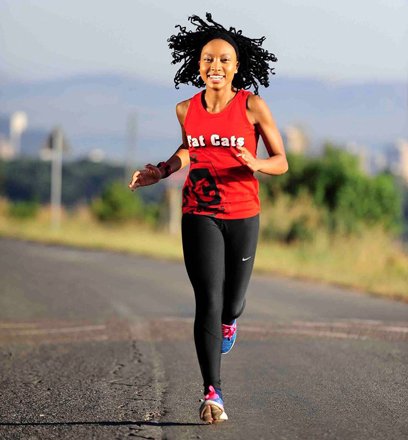
South African, Zanele Hlatshwayo is creating awareness for mental health through running

After losing her father to suicide, Hlatshwayo cried a lot. The mourning process got so close to affecting her mental health that she started looking for ways to deal with her emotions. Eventually, running turned out to be her coping mechanism.

Speaking with IOL, she said:

“When I started, I was running away from the situation. I didn’t want to deal with it anymore but the more I ran, the more I realized it is helping me deal with it.”

It’s been more than 10 years since she started road running and she’s still going strong. Now she’s taking it up a notch by running 18 races around South Africa in just seven months!

To show she means business, Hlatshwayo has already completed seven races since January. With 11 to go, she has partnered with the crowd-funding platform, BackaBuddy to raise R180,000 (more than N5 million) for the South African Depression and Anxiety Group (SADAG).

Explaining how running relates to mental health, she said:

“Running also signifies pain that people who are depressed go through because in many instances, when you run…there’s a lot that you go through, physically and emotionally. It’s a similar process for those who suffer from depression.”

Hlatshwayo will cap off this feat with a 180km race in the Eastern Cape by the end of July.

Source: konbini.com

Nigerian author Chimamanda Ngozi Adichie is the latest cover star for the new issue of PORT Magazine and she is the first woman ever to appear on the cover of PORT, which was launched in 2011 as ‘the magazine for men’.

The cover story for the biannual style magazine was written by Catherine Lacey, and photos were taken by Mamadi Doumbouya.

The new issue, PORT’s 22nd, will be out on newsstands in mid-April.

Talking about putting a woman on the cover for the first time ever, Editor Dan Crowe says:

We launched as ‘the magazine for men’, and, while we’ve dropped that tagline (as it started to seem quite militant), we initially ran with accomplished men on the cover who we felt were under-considered by our youth-obsessed media. After we had established our brand and made this point, we chose to exercise more freedom.

We had wanted to feature the novelist Chimamanda Adichie for a while, but it took a long time to arrange. We’ll be featuring more woman and a younger guy (now that we’ve bucked the trend) from time to time in the future. But we will always have time for the iconic men associated with classic Port covers.

In the issue, Chimamanda talks about her extraordinary books, the complexity of recent gender movements and her next big project.

Speaking about choosing Chimamanda, the magazine wrote,

“The writer Chimamanda Ngozi Adichie is one of the foremost intellectual voices in the United States today. The author of Half of a Yellow Sun, Purple Hibiscus and Americanah – as well as of one of the most viewed Ted talks in the organisation’s history, that was featured in a Beyoncé song – Adichie transcends the barriers between literature, art and music”

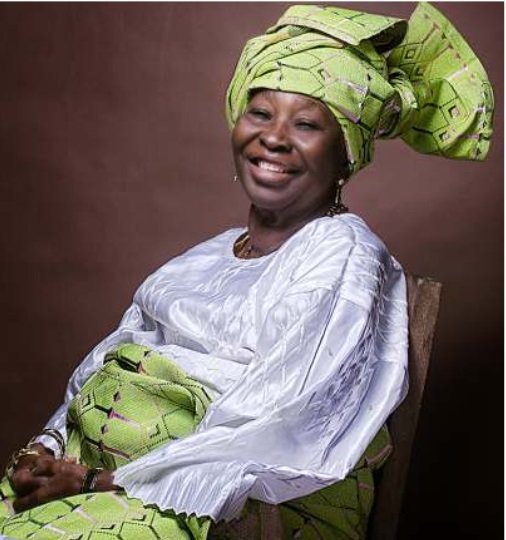
Alhaja Ashiata Abike Onikoyi-Laguda will be 94 years old October 2018 and she still lives a robust life though she has the highly feared SS genotype.

Alhaja Laguda, as she is popularly called, said during an interview with The Nation, that she stopped having Sickle Cell attacks since she turned 40, though her genotype is still the same.

Here are a few things she said:

On being sickly

“Doctors see me and wonder what a miracle I am.

She recalled that being sickly was tougher at the time she was growing up because nobody knew about sickle cell anemia. She was always sick to the point that in a whole year, she may attend school only about three months of the entire annual school calendar while she spent the other months sick and at home. She was given all sorts of concoctions to cure her illness due to the ignorance surrounding the ailment.

“I was taken to the hospital; then they still brought all sorts of concoction from the Igbo tribe, from Yoruba people and from Hausa part of the country, because it was a very serious sickness. I just took everything that they gave me. They would cut me on every part of my body but I gave myself to them because I wanted to live.”

When the illness attacked her hands, she recalled that she would not be able to use them for anything – not even to eat. When it attacked her legs, she would not be able to walk, and whenever she was at home, she must be by the fire-side, to keep her warm.

On shame and insults

“They called me ‘abiku’ and several other names, but thank God things have changed today. Also, the government is doing everything within its power to enlighten the people about the disease.”

On how her father cared for her

She said her father pampered her because he feared he could lose her at any moment. So he mostly kept her away from school.

She said: “If he didn’t die, I probably wouldn’t have been educated because he said I should be left at home so that they can watch over me every time.

“He insisted that because of my nature, no teacher should beat me. He would say I should be left at home even when I was not having any attacks; but when he died I had no choice because my mum insisted I went to school. That, in a nutshell, was how it became possible for me to go to school.”

Before she took a fall

Before I fell, I used to walk from my house here in Ilasamaja, Lagos to Mushin and Oshodi market as a form of exercise because I believe walking is the best exercise one can engage in. I walked like that until I was 90 when I fell and had to stop.”

Prior to her fall, Alhaja Laguda used to go to hospitals to talk to people living with Sickle Cell anemia, lecture them, and encourage them.

On raising sickle cell children

She called on parents with children suffering from sickle cell anemia to take care of the children very well, feed them well and show them lots of love.

“This will make it easier for them to live with the disease. When it is cold, keep them warm; don’t keep them at home because they are always sick; let them go to school, it is very important,” she said.

On if she wants to live longer

She said she hopes to leave this earth soon, adding: “I want to go but God has not killed me, so I have no choice but live.”


Credit: The Nation, Fab Woman

Yoruba actress, Biodun Okeowo, popularly known as Omobutty has in a post on Instagram shared her success story and how she made it despite what people thought of her

In her words:

“Eighteen years ago, I got pregnant. A mistake I thought has ruined my life. People laughed, jeered and mocked me… #YetIwon#
The embarrassment was too much, that it gave me strength to decide I must go back to school. I enrolled at L.A.S.U (part-time)

With no support from anyone except my mum. I did so many menial jobs to cater for myself and the new baby.
I fried doughnuts and Chin chin, which I supply to retailers on campus.
I sold rice outside mummy’s shop on days that I have no lectures.
I sold hair extensions, make hair, ‘stay awake overnight to make hair for people (one million braid) was in vogue then.

I remembered a particular day I fed my son with soaked garri! Yes, I couldn’t afford a tin of even the cheapest ‘My boy’ baby food then.. #yetIwon
I struggled, refused to beg, worked, toiled, laboured to be able to stand on my feet. Whatever you are going through be strong, positive, hardworking, and steadfast.
And No matter how poor you are, invest the little you get into something.

Fast track to 2006 I joined the movie industry after my IT at The Lagos State Television Agidingbi. Acting is another chapter in my life. I experienced mockery, intimidation. I was called different names, looked down upon, aliases like “Biodun oni cut and sew” and “Tolani Alankara”

I could not afford the expensive cloth/costumes. I was not sophisticated enough. #YetIwon.
Dresses/dressing didn’t pave way for me neither did it stop my success. However, my God given talent make it all possible and easy.
The name people call you today doesn’t define you… be focused, strong, determined and be content with whatever you have.

I almost quit because of intimidation, but that strength of “i must make it” came into play. I refused to be intimidated,bow to pressures,or borrow.
I was contented with my “cut and sew”. #yetIwon

Then came the trial that pushed me into becoming an entrepreneur.! For two years I was ignored, no movie jobs, not because of inexperience but because of… yet I persisted. #yetIwon.
I prayed,fasted, and believed in myself. Thereafter, I did a movie that launched me back into reckoning .”…… Full post on her Instagram page to continue reading

Nollywood actress, Chika Ike and business mogul, has revealed in an IG post about how she found it difficult to love her body while growing up and her constant desire to be someone else because she felt she was too thin but the reverse is the case today.

She ended her post with these wise words: “If you want to make changes or improvements let it not be because of pressure or people’s unconscious bias about you.Do it for you. You should hold your pen and draw your life plan… Do you… Mind your business…..Run your race. Do not let anyone define you or rush you with their timeline. We all have different stories, journeys, and different clocks. You are you and that is your power!”

See her Instagram post below

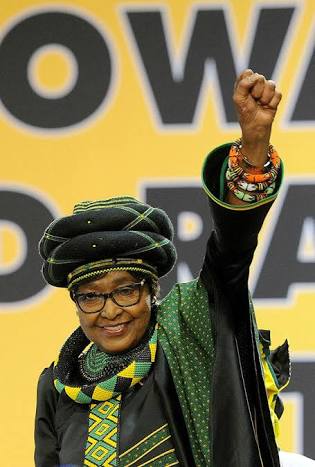
Winnie Madikizela-Mandela, a hero of the anti-apartheid struggle in South Africa and also one of its most controversial figures, has died aged 81 in the recent news which broke the internet on Monday, April 1.

According to her personal assistant, Zodwa Zwane, the ex-wife of the former South African president Nelson Mandela died at a hospital in Johannesburg after a long illness.

Here are some interesting things to know about her

Early life

Born Nomzamo Winifred Madikizela on September 26, 1936, in Bizana, a rural village in the Transkei district of South Africa where she embarked on a career of social work that led to her involvement in activism.

Early Career

Winnie Mandela eventually moved to Johannesburg in 1953 to study at the Jan Hofmeyr School of Social Work. South Africa was under the system known as apartheid, where citizens of indigenous African descent were subjected to a harsh caste system, while European descendants enjoyed much higher levels of wealth, health and social freedom.

Winnie completed her studies and, though receiving a scholarship to study in America, decided instead to work as the first black medical social worker at Baragwanath Hospital in Johannesburg. A dedicated professional, she came to learn via her field work of the deplorable state that many of her patients lived in.

In the mid-1950s, Winnie met attorney Nelson Mandela, who, at the time, was leader of the African National Congress, an organization with the goal of ending South Africa’s apartheid system of racial segregation. The two married in June 1958, despite concerns from Winnie’s father over the couple’s age difference and Mandela’s steadfast political involvements. After the wedding, Winnie moved into Mandela’s home in Soweto. She became legally known thereafter as Winnie Madikizela-Mandel.

Confinement and Leadership

Nelson Mandela was routinely arrested for his activities and targeted by the government during his early days of marriage. He was eventually sentenced in 1964 to life imprisonment, leaving Winnie Mandela to raise their two small daughters, Zenani and Zindzi, on her own.

Nonetheless, Winnie vowed to continue working to end apartheid; she was involved surreptitiously with the ANC and sent her children to boarding school in Swaziland to offer them a more peaceful upbringing.

Monitored by the government, Winnie Mandela was arrested under the Suppression of Terrorism Act and spent more than a year in solitary confinement, where she was tortured. Upon her release, she continued her activism and was jailed several more times.

Following the Soweto 1976 uprisings, in which hundreds of students were killed, she was forced by the government to relocate to the border town of Brandfort and placed under house arrest. She described the experience as alienating and heart-wrenching, yet she continued to speak out, as in a 1981 statement to the BBC on black South African economic might and its ability to overturn the system.

In 1985, after her home was firebombed, Winnie returned to Soweto and continued to criticize the regime, cementing her title of “Mother of the Nation.” However, she also became known for endorsing deadly retaliation against black citizens who collaborated with the apartheid regime. Additionally, her group of bodyguards, the Mandela United Football Club, garnered a reputation for brutality. In 1989, a 14-year-old boy named Stompie Moeketsi was abducted by the club and later killed.

Freedom and Charges of Violence

Through a complex mix of domestic political manoeuvring and international outrage, Nelson Mandela was freed in 1990, after 27 years of imprisonment. The years of separation and tremendous social turmoil had irrevocably damaged the Mandela marriage, however, and the two separated in 1992. Before that, Winnie Mandela was convicted of kidnapping and assaulting Moeketsi; after an appeal, her six-year sentence was ultimately reduced to a fine.

Even with her conviction, Winnie Mandela was elected president of the ANC’s Women’s League. Then, in 1994, Nelson Mandela won the presidential election, becoming South Africa’s first black president; Winnie was subsequently named deputy minister of arts, culture, science and technology. However, due to affiliations and rhetoric seen as highly radical, she was ousted from her cabinet post by her husband in 1995. The couple divorced in 1996, having spent few years together out of almost four decades of marriage.

Winnie Mandela appeared before the nation’s Truth and Reconciliation Commission in 1997, and was found responsible for “gross violations of human rights” in connection to the killings and tortures implemented by her bodyguards. While ANC leaders kept their political distance, Winnie still retained a grassroots following. She was reelected to Parliament in 1999, only to be convicted of economic fraud in 2003. She quickly resigned from her post, though her conviction was later overturned.

In a 2010 Evening Standard interview, Winnie sharply criticized Archbishop Desmond Tutu and her ex-husband, disparaging Nelson Mandela’s decision to accept the Nobel Peace Prize with former South African President F.W. de Klerk. Winnie later denied making the statements.

In 2012, one year before her husband’s death, the British press published an email composed by Winnie Mandela, in which she criticized the ANC for its general treatment of the Mandela clan.

Personal life

She married African National Congress leader Nelson Mandela in 1958, though he was imprisoned for much of their four decades of marriage.

Death and Legacy

Following extended hospital visits to treat a kidney infection, Winnie Mandela passed away on April 2, 2018, in Johannesburg.

A family spokesperson confirmed the death, saying, “The Mandela family is deeply grateful for the gift of her life and even as our hearts break at her passing‚ we urge all those who loved her to celebrate this most remarkable woman.”

Despite the conflicts, Winnie Mandela is still widely revered for her role in ending South Africa’s oppressive policies. Her story has been the subject of an opera, books and films, her character interpreted by many different actresses across numerous productions.

She was played by actress Alfre Woodard in the 1987 television movie Mandela; by Sophie Okonedo in the TV movie Mrs Mandela (2010); and by Jennifer Hudson in the 2011 film Winnie.


Credit: fabwoman.ng, google.com

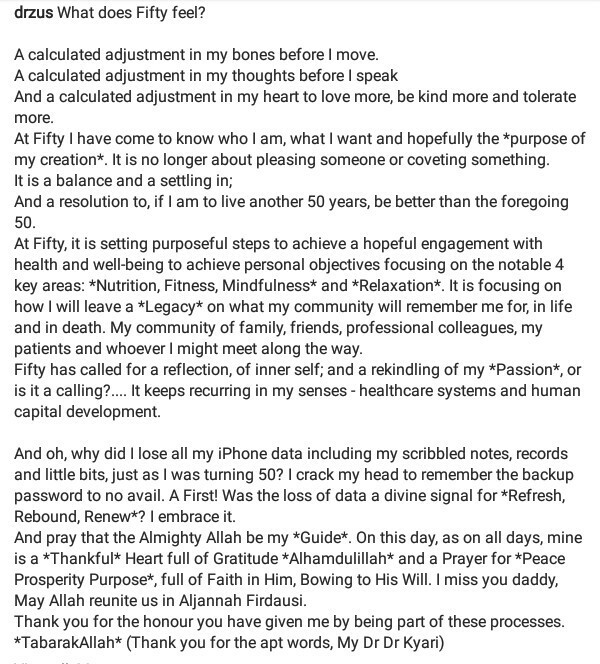
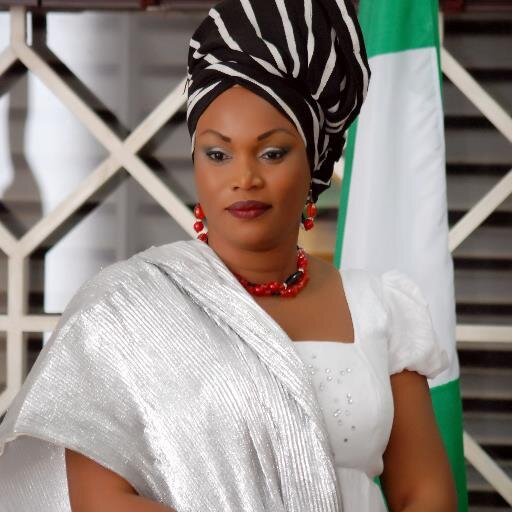
Wife of  Kebbi state governor and founder of Medicaid Cancer Foundation, Dr. Zainab  Bagudu says turning 50 is a major milestone.

A medical certified Pediatrician, known for her admirable role in the fight against cancer, turned 50 on March 27th and took to her official Instagram page to reflect on her life so far. According to her, fifty feels like..

“A calculated adjustment in my bones before I move. A calculated adjustment in my thoughts before I speak.  A calculated adjustment in my heart to love more, be kind more and tolerate more” she says.

See Post Below

Media personality and ‎chieftain of All Progressive Congress  (APC) Chief Amb. Ginika Tor Williams is set to contest in the Federal House Of Representative ring of Awgu. Aniri, Oji River Federal Constituency, in the forthcoming 2019 election.

Chief Amb. Ginika Tor-Williams is a TV personality, a media entrepreneur, brand management expert, income strategist, with vast experience in strategy and planning. She is a graduate of law from the University of Jos .

She is also the event consultant and manager for the Enugu State Fiesta by Enugu state Government through the Ministry of Culture and Tourism.


Credit: fabwoman.ng

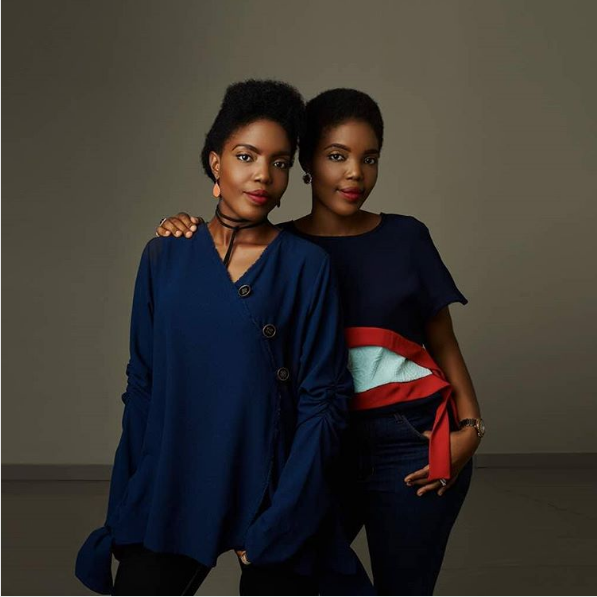
Nigerian sisters and designers,Sylvia Enekwe-Ojei and Olivia Enekwe-Okoji have been featured in  Vogue Italia’s The Next Green Talents.

Born in the east, the sisters stared designing with their mother who was a tailor, they learnt the art of design and sewing by watching her and working with her.

They are part of the next generation designers Vogue is working with. In the interview, they spoke on the inspiration of their designs ,the challenges they faced building up their brand, Gozel Green, and plans for the future.

Read the interview here


Source: fabwoman.ng


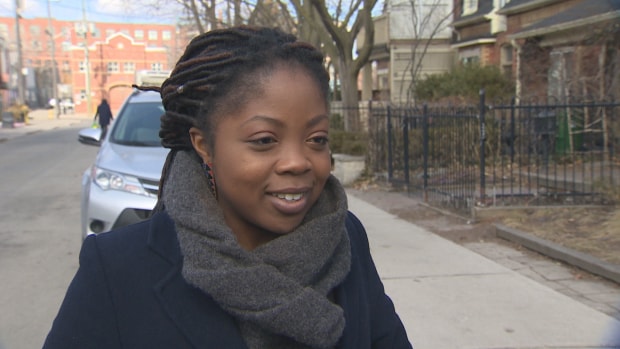
Two weeks ago, Aisha Addo launched DriveHer, a women-only ride sharing platform. Aisha, a Ghanaian who lives in Toronto, Canada, was motivated to start DriveHer after an experience with a taxi driver left her uncomfortable.

She was in a taxi going from a friend’s house to her home in Mississauga when her cab driver started asking her uncomfortable questions.

Aisha Addo (Photo: CBC)

It’s a story many women can identify with. She says:

“He was asking me if I lived alone, and for me that was a bit triggering, because I happened to. Then he started asking if I had a boyfriend, and then [there] just started to be some really weird sexual innuendos. I became a bit guarded.

It sort of got me thinking later on, ‘What about the people whose phones are off, or they don’t really have anyone to call?'”

She then called a friend who she asked to stay on the phone with her for the rest of the ride. She made it home safe, but that taxi ride, along with nights as a designated driver for her friends and hearing multiple news of women getting assaulted and harassed, inspired her to create DriveHer.

“Funny enough, the moment we sort of brought out the concept or idea of DriveHer, I think within that week there were five or six incidents of women that have been assaulted or women that have experienced some sort of violence.”

DriveHer (Photo: DriveHer)

(Photo: DriveHer)

Aisha acknowledges that other ride-sharing services allow riders to specifically request female drivers, but she says DriveHer goes above and beyond existing options.

“There’s so many ride-sharing services, let’s not get that wrong, and that’s amazing, but then there was never really any option for women and people that identify as women. What DriveHer is, is providing an option and creating an equitable space where women and people who identify as women have that option.”

Essentially, while the platform functions like every other existing ride-sharing app, it’s unique in that the the app doesn’t allow male passengers or drivers. And, all the (female) drivers go through the police and criminal background checks that are standard for other ride-sharing services and training specific for its service.


  1. Credit: konbini.com