Women of Rubies

Category

self development

Category

“Look, talent comes everywhere, but having something to say and a way to say it so that people listen to it, that’s a whole other bag. And unless you get out and you try to do it, you’ll never know. That’s just the truth. And there’s one reason we’re supposed to be here is to say something so people want to hear. So you got to grab it, and you don’t apologize, and you don’t worry about why they’re listening, or how long they’re going to be listening for, you just tell them what you want to say. Don’t you understand what I’m trying to tell you?”

These words are from A Star is Born – the 2018 remake of the 1937 film of the same name – uttered midway through the movie by the seasoned country star Jackson Maine, superbly brought to life by Bradley Cooper.

“Yeah, I do. I don’t like it, but I understand it,” says Ally (played credibly by Lady Gaga in her first lead role), the ingenue he discovered makes her Saturday Night Live debut. An ordinary girl on the cusp of stardom, commercialised beyond imagination at the hands of music producers.

What struck a chord with me beyond Ally’s rags-to-riches road to stardom, Jackson’s battle with his demons and their whirlwind romance were these words.

How many stars were made in the ‘90s on the same conveyor belt, shaped with the same cookie cutter? Britney, Christina, Jessica… Until they reached a stage in their career to exert some freedom and control over their material, could you even tell the difference between who was who? I don’t know about you, but I didn’t actually even know Christina Aguilera could sing until she belted out “Beautiful” which we had to wait for until her fourth album.

Watching the fictional Ally on the SNL stage writhing around with a choreography that would make Britney of ‘…Baby One More Time’ era blush, I felt Jackson’s heartbreak at the sight of his rough diamond hewn into a pop princess.

These days we are a little luckier when it comes to our pop stars, Beyoncé has inimitable talent, Rihanna boundless sass, Adele her British blend of softness and edge. Even the new kids on the block from Dua Lippa, Rina Sawayama, Jorja Smith are not manufactured, pre-packaged bubblegum pop princesses. Even X Factor finalists these days boast more personality in their little finger than pop stars of yesteryears, with more opinions than you can shake a mic at, on anything from global warming to unrealistic beauty standards perpetrated by the media to the rise of crypto currencies.

The stars of today, whether made by their talent or their social media following, know that they have gained the much coveted “influencer” status. They also know that, with great influence comes great responsibility – except for Youtube vlogger DJ So Cool perhaps, whose channel was suspended last summer amidst accusations of child abuse after he laced his kids’ ice creams with laxatives and filmed them crying in pain. When you have a platform and you have the spotlight on you, albeit for a short while, most celebrities or influencers know that “you got to grab it, and you don’t apologize, and you don’t worry about why they’re listening, or how long they’re going to be listening for, you just tell them what you want to say” as per Jackson’s advice.

Then, naturally, I think of Nigerian stars and influencers, and it dawns on me just how we can count those who use their platform to say something beyond, “Oya shake body” on the fingers of two hands – at a push. You can rely on Banky W to speak his truth, whether it is political views or social critique, Lami Phillips always serves pepper soup for the soul, RMD shines as a man of virtue and wisdom for our young boys to look up to, Betty Irabor and Joke Silva are forever inspiring and empowering women, by speaking their truth and laying their souls bare for us to learn from. There are a few more.

Except for a respectable few beacons of light that shine through a vast land of nonchalant ignorance, what else do we have but a bunch of so-called celebrities – most of us would be hard pushed to figure out what they owe their fame to – who go around flaunting Gucci, Versace, Porsche, Lamborghini, making countless appearance on the red carpet and chatting absolute rubbish until their season is over and the next movers and shakers of the fame game come along… come to shake body and not much else.

Culled from Guardian Woman
Photo credit: Google

For close to a decade, Oyinkansola the founder of Emotion City has helped hopeless, depressed, suicidal souls, discerning Individuals and executives across thirty states in Nigeria and in six different countries, get clarity, increase productivity and profitability.

Emotions City is the One Stop Centre for Emotional Solutions. We invest our Energy and human capacity in Emotional Intelligence Training, Consulting, Coaching and Research.

We map out solutions to Emotional challenges, develop insights and strategies to the most pressing personal and organizational issues, and impact the course of history by inspiring, empowering and influencing Professionals.

We are willing and available to serve every human being, organization, religious institutions, Private and Public Sectors, Government and Nations. We believe that as long as you are a soul with a body, you need to learn how to harness, develop, and sustain emotional intelligence skills and competencies.

Meet the brain behind Emotions City

Oyinkansola Alabi popularly referred to as the Emotions Doctor is the Lead Researcher, Intellectual Property Owner and Lead Facilitator of EMOTIONS CITY. The Incredible blend of gift and skill is one of Nigeria’s clearest and high impact trainer. She has trained tens of thousands of executives who desired to achieve a high level of Emotional Intelligence at Guinness Nigeria, Interswitch, Stanbic IBTC Bank, FCMB to mention a few.

She is the Principal Coach of Emotions City, an Emotions Coaching and Consulting Firm.The Cornell University-Trained Human Resource Executive, Certified Life Coach, Cognitive Behavioural Specialist, Licensed Emotional Intelligence Practitioner, only female six seconds network leader in Nigeria, is also the convener of the first ever Emotional Intelligence Week in Nigeria and arguably in Africa.

Oyinkan serves as an ordained Pastor under the astute leadership of Pastors Taiwo and Nomthi Odukoya.

We are ready to hear from you;

Midnight listener link : http://emotionscity.com/midnight-listeners/?fbclid=IwAR3pEDmpLYzELT-WnkuuOOBwGGa8Okk1b_5jyT-8vbEpxzd9_BraWMdOebo

Our Listening Line – 08021250367, 08125116740

Follow us on Instagram – @emotions_city, @EmotionsDoctor

Twitter – @emotionsdoctor

Website – www.emotionscity.com

Red Table Talk, a reality TV show by Jada Pinkett on Facebook Watch afforded the couple and their first child together, Williow, to speak on their rumoured plans to end their marriage.

The couple aired all that had gone down in their marriage in the last 10 years when the ‘Bad Boys’ star and his daughter, Willow Smith, appeared on Red Table Talk.

On the rumours about the couple, Will and Jada cleared the air on allegations bothering on their sexuality and religious beliefs.

Shutting down the divorce rumour, Jada said, “We have never considered divorce as an option and that is because it’s wasn’t for us, we had a bigger family aside our nuclear family. I have never seen a divorce lawyer before.

However, the couple agreed to have gone through a phase that broke their relationship and they had to rebuild.

“It’s not possible to clear all the rumours but to just to have it on record about the historical rumours,” Will Smith began.

“We have never been scientologists. We have never been swingers, that’s a real specific lifestyle.

“Do you know why I never got a divorced?” Will continued.

 “It’s cheaper to keep me,” Jada interjects.

“No, but it’s because I’ve never met anyone like you and I knew if I wasn’t with you, I’d be searching in vain for the rest of my life,” Will confessed.

” data-width=”980″>

“>Post by .

In 2016, Will Smith revealed that he and his wife, Jada Pinkett Smith, have had marriage counselling to save their relationship.

The “Suicide Squad” actor revealed he and his wife sorted out their marital problems by attending couples therapy together.

Source: pulse.ng

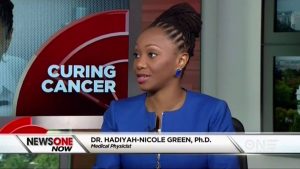
Dr Hadiyah-Nicole Green is the recent winner of $1.1 million grant from the Veterans Affairs’ Office of Research & Development to begin clinical trials to further develop a technology she’s pioneered that uses laser-activated nanoparticles to treat cancer.

Here are 8 things you should know about Dr Hadiyah-Nicole Green.

1.Green was orphaned at a young age and raised by her aunt and uncle in St. Louis Missouri

2.She attended Alabama A&M University with a full scholarship, where she studied physics and earned her bachelor’s degree in physics and optics in 2003.

3.Green continued her education at the University of Alabama Birmingham with another full scholarship, where she earned her Masters Degree in physics in 2009 and her PhD in Physics in 2012.

4.Green lost both her guardians to cancer during her undergraduate days.

5.Green was a member of a team that developed a laboratory method to insert nanoparticles into cancer cells while avoiding surrounding healthy cells in USA.

6.In 2016, Green became an assistant professor at Morehouse School of Medicine in Physiology department.

7.She received a $1.1 million grant from the Veterans Affairs’ Office of Research & Development to begin clinical trials.

8.Dr Green created the technology that kills cancer cells with a treatment using laser-activated nanoparticles.


Source: fabwoman.ng

Business Woman and entertainer, Dencia, has taken to her Instagram page to recount how she removed a breast lump at the age of 12, which according to her was the first time she heard about cancer.

Dencia who urged girls to be their sister’s keeper, disclosed that the surgery left her with a keloid scar for many years and she just noticed recently that it has gone. Read her post below;

“MY RIGHT BREAST STORY
When I was 12 going on 13, I was seating in my dorm room in Cpc Bali (Cameroon) when an older girl who was abt 18 “Belinda”was discussing her breast lump removal surgery,My skinny ass had big boobies & as I heard the story, I immediately touched my breasts & realized my right breast had something extra in it,i went to the nurse who sent me home immediately.

I’m lucky to be raised by a grandma who was very hands on with my health, things went so fast & I was ready for surgery with Dr Ashu in Yaounde, Cameroon.

When the surgery was done it was risky cuz two drs operated on me at the same time Nose,throat & boobies

The next thing was testing the lump for cancerous cells, Yop my first time hearing abt cancer, I remember taking the big ass lump 2 the lab & it was tested, thank God it was just a big ass lump.

I write this cuz a lot of young girls like me in boarding schools away from their parents need older girls like Belinda to tell their story so young girls like me can learn & action is taken fast.A lot of girls don’t get lucky, some end up with cancerous lump which can turn into CANCER. U are never too young & never too old, let’s be our sister’s keeper, I was just a curious young girl, a lot of girls aren’t that curious.

P.S I ended up with a keloid scar for many years & I noticed last night it was completely gone, u can’t even tell I had this surgery which is super crazy, I was treating it will stretch mark cream from whitenicious & lightening it & it’s completely gone which is rare. Thank God

This was a random picture that inspired me to tell this story,wasn’t taken with the purpose for this.

Had my first mammogram & wasn’t even 30

#Scar #Breastawareness #BreastCancerAwareness #Lumps #TouchYourBreast #Breastcancerawarenessmonth”


Credit: stargist.com

It’s not every day that the cast of a reality show embarks on a visit to Ajegunle but the stars of Real Naija Ladies Of Dallas made it to Ajegunle as a medium of giving back to the community.

The team visited three schools including Delight Secondary School from which shows founder, Jennifer Mairo graduated. The purpose of the visit was to empower students and give them insight into the use of social media. Championed by Jennifer Mairo and accompanied by Nancy Ofoegbu, IjeKimora Jennifer John and other volunteers donated school supplies to the students.

Cast and teacher @itsnancyo who has never visited Lagos expressed her gratitude at the opportunity to connect at such a deep level with the students.

For Jennifer Mairo, she expressed the importance of giving back especially to low-income suburban areas like Ajegunle Lagos. The Real Naija Ladies of Dallas would like the world to remember them more so as an inspiration for the next generation of young women

A veteran of seven years who works in the bustling On Nut district, Ar is among the thousands of women drawn to the work as gender roles in Thailand evolve, attracted by the flexible hours, decent wages, and a sense of autonomy.

She welcomes the changes as offering a chance for women to gain more independence.

“I am glad there are more opportunities for women to become ‘motorsai’,” she said, referring to the road warriors whose distinctive orange jackets line the streets of Bangkok.

“A new generation of women now have to be tough and brave.”

Although no official figures are available, observers say more women are choosing to brave the risky traffic-logged roads and discrimination for the flexible work schedule, which allows them ownership over their lives.

Chaloem Changtongmadun, president of Thailand’s Motorcycle Taxi Association, said that working as a motorsai offered women a level of freedom not available in offices, shops or factories.

“Women don’t find the work convenient when they become pregnant, take maternity leave or visit their hometown,” he told AFP.

“They feel a closer connection with their families than when they worked in companies.”

He believes that women today make up roughly 30 percent of Bangkok’s 98,000 registered drivers although others say the numbers are probably lower.

In many parts of the Thai workforce gender expectations are still at play, with women typically filling service industry jobs and clerical positions.

“Thailand still has very blatant gender discrimination,” said Kyoko Kusakabe, a professor at Bangkok’s Asian Institute of Technology where she studies women’s employment in the informal economy.

That is in spite of women shouldering many of the family responsibilities, especially in times of crisis, Kusakabe said.

Women are more likely to take up low-paid work in the informal economy while men “stay unemployed to look for a better job”, she explained.

Chaloem also attributes the increase in recent years to the struggling economy, which has been under pressure since a military junta took over in 2014.

Thailand’s ever-shifting political landscape — where courts and coups have undercut civilian rule since 2006 — has hampered growth in what has been dubbed a “lost decade”.

“Many people lost their jobs or couldn’t make enough money to take care of themselves and their family,” Chaloem told AFP.

Thailand also has one of the highest numbers of road deaths in the world, and Bangkok’s motortaxi drivers embrace a life on the edge to provide a transport lifeline, weaving skillfully between long lines of cars.

As the industry has become more regulated, the drivers are now less vulnerable to abuse from shadowy mafias demanding monthly payments.

Mototaxi queues — known as “wins” — also function in a more democratic fashion, like holding elections of leaders and allowing members of a queue to vote on certain decisions.

However, most of the women still require the support of a male relative in order to join a line, where there is usually a lot of competition.

Waiting for her turn on a shady Bangkok street in the Ari neighbourhood, Paveena — who goes by the nickname Yaya — says she could only secure her position because her brother vouched for her.

“My brother asked the win owner if I could borrow one of their (orange vests) so I could make more money,” 36-year-old Yaya told AFP, explaining the second job was needed to support her family after the death of her mother four years ago.

Today, she earns about 1,200 baht (US$37) for a full day’s work — a relatively high income compared to Thailand’s daily minimum wage of 330 baht.

Being able to make her own schedule also gave her the freedom to juggle her other job of selling school stationery.

Yaya said leaving a life of routine to buzz through the streets even helped her deal with her grief.

“Driving helped me get through the loss of my mother because I didn’t have to think so much… I just drove,” Yaya said.

Buayloy Suphasorn, 53, started 17 years ago and is considered a pioneer as one of the first female drivers on her win.

“Some men didn’t want to sit on my bike because I’m a woman,” she recalled, adding that they thought she would be a bad driver.

“But now things have changed.”

Credit: Pulse News

Its been ages since I recorded my last vlog, which is why I am super excited to bring to your attention that within the next 10 days I will be releasing a series of vlogs all aimed at helping you up your networking game. I had so much fun recording the videos, they had to beg me to leave the venue..LOL.

In the first video I decided to tackle an issue many career women have when it comes to networking…the lack of results. It’s like when you are on a diet, eating leaves and bananas all day, only to check the scale a week later and you have added 1kg! Y-E-K-P-A! Well just like dieting, there is a right and wrong way to Network and I share it all in this video…all for your viewing pleasure.

Please try and find the time to watch this series of videos as they will only be available for a limited time. You can watch the first video by clicking here 

Have you made any of the mistakes I mentioned in the video? Hit the reply button and share with me after watching the video here 

I’m going to live in this body forever, so I just need to love myself and accept that this is who I am.

These are words spoken by Sinikiwe Kademaunga, a Zimbabwean woman born without arms and legs.

Sinikiwe sat with Barcroft TV for their “Born Different” special, where she spoke about surviving as a woman without limbs.

Watch below:

Credit: Bella Naija

Nigeria… The home of the big man with the big watch with the big car, the big yacht, the big Ikoyi villa, the big corner suite and the big watch. Nigeria… The land of the night clubs open late into the night where big boys roll up in their armoured four by fours to pop champagne and big girls (and small ones waiting for the big fish) gyrate to Afrobeats.

Nigeria… Where the make of your car, your designer handbag, your shoes opens the right doors or sees the right doors slam in your face.

Nigeria… The home of pastors who preach hellfire and fury on Sunday mornings on those ashawos who fail to pay their tithe, those same ‘men of God’ who jump on their private jets paid for by those hard earned, easily parted tithes to run up and down the country allegedly spreading the gospel at the congregation’s expense. The same congregation that work day and night to put together that 10%.

Nigeria… The home of the congregation that spend the whole of Friday night at vigil and the whole of Saturday night at the club chasing tail.

Where the road to riches is paved with as much blood, sweat and tears as sin, sleaze and sacrilege. Where a night spent in the right bed or a day spent in the wrong car can make or break you. Where the right friend in high places can set you up and the enemy in the right circles can crush you down.

I remember the first time I visited Nigeria in the spring of 2009. Hungry for a new land and all its heady promises ahead of me waiting to be explored, I couldn’t contain my excitement, keen to explore every nook and cranny. My friends, still in their mid- to late twenties, in their fresh JJC status were keen to make the most of their ‘flavour of the year’ status – until the next shipment of JJCs arrived next year of course! – were keen to make hay while the sun was up. Thus, almost every day was spent at a private beach or one of the new hipster scenes mushrooming around Lagos and every night club hopping into the early hours of the morning.

I recall vividly my first night out. Driving down the cities of Victoria Island that all looked alike to my foreign eye, looking out the window, I would see women cooking under kerosene lamps on street corners, their babies tied in a wrapper on their backs, toddlers on cardboard boxes by their feet, men several feet away idling the night on their stools by the roadside. Bare feet, skin glossed in sweat, bellies hanging out of their trousers.

Turn a corner, and there they were: the young movers and shakers of Lagos, slipping out of Jaguars and Bentleys, dressed to the nines, girls spilling out of body cons, dripping in jewellery, dripped in perfume; guys in their brand jeans, tops and shoes, brandishing their Rolexes. Turn another corner, a family steeped in darkness, then another street, and a nightclub shining like a beacon through the dark night, powered by six generators.

I was horrified at the two extremes side by side. More so by the blindness of the rich and privileges to the bleakness all around them. Looking at their suave swagger, you’d be forgiven to think they were strutting down the bright boulevards of Manhattan or the sleek streets of Mayfair. Yet here they were right in the heart of Africa’s giant, dodging manholes, broken pavement slabs and hawkers, with nothing but poverty and darkness round every street corner.

A few nights later, heading down to the De Marquee, one of the hip and happening clubs at the time, from where our car was parked a few hundred meters down the road, we were assaulted by beggars and hawkers right, left, centre as we zigged and zagged our way. “Don’t look at them,” someone would say, “don’t acknowledge them” another, “do not reply,” someone else would add, “Just keep looking ahead.” So there was I, head held high, eyes fixed to the horizon, ignoring the suffering around me. It had taken me just four days to become immune to the extremes of Lagos.

Now what’s the point of all this? 
According to the Commitment to Reducing Inequality (CRI) index compiled by Development Finance International (DFI) and Oxfam, Nigeria is now home to the highest number of the world’s poorest people – 86.9 million compared to India’s 71.5 million and has overtaken India to become the poverty capital of the world.

Nigeria also ranked really low – 152 of 157 countries – on the World Bank first-ever Human Capital Index (HCI). The index, according to Quartz, measures “the amount of human capital that a child born today can expect to attain by age 18” using 5 factors: chances of a child reaching age five, healthy growth, expected years of schooling, quality of learning available and the adult survival rate.

And to add insult to injury, a most recent report by Technosave presented at “Our Actions Are Our Future: A #Zero Hunger World by 2030 is Possible” has said Nigeria is currently home to the second largest population of malnourished children. If you wanted to quantify this, according to UNICEF, the number of malnourished children stunted due to malnutrition was 17million in 2018.

The report also revealed that one out of three Nigerian children under the age of five is considered stunted, and that their bodies and brains are deprived of the key nutrients that they need to fully develop and reach their potential.

And yet, the movers and the shakers of this country are slipping out of fancy cars, spilling out of designer dresses, dripping in bling, busy jetting off to destination weddings, holidaying in Dubai, Instagramming their avocado on toast. In between, on the odd occasion, we do talk politics of course – deciding which inconsequential, ineffective leader to put into power for the next four years so those who are rich can get richer, and those who are poor become the invisible stepping stones on the way to the glitzy clubs.


Culled from Guardian Woman