Women of Rubies

Category

Interviews&profile

Category

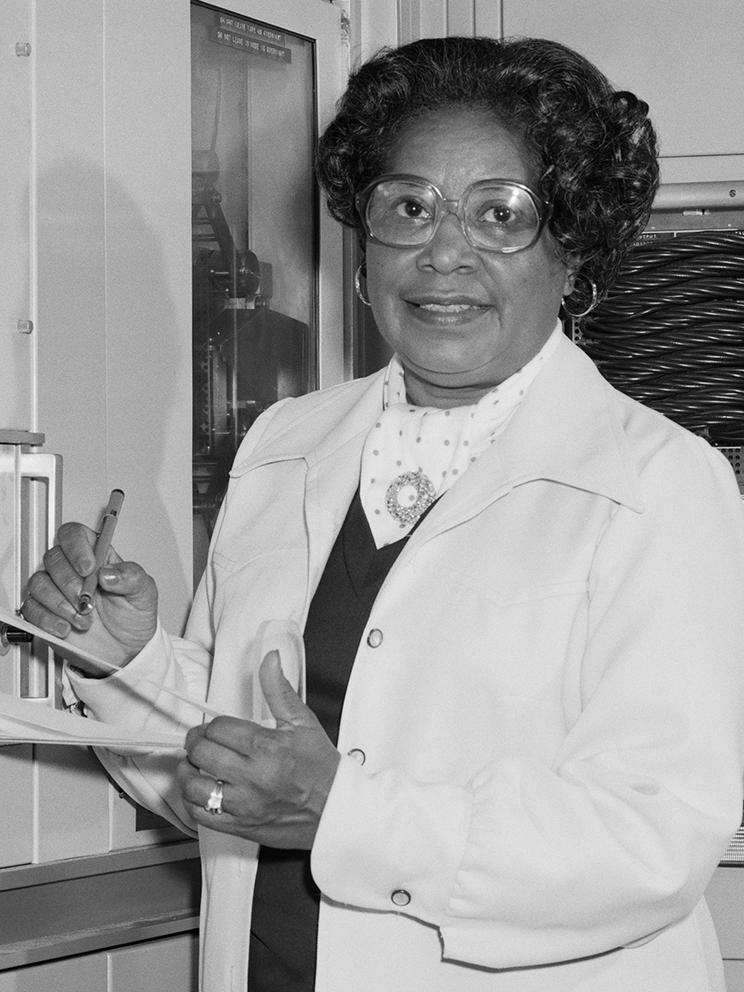
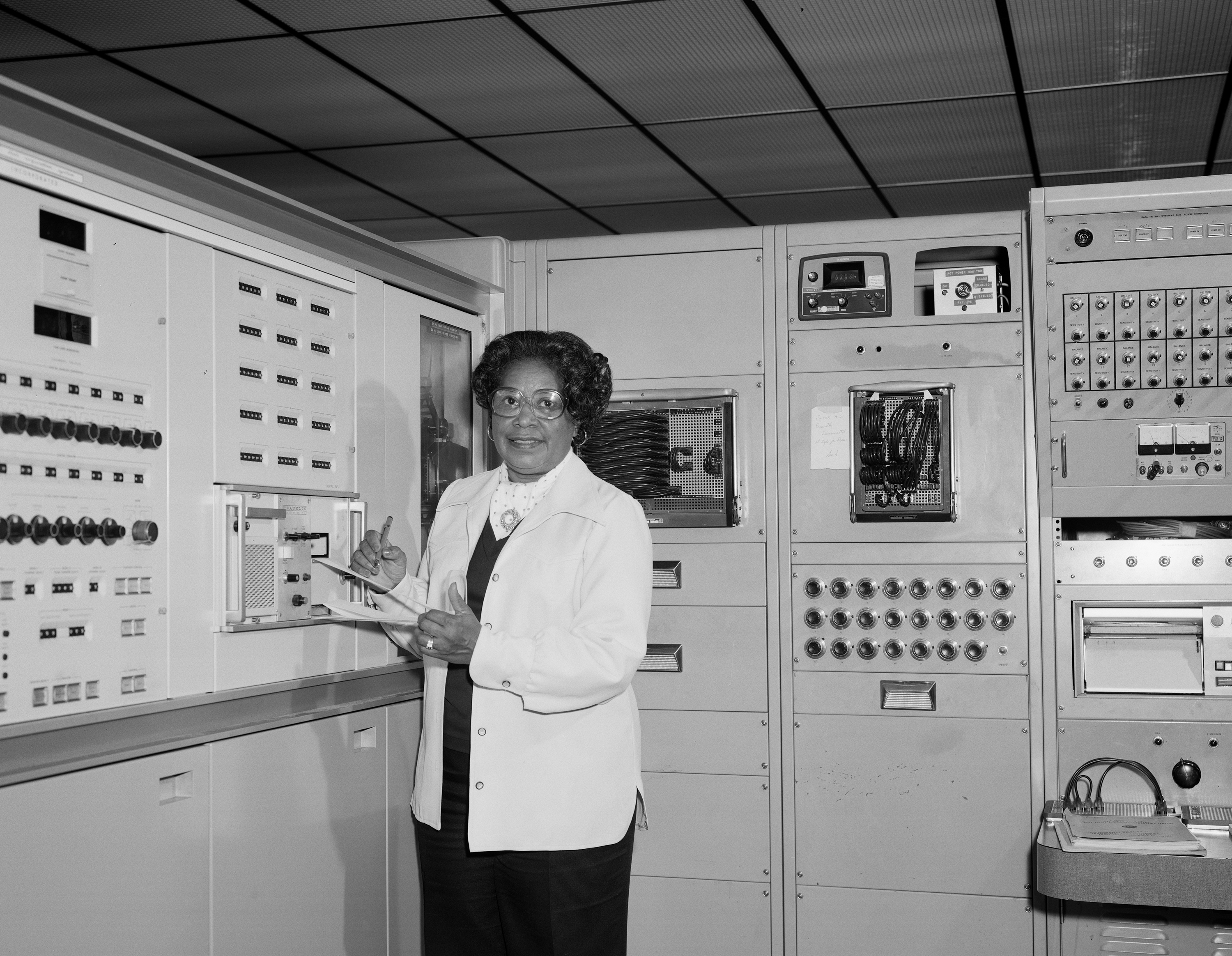
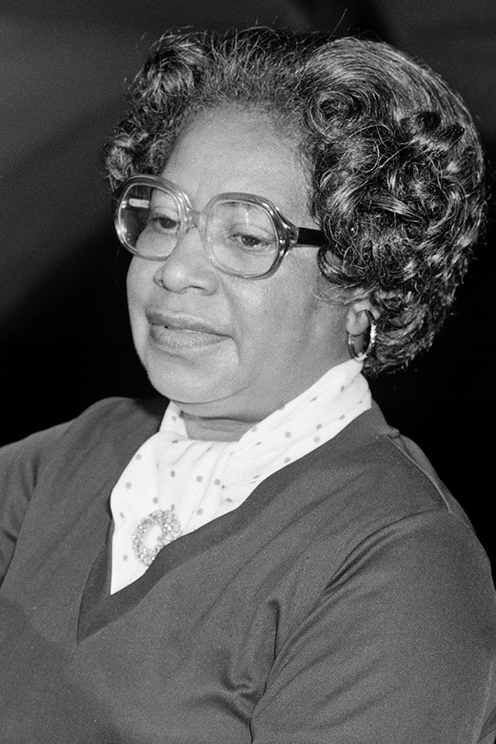
Mary Winston Jackson was an African American mathematician and aerospace engineer at the National Advisory Committee for Aeronautics (NACA), which in 1958 was succeeded by the National Aeronautics and Space Administration (NASA). She worked at Langley Research Center in Hampton, Virginia, for most of her career. She started as a Human Computer at the segregated West Area Computing division. She took advanced engineering classes and in 1958 became NASA’s first black female engineer.

She was born on April 9, 1921, to Ella (nee Scott) and Frank Winston. She grew up in Hampton, Virginia, where she graduated from the all-black George P. Phenix Training School with highest honors. She earned her bachelor’s degrees in Mathematics and Physical Science from Hampton Institute in 1942. She was a member of the Alpha Kappa Alpha , the first sorority founded by and for African-American women.

Jackson served for more than thirty years as a Girl Scout leader. She was noted in the 1970s for helping black children in her community create a miniature wind tunnel for testing airplanes.

Mary Jackson at Work NASA Langley

In 1953, she accepted an offer to work for engineer Kazimierz Czarnecki in the Supersonic Pressure Tunnel. The 4 by 4 foot (1.2 by 1.2 m), 60,000 horsepower (45,000 kW) wind tunnel used to study forces on a model by generating winds at almost twice the speed of sound. Czarnecki encouraged Jackson to undergo training so that she could be promoted to an engineer. She needed to take graduate-level courses in math and physics to qualify for the job. They were offered in a night program by the University of Virginia, held at the all-white Hampton High School. Jackson petitioned the City of Hampton to allow her to attend the classes. After completing the courses, she was promoted to aerospace engineer in 1958, and became NASA’s first black female engineer.She analyzed data from wind tunnel experiments and real-world aircraft flight experiments at the Theoretical Aerodynamics Branch of the Subsonic-Transonic Aerodynamics Division at Langley.Her goal was to understand air flow, including thrust and drag forces, in order to improve United States planes.

After 34 years at NASA, Jackson had earned the most senior engineering title available. She realized she could not earn further promotions without becoming a supervisor. She accepted a demotion to become a manager of both the Federal Women’s Program, in the NASA Office of Equal Opportunity Programs, and of the Affirmative Action Program. In this role, she worked to influence both the hiring and promotion of women in NASA’s science, engineering, and mathematics careers. She ultimately authored or co-authored 12 technical papers for NACA and NASA. She worked to help women and other minorities to advance their careers, including advising them how to study in order to qualify for promotions.

Jackson’s story features in the non-fiction book Hidden Figures: The Story of the African-American Women Who Helped Win the Space Race (2016). She is one of the three protagonists in Hidden Figures, the film adaptation released the same year.

She earned several awards and honors.

Mary Jackson was married with two children. She died on February 11, 2005, at age 83.


While the world focused on the negative effect of Boko Haram in the northeast.  She was compelled to show and tell the virtues of resilience and the collectivist African culture displayed by the refugees. Nelly lived through the surge of Boko Haram;  slept in a house once occupied by the terrorists.

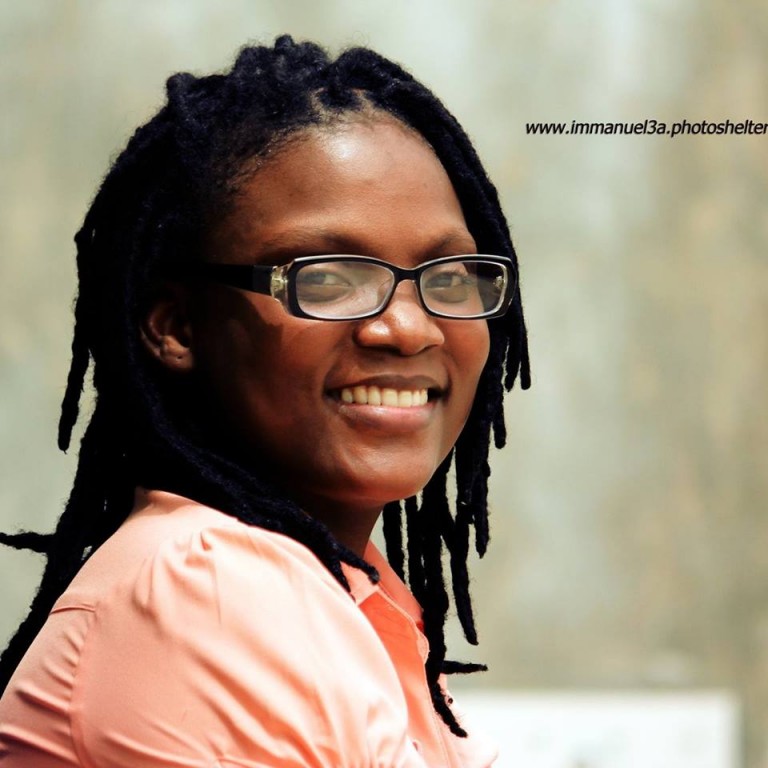
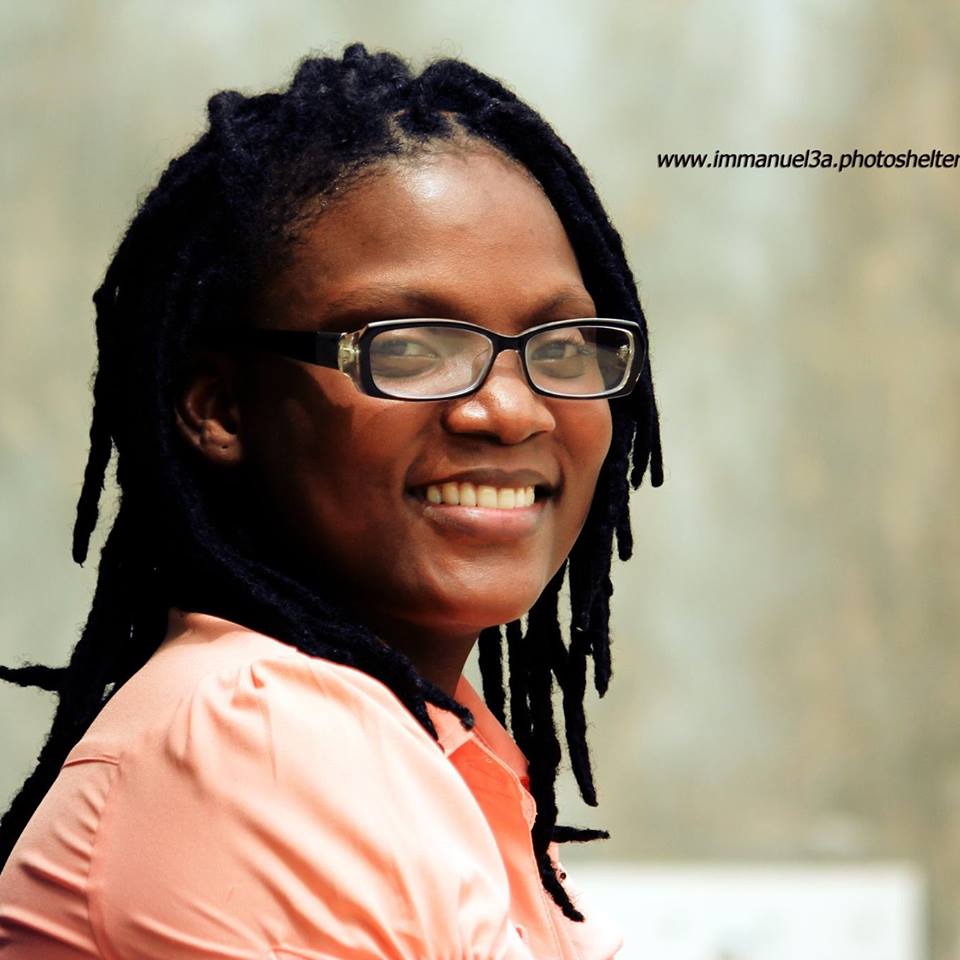
Nelly Ating lives with the story, as a Photojournalist working in these high-risk zones, She h has heard the sounds of the bomb blast; it has become a motivation to tell the positive side and personal stories of survivors. More of putting faces to the personal stories, a show of dignity in humanity, this is why her story is unique. In her words “ I am fearless, something must kill a man”. Nelly shares her inspiring story as a Female Photojournalist documenting liberated Boko Haram Communities


Meet Me

My name is Nelly Ating, I am from Akwa Ibom State, but I like to identify myself first as a Nigerian before any ethnic group or tribe. I am a 28-year-old female Photojournalist based in Yola, Adamawa State. A graduate of Journalism from the American University of Nigeria, Yola.


How the journey started…

I left my job in 2014 as a Video Coordinator in a small Multimedia company based in Port Harcourt to return to Yola. This was at the peak of the insurgency. The drive was stirred from a curiosity of the actual situation on the ground. I came back thinking that from the plane I would be dodging mines, but that wasn’t the case. Life was buzzing only with a strong visible security presence.  Mainstream media had painted the image that the northeast was red zone. Quite well, the insurgency, but we had beautiful stories there were underreported.  Stories such as a ‘Peace model ‘ used in addressing violent extremism that no one was thinking about. A university using research drawn from community development projects to approach resolution in a volatile zone. This was not in the news,  I began documenting all the University activities.

Most of my images that are viral now were taken in 2014 as they were no actual people who were reluctant to visit.  The peace model had given us stories such of how people were thriving on soccer to bring unity between two religious groups. Churches that opened up their cathedral to feed refugees. Muslim prayers were said in church cathedrals and same with Christian prayers. Instantly, I knew history was set and these stories would be needed.

Full nature of my job

My job as a photojournalist is a risky one as right now I am considering visiting Sambisa and this is a plea to Nigerian Army to allow us to tell the stories of the war from both the people and the military perspective. But however, something must kill a man so I am not afraid.

Challenge

My worst challenge was having a congestive cardiac failure last year from pursuing this route in life. And coming face to face with a live IED in Michika local government area or listening to bombs go off few miles from Madagali while people went on with their normal activities.
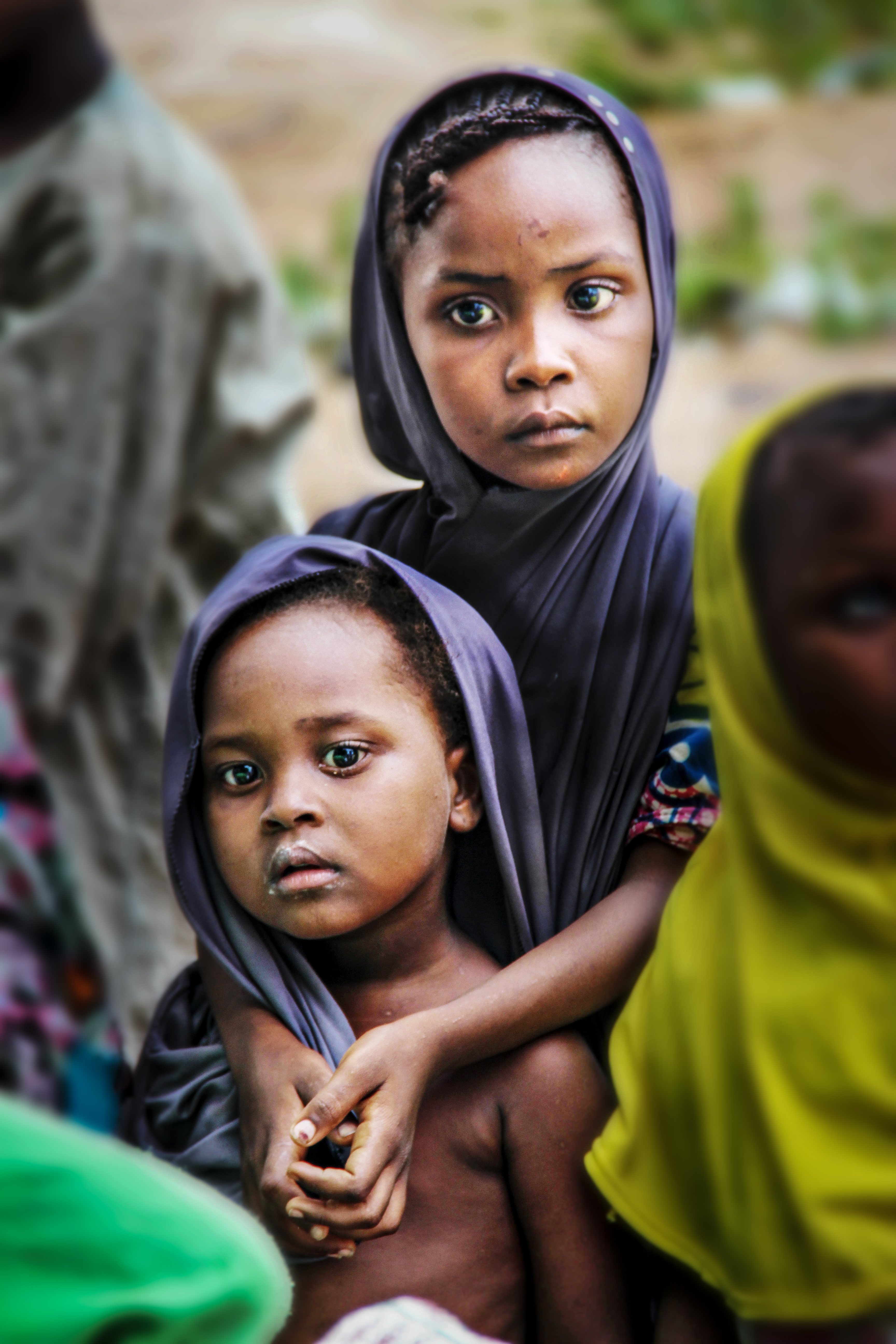
Fearless Nelly!

I have heard the sounds of the bomb blast; it has become a motivation to tell the positive side and personal stories of survivors. More of putting faces to the personal stories, a show of dignity in humanity.  Just like three days before September 11, 2015, Malkhoi IDP bomb blast in Yola, I had accompanied some university students who went to mark World Literacy Day with the refugee children. Last year, I was diagnosed with Tuberculosis and Congestive Cardiac Failure (CCF) which was traced to my constant visit to various concentration camps. None of the above deters me, I woke up from being bedridden for nine months to host a photo exhibition in honor of those lost their lives, the INGO who have worked tirelessly to relief the suffering of the refugees.

The world has a lot to learn from the tales of Boko Haram insurgency which started like a joke until millions of Nigerians in the Northeast became internally displaced suffering from hunger, trauma, and deprivation.

This war will fade, but in managing conflict/peace resolution, history must be revisited, our children must learn, unlearn, and relearn from the mistakes of our government. The path of war lives trails that last forever, especially in the minds of children who are the most affected as their education and future are cut short. Exactly why we shouldn’t take the growing Biafran agitation for granted, the effect of war is pain and trauma.


Social Media as a tool

I have been able to use social media to keep pushing this work out there, of which has proven a success. Last year, I hosted an exhibition themed “The Refugee’s Prayer” in honour of the victims who died. Monies generated were use to support eight Boko Haram orphans residing in Yola, Adamawa State through completing their Junior Secondary Education  (Grade 7-9). The campaigns were mostly on social media and the reviews were positive. Recently, another generous Nigerian has decided to support more children in Michika local government area, Adamawa State.


Greatest reward

I have eight children who are victims of this war in school. One is very dear to me, his name is Mahmoud. He was captured by the insurgents for few days and has lost contact with his family. He was a truck-pusher in the market hustling for N150 daily to survive. With help of friends from Facebook we bought Mahmoud, school supplies and paid in full school fees from Jss1-3. And, recently I had a couple from Lagos sent money to a Pastor who is harboring orphans and supporting Boko Haram widow in Michika. I also link NGO’s with direct help through my images and stories.


I once slept in a house full of terrorists…

I went to Michika for an assignment and spent a night in this house that was occupied by Boko Haram when they had seized that town in 2014. I listened to the widow who owned the house tell me the things she discovered in her house when she returned right after the military liberated that community. She said they had changed her toilet from the water system to pit toilet. Stole her China wares and generator.

The house was so dirty, the left behind sanitary towels. It was eye opening to discover that they terrorists move with their own families in groups when they seize towns. But honestly sleeping with such information in that house, I felt hunted.
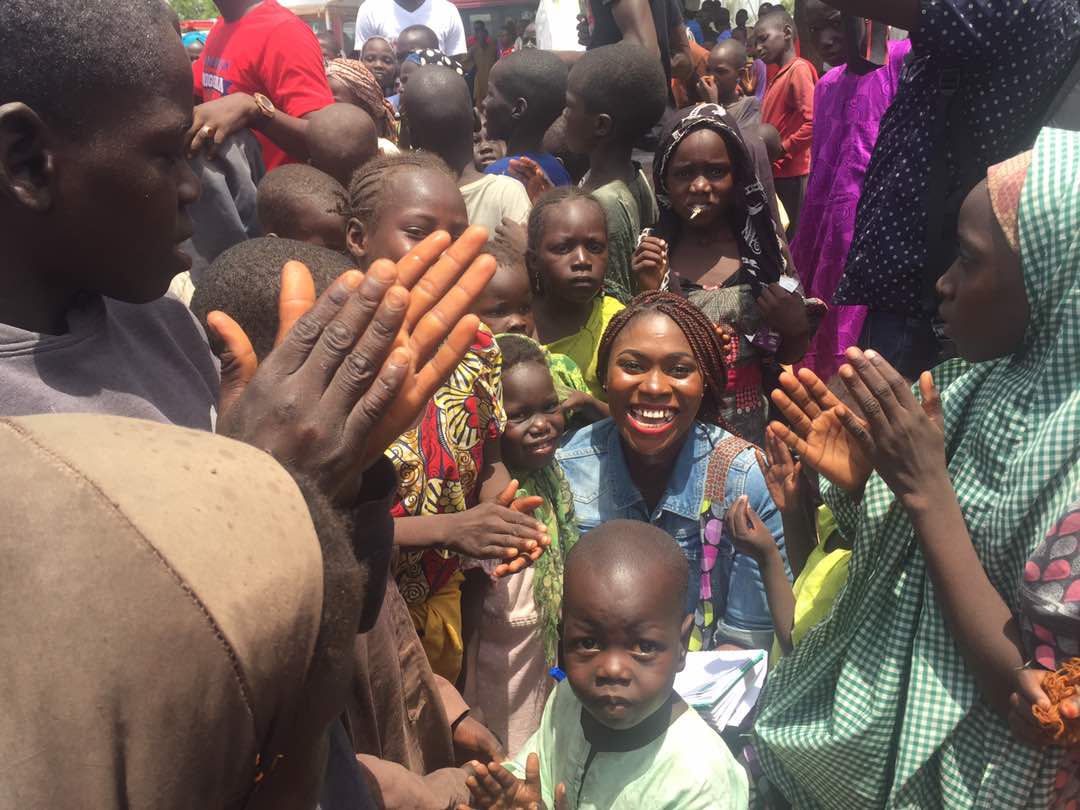
Life in bomb blast IDP camps

The government in conjunction with the international NGO’s are doing a lot to support the IDPs, though there is more to be done, the situation is much better compared to 2014 when some IDPs would prefer to live in the host community than living in the camps. Although, some IDPs have started going back home, especially those from communities that have been liberated.

Greatest fear?

Nothing, I would have said failure. I have failed so many times that I see it as a step to success.

Inspiration

I am inspired by these IDPs who are living despite what they have gone through. To understand the true meaning of happiness, one should listen to these people’s stories and watch them live life. It is called resilience. Then, of course, knowing that you were called to serve humanity.

My Philosophy

My philosophy is not just capturing these faces, but as a creative artist, development impact to the community through photography is my motivation. With my camera, I am creating impact one picture at a time.

Final words to the government and well-meaning Nigerians

We have more people in need of help, you can help a widow by adopting a child. It is a lot easier to be a widow in the south than in the North which has a religious and cultural undertone stigma. They have to work twice as hard to support their families. Most of them have assumed heads of household responsibility; a reality they were not prepared for. We also have young girls who were forcefully married to Boko Haram soldiers. They need rehabilitation, they complain of being stigmatized. Then instead of NGO’s supporting just farming, can we train young people who are interested in Suya making on how to make package Kilishi etc. Let’s find ancient trades that the northerners have been practicing and teach them how to grow that business. Did you know that Mubi has an International Cattle Market? We need to think of leveraging the opportunities here to create employment for youths instead of giving them just food. Lets, go to financial literacy training and break it down to the street food seller etc.

I Am a Woman of Rubies

Oh, being a woman who is fearless!  The humility to accept challenges and learn daily.

Final word for women all over the world

Go to the world and do exploit! We are in no competition with men. Our world is gearing towards artificial intelligence, especially as African women, we need to set the pace for the next generation women to grow! The best resources Nigeria has, is not in its mineral resources, but the PEOPLE. I am challenging a generation of women to fill in most of those spots.
CAROLYN SEAMAN

A female techy who is using technology to empower girls through her Girls VoicesInitiative. The organization empowers girls to use digital literacy skills, journalistic and advocacy skills to make positive impacts in their communities in Nigeria.


DAMILOLA ANWO-ADE

Founded CodeIT, a platform that mentors the next generation of coders, including young women.


OLAMIDE AYENI-BABJIDE

A computer engineer who founded Pearl recycling – an initiative that aims to redefine local production from upcycled waste and increase internally generated income through waste upcycling.”

IJEOMA VINCENT-AKPU


PETRA NNAMANI

A lecturer in the Department of Pharmaceutics, University of Nigeria, Nsukka.


credit: misstechy.com

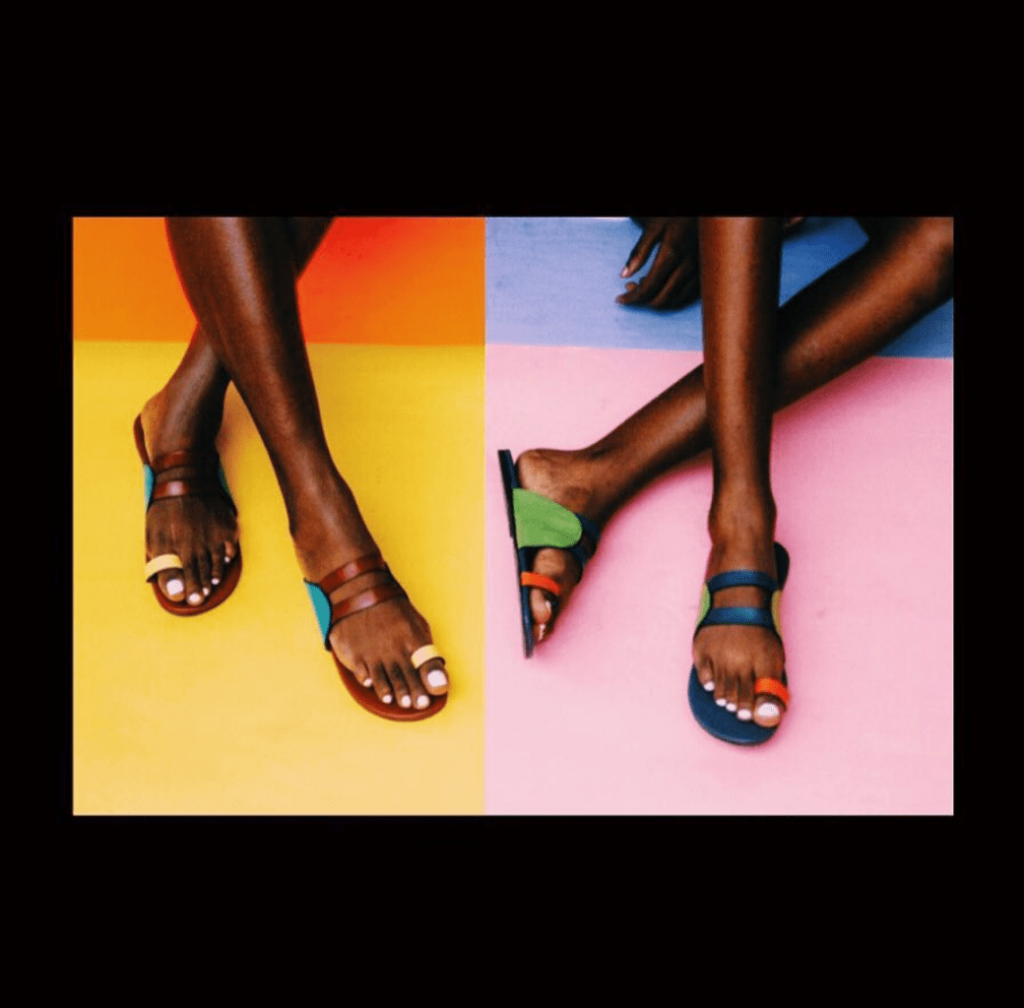
Ginika Okafor is a lawyer, art lover and a Motherland Mogul showing that young Nigerians can wear #MadeinNigeria with pride. In between trying new foods, visiting new countries and experiencing their culture, Ginika designs and creates footwear. Her brand Yili is fun, colourful and Nigerian-made.


Read her exclusive interview with She Leads Africa;

Why did you decide to start Yili

I love colours. I like to be surrounded by bursts of colours and as a result I infuse a lot of colours in my everyday outfits and surroundings. With this in mind, I started Yili because I wanted Nigerian-made and sourced footwear, which infuses bursts of colours in its aesthetics.

Furthermore, I notice colours have positive effects on moods and I wanted to create colourful products that are uplifting in every way. This is why you find most of Yili slippers are combinations of different bright colours.

Also, there is an option for customers to choose the particular materials and colours that will go with our existing designs. This makes each footwear more personal, unique and more meaningful to each customer.

How have you (or do you) overcome challenges that your business faces?

One of the many obstacles I faced so far is the sourcing for materials locally. We get our leather from the local markets, and what is available this week may be sold out the next. I overcome this struggle by widening my local contacts.

This means I travel across Nigeria in search of good local manufacturers selling quality materials. This also affords me the opportunity to see different parts of country and to better understand the culture and everyday living experience of many Nigerians.

Also, due to the exchange rate crisis, the prices of a lot of our raw materials have increased in price thereby forcing us to increase our prices. In this forex instance, I can’t really do much but hope the price of forex comes down. All in all, I have learnt to continue to push through in spite of various obstacles. #andyetshepersisted.

Can you share the process of sourcing for materials as a 100% made in Nigeria brand?

Our products contain different materials from leather to adire to calico etc. What many people don’t know is different parts of the country specialise in different goods/material. Take

ake adire for instance. The best adires are found in Abeokuta. So, when I’m buying my adire I don’t buy it Lagos; I travel to Abeokuta, speak with different families and vendors that have produced adire for decades. I learn from them on what is new, how they come up with new designs and so on.

This applies to all the materials we use. Sourcing for local materials have taken me to very, very interesting parts of Nigeria and I hope to tell the different but amazing stories in a memoir one day.

Where do you see Yili in the next two years?
Expanding. This expansion includes opening a local manufacturing plant, having our own standalone stores in in Lagos, Abuja, Port Harcourt and Kano as well as in three African countries.

We would like to partner with various independent retailers to stock our products. However, we want to ensure that whichever store we stock in must understand the ethos and vision of the brandAlso, we want customers to be able to order Yilifootwear from our website and have it delivered anywhere in the world.

What do you think is necessary to take Yili to the next level?

We need funding. Expanding the business requires a lot of money we don’t have now even though we are open to investors. Also, we believe having a e-commerce website will not only give the brand the visibility it need but it will improve accessibility too.

We are currently working on our website, once that is up and running anyone can order Yilifootwear and we be shipped worldwide, thereby expanding the brand presence globally.

What’s your favourite Yili footwear design?

The Max slippers because I named it after my eldest sister who has been a huge support and inspiration in my life. #loveyouMaks

What three words describe being a young female entrepreneur in Lagos today?

Being an entrepreneur is no child’s play in Lagos. It is a wilderness out here and every day is the survival of the fittest.

That said, being an entrepreneur (especially a female entrepreneur) can be described thusly

  • Perseverance
  • Hardworking
  • Hopeful


Source: She Leads Africa; sheleadsafrica.org

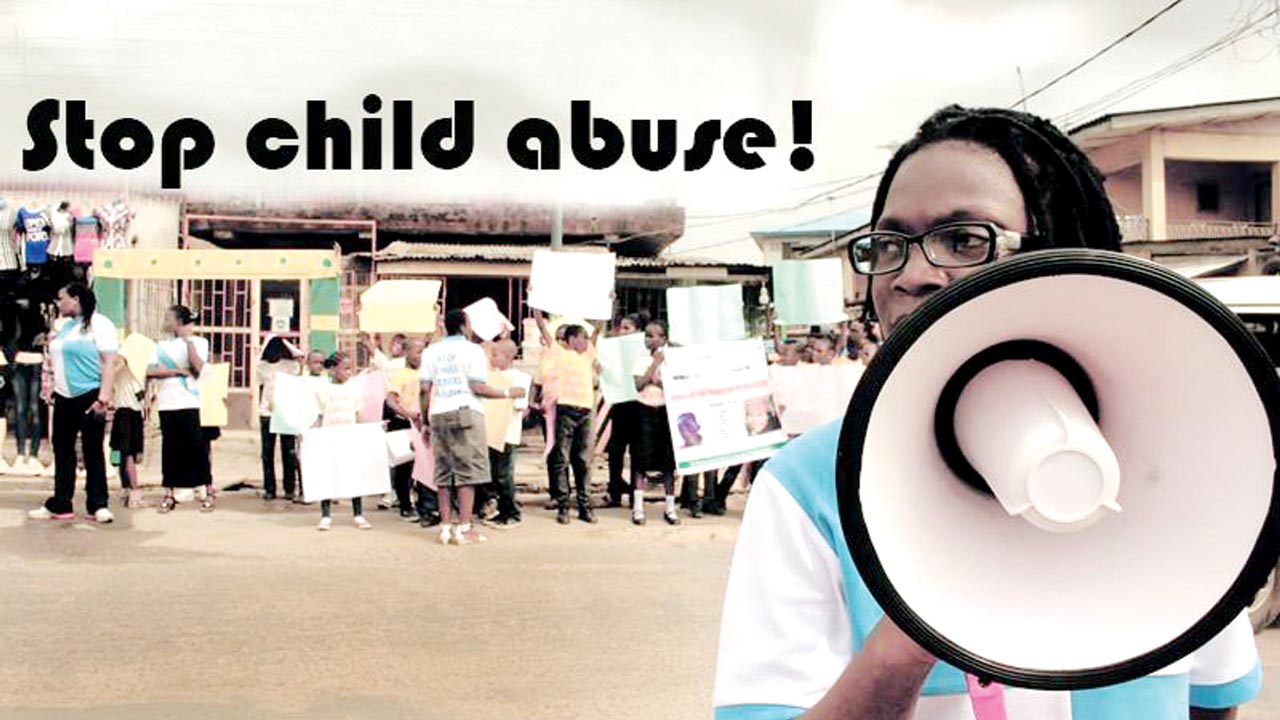
Bukola Afolabi Ogunyeye is the Executive Director and Founder of Morna International Children’s Foundation (MICF). She studied Marketing at the Federal Polytechnic Ilaro, Ogun State. She also has a Master’s degree from the University Of Calabar. A Child’s Rights activist, and member of National Children’s Advocacy Centre Huntsville, USA, she was sexually abused at the age of seven by a family friend, but she only broke silence after 25 years. Bukola shares with us her life experiences, tale of survival and the inspiration behind her initiative.

Childhood
I was sexually abused at age seven. I remember vividly how a man
(known to my family), who couldn’t have been less than 40 years called
me into his office, made me sit on his laps and he fingered me. I was
so scared and ashamed. I remember asking him to let me go. Then he
stood, walked towards the door to his office and told me he would shut
the door and I wouldn’t be able to do anything. I stood there very
afraid, but he eventually let me go. I never told anyone what he tried
to do to me. I remember it took me about 25 years before I could talk
about it to a very close friend.

Touching a child’s private part(s) is sexual abuse. It is not only
when penetration happened that we say a child has been sexually
abused. Nobody has the right to touch a child’s private parts. They
are private to a child. I also started touching myself afterwards into
adulthood. It was later I discovered that the childhood experience was
responsible for it.

All about me
I am Bukola Afolabi Ogunyeye, the Executive Director and Founder of
(MICF). I am a native of Ibonwon in Eredo local government area of
Lagos State. I’m a businesswoman, an author and was formerly a banker.
I also have a passion for women issues, which has been there since my
childhood. It’s so obvious that women are being maligned in this part
of the world; hence I am an advocate of gender equality. My hobbies
are reading and listening to music. My best food is rice and plantain.

Inspiration behind Morna International Children’s Foundation
I have always wanted to work with children, orphans and destitute. I
never knew I would start, when I did, as I thought I would wait till I
was well advanced in age. But as fate would have it, I started earlier
than planned. I believe for a better Nigeria and the world at large,
we must focus on children. My vision is to build a world, where
children are respected and protected from any form of abuse.
Project and activities

Two years ago, Morna International Children’s Foundation (MICF) got
its certificate of incorporation from Corporate Affairs Commission of
Federal Republic of Nigeria. In the past two years, we have reached
out to over 60 nursery, primary and secondary schools within and
outside our community. We have also attended numerous P.T.A meetings,
where we talked to parents on prevention of Child Sexual Abuse.

We take our campaigns to churches, as well as Arabic schools and are
actively engrossed in rallies to further spread our message on child
abuse. We also tell children about their rights. We empower them with
the knowledge of their fundamental human rights. We have participated
in international programmes, such as International Day of the
girl-child, 19 days of Activism towards World Day for prevention of
Child Abuse. The Child Abuse awareness month, which is April, has
taken us to the market community for our campaign.

War against Child Abuse
This is a project, which we just want to start. We want to start a
quarterly aggressive campaign against Child Abuse in our community,
beyond which we will spread across every state in Nigeria.

Never felt like giving up
I have never felt like giving up. This is because, when I set out to
do something, I keep going, no matter what. I hardly get discouraged
over anything; talk less of something I have a passion for. Whatever I
get discouraged at, there is most likely no other way out of such a
thing. I can never give up on this cause. However, I make sure I do
away with negative people, who try to discourage me directly or
indirectly.

Positive feedbacks
This question is very difficult for me to answer because this work is
more about giving and not expecting any form of reward. I mean that
you are not focused on reward, but the work. However, I can say that
my reward comes in the form of encouragement and positive words. I
also receive phone calls from people I don’t know, thanking me
tremendously for the campaigns we do in schools, and rallies. In other
words, whenever I get feedback, most especially from people I don’t
know or people that recognise me from events, where I spoke and I hear
their remarks, I am always encouraged. These kinds of reactions are
priceless to me. These are what I consider my reward.

Lack of funds and passionate people
Lack of fund is a major challenge I am facing in this work. It can
exterminate one’s vision, no matter how passionate you are about your
cause. NGOs are not intended for profit making, yet you must spend
money on programmes and you also pay volunteers some stipend. You pay
for office space and bills attached. You pay for running costs. You
just can’t do without money.

Another challenge I am facing is getting passionate people, who are
ready to work without money as their focus. We know we must pay our
staff and volunteers, but that should not be their motivation.

Determination
My advice to anyone wanting to go into any form of business or
humanitarian work is that they should follow their passion vigorously
and be determined to succeed and add value. Determination is very
crucial in whatever one wants to do. Without determination, you will
get discouraged easily. Be determined and make a difference! An
Entrepreneur must also be ready to go the “extra mile” for his or her
clients.

An exceptional Woman of Rubies
I am a very zealous woman, strong-minded, a go-getter and very
focused. I’m a high-flier and I work self-sacrificingly. I can
accomplish anything I want to. I believe I can do what has been
established as impossible! I also try to be a motivator to other
people, young and adults. I am someone, who concentrates on the
positive side of people.

Childhood
I would say my childhood is the bed rock on which my enterprising skills were planted. My mum was a very aggressive trader, and I learnt a lot from her, before she passed on. She had cold rooms, borrow pits, real estates and a sawmill . Being her last baby, I was always with her in her meetings and discussions. I would say I learnt a lot of technics from her negotiating skills.

More about me
I am a mother of 2 kids married to a wonderful husband who stands with me in all I do and is passionate to seeing me achieve the best that I can be.
I am also the last of 7 siblings most of which are career oriented, but the last 2 of the 7 ( my sister and I) are vigorously business minded. Being the two who were always with her in business and otherwise before she passed on, we have followed in her footsteps, but I must say this hasn’t been easy at all indeed has had a very large shoe size that both of us still haven’t been able to fit in. I am determined to become the best version of my self with hopes that I will be remembered for the values and principles that I stand for. I am determined to be a force for positive change in my generation. I am very family oriented and my desire and what I stand for is the family principles taking center stage in all decisions that we make.

More about what I do
I manage a company that produce packaged food at the best price and quality for Nigerians at primary consideration and the world in general.
Although we are profit oriented, at the core of our mission is our social interest or responsibility. We are providing employment for Nigerians, with a target of (100 direct and 300 indirect staffs by 2020). Producing quality food at best prices to Nigerians ( ensuring our prices fits into the disposable expense category of the average Nigerian consumer), become a source for foreign exchange to the Nigerian government with our export proceeds, encourage entrepreneurship by organizing an annual free seminar for food processing and development. I also plan to diversify our revenue base by venturing into other sectors. We have just launched our recycling division recycling different types of plastics for plastic manufacturing companies.

Inspiration behind Arinoch ventures
My late mother’s energetic personality drives me the most. I often make comparison with what she achieved with her short time on earth with how I am faring now.
She wasn’t educated, I am a graduate of economics. She had 7 children and I just have 2. She built several companies ( timber, sawmills, sand mines, fish trading and real estate) well, am still trying to finalise my operating structure were my ownership is separated from management and yes I have big plans like my mother. The thought of her wishing me well keeps me going. Also, my husband is a very aggressive goal getter. He is a go and get it done person, so am grateful he is with me. A lot of his principles guides and inspires me

Greatest reward
My greatest reward is the satisfactory look I get from my customers every time we close a perfect transaction . It’s the best feeling in the world – it’s the feeling of satisfaction. A win- win situation . A feeling that guarantees my future.

Challenges
Finance – we will love to expand faster and have our presence in all the local government in Nigeria. We will love to be present in all the continents in this world.

Projects and activities
We are currently producing plantain chips of different flavors. We want to make biscuits and cheese balls. We just started our recycling business in plastics. We are also planning for metals and wood recycling. We will be starting our real estate business soon also.

On giving up
Well in business there are ups and downs. To be sincere, I have lost count on how times I have often felt like giving up, but the Lord is our strength when it comes to business and challenges in Nigeria but we owe it to this generation not to give up and to build a structure on which the future generation will build on.

Are Nigerians benevolent enough?
Yes , I will say the average Nigerian is supportive and encouraging, but the Nigerian Government often acts as enemies to their tax payers

Who and what inspire me
There are lots of people I look up to but one often stands out…Dr Uche Ogah, the owner and founder of Masters Energy Group .

I am a Woman of Rubies
If your definition is based on values and principles of integrity, passion and vision for the growth and establishment of the woman as an agent of positive change in Nigeria primarily and the world in general. Then I will see myself as a woman of Rubies because that is what I stand for.

Final word for women all over the world
The woman was created as an incubator – to bring thing together, to make things that are in a confused state organized, To bring to life visions and thoughts of man. The woman is unique in every aspect. She is not a toy to be played with, she is to be taken seriously, she is not to be bruised, she is to be maintained. We shouldn’t let ourselves down but stand together as a force for positive change to all generations .

25 year old Moe is a heptathlete and  a graduate of physiotherapy from the Sheffield Hallam University, UK. She was introduced to sports when she was nine-years-old, however, her talents were recognized at 14 by her Physical Education teacher after she moved to the UK.

The beautiful  actress was  was introduced to heptathlon when she joined a local athletics club and made her first competitive debut for Nigeria at the 11th All African Games, which took place in Brazzaville, Republic of the Congo, in 2015. Today Moe Sasegbon is one of the casts of “Wonder Woman,” an American superhero film, which many look forward to seeing this summer. In the movie, Moe plays the character of an Amazon called to fight uninvited German soldiers. Although she appeared in just one scene in the movie, she is part of the success story as reports say that the movie raked in over $600m worldwide.

In a recent interview , Moe explained that her most memorable moment was winning the senior girls high jump competition at the English Schools championships.

Moe says her mom, a self-taught swimmer, who used to be a swimmer for Nigeria and ultimately trained herself to become one of the best swimmers in the country is her hero. Moe will reportedly have a prominent role in an upcoming movie, “Justice League.


Affiong Williams is the CEO of Reelfruit. ReelFruit is an emerging fruit processing company that is currently introducing a new snack into the Nigerian market; healthy and delicious dried fruit to cater to the growing number of health conscious consumers. It recently launched two new products into the market, and in process to set up processing factory for export of dried fruit.

Affiong has a Post graduate diploma in Business Administration from the University of Witwatersrand, and a BSc in Physiology, Psychology from the same university.

In 2012, she left her job as a manager at Endeavor South Africa, a small business incubator, moved back to Nigeria and founded Reelfruit. She started out from a flat in the Surulere area of Lagos, with $8,000 from savings and loans from friends and family.

ReelFruit produces dried fruit snacks such as Pineapple, Mango, Banana, PaPaya (Paw-Paw), Coconut and Fruit & Nut Mix with Cashews for the health-conscious Nigerian, and in 2016 alone, it sold 500,000 packs of snacks.

The products can be found in more than 80 outlets across Nigeria.

In September 2013, ReelFruit was placed first out of 700 applicants for Women in Business Challenge organised by BidNetowrk, Netherlands. The company won the 5000 Euro prize.

Three months later, it won Creative Focus Africa’s SME competition for businesses in Lagos.

She was named in Forbes Africa 2016 list of “30 under 30 African Entrepreneurs” who are the “billionaires of tomorrow who will create jobs and wealth for the continent.”

During an interview with Africa news.com, she said;

“Well, I was actually attracted to the sector for a number of reasons. Firstly, I believe there is untapped opportunity in processing and value addition of raw materials and I also believe it’s a very budding sector, there is a lot of opportunity as well as the job creation which I think is quite important to me as an entrepreneur”

Alexa Canady is a retired American medical doctor specializing in Neurosurgery. She was born in Lansing, Michigan, on November 7, 1950. She and her younger brother were raised outside of Lansing and were the only two African-American students in their school. They faced many obstacles throughout their school years. However, despite these obstacles, Canady stood out among her peers academically, both in the classroom and by earning high scores on her tests in school.

She later received her M.D. with cum laude honors from the University of Michigan Medical School in 1975. She became a surgical intern at the Yale-New Haven Hospital from 1975-1976, rotating under Dr. William F. Collins. Although being an exceptional student, she still faced prejudice and discriminative comments as she was both the first black and female intern in the program. She then became the first African American woman neurosurgery resident in the US at the University of Minnesota. Despite what people said about her, Canady viewed her accomplishments as something both women and African Americans could look up to.

She became Chief of Neurosurgery at the Children’s Hospital of Michigan in 1987 and held the position until her retirement in 2001. During her time as Chief, she specialized in congenital spinal abnormalities, hydrocephalus, trauma and brain tumors. Her work and accomplishments have opened the door for many surgeons to be of all races and genders.

Alexa Canady later received her M.D. with cum laude honors from the University of Michigan Medical School in 1975. She then became a surgical intern at the Yale-New Haven Hospital from 1975-1976, rotating under Dr. William F. Collins. Although being an exceptional student, she still faced prejudice and discriminative comments as she was both the first black and female intern in the program. She then became the first African American woman neurosurgery resident in the US at the University of Minnesota. Despite what people said about her, Canady viewed her accomplishments as something both women and African Americans could look up to.

She has also been awarded three honorary degrees – doctor of humane letters honorary degrees from the University of Detroit-Mercy in 1997 and Roosevelt University in 2014, and a doctor of science from the University of Southern Connecticut in 1999.

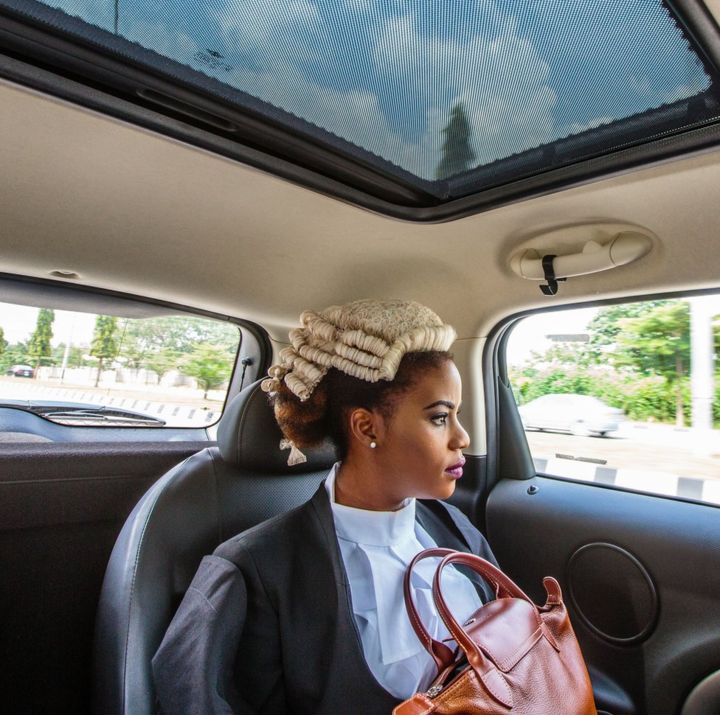
R. Evon Benson-Idahosa is the eldest daughter of Archbishops Margaret and Benson Idahosa. She is the Founder and Executive Director of Pathfinders Justice Initiative, Inc, an International NGO which seeks to eradicate sex trafficking and rape in the developing world. She is a trained English Barrister and an American lawyer who worked as a partner in a national defense law firm in New York for over a decade before venturing full time into activism on behalf of women and girls. As a native of a developing nation (Nigeria), Ms. Benson-Idahosa is particularly passionate about addressing the shrouded issues of sex trafficking (modern day slavery) and gender based violence in the developing world because of her compelling commitment to the liberation of women in developing countries. As an activist, her passion and compassion are geared towards developing a generation of women who stand confident in who they are, what they bring to the table and what they can achieve. She is a firm believer that if you can empower a woman and engage men as allies for gender justice, you can change any society. She shares her story and the inspiration behind her work in this interview.

Childhood Influence

I would not be who I am today or move through the world the way I do without having been born into the family I was born into.  I grew up with parents (Archbishops Margaret and Benson Idahosa) who taught me that one’s life was not fully realized unless it was grounded in the service and upliftment of others.  I saw my parents move through their lives with both compassion and activism- it was what fueled their existence.  Although neither formally referred to themselves as “activists,” that is precisely what they were/are.  They stood against injustice and taught me that God’s justice requires that we affirm the image of God in every man and women, regardless of their social class and status.  Traveling with them around the world was also a gift that informed my worldview because it allowed me to see the gross disparity among racial and social classes and even as a child, the subjugation of women and girls troubled me.  I also went to boarding school in Jos when I was nine and that forced me to become an independent thinker who was able to make decisions on my own at an early age.  So yes, my childhood certainly influenced and prepared me for what I do today.  In fact, it was my father that nicknamed me “Pathfinder” when I was nine.  When I started to consider a name for my NGO, God brought it back to remembrance, not only because it is who I was prophetically named, but also because it is what we endeavor to do for women and girls, i.e., to help them find their paths out of abuse and injustice.  I think that is the general expectation, i.e., that because of our family background, all the Idahosa children would end up in full time “ministry.”   But what exactly is ministry?  When I think of the word, the word “service” is what immediately springs to mind.  So I may not be on a pulpit every Sunday, but I endeavour and am honored to serve the marginalized women and girls that we are fortunate enough to meet.

“Pathfinders.”

Pathfinders is an international NGO (www.pathfindersji.org) which seeks to eradicate sex trafficking and rape in the developing world through empowerment, judicial reform and community transformation.  We focus our time and resources on prevention, sensitization and raising awareness on the implications of these atrocities.  Our primary method of prevention is the empowerment of young women and girls who are most vulnerable to sex trafficking (via our #Not4Sale Campaign, vocational skills training, education scholarships and startup business training and funding) and rape (via our #TakeMeOffMute Total Self Defense Programs).  We also sensitize the public via our public service announcements and utilize workshops and outreaches (in schools, markets, religious organizations, etc.) to raise awareness on the implications of sex trafficking and rape. Via our PATH (Personalized Action to Healing) Plans, we provide rehabilitation for survivors of rape and sex trafficking, particularly women and girls who were trafficked from Nigeria into Europe and have repatriated. These survivor-curated Plans include anything from free medical, legal and counseling services to vocational skills training, housing, education scholarships and start up business training and funding. We recently launched our safehouse in Edo State called “The Anchor” to provide shelter for up to 24 survivors which will be fully operational by Summer 2017.

Reason for choosing Activism and Advocacy

Well, I would actually say that it chose me.  And what I mean by that is that it is what I have been called to do, i.e., to amplify the voices of women and girls.  Prior to working full time in this area, I practiced law for over a decade in corporate America and successfully defended other lawyers as a partner in a prestigious New York firm.  However, I always knew that it wasn’t what I would spend the rest of my life doing.  And so there came a time when I had to choose between financial success and significance.  I had to decide whether I would step out in faith to do what I knew was my life’s work or whether I would sit comfortably in the arms of a corner office that offered me what most people would define as success.  People often tell me that it took courage to choose the former, but as anyone who is called to a work will tell you, not yielding to that calling requires  turning your back on an unrelenting fire within yourself.  For me, it was not an option.  I had a compelling sense of urgency to move and I have absolutely no regrets.

Challenges

Well, I am fortunate to have the foundation that was built by my parents and continues to be built by my mother, Her Grace, Archbishop Margaret Benson-Idahosa.  Interestingly enough, because all my world-changing siblings are also involved in some form of service, our work overlaps and serves to support each other.  As such, I recognize that in many ways, I had a head start that many other young organizations have not been afforded.  I am grateful.  This, however, doesn’t mean that there aren’t challenges.  There certainly are.  The major challenge is the effort it takes to uproot the mindset of patriarchy that is so deeply embedded in Nigerian society.  It is what perpetuates systemic injustice against women and girls and is what has intentionally rendered that demographic vulnerable.

Project and Activities

In 2018, we will be venturing on a social enterprise which will hire rape and sex trafficking survivors as well as young women who are susceptible to sex trafficking. We intend to make and distribute Nigeria inspired bath and body healing products.  Ultimately, the business will utilize a survivor led model, as each woman who works there will ultimately become a distributor and generate her own business.  It is our way of contributing to and giving back to society by filling some of the economic gap that is causing our women and girls to view prostitution as an alternative to poverty.  We are very excited about the project!

Greatest Reward

Fulfillment.  I am from Edo State, an internationally recognized hub of sex trafficking and certainly the hub of sex trafficking in Nigeria (over 90% of women and girls trafficked into Europe are from there).  As such, sex trafficking is part of our functioning economy and is grossly embedded into our culture.  It has wreaked havoc on the lives of our women and girls who return from overseas in broken pieces.  Without judgment, we reach out to each of them in love and remind them that they are still valuable.  It takes courage to start to put up the walls of a broken dream but in time, that is what they start to do.  I am honored that they welcome us into their truth and allow us to take the journey to shalom and healing with them.  That fulfilment is unparalleled.

Testimonials from Survivors

Our rape survivors who have completed our counseling programs tell us that for the first time in their lives, they feel free and hopeful about their future.

Edo State being a sex trafficking hub and  the Solution

The reality is that the overwhelming majority of women and girls trafficked from Nigeria into Europe are from Edo State (over 90%).  Our research indicates that one in every three young women in the State has been recruited.  Last year, 11,000 women (the majority of who are from Edo) risked their lives to cross the Mediterranean Sea from Libya into Italy alone.  Thousands more were trafficked into other countries.  Globally, sex trafficking is a $100 billion business.  There are many different reasons why Edo State is leading in Nigeria, but the primary factors relate to the toxic combination of poverty, lack of economic opportunities and little to no education.  Sex trafficking is also culturally acceptable in Edo, even though we claim to abhor it.  There has also been a complete desecration of our moral standards which has resulted in trafficking becoming part and parcel of our functioning economy.   Mothers are often the negotiators of contracts with traffickers and it cannot be said (with so much awareness now being raised) that they are unaware of what their daughters will be involved in overseas.  The level of deception, however, is what remains problematic.  Our young girls are told that they will be involved in prostitution but only for a short period of time and that they will then be able to send funds home to support their families.  Enticed by this false hope, they view prostitution as an alternative to poverty and volunteer to be trafficked (over 90% of our survivors).  But once they arrive (if they arrive, because the chances of being murdered for your organs along the way are increasing), the story is very different.  The debt unexplainably balloons to anywhere from $45,000 to $50,000 which has to be repaid back before the woman can obtain her freedom.  Each sexual encounter will only generate about $20, so you can imagine how much abuse a woman’s body has to endure to repay that amount.  The Edo State government, under the leadership of Governor Godwin Obaseki, is committed to eradicating sex trafficking and exploitation and in May of this year, requested that we organize, alongside its Strategic Planning Unit, a human trafficking workshop to address the issue.  It was certainly encouraging to see our Governor and First Lady, reinforce their commitment to eradicating the issue from Edo State. The workshop brought over a hundred stakeholders to the table, including Nigeria’s Special Advisor on Diaspora, Abike Dabiri-Erewa, world renowned women’s activist, Dr. Joe Okei-Odumakin (Chairwoman), and so many others to collectively strategize and make recommendations to the government.

Are  Nigerians are well informed and sensitised on how to treat victims of rape?

We are improving, but are certainly not where we should be.  According to statistics, 1/4 girls and 1/10 boys in Nigeria are survivors of rape.  Based on my experience, I believe the numbers are actually considerably higher since a lot of rapes are unreported and there are many categories that we don’t consider rape (child marriage, same sex rape, marital rape, etc.).  Survivors tell us that they do not trust the legal system to protect them and are afraid to face the stigma that is still very prominent.  As a result, they deal with the pain in silence and it eats at their souls.   A lot more work has to be done to reverse the stigma so that it falls flatly on the perpetrators who are often repeat offenders because there is impunity.  One of the ways we endeavor to raise awareness/increase sensitization is via our #SheSaidNo Campaign which aims to address the way that men (who are the primary perpetrators of rape against women) view and value women.  the end of the story!

The menace of Rape in Nigeria

Rape has been an epidemic in Nigeria for a long time- it’s just that it wasn’t spoken of because people were forced into silence because of the stigma and shame that Nigerian society promotes.  It has persisted for so long that it is now almost endemic in our culture.  It is proliferated both by our antiquated laws and our religions which allow perpetrators to rape with impunity.  So for example, other than in the federal capital, via the new VAPP Law, marital rape has still not been outlawed throughout Nigeria.  Even there, it is only covertly outlawed.

Any Personal Experience?

No, fortunately, I haven’t but I know too many friends (men and women) who have been forced to have rape written into their life stories.  The truth of the matter is that I don’t have to have had a personal experience to be compassionate.  I simply believe in our shared humanity and that, in and of itself, is enough.  The rape of any woman/girl in Nigeria is the rape of a citizen to whom we are all obligated.

Is the Edo State Government  doing enough to curb this menace?

Clearly, states like Lagos are making advancements on the issue of rape, but many others are on its heels, including Edo. In January 2017, our Governor inaugurated a Family Court to exclusively handle matters pertaining to children in civil and criminal matters.  The hope is that the court will expedite prosecutions in child related matters, specifically on those relating to child exploitation and rape.  But simply having these in place is insufficient if there is no enforcement and/or implementation.  Bribes are still being demanded by police officers (as recently as April, in one of our cases) to begin the prosecution of a case against a grandmother.  But we are reporting rogue officers and more people are demanding accountability.  The optimist in me believes that the foregoing, coupled with the commitment of our new Governor who has been proactive, will result in a decline of rape cases in the state.