Women of Rubies

Category

Inspiration

Category

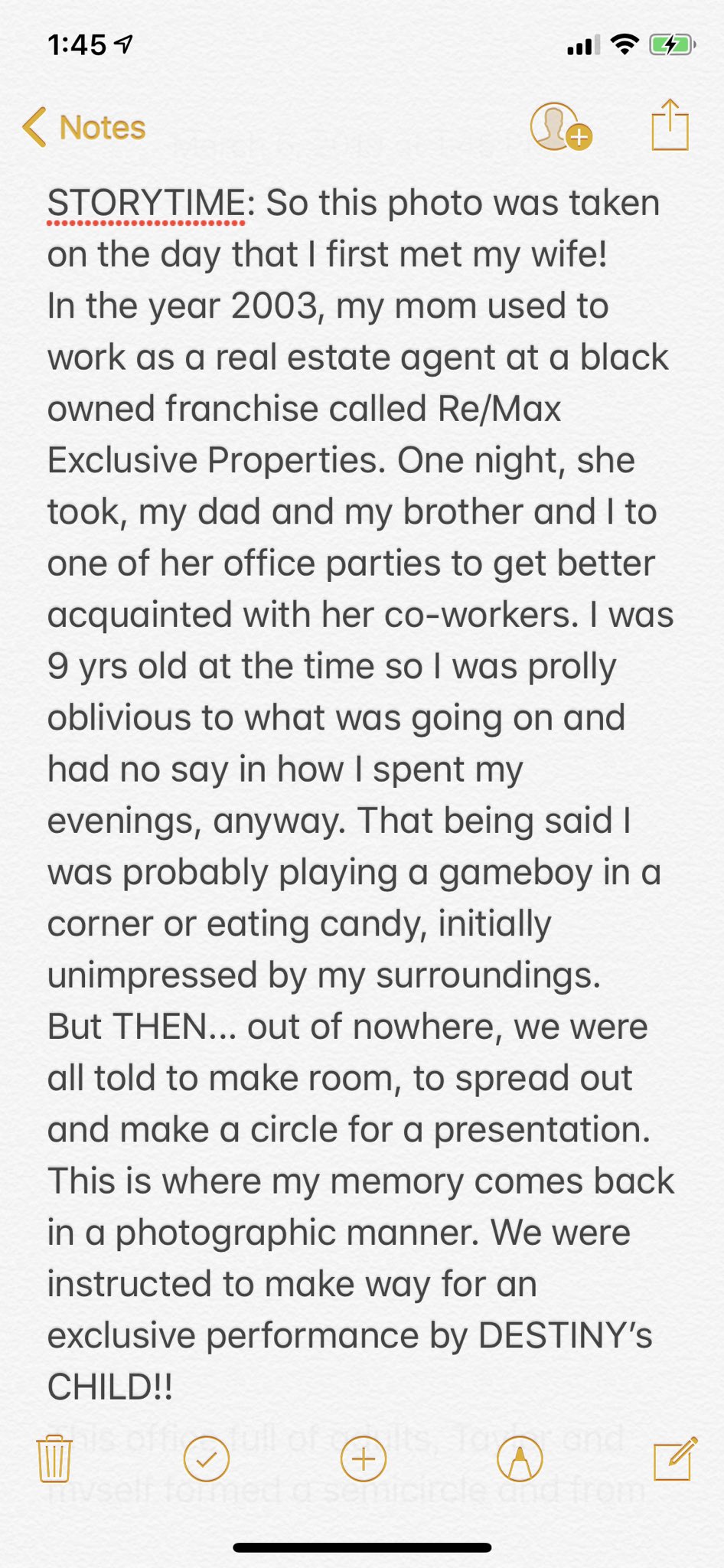
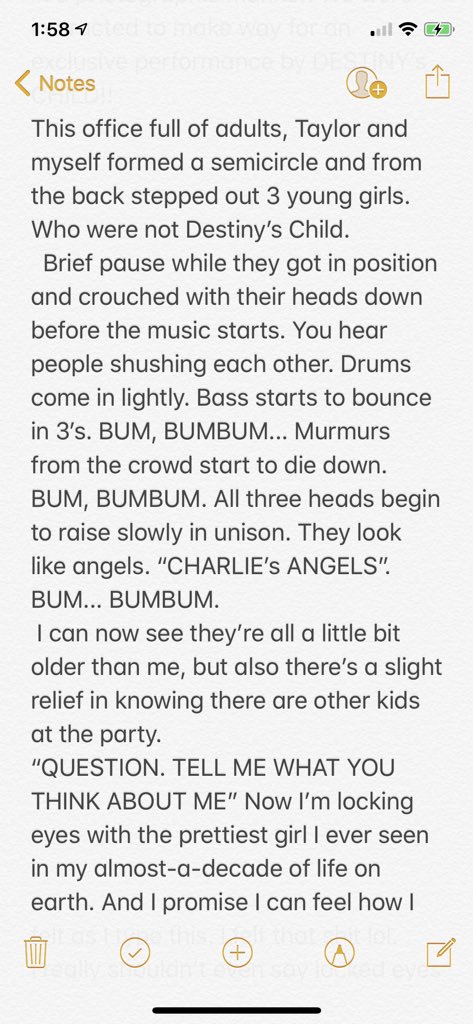
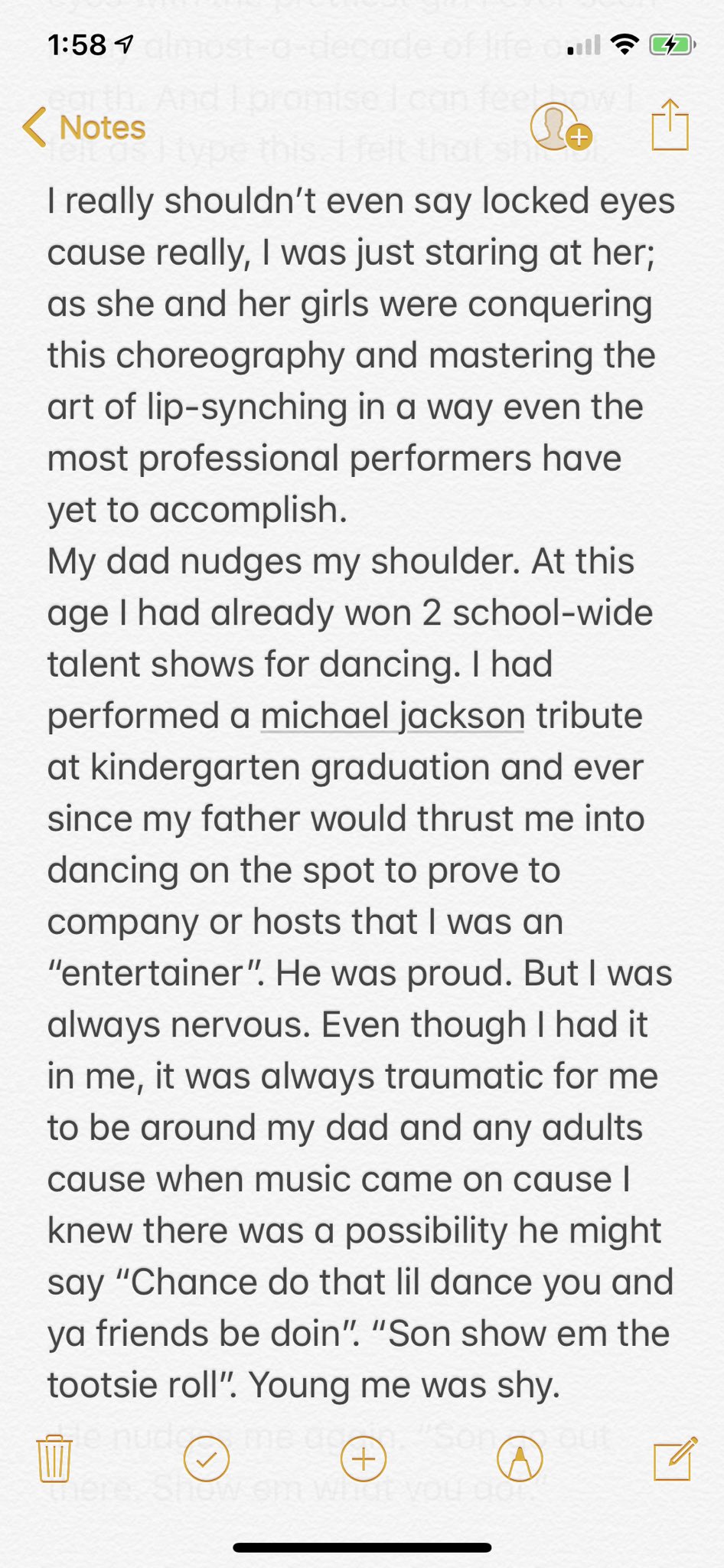
Chance the Rapper and his fiance Kristen Corley are getting married this weekend, and the rapper decided to finally open up about how they met. Starting with a photo of Kristen taken on the day they met in 2003, he tells their 16-year long love story.


Many children are becoming gadget addicts. They are getting so addicted to their phones, laptops, Ipads and play stations that parents should be worried. Children who are addicted to their gadgets lose concentration at school and their grades pay dearly for it. Some gadgets have restricted children’s imagination.

As a parent, you need to help your child or children find the right balance when embracing the real and virtual worlds. Most children’s play-grounds are virtual than real because they are always on their phones. They communicate more with their gadgets and this needs serious parental control.

It is true that technology is informative and entertaining, but it has disadvantages too. Parents need to know how to prevent technology addiction. Too much use of electronic gadgets has negative health effects on children. Too much addiction to gadgets causes rise of musculoskeletal problems in children.

Child gadget addiction needs to be treated firmly. Here are 5 tips for parents who want to digitally detox their children:

ways to prevent your children from being gadget addicts

Involve yourself

This is a very important aspect parents shouldn’t ignore. Even if you are overloaded with work and don’t find quality time to spend with your children, get involved by diverting their attention to other activities.

Parents can avoid having gadget addicts at home by spending quality time with their children. They can play games with them. Ask them questions about school, homework and friends. Don’t allow gadgets replace you in the lives of your children. Take action now.

No use of gadgets at meal time

If you want practical solutions to technology overuse, ban the use of gadgets during meal times in your house. Let your children know that meal time is what it is and shouldn’t be used to browse or play games.

Engage children in sports

Some children addicted to technology do that because they are bored. They can learn swimming, play football and cycle whenever they are bored. They can also go out and play with the other children in your neighborhood. This is how to distract kids from gadgets and divert their attention to real playgrounds.

Set activity time table

You can set time for studies, time to use gadgets, and time for outdoor activities. This is how to de addict kids from phones, laptops and play stations. They may find it hard to adjust but you need to be firm and strict about this. Create more fun-filled activities at home for them to partake in instead of staying glued to their phones and gadgets.

Maintain healthy sleeping routine

One of the ways of managing children’s consumption of electronic devices and preventing addiction to games is maintaining a healthy sleeping routine. Make it a rule for your children not to carry any electronic devices to bed.

Source: Feminine


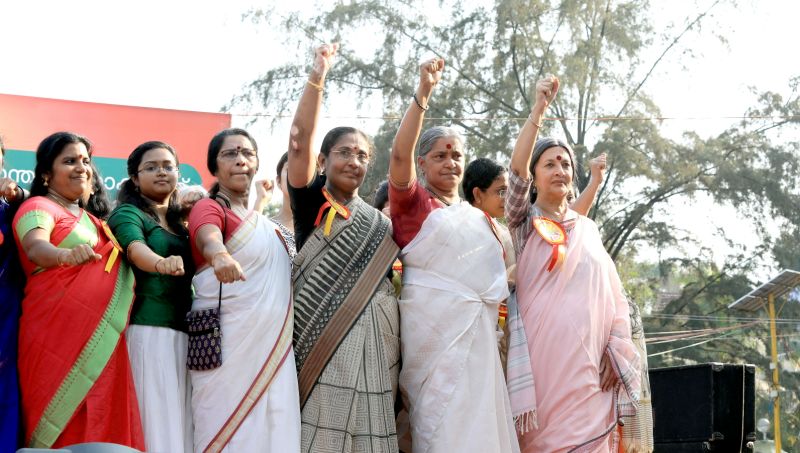
Forming a 385-mile human chain, protestors joined together on Tuesday to build a “women’s wall” stretching across the Indian state of Kerala.

They were fighting for their right to enter the Sabarimala Temple, one of the holiest sites in Hinduism. Last September, the Supreme Court in India overturned a centuries-old rule that banned “menstruating women,” defined as any woman between ages 10 and 50, from entering the temple.


Despite the official ruling, when more than a dozen women tried to enter the sacred site this past fall, violent mobs blocked the trail to the temple. Even the official site for the Sabarimala Temple still reinforces: “Girls who have not yet attained puberty and elderly women who have reached menopause are allowed entry into the temple.”

Spurred by the lack of change, millions of women came together to stand up to those fighting against the updated policy. While organizers initially predicted a turnout of about three million people for the New Years Day event, BBC reports that more than 5 million women—along with men and transgender allies—banned together to stand up for women.

The massive gathering spanned an area nearly double the distance from New York to D.C. In comparison, the 2017 Women’s March — the largest single-day protest in U.S. history — drew about a million protestors.

Politician Jameela Prakasam said of attending the demonstration, “This is for showing the women folk that this is your right.” Trupti Desai, a women’s rights activist, shared a similar sentiment: “It is a victory of the movement of equality and it is a victory of women power.”

“This is a great way of saying how powerful women are, and how we can empower ourselves and help each other,” Kavita Das, a young demonstrator, told the BBC. “Of course, I support the move to allow women of all ages into the temple. I don’t think tradition or any kind of backwardness should stop women.”

https://twitter.com/autumnrainwish/status/1080045762678046720


And their voices were heard. On Wednesday, Bindu Ammini, 40, and Kanaka Durga, 39, made history, becoming the first women to worship at the shrine, according to the BBC.


View this post on Instagram

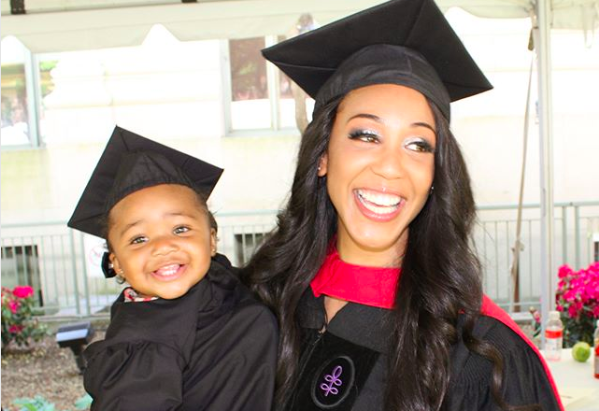
I went into labor in April- during final exam period. I immediately requested an epidural so that my contractions wouldn’t interfere with my Family Law grade. And, with tears in my eyes, I finished it. This “biting the bullet” experience is quite quintessential of my time at Harvard. To say that my last year of law school, with a newborn, and as a single mom was a challenge would be an understatement. Some days I was so mentally and emotionally fatigued that I did not leave my bed. I struggled with reliable childcare. It was not atypical to see me rushing through Wasserstein to the Dean of Students’ office with Evelyn in her carriage, asking DOS can they keep her for a few until class was over. If not, she’d just have to come with me to class. Evie attended classes often. So I’m going to be honest with you guys.. I didnt think I could do it. I did not think that, at 24 years old, as a single mom, I would be able to get through one of the most intellectually rigorous and challenging positions of my life. It was hard. It hurt. Instagram can make peoples’ lives seem seamless, but this journey has been heartwrenching. However, I am happy to say that I DID do it. Today, Evelyn in my arms, with tears streaming down my face, I accepted my Juris Doctor from Harvard Law School. At first, I was the anomaly of my [marginalized] community. Then, as a single mother, I became a statistic. Next, I pray that- for the sake of my baby, I will be an example. Evelyn- they said that because of you I wouldn’t be able to do this. Just know that I did this BECAUSE OF YOU. Thank you for giving me the strength and courage to be invincible. Let’s keep beating all their odds, baby.

A post shared by Briana D. Williams, Esq. (@lovexbriana) on


While most of us who’ve gone to college are familiar with pre-finals procrastination – and the ramen-fueled all-night study sessions that follow – one 24-year-old Harvard Law graduate puts us all to shame

Atlanta native Briana Williams actually went into labor during finals season last year and not only did the single mom finish an exam while actively in labor, but she also successfully graduated this year. Talk about a real-life superhero.

While in labor, Brianna requested an epidural on the spot so she could finish her Family Law exam. “And with tears in my eyes, I finished it,” she confessed on Instagram. In her own words, this “biting the bullet” moment was typical of her Harvard experience.

“A small-town girl from Atlanta,” Brianna Williams is one of six children and the only one in her family to attend college. In a series of heartfelt posts on Instagram, the fresh Harvard graduate opened up about her struggles coming from a low-income family and getting into one the most exclusive and privileged colleges in the world.

Some days I was so mentally and emotionally fatigues that I did not leave my bed… It was hard. It hurt.— Brianna Williams

Although she managed to overcome her “imposter syndrome,” becoming pregnant and then raising a newborn as a single mom during her final year at Harvard brought a new set of huge challenges. “To say that my last year of law school, with a newborn, and as a single mom was a challenge would be an understatement,” Williams confessed.

At first, I was the anomaly of my [marginalized] community. Then, as a single mother, I became a statistic. Next, I pray that for the sake of my baby, I will be an example. Brianna Williams

Detailing her struggles with reliable childcare, Williams spoke of how she’d often ask staff at the dean’s office to watch baby Evelyn while she attended classes, and when that wasn’t an option, she’d go to class with baby in tow.

Many told her she would not be able to do it because of her daughter, but Williams credits Evelyn Willow with her accomplishments.

Now, after working as a waitress and bartender to support herself and successfully graduating from the most rigorous law school in the world, Williams has joined a top law firm in Los Angeles.

Know that I did this BECAUSE OF YOU. Thank you for giving me the strength and courage to be invincible. Let’s keep beating all their odds, baby.— Brianna Williams


Abisoye Ajayi-Akinfolarin is a Nigerian social entrepreneur passionate about quality education in technology and promoting the cause and advancement of vulnerable young girls and women in underserved and underprivileged communities in Nigeria. With her NGO, Pearls Africa, she has the vision of adding at least 20,000 young girls into the technology space by 2020.

A leader, mentor, ICT consultant, women’s right activist, businesswoman and change agent, the graduate of Business Administration from the University of Lagos is the first Nigerian to be featured as a CNN Hero for her passion in teaching young vulnerable girls coding. She has also made the Top 10 CNN Heroes List to be honoured as “CNN Hero of The Year” in December. This year, she joins nine other people the world over, who will receive $10,000 in support of their heroic endeavours. One of the 10 will be chosen as the “CNN Hero of the Year,” and will receive the sum of $100,000.

Speaking about her cause, CNN said: ‘Abisoye Ajayi-Akinfolarin left her career to teach computer programming to girls in Lagos, Nigeria where Facebook and Google opened offices earlier this year. A 2013 survey found that less than eight per cent of Nigerian women are employed in professional, managerial or technology jobs. Ajayi-Akinfolarin hopes to change that statistic.’ The “CNN Heroes: An All-Star Tribute” will air live on Sunday, December 9, where Ajayi-Akinfolarin, along with the other nine heroes, will be celebrated.

In this interview, she speaks with IJEOMA THOMAS-ODIA on her humble beginnings and passion to teach girls coding.

Tell us about your growing up?

I learnt to survive and cater for myself from a very tender age, with the support of my siblings.

My mother passed on when I was four years and it caused us a lot of hardships financially, physically, and emotionally. We were all we had and we supported each other.

As a child, I knew I had to work really hard to succeed and this I did. My brother became my father even as he tried to survive in the university without support from anyone.

After fleeing home, I was adopted by a loving family, who took me in and ensured that I finished my secondary school.

It was a major struggle gaining admission into the university and when I eventually did, I combined it with work in an IT audit company and business in school.

What influenced your passion for teaching disadvantaged girls coding?

After my secondary school, my brother got me an internship at an I.T audit firm. This was where my interest in coding began. I was excited that I could actually develop a skill and earn with it, so I plunged myself into coding.

In a short while, I started earning with my skills and eventually it was with this skill that I paid for my studies at the University of Lagos.

From this experience, I realised that young girls from poor backgrounds and children, who grow up without their parents, go through a lot of challenges and hardships. I termed them “vulnerable.”

All they needed was economic empowerment at an early age like I did. And for me, digital technology was the key. This is why I have been using programming and other digital skills to thicken the economic veneer of their lives.

Coding is a very important and lucrative skill in today’s world and it can be used to solve a lot of problems in the society. Our girls are the future of the society and they need to be exposed to the modern problem-solving tools like coding.

At what point did you set up Pearls Africa?

Pearls Africa was established in April 2012, with mentoring and life skills to empower young girls to enable them to gain economic independence and have better opportunities in life.

Specifically, it started as a response to the inequality and injustice observed with the lives of girls and women in marginalised communities in Nigeria. Our biggest project, Girls Coding, started three years ago.

Why the choice of coding, how do you get these young girls and know their interests?

When I got into technology, females were really under-represented. You find very few girls in Science, Technology, Engineering and Mathematics (STEM)-related areas because they have been made to believe that it’s not a field or sector that they can go into based on their gender, which is a lie.

Even though some developed countries face similar challenges, the ratio of women in science and technology is still fair and not as bad as here in Nigeria.

Coding is an important skill for every young person in the world, especially as the world grows into a global city everyday. When we started, it was and still is community-based (correctional centres, transit homes, orphanages and IDPs), then public schools.

We started advertising for students to join our classes on our social media platforms, by speaking to those who knew of girls around them, who could not afford to pay for the programmes we offer. They go through our screening process, we meet their parents/guardians, then they are enrolled.

Some of our current students also tell their friends who are interested in learning to code about our classes. We know their interests by studying their performance and observing their passion and dexterity as regards learning all they are taught.

What has been the impact so far?

With Girls Coding, we have been able to boost our girls’ self-esteem. They now believe in themselves and know their rights.

By learning how to code, they have been able to develop their critical thinking ability, which is one very important skill people need to think reasonably and clearly.

Girls Coding gives them a stronger voice in society because they now have skills aside from their formal education, which is economically viable. They are able to build mobile and web applications, which are very relevant in this digital age.

Today, we also have a safe space called the Lady Labs Innovation Hub located in Yaba, Lagos.

It was launched last year. It’s a space, where we connect our girls with mentors and experienced professionals, who can give them talks and career advice as well as discussions on making the right choices in life.

The hub also serves as a space where young women in tech can come to hone their skills and learn more aspects of the tech field.

Also we’ve been able to get scholarships for some of our girls and given them international exposure.

The greater impact is bridging the divide between the poorest communities and the middle-class through the exposure that Girls Coding gives them.

Today, these professionals have little sisters in the slums and other marginalised communities to whom they have committed their love and support.

What other projects is Pearls Africa focused on?

At Pearls Africa, we run a number of projects to address the issue of gender inequality, especially as regards employment opportunities and they include; Girls Coding, Empowered Hands (vocational skills), GC Mentors (mentorship and career days) and Girls In STEM (Tech for 18-25 years in university).

At the moment, we’re taking Girls Coding to other states in Nigeria, especially the northern part. We run summer programmes for them for now, we are yet to start an afterschool/regular ones.

What is your take on Nigeria and the appreciation of technology?

We are still behind developed countries in the promotion of technology in Nigeria. The Information Technology (IT) space is fast becoming very important and indispensable in every sphere of society, ranging from business to health, agriculture, entertainment etc. Its importance makes it imperative for Nigeria to place much value on it. I see a lot of young people being innovative with technology and I’m very proud of how fast the young ones are catching up with global trends.

Tell us about the International Visitors Leadership Programme (IVLP) you attended, and how it has influenced your work?

It’s an exchange programme by the US Government and lasted for three weeks; it was in form of meetings and tours around four cities in the US.

It broadened my perspective on the work I do currently and made me realize that girl child education most especially in tech is a global issue. The theme was, ‘Education and activism for young women’.

You have made us proud being the first Nigerian to emerge a CNN Hero, how will it further impact your work with young girls?

I hope that every young girl will see herself as great even before the greatness comes. It serves as a form of validation for my work. I hope this honour will help young girls know that wherever their backgrounds are, they should never determine their future.

I hope that they can use my story and journey as an example that anything is possible and they can fulfill their destiny in life, regardless of where they are coming from.

I hope young girls can see that they are enough and there is no limit to what they can achieve in life. To be interviewed by CNN International for doing humanitarian work is a big honor in itself!

I believe it’s the biggest form of exposure anyone can get.

If you eventually win the ‘CNN Hero of the year’ award, what will you do with the money?

Winning this award will increase my ability to impact more girls and women with valuable technology skills by expanding our training facility, increase the size of our faculty and be able to equip more girls across Nigeria.

Above all, this will get us closer to our dream of having a girls’ village, which will be an incubation hub for these young girls and women.

Other African countries will also be able to benefit from this. And to get to be one of the top 10 CNN Heroes for 2018 brings about a feeling I cannot describe, really I did not see any of these coming.

It’s such a big honour and most especially for Nigeria and Africa. It’s the first time a CNN Hero is emerging from Nigeria in 12 years, I pray for more people to emerge from Nigeria and Africa

What is your advice to young people and how can they pursue their passion?

There is no limit to what you can do with your creative and innovative mind. No matter what challenges you may face, or whatever background or circumstances of life you might have gone through, never give up on your dreams.

Always do your best to see that your work can solve problems and add value to the society. You should endeavour to make a difference in whatever field or sector you find yourself. We can make the world a better place if we can give a helping hand to other persons in need.

QUOTE: I hope that young girls can use my story and journey as an example that anything is possible and they can fulfill their destiny in life, regardless of where they are coming from

Source: Guardian Woman

As we start the new year and begin to tick out our plans for the year, here are  Here are 5  key nuggets that will help you achieve your goals in 2019

EVALUATE YOUR NETWORK

“It’s about the circles you’re in, your network. We have to ask ourselves who is in our network? The challenge for our community is not one of worth, it’s one of trust. Because we’re spending money every day how much of those Nairas do you spend with black entrepreneurs?”

USE YOUR INFLUENCE

“We’re not using our influence. Were very influential. As a matter of fact, there is not a popular trend that’s been started that we have not been at the heart of.”

TRUST YOUR ABILITIES

“Always trust in yourself and your abilities. Be self-aware, because understanding yourself helps you to improve your leadership.”

STAY TRUE TO YOURSELF

“It’s important for us to stay true to ourselves. Not everyone is going to be out here [protesting] in the street but some folk may fund the movement. Not everyone is going to be the person who is going to be out front but every leader is building an organization of support.”

STAY FOCUSED

Stay focused enough [on your] own goals and aspirations.

Rise Up in collaboration with Cummins Incorporated have called on government to implement women-friendly policies to address issues affecting women across the country.

Stressing that Nigerian women and girls are faced with significant challenges in attaining their full potentials, they have identified poor policy implementation as a major factor limiting women from achieving their goals.

Programme manager for Rise Up, Africa, Chantal Hildebrand, said that global data has shown that when women are in a leadership position, there is gender equity within government, the country gets better, stronger, healthier, and happier with better opportunities.

On the upcoming general elections, Hildebrand tasked Nigerian women on the need for them to learn about their candidates, ask them about their plans for women and girls hold them accountable and ensure there are strategies in place to protect women and girls.

“We want to ensure that women are actively being able to be part of the decision and their inputs are taken into account at the same level as their men. We have only selected 20 leaders from Kaduna and Lagos for this phase; they will be spreading this information and training more people,” she said.

Hildebrand disclosed that the leadership training organised by Rise Up for civil society leaders was to prepare them to see the value of women in decision-making as well as advocate for them.

Similarly, Country Director of the organisation, Mrs Theresa Effa, said they are advancing health development and gender amongst women and girls and work most especially with civil society leaders to strengthen their leadership and advocacy skills in order for them to undertake advocacy efforts that would improve the lives of women and girls in Nigeria.

Effa continued: “Nigeria has beautiful policies that touch on all the issues we are talking about, but the implementation is the major challenge. That is why we need to continue the advocacy to remind government to pay more attention to issues affecting women and girls. Putting out a policy means that they recognize the problem and intend to address the problem but they are not addressing the problem. ”

“Rise Up has trained more than 200 people in Nigeria, but for this particular gender equity project that we initiated in April this year, we have trained 40 people.  After this second training and especially because it is an election year, we want to see how this group of civil society leaders will engage our new leaders and see how far their engagement will be Impactful and also bring the necessary results we want to see.

Managing Director of Cummins West Africa Limited, Ade Obatoyinbo, said the intention of the two organisations was centred on betterment of people’s lives and empowering a more prosperous world.

Childlessness in Africa is a major issue that no woman wants to experience, as the period of waiting comes with so much anxiety.And a foremost event planner, Ibidunni Ighodalo, through her Ibidunni Ighodalo Foundation (IIF), has decided to help couples with the problem of conception to have children of their own with assistance from the foundation.

The IIF recently held its second outing where couples were selected by ballot to determine who would undergo the programme for the year. The theme for this year’s edition was Maa Gbe Temi Jo (‘I will carry my own and dance).

Couples began to arrive the venue as early as 8.00 a.m. and before noon, the Agip Hall of MUSON Centre was filled to capacity. The first event was for couples, selected from different states across the country, to meet with a team of medical experts to ascertain their medical viability through a series of assessments and pre-tests. The foundation then pays to a certified fertility clinic that is in strategic partnership with the foundation in the country for fertility services such as In-Vitro Fertilisation (IVF), Frozen Embryo Transfer and Intrauterine Insemination to be performed on them.

Ighodalo said: “Couples face a lot of challenges in their period of waiting to conceive. It is the reason the foundation is committed to going with them on this journey believing that together, their hopes will be turned to happiness. Last year was a good year and it will be better this year. Somebody got pregnant last year just by practising what was lectured here. Knowledge is power!”

Several fertility specialist doctors presented topics on infertility and how to overcome it, either by just doing what was said or by actually partaking in the assisted ways to do so.

A gyneacologist, Ogundiran Bridge from the Bridge Clinic, spoke on fibroids and pregnancies. He told participants that contrary to the saying that what you don’t know will not kill you, the opposite is the case: “Fibroids are common tumours in women worldwide, which is also the cause of infertility in many women. Though some may have symptoms and some may not, but based on study, six out of every 10 women may have it. While some people may get pregnant with fibroid, some women may not be able to conceive depending on where the tumours are located. So, eventually, not everyone may need IVF, as all you need to do is to remove the tumours and get pregnant.

“Nobody knows the cause of fibroid but based on study, obesity has been associated with it. When you are obese, the chances of conceiving are lean.”Bridge also cited diet consisting of plenty preservatives, hypertension, family history for not conceiving for long as causes of infertility. The symptoms, according to him, are abdominal pains, swelling and infertility.However, he said the best solution is to do a medical check up and remove any lump in the stomach if necessary to avoid complications.

Dr. Oluwatoyin Bode Abbas spoke on “How To Handle Infertility’ and the challenges that come with it. Abbas said infertility is a diagnosis like any type of sickness, but people here see it as a special kind of sickness that no one should be associated with.

According to her: “Stigma comes in different forms such as public stigma, where nobody invites you to their children’s birthday parties, neither will anyone wish you happy Mothers’ Day because you have no children. Self-imposed stigma where some women carry a long face and an unpleasant attitude just because they don’t have children.”

According to her, the government is not left out, as they structurally stigmatise couples by not having health insurance big enough to cover the cost of infertility treatment. She advised couples to find treatment and not to isolate themselves but speak out and focus on the positives, saying, “We need to start thinking differently because our parents in those days adopted children but today when it comes to putting pen to paper to adopt, it becomes a problem.”

Dr. Mini Iyizoba spoke on fertility health, saying: “The basic things people forget while waiting is they can freeze their eggs, times are changing and people are marrying at later years than before.

Former Commissioner for the Environment, Mr. Muiz Banire, who also had a traumatising waiting period said: “My experience was just for three years, but it was like forever. People put a timetable by saying things like, we are coming to eat rice o, and they put immense pressure on couples without knowing.

“They will give you all sorts of advice, telling you places to go to for solution as well as if it is automatic and couples keep going up and down without a solution. But I think the way forward is belief in God; don’t stress yourselves and above all, trust God.”He, therefore, urged the men too to also accept the fact that they could be the ones with the problems instead of putting the automatic blame on the women, as it is always the case.

While Head of Department of Psychiatric Lagos State University (LASU), Dr. Rotimi Coker, spoke on the psychological effect the period of waiting has on a couple, Dr. Oluyemisi Adeyemi-Bero spoke on surrogacy.Pastor (Mrs.) Ruth Essien brought another dimension to the programme as she spoke about things that Africans will normally term as taboo. But above all, she advised couples to be peaceful in their marriage, as it contributes a lot to conception while waiting.

Source: Guardian

On Thursday, November 22nd, 2018, Lagos, Nigeria will witness the official launch of Fundanenterprise.org at Best Western Hotel, Victoria Island, Lagos. Fundanenterprise.org is a donation-based crowdfunding website (first of its kind in Nigeria) built specifically for fundraising activities, solely in form of grants to support start-up, micro, small and medium-sized enterprises in Nigeria and beyond.

Date: Thursday, November 22nd, 2018
Venue: Best Western Hotel, Victoria Island, Lagos

The website is owned and operated by the Micro Small and Medium Enterprises (MSME) Crowd Funding Foundation, a new not-for-profit organization in Nigeria. Given the imbalance in the Nigerian economy and its recent rating as the poorest country in the world, it is high time individuals and groups joined hands together to make our economy work again. It is high time we began to support one another in every little way in order to expunge the poverty index and make our economy great again.

The MSME Crowd Funding Foundation, through Fundanenterprise.org, is here, not only to provide the much-needed relief to start-ups, small and growing businesses but to change the way Nigerians in particular and the world in general support business operations. Crowdfunding (raising funds from a large number and spread of people all over the world, majorly through a website) is a globally accepted financing method, practiced as a much easier alternative to the traditional fundraising through the Capital Markets and other Financial Institutions.
Crowdfunding has been used globally and successfully to fund a wide range of entrepreneurial ventures/activities and community-oriented projects, as well as test the community’s reception of a particular project or business idea to find out if it will be successful before embarking on such business. The MSME Crowd Funding Foundation, Nigeria, believes that by bringing this practice of crowdfunding for enterprises closer home, Nigerians can benefit from the much-needed ease of funding / financial support for their personal and group enterprises.

The mandate of MSME Crowd Funding Foundation is therefore solely to help build thriving enterprises, as many as can possibly be; to guarantee a meaningful life and livelihood for Africans, and Nigerians in particular. This mandate is carried out through three (3) key functions as follows:
Skills Training: The Foundation provides its enterprise community members with the necessary financial and soft skills training to start, manage and grow their businesses. Most importantly, the Foundation works with intending start-ups to develop a business plan that is realistic and practical.
Crowdfunding: www.fundanenterprise.org is a crowdfunding website designed to link enterprises that need funding, with good people who love engaging in philanthropic activities and changing lives.
An African proverb says “If you think that you are too small to make a difference, you have not spent a night with a mosquito”. Every small donation, from any volunteer, would make a big difference in our community and by extension, in our country.
Handholding/ Monitoring of Enterprises: A compulsory one-year hand holding support is put in place to assist enterprises who are beneficiaries of grants or backers’ grants from www.fundanenterprise.org put a proper legal and operational structure around their new businesses. Existing businesses are also offered the same business process improvement to ensure that they henceforth grow more, generate their own funding needs and also assist other start-up and struggling enterprises with donations.

It is all intended to be a communal enterprise building circle, to empower our people and build our economy.
The MSME Crowd Funding Foundation, through Fundanenterprise.org, is here to help our country and our world, in the following ways:
People who love to engage in philanthropic activities (both in and outside the country) can now help build enterprises and change lives very easily by donating to enterprise building on Fundanenterprise.org.
Donors can get the products and services they love, through rewards that campaign creators are encouraged to offer on the website.
People with entrepreneurial drive and energy, can now very easily get the funds they need, to start up or scale up their businesses, through their well thought out fundraising campaigns to be published on Fundanenterprise.org.
Young businesses will get it right from the start, as the Foundation and its handholding partners will set up the right legal and operational structure around their businesses for free.
Prospective and existing business founders will find the much-needed knowledge sharing partners/ mentors for free, in the Foundation and its consultants.

Campaign creators will have their business plans critiqued and reviewed by professionals, to ensure that they are good enough to turn out viable enterprises.

Campaign creators can pre-test the public’s reception of their intended products or services through the pattern/level of donations and reactions they get on their campaigns on fundanenterprise.org.

The Foundation can help build the consultancy industry by engaging as many qualified consultants as possible, to render professional and training services to our enterprise community on fundanenterprise.org.
Our people and their dependents can have a meaningful livelihood.

The country will increasingly become an entrepreneurial hub and our economy can grow to reach its full potentials in the ranks of developed economies.

It is the belief of the MSME Crowd Funding Foundation that unless many more people undertake meaningful and viable enterprises; unless the elite and more successful people in our society make it a point of duty to support budding and struggling enterprises, our economy will continue to be underdeveloped. The Foundation is, therefore, calling on everyone out there who wishes to make an impact in the society (no matter how small) to support us in this cause to make our economy buoyant again.

Donate to an enterprise today on Fundanenterprise.org. Photos of the Foundation’s latest enterprise building projects in partnership with its handholding partners – Vi-M Professional Solutions (a tax, audit, and business advisory services firm) are displayed below:

Three African American designers from Harlem, NYC – Kimberly Goldson, Felisha Noel, and Undra Celeste Duncan, have designed the first Lebron signature shoe. The three designers were selected for the project based on their previous work and passion for sport.

At the request of Nike and Lebron James himself, the three designers first traveled to Nike World Headquarters to learn how a performance shoe was made before meeting back in New York City for a working design session. The designers and James say they felt a kinship the moment that he described his vision for the shoe.

“We each had something that connected the four of us based on what LeBron saw from his mom, and the sacrifices she made for him,” says Goldson. “My mom did it. LeBron’s mom did the same for him. The connectivity was there between all of us.”

Their new design called the HFR x Lebron 16 was inspired by James’ belief that “African-American women are some of the strongest people on earth.”

He comments, “As someone who has a platform, because of what I do, I thought it was important to lend that platform to a group of people that I believe are under-recognized.  Being the son, husband and father of strong African American women, I felt like this was something I wanted to do for them and for all the strong women out there who are succeeding despite what might be stacked against them.”

In its cooperative creation, representatives at Nike say that the HFR x LeBron 16 is a symbol of unified strength.

The limited edition shoes can be purchased online at www.nike.com/launch/t/womens-lebron-16-hfr-white-sail/

Watch their story below:


https://youtu.be/07DWXkYf6-8

Credit: blog.blackbusiness.org