Author

Women of Rubies

Browsing

360 women Africa, a leading personal development enterprise for women in Africa, held the first edition of its personal development, mentoring and networking event called Dialogues and Cocktail in Lekki, Lagos, Nigeria.
Founded by Yvonne Chioma Ofodile a UK certified personal development coach, public speaker, and business woman, the objective of the event was to engage women in Africa by creating a platform that seeks to deliver transformational knowledge, impact and soft skills to its participants.
Dialogues and Cocktails round-table meeting gave its participants access toreal talks from expert speakers on lives success, failures, hope, clarity of vision and a total paradigm shift; access and opportunity for speed mentorship, among other things.

The event gathered great speakers and industry holders such as Ayo Mairo-Ese, a multiple award-winning broadcaster, event compere and public speaker; Felicia Odumosu, an astute HR Consultant with over 17 years work experience and Alexandra Amuche Asogwa, TV personality, dancer, writer and brand/social influencer who recently emerged fifth runner-up at the Big-Brother Naija 2018.
The first speaker Felicia Odumosu spoke on Becoming and Remaining Employable. She went further to speak on what employability skills were and desirable employability skills across all employment sector.
Alexandra spoke on The Road To Discovery: How Real Can It Get? She also went further to share her journey and tools that has helped her in this process of evolving. Ayo Mairo-Ese spoke on Been Limitless.
She started with sharing her success story and how she has emerged. She encouraged her audience to engage in a lot of personal development activities like reading, researching, affirmations, seeking mentorship and hard-work.
The dialogue session had a lot of questions and answer for the speakers and it ended with the founder speaking on The Power of Imagination.

The event was powered by 360 Woman Africa and fully supported by Veleta Sparkling Wine, Talent Bureau Limited, YMC Beauty and GuardianWoman.

The phrases “Action” or “Cut” and “That’s A Wrap” are truly synonymous with the entertainment industry, specifically filmmaking and motion picture development.
But these scenes do not occur, without the backing and funding from studios, production houses or deep pocket independent producers and directors.

A new generation of powers behind the industry is emerging – Black Women, and this month, 15 of such influencers are profiled in a new feature in LA Magazine, and they are directors, movie funding gatekeepers, producers, program executives and writers from big-name players such as Paramount Pictures, BET Networks, Extra!, AEG, City National Bank and Revolt.
And then a certain 15-year-old documentary filmmaker called Zuriel Oduwole, youthfully perched at the top left of the group portrait, made the cut.

She made her first film at the age of 9 about the Ghana Revolution, and her fourth film at the age of 12, showed in 2 movie theatre chains overseas and screened in Ghana, the UK, Nigeria, South Africa and Tokyo – Japan.
It made her the youngest producer in the world to show their self-produced and self-edited film in a commercial movie theatre chain. Indeed, a new dawn is breaking in Hollywood.

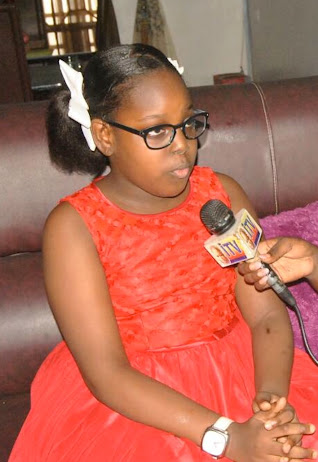
10 years old Erica Tandoh, popularly known as DJ Switch, started deejaying at the age of nine and she has already won Ghana’s annual DJ Awards just a year after she started deejaying.

erica tandoh

Erica’s came into the limelight when she emerged the winner of the 8th edition of  TV3’s Talented Kidz, a Ghanaian Talent Show for kids.

While speaking to BBC Africa, DJ Switch said she started being interested in the art and went on to learn it.

“I started deejaying when I was nine years and I just wanted to try my hand at it… Being a young DJ is not that difficult, when you are being taught in school you pick everything fast, so when you are being taught deejaying you also pick it up fast,” she said.

About her stage name she says;

“I picked the name DJ Switch because I switch up people’s happiness,”

The multi-talented 10-year-old can dance, play the trumpet, drums and is still learning the piano.
She says:

“Deejaying is my passion but I want to be a gynecologist because I want to help women,”.

dj switch erica tandoh

DJ Switch has already recorded a song with her mother dubbed Deceiver.

This interview is one of the first to come out of BBC’s new Africa-focused program, “What’s New,” which is geared towards engaging children on the continent.


Credit: fabwoman.ng

On Tuesday, June 26, 2018, Mrs Valerie Omowunmi Tunde-Obe was appointed as a non Executive Director by the Board of Punch Nigeria Limited.

She attended Grange School and Queen’s College, Yaba, Lagos. She holds a bachelor’s degree in Philosophy from the University of Lagos. Between 1995 and 2001, she worked as a Senior Manager, Copywriting at LTC/JWT Advertising. In 2001, she and her husband founded KOPYKATS & Associates, a  scriptwriting, music production and marketing company.

Tunde-Obe is the owner of Hair Afrique Beauty Salon, a subsidiary of United Hairways Beauty Company and Iya Ibadan Local Cuisine and Foods which promotes foods from Western Nigeria.

A certified member of the Association of Advertising Practitioners of Nigeria since 2004, Tunde-Obe is a  director of Punch Commercial Printing…..

Continue reading on http://punchng.com/punch-appoints-new-chairman-director/


Culled from Punch


Please note, Women Of Rubies do not own any right to this news article. Full credit goes to www.punch.ng

Genevieve magazine founder Betty Irabor  will be releasing her new book soon.

Titled “Dust to Dew“, the book will chronicle some of the most interesting parts of her life journey while she shares learning points from them.
She posted the cover of the book on Instagram and captioned:

I am So Excited to unveil the cover of my book 😁😁💃💃 “Dust to Dew”… Dust is chaos, Dust blinds, it inhibits. Dew is Life, it is Hope, it is New Beginnings 💧💧💦 It’s been an interesting journey putting several emotions into a book that chronicles the darkest period of my battle with depression. I didn’t lose those 7 years, Rather it was a period of Learning and Unlearning! This is me being audacious about sharing my most intimate battle with depression with you. May all our aspirations distill into the morning Dew!

This year, the Oscar Academy is making impressive effort to diversify its members, by inviting 928 new people from 59 countries – 49% of which are women and 38% of which are people of colour – and one of those who received an invitation is Nigerian actress, Omotola Jalade-Ekeinde.

Omotola who was cited for her work in Last Flight To Abuja and A Private Storm, joins an impressive list of invitees, which includes Kendrick Lamar, Gidi Blues’s director, Femi Odugbemi, Black Panther stars, Danai Gurira and Daniel Kaluuya, and British-Nigerian, Wunmi Mosaku.


(Photo: AMPAS)

(Photo: AMPAS)


Credit: konbini.com

Music Executive and media personality, Grace Ladoja, has been honored by British Vogue in the #Vogue25 list as one of the Most Influential Women in Britain.

According to British Vogue, the list was compiled to shine a light on the powerful women driving forward their respective industries.

Vogue wrote:

What does power look like now? As we assembled Vogue’s inaugural list of the most influential women working in Britain for the July issue, it became clear that this question is more complicated than ever to answer. How telling, for example, that while there have never been more women in cabinet, 2018 did not feel like a year to shine a light on the ever-shifting sands of power in the old establishment. It is no longer enough simply to hold a great office of state, it seems.

Power and influence now take many forms. It does, however, still require an eye-watering level of achievement, regardless of age (the oldest entry, Baroness Hale, is 73; the youngest, Dua Lipa, is 22). It also demands the ability to inspire, and the clout to change the conversation.

Drawing from the worlds of politics, fashion, the arts, media and sport, we have had to make notable omissions. For some, authority remains too precarious (Theresa May), for others it is eternal (the Queen). So these are the women of this year: the Vogue 25, an extraordinary cast of leaders defining – and redefining – the way we live now.

Grace Ladoja earns a coveted spot in the #Vogue25 list  (Vogue)

Praising Grace in her capacity as a Music Executive and looking at the amazing work she has done with Skepta and the whole BBK crew,

Vogue writes:

GRACE LADOJA
Music executive

When Skepta won the Mercury Prize for his album Konnichiwa, it was thanks in no small part to his manager: fast-rising music executive Grace Ladoja, otherwise known as the Godmother of Grime. In 2018, in a move unimaginable a few years ago, Buckingham Palace recognised her services to music in the New Year’s Honours List – proof of her crucial role in Britain’s burgeoning DIY music scene, and her talent for shaking up the status quo.


Credit: Vogue, Pulse News

During the second quarter of 2018, the Women at Risk International Foundation (WARIF) implemented the Boys Conversation Café (BCC) a project sponsored by Diamond Bank PLC. The interactive session involved a set of students predominantly male between the ages of 13 and 17 years old, in SS1 and SS2 levels. Experienced male mentors interacted with the students using a guided curriculum for four consecutive weeks. The discussion centered around sexual abuse, boys as protectors not perpetrators, peer pressure, responsible behaviour and the law on rape. The objectives include changing the attitude and mindset of boys about rape and sexual abuse, to educate boys to participate as protectors rather than bystanders or perpetrators and to equip young boys with the knowledge and the tools to assist in the prevention of gender-based violence with the provision of the services provided by WARIF Centre. In this interview with WARIF Founder, Dr Kemi Dasilva-Ibru, she talks in length about this project and what she aims to achieve with it.

You recently launched the Boys Conversation Café. Tell us more about this?
The WARIF Boys Conversation Café is a new initiative launched by the Foundation which is designed to educate young secondary school boys between the ages of 12-16, on the prevalence of sexual violence in Nigeria and aims to change the attitudes, perception and behavioural pattern that exist amongst these group of boys, towards gender inequality and sexual violence against women. The WARIF Boys Conversation Café runs a series of informal sessions with cohort groups of these young school boys, with vetted male volunteers, recruited from different organizations who facilitate as mentor’s /role models at these café sessions. On the issue of sexual-based violence in Nigeria, there are no existing curriculums in schools and elsewhere that directly address these topics for boys and so specific guidelines have been designed by the Foundation and are used as the basis for the topics and issues discussed at the Café sessions. These conversations also highlight already existing issues of gender disparity that exist between the sexes in our communities and the potential for violence against women that occur as a result. It teaches young boys to become protectors of women and not potential perpetrators as these boys reach adulthood.

What does WARIF aim to achieve with this feat?
We spend most of our time discussing how many women are raped in a community, how many school girls are harassed or whether or not consent was given and not enough time asking how many men rape women in that community and how many school boys harass young girls. This initiative plans to shift the focus of attention from educating girls and women on the prevention of sexual violence and rape and how to protect themselves, to teaching boys and men about positive masculinity and standing up for women and changing their mindsets so we prevent them from becoming perpetrators in the future.

How many schools/boys do you hope to reach and in what time-frame?
The goal of the initiative is to reach as many boys as possible across Lagos State. Following the conclusion of the first session sponsored by Diamond Bank in Surulere in May 2018 and the positive measured impact the initiative had in this school district, the Lagos State Domestic and Sexual Violence Response Team (DSVRT) has recently entered a partnership with WARIF where the Boys Conversation Café will be introduced into secondary schools across all six school districts in Lagos State from the next school calendar year in 2018. Through this partnership I believe we will be able to achieve this.

What other activities have WARIF been involved in recently?
The Foundation effectively tackles the issue of rape and sexual violence by working under its three main pillars. The WARIF Centre: a Sexual Assault Referral Centre in Yaba offers free treatment, counseling, accommodation and legal aid to all beneficiaries that visit the Centre free of charge. There is also a 24-hour confidential help- line available to all in need of services, but wish to remain anonymous or are located too far away to reach the Centre. The Educational Pillar of the Foundation has in addition to the Boys Conversation Café – two other initiatives being carried out across the State; the WARIF Educational School Program (WESP), is a preventative initiative where the identification of the signs and the prevention of sexual violence and rape is taught to secondary school girls between the ages of 12 and 16 through a specifically designed curriculum by the Foundation. The WARIF Through the Arts Program is the initiative targeting tertiary level male and female students in universities and colleges across the country. Using the performing arts as a tool for social change, a short powerful skit depicting scenarios of abuse is shown to large audiences of these young adults in these schools and used to create awareness, encourage dialogue and educate and prevent sexual violence amongst this target audience. Under our Community Service pillar, through sponsorship from the ACT Foundation, we have successfully trained 500 traditional birth attendants from several rural local government areas across Lagos State on the signs and prevention of sexual violence under the WARIF Gate Keepers project. This was the first time traditional midwives had received any training in this area and are now equipped to becoming first respondents in the prevention of gender based violence and related issues in their different rural communities. All cases are logged for data collection and referred back to the WARIF Centre for continued care. Advocacy, awareness and sensitization programs are also carried out in more urban areas where public spaces such as market places and known brothels are visited.

Would you say you have recorded increased success in the war against GBV, Sexual Violence and rape since you started and how?
With regards to our various initiatives, the WARIF Centre has attended to over 470 beneficiaries since December 2016; The WARIF Educational School Program has educated 300 girls so far and will continue in the next calendar year with an additional 500 secondary school girls. The recently launched BCC Boys will be introduced throughout all six school districts across Lagos State in the next school calendar as well; impacting on the lives of as many young adolescent school aged boys as possible. With the Gate Keepers Initiative we have trained 500 traditional midwives and have attend to 132 cases from different local government areas and we intend to continue our training with an additional 400 midwives in August 2018. We have also addressed over 550 beneficiaries in the urban areas. Our strong advocacy and awareness programs and campaigns through online social media platforms, radio and TV as well as in traditional newspapers has also reached a significant number of individuals in the thousands; so I would say we have certainly recorded a significant number of beneficiaries we have had a large positive impact on in the war against GBV. There is, however, so much more to be done.

What do you think the government can do in helping to address the problem of GBV?
The Lagos State government has set up a Domestic and Sexual Violence Response Team (DSVRT) made up of a select number of ministries and related regulatory organizations such as law enforcement to address all aspects of sexual and domestic violence in the State. As an official member of this regulatory body, WARIF works hand in hand with other qualified representatives to reduce the number of these cases in Lagos State. I believe this unprecedented level of collaboration created by the Lagos State Government among these professionals all working towards ending sexual and gender-based violence is seeing positive results. The Police Force are also sensitizing more police officers to tackle this problem in some police stations; Gender desks with trained sensitised officers are now available to address these cases. This must be encouraged and emulated in all police stations across the country.

What would you tell survivors and how can they seek professional help?
It is very important for a survivor of a sexual attack to immediately visit a rape crisis centre such as the WARIF Centre located in Yaba. We have specialised qualified staff and offer readily available services that offers an all-round holistic approach to her care. For forensic medical examinations to be carried out, a 72-hour window from the onset of the attack in when specimens for DNA evidence in a rape kit can be retrieved. When a woman is seen at the Centre, she is walked through the event in a very sensitive and least intrusive manner; all the necessary tests are carried out and professionally trained medical personnel examine her. It is the most natural thing to feel the urge to wash away all signs of the attack as soon as it happens, as most women immediately feel dirty and used; but it is important to emphasise that important forensic evidence may be lost in this event; so she must visit the centre prior to washing/ bathing. She must also bring along with her the clothing that was worn during the attack. Other tests and medication also need to be administered to her within this 72-hours period, including the post – exposure HIV drugs to reduce the incidence of HIV. She is also seen by a trained social worker for counseling as her psycho –social needs must also be met. This component of abuse is as traumatic as the physical attack suffered. Before leaving the Centre, her social welfare needs such as accommodation and legal aid are addressed where necessary.

By; Tobi Awodipe for Guardian

Skeleton athlete, Simidele Adeagbo has teamed up with non-profit organization, Youth Empowerment and Development Initiative (YEDI) to organize ‘SimiSleighs Leadership and Sports Masterclass’ for secondary school girls in Lagos State.

As a part of YEDI’s SKILLZ Girl project, 100 schoolgirls took part in a skeleton clinic led by her. Since the masterclass was also a means to teach the participants leadership skills, the Olympian took them on demonstrations, drills and activities centered around teamwork and the skills needed to be a champion.

Speaking about what the clinic means to her, she said:

“The students at State Civil Service Senior Model School are the future leaders of Nigeria and I’m honored to have the opportunity to share this unique experience with them.

Sport is a powerful tool to create change and I hope that I’ve empowered the girls and cultivated future leaders in the classroom and community.”

See photos from the masterclass below:

Credit: konbini.com

In a new report by the World Poverty Clock, Nigeria has overtaken India as the country with the most extreme poor people in the world – 86.9 million people, with the number increasing by six people every minute.
The report added that the Democratic Republic of the Congo could soon take over the number 2 spot.
By the end of 2018 in Africa as a whole, there will probably be about 3.2 million more people living in extreme poverty than there are today, the report added.
The report stated that with the rate people living in extreme poverty is reducing, it’ll be extremely difficult to achieve SDG 1 – No Poverty.
According to Brookings Institute:
Each April and October, the World Poverty Clock data are updated to take into account new household surveys (an additional 97 surveys were made available this April) and new projections on country economic growth from the International Monetary Funds’s World Economic Outlook. These form the basic building blocks for poverty trajectories computed for 188 countries and territories, developed and developing, across the world.
See the top nations below:
Nigeria – 86.9m
India – 71.5m
Democratic Republic of Congo – 60.9m
Ethiopia – 23.9m
Tanzania – 19.9m
Mozambique – 17.8m
Bangladesh – 17m
Kenya – 14.7m
Indonesia – 14.2m
Uganda – 14.2m
Photo Credit: Brookings Institute