Author

Women of Rubies

Browsing

Mary was born in Jamaica to a black mother and a Scottish father in 1805. Her father, James Grant was a lieutenant in the British Army, and this privilege gave Mary the right to be born free. Her mother, who was of African descent, earned her freedom after having Mary. Despite their freedom, Mary and her mother still suffered as much as the slaves did at the time. They had no rights to vote or set up businesses to make a good income.

Mary’s mother was a slave brought from Africa who had managed to retain her knowledge and training in traditional herbal medicine and healing as well as adopting the Carribean methods. This made her one of the most sought after in Jamaica, and she passed on a significant amount of knowledge to Mary.

Mary received a sound education learning how to read and write through the kindness of an unnamed elderly woman she lived with for a few years. As slavery was fought, the privileges of mixed race children increased, and this allowed Mary more freedom in movement and working. She used her privileges to assist her mother in setting up a boarding house which served as a private hospital and hotel in Jamaica.

She got married in 1836, but her husband died in 1844. After the death of her husband, Mary travelled extensively and settled in Central America in 1851 where she suffered racial discrimination and struggled to set up a trading business. In the end, she was successful and traded in medicine until she moved to London in 1854.

Her main reason for moving to Britain during the war was to work as a healer in the British Army. Mary was fully aware of the racial disputes but attempted to be signed into the army by visiting the war office. She requested that she be sent as a nurse to Crimea where many soldiers were dying because of poor medication and facilities, but she was rejected.

Mary travelled to Crimea and set up a hotel called the British Hotel. Due to inadequate funds, the hotel was just a small quarter with mess-table for the injured and a resting room. With time, Mary became the most sought-after nurse in Crimea with a reputation for healing all sorts of deadly wounds.

Many wounded soldiers were sent to her hotel, and she visited the battlefield during more dangerous times to cater for the sick. She soon became known as Mother Seacole, the black Florence Nightingale.

After the war in 1856, Mary fell seriously sick and was bankrupt; with the help of the media, a festival was organized for her and money was raised. The festival was supported by Count Gleichen, Queen Victoria’s nephew and it raised enough money to cater for Mary and her illness as well as her livelihood. Mary wrote and published her memoir; Wonderful Adventures of Mrs Seacole in Many Lands.

Between 1860 and 1881, Mary moved in and out of Jamaica and Britain and became nationally recognised in both countries. She became close to the Britsih royal and was decorated with medals by the military in Jamaica. She lived in London until she died on May 14, 1881.

Even in death, Mary still suffers racial discrimination. Her life and the success of Mary Seacole have not been fully accepted by many western historians and scholars. In 1991, she was posthumously awarded the Jamaican Order of Merit.

In 2012, there were threats to remove her from the educational curriculum, but this was stopped in 2013 by a group called Operation Black Votes. This threat started in 2004 when she was voted the most celebrated black Briton.

A statue of the Black British who dedicated her life to saving soldiers stands at the St. Thomas Hospital in London. Although it was significantly spoken against, the figure was raised in 2016 with the inscription: a pioneer nurse.

Curated from WomenAfrica

Whether you wear makeup every day or occasionally, you are sure to have heard of the term highlighting. You go on social media and see a lot of ladies glowing as they bathed in gold. Well, it’s no news that highlighters are very much trendy.

Yet, with the endless number of shimmery options out there, how do you know which one is right for you? While highlighter has been all the rage for its ability to brighten your face instantly, finding the perfect one when you have a darker skin tone can be a serious struggle.

When it comes to choosing the highlighter of your dreams, dark women should avoid pinks and frosty whites. You want to pick a highlighter that would look like a part of your skin, as opposed to, like, a disco ball.

Top beauty blogger, Dimma Umeh has made life easier by putting together her top 5 highlighters for women of color.

Products mentioned

Black Up Sublime Powder – NPS 01
Bobbi Brown highlight powder – Bronze Glow
Anastasia Beverly Hills Highlighter – So Hollywood
Mac Mineralized Skin Finish – Gold Deposit
J Cat beauty only you glow girl baked highlighter – Pink Goddess


For real article click here

If you’re looking to get promoted or you’re starting a new job as a manager, here are some things that you should prepare for and skills you should gain before deciding to lead a team.

1. Vision

Been a manager, makes you responsible for not only your team, but also for a multitude of projects and tasks.

Good leaders are able to clearly see and act on the vision, manage projects, and can develop their team at the same time.

2. Adaptability

As a leader, sometimes you’ll manage several departments at once that are vastly different from one another. Despite this, you’re the boss so their success is still your responsibility. It’s important that you know enough about what they do and how their department should operate so that you can know how to manage your expectations and be able to answer questions and help when needed

3. Project Management

CreateHER Stock

Being a manager, you’ll be expected to clearly communicate and execute projects from start to finish. During this period, in order to successfully execute a project, you need a proper management of task.

4. Delegation

As a boss, it’s easy to get obsessed with your work. In other to  avoid becoming a control freak, delegation is required. Keep in mind, delegation does not mean pawning off all of your work to your team. Instead, it means understanding the role that each team member has, the deadline of the work, the nature of the project, and strategically assigning portions of the task to each member based on those elements.

Once you start delegating though,  remember to also trust and verify the work.

5. Organizational

Shutterstock

Being organized comes naturally for some people but seems impossible for others. Nonetheless, when you’re responsible for people and projects, it’s critical that you keep your space at least neat enough so that you can clearly find what you and your team need. Also, being organized in your space helps you become organized in other aspects of your work life including managing your team and project timelines.

6. Versatility

media2.giphy.com

Shit happens and things change in business. Sometimes, these changes are very unexpected and it disrupts you and your team’s normal way of work. As the leader, you have to be able to be adaptable and be comfortable with change. On the same note, you have to be able to know how to properly prepare and communicate these changes to your team.

7. Prioritization

Shutterstock

As a boss, you’ll often be given several assignments that might have conflicting due dates, or you may discover that you actually don’t have enough team members to efficiently execute. Being able to prioritize with limited team members, stretched resources, and conflicting deadlines will help you become a better leader.

8. Emotional Intelligence

media0.giphy.com

Emotional intelligence is defined as “the capacity to be aware of, control, and express one’s emotions, and to handle interpersonal relationships judiciously and empathetically.” Having emotional intelligence will help you understand and motivate your employees, especially at times when they need it the most.

9. Confidence

Shutterstock

Having a high level of confidence will help you get past the hard times when employees are underperforming. Maintain your confidence, and understand how to instill a high level of confidence in the people you lead.

10.  Boldness

media1.tenor.com

As a manager, you may find yourself between the thin line of wanting people to like you versus just wanting to become a good leader. Sometimes you have to have hard conversations and make the tough decisions that people won’t like. You have to be bold enough to remain focused and to also not be intimidated to tell your team members what you need from them.

For more click here

American Express enlisted athlete and successful businesswoman, Venus Williams to discuss the initiative, the importance of women in business and the balance between work and life outside of work.

The multinational financial services corporation is one company that is working hard to empower women to be more ambitious in the workplace and to take up their rightful positions as leaders despite male domination.

This week, during the Global Women’s Conference in Miami, American Express announced the launching of a new initiative called, “The Ambition Project.”

“There are going to be a lot of moments where you feel like you can’t, but you have to train your mind to feel like you can.” — Venus Williams 

The Ambition Project has been in the making for two years now, this is when the AMEX executive committee (six of whom are women) learned that only a third of the company’s senior associates had ever described themselves as ambitious. This discovery led to the question of how to help their female colleagues achieve their ambitions.

Venus took part in the chat about The Ambition Project and shared her own ambitions.

“I was taught ambition and I’m happy to have had that guidance but of course having a natural love for what you do helps you to be ambitious. Having all of that created an opportunity for me to just go for it. This is why I always recommend doing something that you love,” Venus revealed to HelloBeautiful in a private chat.

The prized athlete signed on to be a spokesperson for AMEX’s initiative because it’s important.

“Sometimes women are not encouraged to be as ambitious as men. Women need to support. They need someone to have their backs and tell them, hey you can do this, which is exactly what AMEX is doing. It’s amazing to have a company like American Express behind this because they can really move the needle and create a new normal that really makes a mark for people. I am excited that this is happening and that American Express is taking a special interest in women and helping them in realizing that their ambitions can change the world.”

Venus agrees that women face many barriers when it comes to breaking through the glass ceiling. “When you think about the strides that women have made just in the last 30 years, it has been huge,” she added. “Sometimes we need that nudge. Sometimes we need that vote of confidence. Sometimes we need that support and that’s why this initiative is so important.”

The amazing athlete believes in leading by example, which empowers her to go hard in every aspect of her life. “I think that by doing your best, you inspire other people, doing something positive in your own life can inspire others to do the same. Every day, I try to do my best for myself so that everyone can see what they can be too.”

Click here to read full article

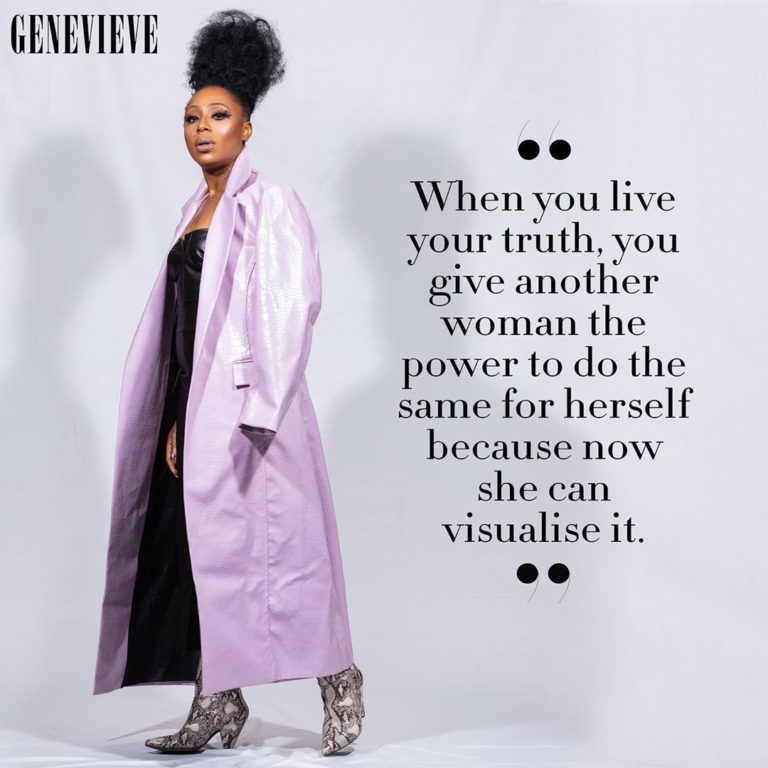
Photo Credit:

Photography: @theseyekehinde

Styling & Wardrobe: @s.b.youme

Creative Direction: @sonia_irabor

Hair: @zubbydefinition

Make-Up: @bimpeonakoya

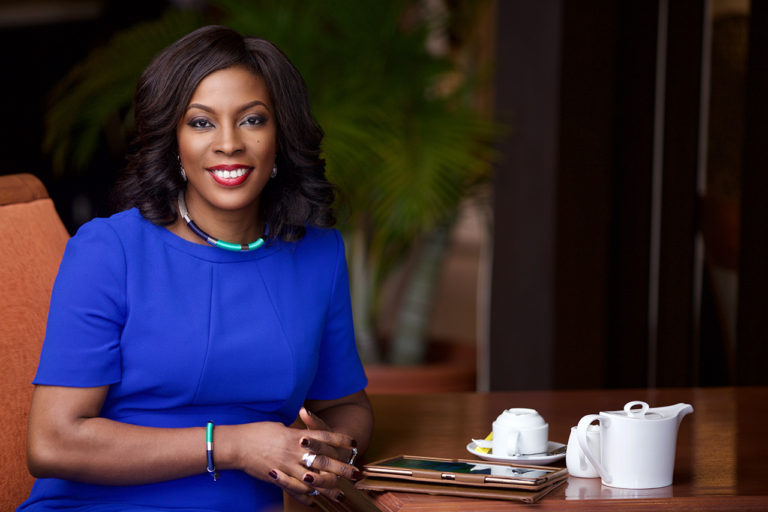
Juliet Ehimuan is an expert and entrepreneur who currently serves as Google‘s Country Manager in Nigeria.

In August 2011, she was listed in Forbes ‘ “20 Youngest Power Women In Africa.”

According to London Business School Reviews she is one of 30 People Who Are Changing the World, according to London Business School Review.

Below is a brief profile of her by London Business review

  • Juliet Ehimuan wants to raise human dignity by helping to develop human capacity and create opportunities for growth. But Ehimuan is not a charity boss or a UN chief. As Country Director of Google Nigeria, she’s a global tech leader whose contributions to technology and entrepreneurship have won her multiple awards and recognition, including being named one of Forbes’ 20 Youngest Power Women in Africa and featuring in the third series of the BBC Women of Africa strand, Power Women.

She is a member of the London Business School Global Women’s Scholarship. In 2012, she won the “IT Personality of the Year” at the 2012 National Information Technology Merit Award.

We love you!

With Megan Markle becoming a member of the royal house, her space has constantly been thrown in the spotlight.

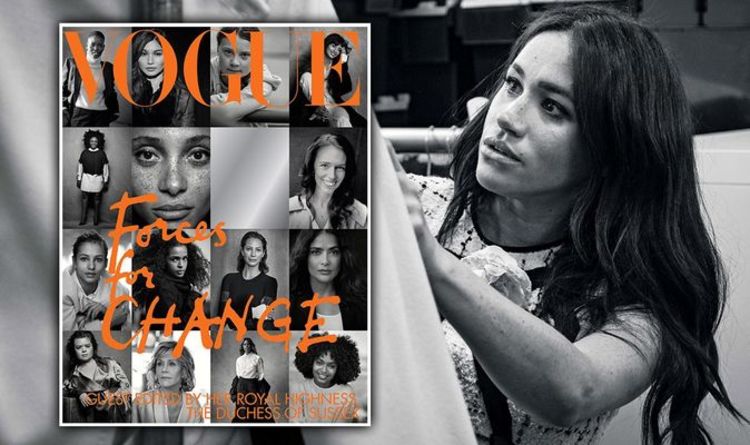
It’s common for members of the royal house to appear on magazine covers but when Meghan was asked to guest-edit the 2019 September issue of British Vogue she further edged herself into history.

The magazine’s editor-in-chief, Edward Enninful, announced that the issue was the fasted selling issue in the history of British Vogue, having been sold out in 10 days, and was the best-selling issue of the decade. In its 103-year history, it was also the first time a September issue was guest-edited.

Meghan’s concept for the issue was to put a spotlight on women who are making a positive change in the world. Instead of her face on the cover, she had the likes of supermodel Adut Akech, English actress Gemma Chan and activist and New Zealand Prime Minister Jacinda Ardern.

“You have an editor’s eye, I mean, I’ve never seen anything like it,” Edward says about Meghan’s editorial direction. Wit this influence as Duchess of Sussex is the clear cut reason for the success of the “Forces of Change” issue.

Although Meghan,  has recently stepped away from her official royal duties, she was expected to join the list of other royals who have graced the magazine’s cover – but she chose to pay homage to other women instead. Other royals like  Princess Diana in 1981 and Kate Middleton, the Duchess of Cambridge, who appeared in 2016 have graced the British Vogue’s cover.

Click here for full article


During black history month, light is shed  on many people who show and prove that black lives matter.

Juliana Stratton is one such person, she became the first African-American to serve as Illinois’ lieutenant governor. She is also the fourth African-American woman in U.S. history to hold a lieutenant governorship.

A lawyer and politician she has been serving as the 48th lieutenant governor of Illinois leading the Justice, Equity and Opportunity Initiative, and chairing the Illinois Council on Women and Girls, the Governor’s Rural Affairs Council, the Military Economic Development Council and the Illinois River Coordinating Council.

She began her own consulting firm which focuses on alternative dispute resolution and served as a mediator, arbitrator and administrative law judge for several government agencies.

Born September 8, 1965, in Chicago, Illinois, she has been known with notable works such as sponsoring 38 bills, eight of which she managed to sign into law, including legislation on prison and criminal justice reform.

Lieutenant Governor Stratton previously served as Director of the Center for Public Safety and Justice at the University of Illinois at Chicago. She was Executive Director of the Cook County Justice Advisory Council, and a Deputy Hearing Commissioner for the City of Chicago Department of Business Affairs & Consumer Protection.

Stratton advocates for the creation of safe spaces for the youth, and is also a restorative justice practitioner and trained peace circle keeper whose aim is to improve public safety and building stronger communities.

She was also a founding board member of the Chicago Children’s Advocacy Center and served on the Board of Directors of the Juvenile Protective Association.

On her words during her inauguration ceremony after she took the oath of office she remembered how her great-great-grandfather, William Stevens, rose out of slavery.

“On Dec. 3, 1818, Illinois became the 21st state. Two hundred years later, with the DNA of my formerly enslaved great-great-grandfather William Stevens as part of my genetic makeup, I am proud to stand before you as our state’s first black lieutenant governor,” Stratton said.

“These brothers, formerly enslaved, were industrious, and continued to build this community,” Stratton said.

“They farmed the land, growing cotton, vegetables, and fruit, and tended to livestock and poultry. They helped create every institution their tenants needed to live full lives: a church, a school, a general store, a post office.”

Click here to read more

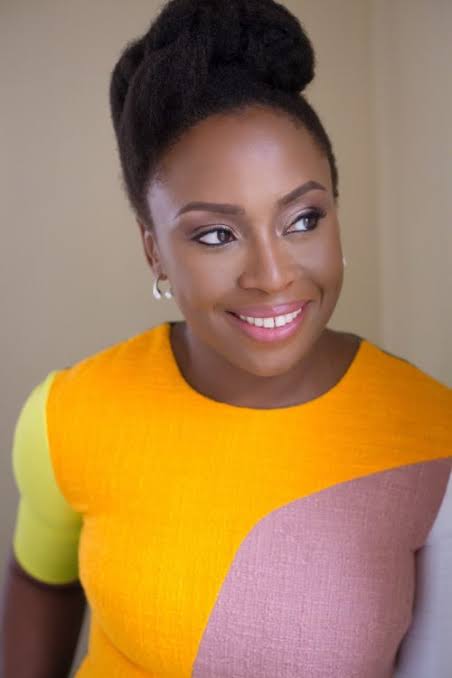
Award winning author Chimamanda Ngozi Adichie will become the first black woman  to deliver the address of the University of Pennsylvania at the 264th Commencement since 1978, and will also receive an honorary doctor of humane letters degree. This will take place on the 18th of May.

The announcement was made by the Vice President and University Secretary, Medha Narvekar.

Amy Gutmann, president of the University said: “We are honored to bestow our highest degree on Chimamanda Ngozi Adichie and have her address our graduates at Penn’s 264th Commencement. Her compelling narratives and absolutely fascinating commentary on complex cultural issues elevate the power of the individual voice.”

Penn trustee and chair of the trustee Honorary Degree Committee Julie Beren Platt, stated that: “It will be our pleasure to welcome renowned author Chimamanda Ngozi Adichie as our 2020 Commencement speaker and to celebrate the contributions of all of our extraordinary honorees. Their exceptional achievements encompass world-changing discovery, creativity, scholarship, the guardianship of justice, and compassionate service to others. We are privileged to honor them as we celebrate Commencement and our wonderful Class of 2020.”

Congrats to Chimamanda Ngozi Adichie!