


Women of Rubies

Tag

Customer Trust

Browsing

Someone discovers your business through a social post, a recommendation or a media feature. Before enquiring, they look for more information. Can they understand your offer? Find evidence of your work? Check what previous customers experienced? See how to contact you?

Building customer trust online means giving people useful, credible information as they assess your business. Research into purchasing behaviour, online reviews and website usability offers practical lessons for founders.

The findings below come from different markets and research methods. They provide guidance rather than a guaranteed formula for sales.

1. Help customers understand what they are buying

In a March 2024 Google/Ipsos survey of 18,003 online shoppers across 18 markets, 79% said they felt more confident when they had done the necessary research. Think with Google

What you can do: Answer the questions people ask before making an enquiry.

Explain who your offer is for, what it includes, how delivery works and what customers need to provide. A consultant could describe the process from an initial conversation to the final deliverable.

Use those questions to shape service pages, frequently asked questions and educational posts.

2. Keep your business information consistent across channels

The same Google/Ipsos research found that 75% of shoppers cross-check multiple sources to assess whether information is true. Think with Google

What you can do: Review your website, social profiles, directory listings and published biographies together.

Check your business name, services, contact details and credentials. Update information that could leave a potential customer uncertain about what you currently offer.

Consistency gives people a clearer picture when they move between sources.

3. Make genuine customer feedback easy to find

Northwestern University’s Medill Spiegel Research Center reported that, in its research using data from a high-end gift retailer, products with five reviews had 270% greater purchase likelihood than products without reviews. The finding was first published in 2017 and should not be treated as a predicted increase for every business. spiegel.medill.northwestern.edu

What you can do: Establish a routine for requesting honest feedback after completed work.

For a service business, useful feedback can describe the customer’s original challenge, their experience and what the service helped them accomplish. Ask permission before publishing identifiable testimonials.

4. Keep collecting recent feedback

BrightLocal’s 2026 Local Consumer Review Survey found that 74% of respondents only cared about reviews written within the previous three months. The survey involved a representative panel of 1,002 US adults and focused on local businesses. BrightLocal

What you can do: Continue asking for feedback as your business delivers new work.

You can also update your portfolio with recent projects, current services and fresh examples. Date case studies so readers can understand when the work took place. For businesses with longer project cycles, detailed examples may be more useful than a high volume of reviews.

5. Build a website that supports the next step

BrightLocal also found that 54% of respondents said they would visit a business’s website after reading positive reviews. Positive feedback can therefore lead to further research before someone buys or books. BrightLocal

What you can do: Make sure your website answers the questions that brought someone there. Check that your service descriptions, contact information and enquiry process work on a phone. Remove broken links and make the next step easy to find.

If you receive publicity or customer recommendations, give those interested visitors a useful place to land.

6. Be clear about costs and conditions

Nielsen Norman Group’s website usability research identifies upfront disclosure as a credibility factor. Its guidance includes explaining charges and relevant policies before asking users to commit or provide billing information. NN/G

What you can do: Explain what is included in your offer and what could cost extra.

If your work requires a custom quote, describe how pricing is determined. Clarify deposits, revision limits, delivery timelines and cancellation terms where relevant.

Customers should be able to understand the commitment they are considering.

7. Make your website professional and easy to use

Nielsen Norman Group also identifies design quality as a factor in perceived trustworthiness. Clear navigation and a professional presentation help visitors assess a website’s credibility. NN/G

What you can do: Review your website as a first-time visitor.

Check text readability, image quality, spelling, navigation and mobile layout. Make contact details visible and keep important information easy to locate.

A practical, well-maintained website can support the confidence you are building through your content, customer relationships and publicity.

Start with one trust-building improvement

Choose the area where a potential customer is most likely to encounter uncertainty. You might clarify a service description, request feedback from recent customers, update your biography or simplify your enquiry process. Track the questions people ask so future updates address real concerns.

Give customers a clearer understanding of your business

A well-prepared business spotlight can bring your founder story, services and relevant experience together in one place.

Women of Rubies offers website spotlight features with social media amplification. To enquire, email info@womenofrubies.com with the subject Business Spotlight.

Your business is getting noticed. People like your posts, watch your videos and visit your website. Yet the enquiries and sales you hoped for are still slow.

This is a common challenge for entrepreneurs: brand visibility creates attention, but that attention needs a clear path to becoming trust and a purchase.

Potential customers need to understand what you offer, see evidence that you can deliver and feel confident taking the next step. Here is how to build that connection.

1. Make Your Brand Message Easy to Understand

When someone discovers your business, can they quickly tell who you help and what you help them achieve? A beautiful website or active social media page can attract interest, but unclear messaging leaves potential customers guessing.

Your brand message should explain:

  • Who your product or service is for.
  • What problem it solves.
  • What benefit customers can expect.
  • How they can buy or enquire.

For example, “We empower entrepreneurs” communicates an intention. “We help women entrepreneurs strengthen their brand messaging and prepare for media opportunities” gives a potential customer more information to work with.

Review your bio, website introduction and service descriptions. Make sure they communicate the same core offer in language your customers understand.

2. Create Content That Answers Buying Questions

Content can help people move from discovering your brand to considering your offer. To support that journey, address the questions customers ask before making a decision. These might include:

  • Is this suitable for someone at my stage?
  • What does the service include?
  • How does the process work?
  • What will I need to provide?
  • What makes this approach relevant to my problem?

A consultant could explain what happens during a strategy session. A product business could demonstrate how an item works. A training provider could show the skills participants will practise and where they can apply them.

Useful content gives people enough information to assess your offer. It also creates opportunities to demonstrate your expertise before asking for a sale.

3. Support Your Claims With Credible Proof

Potential customers want reassurance that your business can deliver what it promises. Build customer trust by sharing evidence such as genuine testimonials, examples of your work, case studies and relevant experience.

A strong case study explains the client’s starting point, the work you completed and the outcome you can substantiate. It helps readers understand how your expertise applies to a situation they recognise.

Use specific language. If you helped a client refine their positioning and secure media coverage, explain those results accurately. If you do not have sales data, focus on the outcomes you can verify. Share client feedback with permission and preserve its meaning. Clear, honest evidence makes your marketing more persuasive.

4. Give Interested Customers a Clear Next Step

Someone may be interested in your business and still leave without taking action because the next step is difficult to find. Match your call to action to the content and the customer’s likely readiness.

For example:

  • A service explanation can invite readers to book a consultation.
  • A product demonstration can link directly to the product page.
  • An event announcement can lead to registration.
  • An educational article can guide readers to a relevant service.

Once they click, make sure the destination answers the questions that matter. Include the offer, what is included, pricing where appropriate and how to proceed. Check the process on a mobile phone. A confusing form, broken link or unclear payment instruction can interrupt a customer who was ready to buy.

5. Use AI to Support Your Marketing Process

AI can help business owners organise ideas, draft content and repurpose useful material. It works best when you provide the knowledge and direction behind the message. Start with actual customer questions, your experience and an accurate description of your offer. You can then use AI to help turn that material into a blogpost, email or social media caption.

Review every draft for accuracy, tone and relevance. Keep examples specific to your work and make sure any claims are supported. A manageable approach is to develop one useful idea each week and adapt it for the channels your audience uses. This can help you maintain consistency while leaving time for enquiries, delivery and customer relationships.

6. Build Trust Through the Customer Experience

Your marketing makes a promise. The customer experience shows whether you can fulfil it. Pay attention to how you respond to enquiries, explain your process, set expectations and communicate during delivery. These interactions influence whether customers feel confident working with you.

If you promise a response within two business days, follow through. If a project is delayed, communicate early. If a customer raises a concern, address it clearly and respectfully. Reliable service strengthens the credibility your content is trying to build. It also gives satisfied customers a reason to recommend your business.

7. Make Customer Retention Part of Your Growth Strategy

Existing customers already have experience with your business. Maintaining those relationships deserves a place in your marketing plan. Depending on your offer, you could follow up after delivery, provide useful guidance, explain a relevant next service or invite feedback.

Keep the communication helpful and appropriate. A follow-up should show that you understand the customer’s needs, rather than simply asking them to spend again. Repeat purchases and referrals can reveal whether your business is creating lasting value. They also help you identify which offers and experiences customers appreciate most.

8. Measure What Happens After People Notice You

Reach and engagement show how people encounter your brand. To assess whether visibility is supporting sales, track the actions that follow. Useful measures include website visits to service pages, qualified enquiries, consultation bookings, purchases, repeat business and referrals.

Look for where the journey slows down. If people engage with your content but rarely enquire, review your offer and call to action. If enquiries arrive but few become customers, examine pricing clarity, suitability and the information people receive before deciding.

These patterns can help you improve the process instead of simply increasing how often you post.

Turn Attention Into a Stronger Business

Brand visibility gives potential customers a chance to discover you. Clear messaging helps them understand your value. Credible proof and reliable service help them develop trust. An accessible buying process makes it easier to act. Start by reviewing one offer: its message, supporting evidence and next step. Improving that path can make your existing visibility more useful to your business.

Learn How to Strengthen Your Marketing and Personal Brand With Hava Maloku

Putting these strategies into practice takes clarity, consistency and a marketing process you can manage alongside running your business. This is where Hava Maloku’s expertise connects to the conversation.

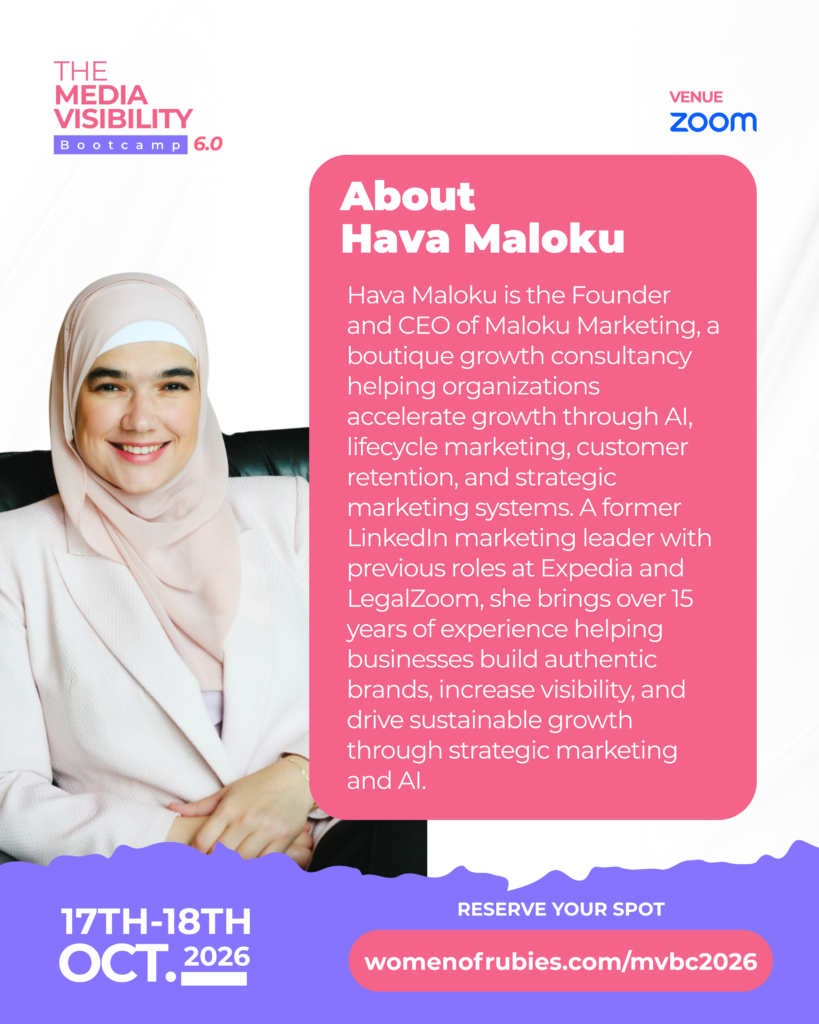
Hava Maloku is the Founder and CEO of Maloku Marketing, bringing more than 15 years of experience in marketing, customer retention and business growth, including work at LinkedIn, Expedia and LegalZoom. Through her company, she helps organisations connect their marketing efforts, customer experience and growth strategy to build stronger, more sustainable businesses.

Her session will explore how to use AI for idea generation, content development, research, repurposing and consistency while keeping your voice and expertise at the centre. For entrepreneurs looking to build customer trust through their marketing, these skills can help make sharing useful, relevant content more manageable.

Hava Maloku, Founder and CEO of Maloku Marketing, speaker at Media Visibility Bootcamp 6.0.
Learn from Hava Maloku how AI can help you build a personal brand without becoming a full-time content creator.

Connect With Hava Maloku

Explore more of Hava’s work and insights on marketing, personal branding and business growth:

LinkedIn | Instagram | Website

Join Media Visibility Bootcamp 6.0

Ready to communicate your value more clearly and build a more intentional approach to visibility? Join Women of Rubies virtually on October 17–18, 2026, to learn from Hava and other experts across marketing, communications, business strategy, technology and leadership.

Explore the programme and reserve your spot at womenofrubies.com/mvbc2026.