Category

self development

Category

Everyone ’s productivity is affected by your Monday Blues. “When you’re unhappy at work, it makes it very difficult for those around you to be happy, and oftentimes just one worker with a case of the Mondays can spread the doldrums to the whole team.”

Here are 5 ways to beat (or avoid) the dreaded Monday Blues:

1. Identify the problem. “The first thing to do is to ask yourself what’s wrong,” Kjerulf says. If you have the Monday Blues most weeks, then this is not something you should laugh off or just live with. It’s a significant sign that you are unhappy at work and you need to fix it or move on and find another job.  if you only suffer the occasional bout of mild Monday Blues, then you can do some things to successfully cheer yourself and others up on an otherwise dreary Monday.

2. . Prepare for Monday on Friday. “Mondays can be extra stressful from work that has potentially piled up from the previous week and, for many, can be challenging to jump right back in.

To help combat that Monday morning anxiety, be sure to leave yourself as few dreadful tasks as possible on Friday afternoon, Friedman says. “By taking care of the things you least want to handle at the end of one work week, you’re making the start of the next that much better.”

If you do have any unpleasant tasks awaiting your attention Monday morning, get them done as early as possible so that you don’t spend the rest of the day procrastinating or “feeling as if there’s a black cloud hanging over your head,” she says. “Make that uncomfortable phone call, resolve that outstanding issue, or clean up that mess that’s waiting for you. You’ll feel a lot better once it’s over.”

3. Make a list of the things you’re excited about.“We often look at the week ahead of us and think of all the tough stuff we have to do and the difficult tasks ahead of us,”  “Turn that around. Sunday evening, make a list of three things you look forward to at work that week. This might put you in a more positive mood. If you can’t think of three things you look forward to, that might be an indication that you need to make some changes.”

4. Get enough sleep and wake up early. Go to bed a little early on Sunday night and be sure to get enough sleep so that you wake up feeling well-rested, Friedman says. “If you’re only running on a couple of hours of sleep, it’s unlikely that you’re going to feel good about going anywhere when the alarm goes off Monday morning.” Although it might seem counter-intuitive, waking up an extra 15 to 30 minutes early on Monday morning can actually make going back to the office easier.

5. . Be positive. Start the week out with an “attitude of gratitude,” Kahn says. “Take time to recognize and appreciate the things that you enjoy about work.”

This starts before you even get to work. To pump yourself up on your way in to work, try listening to your favorite songs, Friedman says. “Think about the type of playlist you would create for a workout, and incorporate that same upbeat, high-energy music into your morning preparation or commute.”

When you get to the office, do your best not to be a complainer–and keep your Monday morning grumpiness to yourself, Friedman adds. “In the same vein, don’t listen to other people’s Monday gripes. Creating or contributing to a culture of complaining is no way to improve your attitude.”


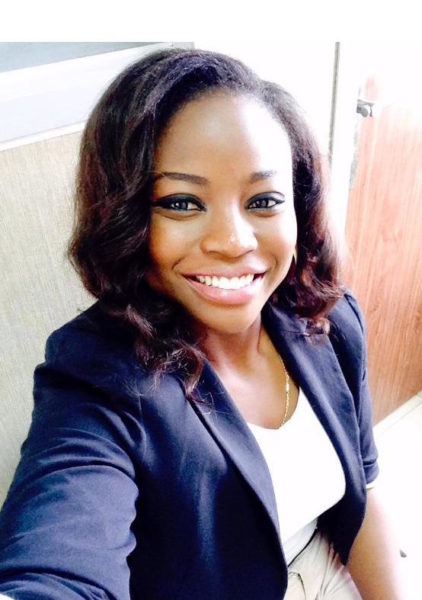
Tosin Taiwo is the Founder of Street to School Initiative, a non-governmental organization which sponsors the education programs of disadvantaged young people in underserved areas, especially out-of-school, street kids and primary school drop outs.

She has 10 years of kindred experience in community intervention projects and youth engaging programs, Over the years, she has resonated to standing in the gap for children who cannot afford basic education programs. Tosin fundraises to sponsor out of school children back to school. At present, 280 young people have been supported to register freely for WAEC/NECO/JAMB/GCE examination, with many as graduates.

In ensuring the total well-being of children in the community she serves, her organization acts as implementing partner to the Embassy of Japan in Nigeria, to ensuring that Ikola Primary Health Care Centre is renovated and well-fortified with every necessary medical equipment. The Project was commissioned by the ambassador of japan in Nigeria, Amb. Yutaka Kikuta.

Tosin is the recipient of the United States Consul-General Award, an Alumnus of the United States Exchange Program International Visitor’s Leadership Program –IVLP in 2014.

The graduate of Computer Science from the University of Lagos, Nigeria, and Overall Best Corps member for


I grew up with a mum whose other occupation was supporting the education programs of children around us. My mum is the type that would see an out-of-school child and would ask why? At early age, the first time I heard the word GCE was when my mum got the form for a student in the church. She was doing all this, because she didn’t have the opportunity as a child to further her education after Basic 4 because of poverty. She remains the medical doctor the world never had.

So, yes, my childhood prepared me in lots of ways. No child deserves to be left behind in attaining quality education, no, not in this 21st century

Meet Me

I am a graduate of Computer Science from the University of Lagos, an advocate of education for all with 9 years of experience working directly with children and women in rural communities and under-served areas. In 2009, after some charitable project during my service year (NYSC) in Kogi State, I came back to Lagos to initiate a pet project named RESOURCE SHARING NETWORK (RSN), with an objective to pull resources together from friends, families and myself, (as I worked briefly in a Software Company) to make impact in the lives of under-served children in the society. From having two members, we grew to having more than 77 like-minded young professionals and matured adult who were willing to mentor and sponsor the education programs of young people in rural communities.

Motivation behind Street to School Initiative

The motivation to start a non-governmental organization was born during NYSC. Remember, I studied Computer Science with keen interest in database management, however, there was a paradigm shift when I left for service, there, I lived close to struggling youth and physically challenged students. I became more inclined and receptive to the needs of vulnerable young people around me, I spent more time mentoring young people and fundraising to get them basic educational materials and mobility aid appliances (wheelchairs, clutches) than I did at my primary place of assignment. At the end of the service year, there came the NYSC State honors award with support from the wife of the Governor.

Testimonials

Recently, one of our sponsored girls graduated with a CGPA of 4.06 from Tai Solarin University. She had been on our sponsorship program since 2012, and, paired with an amazing sponsor. She has been beneficiary to Full Scholarship from GCE through University education. In 2016, we had another GCE sponsored/mentored student graduating with a first class from Nnamdi Azikiwe University. At the primary education level, we have seen the transformational effect that education could bring to any child. At present, we run a tuition-free school for primary school drop-outs and out of school children in Alimosho LGA, and most of these children could neither read nor write the alphabet correctly when they joined us, however, today, it is a different story. In 3 years, we have had 3 sets of 20 previously out of school children transitioned from primary school to secondary school. Some of these children, used to be on the street running errands, others were usually locked up from prying eyes due to parents inability of paying school fees, some had worked in car wash zones etc. The exciting thing is that these kids are not where they used to be. We are so thankful for all our friends and child sponsors.

Renovation of Ikola primary Health care

Ikola Primary Health Care Centre was constructed during the Millennium Development Goals (MDGs) era, however, it was not equipped. And, sadly it was locked up for some years, in a community where there are more than 500,000 residents. In Ikola Community, we have witnessed the death of pregnant women who lost their lives when they could not access quality health care. Twice, we lost mothers of two of our pupils when medical help could not reach them on time. Again in 2017,one of our pupils, a 7 years old girl died in a church when the parents could not afford private hospital bill. These were death so many. So when we had the opportunity to request for one thing from the Embassy of Japan in Nigeria, we requested for the improvement on the existing primary health care center. We requested for provision of medical equipment so that the center could be fully operational, and our children (most especially) could have access to good health care. Thankfully, this project was approved, and on the 14th of September, we had the Ambassador of Japan visit Ikola community for project commissioning. It was a huge one for us.

Challenges faced

When we started our tuition-free school in 2015, our objective was to make school accessible for out of school children, in three years, we have been able to serve more than 200 pupils against our initial projection. Unfortunately, we have outgrown our school space. We hope to get a property of our own to build a bigger and more conducive school. We need funding to achieve this goal. Other challenges that we are faced with are: (a) Lack of Textbooks: Only 2% of the pupils have English and Mathematics textbooks while 98% do not have any of the recommended texts. Consequently, this makes teaching herculean, as children without textbooks may not be able to actively participate in the workbook and exercises illustrated in thereon (b) Food: many times we have had to make provision for children who come to school without breakfast nor school lunch. It is a difficult thing to expect a child to learn and learn well with an empty stomach.

Other projects and activities

Aside education sponsorship, we identify with children from poor homes who do not have basic educational items such as school bags, notebooks, stationaries, sandal, uniform etc, and we donate to them, accordingly. We do this annually, and this project is tagged “BAG-SWAP”. Usually, before the commencement of new academic session, we usually call out for neatly used school supplies and educational items from our friends off and on social media. This year, we had donations of neatly used notebooks, reading books, school bags, lunch boxes, clothing and water bottles that we were able to give out to children we do not have. We do this to motivate children towards learning.

Other activity include, “TEACHER APPRECIATION DAY”, this is done in commemoration of World Teachers Day, usually celebrated on 5th of October. This day is set apart to celebrate exceptional teachers from low cost schools and government owned schools in rural communities.

Greatest reward

The Yemisi Ransome-Kuti Leadership Award in 2017 presented during the 25th anniversary of the Nigerian Network of NGOs (NNNGO).

My organization in five years time

In five years, I see Street to School Initiative as a bigger institution with school branches in 5 other underprivileged communities in Lagos and beyond. I see Street to School Initiative in partnership with World Bank Africa, to execute child-centric projects to reduce the number of out of school children in Sub-Saharan Africa.

On giving up…

Yes, most of the times. Running an NGO, especially in Nigeria is overwhelming, then, running one without adequate funding is life threatening. These are times when sustainability plans fail, and there is nowhere to fall to than to look up unto God, who allow rules the affairs of men. Seriously, I don’t even understand why I am still in this sector. It has been draining however fulfilling to see the smiles from lives positively impacted.

My Inspiration

Every woman out there who is undaunted in their pursuit for excellence inspires me. I remember as a child, my favorite pages on any newspaper or magazines, are those pages where there are photographs of women leaders. I would look at them in admiration and silently wish that someday I would be on the pages of the newspaper too. ☺

Balancing the home and work front

This is something I am still learning how to do more efficiently and effectively.

I am a Woman of Rubies

The word ‘rubies’ was used in the Bible to describe something precious and of great value, same bible tells me that I am fearfully and wonderfully made. Literally, I am a woman of rubies, because the Bible tells me so. Just like Arnold Schwarzenegger said, I don’t pay attention to the rules, because nothing is impossible if I work hard.

Women in advocacy are not well appreciated…

I think that women in advocacy are not well appreciated as they ought to in this part of the world. Undoubtedly, it takes a lot of selflessness and painstaking commitment to champion a cause or policy.

We are hopeful for improvement, as the biggest room in the world is the room for improvement.

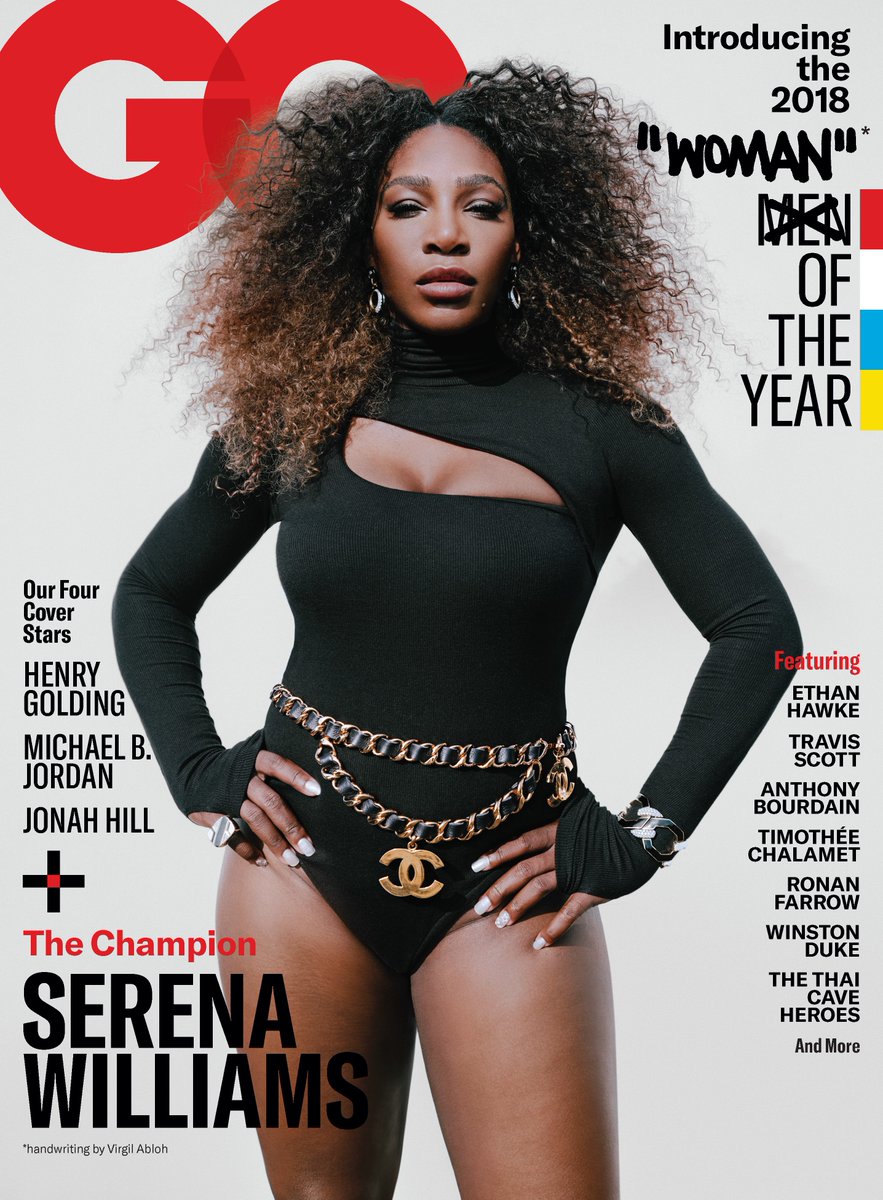
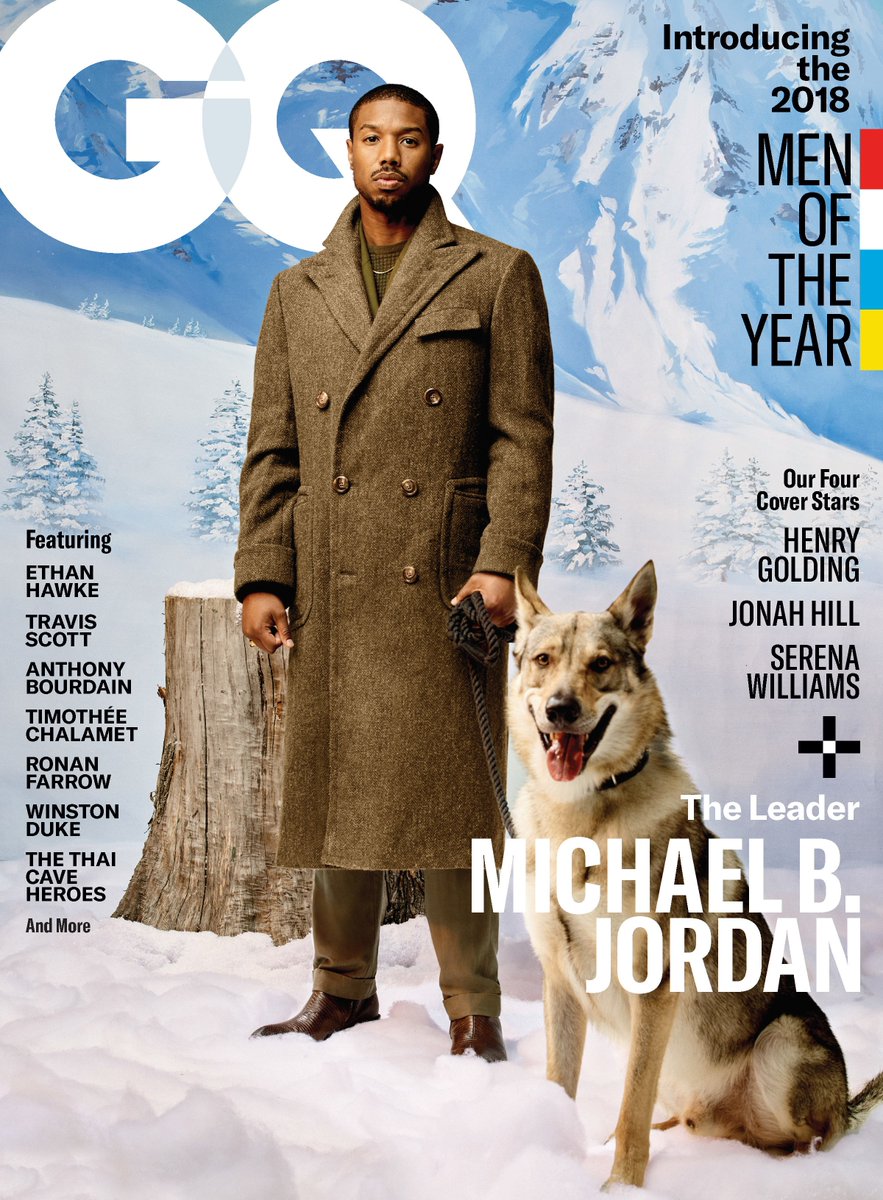
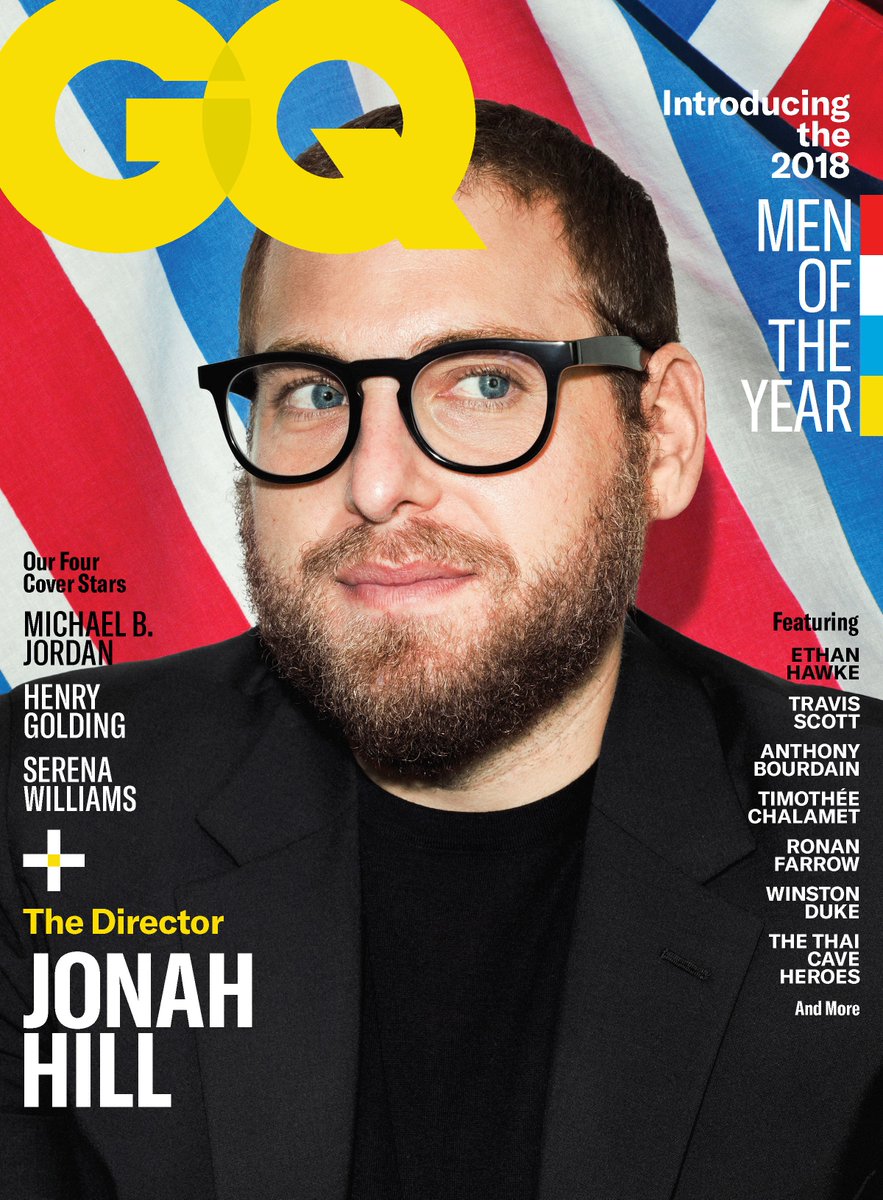
GQ magazine has released four new covers featuring their 2018 Men of the Year with the fourth cover featuring Tennis champion Serena Williams as the Woman of the Year.

The other covers honor Jonah Hill(director of the year), Henry Golding (star of the year) and Michael B. Jordan(leader of the year).

While Serena’s interview highlights have not been released yet, the magazine is already facing some backlash for using quotes around the word woman when calling Serena the Woman of the Year.

Though the decision to put “woman” in quotes is being viewed as questionable by some, added context is that the word was handwritten by Off-White and Louis Vuitton creative director Virgil Ablohwho often uses quotation marks on his Off-White designs.

Virgil Abloh designed Serena’s US Open tutu dress.

Neither GQ nor Serena Williams has responded to the backlash to her Woman of the Year cover

See the other covers below.

Source: Bella Naija

What is the difference between a truly confident woman and a totally insecure one? Everything. The way she walks, talks, thinks, feels and interacts with others are completely different. True confidence is built from within.

In order to build this strength within, truly confident women have figured out which things they should put into their lives and which they should take out. Here is a list of some of those things a truly confident woman simply does not do.

  1. Compare herself to others

A truly confident woman is content with who she is. Seeing another pretty face does not make her feel ugly, because she knows that life is not a competition. She does not keep score of who is the most clever, talented or beautiful.

2. Seek happiness from outside sources

Truly confident women do not depend on others to make themselves happy. They understand that happiness is a choice. When life isn’t giving them lemons, they simply grow their own tree.

  1. Talk constantly

A confident woman does not need to be the center of attention at all times. She is totally fine stepping aside to give someone else the spotlight.


READ ALSO : 12 things mentally strong women don’t do


  1. Feel the need to follow trends

Truly confident women are not followers. They do not feel the need to “fit in.” If they find something they like, they will jump on board. If not, they are perfectly fine wearing an outfit that is “so last season.”

5. Blame others

Truly confident women are well aware that pointing fingers should have ended in third grade. These ladies take responsibility for their own actions. They are not afraid to admit their faults, face their own problems and apologize to those they have wronged.

6. Get jealous

A confident woman does not feel threatened by the success of others. She is genuinely happy for another’s achievements and takes joy in other people’s gifts and talents.

7. Take things personally

Truly confident women are not easily offended. They do not analyze every careless remark made to them, automatically assuming the worst. Unkind words and insults simply do not stick to them.

8. Gossip

Confident women have better things to talk about than other people. Their topics of conversation are interesting and thought-provoking. These ladies do not need to speak poorly of others in order to feel better about themselves.

9. Lower her standards

A truly confident woman never lowers her standards for anyone. She does not seek approval from her peers. She seeks to do what is right.

Source: Family Share


Read excerpts from the interview below:

If you’d been walking past the Hearst Tower, in New York City, on the morning of September 6, I think you might have felt the building pulsating. About 200 people—Hearst magazine editors and execs, and some very pumped-up high school girls—were waiting, many literally on the edge of their seats, for my special guest to arrive. And all of these people had been sworn to secrecy—not just about what this special guest might say during our conversation, but about the fact that there even was a conversation, that my guest was even there. Absolute, total secrecy. From a room full of professional communicators and high school girls. Like I said: pulsating.

And who can blame them? Michelle LaVaughn Robinson Obama doesn’t do a lot of interviews, and this was her very first time talking about her new memoir, Becoming (Crown). It is a remarkable book—I urge, urge, urge you to read it. Because I have known Mrs. Obama for 14 years, and I can tell you: She is everything you think she is and then some. She served as our country’s first lady with such dignity, such grace, such style. Yet at the same time she really is just like all of us. I’m excited for you to see that about her, and to get to know her better, and to catch up on what she’s been doing the past two years. So prepare to be fascinated. And to everyone who was in that room back in September: You can exhale now!!!

Oprah Winfrey: First, let me just say: Nothing makes me happier than sitting down with a good read. So when I realized—in the preface!—what an extraordinary book was coming, I was so proud of you. You landed it. The book is tender, it is compelling, it is powerful, it is raw.

Michelle Obama: Thanks.

Why Becoming?

We actually had a blooper list of titles that we won’t go into here. But Becoming just summed it all up. A question that adults ask kids—I think it’s the worst question in the world—is “What do you want to be when you grow up?” As if growing up is finite. As if you become something and that is all there is. Do you plan to read Mrs. Obama’s memoir?

You grow up and you are many different things—as you have been many different things.

And I don’t know what the next step will be. I tell young people that all the time. You know, all young women probably have some magic number of what age you’ll be when you’ll feel like a grown-up. Generally, when you think your mother will stop telling you what to do.

[Laughs]

But the truth is, for me, each decade has offered something amazing that I would never have imagined. And if I had stopped looking, I would have missed out on so much. So I’m still becoming, and this is the story of my journey. Hopefully, it will spark conversations, especially among young people, about their journeys.

There are so many revelations in this book. Was writing about your private life scary?

Actually, no, because here’s the thing that I realized: People always ask me, “Why is it that you’re so authentic?” “How is it that people connect to you?” And I think it starts because I like me. I like my story and all the bumps and bruises. I think that’s what makes me uniquely me. So I’ve always been open with my staff, with young people, with my friends. And the other thing, Oprah: I know that whether we like it or not, Barack and I are role models.

image

Yup.

I hate when people who are in the public eye—and even seek the public eye—want to step back and say,“Well, I’m not a role model. I don’t want that responsibility.” Too late. You are. Young people are looking at you. And I don’t want young people to look at me here and think, Well, she never had it rough. She never had challenges, she never had fears.

We’re not going to think that after reading this book. We’re not going to think that at all.

[Laughs]

Millions of people have been wondering how you’re doing, how’s the transition—and I think there’s no better example than the toast story. Can you share the toast story?

Well, I start the preface right at one of the first weeks after we moved into our new home after the transition—our new home in Washington, a couple miles away from the White House. It’s a beautiful brick home, and it’s the first regular house, with a door and a doorbell, that I have had in about eight years.

Eight years.

And so the toast story is about one of the first nights I was alone there—the kids were out, Malia was on her gap year, I think Barack was traveling, and I was alone for the first time. As first lady, you’re not alone much. There are people in the house always, there are men standing guard. There is a house full of SWAT people, and you can’t open your windows or walk outside without causing a fuss.

You can’t open a window?

Can’t open a window. Sasha actually tried one day—Sasha and Malia both. But then we got the call: “Shut the window.”

[Laughs]

So here I am in my new home, just me and Bo and Sunny, and I do a simple thing. I go downstairs and open the cabinet in my own kitchen—which you don’t do in the White House because there’s always somebody there going, “Let me get that. What do you want? What do you need?”—and I made myself toast. Cheese toast. And then I took my toast and I walked out into my backyard. I sat on the stoop, and there were dogs barking in the distance, and I realized Bo and Sunny had really never heard neighbor dogs. They’re like, What’s that? And I’m like,“Yep, we’re in the real world now, fellas.”

[Laughs]

And it’s that quiet moment of me settling into this new life. Having time to think about what had just happened over the last eight years. Because what I came to realize is that there was absolutely no time to reflect in the White House. We moved at such a breakneck pace from the moment we walked in those doors until the moment we left. It was day in and day out because we, Barack and I, really felt like we had an obligation to get a lot done. We were busy. I would forget on Tuesday what had happened on Monday.

Mm-hmm.

I forgot whole countries I visited, literally whole countries. I had a debate with my chief of staff because I was saying, “You know, I’d love to visit Prague one day.” And Melissa was like, “You were there.” I was like, “No, I wasn’t. Wasn’t in Prague, never been to Prague.”

Because it’s happening at such a breakneck pace.

She had to show me a picture of me in Prague for the memory to jog. So the toast was the moment that I had time to start thinking about those eight years and my journey of becoming.

In reading the book, I can see how every single thing you’ve done in your life has prepared you for the moments and years ahead. I do believe this.

That’s if you think about it that way. If you view yourself as a serious person in the world, every decision that you make really does build to who you are going to become.

Yes, and I can see that from you in the first grade. You were an achiever with an A+++ attitude.

My mother said I was a little extra.

Getting those little gold stars meant something to you.

Yeah. Looking back, I realized there was something about me that understood context. My parents gave us the freedom to have thoughts and ideas very early on.

They basically let you and [your brother] Craig figure it out?

Oh gosh, yeah, they did. And what I realized was that achievement mattered, and that kids would get tracked early, and that if you didn’t demonstrate ability—particularly as a Black kid on the South Side from a working-class background—then people were already ready to put you in a box of underachievement. I didn’t want people to think I wasn’t a hardworking kid. I didn’t want them to think I was “one of those kids.” The “bad kids.” There are no bad kids; there are bad circumstances.

You mention this phrase that I like so much, I think it should be on a T-shirt or something. “Failure,” you say, “is a feeling long before it becomes an actual result. It’s vulnerability that breeds with self-doubt and then is escalated, often deliberately, by fear.” Failure is a feeling long before it becomes an actual result. You knew this when?

Oh, first grade. I could see my neighborhood changing around me. We moved there in the 1970s. We lived with my great-aunt in a very little apartment over a home she owned. She was a teacher, and my great-uncle was a Pullman porter, so they were able to purchase a home in what was then a predominantly white community. Our apartment was so small that what was probably the living room was divided up into three “rooms.” Two were me and my brother’s; each fit a twin bed, and it was just wood paneling that separated us—there was no real wall, we could talk right between us. Like, “Craig?” “Yep?” “I’m up. You up?” We would throw a sock over the paneling as a game.

The picture you paint so beautifully in Becoming is that the four of you—you, Craig, and your parents—each was a corner of a square. Your family was the square.

Yes, absolutely. We lived a humble life, but it was a full life. We didn’t require much, you know? If you did well, you did well because you wanted to. A reward was maybe pizza night or some ice cream. But the neighborhood was predominantly white when we moved in, and by the time I went to high school, it was predominantly African American. And you started to feel the effects in the community and the school. This notion that kids don’t know when they’re not being invested in—I’m here to tell you that as a first grader, I felt it.

You say your parents invested in you. They didn’t own their own home. They didn’t vacation—

They invested everything in us. My mom didn’t go to the hairdresser. She didn’t buy herself new clothes. My father was a shift worker. I could see my parents sacrificing for us.

Did you know at the time it was sacrifice?

Our parents didn’t guilt-trip us, but I had eyes, you know? I saw my father going to work in that uniform every day.


Your father drove a Buick Electra 225. So did my father.

Deuce and a Quarter.

Deuce and a Quarter.

We had our little aspirational moments when we’d get in the Deuce and a Quarter and drive to the nicer neighborhoods and look at the homes. But the Deuce and a Quarter for my father represented more than just a car because my father was disabled. He had MS, and he had trouble walking for quite some time. That car was his wings.

Yes.

There was power in that car. I call it a little capsule that we could be in and see the world in a way we normally couldn’t.

A window to the world. You know, I appreciate the way you were able to reveal not just what happened to your family, but what was going on with all families. We often talk about how systemic racism impacts generations. And the way you write about your grandfather Dandy—I thought this was so beautiful:

“Gradually, he downgraded his hopes, letting go of the idea of college, thinking he’d train to become an electrician instead, but this, too, was quickly thwarted. If you wanted to work as an electrician (or as a steelworker, a carpenter, or a plumber, for that matter) on any of the big job sites in Chicago, you needed a Union card. And if you were Black, the overwhelming odds were that you weren’t going to get one. This particular form of discrimination altered the destinies of generations of African Americans, including many of the men in my family, limiting their income, their opportunity, and eventually their aspirations.”

I don’t think I’ve ever heard a more gut-wrenching truth explained in such simple, human terms. Did your parents sit you and Craig down, at some point, and explain that the world isn’t always fair?

Oh, yeah, we would have conversations all the time. And my parents helped me to realize that there’s something that happens to a person who knows deep inside that they are more than what their opportunities allowed them to be. For Dandy, it bubbled up in him in a discontent that he couldn’t shake. That’s why my grandparents worked so hard to change our lives. And that’s one thing I understood. When I saw my grandparents and heard about their sacrifice, my notion was, Oh, little girl, you better get that gold star. They’re counting on you.


It’s what Maya Angelou used to say: You’ve been paid for.

Absolutely.

So after high school, you went to Princeton and then Harvard Law School. And then you joined this prestigious law firm in Chicago. Now, this—when I read this, I put three circles around it and two stars. You write, “I hated being a lawyer.”

Oh God, yeah. Sorry, lawyers.

“I wanted a life, basically. I wanted to feel whole.” I wanted to shout that from the mountaintops because I know that so many people are going to read this who are in jobs that they hate but they feel like they have to continue. How did you come to that?

It took a lot to be able to say that out loud to myself. In the book, I take you on the journey of who that little striving star-getter became, which is what a lot of hard-driving kids become: a box checker. Get good grades: check. Apply to the best schools, get into Princeton: check. Get there, what’s your major? Uh, something that’s going to get me good grades so I can get into law school, I guess? Check. Get through law school: check. I wasn’t a swerver. I wasn’t somebody that was going to take risks. I narrowed myself to being this thing I thought I should be. It took loss—losses in my life that made me think, Have you ever stopped to think about who you wanted to be? And I realized I had not. I was sitting on the 47th floor of an office building, going over cases and writing memos.

What I loved about it is, it says to every person reading the book: You have the right to change your mind.

Oh gosh, yeah.

Were you afraid?

I was scared to death. You know, my mother didn’t comment on the choices that we made. She was live-and-let-live. So one day she’s driving me from the airport after I was doing document production in Washington, D.C., and I was like, “I can’t do this for the rest of my life. I can’t sit in a room and look at documents.” I won’t get into what that is, but it’s deadly. Deadly. Document production. So I shared with her in the car: I’m just not happy. I don’t feel my passion. And my mother—my uninvolved, live-and-let-live mother—said, “Make the money, worry about being happy later.” I was like [gulps], Oh. Okay. Because how indulgent that must have felt to my mother.

Yes.

When she said that, I thought, Wow—what—where did I come from, with all my luxury and wanting my passion? The luxury to even be able to decide—when she didn’t get to go back to work and start finding herself until after she got us into high school. So, yes. It was hard. And then I met this guy Barack Obama.

Barack Obama.

He was the opposite of a box checker. He was swerving all over the place.

You write, about meeting him: “I’d constructed my existence carefully, tucking and folding every loose and disorderly bit of it, as if building some tight and airless piece of origami…. He was like a wind that threatened to unsettle everything.” At first you didn’t like being unsettled.

Oh God, no.

This I love so much—a moment that cracks me up: “I woke one night to find him staring at the ceiling, his profile lit by the glow of street lights outside. He looked vaguely troubled, as if he were pondering something deeply personal. Was it our relationship? The loss of his father? ‘Hey, what are you thinking about over there?’ I whispered. He turned to look at me, his smile a little sheepish. ‘Oh,’ he said, ‘I was just thinking about income inequality.’”

That’s my honey.

[Laughs]

I mean, here’s this guy and—at the time, I was a young professional. This is when I was coming into my own, right? I had a job that paid more than my parents ever made in their lives. I was rolling with bourgeois class.

Uh-huh.

My friends owned condos, I had a Saab. I don’t know what’s cool these days, but a Saab, back in the day—oh yeah. I had a Saab, and the next step was, okay, you get married, you have a lovely home, and on and on and on. Yes, the bigger problems of the world were important. But the more important thing was where you were going in your career. I talk about Barack meeting some of my friends and how that didn’t really play out.

There was work we had to do as a couple. Counseling we had to do to work through this stuff.

[Laughs]

’Cause he’s this serious sort of income-inequality guy, and my friends are like…

You really let us into the relationship. I mean, down to the proposal and everything. You also write about some major differences between the two of you in the early years of your marriage. You say: “I understood it was nothing but good intentions that would lead him to say, ‘I’m on my way!’ or ‘Almost home!’ ”

Oh gosh, yes.

And for a while, I believed those words. I’d give the girls their nightly bath but delay bedtime so that they could wait up to give their dad a hug.” And then you describe this scene where you’d waited up: He says, “I’m on my way, I’m on my way.” He doesn’t come. And then you turn out the lights—I could hear them click off, the way you wrote it.

Mm-hmm.

Those lights click, you went to bed. You were mad.

I was mad. When you get married and you have kids, your whole plan, once again, gets upended. Especially if you get married to somebody who has a career that swallows up everything, which is what politics is.

Yeah.

Barack Obama taught me how to swerve. But his swerving sort of—you know, I’m flailing in the wind. And now I’ve got two kids, and I’m trying to hold everything down while he’s traveling back and forth from Washington or Springfield. He had this wonderful optimism about time. [Laughs] He thought there was way more of it than there really was. And he would fill it up constantly. He’s a plate spinner—plates on sticks, and it’s not exciting unless one’s about to fall. So there was work we had to do as a couple. Counseling we had to do to work through this stuff.

Tell us about counseling.

Well, you go because you think the counselor is going to help you make your case against the other person. “Would you tell him about himself?!”

[Laughs]

And lo and behold, counseling wasn’t that at all. It was about me exploring my sense of happiness. What clicked in me was that I need support and I need some from him. But I needed to figure out how to build my life in a way that works for me.

The most important thing I think you said was that we live by the paradigms we know. And in Barack’s childhood, his father disappeared and his mother came and went. She was devoted to him, but was never really tethered to him. But you grew up in the square. The tight weave of your family.

His mother was in Indonesia, he was raised by his grandparents, he didn’t know his father—and yet even with this context, he was a solid guy. You realize that there are so many ways to live this life.

You also write, “When it came down to it, I felt vulnerable when he was away.” I thought that was kind of amazing, to hear a modern woman—a first lady—admit that.

I feel vulnerable all the time. And I had to learn how to express that to my husband, to tap into those parts of me that missed him—and the sadness that came from that—so that he could understand. He didn’t understand distance in the same way. You know, he grew up without his mother in his life for most of his years, and he knew his mother loved him dearly, right? I always thought love was up close. Love is the dinner table, love is consistency, it is presence. So I had to share my vulnerability and also learn to love differently. It was an important part of my journey of becoming. Understanding how to become us.

What was so valuable to me—and I think will be for everyone else who reads the book—is that nothing really changed. You just changed your perception of what was happening. And that made you happier.

Yeah. And a lot of the reason I share this is because I know that people look to me and Barack as the ideal relationship. I know there’s #RelationshipGoals out there. But whoa, people, slow down—marriage is hard!

You even say you all argue differently.

Oh God, yes. I am like a lit match. It’s like, poof! And he wants to rationalize everything. So he had to learn how to give me, like, a couple minutes—or an hour—before he should even come in the room when he’s made me mad. And he has to understand that he can’t convince me out of my anger. That he can’t logic me into some other feeling.

So what was the argument, or the conversation, that got you to say yes to him running for the presidency? Because you mention in the book that every time someone would ask him, he’d say, “Well, it’s a family decision.” Which was code for “If Michelle says I can, I can.”

Imagine having that burden. Could he, should he, would he. That happened when he wanted to run for state Senate. And then he wanted to run for Congress. Then he was running for the U.S. Senate. I knew that Barack was a decent man. Smart as all get-out. But politics was ugly and nasty, and I didn’t know that my husband’s temperament would mesh with that. And I didn’t want to see him in that environment.

But then on the flip side, you see the world and the challenges that the world is facing. The longer you live and read the paper, you know that the problems are big and complicated. And I thought, Well, what person do I know who has the gifts that this man has? The gifts of decency, first and foremost, of empathy second, of high intellectual ability. This man reads and remembers everything, you know? Is articulate. Had worked in the community. And really passionately feels like “This is my responsibility.” How do you say no to that? So I had to take off my wife hat and put on my citizen hat.

Did you feel pressure being the first Black family?

Uh, duh! [Laughs]

Uh, duh. Because we’ve all been raised with You’ve gotta work twice as hard to get half as far. Before you came out, I was saying, “She’s meticulous, not a misstep—”

Do you think that was an accident?

I know it was no accident. But did you feel the pressure of that?

We felt the pressure from the minute we started to run. First of all, we had to convince our base that a Black man could win. It wasn’t even winning over Iowa. We first had to win over Black people. Because Black people like my grandparents—they never believed this could happen. They wanted it. They wanted it for us. But their lives had told them, “No. Never.” Hillary was the safer bet for them, because she was known.

Right.

Opening hearts up to the hope that America would put down its racism for a Black man—I think that hurt too much. It wasn’t until Barack won Iowa that people thought, Okay. Maybe so.

So my question is, when the weight of the world is on his shoulders, and you’re the shoulders that he’s leaning on, how did you carry that? How do you carry that?

Trying to be the calm in his swerve. Doing what I was taught: You know, when the leaves are blowing and the wind is rough, being a steady trunk in his life. Family dinners. That was one of the things I brought into the White House—that strict code of You gotta catch up with us, dude. This is when we’re having dinner. Yes, you’re president, but you can bring

your butt from the Oval Office and sit down and talk to your children.

Because children bring solace. They let you turn your sights off the issues of the day and focus on saving the tigers. That was one of Malia’s primary goals; she advocated throughout his presidency to make sure the tigers were saved. And hearing about what happened with what school friend—you know, falling into other people’s lives. Immersing yourself in the reality and the beauty of your children and your family. Plus, on the East Wing side, our motto was, we have to do everything excellently. If we do something—because the first lady doesn’t have to do anything—

[Laughs]

We were clear that what we were going to do was going to have impact and was going to be positive. The West Wing had enough going on; we wanted to be the happy side of the house. And we were. You’d have national security advisers coming over to brief me about something. They’d fall into my office—which was beautifully decorated, lots of flowers, and apples, and we were always laughing—and they’d sit down for a briefing and wouldn’t want to leave. “We’re done, gentlemen.” “We don’t wanna go back!”

There’s a section in the book that certain news channels are going to have a field day with. You write about Donald Trump stoking the false notion that your husband was not born in this country. You write, “Donald Trump, with his loud and reckless innuendos, was putting my family’s safety at risk. And for this, I’d never forgive him.” Why was it important for you to say that at this time?

Because I don’t think he knew what he was doing. For him it was a game. But the threats and security risks that you face as the commander in chief, not even within your own country but around the world, are real. And your children are at risk. In order for my children to have a normal life, even though they had security, they were in the world in a way that we weren’t. And to think that some crazed person might be ginned up to think my husband was a threat to the country’s security; and to know that my children, every day, had to go to a school that was guarded but not secure, that they had to go to soccer games and parties, and travel, and go to college; to think that this person would not take into account that this was not a game—that’s something that I want the country to understand. I want the country to take this in, in a way I didn’t say out loud, but I am saying now. It was reckless, and it put my family in danger, and it wasn’t true. And he knew it wasn’t true.

Yeah.

We had a bullet shot at the Yellow Oval Room during our tenure in the White House. A lunatic came and shot from Constitution Avenue. The bullet hit the upper-left corner of a window. I see it to this day: the window of the Truman Balcony, where my family would sit. That was really the only place we could get outdoor space. Fortunately, nobody was out there at the time. The shooter was caught. But it took months to replace that glass, because it’s bombproof glass. I had to look at that bullet hole, as a reminder of what we were living with every day.

You end the book by talking about what will last. And one of the things that has lasted with you, you say, is the sense of optimism: “I continue, too, to keep myself connected to a force that’s larger and more potent than any one election, or leader, or news story—and that’s optimism. For me, this is a form of faith, an antidote to fear.” Do you feel that same sense of optimism for our country? For who we are, as a nation, becoming?

Yes. We have to feel that optimism. For the kids. We’re setting the table for them, and we can’t hand them crap. We have to hand them hope. Progress isn’t made through fear. We’re experiencing that right now. Fear is the coward’s way of leadership. But kids are born into this world with a sense of hope and optimism. No matter where they’re from. Or how tough their stories are. They think they can be anything because we tell them that. So we have a responsibility to be optimistic. And to operate in the world in that way.

You feel optimistic for our country?

[Tears up] We have to be.

Ahh. Good job. Good job.


This story originally appeared in the December 2018 Issue of O.

 

Source: pulse.ng

Finding love is not an easy feat for anyone. If you are a woman who is of a higher intellect, chances are you have had an even harder time finding a fulfilling relationship. Society tends to think less of a woman who is single, as if there is something inherently wrong with them. This is definitely not the case. Below are 10 reasons why it can be harder for smart women to find love.

  1. They aren’t afraid to be by themselves.

Smart women know what they want and aren’t willing to settle for anything less. They know the importance of staying true to themselves and they also realize that sacrificing their needs for the sake of love with the wrong person will only cause resentment in the long run. They do not have to settle out of fear of being alone, or fear of social implications by others’ who do not understand a woman’s ability to be by herself, and be happy.

2. They know what they want.

Every woman has a mental “checklist” of what they are looking for in a significant other. A smart woman’s checklist tends to be either longer or more specific than those who want a significant other, just to have a significant other. They know themselves and in turn know what type of person they can and can’t be with.

  1. They don’t need another person to facilitate their lifestyle.

The past portrays that women needed to go straight from their father’s house to their husband’s. In the modern world women no longer need another person to help them live on their own; they may have realized they prefer that alone time. Therefore, knowing that they will eventually have to share that space can be scary for an independent woman.

  1. They have other commitments that take priority over dating.

Careers, friendships, family, extra-curricular pursuits, whatever it is that she has going on may not allow for as much time to date as it takes to find the right mate.

  1. They are hyper-aware that relationships end and can let their knowledge of the past affect their future potential relationships.

They have a harder time “living in the moment” and do not want to waste their time; as time truly is a valuable asset to a smart woman. They need to know that there is a future and that their potential mate is on the same page.  Marriages, kids, finances, etc.

  1. They know that attraction is only half the battle.

Physical attraction is an important aspect to finding love, but smart women understand that attraction is fleeting and can be altered once you see what is underneath.  While a woman’s hormones tend to make the first step towards finding love, smart women understand that it is the intimacy developed (and maintained) by both people that dictates whether or not a relationship can last.

  1. They can be intimidating.

When a woman is intelligent she isn’t afraid to stand up and say what she thinks. This is a hard pill for a lot of people to swallow. Whether it’s because they don’t know how to react, or if it’s because they don’t feel they can live up to her expectations; either way it can be somewhat intimidating for potential lovers and even friends.

  1. They understand Change.

They don’t pretend that they, and their partners, will be the same person years down the road. They want to grow and they have ambitions for their futures that will change who they are, and ultimately, what they want. Knowing this makes it harder for a woman to commit to a partner for a long period of time.


From premier fashion designers to tech giants, these women redefined success and power by being the world’s top entrepreneurs, building their business against all odds. Here are world’s most powerful women entrepreneurs who would inspire you to breathe business and be most successful.

1. Sara Blakely, Founder SPANX
Founder SPANX Sara Blakely is the founder of Spanx, a renowned hosiery company based in Atlanta, Georgia. At the age of 29, she spent the savings of her entire life, $5,000, trying to innovative something beautiful to wear her under white slacks. From there onwards, she found her new line of shaping underwear, which was named as one of Oprah Winfrey’s Favorite Things. Since then, Spanx has journeyed long from a one-product wonder to a business powerhouse, with over $250 million in annual revenues and an estimated net profit margin at 20%. In 2012, she was listed in Time Magazine’s 100 most influential people in the world and was acclaimed as 93rd most powerful woman in the world by Forbes in 2014.

2. Arianna Huffington, Founder The Huffington Post
Arianna Huffington Arianna Huffington is the co-founder and editor-in-chief of the Huffington Post, the leading American online new aggregator and blog. A Greek-American author and a syndicated columnist, she was a renowned conservative commentator in the mid 1990s and became a liberal later. Her initiative continues to gain momentum, expanding its reach by incorporating new international editions. A dynamic and forward-looking entrepreneur, she is ranked in the list of Forbes World’s Most Powerful Women in 2015.

3. Dianna Von Furstenberg, Founder DVF
Dianna Von Formerly Princess Diane of Furstenberg, Dianna Von Furstenberg is a Belgian-born American fashion designer who first invented the iconic wrap dress. She is the founder of DVF, a leading fashion company that has journeyed long from being an introduction to the famous wrap dress to a global luxury lifestyle brand that offers four complete collections every year. The brand is now available in over 7 countries and 45 free standing shops globally. She is now the president of the trade association of America’s top 350 designers.

4. Cher Wang, Cofounder HTC
Cher Wang Cher Wang is a Taiwanese entrepreneur and philanthropist, and is the cofounder and chairperson of HTC Corporation and integrated chipset maker VIA Technologies. HTC is the manufacturer of one out of every six Smartphones sold in the United States today. She plays an active role in the company’s day to day operations and is working to bring HTC’s operations and sales back on a positive path. She is considered one of the most powerful women in technology and a successful entrepreneur with huge net worth.

5. Indra Nooyi, CEO PepsiCo
IndraNooyi Indra Krishnamurthy Nooyi, is an Indian-born American businesswoman and the current Chief Executive Officer and Chairperson of PepsiCo, the 2nd largest food and beverage business in the world by net revenue. Though not an entrepreneur in literal sense of being a founder of the company, she has ably been at the helm of affairs taking the company to new heights. A Master of Business Administration from Yale School of Business, Nooyi has directed PepsiCo’s global strategy for over a decade and has initiated the company’s restructuring. Since she began as CFO in 2001, the company’s annual net profit has increased from $2.7 billion to $6.5 billion. She has continuously ranked among the 100 most powerful women in the world. In 2015, she is ranked 15 in Forbes list of World’s 100 most powerful women.

Margaret Thatcher very rightly said, “If you want anything said, ask a man. If you want something done, ask a woman.”The immaculate researches in neuroscience said that there are biological differences in the way a woman and a man would think but that surely does not prove men and can soar higher than women in leadership capabilities. To prove this point, we do have a straight fact sheet – presently there are approximately 22 female presidents or prime ministers in the world, and more than a dozen women executives ruling the Fortune 500 companies.

Women have been ground-breaking the realm of business since long, but this particular year of 2015 has showed some records. The first female CEO in IBM was appointed this year – GinniRometty; Facebook got its much awaited IPO with the help of Sheryl Sandberg, Irene Rosenfeld is dividing Kraft into two different public companies, while Marissa Mayer raised a level from top Google executive to the seat of CEO at Yahoo. Reaching this level was not so easy!

Let us know more about these 5 extraordinary women and highest paid female CEOs in the world:

1. Irene Rosenfeld (Chairman and CEO of Kraft Foods)
Kraft foods is the second-largest food company in the world and she has been leading the company in perfect business terms since decades. Her journey started with Kraft as a CEO in 2006, before that she was the CEO of Frito Lay. Currently, she draws an annual compensation of $19.3 million. She took the company to a new level by replacing AIG on the Dow Jones Industrial, and then purchasing the British brand Cadbury in exchange of more than 10 billion pounds.

2. Carol M. Meyrowitz (President and CEO of The TJX Companies) –
Retail industry is now defined as a platform for low-cost options to the shoppers offering everything from clothing to housewares – this happened because of Carol Meyrowitz. She took over in the year 2007 and ever since then she looked over the business of TJ Maxx, Home Goods, and Marshall’s, doing a profit of around a $21 billion. Today, she is offered an annual compensation of $17.4 million; once she started as an assistant buyer at Saks but eventually she showed the world the consequences of working hard.

3. Indra Nooyi (Chairman and CEO of PepsiCo)–
She entered PepsiCo (NYSE: PEP) in 1994, climbed the corporate ladder and became the president by 2001. As her business milestone, Nooyi states acquiring Tropicana in 1998, followed by Quaker Oats Company in 2001. PepsiCo today has Gatorade and more tasty and healthy foods in the company basket due to the efforts of this lady. She draws an annual salary of $16.2 million and brought 72% increase in profits since 2001. In 2011, Forbes named her as world’s fourth most powerful woman.

4. Ellen Kullman (Chairman and CEO of E.I. du Pont de Nemours and Company) –
Ruling the Chemical industry, Kullmanjoined DuPoint in 1988 at the post of a marketing manager, later she became the president in 2008 and finally the CEO in 2009. She set a new arena in the company from oil-based chemicals to further technology oriented areas such as green energy and biotech. Drawing a yearly salary of $14.8 million, Kullman never moved back from investing billions for the latest development on new biofuels and highly fertile seeds. She made her company stand back and DuPont earned $1.75 billion profit along with $26 billion revenue.

5. Angela Braly (Chairman, President, and CEO of WellPoint) –
Now, from healthcare industry who else can be the best fitting name in this list apart from Braly ? WellPoint is better known as BlueCross BlueShield and most Americans own a BlueCross card for their health concerns. Braly became the CEO in 2007 and the company’s revenue increased to $60 billion in 2010. She mainly focussed on creating the best healthcare unit by making it unanimously affordable and advocating healthy living from the root level. Braly has a family with three kids; she has thus proved to be a perfectly organised working mother.

These 5 women CEO’s have not only proved that business and economic development of a country can largely come from this fairer sect but women are also skilful, dedicated and loyal workers who brought prosperity to their businesses multiplying returns.

Some years ago, when I was in Law School, I posted something vile on my Facebook page. I believe it was during President Jonathan’s administration. I’m not sure what exactly he did at the time, but I was enraged – like so many other people around me and in diaspora.

I was so angry at whatever had happened at the time that I wrote something very nasty about the President. It was actually insulting.

The next day, I received a call from my Dad asking me what I posted on Facebook. I was confused; my Dad was not on Facebook, and secondly, because I write a lot on Facebook so I was wondering which particular one he meant.

“I don’t understand, Sir” I said.

In an angry tone he told me to remove whatever it was I wrote on Facebook immediately. I had completely forgotten about what I had written the previous day. So I went back to my wall wondering how my father knew what I wrote on Facebook. It must be a family member that can not mind their business, I concluded.

The only damaging post on my wall was the one about Jonathan. So I took it down. I was miffed that my freedom of speech was being infringed on by my Dad and whomever reported me to him. Nonsense.

Years later, I began to understand the essence of keeping your thoughts and everything you put on social media in check.

What is Social Media?

Wikipedia defines social media as “media use web-based technologies, desktop computers and mobile technologies (e.g., smartphones and tablet computers) to create highly interactive platforms through which individuals, communities and organizations can share, co-create, discuss, and modify user-generated content or pre-made content posted online. They introduce substantial and pervasive changes to communication between businesses, organizations, communities and individuals”

Now we understand that social media basically is a technological innovation that gives you a platform to communicate, interact and engage people most times “real time”.

Now let us look at what social media reach means :

It is defined as the total number of people you are able to reach across all of your various social media networks.

It is no wonder that many businesses are now dominating cyberspace and utilizing the many advantages of social media as an effective marketing tool.

The ‘koko’ is you are able to reach more people with your content on social media as a business or as an individual.

So as an individual, I’m present on all social networks, Instagram, Facebook, Snapchat, Twitter. So anything I post will not just be seen by my immediate followers, but their followers as well – especially if they share it to their space. My content is spreading. Your content could be good or bad, but it will definitely leave an impression about you.

What kind of impression do you want people having about you? Sometimes, we don’t care what people think; but what if whatever you leave out there could harm your career, relationship, family or business. Would you think think twice before posting anything and everything that comes to your mind?

Trust me, you don’t want your careless post reaching the wrong hands.

I read with dismay a comment on Funmi Iyanda’s post about marriage not being for her, and the guy that insulted Michelle Obama not having male children. News has it that he was suspended at work for his thoughtless comment.

When are we going to learn constructive criticism and stop being cyber bullies? What are you going to benefit from putting people down all the time? Even the Bible says “I will bless those who bless you and curse them that curse you”.

The rate at which we are so quick to insult people on social media is alarming! There are so many young impressionable people out there, what message are we passing to them?

Let your words/comments be geared toward building and destroying because they might eventually come back to haunt you.

It might have far- reaching consequence than you envisage, if not now, then later.

Be careful what you post on Social Media.

Source & Credit: Bellanaija

If you’ve ever wondered how you could possibly have a more productive day, look no further. Below you’ll find six easy tips that will help you make the most out of your time.

1. Create a good morning routine.

One of the best ways to start your day is to get up early and eat a healthy breakfast. It’s shown that CEOs and other successful people have similar morning routines, which include exercising and quickly scanning their inboxes to find the most urgent tasks. You can also try writing first thing in the morning to warm up your brain (750 words will help with that). But no matter what you choose to do, remember to create good morning habits so that you can have a more productive day.

2. Prioritize.

Sometimes we can’t have a productive day because we just don’t know where to start. When that’s the case, the most simple solution is to list everything you need to get accomplished, then prioritize these tasks based on importance and urgency. Week Plan is a simple web app that will help you prioritize your week using the Covey time management grid. If you get the most pressing and important items done first, you will be able to be more productive while keeping stress levels down.

3. Focus on one thing at a time.

One of the biggest killers of productivity is distractions. Whether it be noise or thoughts or games, distractions are a barrier to any productive day. That’s why it’s important to know where and when you work best. Need a little background noise to keep you on track? Try working in a coffee shop. Can’t stand to hear even the ticking of a clock while writing? Go to a library and put in your headphones. Don’t be afraid to utilize technology to make the best of your time. Sites like focus@will and Simply Noise can help keep you focused and productive all day long.

4. Take breaks.

Focusing, however, can drain a lot of energy and too much of it at once can quickly turn your productive day unproductive. To reduce mental fatigue while staying on task, try using the Pomodoro Technique. It requires working on a task for 25 minutes, then taking a short break before another 25 minute session. After four “pomodoro sessions,” be sure to take a longer break to rest and reflect. I like to work in 25 and 5 minute increments, but you should find out what works best for you.

5. Manage your time effectively.

A learning strategies consultant once told me that there is no such thing as free time, only unstructured time. But how do you know when exactly you have free time? By using the RescueTime app, you can see when you have free time, when you are productive, and when you actually waste time. With this data, you can better plan out your day and keep yourself on track. Moreover, you can increase the quality of low-intensity time. For example, reading the news while exercising or listening to meeting notes while cooking. Many of the mundane tasks we routinely accomplish can be paired with other tasks that lead to an overall more productive day.

6. Celebrate and reflect.

No matter how you execute a productive day, make sure to take time and celebrate what you’ve accomplished. It’s important to reward yourself so that you can continue doing great work. Plus, a reward system is an incredible motivator. Additionally, you should reflect on your day in order to find out what worked and what didn’t. Reflection not only increases future productivity, but it also gives your brain time to decompress and de-stress.

Culled from lifehack.org