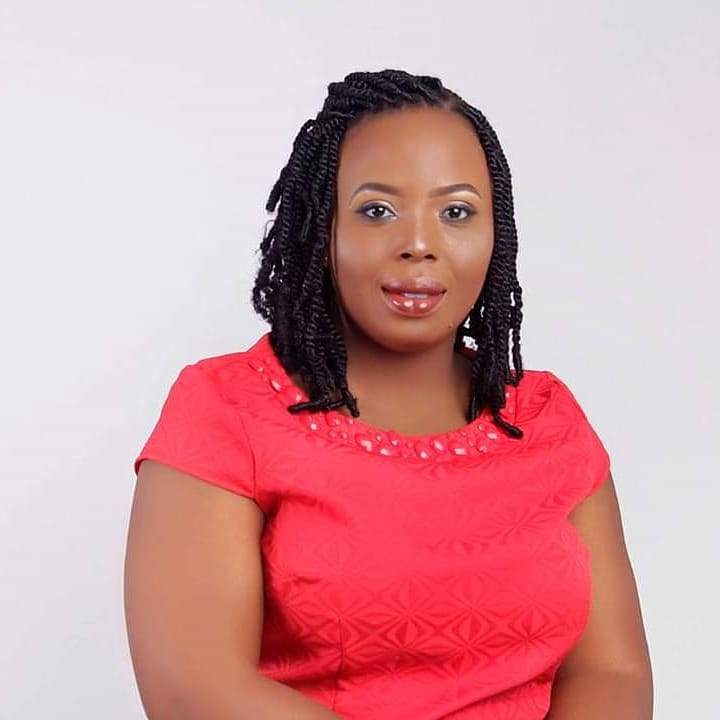
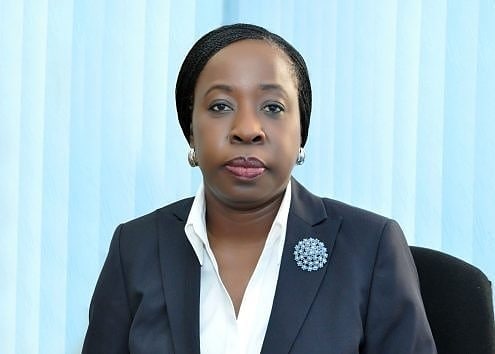
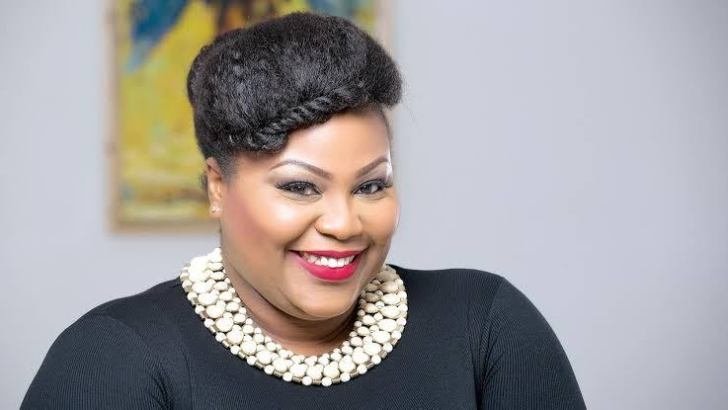
Aramide Akintimehin she earns a living as a primary school teacher with a 1st class degree in Economics.
Apart from using her certificate to work in a primary school, she also runs a free school for out-of-school children, Talent Mine Academy.
A 20-year-old first-class degree holder in Economics, Aramide Akintimehin, embraced a career in training future leaders by dedicating her life to teach primary school pupils.
She earns a living as a primary school teacher who also runs a free school for out-of-school children, Talent Mine Academy.
Aramide said she was prompted to embark on this journey because of the poor quality of education in public schools.
Legit.ng gathers that Aramide is also working on obtaining a diploma in Education from Babcock University.
In the course of impacting knowledge in these kids, the 20-year-old teacher also said she learns from them.
She narrated a scenario where she was unable to solve a verbal reasoning question which had already been solved by one of her pupils. She said the pupil explained to her how she arrived at the answer.
Aramide shared on her Instagram page: “We had Verbal Reasoning this morning and while trying to draft out the correct answers to the questions, I struggled with finding the answer to a particular question. I decided to check the notes of my kids to see if they attempted it because that question was a bit dicey.
“I finally got a hold of Rashidat’s note and there was the answer staring at me and the worst part was that I didn’t know how she arrived at the answer. I called her to explain to me how she got the answer. I got a better understanding and apparently, there was an error in the workbook. We corrected the error, I explained well to the class and everybody was happy I can imagine the confusion I would have brought to my kids if I didn’t keep my rep and pride one side to learn from a 9-year old.”
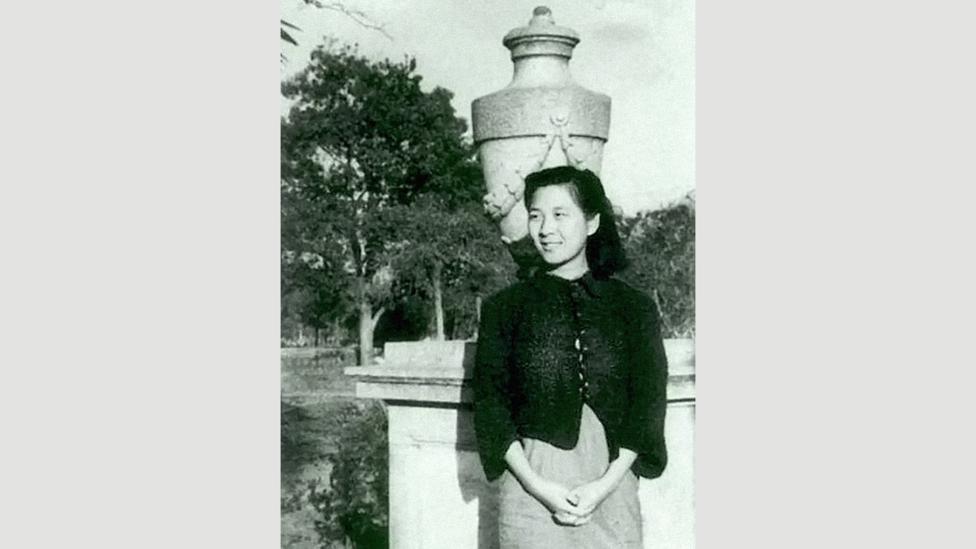
Xia Peisu has been hailed “the mother of computer science in China.”
Throughout her long career, Peisu made numerous contributions to the advancement of high-speed computers in China and helped establish both the Chinese Journal of Computers and the Journal of Computer Science and Technology. A devoted educator, she taught China’s first course in computer theory and mentored numerous students. In 2010, the China Computer Federation honoured Peisu with its inaugural Lifetime Achievement Award in recognition of her pioneering work in China’s computer industry.
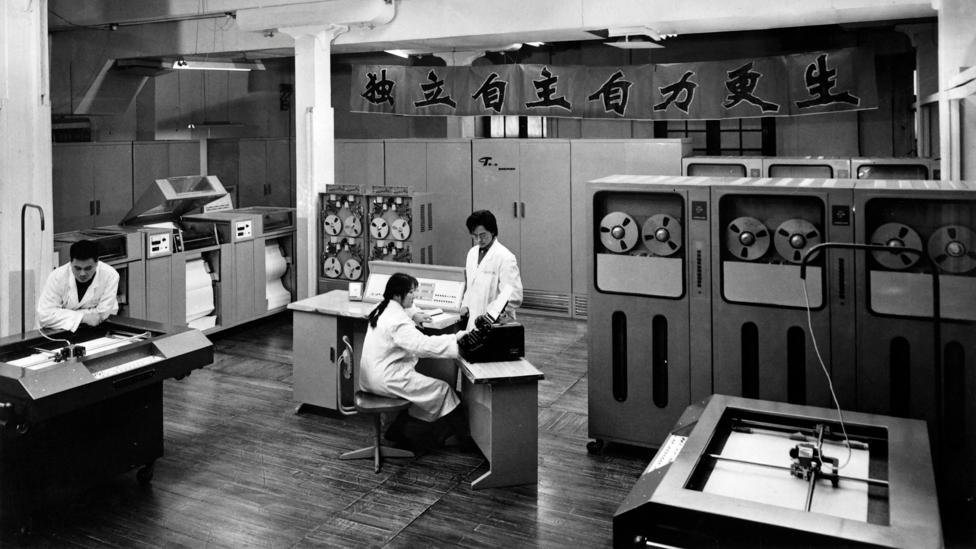
In April 1960, China’s first home-grown electronic digital general purpose computer – the Model 107 – went live. Xia Peisu, the machine’s engineer and designer, had just made history.
After decades of war with Japan and the Chinese Civil War in the first half of the 20th Century, the country’s technological innovation had fallen behind much of the developed world. Chinese scientists relied heavily on hardware and expertise from the Soviet Union to build up their computing power after relying on the west.
But when the relationship between China and Soviet Union dissolved in 1959, China was once again isolated and it had to look inward for a way forward in an increasingly computerised world.
Within a year of the Soviet Union withdrawing aid, Xia delivered the 107 – China’s first step on the road to independence in computing.
Xia was an important personnel to this. She helped shape some of China’s first computing and computer science institutions and developed their training materials. She taught the first computer theory class in the country. Over her career, she would usher hundreds of students into the country’s burgeoning field of computer science.
In the aftermath of war and political upheaval, Xia shaped a new field of science and a new industry in China. Through both her technological innovations and the many students she taught, Xia‘s influence resonates throughout China’s computing world today.
Born into a family of educators in the south-eastern municipality of Chongqing on 28 July 1923, Xia rarely went without an education. First attending primary school aged four and receiving private home tutelage at eight, she went on to excel at Nanyu Secondary School and graduated top of her high school class at National No. Nine in 1940.
Xia Peisu’s home of Chongqing, China during a Japanese airstrike in 1940 (Credit: Getty Images)
Xia graduated with a bachelor’s degree in electrical engineering in 1945. The same year she met Nanjing war refugee and fellow National Central alumnus Yang Liming, now a professor of physics at the university.
Xia developed methodologies that could more accurately predict variations in frequency and amplitude within electronic systems, which led to wide-reaching applications for any system with an electrical frequency, from radios to TV to computers.
In 1950, she was awarded her PhD. Later that same year, she married her husband in Edinburgh. Both scientifically-minded and deeply invested in putting those minds to work in their home country, the couple returned to China in 1951. They both took up positions at Tsinghua University (or Qinghua University), where Xia worked on telecommunications research.
Xia Peisu would go on from a PhD in electrical engineering to designing China’s first home-grown electronic digital general purpose computer (Credit: Wikimedia Commons)
In 1950, the USSR and China joined an alliance, a relationship that would directly impact China’s computing industry (Credit: Getty Images)
Xia became intricately tied to Sino-Soviet partnership when, in 1953, mathematician Hua Luogeng visited her place of work at Tsinghua University and recruited her into his computer research group at the Chinese Academy of Sciences (CAS). She was now one of the three founding members of China’s first computer research group.
With her knowledge of electronics and mathematics, Xia was an ideal choice
In 1956, she joined a delegation to Moscow and Leningrad to explore Soviet research, production and education in computing. When she returned that same year, she undertook translation of Soviet computer design from Russian into Chinese, including a 1,000-page manual that became the course text for teaching Chinese students Soviet computing.
Xia was involved in developing the computer science courses at both institutions, and as a course developer and lecturer, she oversaw the training of hundreds of students between 1956 and 1962.
“What [China] needed above all was a training program,” Mullaney notes. Xia gave them one.
By 1959, China had succeeded in replicating two Soviet electronic computer designs; the 103 model and the 104 model, each based on the Soviet M-3 and BESM-II computers respectively. But just as China began making progress in producing computers, the Sino-Soviet relationship was in dissolution.
The relationship had become so bad by 1960 that the Soviet Union withdrew all support, both material and advisorial, from China, says Mullaney. After the Soviets withdrew, many other countries assumed that China’s computing industry just stopped.
It didn’t.
Far from stopping after the 1960 USSR withdrawal of support, China’s computing industry continued to advance (Credit: Getty Images)
Xia’s 107 model was the first computer that China developed after Soviet withdrawal, and unlike the 103 and 104 models based on Soviet design, the 107 was the first indigenously designed and developed computer in China.
Throughout this time, Xia continued a balance of research and development in high processing speed computers and training new computer scientists and engineers. In 1978, Xia helped found the Chinese Journal of Computers as well as the Journal of Computer Science and Technology, the first English-language journal for computing in the country. And in 1981, she developed a high-speed processor array called the 150AP. Compared to the earlier Soviet-based model 104 that performed 10,000 operations per second, her 150AP boosted a computer’s operations to 20 million per second.
Due in large part to Xia, computer science coalesced into an independent field of study in China and the country’s computer industry emerged despite a tumultuous beginning. “In terms of someone who held her position and was such a central actor in a leadership role, I have not come across other women of her stature at that time,” Mullaney says.
By the 1970s, China had developed powerful, sophisticated computers with integrated circuits (Credit: Getty Images)
She was later named the processing chip of China’s first CPU computer “Xia 50”.
Dubbed in China the “Mother of Chinese Computing”, Xia is still recognised as a founding member of the country’s computer industry. The China Computer Federation awards the Xia-Peisu Award annually to women scientist and engineers “who have made outstanding contributions and achievements in the computing science, engineering, education and industry”. Chen Zuoning and Huan Lingyi received the award most recently in 2019: Chen for her work in developing domestic high-performance computing systems and Huan for her research in CPUs and other core computer devices. Continuing along the path Xia charted for them, Chen and Huan have strengthened China’s domestic computer technology.
In a world of lost untold stories of heroes, BBC new Future column, “missed geniuses” is out to celebrate them today.
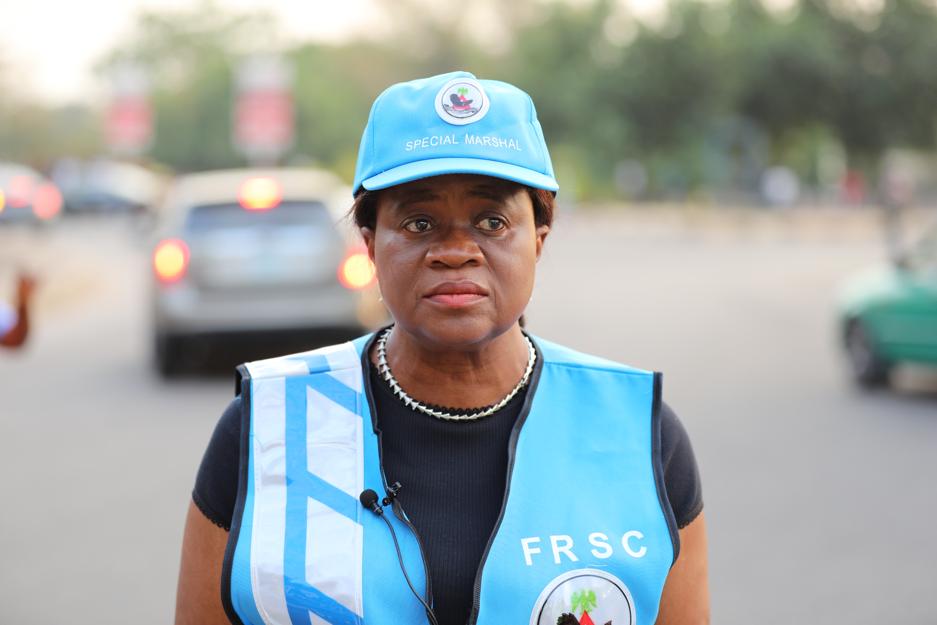
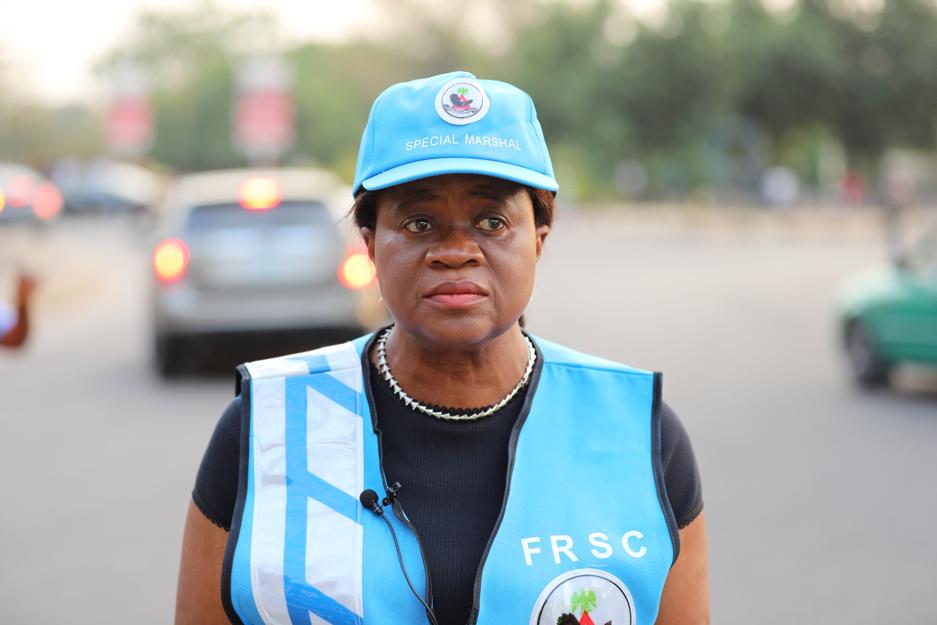
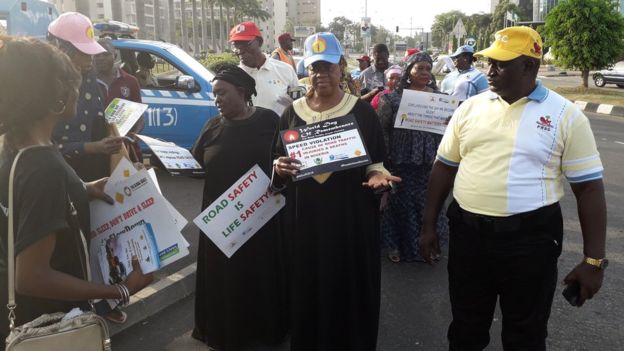
Following the murder of her son by a hit-and-run driver, Justice Monica Dongban-Mensem, now spends part of her time controlling traffic.
She undoubtedly believes many drovers in Nigeria do not understand the rules of driving. Aside ensuring free flow of vehicles, she also visits motor parks to educate drivers
Justice Monica is not just a judge of the appeal court in Nigeria, she is much likely to be the next possible president of the appellate judicial arm of government as Zainab Bulkachuwa, the current head, prepares for retirement. Impressively, she does this during her spare time.
The 62-year-old senior judge does this voluntarily.
The senior judge, however, has a dark memory she has nursed for about eight years – her son was killed by a hit-and-run driver – and as a result, she thinks she can play a major role in changing the psyche of Nigerian drivers and ensuring proper knowledge of the road.
Dongban-Mensem laments that because many drivers in the country are not patient, some of them have caused accidents that have sometimes been fatal.
While speaking with the British Broadcasting Corporation (BBC), she said she never knew the driver behind her son’s death, but it is her determination to touch as many road users as she can.
Despite her position in the country, she has spent time a visiting bus parks for the enlightenment of drivers.
She revealed that her experience with the drivers had shown that most of them do not understand road signs nor have the proper training needed to carry out their daily activities.
Therefore to further boost her resolve, the judge now has a foundation named after her late son and with the aim of enlightening drivers. She further has a plan to create a driving school for would-be commercial drivers.
She also said she spent weeks with the Federal Road Safety Commission (FRSC) training to control traffic before she ventured into the practice as a warden.
Her son, who she called Kwapda’as Dongban, was 32 years old when he died in 2011 at a busy area in Jos, Plateau state.
She said her son, a law graduate from the University of Jos, was in Plateau for his certificate when the incident happened. He broke his two legs, was left without assistance as he groaned in pains till he lost the chance to live.
Like many people, you are probably settling back to work after the much needed holidays. (Hopefully, you actually took a break.) So here you are, with all your resolutions and new energy. 2020 is that year, right? Where we hit all the goals and achieve everything on our vision board. The only problem is our tendency to procrastinate. That book you want to write, that song you want to produce, have you started giving excuses? Maybe you are already turning January goals to March because you think you have time.
Personally, as far as goals go, I like to work with deadlines. With deadlines, you can plan your time and manage your tasks properly. And you get to avoid pushing your results towards an imagined future date. The thing about procrastination is that it rears its ugly head at the most important phase of a project. The execution stage. I remember Uni days studying a course that was 100% coursework. It was basically executing brief after brief and project and after project, both in teams and alone. I was very good at laying the foundation, doing the groundwork and strategizing, even down to planning a work schedule. But when it came to the actual execution, I lagged behind.
Back then, Instagram wasn’t even a thing (yes this shows my age, lol.) Still, I found other ways to procrastinate. And it cost me. I met my deadlines at the last minute and the work was good but sub-standard. I knew it and my lecturers knew it. And the thing with procrastination is, it pushes you into a cycle. Dealing with the disappointment of my lecturers and my disappointment in my sub-standard work led me to beat myself up. And beating yourself up does the complete opposite of motivating you to do better. So you find yourself in a cycle of defeat.
Now, I am anything but lazy. I have since come to realize that procrastination and laziness are not the same things. When you’re lazy you can’t be bothered to do anything, whether you actually enjoy it or not. And I discovered that I was well able to do other things, that I enjoyed, that came easy to me. But if you don’t do the hard stuff, how will you grow?
So I’m all grown up now, well not really but I’m wiser now and I’ve learned that in the real world you can lose much more than the faith of your lecturers. You can lose jobs, clients, money and great opportunities if you procrastinate. I helped myself by acknowledging my bad behaviour and learning my triggers. As an adult, especially if you have a lot on your plate, you tend to do the things that come easy to you first, because your brain likes that. I had to reverse that and do the hard things first. You know, get them out the way then onto the easier things. If I’m overwhelmed by a project or task, I break it down and take it bit by bit, step by step because yes, the big picture can look so overwhelming that you shrink back from it till it’s too late. I also learned to understand my body. My brain is much sharper in the morning, this wasn’t always a case though, there was a time I was nocturnal and my brain was much sharper at night, but let’s say I’ve evolved. So I know to do the tasks that are harder for me, early in the morning when my brain is ‘woke’.
I’ve learned real life doesn’t always forgive you for procrastination and even if you think you got away with it, something else ultimately gets affected. So am I procrastination free? No. But am I taking deliberate steps to do better? Yes. Because we need to do better this 2020.
Dr. Hadiyah-Nicole Green has become the first person to successfully cure cancer in mice using laser-activated nanoparticles, according to Black Culture News.
Unlike traditional cancer treatments, Green’s revolutionary and unique nanoparticle technology, which was found to successfully cure cancer after testing on mice within 15 days, does not require chemotherapy, radiation, or surgery. Green received a $1.1 million grant from the U.S. Department of Veterans Affairs to expand her nanoparticle cancer treatment research.
Green’s interest in cancer treatment stems from witnessing the death of her aunt, Ora Lee, who suffered from cancer, and her uncle, General Lee Smith, who also was diagnosed with cancer and experienced the negative side effects of chemotherapy treatment.
Green is, not surprisingly, highly educated. In her pursuit to fight cancer she obtained her bachelor’s degree in physics and optics from Alabama A&M University and later earned her master of science in physics from the University of Alabama at Birmingham, both of which she received full scholarships for. After earning her degrees, she transitioned to the Comprehensive Cancer Center for five years and the Department of Pathology for one year, according tot of Pathology for on Green’s Ora Lee Smith Cancer Research Foundation, the nonprofit she founded in memory of her aunt, is continuing to fight cancer using laser-activated nanoparticles and focusing on its mission to make cancer treatment accessible, affordable, and effective. She devotes time to helping young black students as well.
Strides in cancer treatments/cures are very important. According to the American Cancer Society, in the U.S. alone, an estimated 606,520 people will die from cancer in 2020. This equates to 1,660 people dying of cancer each day in 2020. Approximately 69% of people diagnosed with cancer between the years 2009 and 2015 were alive five years after their diagnosis. This is higher than people who were diagnosed with cancer between the years 1975 and 1977. Between these years, 49 out of 100 people, or 49%, were alive five years later.
Iam a tech founder, innovator, entrepreneur, machine learning researcher, and high school student.
At age 15, my life seems to be a series of beginnings, but I’ve found that sometimes you don’t recognize the start of something important until after it’s happened. Before everything else, I was a primary school kid who really liked computers.
I began coding when I was six years old by bouncing cartoon cats around the edges of my screen. Scratch, the tool MIT released to teach kids about coding when I was about five years old, was full of fun characters (“sprites”) that you could rotate and whose colors you could change by dragging vibrant blocks of code into the window. The blocks would join together with a satisfying “snap” that I can still recall. I remember sitting on my grandmother’s couch many days after school, holding a heavy laptop, and playing with the sprites, before I began looking into other users’ projects and starting to figure out more complex structures.
WATCH: Changing the world with code | Emma Yang | TEDxFoggyBottom
A few years later, my interest turned from games and animations to mobile apps. I stuffed my heavy laptop into my parents’ black mesh computer bag and took the bus to First Code Academy, one of the first coding schools in Hong Kong (where I lived at the time), which was founded by a female entrepreneur, Michelle Sun, who had just returned from Silicon Valley.
Learning loops, logic, and user interfaces at First Code was exciting and presented three beginnings for me: it was the first time I learned about developing mobile apps, which is a significant part of my work now; it was the first time I was one of the youngest people in the room, a role to which I’ve since become accustomed; and it was the first time I was one of very few girls, if not the only girl, in the room, another role I’ve since gotten very used to.
My interest in coding and eventually computer science continued to expand. I took online classes in HTML/CSS and learned Java with books about object-oriented language, encapsulation, and methods. In sixth grade, my family moved to New York, and I found the Technovation Challenge, a global technology entrepreneurship challenge for girls. I participated with a friend of mine from school and we made it all the way to the finals in San Francisco, where we won second place globally. The challenge was the first time I was in a room full of girls who were all passionate about using technology for good. I started to see technology not just as blocks of code or an animated whack-a-mole game, but as a strength, tool, and platform for a middle-school girl who wanted to change something (maybe even the world).
Emma Yang holds the grand prize at the Women Who Tech Emerging Tech Challenge in 2018 for her app, Timeless.
I took my second live coding class when I was in the seventh grade. It was a high school class for creating iOS apps, and, again, I was the youngest in the room and one of the only girls in the class. The four other girls and I would sit in the back and work through group projects together, almost forgetting how isolated we were from the rest of the class. The class dynamic was so different than what I experienced at the Technovation Challenge and served as another beginning: my first exposure to the gender imbalance that exists in much of the tech world.
Timeless’ “Today” screen shows the patient’s upcoming events for the day.
For the last three years, I’ve been building my company and mobile app, Timeless, which I created to help my grandmother, who has Alzheimer’s disease, stay connected with my family. Now, Timeless 2.0, which we just launched globally, helps hundreds of families across the world do the same. Timeless has given me unthinkable opportunities to travel the world, sharing my story and using my voice to encourage more girls and young people to pursue their passions.
All of these small moments have broadened my understanding of what it means to be a girl in the 21st century who wants to improve the world, and who wants to become her best self
There was no single event that gave me my start down this path. I had no “aha” moment animating cats on my grandma’s couch in Hong Kong or listening to girls from across the world pitch their solutions for social injustice in an auditorium in San Francisco. It wasn’t just the fact that I’m often the youngest person in the room, or the only girl, or the only computer science geek, that made me want to create something that was meaningful to me and, ideally, to millions of Alzheimer’s patients around the world. But all of these small moments have broadened my understanding of what it means to be a girl in the 21st century who wants to improve the world, and who wants to become her best self.
Someone recently asked me what I would want to achieve if I had unlimited resources. I said that I would cure Alzheimer’s, expand the way we leverage machine learning, and optimize research for diagnostic tools. At Timeless, we’re working on it. And in the meantime, I’ll keep my eyes and mind open for new opportunities, because you never know what might change the future.
Take it or leave it, technology is here to stay – forever and ever. As the world changes, humans evolve and technology advances, there’s always a need to be innovative and explore the many opportunities technology offers us.
Technology in Nigeria today has gone beyond torchlight phones and coloured televisions, we can (almost) explore the world through our mobile devices. Thus, it is important for everyone to not only be abreast of new technological innovations, but to be able to harness the immeasurable potential of technology.
Contrary to many people’s belief, the tech space is not for men only. There are women who have gone beyond using technology for themselves alone to empowering more people in the tech space – and women (and people) in general – and changing the face of technology one step at a time.
Juliet Ehimuan-Chiazor
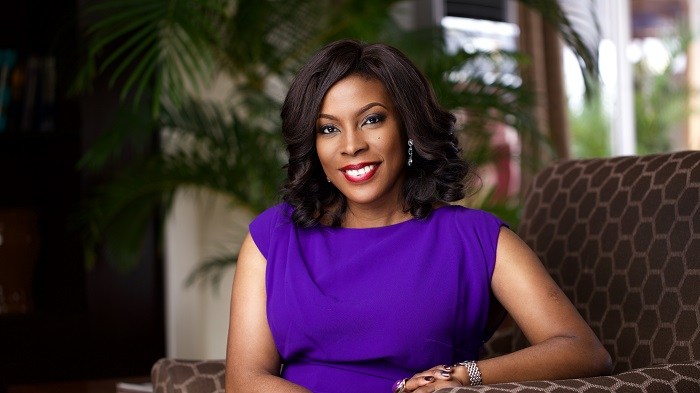
Juliet Ehimuan is the Country Manager of Google in Nigeria. Often called Nigeria’s ‘Queen of Technology’, she is passionate about bringing affordable internet access to Nigeria and also increasing the participation of women in technology. She previously worked with Microsoft in the UK and also Shell Petroleum Development Corporation. Juliet is the founder of Beyond Limits Africa, an initiative geared at mentoring young women to achieve success.
For Juliet, knowing your strengths and knowing how you operate is very important. She says: “…some people are night people, when everybody has gone to sleep and its all quiet, that’s when you do your best work, right? So it’s important to understand your patterns in that way. In your day to day life as well, make sure that you’re able to leverage opportunities to be productive.”
Damilola Anwo-Ade
Damilola is the managing partner of Sprout Consulting and the founder of CodeIT – a platform that mentors the next generation of coders, including young women. Damilola strongly believes in encouraging and empowering young girls to study in science and technology areas. She was honored by the American embassy in Nigeria in 2017 for her contribution to technological education in Nigeria.
Focused on driving effective Educational and social impact-driven Solutions as well as work to improve the structure and efficiency of IT systems in education-focused organizations.
Nkem Okocha
Nkem Okocha is the boss! A former banker, Nkem is the founder of Mama moni, a social enterprise and Fintech startup that empowers women with microloans and free financial and vocational skills training.
Through her Mama moniplatform, Nkem is changing the narrative of Nigerian women who struggle to secure investment, loan, or do not have any vocational training.
Nkem is very passionate about lifting women out of poverty and her company aims to break the cycle of poverty in Nigeria. The startup has been able to impact the lives of more than five thousand low-income women in rural communities across Lagos. Nkem is an alumnus of the Tony Elumelu Foundation Entrepreneurship Programme and the Young African Leaders Initiative, as well as a LEAP Africa 2016 Social Innovator.
Ire Aderinokun
Ire Aderinokun is a self-taught Frontend Developer and User Interface Designer from Lagos, Nigeria. She is currently the co-founder, COO, and VP Engineering of BuyCoins (YC S2018), a cryptocurrency exchange for Africa, and previously worked with eyeo, the company behind products like Adblock Plus and Flattr Plus, building open-source software to make a better internet.
Ire is a Google Expert, specializing in the core front-end technologies HTML, CSS, and Javascript, but is passionate about all aspects of technology.
Ire is giving back to the society through her blog; she has a mailing list of almost 3,000 subscribers on her blog and has written over 100 articles on topics related to tech. She also shares her knowledge by speaking at conferences around Africa and the world.
She organizes Frontstack, a conference for front-end engineering in Nigeria and started a small scholarship program to sponsor Nigerian women to take a Udacity Nanodegree in a technology-related field of their choice. One of her many dreams is to “build up the technical knowledge of women in technology”.
After 20 years of working in U.S. telecoms, Funke Opeke returned to Nigeria to ‘correct the country’s connectivity problems’. The former Verizon executive joined public telecoms company NITEL and learned satellites were just part of the problem. So in 2008, she turned her engineer’s eye towards the ocean, raised $240 million in funding and laid 4,400 miles of fibre optic cable from Nigeria to Portugal. The big business quickly followed; online banking, booking services, and retail websites helped build what is now Africa’s biggest economy. Nigeria’s internet presence, once associated mostly with scams, is now a growing space for international business opportunities. It’s a change for which Opeke is often credited.
She obtained a first degree in Electrical Engineering from Obafemi Awolowo University, Ile-Ife Nigeria and a Master’s degree in Electrical Engineering from Columbia University, New York.
***
We are so proud of these women and every other Nigerian woman doing amazingly well in their various fields. So do you know other women doing amazingly well in tech? Go ahead and share their names.
In 2015 Temie Giwa-Tibosun was revealed in Nigeria with the creation of LifeBank, a platform that supplies Nigerian health centers with blood. This Nigerian entrepreneur wants to save lives. And to achieve its goal, it has relied on technology to improve access to blood transfusions in Nigeria.
LifeBank works with blood banks, hospitals and blood donors. Because Temie Giwa-Tubosun would at all costs want to ensure a better availability of blood to save lives.
After her training in the United States where she studied at the University of Minnesota, the young entrepreneur made the decision to return to her country to make a difference in the development of her country. She puts her know-how at the disposal of her compatriots. It is by working with a non-governmental organization that she noticed the lack of blood in the country’s hospitals. The problem is much more common in poor communities.
Childbirth, accidents and other situations are poorly managed due to lack of blood. In addition to this, in his report, the absence of an organization that allows to store the blood banks according to blood groups and protect them in good conditions.
For the last three years, LifeBank has been helping hospitals better understand the sources of blood, oxygen and vaccines. Then the platform team takes care of the delivery. Today, LifeBank has about 40 blood banks.
To be effective and respond to a concrete and urgent request. “We have cars and motorbikes to avoid traffic jams. We can deliver in less than an hour, “she says. To ensure the safety of boxes that contain blood, there is Bluetooth locking system. A real innovation.
To mark the success, LifeBank will continue to educate people about the importance of blood donation. Every year she organizes blood donation campaigns in the country. These campaigns take place at least four times each year and can supply the startups’ blood stores. The platform already has more than 5,000 volunteer blood donors.
Since 2015, LifeBank has delivered nearly 10,000 units of blood. The platform collaborates with a hundred hospitals in the country. Beyond Lagos the capital, the startup intends to expand its activities in other cities.
Elizabeth Amoaa was born with a rare condition: two vaginas, two cervixes and two wombs. She only got to know five years after the birth of her daughter.
Amoaa in 2015 was diagnosed with uterus didelphys. Uterus didelphys, or “double uterus,” occurs during fetal development, when the two tubes that normally form one uterus instead become two separate structures, according to the Mayo Clinic.
A double uterus may have one cervix that opens into one vagina, or each separate uterine cavity may have an individual cervix and vagina, leaving a woman with two vaginas, according to Health.com.
It’s entirely possible for women with a double uterus to carry a baby to term. However, the condition does come with an increased risk of miscarriage or premature labor per Health Line.
Amoaa’s double womb caused excruciating problems throughout her pregnancy – but neither she or her doctors noticed its existence.
Picture: Barcroft
“In 2008 when I was diagnosed with uterine fibroids, I was told that conceiving was going to be very difficult for me.
“They told me I was actually infertile, so when I fell pregnant it was a huge surprise [and] it was a challenging pregnancy, I was bleeding throughout, fainting and feeling tired,” Amoaa told Metro.
“They actually thought it was ectopic pregnancy as they didn’t know I have a double womb, and nor did I. I would go to have a scan, which I had to do frequently because of my fibroids, and one minute they would see the baby is in the womb, then the next they could not find the baby.
“Sometimes they were scanning the wrong womb, I had 20 scans and no-one pointed out I had a double womb – because it’s so rare they weren’t looking out for it.”
At some point, doctors suggested that Amoaa terminate the pregnancy but she kicked against it.
Picture: Mirror
“They’d say ‘We cannot see the baby, maybe the fibroids are hiding the baby’ and persisted in saying I should have a termination, but my belly was growing and I realized “actually it’s a baby” and I was determined to carry it to birth. The day my daughter was born was a miracle because during the pregnancy it didn’t feel real,” she said.
An MRI scan in 2015 eventually revealed Amoaa’s condition. She had two vaginas, two wombs, and two cervixes. “It was kind of a shock; you want answers to your health but that wasn’t what I was expecting.
“It was new, I had never heard of anyone born with a double womb, then in 2016 they did keyhole surgery and found I also had two cervixes and two vaginas,” she said.
The surgery also revealed that Amoaa had stage 5 endometriosis – a painful disorder where uterine tissue grows outside the uterus – on her bladder, Metro reported.
In 2017, Amoaa was pregnant again but suffered a ‘silent miscarriage’– a miscarriage without bleeding four months into the pregnancy. She had to have a medical abortion and evacuation of the womb to remove the fetus.
Amoaa set up ‘Speciallady’ – an organization dedicated to educating women and young girls on gynecological conditions and menstrual hygiene after the miscarriage.
“I always say that Speciallady is my second baby. I want to be the voice of the voiceless for every woman out there who is going through symptoms like what I went through.
“My condition means that I am a high risk of cervical cancer or ovarian cancer, so I decided I wanted to live out my dreams,” said Amoaa who is originally from Ghana, but moved to the UK from France in 2003.
She was in Ghana recently to create awareness of gynecological issues.
Growing up in Lagos, Nigeria, my mother’s hair salon housed many vivid memories. I recall how my eyes would tear up from the sting of menthol as I greased scalps. I remember my arms cramping from prepping hair extensions, or worse, undoing micro braids. (This was the 1990s. These days, we are more into Peruvian weaves, wigs, and crochet braids.)
I also remember eavesdropping on women swapping recommendations for skin lightening products. Some women gave directions to beauticians who were known for mixing special creams. Others would exchange homemade concoctions, like how combining certain products with moisturizer could mitigate the harshness of the chemicals, or how a certain egg-based shampoo made for effective lightening results. Sometimes code words like skin toning, brightening, or glowing would be used in place of the pejorative “bleaching.”
Thinking back, the question “what are you using?” was a common refrain in my youth.
Personally, I didn’t feel like I needed to be lighter, but I certainly didn’t want to get darker. Like so many Nigerian girls and women, I found myself avoiding the sun as much as I could, a habit that continued into my early adulthood. My older sister is very light skinned, and growing up, it was palpable how both men and women fawned over her. Somewhere in the depths of my subconscious, I too had equated lighter skin tone with beauty.
As I entered my early 20s, I began to interrogate beauty standards and those ideals started to lose their power. But still, despite all the work I’ve done to accept my natural color, when I walk into a salon to get my eyebrows waxed, someone inevitably recommends a product to, as they put it, “heighten my glow.”
Today, the global skin lightening industry is estimated to be in the multibillion dollar range. In Africa, Nigeria is the largest consumer of skin lightening products. While there is no substantial data on the use of skin lightening products around the world, a World Health Organization report claims that 77 percent of Nigerian women use them on a regular basis. Countries like Togo, South Africa, and Senegal are not lagging too far behind.
Skin lightening, however, is not limited to Africa. In 2017, according to Future Market Insights, Asia-Pacific made up more than half of the global market for skin lightening products, with China accounting for about 40 percent of sales, Japan 21 percent, and Korea 18 percent.
In Africa, there is no documented history of when skin lightening took off, but Yaba Blay, who teaches black body politics and gender politics at North Carolina Central University, believes that it began as African countries gained their independence.
In a 2018 interview with the online publication Byrdie, Blay says that white women have historically used their whiteness as a way to communicate purity. This belief was exported to Africa, and around the time of independence, skin lightening began “exploding.”
Television host and actress Folu Ogunkeye has experienced her share of rejection when auditioning for film and television roles as a dark-skinned woman. “What I have found in Nigeria is that leading roles are not readily available for dark-skinned actresses,” she explains. “Initially I had simply assumed that I wasn’t suited for the particular role for which I had auditioned, but then each time, the role was given to a lighter-skinned contemporary. After discussions behind the scenes with industry experts, it has been said outright that certain leading roles are simply not given to darker-skinned actresses because executives do not believe that audiences [want to] see darker women in romantic or leading lady roles.”
One of the seemingly oxymoronic aspects of skin lightening in Nigeria is the sense of shame and denial attached to using these products, particularly among elite women.
A few African countries, like Kenya and Ghana, have attempted a crackdown on the importation and sale of certain skin lightening products, especially those containing chemicals like hydroquinone and mercury. More recently, Rwanda enforced a nationwide ban on skin bleaching products, leading to authorities removing creams and soaps from shelves across the country.
Colorism is a complexand loaded notion that requires re-examining our cultural norms of beauty. This sort of long-term educational approach will take a lot of time and effort. But I think there is hope.
Just in the same way that the natural hair movement caused a decline in the sale of chemical hair relaxers, forcing beauty companies to create products for natural hair, or how black YouTubers forced the makeup industry to rethink its products and marketing, the same can happen to the skin lightening industry.
With education and awareness campaigns and a deliberate move to broaden the spectrum of the skin tones that we see on our television screens and billboards, the needle on colorism will eventually shift. However, while we wait for that change to happen, we need strict regulations to ensure the safety of skin products being sold in stores across the continent.
Now in my 30s, I am surprisingly asked about my skin regimen despite sporting a heavy tan from taking on swimming as a new hobby. I think this is because Nigerian’s perception of what it considered beautiful skin is becoming more expansive, and there is an increased awareness that beauty isn’t monolithic.
Recent shifts in how we see beauty such as the body positivity and natural hair movements as well as dark-skinned, Oscar-winning Kenyan actress Lupita Nyong’o becoming ambassador for French luxury cosmetics house Lancôme, are contributing to our gradual redefining of beauty. My hope is that one day in the near future, no woman in Nigeria will feel she has to lighten her skin to feel beautiful or improve her odds of success in life.