Category

Inspiration

Category

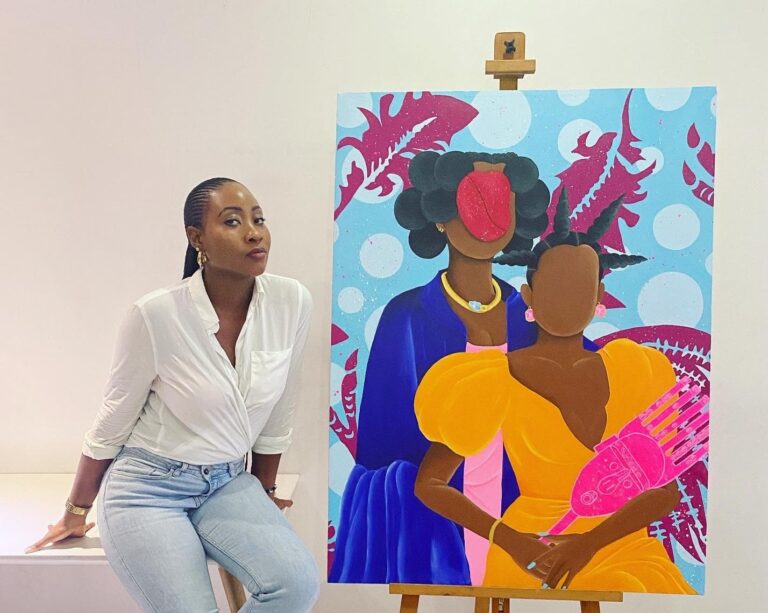
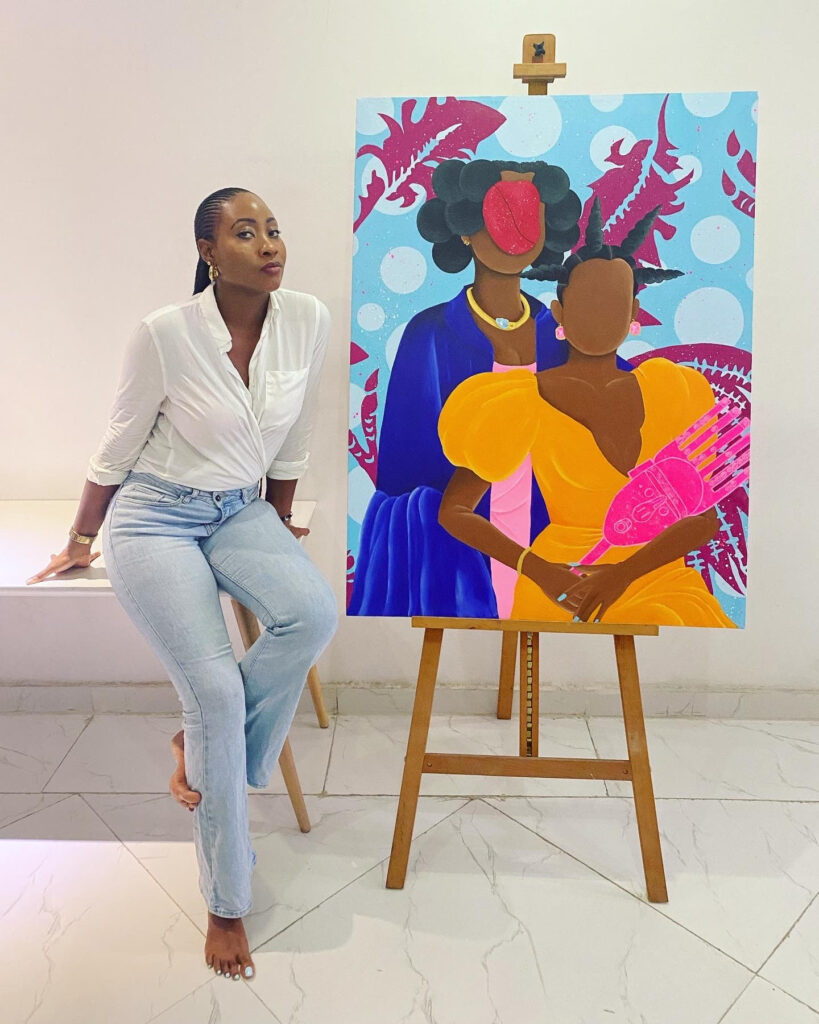
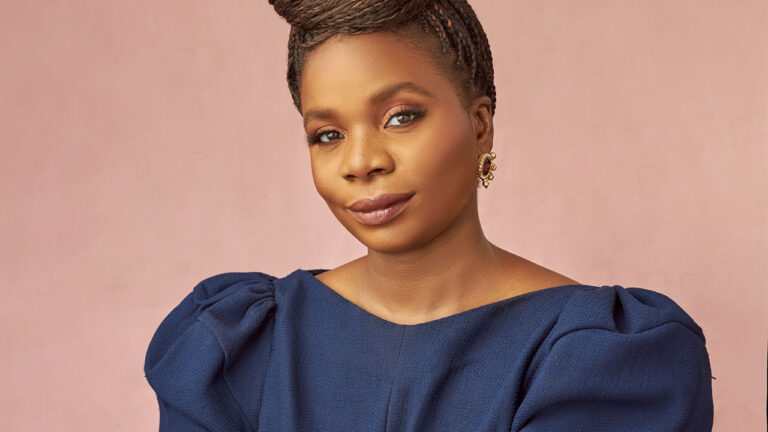
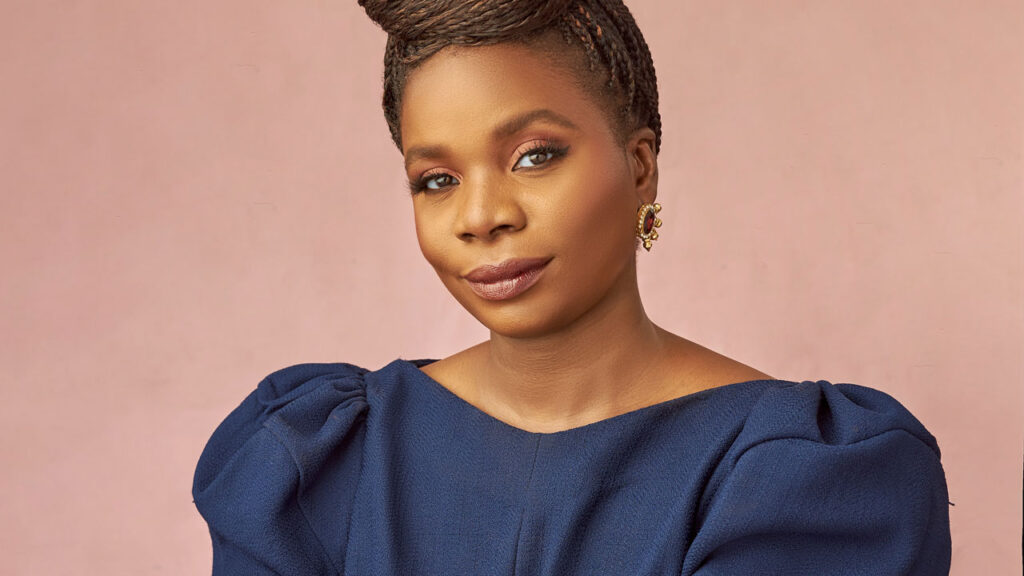
According to a notable artist; Art should be something that liberates your soul, provokes the imagination and encourages people to go further.” This is what Stephanie Unaeze’s Modern Afro-Pop-Surrealism artwork represents.

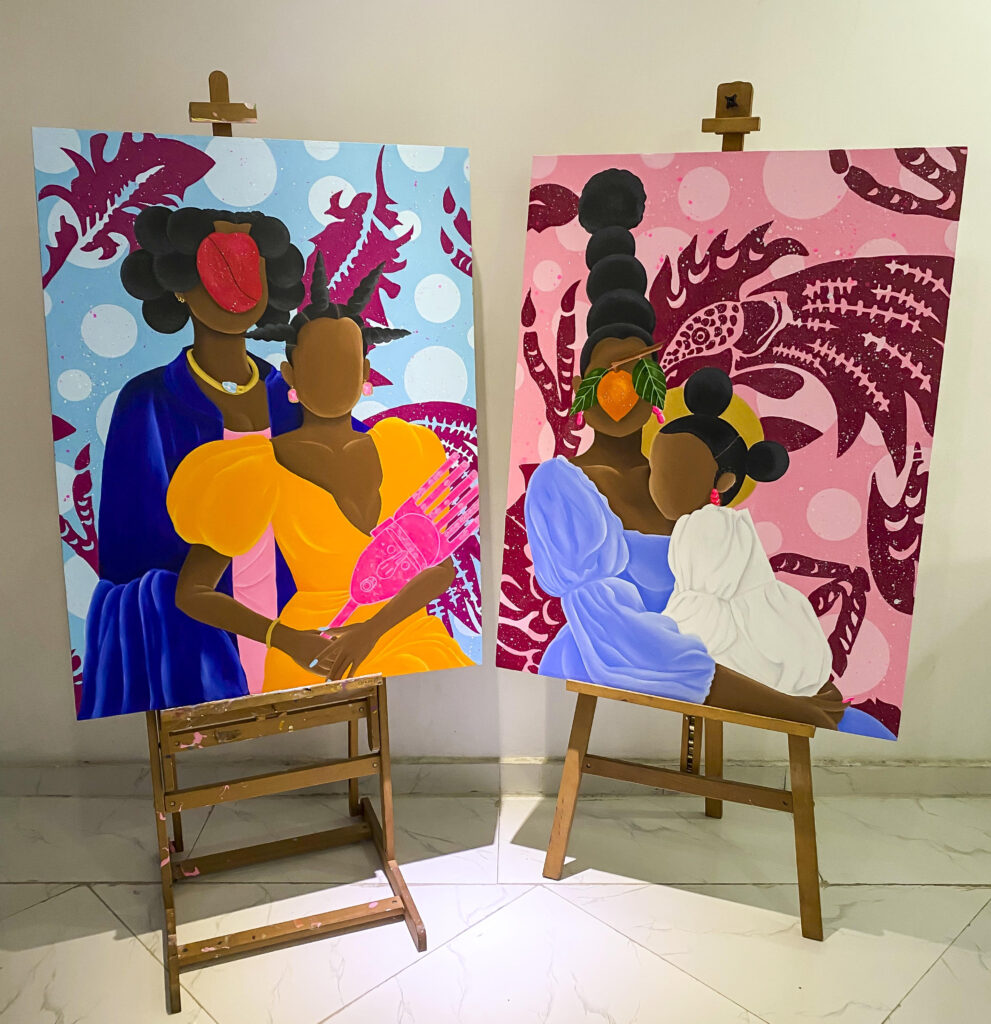
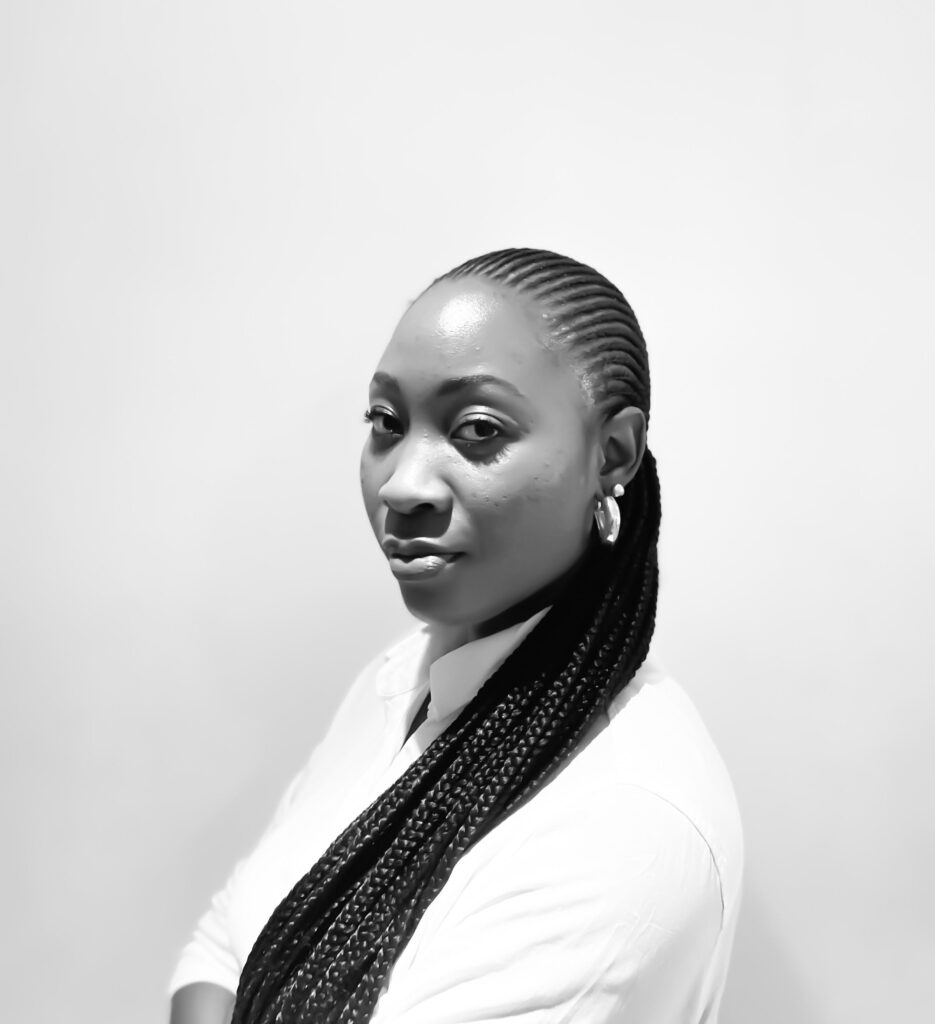
A self-taught  Visual Artist currently living and working in Lagos Nigeria, her practice aims to understand and document the effects that society, culture, and tradition have on the proverbial self. Tackling issues such as globalisation, post-colonial consumerism and identity. She credits her multicultural upbringing as one of her main influences.Through her form, which she describes as ‘Modern Afro- Pop- Surrealism’, she is able to juxtapose fact against fantasy traversing through the conscious and subconscious with ease.

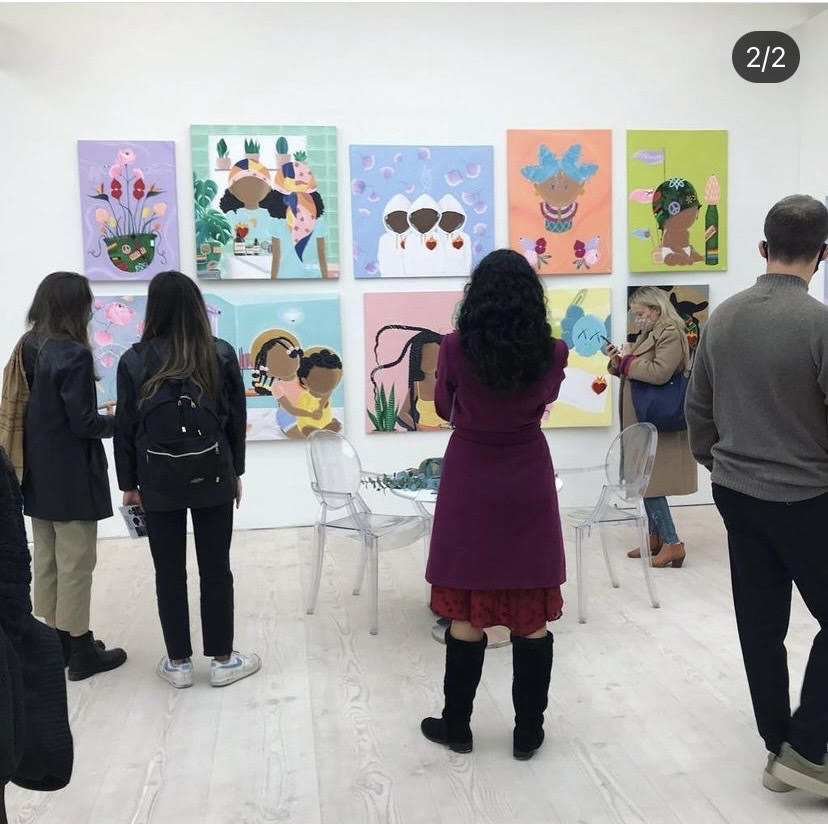
Her work acts as a conduit for history, bringing it into the new age whilst maintaining its authenticity. Stephanie uses her art to express and document the nuances, complexities and layers that surround the modern African lifestyle. With the use of patterns, geometric design, and vibrant colours, she evokes the strong flavours of the continent and the spirit of its people. Her use of minimal, often faceless figures, projects the idea that the self is always present through cultural shifts, new forms of expression and societal changes. The talented artist shares her inspiring story with Esther Ijewere.

Childhood Influence
Growing up, I was a very shy and introverted child, who loved reading and drawing. My Father was a Diplomat in the Air-force, so we moved around a lot; I got to live in a lot of different places and experience different cultures and different ways of living. Books were a form of stability for me; being able to escape into those worlds helped me deal with the constant changes happening in my life.

I first started drawing by copying the illustrations I saw in the books I read. I was enthralled by the striking simplicity of Nick Sharratt’s illustrations and that inspired me to want to create my own. Fortunately for me, I always had Art teachers who saw my talent and encouraged me, especially my art teacher in my first secondary school (St Mary’s College Bishops Stortford ) who enrolled me into a gifted and talented program for the Arts, which opened my mind to the idea of being an Artist.

Why I Became a Visual Artist
On my 21st birthday, I went to the MoMa (Museum of Modern Art, New York) to visit the Warhol Exhibition. I had been a huge fan of his work (as well as other artists such as Frida Khalo and Kehinde Wiley). But something about seeing his work in person and hearing them talk about him and the impact his work had on society and modern culture made me realise that Art was more than just visual images. It’s a way to tell a story, capture a time, speak up about injustice, and for me personally an opportunity to change the singular narrative of Africa and African Art.

The Journey So Far
My journey since I started has been filled with ups arms downs initially, because I didn’t go to Art school; I always felt that I was at a disadvantage. There are so many opportunities Art school gives you to connect with established artists and institutions that I just didn’t get, so I always had to work twice as hard.

I’ve been working as an artist professionally for about five years and there were many times I wanted to give up, because my works weren’t selling and people didn’t understand my style, but I pushed through because I knew I was offering something new that people weren’t used to. I’m still on my journey and I know the best is yet to come.

Modern Afro- Pop- Surrealism’
‘Modern Afro-Pop-Surrealism’ is a mix of several art genres that I draw inspiration from. Surrealism is about the sub-conscious, the dreamlike, quintessentially an expression of the subconscious, made famous by artists such as Salvador Dali. Whilst Pop-Art is more culturally relevant and was created as a way to introduce art to masses by depicting popular culture and imagery in striking compositions and a simplified art style, whilst taking advantage of modern technology such as screen printing, digital art and photography. With my work, I aim to merge these two concepts together in a modern way to showcase African Culture and lifestyles.

Inspiration Behind My Work
It’s very intentional. With my work, I aim to show black people in a divine light. I also believe that artistic talent is a gift from God.

How Twitter Helped My Work
In terms of visibility, it’s been really impactful, it helped me gain a new audience and with how important social media is in these times, it’s really great to have something like that happen.

The pandemic and its impact on my work
I worked through the pandemic and some of my pieces were influenced by what was happening around me and around the world. I honestly think that making artwork was what helped me keep my mental health in check and provide a sense of normalcy.

Challenges as a Visual Artist
I’m a self-taught artist, so learning my craft was a challenge, learning how the art world works was a challenge and learning how to create a career from your talent was also a challenge.

Three Women Who Inspire Me
Lynette Yiadom Boakye, my sisters, and Maya Angelou. Each of these women inspire me with their resilience, hard work, determination, and grace. They’ve taught me to never give up and to always focus on reaching my maximum potential.

Being A Woman Of Rubies
What makes Stephanie Unaeze a woman of rubies and more… her spirit, her determination, her kindness, and her ability to overcome everything that is put in front of her. She is a woman who knows herself and her worth.

Other Projects And Activities
I have a functional Art studio that I just started, Stephanie Unaeze Studio’s. It is a Functional and Applied Art Studio that draws inspiration from the Mbari cultural practice of Eastern Nigeria, inspired by the idea of making art more accessible, interactive, and tactile. Using locally sourced and crafted sustainable materials from around Africa, our goal is to transform the everyday and mundane into art, creating a more enriching life experience.

The Art Industry In Nigeria & Female Artist
The art industry in Nigeria right now has an amazing crop of female artists who are making powerful work and showing these works across the world. What we have now is a good foundation, but we need to build on it. We need to go to the grassroots, primary and secondary schools and put structures in place that will allow more girls to rise up and become the future female artists that will one day lead the industry.

As CEO Obi Ibekwe will advance the team’s mission of leading Nigeria’s transformation as Africa’s premier financial services center

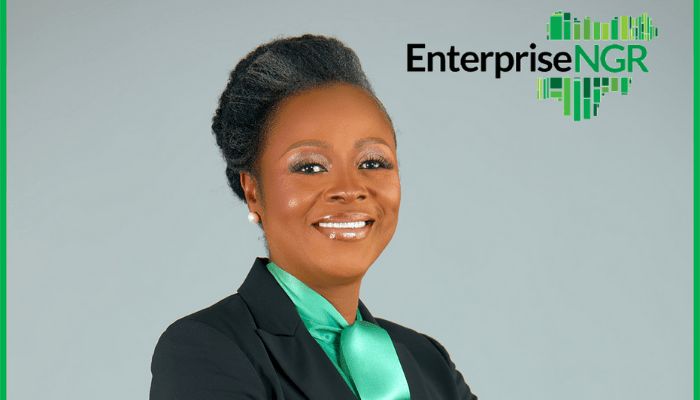
EnterpriseNGR, Nigeria’s newly-established professional policy and advocacy group representing members of the Financial and Professional Services (FPS) sector, announced the appointment of Obi Ibekwe as its founding Chief Executive Officer on October 4, 2021.

With more than three decades of experience in the FPS industry, Ibekwe will lead the EnterpriseNGR management team in close partnership with the organization’s Board of Directors and strategic partners.

“EnterpriseNGR is led by a board of seasoned industry professionals with broad experience and expertise across all aspects of the financial and related professional services sector”, said EnterpriseNGR Chairman Aigboje Aig- Imoukhuede.

“We are very pleased to have Obi Ibekwe leading our management team as our founding CEO. She will lead a world-class team of well-trained, experienced, agile, and dynamic professionals, committed to a culture of execution excellence in delivering on the mission of EnterpriseNGR vision.”

Ibekwe joins EnterpriseNGR from the banking industry with a background in commercial law. She has held leadership roles at Diamond BankZenith Bank, and United Bank for Africa where she retired as an Executive Director. She has also worked as a member of the senior management team at Accenture Nigeria and as a Non-Executive Director of Transnational Corporation of Nigeria Plc and Saroafrica International Limited.

With experience in areas spanning Credit and Marketing, Credit Risk Management, Human Resources, and Customer Services, Ibekwe says she aims to work with EnterprisNGR to demonstrate the importance and value of the Nigerian FPS sector and its contribution to national development.

“I am passionate about the vision of EnterpriseNGR,  It’s a vision of a unified financial and professional services industry in which all sectors are enabled to achieve their potential and contribute to the transformation of Nigeria into the premier financial center of Africa” said the new CEO in a statement.

Our goal at EnterpriseNGR is to work collaboratively with the entire ecosystem of the financial and professional services industry and Government to develop and implement policies that will promote growth, efficiency, and transparency in our financial system. I am honored and feel very privileged to be leading these efforts as our founding CEO and will work every day to help build that one big voice of enterprise™ for the financial and professional services industry.”

Ibekwe holds a Bachelor of Arts degree in International Relations from Tufts University, Medford, Massachusetts, U.S.A. She earned her Law degree from the University of Lagos, Nigeria, and was called to the Nigerian Bar in 1986. She also holds an MBA degree from the prestigious Ross School of Business, University of Michigan, Ann Arbor, U.S.A.

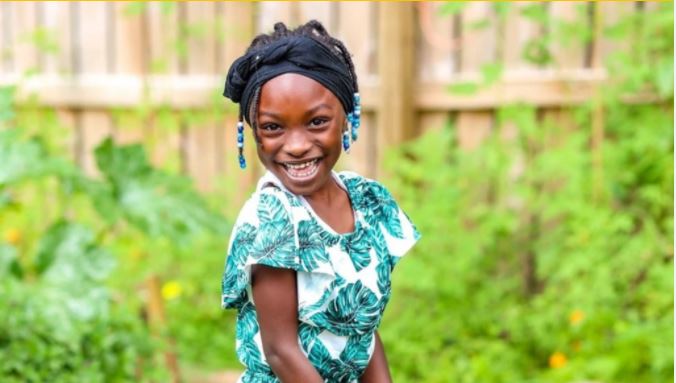
Kendall Rae Johnson recently made history as Georgia’s youngest certified farmer, Black Enterprise reports. She is working to make her mark at the tender age of 6. With her mom and dad’s support, Kendall Rae started her own business, “aGrowKulture,” joining several agricultural organizations in the state, including Georgia Grown and the Georgia Farm Bureau. Her hope is to apply for grants and scholarships to help expand her farming business.

Her mom, Ursula Johnson, said that her daughter has been farming for nearly half her life, crediting Kendall Rae’s great-grandmother, Laura “Kate” Williams, with giving her a green thumb.

“She started out in a patio garden, and the patio garden grew from a little bitty something to, by the time her fourth birthday came, we had a full-fledged garden in our backyard. And then we moved, and now she has a farm,” Johnson said.

The kid farmer grows several things, including okra, carrots, cucumbers, squash, zucchini, and strawberries. She shares her love of farming via a monthly gardening club and a subscription-based food box. Kendall Rae hopes to inspire other families and children to begin gardening and continues helping people learn about a farm-to-table lifestyle.

Georgia state Rep. Mandisha Thomas has been an advocate for Kendall Rae, recruiting the young agriculturist to support other young farmers in the South Fulton region. As a result of Thomas and Kendall Rae’s efforts, they raised nearly $85,000.

The goal for Kendall Rae is to continue her farming, focusing on raising funds to launch an outdoor agricultural science lab so she can begin composting. Currently, she needs about $10,000 to help bring it to life, and she’s hoping that the community will assist her.

Source: becauseofthemwecan


Rafiat Atanda is a Communications Officer at a leading financial institution, and with a heart in the social impact space. She is a 2021 Carrington Youth Fellow, 2021 Margaret Ekpo Youth Fellow, 2020 ONE Champion, Advocate, quintessential Public Speaker, Host, and Freelance Presenter with over five years of experience.

In her capacity as a 2020 ONE Champion in Nigeria, she was privileged to join the high-level Tortoise G7bn Summit and shared her thoughts on the kind of leadership the world should be aiming for.
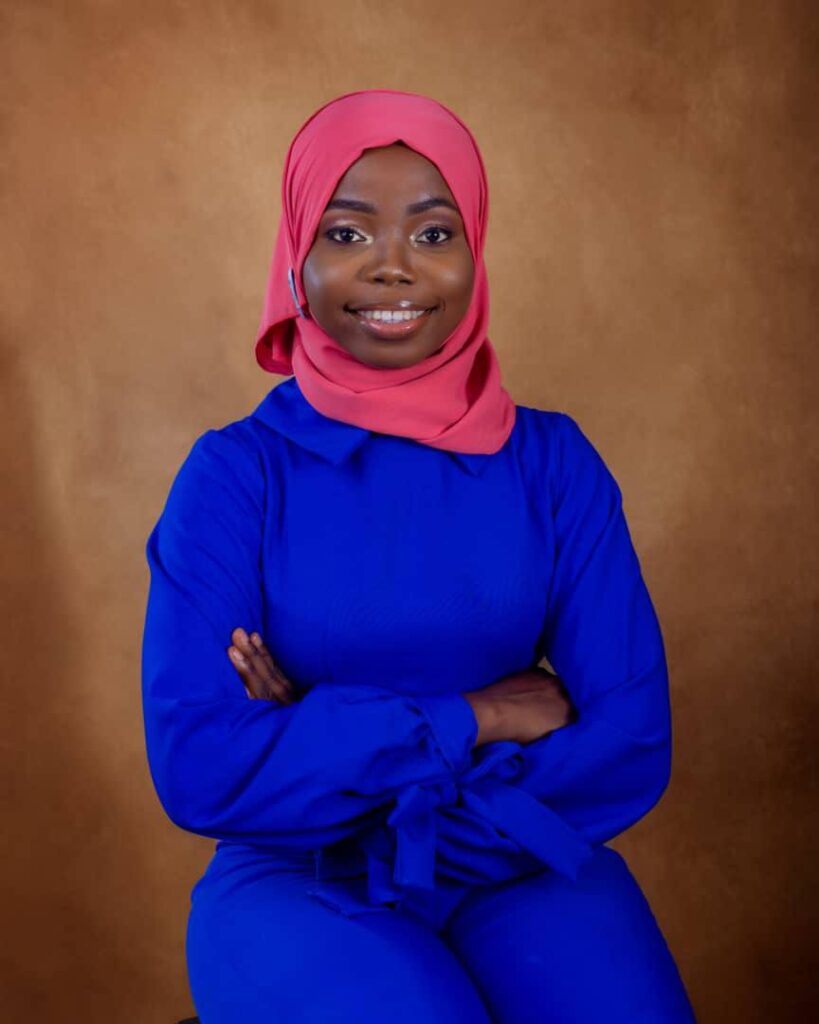
Also, she has hosted a number of top-level events, judged several debate competitions, moderated a number of panel sessions and trained individuals in the art of excellent public speaking. A one-time presenter on LASU Radio 95.7FM and “Insight on Politics” on LTV, she continues to trailblaze and inspire action whenever she talks. She is the host of “TalkWithRaffy” on Instagram, a platform where she teaches people how to speak and communicate effectively.
Rafiat Atanda is passionate about women, girls and youth.

She shared her Ruby Girl story with the team.

1. Tell us about your childhood, Rafiat. What was growing up like for you?

Growing up was a blend of fun, fear, faith and hope. Like many kids in semi-urban areas, I grew up playing table tennis with boys, seasonally going to Mr Biggs, defending other girls from male oppression, living with caution because my parents were principled and entrenched in spirituality. It was a tough environment characterised by juvenile delinquency, little or no regard for education and other social vices but thankfully, I had parents who checkmated my steps and served as great anchors; instilled a profound moral compass in me; taught me the way of the Lord; charged me to believe in myself and not be defined by my immediate environment; and taught me that being female, even in a male-dominated world is a rare blessing. I didn’t have access to luxury but I had access to parental guidance, and the understanding of what genuine love for humanity is.

2. ‎Have you or people around you always known you would be interested in public speaking?

Yes. I have always had an undiluted love for public speaking. As a student of Sari Iganmu Secondary School and undergraduate at the Lagos State University, I represented my schools in different debate competitions and won trophies. This interest spurred from childhood; I loved talking. I remember how I used to rush to put on the generator, whenever it was time for “The Debaters (a debate competition for adults organised by Mo Abudu) “and there was no power supply. After English tutorial classes taken by my teacher Ganiu Bamgbose who is now “Dr Ganiu Bamgbose”, I would consciously practice speaking right with my good friend Grace Uzoh.

Communicating with poise and the right diction became a crucial component of my being. People always told (they still do) me that they like the way I speak and at some point, my coursemates at the university labelled me “Diction mistress”.

It’s been quite a ride, so they’re not surprised I’m interested in public speaking and communication.

3. ‎Can you enlighten those who are currently nursing the desire to be a Margaret Ekpo Youth Fellow or Carrington Youth Fellow someday how they can achieve this ambition? Also what do you intend to do as a fellow?

I’m very grateful for the opportunity to learn, engage and impact through the Margaret Ekpo Fellowship and Carrington Youth Fellowship. As a corporate communication officer, it’s delightful to know that the little work I do in the social impact space advancing the lives of youth, women and girls isn’t so little after all. For anyone willing to be part of these incredible initiatives, I implore you to put in the work and tell your stories the right way. Endeavour to increase your digital footprints with inspiring and humanised stories. Organisers are looking for passionate and empathetic changemakers; you need to demonstrate that you are the one they’re looking for. Also, seek guidance from alumni; it will help strengthen your application and increase your chances of being selected.

As a Carrington Youth Fellow, I currently work with the civil liberty team and we are looking to work on a project based on juvenile justice. This project is dear to my heart because upon my visit to a correctional center, I noticed that these juveniles are not adequately prepared to be well reintegrated back to the society. It was a devastating experience and I have never stopped thinking about them. I will be engaging individuals to teach these kids monetisable digital skills, as well as work with other members of my team to better ease the entry and exit process of these juveniles.

On the other hand, I have realized that there’s the feminisation of poverty, the erasure of women in history and the underrepresentation of women in governance. So, as a Margaret Ekpo Fellow, I intend to document the stories of women- past and present- as well as champion or support empowering initiatives that will help more women take up leadership spaces, be economically buoyant and live wholly as humans.

4. Judging by your years of practice in the Communications sector, what have you noticed most organizations and institutions are lacking and need to improve on?

Lots of organisations are upping their communications game. It’s interesting seeing how they strategically jump on trends, engage influencers, put some marketing budget on traditional and new media advertising, and try not to hard-sell their products or services.

However, I believe that many organisations still need to learn how to humanise their stories, especially by standing with the people on issues affecting their collective existence. No sitting on the fence; they should join them or back out! No more robotic response to customers, too. In addition, organisations need to ensure they’re domesticating their communication assets.

5. ‎Any particular or general challenges you encounter in the course of practicing and teaching public speaking? Any tips on how you have been able to overcome them?

The challenges I encountered as an early stage public speaker were:

– Overcoming stage fright
– Speaking with confidence, clarity and the right diction
– Getting the right response/emotions from the audience

Here are tips that have worked for me…

Every time I get to talk about public speaking, I particularly share the power of the “3Rs”; Research, Rehearsals and Reflection.
I have come to realise that the challenges I stated above stem from a lack of mastery of the 3Rs. Before you speak to an audience, endeavour to have researched about them and the topic of discussion. This will influence your 5Ws and H. Remember people have come, so you can educate, entertain and inform them.

In addition, you must rehearse your presentation. That is, practice! Do this with friends, family members or even the mirror (the mirror is my best part). Treat it like the serious business that it is. You can not master what doesn’t matter to you.

When you reflect on your speech beforehand, it gives you an idea of what the tone of your voice should be, your choice of words, your looks, etc. You’re ultimately doing this to elicit some kind of emotions/feedback from the audience.

For the challenges stated above, the 3Rs have helped me address them. When you have sufficient knowledge of the topic and people, practice in whatever way you can and reflect, against all odds, you will most likely deliver a memorable presentation.

6. ‎A random fact about your talk show, “TalkWithRaffy.”

The ideas of many of the content I have worked on in the past came while I was in the restroom.

7. To many, feminism means not being submissive, proud, rude and wanting to be in control, what’s your take on feminism?

There are lots of misconceptions about what feminism is in this part of the world, and I believe they largely stem from a place of patriarchal privilege, power domination and unhealthy social constructs. At the heart of feminism is the advancement of women’s issues- ones that everyone should be deeply concerned about. But no, when a woman takes the bull by the horns and decides to deconstruct unprogressive practices, she is labelled “proud, rude, etc.”.

For far too long, the trajectories of women have been laced with underrepresentation and dehumanisation across human endeavours. Women make the numbers but sadly, these numbers are mere statistics that do not translate to shared opportunities. I have met many ladies who have shrunk to fit because the audacity in their voices is a threat that could cost them marriage to a man in the nearest future. They continue to wallow in the pit of social constructs and living wholly as humans does not seem like an option to them.

Regardless of the labels, I understand that a person’s experience can be learned from but not be universalised. Equal opportunity is not a luxury and should not be gender specific. I believe in the social, economic and cultural inclusion of everyone. I believe in the freedom of women and girls to be simply humans who nurture their individualities. This is what feminism means to me.

8. ‎Your major takeaways from advocacy over the years?

– Advocacy isn’t cheap; you need resources (money, time, manpower, etc.) and an undying passion to do great advocacy.
– Emotions alone doesn’t push advocacy, you need facts, a strong network, diplomacy and good lobbying skills.
– When you do advocacy, tell your story in a compelling way. It will not only advance your cause and improve the lives of the people, but aid your personal development.
– You can pursue a career in a different sector and still do great advocacy. I am a Corporate Communications Practitioner who has leveraged my learnings and skills over the year in driving sustainable development. For instance, I ran on online campaign during the rise of the 2nd wave of COVID-19 cases in Nigeria. The hashtag used “#MoreThanAMask” garnered about 2.5million organic impressions.
– As much as possible, advocate without being provocative. A smart advocate doesn’t shut the door; they leave it ajar.

9. ‎ If you were to be the President of the Nigeria, which changes would you implement?

It’s very appalling that politics in this part of the world isn’t largely based on ideas and ideals; but on the size of your pocket and your loyalty to “constituted authorities”. Politics is perceived as a business that people venture into for profit, and not an avenue to genuinely serve God and humanity.

If I were President, I would reduce the cost of governance, so more parts of the budget can be allocated to sectors such as education, health, justice, etc; and passionate individuals are attracted to politics. I would elevate and regard “The Office of the Citizen”, lead by example, entrench the rule of law and democracy, provide an enabling environment for young people to innovate and thrive, and increase women representation in government.

I would improve communications in a way that citizens are addressed with empathy and compassion.
I would strengthen the agricultural and manufacturing sectors, so we produce most of what we consume and eradicate poverty. I would put a strong monitoring and evaluation mechanism in place, so resources are better utilised. My people will enjoy the dividends of democracy and everyone will have equal opportunities to live a life of dignity.

10. Mention 3 women who inspire you and why?

Mo Abudu: What else to say about her cross-sectoral experience, grit, poise, intelligence, persistence and determination. One of my inspirations for being a public speaker- especially, a hijabi public speaker- was watching “The Debater”, an initiative of Mo Abudu. She is an amazon who is constantly changing the African narratives. She wears so many hats, and does so excellently.

The Squad (Reps. Ilhan Omar of Minnesota, Alexandria Ocasio-Cortez of New York, Rashida Tlaib of Michigan, Ayanna Pressley of Massachusetts and Cori Bush of Missouri): I like that these audacious women represent different “Firsts” and together, they have built a resilient and forward-thinking sisterhood. They will rather be honest and feel the heat, than be neutral. For them, the interest of the populace supersedes the party’s interest. They are smart, knowledgeable, graceful and radical. What a breath of fresh air they are!

Christiane Amanpour:

A stellar outlier and outstanding storyteller. Despite being so long in the game, Amanpour continues to grace our screens with incredible stories of people, places and possibilities. She has shown that hard work and passion are major ingredients to attaining success and significance.

11. Where do you see yourself in the next 5 years?

I like the intersection of media and communication, politics, policy and development. In the next 5 years, I see myself occupying an international role that brings everything together and allows me do great, impactful work.

12. If you were given the opportunity to address a group of girls five years younger than you, what will be your advice to them?

You’re bigger than your current environment; don’t let it define you. Own your truths, take up spaces and do not be enveloped by social constructs. Live wholly as humans, breathe! Do not let the fear of failing stop you from trying. Tell your story because no one understands what it feels to be you like you. Seek guidance, you do not have to thread the rocky path of life cluelessly. Embrace humanity and spirituality, it will help you live a more fulfilled life.

_Thank you for your time, ma. We’re most grateful._

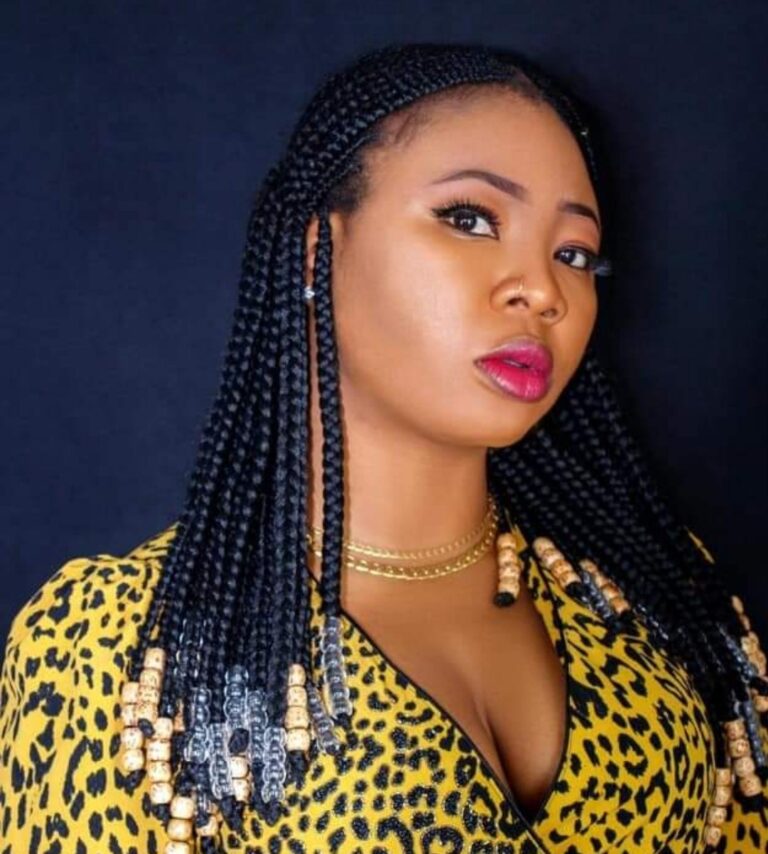
C-mi (pronounced C.M.I), Adegoke Adesimisola Alice is a Nigerian born, France based artist poised to take the Nigerian and French scene by storm. She started recording in 2002, heavily influenced by Whitney Houston, Jay-Z and Eve. So she easily swings between Afrobeat, Rap, Pop-Reggae and others.

In 2011, C-mi won the Bitbender freestyle competition in Lagos and then relocated to Malaysia in May of same year, where she released her first single— ‘Nani’. In her music journey, she has shared the stage with 2Baba, Kelly Handsome, Terry G, Morachi among others, while performing in shows from Nigeria to Malaysia and across France, among others.

The versatile artiste, and multi-tasking mom of 4, and wife shares her inspiring journey exclusively with Esther Ijewere in this interview.


Childhood Influence

I grew up in a family where music was literally a part of our daily lives. We used to sing and dance all the time. My younger sisters and I would sing while washing clothes and our neighbors would listen and they even advised us to form a group ‘THE SOLAS’ lol. We would make a circle around our centre table and beat the table with our palms to make drum sounds and just sing. Every member of my family composed songs so my Dad bought a mini tape recorder where we used to record every time we had an inspiration. It was so great. I was also very active in the church choir from the age of five. So, yes my childhood prepared me for where I am and what I do right now. I was born in Egbeda, Lagos but my family moved to Ijegun, Ikotun, Lagos when I was about 8.  I am the first of 6 children so I had to grow up and be responsible from a young age


My Passion for Music

I have always known from a very tender age that Music is the way to go for me so although life happened, I have always managed to keep that dream alive.


The Journey so far

It hasn’t been easy, but I have managed to keep pushing because the dream is very much alive in me and Valid.  I have had a lot of support, disappointments and discouragements from people in the Industry and even from friends and families. I just focus on the good stuff and block out the negativity.


Performing with A-list artists

I haven’t had the opportunity to record with any A-list Artist but I have performed shows with them and the one that stood out for me was the ASAM Awards in Malaysia where I got to share the stage with Tuface Idibia. His humility and energy stood out for me, and I am very grateful for that experience.


Living in a Francophone country, and breaking into the music industry

Initially it was a great challenge because most of my songs are in English and Yoruba but music is a universal language so the vibe and energy in my songs made it easy for people to connect.  Now I try to infuse French in my songs too, so everyone is involved. I have met great people that have been very supportive of my brand and my Music too.

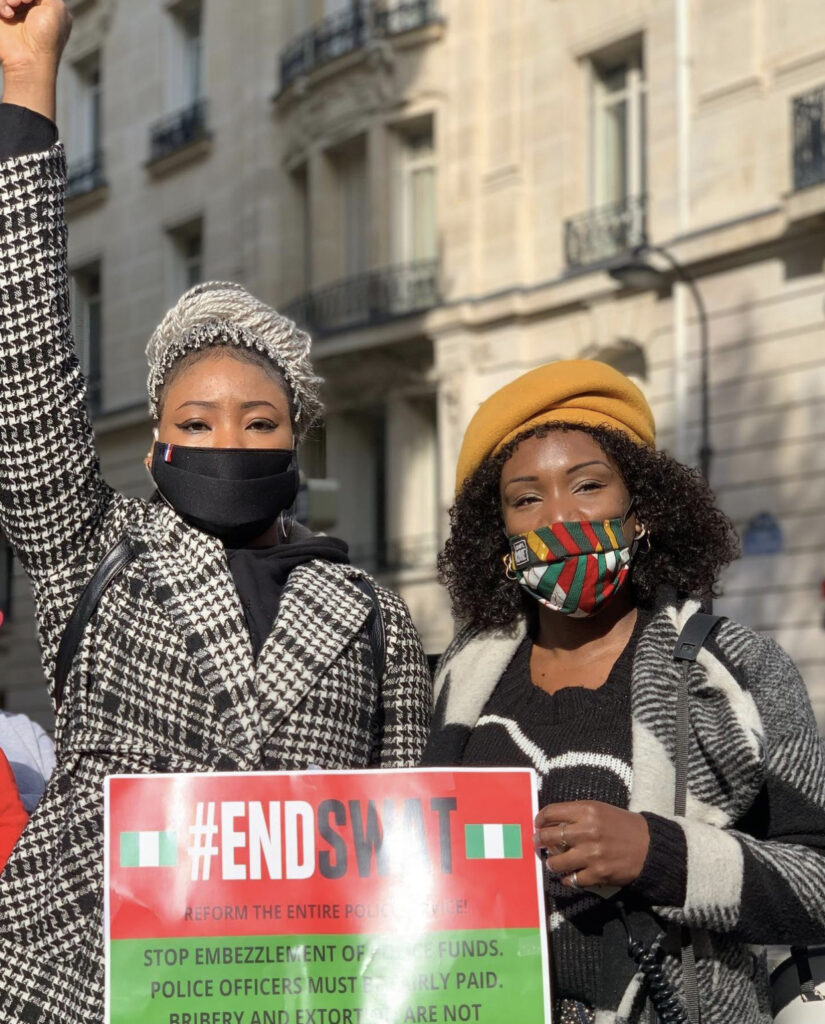
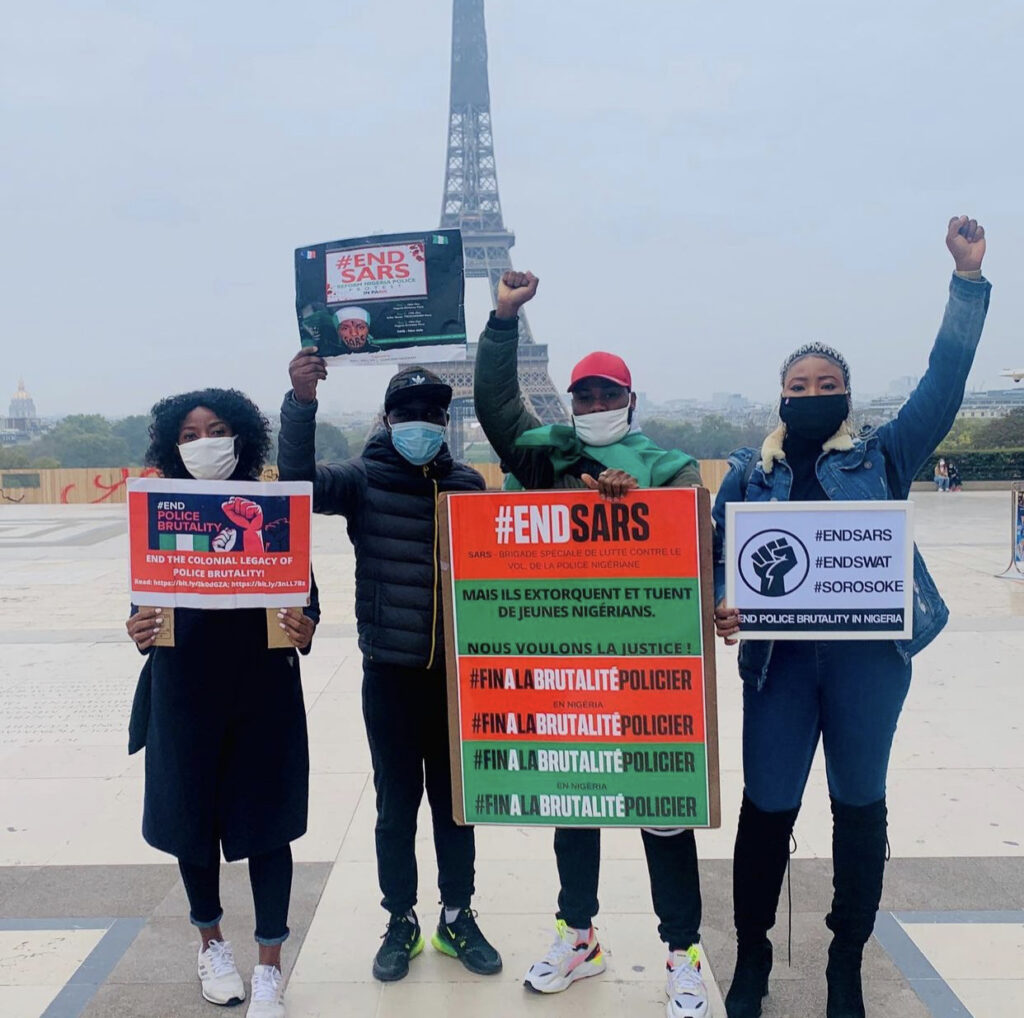
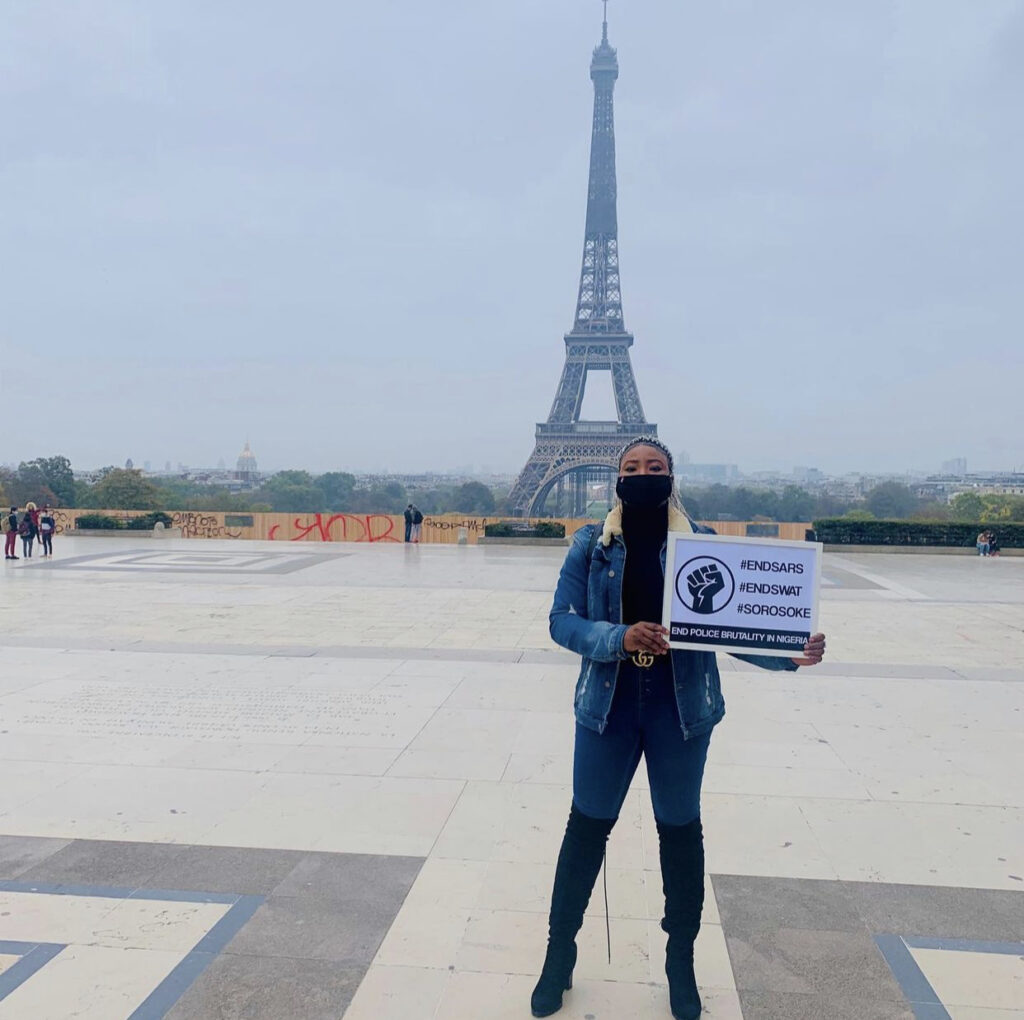
Lending my Voice to the #EndSars Campaign In France as an Artist

Personally, it made me discover a part of me I didn’t really pay attention to. The movement made me believe more than ever that there is still hope for humanity, anything is possible, and we are stronger together. It gave me more visibility as an artist. I stand against injustice and would not hesitate to lend my voice to any because that makes our world a better place.

Challenges

It’s the same everywhere I guess, nothing good comes easy. It hasn’t been easy getting a lot of paid gigs. I’ve had to do a lot of stuff myself before setting up my team. Getting a record deal is very challenging too.

 2 Women Who Inspire me to be Better and why

My Mum: Because she did not have an easy life but she was very hardworking, very industrious and always did her best to take care of her family and everyone around her. She taught me the act of service, how to be a good mother and how to be kind. 2) Oprah Winfrey : As one of the most powerful black women, Her story is very inspiring and makes me believe that we can achieve anything we set our minds to.

 Being a Woman of Rubies

I am a woman of rubies because I am BRAVE, I refuse to take my God given talents to the Grave, I am also resilient and regardless of all the hardships life has dealt me, I have managed to stay kind, stay true to myself and to my DREAMS .  I am a woman of rubies because I choose to always be positive and see the good in everyone and everything.  I am a woman of rubies because I want to encourage everyone to be the best they can be!  I am a mother of Four. I’m still working on my lifelong dreams. If I can do it, you can do it.

To every woman out there, Why be ok when YOU CAN BE MORE???

Being a mom, wife music composer,  artist, and managing it all

Initially it was a hot mess juggling all these things, but I was intentional about it so it got better.

I prioritize everything. My time, energy, finances, etc. I try to strike a balance and I always pray to God for guidance and help.  My partner is also very supportive so it makes everything easier, I am so grateful for him.

Other Projects and Activities

I am presently working on a lot of projects. I recently released a new single titled HUSTLE, working on my Debut Album to be released in December, just put together a band for live concerts. I am recording and writing new songs and also working on video clips for my singles.  I am also working with an association here in France CULTURE PREMS to encourage other young talents in my city and mentor them. I am also into Events planning and photography so I’ve got a lot of projects I’m working on.

Nigerian artiste I’d like to collaborate with

I would love to collaborate with Simi and Davido

C-MI brand  in 5 Years

In five years, C-Mi would be a household name. My songs would have spread all over. I would be having SOLD OUT shows and my Music and brand would be making a positive impact on lives. I would be giving back to my community.

To fill up key tech roles with the right people, it takes a company an average of 3 months. This is because the process is hectic, delicate, and time-consuming, and if not properly done, can lead to a poor hire, waste of time, and productivity.

The war for hiring new talents is real, companies struggle with where to find quality tech talent and the challenge of long time-to-hire, this is where CodeLn comes in.

CodeLn is a software company that helps companies seamlessly find, test, and hire skilled African tech talent i.e Software Engineers, UI/UX Designers, Data Scientists, etc.
They have a technology that automates the entire tech recruitment process; recruiters can post jobs, get matched with candidates on the talent marketplace, manage applications using an integrated applicant tracking system and also test the coding skills of applicants using an in-built assessment platform.

With CodeLn, your ideal dev is just a click away!

In 2016, Elohor Thomas, the brain behind CodeLn, facilitated a tech training program organized by the government and a top tech company. The purpose of this program was to train graduates on software development during a 3-month intensive boot camp and match all of them with employment afterward.
At the end of the boot camp, they had over 70% success, and candidates moved from tech novice to full-stack engineers in the shortest time. Their drive was mostly their desire to learn and the promise of a job from the government.  Sadly, only less than 3% of them were connected to jobs and it was mostly those who had connections in the government (“man-know-man” as it is commonly known). The candidates came back to Elohor, complaining bitterly that the government did not deliver on their promise to provide them jobs. She felt bad because there was nothing she could do to help them at the time.

Elohor Thomas started CodeLn because as an engineer, she knew that learning to code can be quite a journey and she believes that anyone that succeeds should be rewarded with their dream job.

CodeLn is addressing a niche market and their expertise to tackle the needs of this market sets them apart from other competitors. For them, it is really about their commitment to impact and solve the problem of both their users – programmers and recruiters. This has made them attractive to even notable clients and partners abroad which include Wikipedia, Microsoft, IBM, Digital Ocean, Cloudinary, to mention a few.

CodeLn is a 50% female-founded team of 4 engineers from 3 African Countries. Elohor prides in diversity ad their greatest asset as the team comprises of a Nigerian, two Kenyans and one from Ivory Coast.

They have physical offices in Ghana and Nigeria and a database of over 9000 African tech talent.

Elohor’s entrepreneurial drive runs deep in her gene. She always had the zeal to do her own thing, she ran a business of hers for over 2 years in the university. After graduation, she, went into employment to learn how to run a business from others because she believes anyone that wants to lead must first learn to serve. She passed through a corporate firm, institutions, and startups. After that, she decided it was time to start her own. Her co-founders and her kicked off CodeLn sometime in 2017.

“It is our vision to become the global go-to marketplace for finding skilled African Programmers. I always say that there is only one global language and that is “programming language”. I believe that software engineers are not limited by borders and our engineers in African can compete with their counterparts anywhere in the world -engineers without borders.” she said.

Describing her greatest fulfilment as a techpreneur, Elohor says it is “direct impact”, running her own business gives her access to directly influence decisions and take risks that would lead to measurable impact. Something she did not get during her time as an employee. In her words, “because I understand the mission of my company and I am passionate about what I am doing, I am excited to stay up late till 3 a.m working on strategies to ensure that I get the right impact and result that the business needs.”

This is why she can boldly say to anyone who has an idea in them but are afraid to begin small. If you are that person, Elohor says ““start already”. As they say, “not taking a risk is a risk on its own”. So take the risk of starting, learn, iterate and if it is not working, do not be afraid to pivot. Remember, a business only becomes what you want it to become with the right execution.’

Let these words be your drive as you launch into the new week.

Take that risk.
Bet on yourself.
Start already!

Since 2019, the AGS Tribe, a women’s community with the focus of enabling women for success, has been working on creating and providing amazing opportunities for women and youths in Nigeria and Africa as a whole. AGS prides itself in fostering financial and economic growth and stability for its members and beyond. The app was an additional innovation to the AGS products and was created to further inspire, connect and build the capacity of young entrepreneurs and professionals.

Some of these efforts include the AGS Enterprise Challenge for entrepreneurs, the Modern Mom competition for working moms, and the collaboration with Quickteller on the Money Simulation Programs, amongst others.

In a culmination of their efforts to bring opportunities to women and young people, the AGS Tribe app was launched in December 2020, with an opportunity board that showcases opportunities from around the world. These openings include potential job roles, Funding, Fellowships as well as Scholarships, and more. Since its launch, The AGS tribe app has been impactful for women globally, it is a social community with daily updates with various impactful features easily accessible to its members. The platform has impacted the lives of over 80,000 women through capacity building, mentorship and funding.

Amazon prides itself in pursuing excellence and is committed to diversity and inclusion, also always looking for ways to scale impact as they grow. The partnership with AGS Tribe, a credible organization based in Nigeria, with a diverse pool of female professionals is perfectly positioned to introduce more female talent to the Amazon Engineering services team.

The AGS Tribe will now be hiring partners with Amazon Engineering Services in recruiting talents for Amazon from within Africa. The roles will include recruiters, managers, Program and Project managers, business analysts, and interns.

The partnership reveal was virtual and had over 100 people in attendance. During the reveal, the Diversity, Equity, and Inclusion Pipeline Subgroup Lead from Amazon said, “I personally reached out to AGS Tribe a few months ago because I saw what they were doing in terms of diversity and empowerment, and it aligned with what the Engineering services team in Amazon is doing. My role specifically is to fill the recruitment pipeline with diverse candidates so that we can have a wider talent pool when we recruit into Amazon. We are really excited to be partnering with AGS Tribe on this, and we are hoping to get a lot of quality candidates to fill the recruitment pipeline for engineering services; procurement, finance, category managers, etc.”

This partnership ushers in an exciting new future for Female African talents and we can’t wait to see the future of this new venture.

AGS is Social
Instagram: @AGSTribe
Twitter: AGS Tribe
App: AGS Tribe

Toyin Odulate is the founder of Olori Cosmetics, an African hair, bath and body care company formulating products for women and children. Her love, passion and obsession for beauty started as early as age seven, but her dream to establish Olori took 15 years to actualise.

A former L’Oreal executive and consumer goods expert with over 18 years of experience across the USA, Europe and Sub-Saharan Africa, she has managed global beauty, food and beverage brands across Africa and the Middle East, where she honed her skills in the business of beauty, brand marketing, product and business development, as well as distribution and logistics with a focus on the African consumer. After years of nursing the ambition of owning her own beauty company, a hair coloring accident propelled her to produce what would become her first product.

In this interview with TOBI AWODIPE, she spoke on the world of cosmetic formulation, challenges involved in running a startup in Nigeria and how a plethora of choices for consumers is a good step in the right direction.

Could you take us through your journey in starting your business, how has it been for you?
I’ve had the idea for Olori since my third year in the university. I was frustrated that I couldn’t find makeup shades that suited my skin tone and that I had to mix several shades of lipstick or foundation to get the shade that I liked, so, I planned to start a makeup line. As a child, I enjoyed mixing potions and ruffling through my mother’s extensive beauty counter. I found a little notebook I kept at age 12 where I wrote that I was going to own a cosmetics company. I guess it’s been in my sub-conscious for that long and beauty products development and beauty stores and shelves are my happy place.

I had always ‘planned’ to start the business, waiting on the ‘right’ time, but was very busy building my corporate career. But when I finally started, it happened totally by accident. A few years ago, I had a hair coloring accident that left my hair feeling like hay. I asked my mum to mix me a potion that she used to make for us as kids to care for our hair back then; I used it and it literally reversed the damage and texture of my hair within days. It was then I knew that I had to jar this product and share it with the world.

I sent samples to about 20 friends to try out; they all loved it and kept asking for more. When I could no longer afford to give it out for free, I started to sell it in recycled Body Shop jars. We peeled off the Body Shop labels and created our own Olori labels and stuck in on the jars and that’s how we started. I transitioned from corporate life to running Olori full time almost two years ago. It’s been a very different journey where you don’t have the security and luxuries of a big company environment, but building one from scratch is a very fulfilling process with some frustrating moments but I’ve learnt to focus firmly on the big picture.

You’re no stranger to the world of hair and beauty as you have worked with international brands in the past. How has these experiences shaped your business?
Having firsthand experience at the corporate level working for the biggest beauty conglomerate in the world (L’Oreal) in multiple countries definitely exposed me to the business side of beauty, especially the non-glamourous side, which included long hours of business development, supply chain coordination and management, distribution, marketing, brand development, budgeting and finance to name a few. It definitely gave me the much-needed tools and credibility that I needed going into building my own beauty brand and company from the ground up.

From the formulation stage to branding to marketing and developing retail management relationships, negotiating with salons and distributors… all very grounding experience to build on to get my brand to the heights I want to take it to. Though we’ve accomplished a lot, we’re still very much a work in progress.

Funding is usually a major challenge for startups, how did you get funds to start out?
I funded the business from my savings and personal investments and then started to bootstrap once the business became financially viable. I have recently opened up the business to seed funding to help with our growth ambitions to scale into other markets.

The global beauty industry is a multibillion-dollar sector, which experts have said Nigeria is yet to fully tap into. How do you think we can achieve that?
Don’t underestimate how big the beauty industry is in Nigeria; what we have lacked is reliable data to back this up. The other issue is the relentless currency devaluation, which further shrinks the value of the size of the industry in Nigeria. But regardless of this, Nigeria is a huge contender and player in the African beauty sector.

How best do you think the government, banks and private bodies can support SMEs such as yours to thrive better?
The answer to this question requires three separate paragraphs, but generally, we can already see a shift in private bodies such as venture capital and angel/pre-seed investor groups towards the fintech community; funds are flowing in this sector. But in the consumer goods and manufacturing sector, we are not seeing the same levels of funding generosity, excitement and activity and that needs to change. Government can also assist by making regulatory requirements simpler and more straightforward; the current processes in place take too long.

As an entrepreneur, what are some issues you’ve had to deal with over the years?
Funding has been and is still my greatest challenge.

What keeps you passionate about doing what you do?
I’m passionate about taking an African beauty brand such as Olori to the global stage, where you walk into the big chain stores in the States or in Europe or Latin America and see a proudly African brand on those shelves. I’m passionate about how commerce has the ability to make an impact on the social sector by helping to change lives via education, gainful employment, and innovation.

With so many fake products in this sector, how best do you think this can be stemmed?
I think with an environment as fragmented and as rudimentary as ours (Nigeria and West Africa), our regulatory bodies are overwhelmed and under-resourced. So, the onus is placed on businesses like ours to put in the work to make sure your product is set apart from imitations and fakes and educating the public to know the difference. This problem isn’t going away anytime soon, but there are ways to tackle it even though tackling it is expensive.

How can we create better opportunities for upcoming industry players in the global beauty and wellness market so they can compete with big names?
Through funding and more funding! For brands and companies with a strong proof of concept and in-market stress testing, access to funding and the right partnerships are the only way they have a fighting chance to compete on the global stage alongside the more established names.

What five things would you tell a new entrant into this business to avoid and do respectively for maximum impact?
First, register your business legally; trademark your brand name. Test your products on a sample pool of friends and family over a period of time before going to market. Stay flexible and keep your overheads as low as possible as need-based for as long as possible. Be open to partnerships and collaborations. Finally, know your competition, but don’t obsess over them – focus on your path.

Sourcing materials can be a huge challenge, how and where do you source your materials from?
We source about 80 per cent of our ingredients locally, the rest we source from across the continent or from the most reliable source. We’ve built our supply chain network slowly and methodically over the years and set up relationships with suppliers. It’s a challenging task because for just one ingredient for example, we have about six sources, just to manage disappointments and long lead times.

Tell us something you did/do recently that has turned your business around positively for you?
We invested very intentionally in our e-commerce and digital strategy in January of 2020. We had no idea that a pandemic was looming and that this would be our saving grace just two months later. During the lockdown, we were pretty busy as we had a sudden uptick in direct-to-consumer sales and inquiries, primarily due to the fact that salons were not open, so most people were doing their own hair at home.

This also gave us an opportunity to get direct feedback from our customers and improve our products or services where needed. The overhaul of our digital strategy also got us a lot of international attention from a number of international publications and international demographics. With this, we activated international shipping and this has been great for us.

There are so many products in the market now which can be overwhelming for users, what specific things should users look out for when selecting products?
I think the fact that consumers are now spoilt for choice on the shelves across different categories is a good thing; this was not the case five or seven years ago. Caucasian consumers have thousands of options in every single personal care category, so why should it be different for us?

But to simplify purchase decisions, buyers should seek for ingredients that work best for them. Understand your allergies and avoid products with ingredients that cause such. But the easiest way is to stick to the brand that has worked best for you but be open to experimenting on occasion with a brand or product that you’ve never tried before. You just might find a gem in it.

What is your dream and goal for your brand in the next couple of years?
Dream goal in the next two years is to get Olori on the shelves of major retailers in markets internationally and also to have built a scaled and robust direct to consumer business. Also, to grow our international customer base of black girls and women of African descent from across the globe to become a brand of excellence that they can identify with directly and that represents them and their unique multi-textured hair and skin and personal care needs. We want to be a brand that serves the global African diaspora.

What final words do you want to leave for women?
Playing small does not serve the world, go big and then go home. To a very nice home I must add.

Source: Guardian

Someone once said a great photograph is one that fully expresses what one feels, in the deepest sense, about what is being photographed. Being a photographer avails you the opportunity to see life through other people’s lens of understanding.
Photographers and artists constantly have the nudge to create magic through their work, and that’s exactly what Toni Payne is doing through her Toni Payne Photography brand. Giving life to objects she captures with her camera.Payne wears many hats and has taken her talent to different sectors; from managing some of the biggest names in the entertainment industry, directing music videos, expressing her thoughts through poetry, to being an award-winning photographer. The media personality and entrepreneur enjoys working with still and moving images to create visual masterpieces.

Holding a degree in Video Digital Art, her love for the arts dates back from her childhood days. A creative mind, who is also not shy about addressing controversial topics, Toni Payne has morphed over time into a vibrant entrepreneur and entertainment icon. She has set a high standard and a great work reputation for herself in the entertainment industry.

Though her journey has not been particularly smooth, she is still winning at life and living her dreams. She shares her inspiring story and passion for visual art in this exclusive interview with Esther Ijewere.

Childhood Influence
I WOULD say yes; my childhood did prepare me for what I do now. Being creative was not frowned upon. We were forced to choose to be a doctor, lawyer, but my upbringing was liberal in that sense and a career in the Arts was not seen as a bad thing.

Inspiration Behind Toni Payne Photography
Asides Toni Payne Photography, I also run a commercial photography business called Osha Creation. I studied video digital arts at the university; I have always had a thing for visually documenting still or moving images. I decided to get fully into photography after I left the music industry. I am a creative person whose mind tends to run at full speed, so, I needed an outlet and found that going outside with my camera calmed me down, and coming up with different photographic creations made me happy.

I always say photography saved me because, at the point when I took up photography, I wasn’t sure what to do with myself career-wise. I knew I did not want to go back to music, I also knew it had to be something I am passionate about and enjoy. So, I chose photography and it’s been the best choice I’ve made.

The Journey So Far
It has surprisingly been great. When I started my business, they said it takes a while to build customers, especially because I am starting from scratch where no one knows my work or me. Within six months, I had my first few clients and it has been non-stop since.

I enjoyed commercial photography and knew it would pay the bills, but my dream was to create Art using photography as a tool and positioning myself as one of the best Visual Artist Photographers of our time.

Managing Some The Biggest Names In The Entertainment Industry, My Make-Up Line And Goals
If I ever decide to go back to music, the money must be right. I did things back then because I had a passion for it, but quickly found out that sometimes, it is best to invest in yourself and your talent. The makeup line, heck yeah, I would; it takes a lot to own a makeup line. I was young and excited and had put so much money in and when I decided to uproot my business in America to come to Nigeria, it wasn’t a smart move.

I believed in the country and was just excited to be able to do something like that there. If I were to do it again, I will stay put here in LA and just let it trickle down to Nigeria via distributors and retailers.

How I Manage And Maximise My Talent
I create almost daily. I am no longer in school, but I am still learning every day. The skills I learned in school are helping me today with my photography. These are lifelong skills that can be applied to so many things. I am still growing, so definitely, I plan to use my current knowledge and soon-to-be-acquired knowledge to advance my growth.

Long-term Goal
I want to be a household name in the Art industry. I want my work in homes and I want owners of my work to be proud to say they own it. All my works are limited pieces, so for collectors, it’s valuable. I want to bring artistic value to the table and hopefully also groom future artists.

Rising From The Ashes Like Phoenix After A Period Of Adversity
I always ask myself this question. Like, how did I even survive that episode, because every time I look back, I am baffled at how I did not break down? I think I drowned myself in my work; I stayed busy and that helped a lot.

Also, I have an amazing family. My family supported me the entire time and made sure I was very ok. I also think God doesn’t give you what you can’t handle. We might all be faced with trials in life to test us; I believe that was my test. I am glad I stayed graceful through it all, because today, I can hold my head up high and say nothing to myself. The strength that I got from dealing with that has also prepared me for the beautiful things that are coming my way now.

Achieving Work-Life Balance As A Single Parent And Career Woman
It means getting up and just getting things done. I try to do a to-do list, but my day also has to be scheduled around my son’s schedule. It can be hard balancing time because it feels like there are never enough hours in the day, but I do my best. The only issue I have is that I hardly get enough sleep.

Lessons from some of my life challenges
Protect your peace. Don’t trust anyone 100 per cent. Those who claim to love you can harm you, so stay vigilant. Stay graceful and work hard. Never let people’s opinions of you affect you or your daily bread; they will move on to the next topic soon enough.

Trust your heart and stick to your convictions. One million people will give you advice, but always remember that the only advice that matters is the one your heart gives you because it’s you that will have to live with your choices. Be a good person and trust God

Being A Woman Of Rubies
I am resilient, strong, and passionate.

Other Projects And Activities?
Right now, I am 100 per cent focused on the visual arts. I spent the majority of my career doing one million things at once. This time, I just want to enjoy what I am doing and focus on growing it. I have chosen it to be my career legacy, so it requires my full attention.

Three Women Who Inspire Me And Why
My grandma, my mum, and my aunts (more than three lol); I see how they go about their daily grinding and living and loving and that inspires me.

One Thing I Wish To Change In The Entertainment Industry
Structure. I believe it lacks proper structure, but I guess these things take time.

Upcoming Project
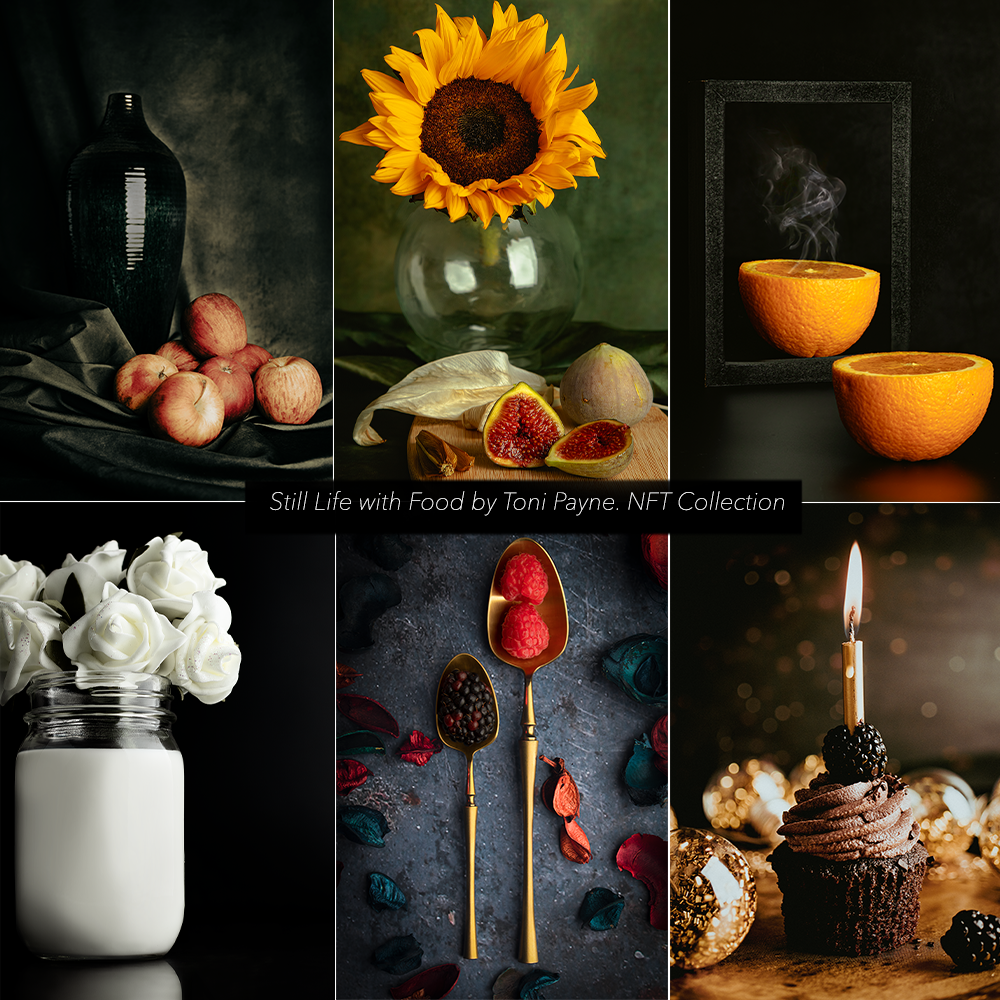
I recently launched an NFT Collection called Still Life with Food, a collection of digital food photos reminiscent of works from old masters like Picasso. It is also available in prints. I am having talks with a group about bringing my art to Nigeria. The prints are made on metal and are just gorgeous. They are limited edition, so if you own one, you and less than 100 people in the entire world will own any piece you purchase.

If I could turn back the hands of time
I would have started photography earlier and I would have put all the energy I put into music into my own personal work


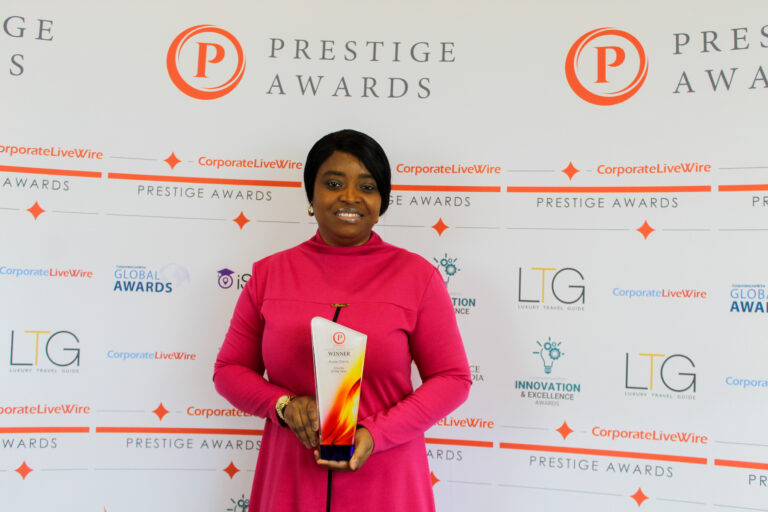
The Prestige Awards was held in the UK on the 3rd of September , and Shulamite Ezechi’s organisation; ANYISO took home  the prestigious charity of the year award.

ANYiSO is a registered charity in the UK that runs multiple projects, seminars, workshops and conferences, and provides support and services for women, young people, refugees, and asylum seekers. The award was given to ANYISO for its works for humanity, and support for women, young people , refugees and asylum seekers.

Reacting to the award , Shulamite said ; ‘’Prestige awards recognises businesses and organisations in the UK that have proven to be the best over the year. ANYISO was nominated, and won ‘’the Charity of the year award.’’ We felt very honoured and we are very proud of the work we do, and moments like this encourage us to do more’’.

Shulamite, an amazing humanitarian, served as a member of the Refugee women’s Strategy Group and has been involved in the review of many policies that affect ethnic minority women and young people. She is on a team of the First minister’s National Advisory council on Women and Girls (BAME).  Shulamite also served as a board member for North Glasgow Community Food Initiative Glasgow, United Kingdom. She is an author and has published many articles..

Shulamite holds a bachelor’s degree in Nutrition and Dietetics from Imo State University, Nigeria and a Master’s degree in Clinical Nutrition and Health from Glasgow Caledonian University, UK and a second Master’s degree in Policy analysis and global governance.

Aside from the Prestige Award, Shulamite has also won many awards including ‘the Inspiration to the BME Community award’ that was conferred to her at the Glasgow City Chambers, United Kingdom.