Category

Career Gems

Category

At just 31, Rihanna has officially been named the world’s richest female musician by Forbes.

A new Forbes report published on Tuesday estimated the singer’s massive assets to be worth about $600 million, thereby placing her ahead of fellow music superstars as Madonna ($570 million), Celine Dion ($450 million) and Beyoncé ($400 million).

This is coming on the heels of the news that her early mentor Jay-Z has just become the first rap billionaire.

A breakdown indicated that Rihanna’s earnings tripled as a result of her partnership with LVMH, the French luxury goods giant run by billionaire Bernard Arnault.

Rihanna and LVMH co-own the makeup brand Fenty Beauty which was launched in September 2017.

Not only did the business quickly become a viral success, it also racked up a reported $100 million in sales in its first few weeks, propelled by Rihanna’s fame and 71 million Instagram followers.

Forbes said Fenty Beauty generated an estimated $570 million in revenue last year, after only 15 months in business.

The entire operation is worth, conservatively, more than $3 billion.

Forbes estimates that LVMH owns an estimated 50% of it, while Rihanna has about 15%, a figure a spokesperson for the artist disputed but would not clarify further.

The Barbados native, who overcame hardships including an abusive addict father and a well-publicised assault by then-boyfriend Chris Brown in 2009, also co-owns the Savage X Fenty lingerie line with Los Angeles-based online fashion firm TechStyle Fashion Group.

She has millions in earnings from her career touring and releases as a singer, which make up the rest of her fortune.

Her empire continues to grow. In May, LVMH and Rihanna announced Fenty, a new clothing house that will make high-end clothes, shoes, accessories, and jewelry.

Credit: Premium Times

Two Nigerian teenagers reportedly became pregnant for men whom they had sex with just so they could buy sanitary pad for them

The incident happened in Akwa Ibom, Nigeria’s South-South, PREMIUM TIMES learnt. And the teenagers are said to be from poor families.

A campaigner against teenage pregnancy revealed this at a roundtable on child development hosted by PREMIUM TIMES in Uyo to mark the 2019 Children’s Day.

“We have two of our teen mothers, between the age of 16 and 19, who got pregnant because they could not afford sanitary pad, so they slept with men who promised to buy them the pad,” Sifon Udo, who runs an NGO, Smartsmothers Foundation, said at the roundtable.

Ms Udo attributed the girls’ predicament to poverty.

“There’s another (teenager) who slept with a man because of sweet and got pregnant!” she said.

“She is getting to 17, she was 15 when she got pregnant.”

Some brand of sanitary pad could go for as low as N250 in Nigeria. But some girls, especially in the country’s poor rural communities, lack the money to buy them, PREMIUM TIMES learnt.

“They (the girls) have given birth,” Ms Udo said.

“(But) because they have not been given the right care, even when they give birth they still don’t have the right information to pick up their lives and move on, and so they run into multiple pregnancies.

“We have a case of a 19-year-old who has two children already and she is pregnant with the third one.”

Ms Udo said teenage pregnancy was on the increase in Akwa Ibom rural communities.

“The key factor here is poverty, but there are cases of abuses, and parental neglects.

“We have a case of a teen mother, she was raped by an uncle who stayed close to them. She wanted to tell her parents about it, but they didn’t want to listen to her. They chased her out of the house.

“Another factor is, when these girls see how their friends are living big, they also want to be like them. They go for what they cannot afford and as a result give themselves out freely to men,” Ms Udo said.

Smartsmothers Foundation, she said, runs a network in Akwa Ibom where they make effort to rehabilitate teenage mothers through reorientation and skill acquisition.

Ms Udo said there was not much her organisation could do about the men who get teenage girls pregnant.

“The challenge we have is that most times before these girls come in, it is already too late. Most of them don’t even know how to locate those who got them pregnant,” she said.

“These stories are real. Most of the men who get these girls pregnant are the National Youth Service Corps (NYSC) members who probably leave the area after their service year. Others are just regular men on the streets.

“In Obio Akpa, a developing community where you have a campus of the Akwa Ibom State University, young girls make it a competition to get pregnant – if I am your friend and I get pregnant, you are no more in my clique. I make you feel like you are no more in my class, I now have a kid, so I have many responsibilities. It’s like, look I have more money than you.

“This thing is a cycle, a teen mom will probably have her own female child take after her and also get pregnant the same way,” she said.

Other participants at the roundtable were Uduak Ekong, the chairperson of the Nigeria Association of Women Journalists (NAWOJ) in Akwa Ibom, and Imaobong Akpan, a blogger.

The participants talked on obstacles against child development in Nigeria, such as child labour, lack of education, labelling of children as witches, lack of mentoring, and poor implementation of child rights law.

“People have linked such (witchcraft) accusation to poverty, and it is usually in households where they are going through some tough phases – either the father is having hard luck, maybe he just lost a job, the mother is barely struggling to manage the little that is available – and suddenly this child that is obviously malnourished becomes the focus of attention.

“And someone would just give a hint – have you looked at this child? And then the next thing, the child is thrown out from the home, as we have heard and read in the past,” Mrs Ekong said, in her contribution at the roundtable.

“I have never come across a story where a son or a daughter of one big politician is labelled a witch,” she added.

A participant, Ms Akpan, said it could be difficult to bring to justice, pastors who tell parents that their children are witches.

“It’s a very dicey one because the parents or guardians who take these children to the pastors would hardly give information that could incriminate these pastors or prophets.

“You may not have sufficient evidence, except it was captured in a video. Most deliverance services in these churches are often private sessions between the pastors, parents, and the child involved. If we have some people caught and then punished for it, maybe others would sit up.

“I think society is defined by the level of exposure of its members.

“In Akwa Ibom, people watch a lot of Nollywood movies that tend to paint a picture of witches, and those pictures formed our perception generally – witches are supposed to look like old women, maybe, with bad teeth, going by pictures from Nollywood.

“Witches are supposed to look like children who are malnourished. Politicians’ children are not malnourished, so they don’t fit into the picture of a witch. A child in the village without proper nutrition fits perfectly into that picture,” she said.

PREMIUM TIMES spoke with Charles Udoh, the commissioner for information in Akwa Ibom, on the continuous branding of children as witches in the state, he said he is not aware of such case since Udom Emmanuel became governor about four years ago.

“To be honest with you, I haven’t heard of it, I haven’t encountered it (children being branded as witches and then pushed into the street) since I came here,” Mr Udoh said.

Mr Udoh, however, admitted seeing street children in Uyo, the Akwa Ibom capital.

He said the state government was planning to rid the streets of Uyo and other cities of destitute.

“If you look at it, before this administration came into power, there was so much noise about child molestation in Akwa Ibom, but the level of noise has reduced drastically. The government is very passionate about making sure the rights of children in the state is upheld,” the commissioner said while responding to a question on how effective the child rights law has been in the state.

“The government is also sustaining the free education programme and payment of WAEC fees to students in the state,” he said.

Credit: Premium Times

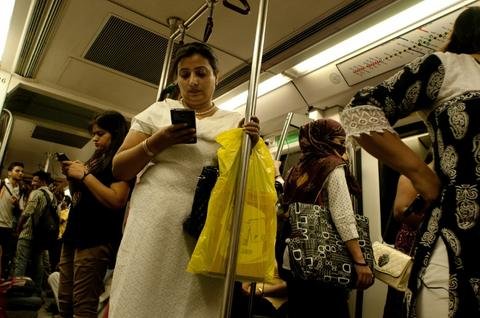
Almost a million women will enjoy free public transport as part of an attempt to make the Indian capital safer, New Delhi’s government said on Monday.

The city has been notorious for women’s safety since the 2012 gang rape and murder of a female student on a Delhi bus that sparked major protests.

The measure will be rolled out in the next two-to-three months for around 850,000 women.

Delhi chief minister Arvind Kejriwal said it would cost about $115 million a year, but would improve security and cut traffic pollution.

The regional government is also looking to install 150,000 CCTV cameras across the capital this year, Kejriwal added.

Delhi, home to nearly 20 million people, is also one of the world’s most polluted cities, according to UN studies.

“Women will be allowed to travel free of cost so that they have safe travel experience,” Kejriwal told a press conference.

Delhi has a rickety public transport system, and the doubling of some metro fares in recent months has forced many people onto the streets.

Some commentators accused Kejriwal, head of the small Aam Aadmi Party (AAP), of making the gesture to win votes in state elections expected in January.

Kejriwal’s party won a landslide victory in 2015 state elections when it offered free drinking water, subsidised electricity and healthcare and better education for the poor.

It also promised to improve women’s security after the 2012 Delhi gang rape.

But the AAP failed to make a breakthrough in a national election in April-May when conservative Prime Minister Narendra Modi won a second landslide, including in Delhi.

The AAP is expected to face a stiff challenge from Modi’s Bharatiya Janata Party in the state polls.

Credit: AFP

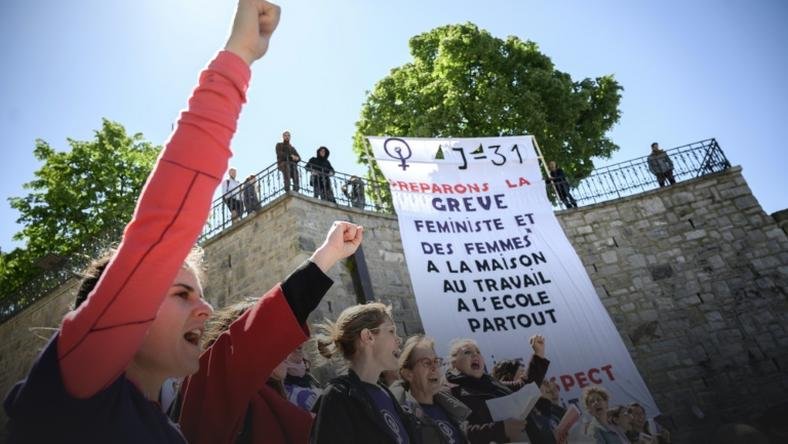
On June 14, 1991 — 10 years after equality between the sexes was enshrined in the Swiss constitution — half a million women walked out of their workplaces or homes to protest persistent inequalities.

Three decades on, however, unions and rights groups say things have barely improved.

They are calling on Swiss women to join a fresh strike, again on June 14, to demand “more time, more money, more respect”.

Women in Switzerland on average still make 20 percent less than men.

And for men and women with equal qualifications, the wage gap remains nearly eight percent, according to the national statistics office.

“Even if you take into account all of the regular excuses and you only compare women and men in the exact same position with the same professional experience, the fact remains that a woman in Switzerland is cheated out of 300,000 Swiss francs ($313,000, 266,000 euros) over the course of her career, just because she is a woman,” Switzerland’s largest union UNIA said in a statement last year.

Strikers will also be demanding zero tolerance for violence against women and more respect and better pay for women’s work, including through the introduction of a minimum national salary.

The idea of another nationwide women’s strike was born out of frustration at a bid to change the law to impose more oversight over salary distribution, which passed through the Swiss parliament last year

The final text only applied to companies with more than 100 employees — affecting fewer than one percent of employers — and failed to include sanctions for those that allow persistent gender pay gaps.

‘Women work for free’

Organisers have called upon women to snub their jobs, and also housework, for the entire day to help raise awareness about the vital contribution women make across society.

“Really, the objective is to block the country with a feminist strike, a women’s strike,” activist Marie Metrailler told AFP.

For those women unable to take a full day, the organisers urge them to at least pack their things and go by 3:24 pm — in recognition of the male-female pay disparity.

“After that, women work for free,” said Anne Fritz, the main organiser of the strike and a representative of USS, an umbrella organisation that groups 16 Swiss unions.

Gaining recognition of women’s rights has been a drawn-out process in Switzerland.

It was one of the last countries in Europe to grant women the right to vote, in 1971 — and in the conservative Appenzell region women only won that right in 1991.

And while Switzerland did enshrine gender equality into its constitution in 1981, it took another 15 years before the law took effect.

“In 1991, we determined that… nothing was moving. So we went on strike,” Geneva author Huguette Junod told AFP.

Around 500,000 women — a high number in a country that at the time counted fewer than 3.5 million female inhabitants — marched and organised giant picnics in the streets. Some women hung brooms from their balconies.

The large turnout was all the more remarkable given that work stoppages have been extremely rare in Switzerland since employers and unions signed the “Peace at Work” convention in 1937. It states that differences should be worked out through negotiation rather than strikes.

Junod, 76, recalls that many women were blocked from participating in 1991.

But, she said, “those who were not permitted to strike wore a fuchsia-coloured armband … and took a longer break”.

‘Illegal’

Organisers are bracing for a repeat of that situation, for while the strike has some support, the employers’ organisation flatly opposes it.

“This strike is illegal,” Marco Taddei, one of the organisation’s representatives, told AFP.

He stressed that the demands put forward “do not solely target working conditions”, and that the constitution “stipulates that a strike can only be used as a last resort.”

The unions disagree.

“What is illegal is wage discrimination and sexual harassment in the workplace,” Fritz said.

Recognising that many women will not be able to get away from work, organisers have declared purple the colour to wear this time to show support for the strikers.

Over the past three decades, womens’ rights advocates in Switzerland have made some gains. Abortion was legalised in 2002, and 2005 saw the introduction of 14 weeks of paid maternity leave.

But Switzerland still offers no paternity leave, and limited access to over-priced daycare is seen as a major hindrance to women’s full participation in the world of work.

Switzerland “is very conservative on the question of women’s rights,” Eleonore Lepinard, a sociologist and associate professor of gender studies at Lausanne University, told AFP.

The authorities have yet to commit to collective policies on day-care and elderly care, which would make it easier for women to enter, remain and thrive in the workforce.

Women’s forced absence from the workforce for years at a time “benefits men on the employment market and in terms of salaries”, Lepinard said.

She hailed women’s growing ability to speak up and make their grievances known.

The question, she said, is: “Do the politicians know how to listen?”

Credit: Pulse News

A graduate of a UK university – Anglia Ruskin University – has received a £60,000 out-of-court settlement after she sued her university over her “Mickey Mouse” degree.

According to BBCPok Wong graduated with a first in international business strategy from the university in 2013 but claimed the school “exaggerated the prospects of a career,” hence filing a suit for false advertising.

Wong said claims made in the university’s prospectus were untrue.

She told the BBC in 2018:

“They think we’re international students [and] we come here to pay our money for a piece of paper, for the degree. But actually we care about the quality, we care about how much we could learn. They exaggerated the prospects of a career studying with them, and also they exaggerate how connected they are.”

A spokesperson for the university said that they did not support the settlement, revealing that it was agreed with their insurer’s solicitors.

The County Court of Central London had ruled in favour of the university in 2018 and ordered Wong to pay £13,700 of Anglia Ruskin’s legal costs.

However, the university’s insurers wrote to Wong and offered to settle her £15,000 claim and also her legal costs.

Wong’s litigation “has been rejected numerous times and has never been upheld,” a spokesperson of the university said, adding that the school did not support their insurer’s decision.

“We consider that they acted negligently and against the university’s interests,” the spokesperson added.

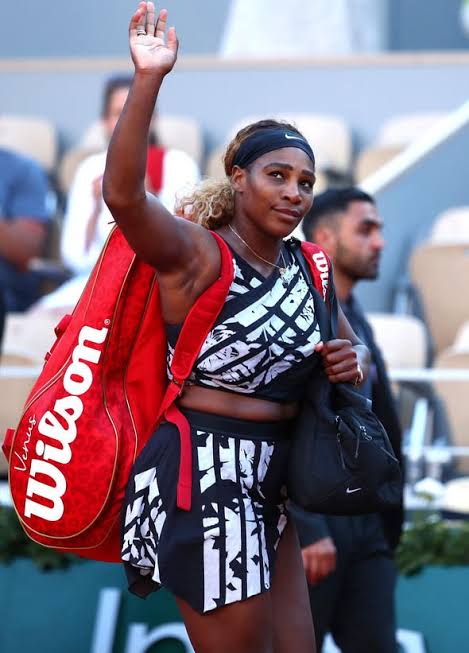
Serena Williams has been knocked out of the French Open 6-2, 7-5 by compatriot Sofia Kenin in the third round.

It was 37-year-old Serena’s earliest exit at the Slams since a third round loss to Alize Cornet at Wimbledon in 2014.  

Kenin, the 20-year-old World Number 35, will face eighth seed Ashleigh Barty of Australia for a place in the quarter-finals. Three-time Roland Garros champion Williams was attempting to equal Margaret Court’s record of 24 majors.

Credit: LIB

While the intent of students at Oak Park and River Forest High School remains unclear, the photos were jarring enough that administrators withheld the books.

A high school in a Chicago suburb is spending more than $53,000 to reprint its 2018-2019 yearbook after staff discovered photos inside in which students were flashing the white supremacist “OK” hand sign.

Administrators at Oak Park and River Forest High School released a statement last week notifying parents that they were withholding the yearbooks from distribution after they discovered the photos, according to CBS Chicago.

This week, the Chicago Tribune reported that the high school will pay Jostens $53,794 to reprint the books and that the new versions are expected to be delivered to students by mid-June.

The racist adaptation of the “OK” hand sign began on 4chan ― an anonymous message board frequented by racists, trolls and extremists ― and has since been co-opted by prominent white supremacists who often use it to signal their presence to like-minded extremists. It’s prominent enough that those who use it have been fired from their jobs or faced other consequences ― recently, a Chicago Cubs fan was banned indefinitely from Wrigley Field after flashing the hand sign behind a black reporter during a live broadcast.

While the students’ intent was unclear and the photos weren’t made available, the content was apparently jarring enough that staff felt it necessary to reprint the yearbooks.

An email to parents, from school district Superintendent Joylynn Pruitt-Adams, notes that while the hand gestures could have been in reference to the classic schoolyard made-you-look “circle game,” its use by hateful people and ideologies led to the decision:

We’ve been made aware that this year’s ‘Tabula’ yearbook, which has not yet been distributed, contains several photos of students making a hand gesture that has different meanings. In some cases it’s used in what is known as the circle game. However, the gesture has more recently become associated with white nationalism. Regardless of intent, the potential negative impact of this gesture has led us to decide that we cannot distribute the yearbook as is. We are looking at alternative options, and in the coming days we will share further details about distribution plans. In the meantime, we appreciate your patience and support as we work through this situation.

The U.S State Department has announced that applicants for U.S visas will have to submit their social media names and five years’ worth of email addresses and phone numbers as part of the application process.

BBC reports that the proposal would affect about 14.7 million people annually.

Some diplomatic and official visa applicants will be exempt from the new rules.

“We are constantly working to find mechanisms to improve our screening processes to protect US citizens, while supporting legitimate travel to the United States,” the department reportedly said.

Gulf News reports that the U.S Embassy in Abu Dhabi confirmed the news. It quoted the embassy as saying:

This update — which we initially announced last year in the Federal Register — is a result of the President’s March 6, 2017, Memorandum on Implementing Heightened Screening and Vetting of Applications for Visas and other Immigration Benefits and Section 5 of Executive Order 13780 regarding implementing uniform screening and vetting standards for visa applications.

We already request certain contact information, travel history, family member information and previous addresses from all visa applicants. Collecting this additional information from visa applicants will strengthen our process for vetting these applicants and confirming their identity.

In that past, only people who needed additional scrutiny are requested to submit their social media names.

The Kaduna State Executive Council has approved six months maternity leave for all new mothers in the state.

Governor Nasir El-Rufai announced this on his twitter handle. He wrote’

”I am pleased to announce that  just yesterday, our State Executive Council approved six months maternity leave for our female public servants. This encourages the healthy development of infants through prolonged breastfeeding, among other benefits”.

Kaduna state government approves six months maternity leave for nursing mothers


Credit: LIB

Asisat Oshoala has signed up with Barcelona Ladies from Chinese club Dalian Quanjian on a three-year parmanent contract, Completesports.com reports.
 

Oshoala, 24, spent the second half of the 2018-19 season on loan with Barcelona Ladies from Dalian Quanjian. The Nigeria international scored eight goals in 11 games in all competitions for the Blaugrana.
 

She also scored the only goal in Barcelona Ladies’ 4-1 defeat to Olympic Lyon in the UEFA Women’s Champions League final in Budapest this month.
 

The forward won the Chinese Women’s Super League title with Dalian Quanjian in 2017. Oshoala was also part of the Arsenal Ladies side that won the the English FA Cup crown in the 2015/2016 season.
 

On the international scene, she has won three Women’s Africa Cup of Nations Cup with the Super Falcons. The former Rivers Angels star is expected to feature for Nigeria at the next month’s FIFA Women’s World Cup in France.