Category

Career Gems

Category

George Mason University is renaming the largest building on campus after the 100-year-old former NASA mathematician Katherine G. Johnson. 

She overcame racism and sexism to help lead the United States into a new era of space exploration, but few knew her amazing accomplishments until the movie Hidden Figures came out.

Katherine G. Johnson Hall will be the new name for the former Bull Run Hall. The university will also create a scholarship in Johnson’s name.

“Katherine G. Johnson Hall will be a powerful symbol of what can be achieved, no matter the obstacles, when students of all backgrounds are given the opportunity to succeed,” said Mason President Ángel Cabrera, one of the dedication ceremony speakers. “Katherine Johnson represents the idea of striving to fulfill one’s full potential. Her name on this building, and her remarkable story, will inspire future generations of scientists and engineers.”

She worked at NASA Langley Research Center in Hampton, Va. for 33 years and performed complex calculations and flight path analysis in the early years of the space program, including Apollo 11 flight to the moon in 1969. 

Her achievements were seen in the 2016 Oscar-nominated film Hidden Figures.

Johnson is 100 years old and was not able to make it to the dedication, but her family attended.

“For mom to be in Virginia, and have a building named after her, and to have the history as to why they chose her, has just been amazing,” her daughter Katherine Johnson said.

The movie “Hidden Figures” tells the story of Johnson who overcame racism and sexism to put rockets in space.

The movie poster was enough to blow away Olena Bromell.  “I was shocked. I looked at the poster and I was like, is that a black woman? Is that a rocket behind her?

“And she went and did math. She did math so well that the engineers were like, whoa, wait a minute!”  Bromell, a rising sophomore at Woodson High School in Fairfax, has been part of a Mason’s STEM summer program since she was in sixth grade. Several of the young people in that program attended the dedication ceremony. Bromell got to read a passage from Katherine Johnson’s book when she corrects a man’s calculations  at NASA.

“His face begins to turn the color of a cherry cough drop. I was right and he was wrong,” read Bromell.

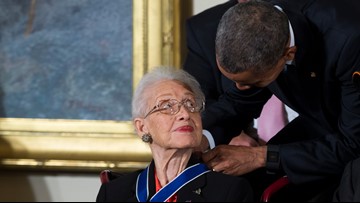
Johnson has NASA facilities named in her honor and received the Presidential Medal of Freedom in 2015.

Obama Medal of Freedom

Photo by: APPresident Barack Obama presents the Presidential Medal of Freedom to NASA mathematician Katherine Johnson during a ceremony in the East Room of the White House, on Tuesday, Nov. 24, 2015, in Washington. (AP Photo/Evan Vucci)

Of course, it’s an honor for Katherine Johnson and her family to have an academic building named after her. But the people it’s really going to impact are the students.

 “It means that I can do this, it means that I can do whatever I set my mind to, and I’m going to!” exclaimed Bromwell. 

The Katherine Johnson building is home to many academic programs including The Virginia Serious Game Institute.

Credit: Wusa9.com

Wife of singer, Timi Dakolo, Busola, has accused controversial clergyman and founder of the CommonWealth of Zion  Assembly COZA, Biodun Fatoyinbo, of sexually assaulting her when she was much younger.

In an explosive interview with YNaija, Busola, the mother of three, recounted how the clergyman who has been embroiled in a number of sexual assault related cases, Ese Walter being the most prominent, allegedly raped her in her mother’s house while she was still in secondary school. In her interview, Busola recounted how the clergyman also allegedly tried having sex with her inside his matrimonial home when she came in to help his wife, Modele, when she had their first child. 

Recall that Timi Dakolo recently launched an attack on the clergyman, anonymously. He called out the pastor, accusing him of taking advantage of women in his ministry and leaving them broken emotionally. Read hereand here.

Read the interview as reported by YNaija below and watch the full interview below

ON MEETING BIODUN FATOYINBO FOR THE FIRST TIME

Busola Dakolo was born and lived most of her early life in Ilorin. The first time she left Ilorin was for secondary school at Suleja and that time away allowed her really find her Christianity. She joined and rose to become the vice-president of the Gifted School Academy Suleja’s fellowship and embraced a conservative approach to Christianity, growing to become distrustful of churches and fellowships that tried to copy worldly trends as a way to reach people outside the church. She returned home for the holidays to find that her sisters had started attending a non-denominational ‘youth club’ that embraced all kinds of people and focused on worship and fellowship over doctrine and legalism. It took a while but  her sisters convinced her to go by telling her she needed to meet different kinds of people, especially former prostitutes and cultists that have given their lives to Christ.

Busola reluctantly joined her sisters for the youth club, but she wasn’t comfortable there, partly because of the way they worshipped and because I was the youngest person there. After the service, there was a first timers call, and Busola stood up and introduced herself, explaining her initial skepticism and how their worship had changed her mind. After the service, the pastor of the club, a much younger Biodun Fatoyinbo came looking for her after the service. 

Pastor Biodun wasn’t yet married ( though he was engaged to his current wife) and the Commonwealth of Zion Assembly (COZA) wasn’t yet a church, it was called Divine Delight Club.

He expressed his surprise at how bold she was for someone so young and encouraged her to keep speaking up for herself. He also managed to convince her to sing at their next meeting before she left back for school. To sell this idea, he offered to personally rehearse with her, mentioning that he played the keyboard. This was before mobile phones and internet, so Busola’s sister had to take her to Fatoyinbo, who was living with his parents at the time. 

Though Busola remembers the song they rehearsed, their rehearsal was uneventful, and at the next meeting she performed, her performance moving enough that a former cultist who was attending the club public renounced his past and embraced Christianity. After, the members of the club affirmed her and Fatoyinbo convinced her through gifts of books and cassette tapes to keep attending their club when she was back home from school. 

Returning to school and the more conservative worship environment she was used to was harder than she had anticipated. For the rest of her secondary school year, she struggled with guilt, shuffling between her role in the conservative Fellowship of Christian Students (FCS) and the more liberal world of Fatoyinbo’s COZA. She felt she was living a dual life. Eventually she graduated and returned home to find that Divine Delight Club had grown into a church headed by Fatoyinbo, and her sisters had convinced her family to join the church. It felt like the only option she had to join as well. 

A YEARNING FOR UNDERSTANDING LEADS TO RAPE

Busola had embraced conservatism because she’d grown up in a polygamous family and she wanted some control over her own life in service of something bigger than herself. Her father was largely absent in her life and her mother had tried to shield them from the financial difficulty that came with parenting her and her sisters alone but she saw and it affected her deeply. Conservative Christianity gave her purpose and the structure she desperately craved. She joined the choir at COZA as a way to integrate into the church and rid herself of the discomfort she felt towards the church. Being in the choir made her visible and eventually Fatoyinbo would take an interest in her, inviting himself to her home under the guise of getting to know her better.  

The first time he visited, he asked if she’d join him on an errand run. Her mother was concerned but didn’t really push when Busola insisted that she wanted to go. They drove in his white Mercedes Benz and finally spoke for the first time. Though she was normally guarded around men, Fatoyinbo was charming, using his knowledge of her family and the absence of her father to gain her trust. Before long, he was visiting the house regularly, engaging her in ways her unavoidably distant sisters weren’t. 

Fatoyinbo showed up at her house unannounced. It was a Monday morning early enough that Busola Dakolo was still in her nightgown. Her mother had traveled with her sisters and were absent at service the previous sunday. He didn’t say a word, forcing her onto a chair, speaking only to command her to do as he said. It took Busola a while to come to terms with what was about to happen, and it was why she didn’t struggle or make a fuss when he pulled down her underwear and raped her. She remembers he didn’t say anything after, left to his car, returned with a bottle of Krest  and forced her to drink it, probably as some crude contraceptive. She remembers him saying. 

“You should be happy that a man of God did this to you.”

At this time, his wife had just given birth to their first child, Oluwashindara. 

AFFLICTION STRIKES A SECOND TIME

Busola spoke up because her husband, the singer Timi Dakolo put up a social media post on Instagram accusing Nigerian clergy of condoning rape and sexual assault. People had approached him anonymously about Pastor Biodun Fatoyinbo targeting underage girls for sexual relationships and he felt obligated to publicly speak up on their behalf. His posts had created intense backlash and support and sparked rumours about who the subject of his post was and who the victims were. This wasn’t the first time Timi Dakolo had spoken up about sexual assault and he was aware of what had happened to her from the beginning of their relationship. 

What motivated her to speak up about her rape was a social media post from an anonymous account that had insinuated that she had been promiscuous as a teenager and had affairs with pastors when she lived in Ilorin and questioned the paternity of her children.  

The reality was, rather than the fabricated promiscuous teenager, Busola Dakolo was an isolated girl, terrified of Fatoyinbo whose salvation story heavily featured his past as a cult member. She was too terrified to tell her sisters or mother about his violence, stewing in silence for a week. Her sisters were active in the church, and to avoid suspicion she followed them to church the next Sunday. She remembers he spoke about grace during the service and after, Modele Fatoyinbo asks that she come to help her with her new baby, something she had never done before. It was normal for church members to come serve at the pastor’s house so her sisters allayed her protests. 

Feeling she had no options, she went to her pastor’s house, Fatoyinbo tried to isolate her later that night from his wife and their daughter by insisting she slept in the family’s guest room. She managed to thwart his plans, appealing to the pastor’s wife to let her sleep in their master bedroom. 

“No one ignores me.” 

He would tell her this the next morning, smacking her butt. It was an ominous enough statement that Busola became apprehensive and tried to leave for her house once it was past twilight. It was the first of many threats she would get from the flamboyant pastor. Fatoyinbo would insist on dropping her off at home, even though she protested several times. Instead of dropping her off at the junction as he had promised, he detoured, driving her away from safety and towards a secluded spot. He threatened her the entire drive, making proclamations about how he owned her and how he was angry that he had thwarted her the night before. He opened the car, pulled her out of the passenger seat and raped her a second time in the space of a week. First behind the car, then moving her to the bonnet for ease of access. 

She didn’t fight, she had lost all her will to. She’d protected her virginity for so long that having it forcefully taken this way broke her. He guided back into the car when he was done, and told her he loved her, speaking of how he’d told his pastors that men of God raped women, that there was nothing special about what he did. He dropped her off outside her home as though everything was normal. She bathed immediately after and didn’t leave her room for three days, but while her siblings were worried about her, no one made any connections between her sudden mood and her married pastor. Busola’s family was a ‘church family’, a family so involved in church activities that their home was routinely used as a hostel for visiting ministers and guests of the church. Fatoyinbo had exploited that, and did it again when he showed up the next Sunday, to ask why she hadn’t gone to church that Sunday. She was afraid of drawing attention to herself, so she went to church the next Sunday, and kept going, even though she left the choir and began to voice her dissent towards Fatoyinbo. 

THE BEGINNING OF RELIEF

A dream was the catalyst for Busola opening up for the first time about Fatoyinbo raping her. Her elder sister had relocated to Lagos, and she pleaded to visit, drained from avoiding the pastor. In Lagos, her sister who she believes has the Sight, told her about a dream she had had, where she’d seen Busola crying, blood on a chair and Fatoyinbo smiling. She asked her pointedly, breaking months of silence and starting a flood of admissions about the rape and everything that had happened. Her sister convinced her to return to Ilorin and together they told her other sisters and her brother, who was studying at the University of Ilorin. Her brother flew into a rage, grabbing a pocket knife and taking her to Fatoyinbo’s house. He was able to intercept them before they reached his house, and together with Wole Soetan, who she suggests is now the pastor of the COZA Portharcourt branch, convince them to return home and that Fatoyinbo would follow. 

The pastor and two of his church members would eventually come to pacify her family, blaming the devil and Soetan even promising to leave the church to show how little tolerance he had for promiscuity. After Soetan would confide in Busola that he couldn’t leave the church because he felt Fatoyinbo was ‘weak’ and needed spiritual guidance and support. He convinced her siblings to keep the rape and assault from her mother.  Numb to all emotion, Busola pretended to concede and after two weeks of constant visitation from the pastors and the unspoken implication that Fatoyinbo was an alleged reformed cultist with a lot to lose if news of her rape went public, she returned to the church to protect her family and project normalcy. It was clear to her at this point that she would never feel comfortable within organized religion. 

Fatoyinbo continued to target Busola in the intervening months, organizing prayer sessions and specialized deliverance sessions with guest pastors to help ‘repair’ her ‘bondage’ and suggesting to her that the violence he had meted towards her was a problem they both had in common and needed communal deliverance, Busola would find out that Fatoyinbo had been telling church members that she wasn’t ready for a relationship when the pastor’s cousin befriended her. Their time would eventually develop into a relationship and she would confide in him about what had happened to her. 

With his help, she would leave the church and join another congregation.  

Credit: LIB

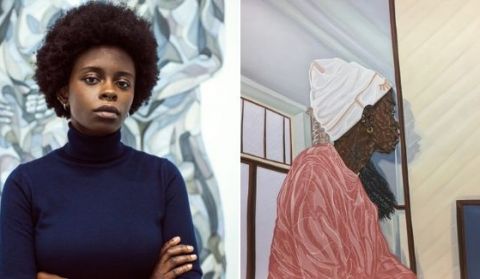
Toyin Ojih Odutola has gained a lot of popularity over the years for her pen ink drawings, which raise pertinent questions about the construct of blackness. Now, with a recent sale of one of her stunning pieces, she’s officially the third highest selling Nigerian artist of all time. 

After moving from Nigeria to America at the age of five, Ojih Odutola became aware of her blackness and began questioning her identity. Due to the shock of this transition, she used art as a coping mechanism, and over time, it transformed into an “investigative, learning activity” for her. 

Speaking with Vogue about how art helped her escape, Odutola said:

“I was obsessed, capturing everything I saw and being fascinated with the incredibly simple task of looking at something and transmitting it onto paper. It’s an immediate magic.”

Yesterday at the Sotheby’s, Toyin sold one of her fantastic drawings, titled ‘Compound Leaf’, for £471,000 (roughly N215 million), making her the 3rd highest selling Nigerian artist of all time — behind fellow female artist, Njideka Akunyili Crosby, and the legendary Ben Enwonwu.

Check out more of her work right here: 

Credit: konbini.com

For the first time in Portland, Oregon’s history, two Black women are leading both the city’s police and fire bureaus.

On June 13, Sara Boone became chief of Portland Fire & Rescue, joining the ranks of Danielle Outlaw, the Oregon city’s police chief.

According to the U.S. Census Bureau, people who identify as Black account for only 5.7% of the city’s population of more than 653,000 residents. However, of the nation’s 100 largest cities, Portland is the only one with police and fire bureaus led by Black women, reports Willamette Week.View image on Twitter

View image on Twitter

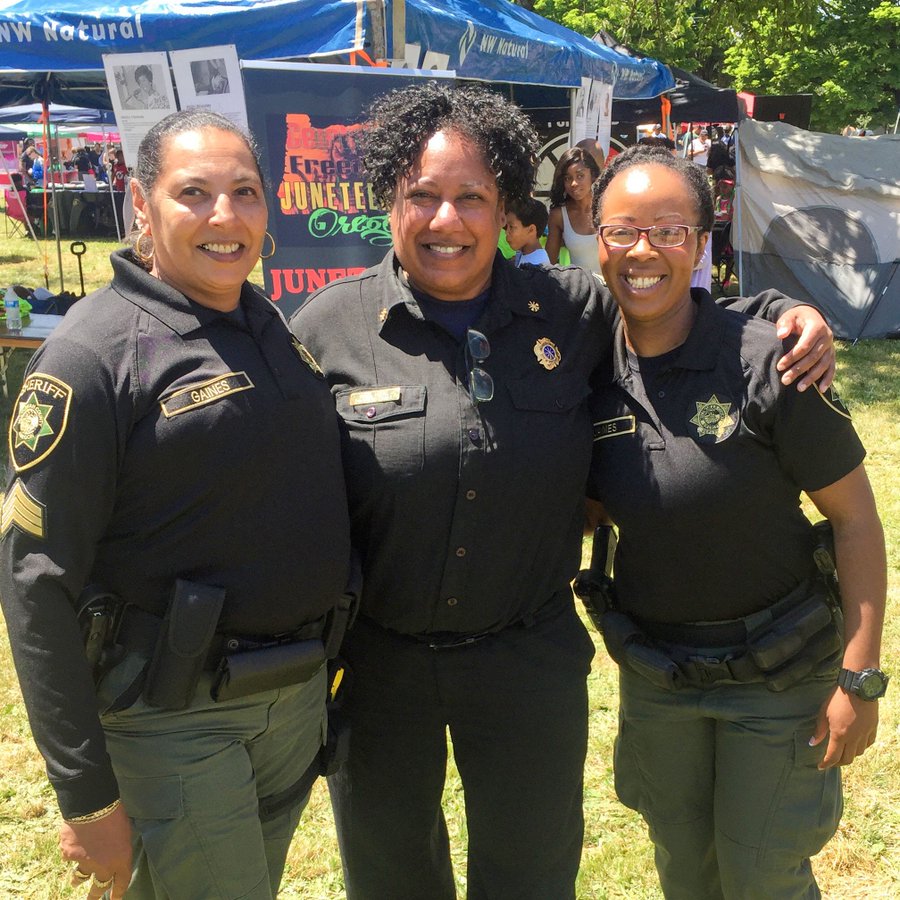
Multnomah Co Sheriff@MultCoSO

Today is #Juneteenth and last Saturday, MCSO joined the local community to celebrate!
During the festivities we ran into Portland’s first African American Fire Chief, Sara Boone. We are proud to serve alongside such great and diverse public safety professionals.@PDXFire184:25 PM – Jun 19, 2019See Multnomah Co Sheriff’s other TweetsTwitter Ads info and privacy

Outlaw, who was appointed Portland’s police chief in 2017, has focused on the city’s hotbed climate for protestors and continues to make reforms in leveling back excessive force and handling growing crime rates.

Boone’s appointment makes her the first Black fire & rescue chief in Portland history, but it isn’t the first time she has trailblazed in her hometown. Upon starting her career as an entry-level firefighter 24 years ago, the Northeast Portland native was the first Black female firefighter to join the department since 1883, according to The Skanner News.

“I am deeply honored to be the next Fire Chief of Portland Fire & Rescue, a bureau I hold in high esteem because of the men and women who serve with honor, integrity, and sacrifice,” Boone said. “I am committed to ensuring that our responsiveness and our professionalism live up to the highest ideals of service, integrity, and equity.”

Boone will be sworn in as chief at the beginning of August.

Serena Williams has made history yet again.

The tennis star’s image will be featured on the iconic Wheaties cereal box, reports ABC News. As Williams noted on Instagram, she is the second Black woman to be featured on a Wheaties box. The only other Black woman to receive the honor was Althea Gibson back in 2001. Gibson is widely recognized as one of the greatest athletes to ever grace a tennis court. She was best known as the first Black woman to ever win a Grand Slam title when she won the French Open in 1956.


View this post on Instagram


In 2001, Wheaties paid homage to a true champion and an icon by putting her on the cover of a Wheaties Box. Althea Gibson was the FIRST Black Woman tennis player to be on the box. Today, I am honored to be the second.

A post shared by Serena Williams (@serenawilliams) on Jun 25, 2019 at 6:00am PDT

“In 2001, Wheaties paid homage to a true champion and an icon by putting her on the cover of a Wheaties Box,” Williams wrote.

“Althea Gibson was the FIRST Black Woman tennis player to be on the box. Today, I am honored to be the second.”

View image on Twitter

noironlineorg@noironlineorg

Wheaties cereal originally began featuring a variant of athletes in 1933; but has featured only two black females within their history.

International tennis players #AltheaGibson was featured in 2011. With #SerenaWilliams recently being featured in 2019.23:00 PM – Jun 25, 2019See noironlineorg’s other TweetsTwitter Ads info and privacy

Wheaties confirmed the development in a press release and praised Williams for her accomplishments.

“Serena exemplifies all of the personal attributes that Wheaties looks for when choosing who its next champion will be,” marketing manager Tiffani Daniels said. “On the court she has been named the women’s most valuable player seven times, while off the court she uses her voice to inspire and spark change to make the world a better place.”

The mom-of-one has won 23 grand slam singles titles and 14 grand slam doubles titles. On June 4, Williams became the first athlete to make Forbes’ World’s Richest Self-Made Women list. Her net worth is reportedly $225 million.


View this post on Instagram


Be the brand. Starting @Serena and @Serena.Ventures are just a few steps. Honored to be the first athlete on @Forbes #SelfMadeWomen list. Hair by @lorraine_dublin Makeup by @paulinebriscoe

A post shared by Serena Williams (@serenawilliams) on Jun 4, 2019 at 6:01am PDT

“I am so excited to be on the cover of the next Wheaties box,” Williams said in a statement. “I have dreamt of this since I was a young woman and it’s an honor to join the ranks of some of America’s most decorated athletes. I hope my image on this iconic orange box will inspire the next generation of girls and athletes to dream big.”

Williams’ most recent honor caps off an incredible stretch for the tennis star. She was honored with Sportswoman of the Year award at the 2019 BET Awards on June 23.

Credit: blavity.com

The First Lady of the Federal Republic of Nigeria, Mrs Aisha Buhari, on Tuesday asked maritime agencies to review subsisting policies to accommodate more Nigerian women in the seafaring profession.

The First Lady, Mrs Aisha Buhari [NAN]

The first lady who described women as good human and material managers said that, such policy drive would help to level gender inequalities existing in the profession.

Mrs Buhari, gave the advice at the 2019 Seafarers Day organised by the Nigeria Maritime Administration and Safety Agency (NIMASA) in Lagos.

The News Agency of Nigeria (NAN) reports that the theme of the event was: `On Board with Gender Equality’ aimed at honouring seafarers for their contribution.

NAN) also reports that the president’s wife was represented at the event by the wife of the Vice President of Nigeria, Mrs Dolapo Osinbajo.

She said “There has been significant effort by the NIMASA leadership at making the women play active role in the maritime sector especially in the seafaring aspect.

“Mr President is desirous of seeing more women in the industry this year celebration focusing on women seafarers is therefore apt.

“It will be development on a wider range seeing agencies play pivotal role in leading the pack in the new direction of gender equality in maritime career of the girl child.

“Let me stress that it is important to educate the girl child in opportunities in taking up career in the sector and the derivable benefits there, while dissuading them from the notion that it is men’s job,’’ she said.

Dr Dakuku Peterside, the Director-General (DG) of NIMASA in his address said the agency was gender sensitive, adding that more Nigerian girls had in the recent times benefited from NIMASA cadet training.

To this end the agency will continue to pursue policies that will accelerate gender equality and empowerment of women in the maritime.

“In addition to the 304 female cadets we have trained since the inception of the Nigerian Seafarers Development Programme (NSDP), special attention will now be given to the training of female seafarers in specialised courses to enable them take-up professional responsibilities,’’ he said.

MS Sophia Adula, an awaiting Seatime Mandatory Cadet told NAN that many of them out there were yet to sail out after graduation because of no platform to acquire the training that would certify them.

She called on the authorities to make seatime training platform available for them to ply their trade.

Credit: Pulse News

A woman has been appointed as president of the U.S. Naval War College for the first time in the institution’s 135-year history, the Navy announced on Friday.

Selecting Rear Adm. Shoshana Chatfield, a helicopter pilot who now heads a military command in Guam, as the college’s next leader was a “historic choice,” said Navy Secretary Richard Spencer.

Her appointment follows a scandal involving the former president of the Naval War College.

Just days ago, top Navy officials removed the previous president, Rear Adm. Jeffrey Harley, in the wake of an investigation into complaints over Harley’s behavior, including excessive spending and abusing his hiring authority. The Associated Press first reported on the probe into alleged inappropriate conduct, such as keeping a margarita machine in his office.

The official release about Chatfield made no mention of Harley’s removal. Top Navy officials told the AP that though the investigation into Harley has not been completed, officials “had enough information” to justify Harley’s departure this week.

Incoming president Chatfield, 53, is originally from Garden Grove, Calif., and she had been deployed to helicopter detachments in the Western Pacific and the Arabian Gulf before serving as a commander of a provincial reconstruction team Afghanistan in 2008, according to the Navy. Chatfield, who has a doctorate in education, has also taught political science as an assistant professor at the United States Air Force Academy.Article continues after sponsor message

Then a lieutenant, Chatfield told The Los Angeles Times in 1993 when restrictions on women flying in combat missions were lifted: “The goal of every Navy pilot should be to command a squadron at sea.”

More than two decades later, Chatfield will be at the helm of an institution with more than 50,000 graduates since its founding in 1884.

On her appointment, Spencer said: “She is the embodiment of the type of warrior-scholar we need now to lead this storied institution as it educates our next generation of leaders.”

Kenesha Starling is the first Black student to serve as editor-in-chief of the law review in the school’s history.

The school, which was founded in 1923, touted Starling as a hardworking second-year law student eager to break down longstanding barriers.

“This is an opportunity for us to leave our footprint, our chance to do things a bit differently, a bit better… to shake things up a bit. Our school has a rich and impressive history; our alumni are Texas Supreme Court justices, judges, U.S. and district attorneys, and presidents of state and local bar associations, to name a few,” she told the school in an interview.

“Our Law Review should reflect that same culture; it should be a leading resource for the legal community. It is not enough to be on Law Review — we have to increase our presence, open doors for all the law students who follow our stead as the esteemed South Texas Law Review.”

Starling has an impressive resume. She spent almost two decades working for a federal agency while raising her young son and spending hours studying for her law degree. She already has her MBA on top of all her current work.

“Having a professional background, I tend to see things a bit differently from my peers. Generally, when people think of diversity, they only consider color or ethnicity, but I think diversity is also background, age, and the wealth of experiences that go along with that,” she said.

STCL Houston Professor Shelby Moore said she was proud of Starling for her hard work and said her new position would positively affect hundreds of other people who will look up to her. 

“Kenesha has achieved a truly significant milestone as the first black editor-in-chief of South Texas Law Review — not only for herself, but for all minority students at the law school,” Professor Moore said.

“STCL Houston always has celebrated diversity and this important accomplishment furthers the school’s inclusive environment and reputation as a school of accessibility to all.”

She’s taking almost as many classes as her full-time peers, all while raising her 15-year-old son Darius. Starling was partially inspired to seek the position after seeing an inspirational poster honoring Black History Month. She’s in her final year of law school but is hoping her years of experience will be a benefit to the position.  

“There is a lot of pressure that comes with being the first in anything because people see you as a role model. They wonder if you’ll fall into a certain stereotype or be better or worse than your predecessors. Most of all, you must do your best, more for those coming behind you than for yourself,” she said during the interview with the school.

“Because the reality is — if you don’t knock it out of the park — that ‘failure’ becomes a stigma and follows everyone who looks like you. That’s a weighty but exciting opportunity.”

Credit: blavity.com

Mae Jemison is getting her very own Lego figurine and if you have ever played with legos you can appreciate this new way to celebrate her accomplishments.

Via Rolling out:

MAE JEMISON, ASTRONAUT, PHYSICIAN, AND ENTREPRENEUR: TRAINED AS A MEDICAL DOCTOR, JEMISON BECAME THE FIRST AFRICAN-AMERICAN WOMAN IN SPACE IN 1992. AFTER RETIRING FROM NASA, JEMISON ESTABLISHED A COMPANY THAT DEVELOPS NEW TECHNOLOGIES AND ENCOURAGES STUDENTS IN THE SCIENCES.

Mae isn’t the only astronaut being recognized, Lego is celebrating all the women of NASA in this new collection and with enough support, they hope to get the Lego’s on the shelves.

The other women are:

MARGARET HAMILTON, COMPUTER SCIENTIST: WHILE WORKING AT MIT UNDER CONTRACT WITH NASA IN THE 1960S, HAMILTON DEVELOPED THE ON-BOARD FLIGHT SOFTWARE FOR THE APOLLO MISSIONS TO THE MOON. SHE IS KNOWN FOR POPULARIZING THE MODERN CONCEPT OF SOFTWARE.

KATHERINE JOHNSON, MATHEMATICIAN AND SPACE SCIENTIST: A LONGTIME NASA RESEARCHER, JOHNSON IS BEST KNOWN FOR CALCULATING AND VERIFYING TRAJECTORIES FOR THE MERCURY AND APOLLO PROGRAMS — INCLUDING THE APOLLO 11 MISSION THAT FIRST LANDED HUMANS ON THE MOON.

SALLY RIDE, ASTRONAUT, PHYSICIST, AND EDUCATOR: A PHYSICIST BY TRAINING, RIDE BECAME THE FIRST AMERICAN WOMAN IN SPACE IN 1983. AFTER RETIRING AS A NASA ASTRONAUT, SHE FOUNDED AN EDUCATIONAL COMPANY FOCUSING ON ENCOURAGING CHILDREN — ESPECIALLY GIRLS — TO PURSUE THE SCIENCES.

NANCY GRACE ROMAN, ASTRONOMER: ONE OF THE FIRST FEMALE EXECUTIVES AT NASA, ROMAN IS KNOWN TO MANY AS THE “MOTHER OF HUBBLE” FOR HER ROLE IN PLANNING THE HUBBLE SPACE TELESCOPE. SHE ALSO DEVELOPED NASA’S ASTRONOMY RESEARCH PROGRAM.

Read more about the initiative here.

Women of Nasa

Credit: emilycottontop.com

South African singer, Nhlanhla Nciza, who is one half of the Mafikizolo music duo, has announced that she is splitting from her husband of almost fifteen years, Thembinkosi Nciza.

The 41-year-old singer posted a statement on Instagram saying:

After almost 15 years of our strong bond of marriage, my husband TK Nciza and I have come to a  tough but amicable decision to bring an end to our union.

I am thankful for the support we have given each other over the years while raising our children.

We shall remain on good terms and continue our endeavor to be great and exemplary parents to our children.

We appreciate the support we’ve received from family and friends. At this stage, we would like to appeal for privacy, particularly for the sake of our children. We thank you🙏

All queries may be directed to David Feinberg at
davidf@rwr.co.za

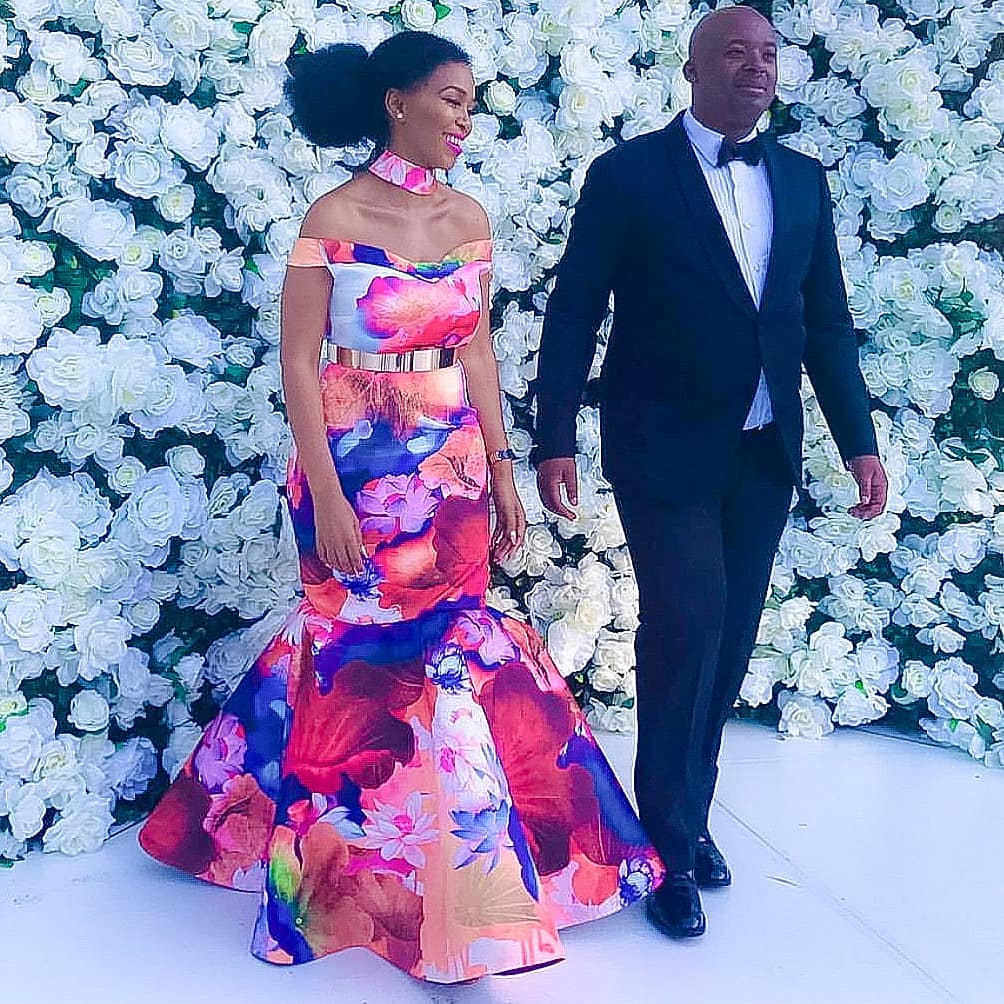
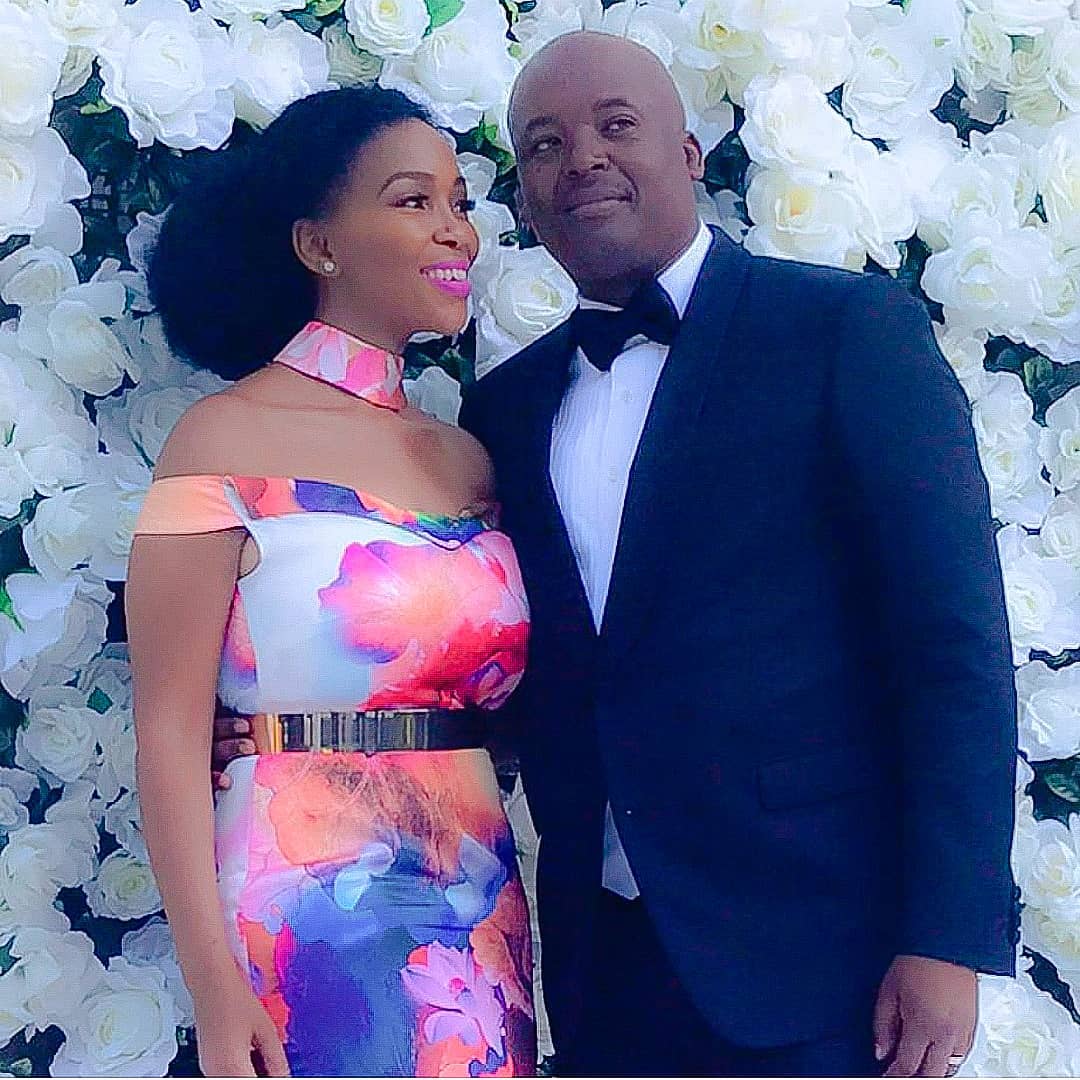
She also posted a few photos of herself and her husband.

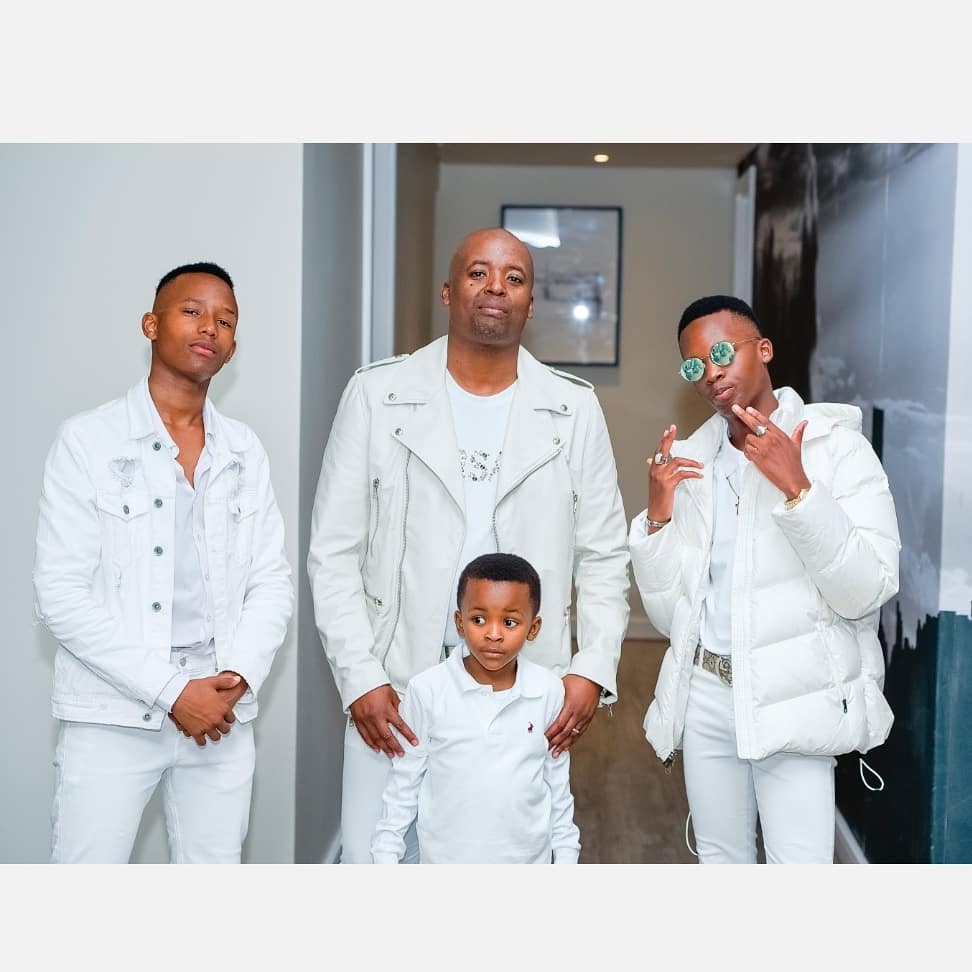
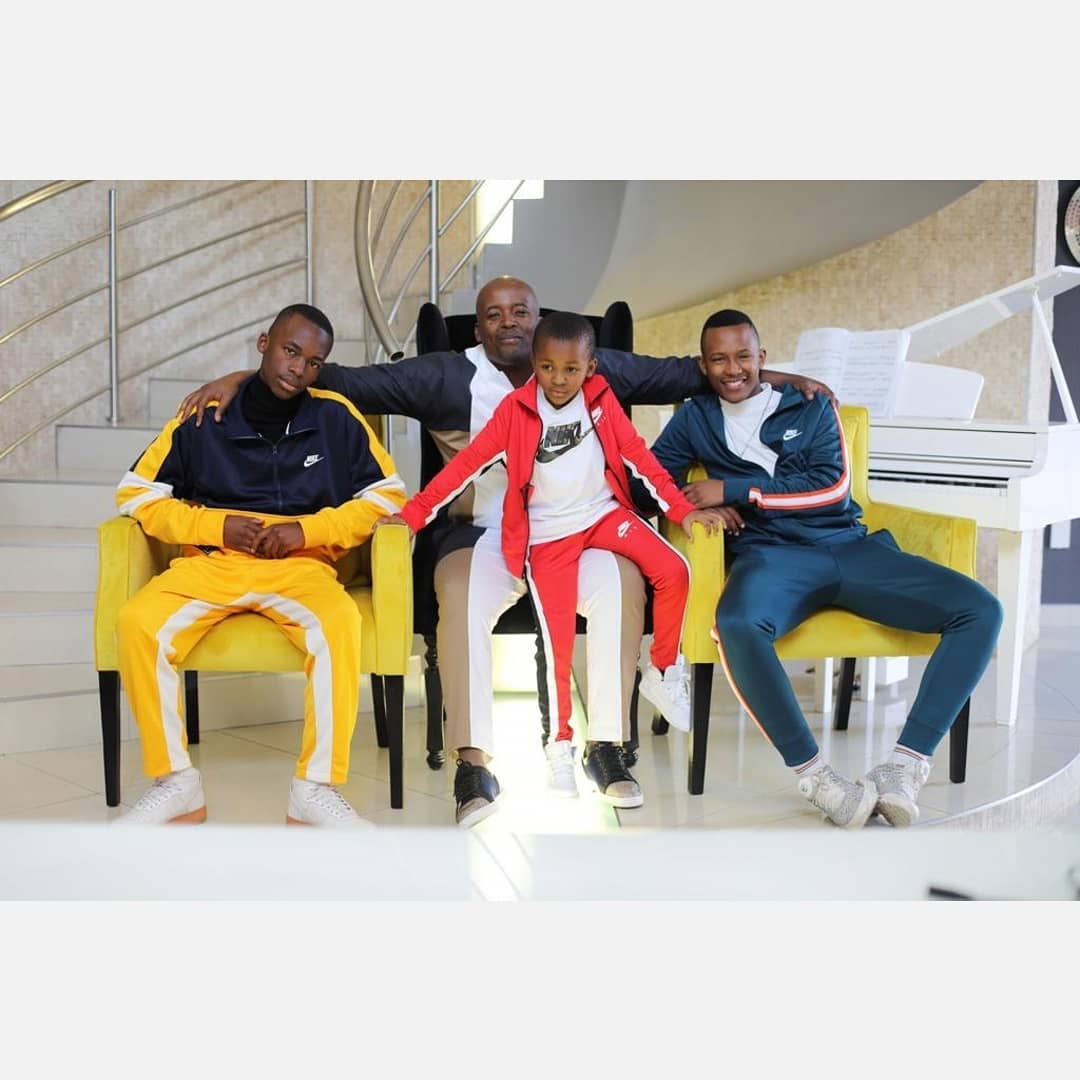
The couple has three sons, Nkululeko, Thamsanqa, and Luvuyo. Their daughter, Zinathi, was killed in a car crash in 2009.

A few days ago, Nhlanhla shared a Father’s Day post where she thanked her husband for being a good role model to their sons.

Photo Credit@nhlanhla_nciza

Credit: Bella Naija