Category

Career Gems

Category

Putman Media, publisher of Chemical Processing, Control, Control Design, Food Processing, Pharma Manufacturing, Plant Services and Smart Industry magazines has announced the 2019 Class of Influential Women in Manufacturing. (See below for full list of honorees.)

The 27 women who join the ranks of IWIM this year are recognized for their change leadership in manufacturing—their risk-embracing work that serves to move the needle on asset management and reliability, digital transformation, workforce development, and other elements critical to ensuring the manufacturing industry’s readiness to meet the challenges of today and tomorrow.

Founder of STEMHub Foundation, who is also Senior Additives Manufacturing Engineer at Cummins Inc, Dr. Adeola Olubamiji is one of the Honorees on the List.

She wrote on her facebook page:

Happy Independence Day America – The American Dream

Part A:

It is with pleasure that I announce to you my beloved that I have been named one of the 27 INFLUENTIAL WOMEN IN MANUFACTURING in the USA for 2019: https://www.influentialwomeninmanufacturing.com/iwim-honorees-announcement-2019/

The 2019 Influential Women in Manufacturing honorees will be profiled in a dedicated e-book to be released by Putman Media in September and recognized in person at the 2019 IWIM awards luncheon, taking place Friday, Oct. 4 (Manufacturing Day) at MxD in Chicago.

Part B:

8 months ago, I moved to the USA in search of the “American Dream.” The last eight months has been the most challenging, the most promising and also the most rewarding period of my career. Although the American Dream hasn’t been achieved in full circle, I am thankful for the opportunity to yet again TRAIL-BLAZE in corporate America 🙏🏿.

My knowledge and experience is now making contributions to the advancement of digital manufacturing and Industry 4.0 at #Cummins and this has received the deserved credits: https://www.cummins.com/news/2019/03/07/cummins-takes-next-step-3d-printing-and-future-manufacturing

America, thank you for welcoming me, my blackness, my youthfulness and my multiple foreign degrees with open hands. I am indeed grateful for the career advancements, the accolades and the chance to thrive without boundaries.

I had a DREAM, I DESIGNED a plan, I put in the WORK, GOD provided a FERTILE ground, I took the calculated RISK and I hope you can see the RESULTS.

In this second quarter of 2019, I hope you will take at least one major risk and give it all you’ve got.

The 2019 Influential Women in Manufacturing honorees will be profiled in a dedicated e-book to be released by Putman Media in September and recognized in person at the 2019 IWIM awards luncheon, taking place Friday, Oct. 4 (Manufacturing Day) at MxD in Chicago.


See full List Of The 2019 Class of Influential Women in Manufacturing below:


Credit: Influentialwomeninmanufacturing.com

Adeola Olubamiji

Six days after Busola Dakolo came out to share her harrowing story of rape by Senior Pastor of Commonwealth of Zion Assembly (COZA), Biodun Fatoyinbo, another woman is accusing the clergy of the same thing.

The woman, who says she’s a former member and staff at the church, said Fatoyinbo, who she regarded as a mentor, spiritual leader, and father figure, allegedly raped her when he invited him to his house to discuss church issues.

She said that wasn’t the first time she was going to the house, adding that things moved on really fast and Fatoyinbo in no time was all over her.

She says she hopes that her story will build on the impact of Busola Dakolo’s and Ese Walter‘s stories.

In her story, she said Fatoyinbo addressed the Busola Dakolo incident, saying she had seduced him and “something had happened”.

Her Story

The woman said she joined the church in 2009, and in 2013, when the Ese Walter story broke, she immediately felt the weight of its implications, but dismissed it as some smear campaign. She hadn’t been working closely with the pastor at the time and the church was a place of sanctuary for her.

She joined the music group and was there till 2015, when Fatoyinbo’s wife Modele took an interest in her, and she began working with her on church adminstration duties and even taking care of the Fatoyinbos’ son.

The woman said she had found out about how church members viewed their proximity to the pastor as something special and she did feel special.

She says women and girls who were granted access to the Fatoyinbos’ children were referred to as ‘choice daughters,’ as the pastor was known to guard access to their kids.

She said she took care of the kids from 2015 to 2016, and later on, she moved to another country, living in one of the cities where COZA had a branch.

While she was hired by Modele, her job also required that she worked with Fatoyinbo who visited regularly to minister to the congregation and spend time with his children who were schooling in the city.

The alleged rape took place when Fatoyinbo visited and invited her to the house to discuss church issues.

As he forced himself on her, she says, removing her shirt and unbuttoning her trousers, telling her to “relax”.

She adds that she was too shocked to react, trying to reconcile the person in front if her, with the person who she saw as a spiritual leader, father figure, and mentor.

After the rape, she said he switched back to the pastor she knew, going on to apologise for what happened, saying he didn’t mean to hurt her.

She said she stayed silent and couldn’t talk to church members about it, remembering how the church took the Ese Walters case.

She was happy Fatoyinbo lived in Nigeria, pastoring the church in Abuja, so the distance helped her reevaluate her life. She wanted to leave the church but it would be difficult, seeing the church was responsible for her livelihood. She began saving to come back to Nigeria and continue her life.

One day, a friend called her out of the blues saying Fatoyinbo was asking for her number. She couldn’t tell the friend why she refused to share her contact with the pastor, so she had to give it to the friend to share with him.

Fatoyinbo called her, she said, saying ‘I know you are angry with me.’ She said his apology rang of dishonesty and after the call ended, her other friends called to tell her about Busola’s husband, Timi Dakolo‘s May 2018 Instagram postaccusing an Abuja pastor of sexual assault.

She said she figured Fatoyinbo’s call was an attempt at damage control and if she had any doubts about him being a sexual abuser, that call cleared them.

The rape occurred in the last quarter of 2017, she said, but she continued working in the church till July the next year. She said she told Fatoyinbo of her plan to leave and he insisted that they both see each other before she does so.

She adds that by the time she returned to Nigeria, Timi Dakolo had made his second post, accusing Fatoyinbo of sexual assault, although not explicitly.

One month later, Busola shared her story, accusing Fatoyinbo of raping her twice when she was 16.

The woman said when she returned to Nigeria, Fatoyinbo insisted on them meeting, and he shared that Busola had seduced him and “something had happened.” He said he didn’t know she was a teenager, adding that he had no idea why she was trying to “sabotage” his ministry.

The woman said she doesn’t think Modele is unaware of her husband’s alleged assault, adding that she either intentionally or inadvertently brought young women closer to her, setting them up for exploitation by her husband.

She added that some pastors are aware of Fatoyinbo’s sexual violence but either kept quiet, or enabled it. She called them “The COZA 12,” saying they are pastors within and outside the church.

Watch:

Credit: Bella Naija

Young people have the power to change the world – those are the words of The Diana Award, set up in memory of Princess Diana, who during her life doggedly pursued positive change in the world.

The Diana Award honours young people between the ages of 9 and 25 from across the world, who impact positive change in the lives of others and their community, their country, and the world.

In 2019, 9 young Nigerians are among the few selected from across the world, recognised for making an impact on Nigerian lives and on Nigeria. They include:

Meukara Monday
Lekeh Development Foundation. 24
Muekara has been volunteering with an environmental group called Eco-Club, aimed at educating primary and secondary school students to learn about their environment and how to take action. Through campaigning, he has raised awareness of issues from dropping litter in the playground to the illegal cutting down of trees and engaged his community to take responsibility for their planet. Muekara also teaches subjects including Maths and English, educating students on the Sustainable Development Goals. His aim is to raise global leaders across the 24 schools his Eco-club has reached, empowering young people to make a change.

Precious Adebola
Precious Fount Foundation. 25.
Precious has embarked on a number of selfless services to help disadvantaged students in Nigeria. She started a scholarship for students in the Nigerian village of Ufodo and has also initiated a project that prepares students for their return to school by providing them with Back to School packages. In addition, she supervises mentoring sessions and an online academic support group. Precious has overcome challenges including sourcing the funding for her projects, requiring her to leverage on her social skills and inspire others towards her mission to strengthen Nigeria’s educational system.

Eedee-Bari Bawoh
Voice To The Street. Lagos. 22.
After seeing so many children falling into the traps of the street, Eedee-Bari was inspired to take action. She made it her mission to empower children through education, giving them the best life chances possible. Since founding ‘Voice to the Street’, Eedee-Bari has supported over 1,350 street-children through counselling events, scholarship funds and the distribution of educational materials. Thanks to her hard work, and the coordination of over 50 volunteers, Eedee-Bari is building new futures for children throughout Lagos. Eedee-Bari used to find it hard to speak out but now she has gained enough confidence to see a wrong and opt to make a difference. And that difference is only going to keep on growing.

Wadi Ben-Hirki
Wadi Ben-Hirki Foundation. 22.
Wadi founded her non-profit organisation at the age of 18, focused on improving the lives of women and children, and now uses her voice to amplify the issues surrounding education, peace and gender inequality. Wadi’s organisation runs four main projects and campaigns to empower marginalised and disadvantaged people. ‘Street to School’ focuses on free and inclusive education. ‘Girls Not Wives’ advocates against child marriage, ‘Love in the Midst of War’ rehabilitates survivors of insurgency. ‘SHEROES’ empowers young girls and women to be the best version of themselves, helping them to dream beyond their present and become great leaders. Wadi’s work is changing the lives of young people across Nigeria.

Chidinma Okoli
Financially Literate Africa. Lagos. 23.
After witnessing first-hand the level of poverty prevalent in her community, Chidinma founded Financially Literate Africa – a financial education organisation for young Africans to bring themselves and their families out of poverty. In this capacity she provides young people with financial advice to become economically empowered and financially literate. Through her campaign “Be Financially Intelligent” over a thousand young people took part in activities that would benefit their future financial self. She has mentored over 50 young girls on financial literacy through the G7 initiative and has become passionate about bringing financial stability to young people in poverty.

Marvellous Olusegun
The Invasion Foundation. 24.
Marvellous founded “The Invasion Foundation” which carries out free breast and prostate cancer screening in Nigeria – a country which has one of the worst cancer:death ratios in the world. Cancer statistics in Nigeria were so alarming that Marvellous became determined to lead the fight against cancer and so far his efforts have directly affected 8,000 lives and saved more than 50 Nigerians from needless deaths. Through the foundation, Marvellous has gathered a volunteer base of 350 college students, making it the first youth led cancer initiative in the country. Marvellous is a trail blazer, he identified the gap in the healthcare system and plunged into it.

Kennedy Ekezie-Joseph
Calabar Youth Council For Women’s Rights. Calabar. 20.
Kennedy’s work addresses the scourge of female genital mutilation (FGM), gender-based violence and the stigma attached to menstruation in Nigeria. He established the Calabar Youth Council for Women’s Rights and, through research and advocacy, worked with partners to establish and run safe houses for victims of FGM. His work distributes menstrual products to Nigerian girls unable to afford them – focusing on children at risk of dropping out of school, and prisoners. Additionally, his work seeks to empower women: the safe houses are also schools for the residents, and he has worked with The Girl Generation in Nigeria to help bring STEM education to schoolgirls.

Victoria Ibiwoye
One African Child Foundation. Lagos. 25.
Amidst the responsibilities of studying for her law degree, Victoria founded the One African Child Foundation to address the inequality in education. Having faced difficulties herself, Victoria understood the power of education in transforming lives, breaking the cycle of poverty and building peaceful and resilient societies. Through activity-based workshops on global citizenship education, life skills and peace building in violent communities, the One African Child Foundation has worked with and trained over 4,000 children from disconnected communities and provided mini grants to 25 young change makers across Africa. Victoria is youth representative of the SDG Education 2030 Steering Committee and is a strong voice for education both in Nigeria and globally.

Mariam
Pearls Africa Foundation. Lagos. 22.
Described as a ‘strong and fearless’ leader in the volunteering field, Mariam inspires and educates young people to also become volunteers. At the age of just 22, Mariam has already volunteered for over 100 organisations. After attending a developer meet-up where she was the only female present, Mariam was inspired to encourage more girls to take up coding. Currently volunteering with Pearls Africa Foundation (popularly known as Girls Coding, a CNN Heroes Top Ten Nominee 2018) Mariam motivates young women with her communication, negotiation and programming skills, leading them through their own personal and professional development.

Several other Africans also received the award, making impact in their home countries of Ghana, Benin, Tanzania and Kenya. They include:

  • Julio Muhorro of Ideia Lab from Mozambique. 23.
  • Saul Mwame of the United Nations from Tanzania. 19.
  • Efua Asibon of the The Swarthmore Lang Center for Civic and Social Responsibility from Accra, Ghana. 25.
  • Ida Na-Tei of Techworld Hub from Ghana. 22.
  • Catherine Nakayemba of Gejja Women Foundation from Uganda. 22.
  • Nora of Bedayaa Organization for LGBTIQ+ from Cairo, Egypt. 25.
  • Margaret Oslo Odhiambo of Streetwise Transformers from Nairobi, Kenya. 22.
  • Meganne Lorraine Ceday Boho of Sephis from Abidjan, Cote d’Ivoire. 24.
  • Esi of Heritage and Culture for Development from Ghana. 17.
  • Castello Semevo Zodo of Youth and Green Jobs for a Green Economy from Benin. 23.
  • Freda of Inspiring Young Achievers Network from Ghana. 25.
  • Tanatsei Gambura of The 25 May Movement from Zimbabwe. 20.
  • Zanji Sinkala of She Entrepreneur And Women Taboos Radip from Zambia. 23.
  • Phyllis Wanja Gitimu of Afyakili Organization, Nairobi, Kenya. 24.
  • Joseph Ssengooba of JBCaring Hearts from Uganda. 24.
  • Susan of The Mesh from Harare, Zimbabwe. 22.
  • Agnes Kabonesa of World Vision Uganda from Uganda. 25.
  • Erick Venant of Roll Back Antimicrobial Resistance Initiative from Tanzania. 25.
  • Brightstar Kasyoka of Brightstar Rose Foundation from Kenya. 20.
  • Ziyaan Virji of The Age Khan Academy in Mombasa, Kenya. 17.
  • Divine Kporha of Mental Health and Wellbeing Foundation from Ghana. 24.
  • Wantoe Teah Wantoe of National Children and Youth Advisory Board from Monrovia, Liberia. 24.
  • Christelle Kwizera of Water Access Rwanda in Rwanda. 24.
  • Elizabeth Wathuti of Green Generation Initiative from Kenya. 23.
  • Trevor Lichuma of Save the Future Leader Organization from Nairobi, Kenya. 24.
  • Cape Town Diabetes Initiative’s Primary Health Care Directorate, University of Cape Town. Ages 21 – 25.
  • Louise of Sophie A Kanza Foundation from Johannesburg, South Africa. 25.
  • Infinite Research Institute. Ghana. Ages 22-25.
  • Nicholas Luweesi of Refugees for Prosperity, Kampala, Uganda. 23.
  • Project Imagine in Nairobi, Kenya. Ages 14-18.

Credit: Bella Naija

Last year, following the #OscarsSoWhitbacklash, the Academy, in a bid to diversify its members, invited 928 new people from 59 countries – 49% being women and 38% being people of colour — including two Nigerians, Omotola Jalade-Ekeinde and Femi Odugemi.

This year, 842 new members have been invited to join the Academy — 50% being women and 29% being people of colour. This raises the percentage of women in the Academy from 31% to 32%, while the percentage of people of colour remains at 16% from last year.   

(Photo: AMPAS)

(Photo: AMPAS)

Among the new 842 members invited to become Oscar voters, three of them are of Nigerian descent — including the iconic Tunde Kelani for directing, the talented Adewale Akinnuoye-Agbaje for acting and the fast-rising Chinonye Chukwu for writing. 

Tunde Kelani

Tunde Kelani is one of Nigeria’s most acclaimed directors, known for classics like Thunderbolt: Magun, Saworoide, Agogo Eewo, and Dazzling Mirage. He’s currently working on the film adaptation of Wole Soyinka’s award-winning novel, The Lion and the Jewel.

(Photo: Independent Newspapers Nigeria)

Adewale Akinnuoye-Agbaje

British-Nigerian actor, Adewale Akinnuoye-Agbaje has been on a steady rise, standing out in films and TV shows like The Bourne IdentityThor: The Dark WorldSuicide Squad and Game of Thrones. Last year, he made his directorial debut at TIFF with the auto-biographical Farming.

(Photo: HBO)

Chinonye Chukwu

This year, Nigerian-American filmmaker, Chinonye Chukwu, became the first black woman to win the Sundance Film Festival’s biggest prize for her movie, Clemency. She’s also set to direct the film adaptation of former Black Panther Party chairwoman, Elaine Brown’s memoirA Taste of Power

Chinonye Chukwu (Photo: Chinonye Chukwu)

Credit: konbini.com

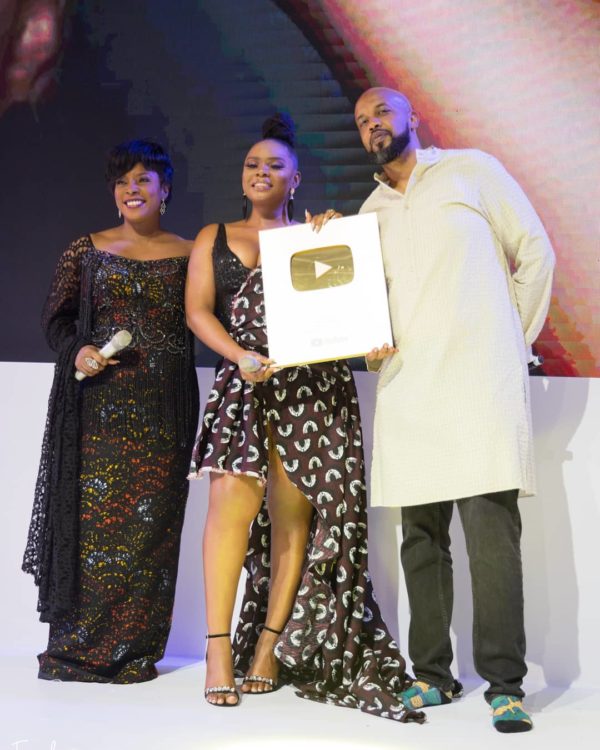
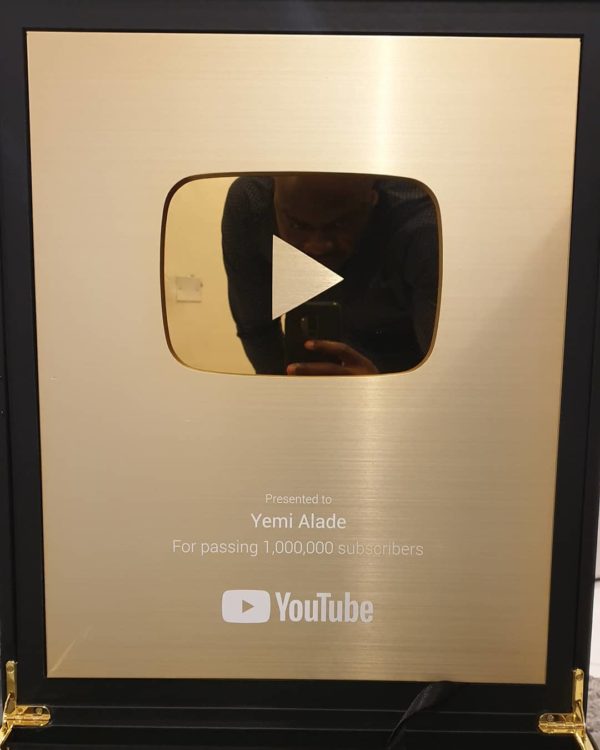
Few months ago, Yemi Alade‘s “Johnny” became the first music video by an African woman to amass over 100 million views on YouTube. Now, the superstar has smashed yet another record, becoming the first female African artist to attain over one million subscribers on YouTube

Over the weekend, Yemi Alade broke the news on her Instagram: 

“God is the GREATEST, started this journey six years ago. Thanks to everyone streaming / watching my videos and music. Godbless us all.”

Yemi Alade joins an elite club of entertainers to have over one million subscribers, including the likes of P-Square (1.2 million), Davido (1.5 million) and Diamond Platnumz (2.1 million). We’re super pleased for Yemi Alade, who continues to break boundaries in African music. 

Listen to her record-breaking hit, “Johnny”, below:

Credit: konbini.com

Kim Kardashian is set to rename her shapewear brand – Kimono Solutionwear – following backlash accusing her of appropriating the Japanese culture.

Using the hashtag #KimOhNo, people on social media expressed their agitation over Kim Kardashian naming her shapewear ‘Kimono’, insisting that the name was disrespectful to the Japanese culture.

The Kimono is a traditional Japanese attire won on very special occasions and according to the Japanese, Kim Kardashian had no right to use the name for her shapewear.

Responding to the backlash, Kim had said that her shapewear is ‘built with inclusivity and diversity at its core’ and she is ‘incredibly proud of what’s to come’. She also insisting on not changing the name and went ahead to trademark the name.

‘Filing a trademark is a source identifier that will allow me to use the word for my shapewear and intimates line but does not preclude or restrict anyone, in this instance, from making kimonos or using the word kimono in reference to the traditional garment,’ Kim had said.

However, Kim Kardashian has had a change of mind and has decided to launch her Solutionwear brand under a new name.

She also broke the news on her social media handles saying:

Being an entrepreneur and my own boss has been one of the most rewarding challenges I’ve been blessed with in my life. What’s made it possible for me after all of these years has been the direct line of communication with my fans and the public. I am always listening, learning and growing – I so appreciate the passion and varied perspectives that people bring to me.

When I announced the name of my shapewear line, I did so with the best intentions in mind. My brands and products are built with inclusivity and diversity at their core and after careful thought and consideration, I will be launching my Solutionwear brand under a new name.

I will be in touch soon. Thank you for your understanding and support always.

Credit: Bella Naija

At just 14-years old, Sydney Wilson is about to start her freshman year at the prestigious Spelman College this fall, making her the youngest student ever admitted into the all-women HBCU.

During her early years at school, it has always been evident that Wilson was an excellent student. When she reached second grade, it was found that she was really a bit different from her peers. Many of her classmates teased her for being too smart but she didn’t let it bother her.

“I just stayed on my path,” Wilson told WSB-TV. “I didn’t really feel like I needed to be popular… because, I mean, I like myself.”

When she was 10-years old, Wilson’s parents decided to enroll her in Wilson Academy in Lithonia where she already started taking high school classes.

Just a few months ago, Wilson was just then 13-years old when she applied to Spelman College. Later on, her father received an email from the school saying that she got accepted.

“So, he calls me in and he says, ‘Look at the computer!’ So I looked at it, and I just melt,” Wilson excitingly said. “I was screaming and I was crying. I ran out to tell my family, and we took a bunch of pictures and posted it on Instagram and everything.”

Just like a usual college student, Wilson plans to live on the campus. Although she is still young, she isn’t worried about her age gap from her future schoolmates.

“I’ve been with the older kids all my life, so socially, I don’t think it will be a problem for me,” Wilson said.

Moreover, Wilson said she wants to major in Biology in hopes to use animal science in curing human illnesses one day.

Credit: Blacknews.com

History was made in Tennessee on Saturday night after Brianna Mason was crowned Miss Tennessee, making her the first Black woman to hold the title. 

The 23-year-old elementary school teacher and Nashville native took home the crown after competing in the pageant for four years. 

Dedicated to increasing visibility for young Black women in the pageant circuit, Mason said, “I’m here to tell you that it does not matter what your skin color is. It does not matter what your religion is. You can do anything you want.”

Last year, she competed as Miss Knoxville and was second runner-up. 

“I can’t even put into words how special this is,” Mason said during a press conference following her win. “I have been competing for so long, and there’s a Miss Tennessee room with portraits of all past Miss Tennessees, and none of them looked liked me.”

As the newly crowned Miss Tennessee, Mason, who received her bachelor’s and master’s degrees from the University of Tennessee, received a $15,000 scholarship and a chance to compete in the Miss America pageant on September 8.

With Mason’s crowning, she is in good company; earlier this year, the nation’s top pageants crowned three Black women as their winners: Miss USA Cheslie Kryst, Miss America Nia Franklin and Miss Teen USA Kaliegh Garris.

Credit: blavity.com

In a shock defeat, five-time Wimbledonsingles winner Venus Williams was beaten by 15-year-old American tennis prodigy Cori ‘Coco’ Gauff.

“Honestly I don’t really know how to feel,” Gauff said upon winning, as the Guardian reports. “This was definitely the first time I ever cried after winning a match. I don’t even know how to explain how I feel. I had to tell myself to stay calm, I’d never played on a court so big. I had to remind myself that the lines are the same size.” 

Gauff, the youngest player to ever qualify for the main draw at Wimbledon, won 6-4, 6-4.

She revealed to BBC that Williams congratulated her after her win.

“I just told her I wouldn’t be here if it wasn’t for her, she’s so inspiring,” Gauff said. “I’ve always wanted to tell her that but I’ve never had the guts to before.”View image on Twitter

View image on Twitter

The Undefeated@TheUndefeated

Last week, 15-year-old tennis prodigy Coco Gauff became the youngest tennis player to qualify for Wimbledon in the Open era.

Venus and Serena Williams were the reason Gauff picked up a tennis racket.

Gauff just defeated Venus Williams (6-4, 6-4) in the first round.29.7K7:24 PM – Jul 1, 201910.4K people are talking about thisTwitter Ads info and privacy

There’s been a lot of Wimbledon surprises so far: Naomi Osaka is already out in the first round after losing to Yulia Putintseva. Osaka had been a favorite of tennis fans ever since she made her impressive performance in 2018, where she beat Serena Williams at the U.S. Open.

Credit: images.complex.com

Cardi B‘s application to catchphrase ‘okurrr’  to be used mostly for merchandise has been  officially rejected. 

According to Mail Online, Government officials have officially rejected her application to lay claim to the word, which is popularly pronounced with the Rs rolled.

Back in March, the 26-year-old rapper and mother of one submitted an application to catchphrase ‘okurrr’ including the commonly misspelled ‘okurr.’ Unfortunately, the US Patent and Trademark ruled that the slogan fell under the category of ‘widely-used commonplace expressions.’ It’s a valid argument, given that the phrase has existed in minority communities for years.


They also explained that it ‘is a slogan or term that does not function as a trademark or service mark to indicate the source of applicant’s goods and/or services.’

Credit: LIB