Category

Career Gems

Category

Actress Danai Gurira is set to play iconic presidential candidate Shirley Chisholm in a new film, Variety reports.

“The Fighting Shirley Chisholm” is a new film about the pioneering political maven who made history in 1972 as the first Black woman to run for president on the democratic ticket. Chisholm, a former NYC educational consultant, got into politics solely for her Brooklyn community’s betterment, her first campaign proving successful and allowing her to make history as the first Black congresswoman. Years later, Chisholm would follow up her congressional run with a historic run for president. 

The new film focuses on Chisholm’s campaign and how it galvanized an entire generation of people. More importantly, how “the Chisholm Trail was populated by young people who sought social and political change during one of the most turbulent times in American history.” It was Chisholm’s time in Congress that gave her the confidence to run for president, realizing “that she could make real change by challenging the status quo through her efforts to gain enough delegates to speak for the people at the Democratic Convention.”

While Chisholm didn’t win the presidential election, her courage, political savvy and “unbought and unbossed” attitude awakened something in voters and changed the political landscape as we know it. The new film will be directed by Cherien Dabis and written by Emmy nominated screenwriter Adam Countee. Stephanie Allain’s Homegrown Pictures will produce with Gabrielle Ebron on board as executive producer. 

According to Deadline, actress Uzo Aduba recently won an Emmy for her role as Chisholm in the FX series “Mrs. America.”

No word yet on when “The Fighting Shirley Chisholm” will be released, but we can’t wait!

Congratulations, Danai!

Photo Courtesy of LA Times/Associated Press

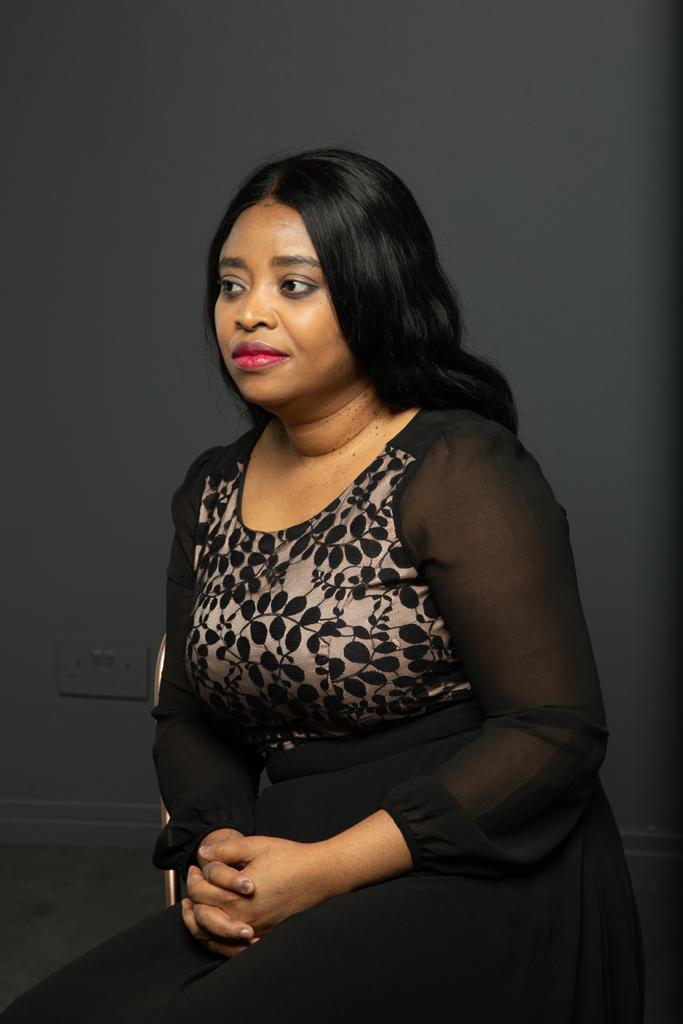
Shulamite Ezechi is the author of the fast selling motivational book “Unveiling your potential”, she is an active and inspiring motivational speaker, and founder of ANYiSO, a registered Scottish Charity organisation.

Shulamite through personal experiences and passion for driving change, has served and still serves in multiple capacities in various human rights groups to make impacts through her voice. She is involved in reviewing several policies affecting black and ethnic minority women and young people in Scotland, UK. She is an author, a community leader and a mentor to many young people, men, and women.

Shulamite holds a bachelor’s degree in Nutrition and Dietetics, two master’s degrees: one in Clinical Nutrition and Health and the other in Policy Analysis and Global Governance both from universities in Scotland, UK.

Shulamite has won many awards including ‘the Inspiration to the BME Community award’ that was conferred to her at the Glasgow City Chambers, United Kingdom. She has been privileged to be invited to Oxford University Women leadership Symposium to deliver a talk on ‘’girl child marriage’’ and lead a group of women to UNESCO Spring School to tell their integration stories through drama.

According to her; “The book focuses on one of those lows pertinent to me and my experiences. Going on a journey of self-discovery borne out of a very unsettled time in my life is a story that is worth sharing. This journey has taken me through to the other side, and whilst still growing, I have found myself, my calling, and my true potential.

My hope is that this book creates an energy and determination in you that will drive you into your own self-discovery journey pushing you to experience and live out your true potential.

You can get a copy of “Unveiling your true Potential” on https://shulamiteezechi.com/

Follow  Shulamite on LinkedIn here; https://uk.linkedin.com/in/shulamite-ezechi-55729812b

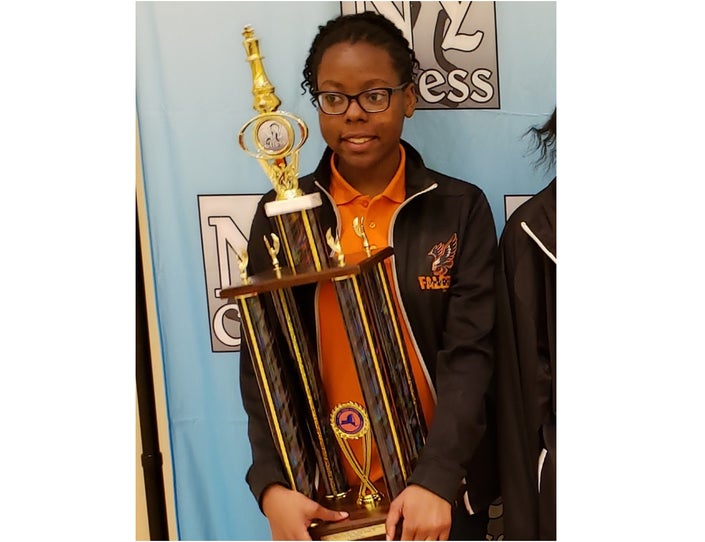
A 15-year-old Brooklyn chess champion was just awarded a $40,000 college scholarship as she aims to become the first Black woman chess master in the world, CBS New York reports.

Jessica Hyatt is one of the top 10 Black women chess players in the nation, dedicating five to seven hours a day playing the game. At just 15-years-old, she is very close to making history as the first Black woman chess master and was recently awarded the Daniel Feinberg Success in Chess Award, a $40,000 college scholarship. She joins other young Black chess champions like Nigerian refugee, Tanitoluwa “Tani” Adewumi and Cahree Myrick, in courting greatness before they were old enough to drive.

“I play whenever I get the chance, like in my free time, like during my classes, like sometimes during classes,” Jessica said. 

She’s currently a sophomore at Success Academy, a school known for its elite chess program. Just five years ago she met her coaches, Tyrell Harriott and David Mbonu, both National Masters, who took a liking to her immediately. 

“The first thing she did right around when class was over is she walked up to me, and she was like, ‘Can I play you?’ and I remember, I was like, ‘oh.’ There has never been a Black woman player to break the master ranking and that’s what Jessica is going for,” Mbonu said. 

To become a chess master, Jessica has to earn a ranking of at least 2,200; she’s already at 1,950.

“I learned the game when I was 15, so for Jessica to be at 1,950, that’s a huge edge,” Harriott said.

As a result of the pandemic, Jessica is spending most of her time playing online. Her mom, Loy Allen, said she hopes Jessica’s story will inspire other young children of color.

“If your kid’s passionate enough about it, have them go for it because the sky’s the limit, right?” Allen said.

Jessica plans to reach her goal of chess master first, followed by applying to college at MIT with the hopes of teaching chess to children in her community.

Congratulations, Jessica! We can’t wait to cheer you on to your rightful title!

Nollywood actress, Genevieve Nnaji has pleaded with the Feminist Coalition to reconsider its decision to stop receiving donations aimed at supporting #EndSARS protesters.

The group, which has been offering administrative support to the #EndSARS protests, had earlier announced that it would no longer accept donations for the campaign against police brutality.

It had also urged other protesters to leave the streets following President Muhammadu Buhari’s address on Thursday to prevent further violence.

But in a post on Friday, the actress said sustaining such an initiative is imperative to meet the financial needs of several Nigerians amid the issues trailing the movement.

Nnaji also said that the reality in the country has shown that citizens can no longer depend on government for survival.

She commended the group for its heroics during the heat of the #EndSARS campaign, while also promising to keep donating to support Nigerians.

“God bless you for all your hardwork ladies. But please don’t stop. I’m tired of people dying because they can’t pay before service at hospitals,” she wrote on Twitter.

“Bail money will be crucial now more than ever. I want to keep donating for it is clear our lives and well-being are in our own hands.”

The group had on Friday revealed that it received N147,855,788 donations and spent N60,403,235 over the past 14 days while the protests lasted.

Genesis Cinema has claimed that Nigeria lost about seven movie theatres to the hoodlum attacks and vandalism that trailed the #EndSARS protests.

In the past few days, there have been serial looting and vandalism of private businesses and government properties, and the burning of police stations across the state following the crisis that erupted as a result of the #EndSARS protests.

These attacks were triggered by the shooting of unarmed #EndSARS protesters at Lekki toll gate in Lagos on October 20.

In a chat with Arise TV on Tuesday, Ope Ajayi, executive director for Genesis Cinema, counted the losses incurred by the brand due to the vandalism and lootings that were recorded during the violent aftermath of the protest.

He said the firm’s Novare, Lekki and Sangotedo stores were affected while its restaurant at Circle Mall was also hit.

“In total, I think we’ve lost about seven cinemas in the country, generally from this EndSARS protest, not just Genesis now. Our store at Novare, Lekki; Sangotedo was affected,” Ajayi said.

“But we’re probably better than our colleagues in the industry. Our restaurant at Circle Mall was also affected.”

The damage to Nigerian theatres come after the financial losses incurred amid the COVID-19 lockdown, the delayed reopening of film houses thereafter, and the safety measures that forced the industry to operate below capacity.

Ajayi expressed concerns that the affected brands might have to stay out of business for a while before a comeback.

“Generally we all hope for a safer country. There are a lot of stalls along Admiralty Way that are standalones. And there were others that were not necessarily malls that were targeted,” the director added.

“I don’t think it’s a mall thing. I agree malls are a target but I think a better strategy is to ensure the malls are safe. And to see how to prevent general unrests going forward. We’re not moving to standalone. It’s also just as risky.

“Our premises are insured but there’s so much insurance can do. You’re going to stay out of business for a while.

“Even when you reopen, sometimes there’s a buildup. You’re not just going to reopen and business picks up. Yes we’re insured, which reduces the impact of the losses, but it’s still a huge hit on us.”

Public Eye’, a show by Funmi Iyanda, a Nigerian media personality, is set to make its television debut on November 1.

In a statement on Friday, the producers said the show will air every Sunday at 5 pm on Television Continental (TVC).

According to the statement, the show, supported by MacArthur Foundation, aims to beam the searchlight on current happenings in the country with a view to improving the situation.

“Nigeria is bleeding. The nation is on the precipice of a revolution sparked by outrage and pain. How do we make sense of everything that is happening? Where do we go from here?,” the statement read.

“Public Eye is here to shine a light through the fog of confusion and fear and provide answers to these nagging questions.”

The show is expected to feature stakeholders from different sectors who will be analysing various issues while also suggesting solutions.

“With Public Eye, Funmi Iyanda brings together the different stakeholders affected by the many problems in Nigeria police brutality, poor education, sexual abuse, and more and those with the power to fix these problems,” it added.

“The problems are not just discussed, but contextualized in a manner that highlights why these problems persist and the solutions.”

You can watch a trailer for the upcoming episode of the show here.

Demand Accountability Around Monetary, Material Distribution

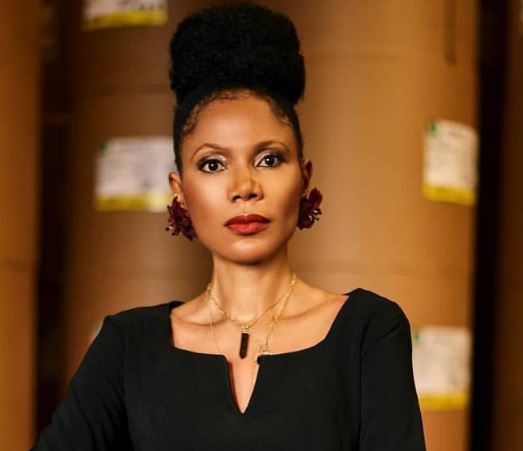
President of the Nigerian Women Trust Fund (NWTF), Mufuliat Fijabi and CEO, Women’s Radio, Toun Okewale-Sonaiya have lent their voices to women groups that have decried the poor representation of women in the distribution of cash and relief items to cushion the effects of the COVID-19 pandemic and subsequent lockdown.

They revealed that most women lost their source of livelihood during the lockdown while a good number of women and girls suffered sexual and gender based violence. They urged government at all levels to show Nigerians how they spent the monies raised and who benefitted from the palliatives they claimed was distributed to the most vulnerable as studies show many vulnerable people, including women and differently-abled persons did not benefit.

“Covid-19 palliative distribution is no different as it concerns Nigerians and transparency is essential. According to Partners West Africa Nigeria, a whooping 87percent of Nigerian women lost their jobs/source of income during the lockdown with 61percent unaware of provisions made by government; this shows we need to dig deeper and ask more questions. Our primary assignment as the media is to inform and educate, therefore asking for how palliatives were distributed whether in cash or materials is critical and appropriate. During the lockdown, we gave palliatives to women and their families including cash to widows. These were donated by Nigerians within and outside Nigeria and we gave a breakdown with video/photo evidence of how donor funds were spent. This is accountability and this is all we ask of our leaders. The media must continue to demand for accountability on COVID-19 palliatives. The media is a key stakeholder of democratic accountability and at every opportunity, must ask her leaders questions and demand for answers,” Sonaiya said.The NWTF boss on her part divulged that there have been several complaints about the distribution of palliatives, especially government initiated ones which means the agencies in question need to be more strategic in the distribution of said palliatives through point of contact. “While I do not think women should take over the heading and distribution of palliatives, I believe we all need to work together to ensure these relief items get to those who most need them.”

She added that women have been in the forefront of the pandemic as care givers, health workers and family managers and have continued to do all these with little or no government involvement. “Unfortunately, less visibility has been given to women’s efforts and government at all levels have refused to involve women. At all levels, government should deliberately mainstream women into all its activities and response to COVID-19 and the efforts already made by women who did not wait for government to involve and invite them must be acknowledged.

Sonaiya said that whilst individual women and women organizations are pushing for inclusion and amplifying female voices on national issues, more women are demanding accountability, condemning corruption and challenging stereotypes. “We need more women in positions of authority to speak up, we need to be more strategic and utilise varied approaches to increase our numbers and strengthen our visibility. Take for example, the equal opportunity bill of 2016 that was presented in 2019 by Senator Olujimi, it’s a bill that every Nigerian woman should be talking about and every Nigerian man should support because it seeks for a fair, healthy, and conducive Nigeria for all. We’ll continue to ride on the wings of those who paved the way as we widen the road for more seats to be created. We need put gender on national agenda and make it everyone’s agenda.”

Okewale-Sonaiya lamented the fact that an alarming number of women and girls suffered increased violence during the lockdown, with the home being most unsafe place for them. “According to reports, 36percent of married women experienced spousal, physical, sexual and emotional violence during the lockdown. 55percent didn’t seek help due to fear, lack of support and ignorance and from our engagement with Northern Nigeria women, mostly due to religion and culture. We need to advocate against any belief and custom that aids silence, violence and suppression of women. We need more male voices to educate and teach other men that the holy books do not preach violence but love and compassion.”

She commended the efforts of women organizations and donor agencies during the lockdown, reiterating the call for a simple framework for rape and sexual assault victims as the current process of reporting rape and sexual assault remains extremely cumbersome and vague. “From over 70 programmes we organised during the lockdown, it saddens me to say that 89percent of respondents do not know the process of reporting a rape. Seven of 10 women said reporting to the police can be humiliating, thus discouraging reporting and hindering justice whilst eight of 10 do not know that evidence of rape in court must come from only approved government hospitals. We need more legal aid, free counselling and support groups and better grassroot awareness on how to report sexual abuse. Sexual Assault Referral Centres (SARCs) are our lifesavers and any governor that genuinely cares should have a SARC established in every state.”

She revealed that many Nigerians still don’t believe COVID-19 exists and this is due to lack of trust in the government. “Some governors were initially discrediting it with zero data sharing in most cases. While media houses continue to play its role to sensitise, the government needs to intensify awareness. People go about without using masks and physical/social distancing is no longer practised. We may not have experienced a pandemic in Nigeria and cases may be decreasing, but people are still contracting it,” she said.

Yara Shahidi is making history as the first Black Tinkerbell in Disney’s newest live-action adaptation, Variety reports.

“Peter Pan and Wendy” is the newest adaptation of the classic 1953 Disney movie “Peter Pan” about a boy who never grows up. Shahidi will play the beloved Tinkerbell, a fairy who guides Peter with her magic throughout his adventures. The “grown-ish” actor will join the cast alongside Jude Law (Captain Hook), Alexander Molony (Peter Pan), and budding actress Ever Anderson (Wendy).

Shahidi recently launched a production company in partnership with ABC Studios. She is on their hit show “black-ish,” and the spinoff on Freeform, “grown-ish,” which she produces. Disney is attempting to diversify its casts, given the current cultural climate. Recently, they cast singer and actress Halle Bailey as Ariel in the live-action adaptation of “The Little Mermaid” and Niles Fitch as the first live-action Black prince in the “Secret Society of Second Born Royals.”

Disney has been rolling out a ton of new content, recently releasing a live-action adaptation of “Mulan.” Shahidi took to Instagram to share a new Black Tinkerbell sketch and thank her fans for all of the support. “Thank you all for all of the love. It truly means so much to me. I’m excited for this next adventure,” she wrote.

Source: Becauseofthemwecan

Formerly known as Google Ventures, GV is a large venture capital firm that has invested in major companies such as Slack, Uber, and GitLab. Now the company is welcoming Principal Terri Burns as its newest investing partner. Burns is making history as the first Black woman partner at the company and the youngest, at just 26-years-old. 

Burns got her start at Twitter as an associate product manager, eventually getting hired at GV, where she’s worked for the last three years. Because of her age, Burns has a knack for recognizing new ventures to capture Gen Z’s attention. Her latest investment in HAGS, an app that started as a digital yearbook and is now expanding into a broader social site for high school-aged youth, is just another example of that. 

In an industry dominated by white males, Burns is an anomaly. As of February 2020, the number of women leaders in the VC world was at just 13%, a mere 4% increase from 3 years ago. In 2019, there was only one Black woman named partner at any VC company, and between 2010 and 2015, Black people have made up just 0.67% of the industry workforce. 

Dave Munichiello, a general partner at GV, spoke about the importence of Burns’ promotion, saying, “Her investments display her interest in companies that are built by and for Gen Z, particularly as this generation comes of age in a remarkably uncertain time.”

As of now, Burns is focused on consumer businesses, expanding to include investments in the future of work and fintech. She’s not giving many details about her next move, and she plans to keep it that way.

“[It’s] broad…but that is by design,” said Burns.

Keep rising, Terri! Congratulations!

With a population of over 50,000, the Himba are a polygamous people where Himba girls are married off to male partners selected by their fathers once they attain puberty.

Most of their cultures have been upheld despite western influence and agitation.

Among these is the “Man comes first” tradition. The woman has little or no opinion in the decision making. Submission to her husband’s demands come first.

According to the Guardian, “When a visitor comes knocking, a man shows his approval and pleasure of seeing his guest by giving him the Okujepisa Omukazendu treatment — the wife is given to his guest to spend the night while the husband sleeps in another room. In a case where there is no available room, her husband will sleep outside.”

This, apparently, reduces jealousy and fosters relationships.

Another tradition that has stood the test of time is the “bathing is forbidden” rule. Rather than take their baths, the women take a smoke bath and apply aromatic resins on their skin. They are also guided by the belief that the colour red signifies “Earth and blood”. Their red skin is one of the things that make them extremely unique. The red colour is from the otjize paste (a combination of butterfat, omuzumba scrub and ochre) and its function is to protect their skin from the harsh desert sun and insect bites.

Himba Influence in African Literature

The Himba people haven’t been represented a lot in Literature. However, in Nnedi Okorafor Binti, the lead character ‘Binti’ is of the Himba poeple. Okorafor describes the tribe as a “tribe in Namibia who use ‘sweet smelling otjize’, a mixture of ochre and butterfat over their skin, rolling it into their hair as protection against the desert sun”. In the novella, the Himba don’t travel, which directly contrasts the real Himba people who are nomads.