After watching her grandmother struggle to remember her own family members, the young coder Emma Yang decided to figure out how to use AI and facial recognition to help her–and others coping with the illness.

[Photo: Emma Yang]


After watching her grandmother struggle to remember her own family members, the young coder Emma Yang decided to figure out how to use AI and facial recognition to help her–and others coping with the illness.

The Wife of Lagos State Governor, Mrs Bolanle Ambode, has urged government at all levels to formulate the right policy for the eradication of Female Genital Mutilation (FGM) in Nigeria by 2030.
Ambode made the call at a programme to commemorate this year’s International Day of Zero Tolerance for FGM at Alausa, Ikeja on Tuesday.
The wife of the governor also urged parents and Non-Governmental Organisations (NGO) to continue to advocate for the total eradication of FGM.
She expressed optimism that FGM could be stamped out of Africa by 2030 if relevant institutions and stakeholders work together toward achieving that goal.
The governor’s wife said that FGM constituted an extreme form of discrimination against women and girls, directly violating their rights to health, security and physical integrity.
She wondered why women should be subjected to such life-threatening dehumanisation.
According to her, the pace of penetration of awareness seems slow because the practice is an ancient one that is deeply rooted in our various cultures.
 Female Genital Mutilation is an extreme form of discrimination.
(Instagram (@akinwunmiambode))
“But that does not make our efforts fruitless.
“Though progress may be slow, we are going somewhere as rural women, mothers and young girls are becoming aware of the severe health implications of the barbaric practice.
“A Few years ago, many women, even some educated ones, saw it as a normal and socially acceptable practice.
“But the story is fast changing as awareness is getting mileage and rural women are now campaigning against it,’’ she said.
Ambode expressed concern that the practice was well entrenched in the continent, with some countries recording up to 90 per cent prevalence rate among girls and women.
She, however, said the situation was not hopeless if the present advocacy was sustained or increased.
Ambode advised governments at all levels to fight the practice with direct legislation in the manner they were doing with some other barbaric anti-female practices.
NAN reports that Feb. 6 every year has been set aside by the United Nations to mark the International Day of Zero Tolerance for FGM across the world.
Credit: Pulse News

Linda Ikeji, Nigeria’s top most celebrity blogger is in no way relenting in her money making moves. The 37 year old will be launching her entertainment and lifestyle channel on DSTV and online, in March 2018.
On social media she wrote:
“Growing up I wanted to be a reporter or a TV presenter… now I employ reporters and TV presenters,” said Ikeji. “Instead of working at a TV station, I’m about to own one. God has a way of doing his thing. Just trust him and never depart from him as you go on your journey. And remember, you just can’t beat the person who never gives up.”
Source: PM News
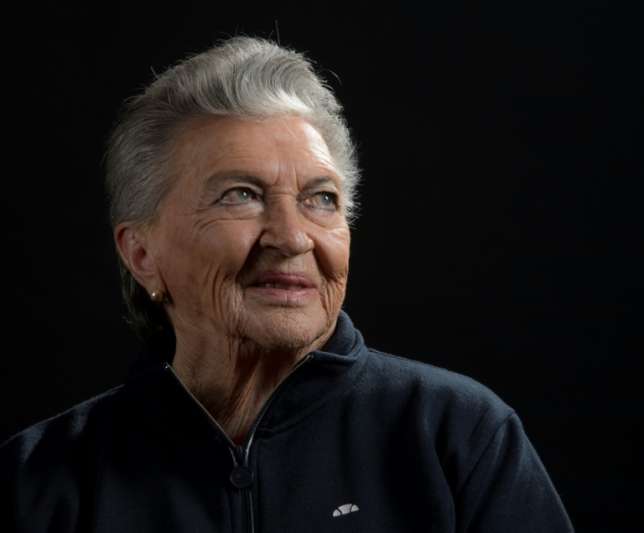
Margot Duhalde, who flew Spitfires in World War II as Chile’s first female fighter pilot, has died at the age of 97, the government said Monday.
Duhalde smashed gender tradition in Chile by learning to fly at age 16. Years later, she answered the call of French President Charles de Gaulle to fight the Nazis.
A country girl from southern Chile of French Basque ancestry, Duhalde became her country’s first female pilot — and the only woman aviator to join the Free French Forces of de Gaulle’s government in exile.
“Ever since I can remember, I wanted to fly,” she told AFP last year. “According to my mother, I started saying ‘plane’ before I could say ‘mummy.'”
Duhalde convinced her parents to let her leave home in the town of Rio Bueno aged just 16 and go to Santiago to train as a pilot.
She lied about her age and enrolled in a flying school.
In 1940, she joined the French forces as a volunteer. She was recruited as a pilot, then just 20 years old, by the Free France consulate in Santiago.
Duhalde headed to Buenos Aires and from there by ship to brave the war in Europe.
She ended up being incorporated into Britain’s Royal Air Force as it fended off the Nazi threat.
At first, Duhalde was made to look after the sick and help mechanics.
But eventually, she was recruited into the British force’s Air Transport Auxiliary to help with the war effort.
Her mission was to fly Spitfires and other aircraft from one British airfield to another to prevent them from being destroyed on the ground by the Germans. She never flew an actual combat mission.
Apart from the English weather, she faced the barriers of language and sexism at a time when women pilots were rare.
“The men always said that women were never going to be able to fly airplanes,” she said in the interview. “But they had to swallow their pride, because really we flew just as well as they did.”
The Ministry of Women’s Affairs said on Twitter: “We regret the death of Margot Duhalde, Chile’s first female pilot.”
The cause of death was not given.
For her service in the war, Duhalde was decorated by Britain, Chile and France, which inducted her into the Legion of Honor.
Duhalde last flew a plane in 2007.
Source: Pulse News
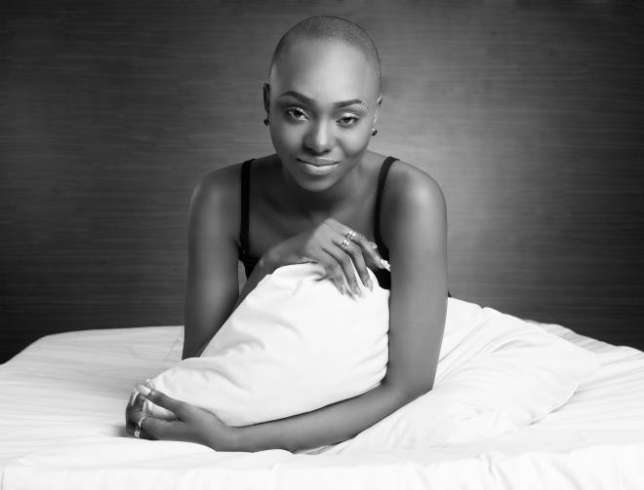
You know how they say disappointments are blessings in disguise? Well, Daala Oruwari is living proof of this.
The OAP just took to Instagram to share the story of a chain of disappointments that ended up saving her life.
From the registration itself to car battery issues, everything that could go wrong went wrong. That is until she started feeling dizzy and passed out.
Waking up in the hospital, Daala was told that her blood pressure had been very low and if they had left the premises of the Ikoyi club where they had gone to register for their PVC, she may have died.
Read the full story below:
Presently, Daala who is a graduate of Mass Communication from the University of Lagos, works with Ovation TV. She used to be a VJ for Hip TV and prior to that, she worked with Dynamix TV.
Once again, an age-old proverb is proven right and another life saved.
Source: Pulse
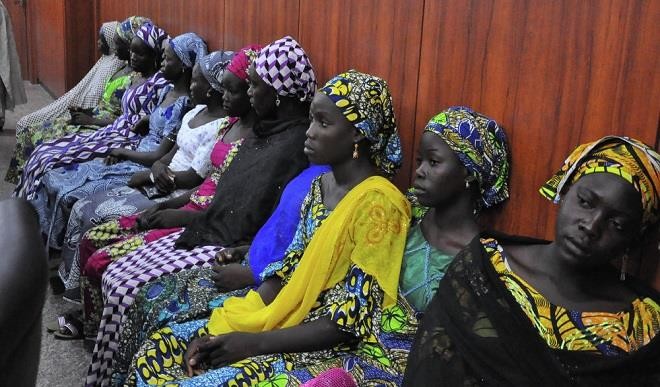
David Oyelowo is not just an actor, he’s also a humanitarian and he flexed these muscles in August 2016 when he spearheaded a scholarship which aims to ensure that young Nigerian girls have the necessary tools to excel in society.
In partnership with an LA-based NGO GEANCO, the David Oyelowo Leadership Scholarship For Girls specifically aims to support female victims of terror attacks and gender-based inequality.
The foundation donates important supplies to schools in Nigeria, while providing scholarships to young female victims of terrorism in order to give them a fighting chance. The scholarship was named after the actor because he encouraged the creation, and he also plays an active role in selecting recipients and raising money to ensure its continued success. He has got his important friends like Oprah and others involved in funding the foundation.
Speaking about the scholarship on Instagram, David Oyelowo said:
“We cannot stand idly by while thousands of innocent girls remain under serious threat. With our help, these bright and resilient girls can blossom into Nigeria’s most inspiring leaders in government, education, business, entertainment, and so much more.
Proud to present the glorious recipients of the David Oyelowo Leadership Scholarship. They survived terror at the hands of Boko Haram, now the journey toward their true destiny has begun.”
Go to Davido Oyelowo’s Instagram page to see the latest recipients of the David Oyelowo Leadership Scholarship:
Source: konbini.com

In her post, the actress take about her consistent struggle to get into Harvard and how she had been denied repeatedly but she never gave up. She also wrote of the pressure she had juggling her business together with schooling.
We have her Instagram post below

In 2015, UNICEF reported that one in four girls and one in ten boys in Nigeria experience sexual violence before the age of 18. And according to a survey by Positive Action for Treatment Access, over 31.4 percent of girls surveyed said their first sexual encounter had been rape or forced sex of some kind. Narrowing it down a little, in Lagos, the number of reported sexual assault victims increased by 100% between 2006 and 2015; and between 2015 and 2017, it went up by 200%.

(Photo: Premium Times)
But the Lagos State government, thankfully, looks like it is taking a definite stand against sexual assault and related offences. Yesterday, four Special Offences and Sexual Offences courts were commissioned in Lagos by the wife of the Vice President, Mrs Dolapo Osinbajo, the state’s Deputy Governor Idiat Adebule, and the Lagos State First Lady, Mrs Bolanle Ambode. Two of the courts will adjudicate on economic and financial crimes, while the other two will try sexual offences. The state is also working on expanding the operations of the DNA and Forensic Centre and Chemistry section.
If you’re wondering why this is huge news, it’s because this is the first of its kind in Nigeria. That’s right, after 58 years of existence, Nigeria (the government) has yet to take sexual offences seriously. Between 2015 and now, the DSVRT and Mirabel Centre (both in Lagos) have handled over 400 cases of sexual offences while 376 cases are being prosecuted in the various courts. And, there are currently about 600 pending sexual offense cases in the high court of Lagos, not including the ones in the Magistrate courts.
Dedicated courts for sexual crimes are now more mandatory than ever. The hope that we all have is that one, the establishment of these courts will facilitate faster hearing and trial of sexual crimes and get survivors justice and closure; two, that this will jumpstart a nationwide establishment of special courts like these; and three (this the most important), that the judges who hear these sexual cases will really not be the kinds who will blame the victim.
But more than anything, thank you, Lagos. Other states need to absolutely follow.
Culled from konbini.com
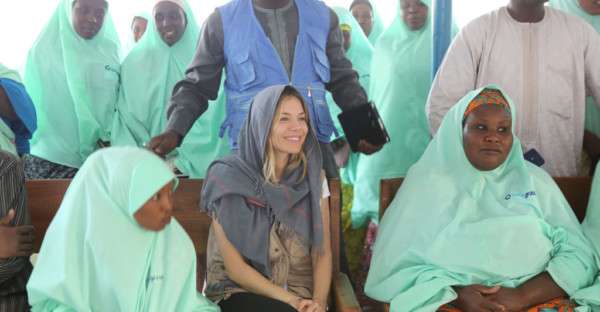
American actress, Sienna Miller has visited the Internally Displaced People’s camp in Maiduguri.
The movie star who also doubles as a global ambassador for the International Medical Corps visited the camp with her team and gave out items to the mothers and children at the camp.
Sienna Miller who joined the International Medical Corps in 2009 joins a number of celebrities who have visited the IDP camps in Maiduguri.

The last celebrity to have visited the IDP camp in Maiduguri was On-Air personality, Tolu ‘Toolz’ Oniru. Toolz said she was motivated by the British High Commissioner to Nigeria, Paul Arkwright, recently visited the Bakassi IDP camp in Maiduguri, and she shared her experience on Instagram.
 Sienna Miller interacting with people at the camp
(International Medical Corps/Margaret Traub via Getty Images)
 Sienna Miller with women at the IDP camp
(International Medical Corps/Margaret Traub via Getty Images)

Femi Otedola’s daughter Dj Cuppy, is setting her 2018 plan in motion with supporting 10 students to school.
The billionaire heiress will be paying for the school tuition of 10 students this year. The welfare plan is already in motion as the first student is set to go to school.
Gospel artiste, Nikki Laoye has commended Cuppy for her support. Nikki Laoye is the founder of the Angel4Life Foundation, that helped the first student Akeem Owolabi get his tuition for his studies.
Keep up the good work Cuppy.
See the posts below.
I plan to send 10 people to university this year and I’m so proud to say I have completed with my first student!
Akeem Owolabi is off to Unilag! #Blessed
Source: fabwoman.ng


I have personal experience with how the disease can affect not only the patient, but also family and friends. When I was about 11 or 12, I got really interested in using technology for social good to help other people around the world,” says Yang, who is now 14.
In her app under development, called Timeless, Alzheimer’s patients can scroll through photos of friends and family, and the app will tell them who the person is and how they’re related to the patient using facial recognition tech. If a patient doesn’t recognize someone in the same room, they can take a picture and the tech will also try to automatically identify them.
“I saw a lot of things about how AI and facial recognition were really evolving and being applied in more and more areas, especially healthcare,” she says. She partnered with mentors at the tech company Kairos, which makes the facial recognition software that is now used by the app, and learned to code for the iPhone for the first time.The app also includes a simple reminder screen that lists appointments for the day, along with a simple contacts screen that shows photos of family members along with names. If a patient tries to call a contact repeatedly–something that can sometimes happen because of the disease–the app will flash a quick reminder: “Are you sure you want to call? You just called less than five minutes ago.” A “me” page shows the patient’s own name, age, phone number, and address.
A caregiver maintains some of the other parts of the app, including putting events on the daily calendar, and inviting friends and family to send an initial set of photos that the facial recognition algorithm can use to learn to identify them.
The app is still in development, and Yang doesn’t yet have proof that it will work. In a crowdfunding campaign, she’s raising money to take the next step of piloting it with patients. But she is optimistic that it can help, especially if introduced to someone in the early stages of the disease.
“There are no apps on the market that really help Alzheimer’s patients with their daily lives,” she says. “A lot of times people think that it’s not going to help, or the elderly can’t really use technology, but in fact, if you strategically introduce it to them, it’s actually a possibility and can really benefit their lives.”
Katherine Possin, an associate professor at the UCSF Memory and Aging Center who was not involved with the project, agrees. “It can be hard for somebody who has a lot of cognitive impairment or memory problems to learn a new technology or software,” Possin says. “But if somebody’s mild in their disease, and with support from their caregiver, it’s possible that if the app is simple enough that they can learn to use it through repetition and practice.”
Scrolling through the labeled photos, Possin says, can be a type of social activity for the patient, helping keep family members and friends in mind. It also could strengthen memory. “I think it can be very helpful for patients to rehearse memories that are important to them–having a chance to rehearse that can strengthen those memories and make them stronger and make them more resilient in the face of the disease.”
Yang recently shared her story on a podcast called Sincerely Hueman.