Category

Career Gems

Category

The phrases “Action” or “Cut” and “That’s A Wrap” are truly synonymous with the entertainment industry, specifically filmmaking and motion picture development.
But these scenes do not occur, without the backing and funding from studios, production houses or deep pocket independent producers and directors.

A new generation of powers behind the industry is emerging – Black Women, and this month, 15 of such influencers are profiled in a new feature in LA Magazine, and they are directors, movie funding gatekeepers, producers, program executives and writers from big-name players such as Paramount Pictures, BET Networks, Extra!, AEG, City National Bank and Revolt.
And then a certain 15-year-old documentary filmmaker called Zuriel Oduwole, youthfully perched at the top left of the group portrait, made the cut.

She made her first film at the age of 9 about the Ghana Revolution, and her fourth film at the age of 12, showed in 2 movie theatre chains overseas and screened in Ghana, the UK, Nigeria, South Africa and Tokyo – Japan.
It made her the youngest producer in the world to show their self-produced and self-edited film in a commercial movie theatre chain. Indeed, a new dawn is breaking in Hollywood.

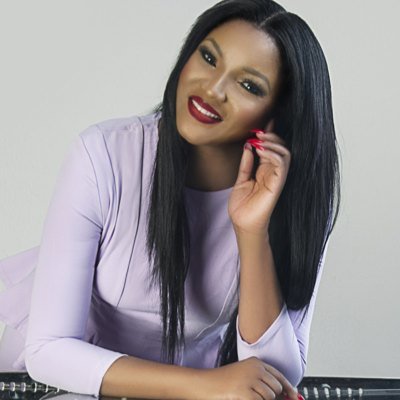
On Tuesday, June 26, 2018, Mrs Valerie Omowunmi Tunde-Obe was appointed as a non Executive Director by the Board of Punch Nigeria Limited.

She attended Grange School and Queen’s College, Yaba, Lagos. She holds a bachelor’s degree in Philosophy from the University of Lagos. Between 1995 and 2001, she worked as a Senior Manager, Copywriting at LTC/JWT Advertising. In 2001, she and her husband founded KOPYKATS & Associates, a  scriptwriting, music production and marketing company.

Tunde-Obe is the owner of Hair Afrique Beauty Salon, a subsidiary of United Hairways Beauty Company and Iya Ibadan Local Cuisine and Foods which promotes foods from Western Nigeria.

A certified member of the Association of Advertising Practitioners of Nigeria since 2004, Tunde-Obe is a  director of Punch Commercial Printing…..

Continue reading on http://punchng.com/punch-appoints-new-chairman-director/


Culled from Punch


Please note, Women Of Rubies do not own any right to this news article. Full credit goes to www.punch.ng

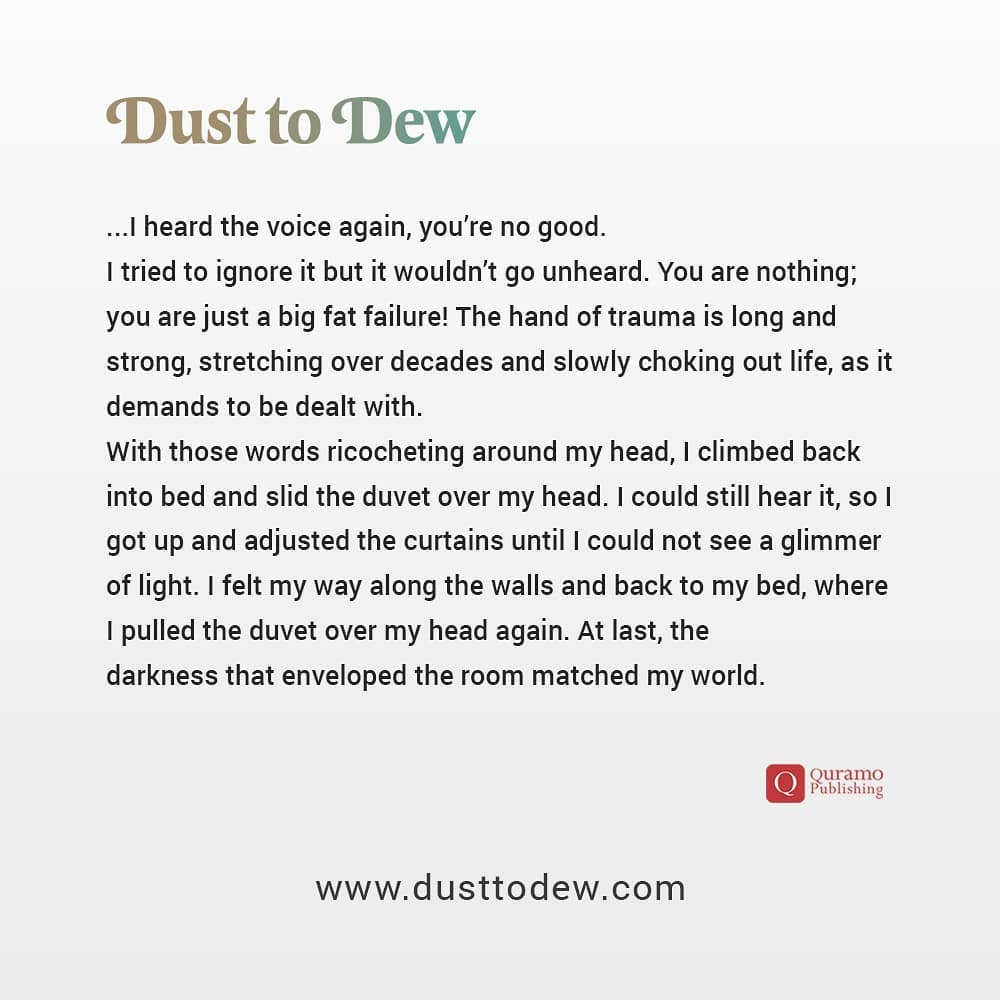
Genevieve magazine founder Betty Irabor  will be releasing her new book soon.

Titled “Dust to Dew“, the book will chronicle some of the most interesting parts of her life journey while she shares learning points from them.
She posted the cover of the book on Instagram and captioned:

I am So Excited to unveil the cover of my book 😁😁💃💃 “Dust to Dew”… Dust is chaos, Dust blinds, it inhibits. Dew is Life, it is Hope, it is New Beginnings 💧💧💦 It’s been an interesting journey putting several emotions into a book that chronicles the darkest period of my battle with depression. I didn’t lose those 7 years, Rather it was a period of Learning and Unlearning! This is me being audacious about sharing my most intimate battle with depression with you. May all our aspirations distill into the morning Dew!

This year, the Oscar Academy is making impressive effort to diversify its members, by inviting 928 new people from 59 countries – 49% of which are women and 38% of which are people of colour – and one of those who received an invitation is Nigerian actress, Omotola Jalade-Ekeinde.

Omotola who was cited for her work in Last Flight To Abuja and A Private Storm, joins an impressive list of invitees, which includes Kendrick Lamar, Gidi Blues’s director, Femi Odugbemi, Black Panther stars, Danai Gurira and Daniel Kaluuya, and British-Nigerian, Wunmi Mosaku.


(Photo: AMPAS)

(Photo: AMPAS)


Credit: konbini.com

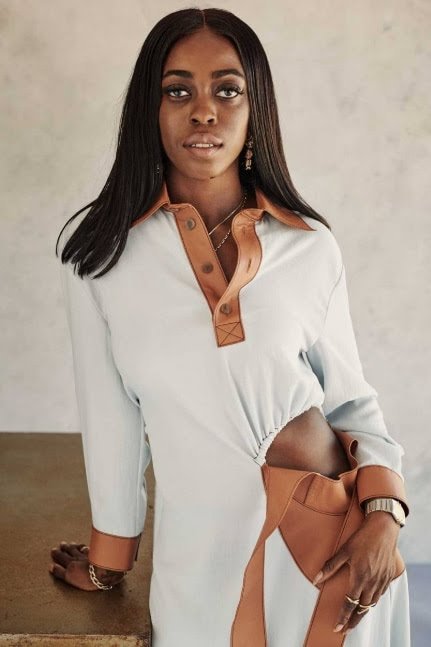
Music Executive and media personality, Grace Ladoja, has been honored by British Vogue in the #Vogue25 list as one of the Most Influential Women in Britain.

According to British Vogue, the list was compiled to shine a light on the powerful women driving forward their respective industries.

Vogue wrote:

What does power look like now? As we assembled Vogue’s inaugural list of the most influential women working in Britain for the July issue, it became clear that this question is more complicated than ever to answer. How telling, for example, that while there have never been more women in cabinet, 2018 did not feel like a year to shine a light on the ever-shifting sands of power in the old establishment. It is no longer enough simply to hold a great office of state, it seems.

Power and influence now take many forms. It does, however, still require an eye-watering level of achievement, regardless of age (the oldest entry, Baroness Hale, is 73; the youngest, Dua Lipa, is 22). It also demands the ability to inspire, and the clout to change the conversation.

Drawing from the worlds of politics, fashion, the arts, media and sport, we have had to make notable omissions. For some, authority remains too precarious (Theresa May), for others it is eternal (the Queen). So these are the women of this year: the Vogue 25, an extraordinary cast of leaders defining – and redefining – the way we live now.

Grace Ladoja earns a coveted spot in the #Vogue25 list  (Vogue)

Praising Grace in her capacity as a Music Executive and looking at the amazing work she has done with Skepta and the whole BBK crew,

Vogue writes:

GRACE LADOJA
Music executive

When Skepta won the Mercury Prize for his album Konnichiwa, it was thanks in no small part to his manager: fast-rising music executive Grace Ladoja, otherwise known as the Godmother of Grime. In 2018, in a move unimaginable a few years ago, Buckingham Palace recognised her services to music in the New Year’s Honours List – proof of her crucial role in Britain’s burgeoning DIY music scene, and her talent for shaking up the status quo.


Credit: Vogue, Pulse News

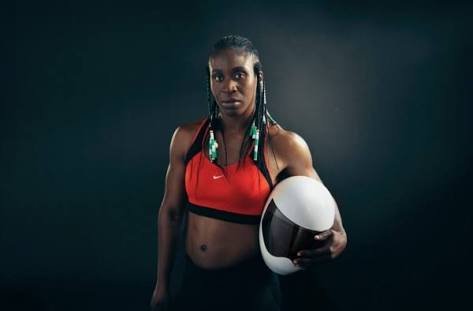
Skeleton athlete, Simidele Adeagbo has teamed up with non-profit organization, Youth Empowerment and Development Initiative (YEDI) to organize ‘SimiSleighs Leadership and Sports Masterclass’ for secondary school girls in Lagos State.

As a part of YEDI’s SKILLZ Girl project, 100 schoolgirls took part in a skeleton clinic led by her. Since the masterclass was also a means to teach the participants leadership skills, the Olympian took them on demonstrations, drills and activities centered around teamwork and the skills needed to be a champion.

Speaking about what the clinic means to her, she said:

“The students at State Civil Service Senior Model School are the future leaders of Nigeria and I’m honored to have the opportunity to share this unique experience with them.

Sport is a powerful tool to create change and I hope that I’ve empowered the girls and cultivated future leaders in the classroom and community.”

See photos from the masterclass below:

Credit: konbini.com

In a new report by the World Poverty Clock, Nigeria has overtaken India as the country with the most extreme poor people in the world – 86.9 million people, with the number increasing by six people every minute.
The report added that the Democratic Republic of the Congo could soon take over the number 2 spot.
By the end of 2018 in Africa as a whole, there will probably be about 3.2 million more people living in extreme poverty than there are today, the report added.
The report stated that with the rate people living in extreme poverty is reducing, it’ll be extremely difficult to achieve SDG 1 – No Poverty.
According to Brookings Institute:
Each April and October, the World Poverty Clock data are updated to take into account new household surveys (an additional 97 surveys were made available this April) and new projections on country economic growth from the International Monetary Funds’s World Economic Outlook. These form the basic building blocks for poverty trajectories computed for 188 countries and territories, developed and developing, across the world.
See the top nations below:
Nigeria – 86.9m
India – 71.5m
Democratic Republic of Congo – 60.9m
Ethiopia – 23.9m
Tanzania – 19.9m
Mozambique – 17.8m
Bangladesh – 17m
Kenya – 14.7m
Indonesia – 14.2m
Uganda – 14.2m
Photo Credit: Brookings Institute

For any society to thrive and attain a level of profound development and constant growth, investment in human capacity has been identified as the way to go. Hence the drive for Women in Management, Business and Public Service (WIMBIZ), an NGO, to platform 2018 CEO/Policy Maker Interactive Series, themed Innovative Investment in People -The Multiplier Effect, to lay the foundation for sustainable development in Nigeria.

Chairperson, Executive Council WIMBIZ, Olubunmi Aboderin-Talabi, said the ideology of the event is to draw attention to the value of human beings, for CEOs and policy-makers to come up with ideas on how best to invest in people in order to help them meet all their physiological needs, so that they can be more proactive citizens.
“As an NGO, our focus is to use our platform to shed light on diverse issues with the aim to impact on people who would in turn, make a change in their organisations and the country as a whole.

“So we hope that the ideas we platform will cause them to think about ways they can innovatively invest in people” she said.Aboderin-Talabia further explained that each community in the country is more likely to be proactive and productive if the basic needs of people are met through proper healthcare, education, shelter, clean air, security and housing.“So if we can take care of these basic needs, people would be more focused, productive and less stressed, with self-actualisation that would benefit the development and growth of the nation,” she said.
Catherine Bickerseth, the Founder and Co-Director of Strategic Education Advisory Services Limited anchored the event, which took place at Wheatbaker Hotel in Lagos, where she staged panelists who headlined education, healthcare and agriculture as the primary areas that must be massively invested on for sustainable development in Nigeria.Kehinde Nwani, a Social Entrepreneur said, the importance of education to a country’s growth and development couldn’t be overemphasized, as the multiplier effect itself is education.
“Without education, we’re going nowhere close to development as a country. We need to invest in education for improvement.“Most importantly, we need to improve rural education in Nigeria because children in the rural areas barely go to school” she said.Nwani further said that stakeholders must focus on teachers training and development, in order to enhance education in Nigeria, as the quality of teachers determines quality of education.

Yaw Nsarkoh, Executive Vice President of Unilever Ghana and Nigeria, said the starting point to growth and development in business and the country at large is to make available everything that contributes to growth by erecting proper incentive system.
“The biggest transformation in the world is to provide a child qualitative education.“It is very important to focus on everything that attributes positive change and growth to make a difference in the society because, when you’re successful as an organisation or nation, the numeric impact is higher,” he said.
Adepeju Adebajo, Ogun State Commissioner for Agriculture, opines that food security aids national security and at such there must be provision for input at subsidised level.“We should address issues of land, input, organisation of farmers and other factors to stimulate agriculture.“As a country, we must be able to grow what we eat, and eat what we produce” she said.

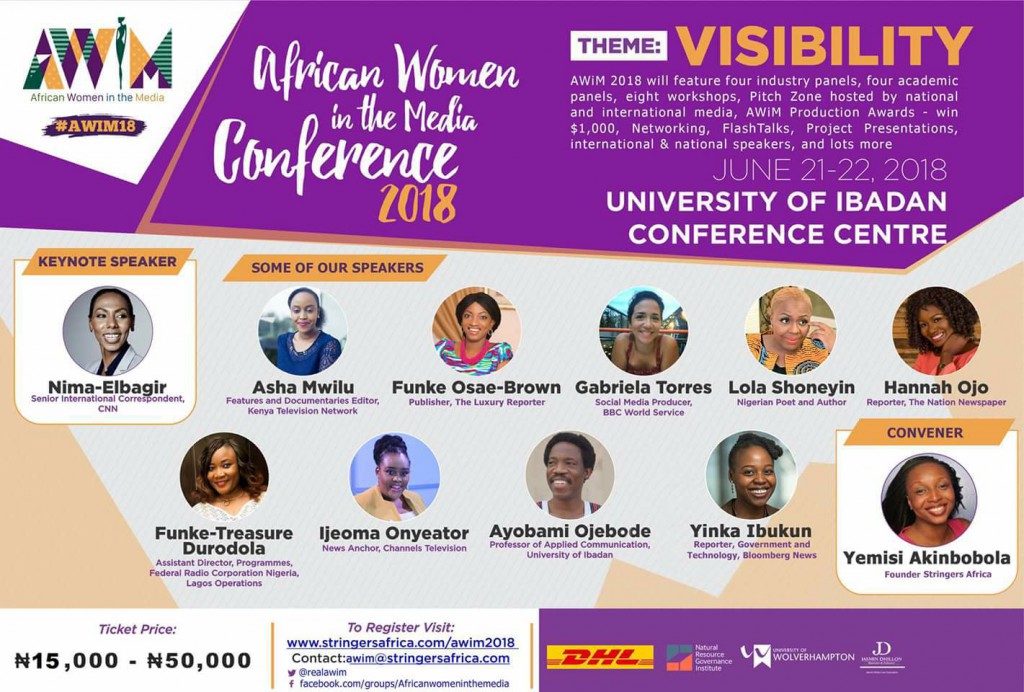
African Women in the Media 2018 Conference, which has ‘Visibility’ as theme will host female journalists delegates from around the world at University of Ibadan Conference Centre from June 21 through 22, 2018. The event is organised by award-winning Nigerian journalist based in Birmingham, U.K., Dr. Yemisi Akinbobola. It promises to empower delegates through panels, workshops and networking.

Delegates will experience keynote presentations, industry panels with leading names like Eugenia Abu, Lola Shoneyin, Funke Osae-Brown, Ijeoma Onyeator, Ayobami Ojebode, Yinka Ibukun, Funke-Treasure Durodola, Stephanie Busari, Aisha Mwilu, Gabriela Torres, Hannah Ojo, Kunle Afolayan and much more, as well as academic panels and numerous training workshops.
“There are three tracks running simultaneously at any one time during the conference,” saidAkinbobola. “We don’t want to just talk about the issues, but through the workshops, pitch zone and networking opportunities, we are putting actions into place to empower attendees.”

The African Women in the Media group aims to impact positively the way media functions in relation to women, both in the industry and media’s representation of gender issues.

“Action is key here and we are so grateful to all our sponsors for their support,” adds Akinbobola. “We are particularly excited to launch the AWIM/NRGI Award, which comes with a $1,000 cash prize.”Among AWIM18 Conference highlights include CNN’s Nima Elbagir as keynote speaker, Prof. Abigail Ogwezzy as academic keynote speaker, three industry panels – Gender, Security and Election Coverage, Women in Media Leadership, and Role of Fictional Content on Society’s Perspective of Women in Leadership. Three academic panels: Break the Silence: Health, Violence and Media, Women Behind and In-Front of Camera, Women in Media: Participation, Advocacy and Youth. Ten training workshops: Data Journalism, Digital Marketing, Reporting in Conflict Zones, Newsroom Leadership, Vlogging for Change, Oil and Gas Reporting, PR, Rethinking Content, Self-editing, and How to listen, engage and tell stories on social media to grow female audiences.
The pitch Zone, hosted by BBC and the Natural Resource Governance Institute which is funding the AWIM/NRGI Award, where delegates can win £1,000 to produce their gender-focused natural resources story. Dinner parties and networking on both nights and roundtable discussions with speakers.

African Women in the Media (AWiM) is a Facebook group that convenes annually. The first convening event took place in Birmingham, U.K. with panels from both academia and industry. The AWiM17 keynote speaker was Minna Salami. The group wants to challenge the way media functions in relation to African women, and seeks to inspire, support and empower its members.
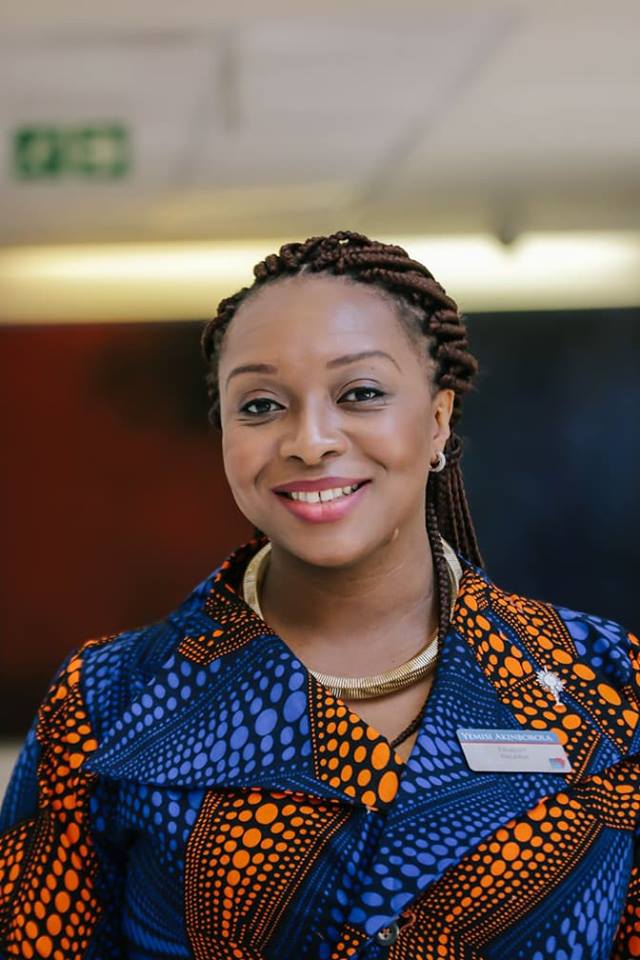
Conference convener, Akinbobola, is an award-winning journalist, academic, and media entrepreneur. A Nigerian living in the U.K., her work is Africa-focused, covering stories from rape culture in Nigeria, to an investigative and data story on the trafficking of young West African football hopefuls by fake agents. The latter won the CNN African Journalist Award 2016 (Sports Reporting). Yemisi holds a PhD in Media and Cultural Studies from Birmingham City University where she is the Course Director for MA Global Media Management, and her research interest is in digital journalism and African feminism.

She is the founder of Stringers Africa, which connects freelance journalists in African countries with newsrooms worldwide, and she runs the African Women in the Media group. Founder also of IQ4News, a multimedia production company, she has freelanced for publications, including UN Africa Renewal magazine. Akinbobola she has several years’ experience in communication management for charities.

The Government scheme, which aims to tackle “period poverty”, is considered a world first and will be made available to residents with little money, including girls in “school, college or university”.

Menstrual protection (Photo: BSIP/UIG via Getty Images)

According to the BBC, the scheme was first launched in July last year and, since being renewed for another six-month pilot in March, has distributed free products to more than 1,000 women.

Equalities Secretary Angela Constance has now announced plans to provide charity FareShare with more than £500,000 to extend the project to reach an estimated 18,800 more people.

As the Scotsman reports, free sanitary products will also be available to those “at school, college or university from August.”


The campaign to provide free feminine hygiene products was led by Community Food Initiatives North East (CFINE) – and had been welcomed by anti-poverty groups, including The Trussell Trust.

It follows growing calls demanding “dignity” for women whose budgets do not quite stretch to sanitary protection.

The scheme was – in part – inspired by Ken Loach’s 2016 film “I, Daniel Blake” which includes a scene where an impoverished female character shoplifts a packet of tampons.

Scriptwriter Paul Laverty reportedly penned the scene after meeting with women who struggled to afford essential hygiene products.

“It is unacceptable that anyone in Scotland should be unable to access sanitary products,” Constance said.

Gillian Kynoch, head of FareShare in Scotland, said: “We are excited to be working with the Scottish government to use our network to make sanitary products available to people across Scotland.”

Labour MSP Monica Lennon welcomed the extension plans, but called for a statutory requirement to ensure free provision in schools, colleges and universities as well as “placing a duty on the Scottish government to deliver a free universal system of access”.

She said: “Scotland can be a world leader in tackling period poverty if we are bold enough to take these radical steps.”

Source: konbini.com