Category

Career Gems

Category

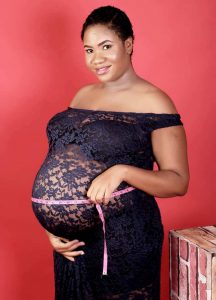
A Nigerian woman has shared her amazing story of how she had 19 painful miscarriages in the space of 6 years and all the challenges and trauma she went through before God eventually blessed her with a bouncing baby girl.
She wrote,

“Medical doctors in owerri said I had a fibroid, my fallopian tubes were tilted and that my hormones were imbalanced. After trying and failing with hospitals and medical doctors, I had to try traditional doctors, herbalists if u may, and of cos they had their own reports. Ukwu oku, ehie afor, and the rest of them. Herbs (ogu igbo) took me to different parts of the east, aba, mbaise, anambra, orlu, ngwa, just to mention a few.

It’s not like I wasn’t getting pregnant, I was, but I kept loosing the pregnancies. I stopped counting when I had lost over 19 babies (19 miscarriages), because after all, it was not an achievement, I told myself there was no point keeping records.

I took drugs and drank concotions till I was almost shapeless, people kept telling me “Sandra ure getting fat oh, u better watch it”, without knowing what I was going thru, how would I have told them that it was the hormonal drugs that were making me fat.

A lot of things were said, a lot of gossips went out, I heard them all but still smiled with the people that said them, after all, they were “friends”, and some family.
One said she went with me to where I did the abortion that cost me my womb, another said I have plans of leaving my husband that’s why I didn’t want to get pregnant for him, another said I should keep buying cars, instead of building my home and filling it up with children, another said God has not given me my own kids bcos I don’t appreciate other people’s kids, another said im eating the children in my womb tru witchcraft, another said God will not bless me with my own kids bcos I have a bad character. I was called barren, a man, a wood, infertile, a witch……. the list of names and gossip is endless.

I prayed, oh believe you me, I prayed, I fasted, I cried, I went to different churches, I was in the chior, I cleaned the church on Saturdays. To a large extent I was faithful to God, yet nothing happened, and I kept asking God why he hated me so much. But when it was time, it was time. God showed up, He proved himself strong, he showed me He didn’t hate me.

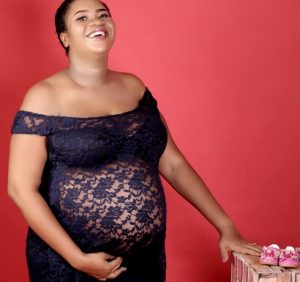
After 6 years of marriage, 6 years of waiting, 6 years of praying, 6 years of crying, 6 years of fasting, 6 years of mockery, 6 years if gossip, 6 years of pain, God decided to dry my late night tears with this beautiful miracle, MY BABY GIRL.

I call her CHIZARAMEKPERE. KENDRA. OLAOLUWA. FAVOUR. ONYEMACHI.

Welcome MY PRINCESS.

See photos of the baby below:

Out of 80 parliamentary seats in Rwanda, women occupy 54 seats, which is 67.5%. The new record was set after the National Electoral Commission announced the September 3 parliamentary elections results, which saw President Kagame’s party, RPF sweeping 74% of the total vote and taking 40 seats.

By contrast, women in the Nigerian House of Assembly and the Senate make up less than 10% of all the representatives.

While Rwanda is a world leader for women in politics, no woman has managed to become President. Two have tried unsuccessfully, and the last one who tried, Diane Rwigara, is now facing 20years in prison.

Though President Kagame places value on women’s roles and spearheaded many reforms to help build women’s capacity in civil society, his dictatorial government is still limiting women’s – and human – rights.
Credit: konbini.com

The Tanzanian parliament has banned female lawmakers from entering the parliament with fake nails and eyelashes.

Job Ndugai, the speaker of the parliament, who made the announcement on Monday, told BBC he imposed the ban after their deputy health minister raised concerns about the health risks posed by fake nails and eyelashes — because this is totally about female health and not men having agency over women’s bodies.

The speaker said the ban would also apply to visitors to parliament. In addition to that rule, lawmakers are also prohibited from wearing short dresses and jeans to parliament.

This news comes just days after the Tanzanian president, John Magufuli urged Tanzanian women to “give up contraceptive methods” insisting that his country needs more people. The president said family planning had led to a declining population in Europe, and a workforce crisis.

Mr Magufuli said:

“Those going for family planning are lazy. They are afraid they will not be able to feed their children. They do not want to work hard to feed a large family. And that is why they opt for birth control and end up with one or two children. I have travelled to Europe and elsewhere and I have seen the side-effects of birth control. In some countries, they are now struggling with declining population growth. They have no labour force.”

Mr Magufuli’s comments were however condemned by MP Cecil Mewambe who said:

“Our health insurance schemes can only accommodate a maximum of four children from one family.”

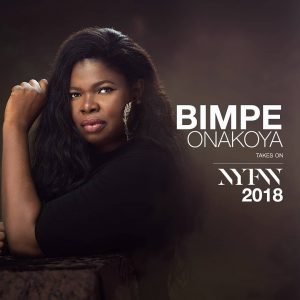
One of Nigeria’s top make up artist, Bimpe Onakoya was the headline makeup artist for American designer, LaQuan Smith for his sultry collection showing off brass sensuality for Spring/Summer 2019 at the New York Fashion Week.


Maybelline New York Nigeria’s Artistic Director created beauty looks for super models like Winnie Harlow and many more. Check out photos from Bimpe backstage.


Ahead of 2019 general elections, women have called for political parties to allow more females emerge as candidates in the forthcoming primaries to give them better chance and increase their involvement in politics and governance.

The women made this assertion during a rally held at the Peoples Democratic Party (PDP) and Labour party secretariats during the week. This was organised the Women Advocates Research and Documentation Centre (WARDC) in conjunction with National Democratic Institute (NDI).
Held simultaneously in Lagos, Kaduna, Adamawa, Enugu, Jigawa and Anambra states, the women also appealed for more female aspirants to emerge in the primaries while drumming up support for the emergence of female aspirants ahead of party’s primaries, especially at the governorship level, state and national assemblies.

Founding Director of WARDC, Dr. Abiola Akiyode-Afolabi noted that women have been in the back-seat for too long and things are not getting any better and believes women can make a difference in terms of addressing the myriad of problems we have in this country.
“These demands are for peace, progress and development for Nigeria. Women have proven themselves across the world that they can do great things. Look at Angela Merkel of Germany and Theresa May of Britain who were in Nigeria recently. I think women have passed that stage where our abilities should be doubted by anyone.”

At the PDP and Labour Party secretariats, the party leaders assured that their political parties would encourage more women in next year elections by ensuring that female candidates are featured for national and state assemblies elections.

Source: Guardian

In a bid to provide community information and access to hundreds of child protection services, The Cece Yara Foundation has launched the Cece Yara SafeKids Directory – a web-based/online portal which provides information on police stations, State Child Protection Units, medical services, Sexual Assault Referral Centres, free legal services and mental health care at the click of a button.

Recent reports have shown a rise in child sexual abuse with 1 in 4 girls, as well as 1 in 10 boys experiencing it before they reach the age of 18. The Foundation has been the light at the end of the tunnel for sexual abuse cases – fighting for the rights of children, non-offending families as well as amplifying societal prevention awareness via field and media initiatives.
Being the first of its kind in Nigeria, the online portal will serve as a vital information hub for individuals or organisations seeking child-protection services offered by the police, medical practitioners, mental healthcare providers, legal advocates, shelter providers and other credible child-focused organisations in the country.

Mrs. Bola Tinubu, Founder Trustee of the Foundation stated: “We were committed to building the most complete and accurate database of Child Protection Service Providers in Nigeria from day one and it has taken a lot of hardwork and research hours to verify all entries. This Directory will go a long way to support speedy reporting and response to child sexual abuse and other cases of abuse. This portal will be regularly updated by a team of dedicated data volunteers.”
On the functionality of the directory, the Foundation’s Research and Data Analyst, who is also the brain behind the design and development of the directory, Mr. David Adeleke said: “The web directory is user-friendly, and with the understanding that majority of the end-users will be accessing these services from their mobile devices, the directory offers maximum compatibility with mobile devices.”
It is important to know that the impact of child sexual-abuse can be profound and last a lifetime. However, easy access to help will drastically reduce the risk factors and promote protective factors that will ensure the well-being of children and families.

The directory can be accessed on the foundations website (www.ceceyara.org) and currently has close to 200 listings of child -specific service providers in Lagos state. It is being expanded daily and will eventually serve other states of the federation. Listings can be filtered by Local Government Area, service categories and keywords. Phone can be dialed automatically from the web page, while addresses can also be searched using Google Maps.The Cece Yara Foundation is a child-centered non-profit organisation established to prevent child sexual abuse and provide access to care, information, protection and emergency intervention for children who are sexually abused or at risk, and their family.

The Foundation provides the ideal response to children through a 24-hour free child telephone helpline (08008008001) and its child-friendly Child Advocacy Centre based in Lagos, which provides free professional counselling, medical, legal and psycho-social support, as well as referral services. The Foundation also conducts prevention programs for adults to raise the awareness of sexual abuse, and to educate adults on how to protect children from sexual abuse.


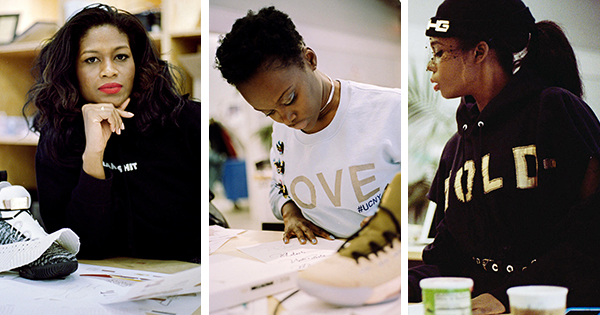
Three African American designers from Harlem, NYC – Kimberly Goldson, Felisha Noel, and Undra Celeste Duncan, have designed the first Lebron signature shoe. The three designers were selected for the project based on their previous work and passion for sport.

At the request of Nike and Lebron James himself, the three designers first traveled to Nike World Headquarters to learn how a performance shoe was made before meeting back in New York City for a working design session. The designers and James say they felt a kinship the moment that he described his vision for the shoe.

“We each had something that connected the four of us based on what LeBron saw from his mom, and the sacrifices she made for him,” says Goldson. “My mom did it. LeBron’s mom did the same for him. The connectivity was there between all of us.”

Their new design called the HFR x Lebron 16 was inspired by James’ belief that “African-American women are some of the strongest people on earth.”

He comments, “As someone who has a platform, because of what I do, I thought it was important to lend that platform to a group of people that I believe are under-recognized.  Being the son, husband and father of strong African American women, I felt like this was something I wanted to do for them and for all the strong women out there who are succeeding despite what might be stacked against them.”

In its cooperative creation, representatives at Nike say that the HFR x LeBron 16 is a symbol of unified strength.

The limited edition shoes can be purchased online at www.nike.com/launch/t/womens-lebron-16-hfr-white-sail/

Watch their story below:


https://youtu.be/07DWXkYf6-8

Credit: blog.blackbusiness.org

Genevieve Nnaji sat down with Women and Hollywood prior to the premiere of her directorial debut “Lionheart” at the 2018 Toronto International Film Festival (TIFF) to discuss the inspiration behind the movie, challenges she faced and her inspiration for going into filmmaking.

The star actress and filmmaker described “Lionheart” as “an inspiring drama about family values, succession, and most importantly, female empowerment. It highlights the various challenges faced by women, particularly in male-dominated industries.”

On what drew her to the story, Genevieve said: “The message and the environment which forces a heroine to shoulder the load. Questions of succession, gender roles, and traditional versus modern ideals surround the story. Plus, that it was rooted in African culture which made it even more fascinating. So, drawing inspiration from a close friend and family run businesses in Nigeria, “Lionheart” was created.”

Genevieve told Women and Hollywood she “wants people to reflect on the endless possibilities of growth and success that come with men and women, the old and the young, working together: a world where insecurities are tackled and equality is encouraged,” after seeing the movie.

“We need to be more open and accepting of competition instead of feeling threatened by it,” she added.
Her biggest challenge making the film will be “playing both roles of director and lead actor,” she says. “Fortunately, I was surrounded by a very efficient and effective crew. With their help, plus adrenaline and sheer determination, we were able to make a movie,” she added.

When asked about what inspired her become a filmmaker, she said:
I’ve always had a hunger for visual storytelling. There is so much material out there that is still untold — countless real-life stories from within and outside Africa, and today, we have the chance to tell it ourselves. My hope is that Africans will have adequate representation globally, and be given a seat at the table in big studio productions as we continue to grow and improve from within the continent.
I also believe that my generation of women need to continue to work at paving a path better than the one that exists today for the future generation of women in film.

Credit:Bellanaija