Author

Women of Rubies

Browsing

Yara Shahidi is making history as the first Black Tinkerbell in Disney’s newest live-action adaptation, Variety reports.

“Peter Pan and Wendy” is the newest adaptation of the classic 1953 Disney movie “Peter Pan” about a boy who never grows up. Shahidi will play the beloved Tinkerbell, a fairy who guides Peter with her magic throughout his adventures. The “grown-ish” actor will join the cast alongside Jude Law (Captain Hook), Alexander Molony (Peter Pan), and budding actress Ever Anderson (Wendy).

Shahidi recently launched a production company in partnership with ABC Studios. She is on their hit show “black-ish,” and the spinoff on Freeform, “grown-ish,” which she produces. Disney is attempting to diversify its casts, given the current cultural climate. Recently, they cast singer and actress Halle Bailey as Ariel in the live-action adaptation of “The Little Mermaid” and Niles Fitch as the first live-action Black prince in the “Secret Society of Second Born Royals.”

Disney has been rolling out a ton of new content, recently releasing a live-action adaptation of “Mulan.” Shahidi took to Instagram to share a new Black Tinkerbell sketch and thank her fans for all of the support. “Thank you all for all of the love. It truly means so much to me. I’m excited for this next adventure,” she wrote.

Source: Becauseofthemwecan

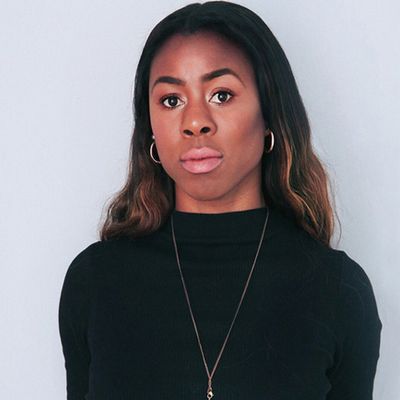
Formerly known as Google Ventures, GV is a large venture capital firm that has invested in major companies such as Slack, Uber, and GitLab. Now the company is welcoming Principal Terri Burns as its newest investing partner. Burns is making history as the first Black woman partner at the company and the youngest, at just 26-years-old. 

Burns got her start at Twitter as an associate product manager, eventually getting hired at GV, where she’s worked for the last three years. Because of her age, Burns has a knack for recognizing new ventures to capture Gen Z’s attention. Her latest investment in HAGS, an app that started as a digital yearbook and is now expanding into a broader social site for high school-aged youth, is just another example of that. 

In an industry dominated by white males, Burns is an anomaly. As of February 2020, the number of women leaders in the VC world was at just 13%, a mere 4% increase from 3 years ago. In 2019, there was only one Black woman named partner at any VC company, and between 2010 and 2015, Black people have made up just 0.67% of the industry workforce. 

Dave Munichiello, a general partner at GV, spoke about the importence of Burns’ promotion, saying, “Her investments display her interest in companies that are built by and for Gen Z, particularly as this generation comes of age in a remarkably uncertain time.”

As of now, Burns is focused on consumer businesses, expanding to include investments in the future of work and fintech. She’s not giving many details about her next move, and she plans to keep it that way.

“[It’s] broad…but that is by design,” said Burns.

Keep rising, Terri! Congratulations!

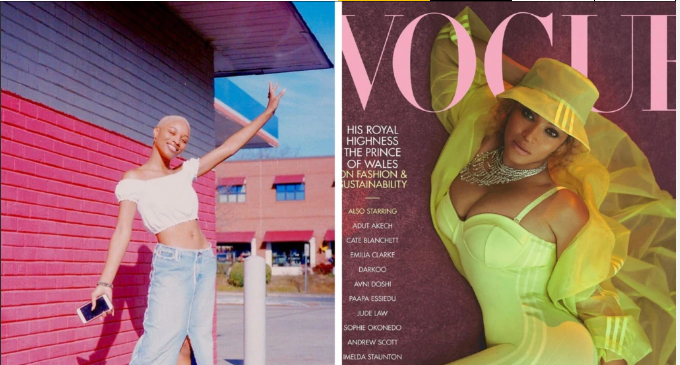
At 21-years-old, Kennedi Carter has made history as the youngest photographer to shoot a cover for British Vogue in its 104-year history. Carter had the privilege of photographing one of her musical idols, Beyoncé, for the December 2020 cover. The North Carolina native said she was shocked when she got the job.

“It feels like it dropped out of the sky,” Carter told British Vogue. “I’m 21… I haven’t really had many opportunities like this.”

Carter is a fine art photographer who describes her work as showcasing “overlooked beauties of the Black experience” and was handpicked by Vogue’s editor-in-chief Edward Enninful and Beyoncé, who asked for a woman of color specifically for the shoot. This isn’t the first time Queen B has had a hand in a historic Vogue cover; in 2018, she tapped 23-year-old Tyler Mitchell as her photographer. He became the first-ever Black photographer to shoot a Vogue cover in the publication’s 126-year history.

Although Carter’s aesthetic falls in line with Beyonce’s, especially with her recent Black Is King visual album, which uplifted the Blackness across the diaspora, Carter still felt shocked due to her perceived inexperience. She is younger than Irving Penn and David Bailey who’s first Vogue covers were 26 and 23, respectively.

“I thought I wouldn’t be able to do something at this level unless I was older, with many years in the game,” she told Vogue UK. “This is for people at the pinnacle of their careers.”

The senior African American studies major at the University of North Carolina at Greensboro told British Vogue that she didn’t let nerves get to her during the two-day shoot. She said she was going with the flow, having researched how the star worked and was surprised at how much control over the shoot Beyoncé gave her.

“I had underestimated how much she’s willing to submit herself to a vision and truly become someone else’s muse,” Carter said. Adding that the star’s ability to “control her own narrative” was something that she admired and that she was “just so, so nice.”

She said she appreciates the opportunity Beyoncé has given her and other artists that may not have been recognized without her platform.

“It’s really amazing that she’s using her influence to be able to give young artists this experience, and allowing their voices to be heard,” Carter told British Vogue. “She’s opening the door for others.”

Growing up, Carter didn’t expect to be a photographer; she’d only taken a photography class in high school because she thought it was going to be easy — it wasn’t. However, she kept at it and found her passion. She credits Dana Scruggs with getting her work in front of editors. Now that she has Beyoncé on her resume being noticed shouldn’t be a problem. But even with her newfound acclaim, she said she isn’t looking to leave her family in Durham to find a big city anytime soon. But she does plan to celebrate with them.

“I think we’ll just sit outside and make a little bonfire, the four of us,” She told British. “And I’ll invite my man.”

We can’t wait to see where you go from here, Kennedi! Congratulations!

Photo Credit: British Vogue/@internetbby Instagram

Tayo is an accountant who manages the payable and receivable functions of her workplace. When she started her career, her main career goal was to become a renowned CFO and thought-leader in the financial sector. She’s been with the organization for over 7 years on the same role. She approached me and complained about how she hasn’t progressed toward her goal in 7 years. I probed some more, but didn’t find anything tangible.

Coincidentally, I happened to know her line manager, and decided to ask about his individual team members and opinions about them. One thing that stood out from what he said: “Tayo does her job well but sticks only to her job description. When you give her something else that may push her to higher task, she complains that it is not her job description and she would rather stick to only what she knows.”

He also went further to say, “How will I help her grow in the finance space if she’s so rigid? I’ll rather pack the challenging work to someone else and leave her in her comfort zone.” I thought about this deeply and realized I’ve actually met people like that in the past. Outwardly, they sound like people who want to grow, but when they’re at work, they’re the ones filled with unnecessary complaints. Line managers notice it and avoid getting into any trouble with these people. They’ll rather smile with them and leave them in their rigid place. People join, learn more than them and eventually move on.

There are a lot of Tayos in the workplace and they are wondering why their mates are soaring and earning way higher while they are on a poor salary scale despite going to the same school and even having a higher GPA. As a career professional willing to grow, don’t get stuck with the mentality that everyone just wants to ‘use’ you. Sometimes, the exposure you get from these experiences will catapult you towards something greater.

I once had a team lead who used to pass flimsy work to me. That was when I just started my career. Within me, I’d grumble about how unnecessary tasks were being added to mine. Yet, I would do them without complaining or giving attitude. One day, I jokingly asked him why he gives me such tasks. He told me he’s deliberately doing it so that I can learn the ‘basics’.

Always learn to ask for feedback from your supervisor, at least every quarter. This will help you know how you need to get better. Let your team members and team lead see the burning passion in you to learn.

Go the extra mile and even if you’re not sure you can do it, take it, use Google, and then ask for help during the process. You’re building yourself. Learning to go the extra mile will definitely pay off for you in the long run.

I hope you have learned from Tayo’s story. I wish you the best in your career.

***

Photo Credit: Dreamstime 

With a population of over 50,000, the Himba are a polygamous people where Himba girls are married off to male partners selected by their fathers once they attain puberty.

Most of their cultures have been upheld despite western influence and agitation.

Among these is the “Man comes first” tradition. The woman has little or no opinion in the decision making. Submission to her husband’s demands come first.

According to the Guardian, “When a visitor comes knocking, a man shows his approval and pleasure of seeing his guest by giving him the Okujepisa Omukazendu treatment — the wife is given to his guest to spend the night while the husband sleeps in another room. In a case where there is no available room, her husband will sleep outside.”

This, apparently, reduces jealousy and fosters relationships.

Another tradition that has stood the test of time is the “bathing is forbidden” rule. Rather than take their baths, the women take a smoke bath and apply aromatic resins on their skin. They are also guided by the belief that the colour red signifies “Earth and blood”. Their red skin is one of the things that make them extremely unique. The red colour is from the otjize paste (a combination of butterfat, omuzumba scrub and ochre) and its function is to protect their skin from the harsh desert sun and insect bites.

Himba Influence in African Literature

The Himba people haven’t been represented a lot in Literature. However, in Nnedi Okorafor Binti, the lead character ‘Binti’ is of the Himba poeple. Okorafor describes the tribe as a “tribe in Namibia who use ‘sweet smelling otjize’, a mixture of ochre and butterfat over their skin, rolling it into their hair as protection against the desert sun”. In the novella, the Himba don’t travel, which directly contrasts the real Himba people who are nomads.

When you fall in love, you think that your partner – and your relationship – is perfect, right? The idea that one of you could be emotionally unstable is the farthest thing from your mind. After all, being in love causes your brain to release all sorts of feel-good chemicals that make you feel like you’re on Cloud 9. In fact, when scanned, a person’s brain who is in love looks a lot like a person’s brain who is on cocaine. So, you really are feeling “high” when you’re in love!

However, as most of us know, that feeling of being in Heaven with your new love wears off after a while. Your brain eventually stops creating as many feel-good chemicals, and you slowly start returning back to normal.

In reality, this phase of love doesn’t have to be a bad thing. It’s just a fact of life.

While some people do go on to live happily ever after, others begin to realize that their supposedly “perfect partner” is not so perfect anymore. In fact, some even come to the realization that their partner is downright emotionally unstable.

Uh-oh. What do you do when that happens? It’s almost unbelievable – literally. How did this person turn into someone you hardly even recognize?

The problem is that you probably still love the person. And if that’s true, how do you deal with your emotionally unstable partner?


Before we discuss how to deal with them, let’s first start by talking about how to recognize the symptoms of an emotionally unstable individual.

Symptoms of Being Emotionally Unstable

All of us have our bad days and our mood swings – it’s just the nature of being human. But how do you know when someone has crossed over the line from having just normal, everyday emotions to being downright emotionally unstable? Here are some of the signs.

Angry Outbursts

Everyone gets angry at times. It’s a normal and natural occurrence for every human being. However, how you express your anger is key to healthy relationships. So, if your partner seems to have outbursts of anger for no apparent reason (or over small things), then that is a sign.

Overly Dramatic

Again, we all have things happen in our lives that we don’t like. But a lot of people just deal with it, try to change things, and move on with their lives. An unstable person, however, will turn their life into unending drama when they don’t need to.

Gaslighting

Gaslighting[1] is psychologically manipulating another person into questioning their own sanity. For example, if they told you they would do something, they will deny ever saying it when you bring it up. Then, you wonder if they really said it or if you just imagined it. But that is just one example.

Mood Swings

It’s normal for people’s moods to change. No one can be happy 100% of the time, right? But for most, the change in mood is relatively minor. It’s usually dependent on something outside of themselves. But an unstable person could have extreme mood swings for no good reason.

Inappropriate Anger

When most people get angry, it’s usually at someone who is close to them. That makes sense, because those are the people with whom we spend the most time. But if your partner frequently yells at a server in a restaurant or other random people, then that is not healthy.

Lack of Empathy

Empathy is the ability to feel what another person feels and to see things from their perspective – not just your own. Emotionally unstable people are generally unable to do this. They only see their own side of a situation.

Tries to “One up” You

They always seem to be in a power struggle with you. For example, if you had a bad day, they will tell you how theirs was worse. Or, if you are having an argument, they will always try to gain the power to “win” and make you lose.

Inability to Admit When They Are Wrong

Emotionally unstable people can’t admit when they are wrong. In fact, admitting they are wrong is a threat to their psychological well-being. It shakes the core of themselves and their self-identity. So, they will never admit “defeat,” even if they secretly know they are wrong.

Sense of Entitlement

They think they deserve everything, and nothing needs to be earned. For example, they demand that you do things for them because they think it’s their right to do so.

Dealing With Problems Irrationally

The best way to deal with problems in relationships is to have both people on the same team, and for them to come up with a mutual solution. However, emotionally unstable people are unable to do this because they only look at things emotionally, not logically.


Too Intense

The intensity with which they express their emotions is extreme. They don’t tend to be moderate in any of their interactions. This may generate a feeling of walking on eggshells around them because you are afraid of their intense communication.

Blaming Others

Unstable people don’t ever look in the mirror and take personal responsibility for their actions. Instead, they always point fingers at other people and blame them for everything that is wrong in their lives.

How to Deal With an Emotionally Unstable Partner

Now that we know some of the signs and symptoms of an emotionally unstable person, here are some things you can do to deal with them.

1. Step Back and Observe

Ask yourself if you did anything wrong. Because they tend to gaslight other people (see above), emotionally unstable people have you question your actions and sanity. Be objective, and observe them and yourself. Did you really do anything wrong? Probably not.

2. Get Other People’s Perspectives

Tell your stories to trusted loved ones. Tell them what happens in your interactions, and get their opinion about whether or not your partner is overacting, or if you actually did something wrong. Someone on the outside will likely have a clearer view of what’s going on.

3. Don’t Play Into Their Drama

As the saying goes, “It takes two to tango.” In other words, someone can’t play a game by themselves. They need another person to participate. But don’t give into their drama. Refuse to engage in it and walk away.

4. Walk Away When They Attack You

If and when they verbally, mentally, or emotionally attack you, just leave the conversation. Don’t allow them to do that to you! Demand that they talk to you nicely, and don’t accept anything less than that. If they can’t give you respect, then end the conversation until they can.

5. Demand Respect

Remind them that how they are speaking to you is unacceptable. One very important thing to remember is this: you teach people how to treat you. Demand that they treat you with respect[2].

6. Stay Calm

Don’t get sucked into their emotional storms. It’s easy to do because you want to defend yourself, but this just plays into their drama. Try to stay calm and rational because that’s the only way people can talk in a healthy manner.

7. Don’t Fall for Gaslighting

When they try to gaslight you, refuse to accept it. Take notes on things that they tell you and what they do, so you have a record. When they try to deny things to make you look crazy, pull out your record and show them the truth.

8. Suggest Therapy

Many times, an emotionally unstable person cannot get better on their own. Going to a trained therapist or psychologist is something that they should probably do – both on their own, and perhaps as a couple as well.

9. If All Else Fails, End the Relationship

Unfortunately, not all relationships can survive – even under the best of circumstances. If you have tried all you can to fix your relationship and make it healthy with someone who is emotionally unstable, sometimes it’s just time to end the relationship and find someone else that you are more compatible with.

Final Thoughts

Being in a relationship with an emotionally unstable person is never easy. You feel like you never know how they are going to act or what they’ll say next. But that’s no way to live. Everyone deserves to be in a happy, healthy relationship. Don’t forget to love yourself enough to put yourself and your happiness first!

Pop star Beyonce is on the cover of British Vogue’s December 2020 issue and she debuts on the cover with not one, not two, but three cover images! Yes, all the covers are pretty lovely.

For British Vogue’s new issue, the singer was photographed by 21-year-old Kennedi Carter.

Editor-in-chief of the magazine, Edward Enninfulsays about Beyonce, “I had the enormous honour of interviewing Beyoncé, and working with the gifted up-and-coming photographer Kennedi Carter on a 20-page fashion story. At just 21, Kennedi becomes the youngest photographer to capture a British Vogue cover. Everyone always wants to know what it’s like to work with Beyoncé and her incredible team, and the answer is… flawless. A perfectionist to the core, more than anything, she wanted her Vogue moment to be filled with positivity as this trickiest of years draws to a close. As ever with Beyoncé’s goals, she got her wish.”

In the issue, Beyonce talks about how she feels changed by the events of 2020 as well as spending a considerable portion of her creative life working to elevate black, and specifically African, voices.

For more from Beyonce, visit Vogue.co.uk.

You’re having one of those days or weeks. Nothing seems to be working, your motivation i gone  , and you’re daydreaming about quitting. Your confidence is running empty and you’re feeling worthless. Sounds like you? Then this article is just for you…Read On

First of all; Breathe, because we’ve all been there. Furthermore, I want to remind you that a high growth lifestyle comes with vulnerable emotions. You feeling this way does not say anything about your character or capability.

However, the longer you stay in a state of feeling worthless, the more clarity and momentum you start to lose. Because while feeling this way is normal, staying there becomes a choice.

In this article, you’re going to learn 7 things to remember and practical steps to help you come out the other side with more resolve and clarity, not less. Let’s dive in.

1. High Growth Equals High Vulnerability

You wouldn’t be reading this article if you weren’t someone committed to their personal and professional growth. And let’s be clear here—a high growth life requires dealing with messy emotions.

Why?

Well, for starters, you’re leaving your comfort zone. You’re working on yourself. You’re no longer a “talker” but someone who is actually doing it. It’s important to remember what you’re going through now is a natural part of growth.

2. You’re Exactly Where You Need to Be

One of the biggest misconceptions in psychology is that you should feel bad if you’re feeling badThere couldn’t be anything further from the truth; ”negative” emotions are as healthy as positive ones. It is our reaction to negative emotions that can cause harm. But the emotion alone is a healthy and normal part of life.

3. There’s So Much That Is Working

Being in a vulnerable state can shift our awareness to stack all the ways life isn’t working for us. We think of the people who betrayed our trust. We think back to being fired after giving time and energy to an organization. We overanalyze a comment on social media and obsess over how our goals aren’t happening fast enough.

Remember, you woke up today—50,000 people didn’t. Your heart’s still beating to the tune of 2,000 gallons per day. You likely have access to shelter and clean water. This is a simple perspective shift that allows us to lower the bar on gratitude and remember what is working.

4. Contrast Creates Perspective

We live in a culture that emphasizes 24/7 positivity. We must present our best selves—we must find the ‘silver lining’ in every circumstance. And while these are great aspirations, they’re not real life.

Enter contrast in life—the experience of something different. Hard moments, unsettling emotions, and experiencing conflict in our lives all lead to a newfound perspective we wouldn’t have otherwise had access to.

With “contrast,” we ask better questions. We seek better answers. We ask for help, creating a deeper connection. We become empathetic to others’ struggles. We may even get an idea for a change in our lives that could only be accessed in the contrast.

With that said, stay curious. When we are curious about our emotions and what we’re going through, we are compassionate instead of judgmental. We stay open to new insights instead of labeling ourselves. All of these lead to healing.

5. Dig Into the Truth About You

Years ago, I started keeping a digital file that someone advised me to call “the truth about you.” It is a simple document where I keep screenshots, emails, comments on compliments, and reminders from those I respect.

We all have a folder in our minds where we can remember the truth about ourselves—the places we showed up and followed through. The accomplishment someone else is amazed by. The consistency we showed when it was easier to quit. You may not have this folder available, however, I highly recommend you start building it.

But even without it, remind yourself of the truth. To do so, you’ll have to transcend your current circumstances and emotional state and dig deeper.

6. This Is Why You Do the Work

If you’re reading this article, you’re interested in maximizing your potential and living a productive, fulfilling life. This means you have a toolkit at your disposal—practices, and actions that are designed exactly for what you’re going through right now.

Remember that the tough times are the best times to use these tools, whether meditation, time in nature, doing some journaling, or going for a long walk—don’t forget the power of these tools.

7. Breathe, Play, Lighten Up, Help Others

When you’re emotionally contracted, you also tend to be physically tense. Body language tends to be less open, shoulder slump forward. It’s easy to tighten up and even enter fight or flight.

We often forget we possess the number one tool to release overwhelm and get back to the center—our breath. By engaging in a breathing practice—taking some much-needed deep inhales or box breathing—you can manufacture a state of clarity and peace.

Another tool when you’re feeling worthless is to help someone else. It sounds crazy, right? We must focus on ourselves. We must fix the issue and do so now.

Oddly enough, by taking the focus off ourselves, we find healing. It doesn’t have to be anything grand—but encouraging an old friend, a random act of kindness, or dropping off snacks for a person on the street pays dividends.

All of these can create what psychologists call the “giver’s high,” and shift your perspective.[5]

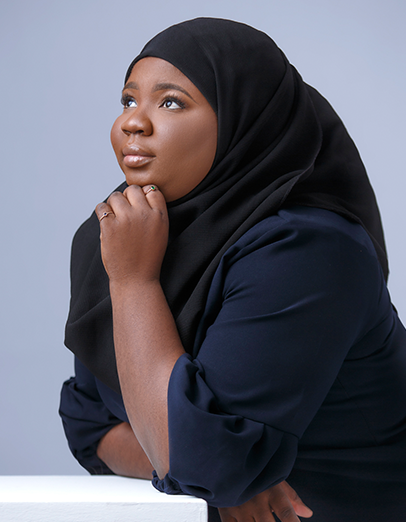
Rukayat Sadiq, is  a software engineer with over 5 years successful experience leading engineering teams to build and deliver scalable software products in multiple languages and technologies.

The need to solve problems around her led Rukayat to study Electrical & Electronics Engineering. The same zeal also directed her the field of software engineering field where she has focused on working with teams to build software solutions targeted at the health, financial and educational sectors through her career.

Rukayat decided to go into software engineering after she realised what she could potentially build through computer programs having successfully written code to solve her engineering mathematics problems in her undergraduate days.

She currently works as a software engineer with Influitive – a Canadian based marketing technology firm.

She had worked as a Full Stack Software Engineer and Technical Team Lead, Senior Software Engineer at Andela, after completing the Andela Fellowship Program. At Andela, Rukayat also co-foounded and co-led the Andela’s Ladies-in-Tech group. She is also a co-organizer of the Lagos Women in Machine Learning and Data Science Group.

Rukayat holds a bachelors degree in Electrical and Electronics Engineering from the University of Ilorin and is completing her masters degree in Electrical and Computer Engineering from Carnegie Mellon University.

Rukayat was one of the women celebrated in Tech Cabal‘s Tech Women Lagos series, which profiled 50 women in the Lagos technology ecosystem from different backgrounds and at different stages of their technology careers.

We celebrate Rukayat for pursuing her dreams and inspiring others to do so and we’re rooting for her!

Source: Bellanaija

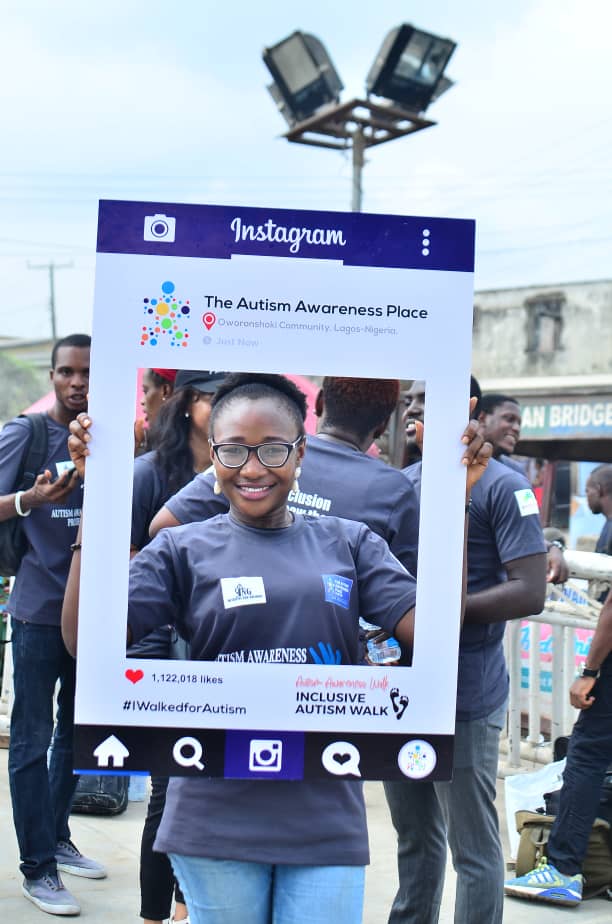
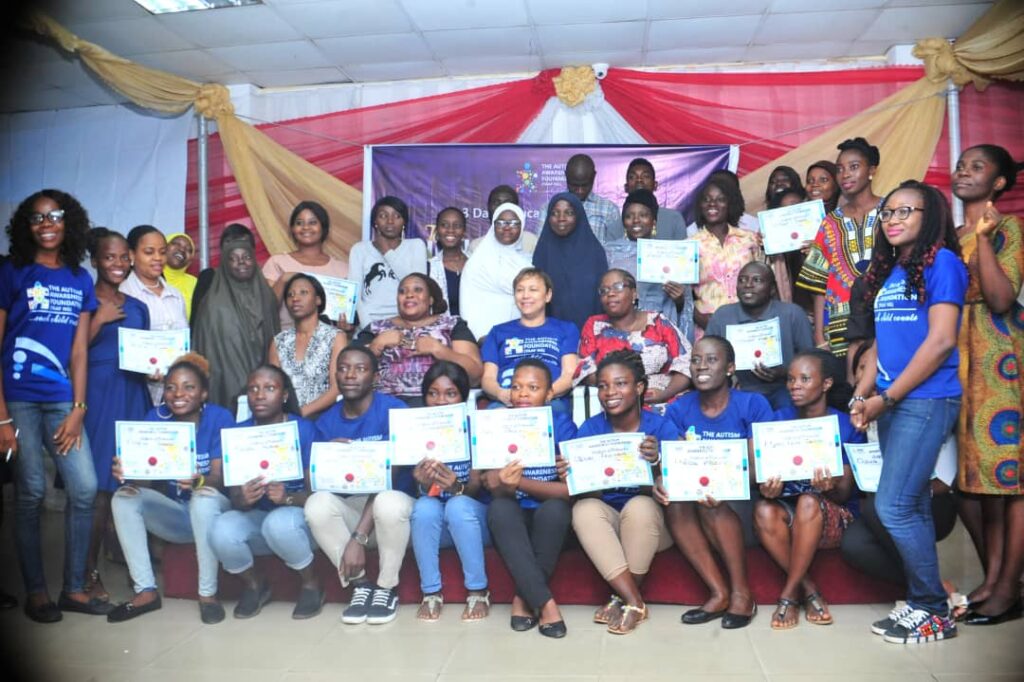
Omotoke Olowo   Olugbode is a passionate inclusive education advocate with over 5 years’ experience in education, community service, and advocating for children with disabilities. She is the Founder and CEO of The Autism Awareness Foundation, an organization that is focused on inclusive education for children living with disability especially children on the Autism spectrum disorders. She is also the CEO at Theraconnect an online mobile App that connects parents of children with special needs to the nearest and affordable therapist.

Omotoke holds a Bachelor Degree in Education (Educational Foundation and Counseling) from Obafemi Awolowo University and a certificate in Youth Mental Health First Aid in USA. She is a Mandela Washington fellow and a 2020 LEAP Africa SIP Fellow.
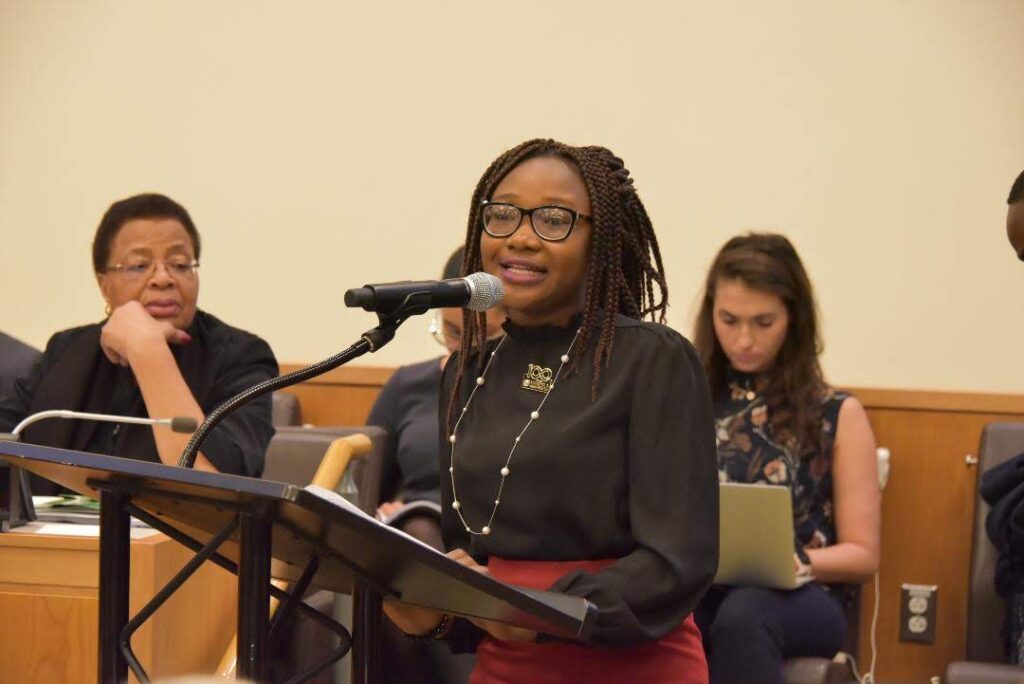
Omotoke has spoken at International conferences including, The Concordia Summit at the Grand Hyatt, Voice of women at Wagner College. She also had an internship opportunity with the Department of Behavioral Health and Intellectual Disability, Philadelphia, USA

Omotoke believes education is the bedrock of everything and without it she would not have been able to achieve all she has.

She shares her “Ruby Girl” story in this interview.

1. Who is Omotoke Olowo Olugbode?

Omotoke Olowo Olugbode is a passionate inclusive education advocate with over 5 years’ experience in education, community service, and advocating for children with disabilities. She is the Founder and CEO of The Autism Awareness Foundation, an organization that is focused on inclusive education for children living with disability especially children on the Autism spectrum disorder, while also raising awareness and advocacy in the community to change perspective and myths about Autism as she believes that each child counts and each child can learn irrespective of their disability, mental health or environment.

She is also the CEO at Theraconnect an online mobile App that connects parents of children with special needs to the nearest and affordable therapist.

Omotoke holds a Bachelor Degree in Education (Educational Foundation and Counseling) from Obafemi Awolowo University and a certificate in Youth Mental Health First Aid in USA. She is a Mandela Washington fellow, Outstanding Global Youth Ambassador for TheirWorld UK where numerous articles on her advocacy has been published, an Ashoka ChangemakerXchnage Fellow and a Robert Stiffing Alumni. She is also a 2020 LEAP Africa SIP Fellow.
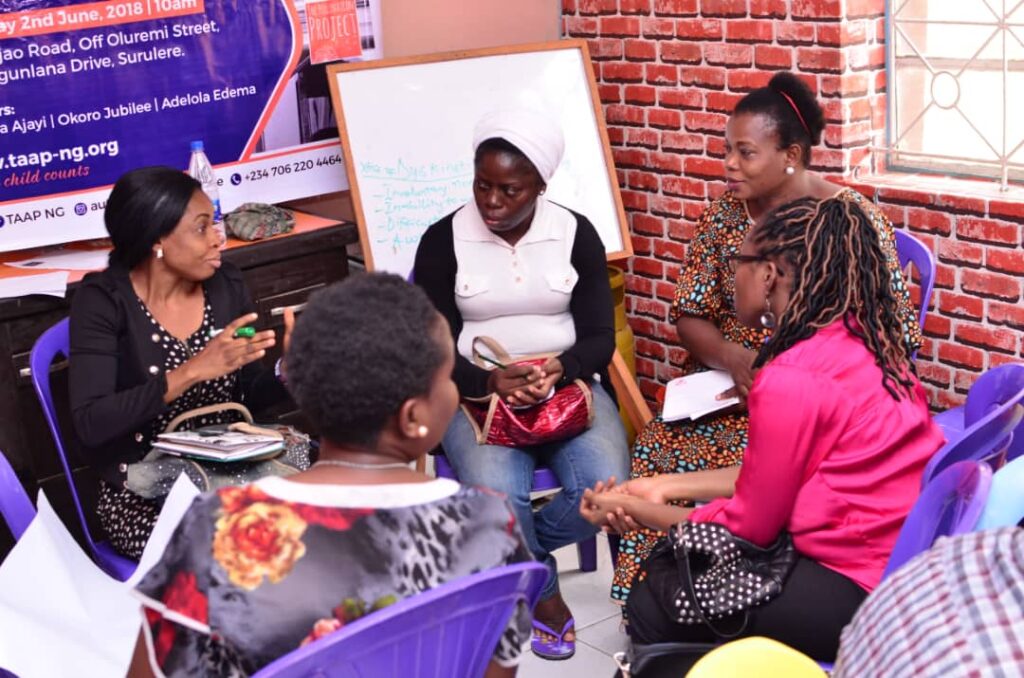
She was awarded The Essex County Board of Chosen Freeholders New Jersey, and also awarded as International Associates on civic Leadership at Wagner College, New York.

Omotoke has spoken at International conferences including the MakeImpossiblePossible Summit at United Nations General Assembly, The Concordia Summit at the Grand Hyatt, Voice of women at Wagner College. She also had an internship opportunity with the Department of Behavioral Health and Intellectual Disability, Philadelphia, USA

2. ‎ What is The Autism Awareness Foundation (TAAF)?

The Autism Awareness Foundation is a not for profit organization that raises awareness about disability and inclusion of children with disability in the classroom and society while eradicating stigmatization and marginalization. We ensure children with disability especially children on the autism spectrum disorder get access to good and quality therapy for early intervention to function and get included in the school system as most children with disability are always denied access to inclusive and quality education.

The Autism Awareness Foundation started in 2017 as a not for profit where we create awareness for children on the Autism spectrum disorder, we have been involved in active teachers training and parental support group, due to our work expansion and experience we set up the social enterprise of THERACONNECT as physical connecting platform before thinking of the App. Currently, since May 2018, we have been involved in outsourcing over 50 therapist and special needs educators to parents, teachers and school.
3. What prompted you to start an inclusive education?

I am a Teacher by profession and I got into the Teaching sector as a zeal I have for Teaching which was further influenced by my friend who had a disability during my secondary school days, and I watched how he couldn’t get the adequate and efficient education during our school days.

Teachers would rather not have her in their classroom and she most often does not come to school at all. So, from there I developed a passion to become a teacher and a deep commitment for children living with disability so that I could be able to teach them in the classroom. After going through my University Education, I discovered that my Teachers then could not teach my friend because they do not have the knowledge and skills to teach children with disability.

The spark and motivation to start my Social Initiative come after reading an online article about a mother with a child with Autism, about how people refer to her child as being possessed, this brought back memories of my experience in secondary school with my friend.

Autism as a disability was strange to me and foreign, and as such I wonder if children in my community has this disability and they don’t have access to education.

I decided I want to advocate for children living with Autism because its disability in which a lot of parents and teachers are not familiar with and a lot of stigmatization and marginalization.
4. ‎ Apart from running an inclusive education that other thing to you into?

Apart from my NGO, The Autism Awareness Foundation, I am also an Innovator, I am currently working on an online App where parents can connect with Therapist without leaving their home which saves them stress, money and time.

I am a social Entrepreneur, I currently run a social enterprise called “The Sensory Place” that focuses on sensory materials, Toys and Montessori schools equipment for parents and schools owner while also consulting for schools on issues pertaining to inclusion in their classroom and connecting with therapist to schools and parents.

“We ensure children with disability especially children on the autism spectrum disorder get access to good and quality therapy for early intervention.”

5.How do you relax despite your busy schedule?

Netflix and gist is my friend when I am less busy. As a person who provide support in issues relating to mental health of parents and disabilities, I take my mental health seriously too, I know when I need to close my laptop, turn off my phone data, decline a speaking engagement and just relax, either with talking long hours on the phone with friends, watching amazing series on Netflix or just sleeping. I am more of an indoor person than outdoor.

“I decided I want to advocate for children living with Autism because its a disability in which a lot of parents and teachers are not familiar with and a lot of stigmatization and marginalization”.
6. ‎ What has the pandemic taught you?

The pandemic has taught me how to prioritize, most time we waste our time on things that are not really important but the pandemic has really taught me to cherish each moment, love people around and check on my families more. It awakened my sense of commitment and knowing how to show love to others too, even during the pandemic, I was still on long calls with parents on how they can support their kids at home in terms of therapy and achieving their milestones


7. ‎As a global youth figure, what has been your achievements on inclusion?

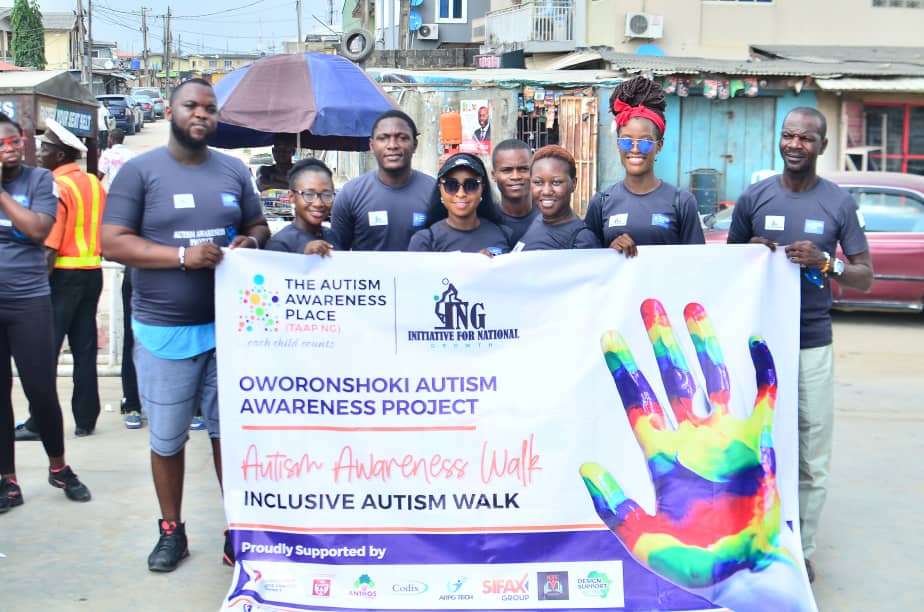
My achievement on inclusion has always come through my NGO, my impact has made over 100 parents accessed therapy for their children for early intervention, increase the awareness around autism spectrum disorder to over 5000 people in the community, through our annual Walk Aware Autism and trained over 1000 teachers on skills needed to include children on the spectrum in their classroom both online and physical training, with the advent of our online support for 30 parents as a form of continued training and counseling.

In all of this, my greatest achievement is when parents call me after their kids have been able to achieve a developmental milestone and when they get accepted in an inclusive school, the joy and smiles on parents at such moments always mean everything to me.

8. ‎What was growing up in a Nigerian home like for you? Did it in anyway contribute to everything you do now?

Growing up was a bit challenging but I grew up in a family full of love. Both my parents are quite loving and amazing people, my mum is the disciplinarian of the house while my dad condones me a lot, people will say it’s because we look alike.
I never had all I wanted while growing up but received love from sisters all the time, we shared everything and we could confide in each other.

Well, I will say my upbringing definitely contribute to what I do now, because I could feel what it means to be like one is unworthy or not enough. I understand the pain of women with children with disabilities in rural communities having being born and raised in one at Oworonshoki community, so yes my passion for setting up The Autism Awareness Foundation definitely stemed up from my own personal experience too.
9. ‎What are the challenges you faced when you became an inclusive educator? Do you still experience them? And also how were you able to overcome them?

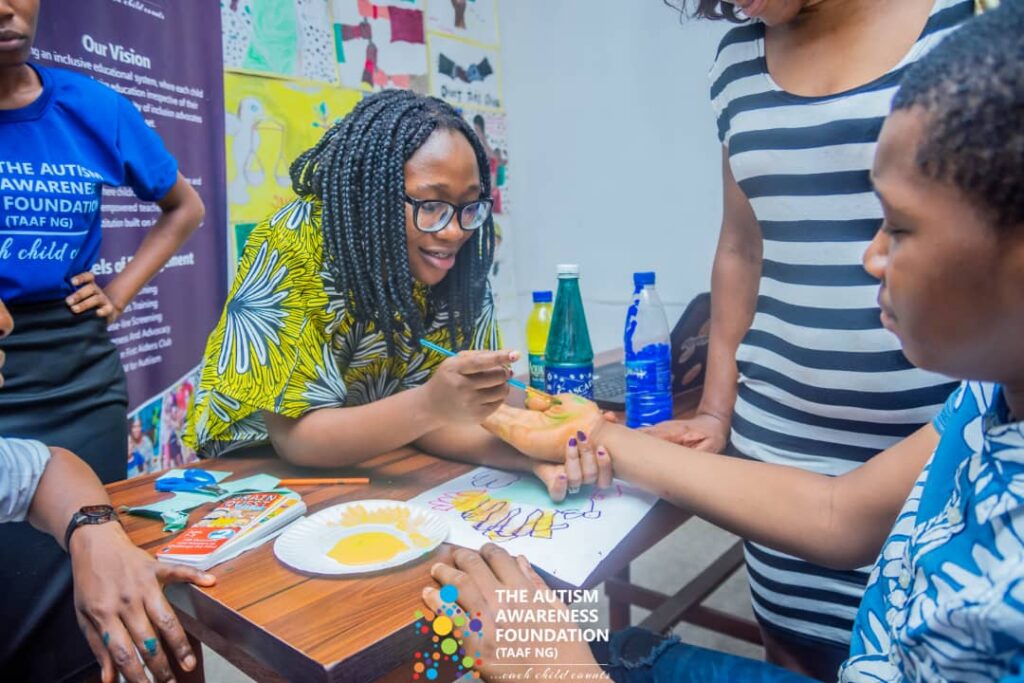
Challenges are bound to happen, will happen and they still happen, one of the challenges I faced is the stigmatization and marginalization that comes with working with children with disability which is a big problem of acceptance and inclusion, another challenge is the myth associated with children with disability as a punishment from God as such most parents in my community prefer to keep their children at home and lock them inside rather than bring them out for assessment and therapy, as most schools won’t accept them and when schools finally accept them, other parents in the school sometimes withdraw their children from the school, saying they don’t want their children to catch the disability. And finally I am faced with the challenge of lack of trained teachers to facilitate learning in the classroom. I have been able to overcome these challenges through trainings and holding meetings with school owners to explain that disabilities are not contagious and children benefit more when they learn in inclusive settings.


10. ‎If you were to be the President of Nigeria for a day, what would you change?

If I were to be the president of Nigeria for a day, I would change the Educational sector. The Educational sector has become a shadow of itself and what it is supposed to achieve, most public schools lack trained teachers, use outdated curriculum and old teaching methods that does not facilitate independent and collaborative thinking on the part of students. Our graduates can’t even compete globally and our state of inclusive education is nothing to write home about especially with no therapist and special educators to facilitate learning. After changing the Educational sector, I will definitely reform and change the health sector, too much death, misdiagnosis and sometimes lack of doctors to train patient has led to more death than anything in recent years.

11. ‎Mention 3 women who inspire you and why?

One of the women who inspire me is Clare Henshaw, she runs Girls Inspired Foundation, she has gone off to inspire many girls and yet with an humble and kind spirit, I am surely learning humility from her.

Another woman that inspires me is Jasmine, Jasmine is a mother to a child on the autism spectrum disorder who I met in Philadelphia, despite her position she has constantly been reaching out to me on how to provide support for more mothers in Africa and especially Nigeria.
Lastly is my Mother, being a mother to four ladies without a boy child, I know we all know how the narrative would have been, but she have kept it all together, fireful and always there for us her children, she constantly teaches faith and trust in the most difficult time.


12. ‎Where do you see yourself in the next five years?

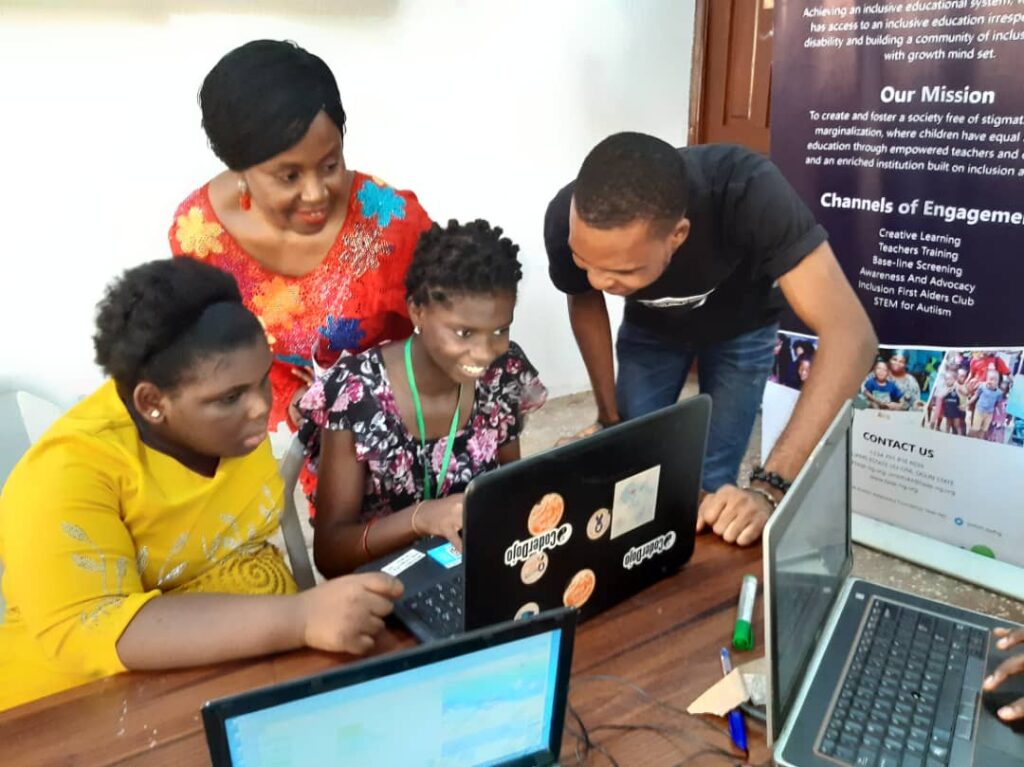
In the next five years, I see myself running The Sensory Place into a big social enterprise, settling up a safe center for therapy and play center for inclusion of children with special needs and disabilities while they also learn a skill through our coder dojo club. I see myself running different starts up into big businesses and ensuring that I am constantly giving back to the society. I also see myself in a place of policy advocacy and implementation at the government level to ensure policy reform on inclusive education and ensuring inclusion in the workplace where each child can truly count.


13. ‎If you were given the opportunity to address a group of young females five years younger than you, what will be your advice to them?

I will tell them to explore all the opportunity they have at their disposal, aim for the sky and land among the moon, dare the impossible and to keep showing up for themselves. I will tell them that impossible is nothing and they are born to do great and amazing things. They should never underestimate themselves and to keep shattering limits and breaking new grounds.