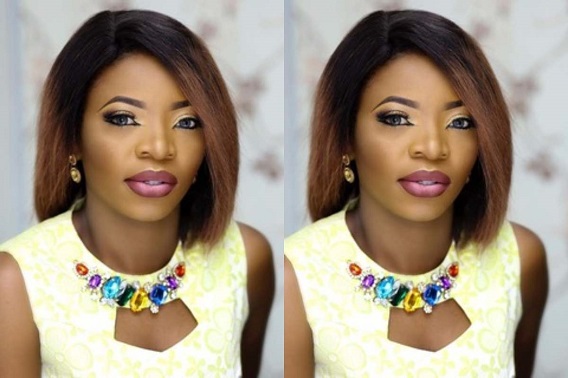
Nigerian Afro-soul singer and songwriter, Aramide Sarumoh, has been appointed into the Washington DC’s chapter of the Recording Academy Board of Governors.
The singer who has been an active voting member of the Recording Academy for several years and previously served on the committees of the Academy took to her Instagram page to announce this major achievement.
She said, “I am proud to have been elected as Board of Governor and look forward to supporting the cause of the Recording Academy. “The Recording Academy plays a vital role in supporting and advocating for artists, producers, songwriters, and other professionals working in the music industry”.
Aramide shot into limelight in 2006 when she contested at Nigeria’s music talent hunt show, Star Quest, where her team came third.
In 2015, she won the award for the best female vocal performance at the Headies following the release of her first single, `Iwo Nikan’.
Katherine Johnson, Dorothy Vaughan and Mary Jackson provided pivotal contributions to space flight research from the 1940s through to the 1960s, when the United States first sent men to orbit and then walk on the Moon.
Despite their achievements, all three had to confront the racial segregation of the era.
They were among dozens of African-Americans, both male and female, who worked as mathematicians and physicists for the US space program, even as they were forced to use separate bathrooms from whites, and were barred from the same restaurants and schools frequented by whites.
The trio’s work was largely forgotten until they were profiled in the book “Hidden Figures” decades later by author Margot Lee Shetterly, later adapted into the 2016 blockbuster of the same name.
Shetterly said the decision to ordain Hidden Figures Way honored “the contributions of unseen individuals who were there at the beginning of the story, and whose persistence and courage have delivered us to where we are today.”
“These female mathematicians were doing the heavy lifting in aeronautical research and many, many other fields long before those chunks of electronic circuitry became the defining feature of our life and work,” she said at a Wednesday ceremony outside NASA.
In 2015, Former US President Barack Obama gave Johnson, who is now 100, the Presidential Medal of Freedom, the highest civilian honor in the United States.
Jackson and Vaughan died in 2005 and 2008 respectively.
NASA will next month celebrate the 50th anniversary of the successful Apollo 11 mission and humanity’s first Moon landing.
The agency last month announced its plan to return astronauts to the Moon by 2024 through its “Artemis” program — named for the twin sister of Apollo in Greek mythology.
Following Nigeria’s 3-0 loss to Norway in their first game, the coach, Thomas Dennerby, replaced Tochukwu Oluehi with Nnadozie for the second game. According to OptaJoe, the goalkeeper was 18 years and 186 days on the day Nigeria of the match.
Thankfully, the young goalkeeper delivered, making a number of crucial saves during the game. The only effort that would’ve ruined her record came when South Korea’s Lee Guemmin scored a goal, but it was instantly flagged an offside.
Given this performance, she’s sure to be part of the squad when Nigeria takes on France on Monday.
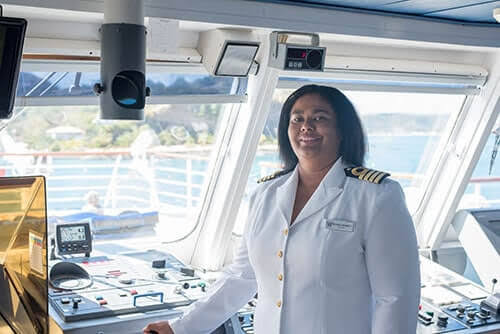
Presently, women make up 18 to 20 percent of the cruise ship workforce, with the first woman cruise ship captain not being appointed until 2007. Breaking the glass ceiling in this industry is Belinda Bennett, who is the World’s First Black woman cruise ship captain.
According to Forbes, Bennett has worked for the cruise line Windstar Cruises for 14 years. She came to the cruise ship line in 2005 and worked her way up from second officer, to chief officer to now captain, which is a position she was appointed to in 2016. Currently, she is captain of the MSY Wind Star and is in charge of sailing the ship through the Caribbean in the winter and Europe in the summer.
Growing up on a small island called St. Helena, which is between South America and South Africa, Bennett says she’s always had a love for the ocean. She started her career in the cruise ship industry at just 17 years old, working on the island’s local ship called RMS St. Helena. From there, she went on to train as a cadet and admits that her journey to moving up the ranks has been met with a lot of push back and hard work as a result of her gender and race.
“Unfortunately, I had a rough start,” she says. “When I was training as a cadet, I sailed with the chief officers who made me work harder than the other guys. During your cadetship you’re starting out as a sailor, so you do every job that they do. I had a chief officer, unfortunately, who made me work later than the sailors, so they would knock off for the day, and I would be left outside continuing to work until it got dark.”
After working on a private yacht of Monaco for two years, Bennett went back to school to get her masters and then tried to work her way into the leadership ranks of the yachting industry. But, she was again met with barriers when she says an agent in Antibes sat her down and told her that finding a job in yachting would be hard because she is more educated than most of the captains, she’s a woman and she’s Black.
Using the criticism to find motivation for a different route, Bennett left the yacht industry and joined the cruise ship industry in 2005 when she landed a job with Windstar Cruises.
Most recently, Bennett’s work in the industry has led her to be awarded with the prestigious Merchant Navy Medal award for Meritorious Service in the U.K. While she says most of the career goals that she initially set for herself have been accomplished, she admits that getting to where she is today has not been an easy feat.
“Being a woman, you have to work extra hard to prove yourself – even more than a man,” she explains. “Some men might not like that, but that’s the way it is. I’m driven. I wanted to be captain, and so, I am.”
The Kenyan police command has arrested a certain Rashid Kassim, a member of the Kenyan Parliament representing Wajir East for allegedly assaulting Wajir County Woman Representative, Fatuma Gedi.
According to reports, Fatuma Gedi, Wajir Woman Representative is said to have been beaten up on Thursday morning June by Rashid Amin in the parliament building. Gedi reportedly got into a heated discussion which led to the assault from the MP.
Reports have it that the MP demanded to know why Gedi, also a member of the budget committee, did not allocate any money to his Wajir East constituency.
Speaking on the incident, Gedi said;
“He called me stupid and nonsense and then he beat me. I was shocked, I could not believe it. He came again and hit me. I told him that Wajir County was only allocated Ksh100 million and we had to allocate money to only areas of priority to the region like water and roads but he told me that was nonsense,” she highlighted.
Gedi who was with the Home Bay Woman Representative when the assault occurred, had her story collaborated by the Home Bay Woman Representative
“They started to converse in Somali so I just stood by to wait for Gedi. A few minutes into the conversation I just saw him hitting Gedi on the cheek, she was crying and bleeding. I didn’t know what could lead to that. I was surprised that a colleague can assault a female member,” Wanga narrated.
Gedi was then taken to the Karen Hospital for treatment.
While celebrating her 28th birthday, actress Steph Isuma recounts how she was raped in the most humiliating way at 14, attempted suicide a few times, survived a house fire in 2017 and was kidnap in 2018.
So sometime Last month I opened up about my struggle with depression and managing it for years! Struggling with ptsd from some of the worst experiences of my life! From getting raped in the most humiliating way at Age 14 To attempting suicide a few times To Losing my best friend to Domestic violence. To Surviving A house Fire in 2017. A Kidnap in 2018 wheeeew! .
Living through all of the trauma, the nightmares,the panic attacks has been a struggle!
You crave for peace but even sleep doesn’t afford that. It wrecks your dreams and turns your days into a living nightmare. It messes your head up, destroys your personality, your relationship with your family and friends, your work, your social life, it affects them all.
I decided to share some part of my story just to motivate some people here because I want people to know that they’re not alone
Truth is some of The people who appear strongest.. some of the people u look up to who you envy are fighting the toughest battles too. I can come out wearing the brightest smile but deep down be really sad. , But in all…. I’ve come to understand that living is an act of bravery So , Today….I Celebrate me for never giving up! For holding me up regardless. Now I know better….I love my life and how it is turning out. I am grateful for it. If I could shine a spotlight on it for everyone who’s ever wanted to die, I would, because it’s beautiful and amazing and I would do anything in the world to protect it. And I want anyone who might be suicidal to know how much better life can be. Yes Emotional pain is real, and no matter how much it feels like it can’t end, it can. It can get better. It does get better. Life gets better. And you get better with it.
ThankGod we don’t look like what we’ve been through!
Late last week, Sudanese beauty influencer Shahd Khidir (@hadyouatsalaam) took to her Instagram feed to talk about the massacre currently plaguing her home country. Shahd, who moved from Omdurman, Sudan, to the United States with her family when she was younger to flee civil political unrest and create a better life, wrote in her Instagram post: “It’s really hard being an influencer and sharing information that is ‘off brand’ and not worthy of the ‘feed’ but I cannot hold this in anymore. I am at my office crying because I have so many emotions in me and I feel horrible. There’s a massacre happening in my country Sudan’s and a media blackout and internet censorship for four consecutive days.”
Now based in New York, the 26-year-old, who still has family in Sudan, also pointed out the lack of media coverage the conflict has received saying, “There is no objective media sharing what’s going on except for @aljazeeraenglish which had their offices shot down.” According to The New York Times, in April the country’s former president Omar al-Bashir, known for being a dictator during his nearly 30 years in office, was “toppled by his [military] generals” following months of peaceful protests that called for a democratic nation. Since then, the African country (the continent’s third largest) has experienced at least 100 killings, with bodies ending up in Nile River (as of June 4), over 70 reported rape case, robberies, and more, all at the hands of the military forces, with Internet and cellular networks being shut down, as well.
After sharing about the massacre, Shahd got personal in her post, explaining, “My friend @mattar77 was MURDERED by the Rapid Support Forces. My best friend was in hiding on June 2 and that’s the last time I spoke to him. He was missing for 4 days and when I got in touch with him he said: ‘I was caught, beaten and abused and humiliated and arrested and had my phone confiscated from me. I am injured currently.’ And all I could do this post this.”
In an interview with Teen Vogue, Shahd says she felt an “impulse” to speak up about the massacre, expressing,
“I couldn’t handle not being in touch with my friends and family members especially those who are out protesting. After I lost contact with my friend it drove me insane and then when I did hear back it was bad news.” Shahd was devastated at work and didn’t have any friends or family around to support her. “I couldn’t keep it all in my head or wait until the end of the day to share.”
In the original Instagram post, Shahd included a note to the brands she is working with, saying, “I am sorry to all companies I am running campaigns with but my editorial calendar is currently on pause. I am willing to refund all and everything right away. Please, just send me an email.”
Shahd tells Teen Vogue that many of the companies have not responded to her, while others have been “so understanding and cooperative,” and she appreciates their support immensely.
Beyond this, Shahd also made a point to share a message with her Instagram community, offering, “To my followers/supporters who this is too much for I am also sorry but my regularly scheduled content/reviews is also on pause. If this offends you, I am sorry. But I need to speak out and share this in a time like this.”
Shahd later explained that it was hard and “scary” for her to share the post because it made her feel “vulnerable and weak”. “As a micro-influencer in the beauty community this photo of me without makeup and with blemishes and zits and tears down my face, it was really crazy,” she revealed. “I felt like being political, which is ironic because I am a political scientist by degree, would be the death of my career.” Her hesitation to be honest online shows just how much pressure there is for influencers to keep up appearances so their followers and brand partners are happy.
Ultimately, Shahd did not expect her post to go viral (it currently has more than 400,000 likes). In fact ,she says, “I expected people to unfollow me and for my influencing career to end right there.” The influencer thought that opening up about the situation would risk her career but that she felt she needed to say something. “It’s important for anyone that has a voice to speak up…If we don’t speak up about terrible injustices, who will?”
At the end of the original posting, Shahd went one step further to tell her followers, “If you want to support me please share this information as widely as possible and don’t be silent. Be an ally because we need your help. And tune into my stories for more information. THE INTERNATIONAL COMMUNITY HAS BEEN SILENT.”
So far, her 62,000 followers have responded positively. “They have stood by me and really touched my heart. I made an active effort to respond back to every single comment, and direct message but I got blocked from responding,” she shares over email. Accordingly, Shahd wishes she could hug every single person who has shared words of support.
When asked what more people can do to support those impacted by the massacre, Shahd says, “I encourage people to keep sharing information about the Sudan Revolution until there’s a civilian led democratic government. It’s important to spread awareness. It’s important to tell everyone what’s going on. Considering the fact that the Internet is completely blacked out, the Sudanese people have no connection with the outside world. So we have to connect them and spread information about their struggles. Also, please donate to funeral funds, and to medical supplies.” Shahd has continued to share about the conflict on her Instagram stories.
Shahd is not the only one speaking up about the massacre on social media. Yesterday, Rihanna also posted about the conflict on her Instagram stories.
It goes without saying that a woman should never have to wear something she’s not comfortable with — including high heels. A movement has recently begun in Japan to address just that: the ability for women to choose what footwear they wear at the office.
Earlier this year, actor and freelance writer Yumi Ishikawa started the #KuToo movement to protest the near-obligatory requirement that female employees wear heels to work and while job hunting. The strict dress code that makes it essentially mandatory for women to wear high heels has been compared to modern foot binding by #KuToo supporters. “Today we submitted a petition calling for the introduction of laws banning employers from forcing women to wear heels as sexual discrimination or harassment,” Ishikawa told reporters.
#KuToo is a play on #MeToo and the Japanese word for shoes, kutsu, and pain, kutsuu. The online petition has close to 30,000 signees and is rapidly growing, fueled by international attention stemming from press around the world recently starting to cover the movement.
But last week, Japan’s health, labor, and welfare minister responded to the petition by defending workplaces that require women to wear high heels, saying, “[Wearing high heels] is socially accepted as something that falls within the realm of being occupationally necessary and appropriate.” Gross. For one, high heels aren’t “necessary,” and the choice to wear them shouldn’t be made by a politician. Just as men shouldn’t get to make decisions about women’s bodies, men shouldn’t dictate what a woman should or should not wear. It should be up to each person to decide what’s right for them.
At least not all men agree with the health minister. Yesterday, a group of men hit the streets of Tokyo in high heels to protest the arcane laws and support the #KuToo movement. “I’d be quite annoyed if someone asked me to wear these,” shoemaker Jun Ito told the Japan Times. He quickly posed for a photo wearing heels before immediately removing the shoes, telling the Japan Times that: “Wearing heels makes me feel unstable and my feet got sweaty.” The core of this protest highlights the discriminatory double standard that women face in the workplace.
“For better or worse, the high heel is now womankind’s most public footwear. It is a shoe for events, display performance, authority, and urbanity,” writes Summer Brennan in her book Object Lessons: High Heel. “In some settings and on some occasions, usually the most formal, it is even required. High heels are something like neckties for women, in that it can be harder to look both formal and femme without them. Women have been compelled by their employers to wear high-heeled shoes in order to attend work and work-related functions across the career spectrum,” she continues.
The author also weighed in on the #KuToo movement in a Guardian op-edpublished last Thursday. “…No item of men’s clothing causes such hampered movement or physical pain. Indeed, high heels fit into a long history of women’s physical repression and mandated suffering,” she writes. Workplaces that demand high heels are actively causing women to suffer, and that’s not okay. The fact that there has to be a petition in the first place shows how little women’s pain is taken seriously.
Sometimes models, whose professional duties occasionally include the wearing of high heels, fall while walking down the runway. And if models, who often receive catwalk training, fall, what about the rest of us? High heels can be a legitimate safety risk, not to mention, uncomfortable and painful. Plus, there’s nothing inherently more professional about wearing high heels than a flat shoe.
Some women like wearing high heels, and that’s okay! But not giving women a choice of what to wear? That’s beyond reproachable.
In recent years, television and film animation have made headlines for progress in inclusive storylines, including historic same-sex relationships and plus-size superheroes. Unfortunately, though, a new study from the USC Annenberg Inclusion Initiative discovered that the same spirit of representation doesn’t appear to have spread to those working behind the scenes.
According to the new study, over the past 12 years, only 3% of animated movies were directed by women, Varietyreported. That number is even smaller among women of color — Jennifer Yuh Nelson, who directed Kung Fun Panda 2, was the only woman of color to direct an animated film.
When it came to women directors working on television series, the number improved, but only slightly, Varietyreported. Thirteen percent of animated programs that aired in 2018 were directed by a woman, and just three of those directors were women of color.
In a statement, Marge Dean, the president of Women in Animation, the organization that collaborated with USC on the study, commented on the findings, saying, “This study validates what we have known all along, that women are a hugely untapped creative resource in the animation industry. Now that we have a greater understanding of how the numbers fall into place and what solutions may help rectify this deficiency, we can take bigger strides toward our goal of 50-50 by 2025.”
Even with a continued focus on more diverse characters, the study noted that Hollywood still has work to do. Out of 120 recent films, only 17% had a female character as the star or costar. Television animation actually did better in this regard, with 39% of 100 animated TV series featuring a female lead or co-lead.
In response to these findings, the USC Annenberg Inclusion Initiative called for “industry-wide efforts” for change, and suggested creating workplaces where women feel welcome, adjusting the use of pronouns to become inclusive of all genders, and encouraging discussions between employees about cultural differences.
This study isn’t the first time that others have called for change in the world of animation. The Black Girl Animators Collective (BGAC) previously spoke with Teen Vogue about their work, and shared their hope for eventually seeing animation that’s representative of everyone.
“In animation, you don’t really see any women at all,” Taylor K. Shaw, BGAC founder said. “You see a few white women, very few women of color, and hardly any black women at all. What we’re doing [here] is transforming the media landscape and making sure that women of color are included in this space.”
‘Even if it’s just sex he wants from me, he should say it from the onset.’ Can women really deal with this level of honesty without feeling some type of way?
Either expressly stated or just simply presumed, women set a demand for men who would be forthright from the very beginning. You hear them say stuff like ‘even if it’s just sex he wants from me, I’d appreciate it if he says it from the onset.’
But the question is this: are women really ready for this level of honesty? Will you truly be cool with a guy meeting you from the very beginning and showing nothing but a desire in your body and the pleasures to be derived from that carnal attraction?
Sarah, 26, says she prefers this truth as it helps her decide if she really wants to be with the guy like that or not.
“I think I’ll appreciate the honesty,” she says. “I think I’ll prefer to know what I’m getting into instead of being led on with promises of romantic emotions when there’s actually nothing but a desire to sleep with me.”
Asking three other young women between 25-28 produced the same result. These young, upward-mobile professional women all believe that knowing what’s happening from the onset is actually the best as it affords them the opportunity to say yes to whatever the guy is proposing instead of being left in the dark as to his true intentions.
You’ll still find women who can’t handle that truth [Credit – Shutterstock]
But this perspective can’t be taken as conclusive evidence of women being cool with 100% openness from men, especially when it comes to an expression of intent for sex without commitment.
Despite the constant call by women for honest men who will say what they want from the very onset, you’ll still find women who can’t handle that truth, especially the sexual type. There are women who feel disrespected when a guy expresses a clear sexual interest from the get-go.
That a guy would look at them and be filled with lust instead of a romantic interest is something that some women see as an insult on their womanhood.
“This happens because women around here are taught that sex is something they give, not necessarily something they enjoy. The way sex is spoken of in these parts will make you believe that it is something a woman gives in return for a man’s affection, care and financial support,” says Zoey, 29.
So to get sex from many of such women, all you need do is profess an emotional connection, fake a romantic interest and show affection even if you do not feel any of such things. Your chances of getting that sex jumps by some 40% if not more.
That a guy would look at them and be filled with lust instead of a romantic interest is something that some women see as an insult on their womanhood. [Source: Essence]
“Women think guys don’t know this code but of course we do. So if you are really sexually attracted to a girl and she’s forming I don’t have random sex and all, just work up some romantic act and you’ll be there in her panties in no time. It always works,” says a young Lagos bachelor who asked to be anonymous for this piece.
This, in a way, explains why many women have experienced guys entering ghost mode immediately after dipping into the cookie jar. He says all you need to hear, makes you comfortable enough to roll in the hay with him, and boom! Off he goes without a trace when he has his fill of your body. Of course, this is a f—boy move.
Until more women realise that it is not inherently offensive for men to express their desire for just sex, we may continue to have this problem. If he [sensibly, like a normal human being] says he wants just sex and nothing else with you, just say you are not interested and keep it moving. No need to feel disrespected. It’s not [always] that deep.
Ladies, if you don’t want to have sex with a guy don’t tell him it’s because you’re not in a relationship with him. If you do this, you give him a cheat code and he’ll explore it to your detriment. Tell him that your refusal is because you are not interested at all, regardless of the relationship status.
Also men need to learn to leave women be, who have expressed disinterest in casual sex. There are more than enough women who would be willing to do your bidding; women to whom that honesty will be such a turn on that they’d have no qualms giving you what you want.
In any case, what’s most important in all of this is the continuous need for men and women to relate with more openness and honesty. If there’s more of this and less of dubiousness and emotional fraud, relationships, all variants of it, will be less stressful than we have it now.