Author

Women of Rubies

Browsing

Beyonce had Nigerian superstars, Wizkid, Burna Boy, Mr Eazi, Tiwa Savage and Yemi Alade and other African artistes on the album “The Gift”. However, most people are not aware that Niniola also worked on the album alongside other Nigerians.

The singer wrote and performed the track “Find Your Way Back” which contains elements of her hit single “Maradona”.

Niniola took to her Instagram page to reveal that working on the album was a dream come true and thanked fans, her team, and family for their support.

In her words, MARADONA!!!” The Song that keeps giving! When the advance royalty cheque comes in from featuring on @Beyonce’s Album, “THE GIFT”, and you can’t but give thanks to God. ???? Being a contributor to the “Find Your Way Home” Song off Queen B’s Album was a dream come true for me and I cannot wait to share with you, greater news and opportunities that this has opened me up to, internationally. 

As always, a big thank you to all of you for continuing to support the Niniola brand. Special thanks to my Label, @@drumrollrecords, my Management Company @Naijareview my Publishers @kobaltmusic my lawyers @rbmmnigeria and everyone that continues to work behind the scene to ensure I achieve my God-given potential. I love you all.

Credit: tooexclusive.com

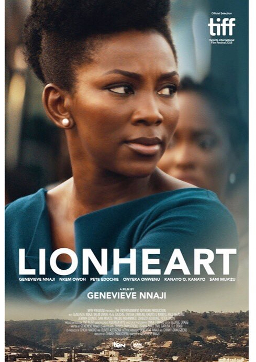
Nigeria’s 2020 Oscar entry ‘LionHeart’ was disqualified on Monday November 4, for having too much English dialogue.

The movie which is Nigeria’s first-ever submission to the Academy Awards, was submitted for the international feature film Oscar category. The Academy’s description of an international feature film “is a feature-length motion picture (defined as over 40 minutes) produced outside the United States of America with a predominantly non-English dialogue track.”

LionHeart which is not excluded from entering other Oscar categories including consideration for best picture, has just under 12 minutes of dialogue that is in the Igbo language native to Southeastern Nigeria, while the remaining 94-minutes is in English. With the disqualification, the number of films in contention for the award has dropped from 93 to 92.

However reacting to the disqualification on Twitter, Genevieve Nnaji wrote;


 “This movie represents the way we speak as Nigerians. This includes English which acts as a bridge between the 500+ languages spoken in our country; thereby making us #OneNigeria.” She added, “It’s no different to how French connects communities in former French colonies. We did not choose who colonized us. As ever, this film and many like it, is proudly Nigerian.”


American filmmaker who directed the Netflix drama miniseries When They See Us, Ava DuVernay also reacted to the disqualification. She tweeted;


 “To @TheAcademy, You disqualified Nigeria’s first-ever submission for Best International Feature because its in English. But English is the official language of Nigeria. Are you barring this country from ever competing for an Oscar in its official language?”


LionHeart movie disqualified from Oscar consideration, Genevieve Nnaji and Ava DuVernay react


Credit:LIB

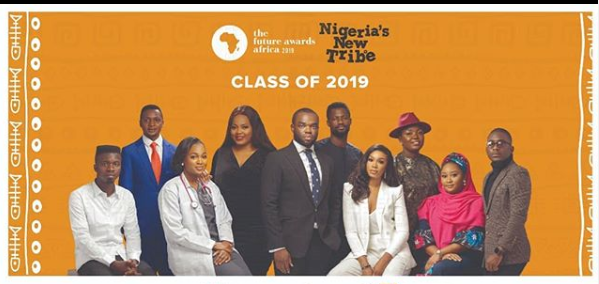
The Future Awards Africa 2019 nominees list was unveiled on Sunday, 3rd of November.

The nominees consist of young Nigerian leaders doing exceptional things in their chosen fields.

Nominees for 2019 include Teni Apata, Sharon Ooja, Rahama Sadau, Ife Durosinmi-Etti, Tosin Olaseinde, Andrea Iyamah, Oyinkan Braithwaite to mention a few.

The main event will hold on November 24.

Check full nominees list below (the females have been highlighted)

THE FUTURE AWARDS AFRICA PRIZE FOR ACTING

Timini Egbuson (32)
Bimbo Ademoye (28)
Bandele ‘Baaj’ Adebule (30)
Sharon Ooja (28)
Fatima Washa Abdullahi (26)
Moshood Fattah (28)

THE FUTURE AWARDS AFRICA PRIZE FOR AGRICULTURE

Emmanuel Maduka (24)
Chiamaka Ndukwu Theresa and Kenneth Okonkwo (25/25)
Uka Eje (29)
Divine-Love Akam (24)
Rotimi Olawale (29)

THE FUTURE AWARDS AFRICA PRIZE FOR ADVOCACY

Hamzat Lawal (32)
Bright Jaja (29)
Uchechi ‘Ucy’ Rochas (27)
Ifedayo Durosinmi-Etti (30)
Funke Adeoye (27)

THE FUTURE AWARDS AFRICA PRIZE FOR ARTS (VISUAL & APPLIED)

Arinze Stanley (26)
Ken Nwadiogbu (25)
Dipo Doherty (28)
Olarinde Olayemi Ayanfeoluwa (22)
Olabanke Subair (28)

THE FUTURE AWARDS AFRICA PRIZE FOR COMMUNITY ACTION

Abdulazeez Kaltumi (27)
Yetunde Fadeyi (27)
Kelechukwu Nwachukwu Lucky (25)
Tony Joy (27)
Akpobi Elvis (31)
Isaac Success (28)
Stephen Teru (29)

THE FUTURE AWARDS AFRICA PRIZE FOR FILM-MAKING

Kayode Kasum (28)
Dare Olaitan (28)
Chinney Love Eze (31)
Rahama Sadau (26)
Uche Odoh (30)

THE FUTURE AWARDS AFRICA PRIZE FOR LITERATURE

Akwaeke Emezi (32)
Ijeoma Umebinyuo (30)
Lanaire Aderemi (20)
Oyinkan Braithwaite (31)
Otosirieze Obi-Young (25)

THE FUTURE AWARDS AFRICA PRIZE FOR MEDIA

Peace Itimi (24)
Paul Alasiri (27)
Edirin Edewor (28)
Samuel Ajiboye (28)
Tosin Olaseinde (31)

THE FUTURE AWARDS AFRICA PRIZE FOR MUSIC

Teniola Apata (26)
Damini Ebunoluwa ‘Burna Boy’ Ogulu (28)
Folarin ‘Falz’ Falana (29)
John ‘Johnny Drille’ Ighodalo (29)
Sadiq ‘Wurld’ Onifade (32)

THE FUTURE AWARDS AFRICA PRIZE FOR PROFESSIONAL SERVICE

Bukky Akomolafe (31)
Adesola Ade-Unuigbe (28)
Yinka Iyinolakan (30)
Onoriode Reginald Aziza (27)
Peter Tega Oghenejobo (32)

THE FUTURE AWARDS AFRICA PRIZE FOR OAP (VISUAL & AUDIO)

Osato ‘EDK’ Edokpayi (27)
Huisaina ‘Dashen’ Usman (31)
Mayowa Ogundele – Adegoke (30)
Simi ‘Drey’Adejumo (21)
Sandra Ezekwesili (30)

THE FUTURE AWARDS AFRICA PRIZE FOR PUBLIC SERVICE

Adetola Onayemi (28)
Ibijoke Faborede (31)
Moses Onalapo (29)
Dr Achama Eluwa (31)
Fehintola Ajogbasile and Judith Oguzie (27/32)

THE FUTURE AWARDS AFRICA PRIZE FOR SPORTS

Al-farouq Aminu (29)
Georgia Oboh (18)
Eseoghene Oguma (21)
Samuel Chukwueze (23)
Israel Adesanya (30)

THE FUTURE AWARDS AFRICA PRIZE FOR EDUCATION

Olaseni Cole (32)
Omozino Eguh (28)
Eyitayo Ogunmola (31)
Seyi Oluyole (27)
Farida Kabir (27)

THE FUTURE AWARDS AFRICA PRIZE FOR TECHNOLOGY

Chinedu Azodoh/ Adetayo Bamiro (29/32)
Zang Luka Bot (28)
Muhammad Salisu Abdullahi (28)
Timothy Adeleye (25)
Funfere Koroye (29)

THE FUTURE AWARDS AFRICA PRIZE FOR FASHION

Andrea Iyamah (26)
Derin Fabikun (29)
Tuboboreni Sandrah (28)
Osemwengie Victor Odion (31)
Kenneth Izedonmwen (29)

THE FUTURE AWARDS AFRICA PRIZE FOR BUSINESS

Adekunle Hassan (31)
Obi Ozor (30)
Chika Madubuko (30)
Olawale Ayilara (31)
Tiwalola Olanubi (31)

THE FUTURE AWARDS AFRICA PRIZE FOR JOURNALISM

Aisha Salaudeen (25)
Joey Akan (28)
Ayodeji Rotinwa (29)
Shola Lawal (25)
Kiki Mordi (28)

THE FUTURE AWARDS AFRICA PRIZE FOR PHOTOGRAPHY

Adah Clarence (30)
Yemi Ajala (31)
Praise Nnemeka (21)
Stephen Tayo (25)
Tolani Alli (27)

THE FUTURE AWARDS AFRICA PRIZE FOR YOUNG PERSON OF THE YEAR – Full list to be unveiled in a press release.


Credit: fabwoman.ng

University of Port Harcourt, UNIPORT, has launched its policy against sexual harassment where amorous hugging between lecturers and female students is now an offence with those found guilty punished severely.

The Vice Chancellor of the University, Professor Ndowa E. S. Lale at the launch of the policy ceremony, which held at Ebitime Banigo hall said the University decided to raise the bar on sexual harassment to ensure that the young men and women put in the charge of lecturers are protected, especially from antics of sexual predators who use their privileged positions to blackmail or railroad their unwilling students or subordinate staff into granting them sexual favours.

He said the management of the University in the policy document defined the rules of engagement in terms of the acceptable of engagement between lecturers, administrators and students, including visitors to the university. Prof Ndowa vowed that sanctions would be meted to earring members of staff but added that there was a robust in built checks and balances to protect those who are innocently accused.

He also warned that any person so accused would be presumed guilty until he or she could prove otherwise under the established rules of fair hearing. Prof Ndowa also warned that henceforth, lectures and administrators who did not remember to tell their tailors to sew zippers in front of their trousers should be ready to bear the consequences of their amorous liaison with female students.

He warned that the same applied to students who harassed lecturers to award them undeserved grades, saying they should equally be ready to face the music if and when caught in the act of self advertisement to their lecturers.


Credit: LIB

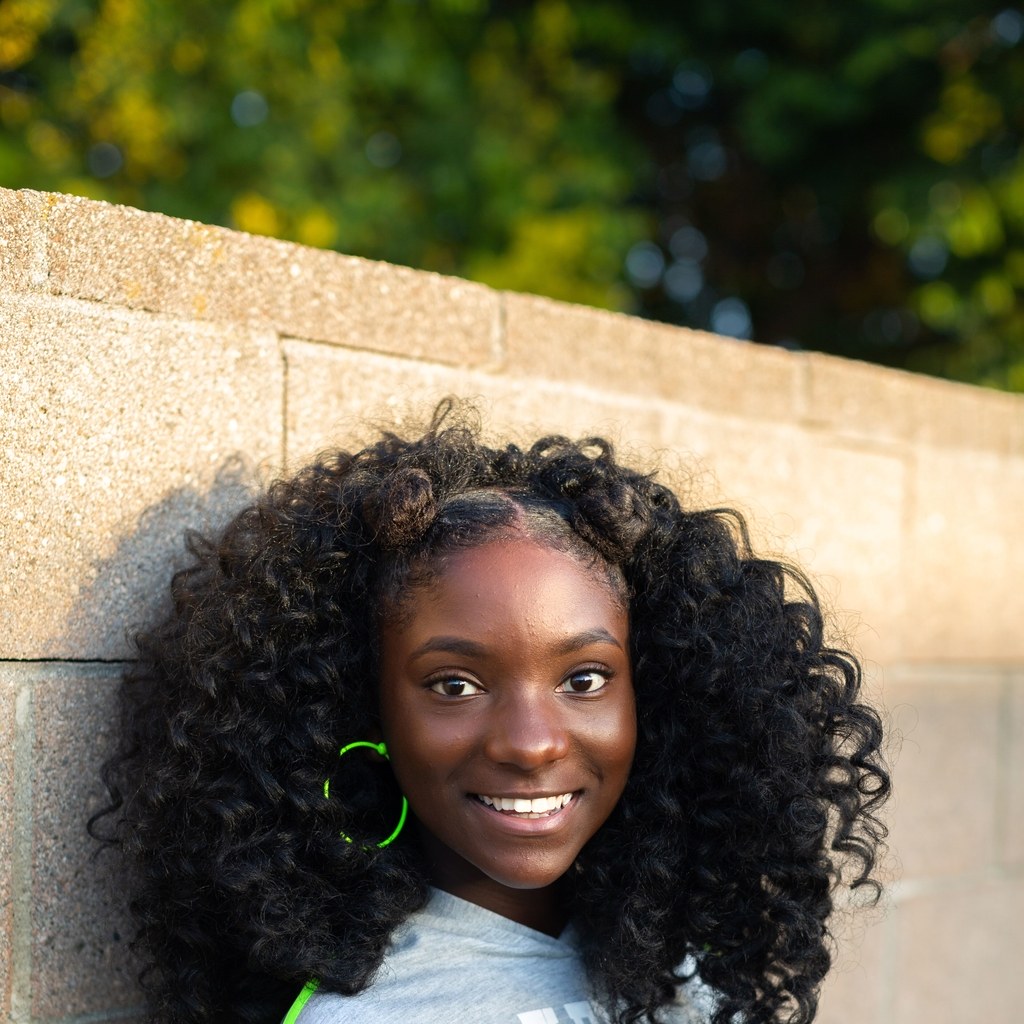
When Kheris Rogers was bullied because of her skin color in the first grade, she found strength in affirmations. Her mother helped build her confidence, and Kheris reminded herself daily that the only person’s opinion that mattered was her own.

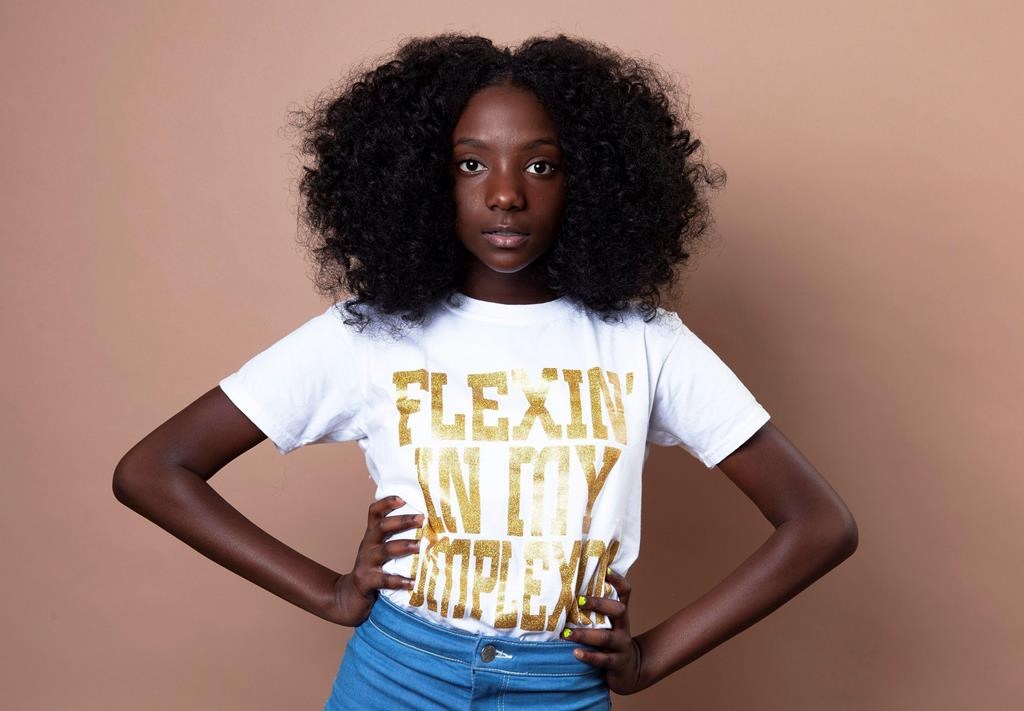
With that new outlook, the saying that Kheris’ grandmother had been repeating to her and her sister took on a whole new meaning. That’s when Kheris, now 13, decided to start a clothing line dedicated to fighting against colorism and bullying.

“I was like, ‘wow, why am I dark, why don’t I become lighter?’ I wanted to stay in the bathtub one time so I could get lighter,” Kheris said. “When I told my mom about it, she started making me feel more comfortable in myself, saying affirmations in the mirror every day that I’m beautiful [and] it doesn’t matter what other people think of you — only what you think of yourself. You know that you’re smart, creative, special at the end of the day. And that’s basically what my message is behind Flexin’ in My Complexion.”

A

Kheris said she got the idea for the clothing line because her grandmother constantly told her and her sister that they were “flexing in their complexions.” So, Kheris and her sister Taylor acquired a screen printer and some t-shirts, and started stamping the phrase on clothing. The first batch of shirts, Kheris said, sold out in just 10 minutes. So began Kheris’ journey to being an anti-bullying and anti-colorism advocate.

The line has been worn by celebrities including Alicia Keys to Lupita Nyong’o, and has won Kheris honors like being named one of Teen Vogue’s21 Under 21 class of 2018, and being chosen to participate in a Lebron James campaign for Nike.

Now, Kheris has taken her message beyond the clothing line, going to speaking engagements and sharing her story with her peers on social media. This, she said, helps show other young people experiencing bullying, racism, or colorism that they aren’t alone. One way she helps her peers sturdy themselves against the words of their bullies is the same way she overcame her own detractors: with affirmations.

With so many young people becoming advocates not just for themselves but for their peers, Kheris said she has hope that the future will be ripe with confident young people like her.

“My vision for the future is everyone being themselves and loving themselves on the inside and out,” she said. “I just love my complexion, I love who I am — and everyone should.”


Culled from Teen Vogue

Entrepreneurs are known to possess specific skills that fuel their desires to start, manage, and succeed in a business venture. These traits, however, are also being seen as contributing negatively to their mental health at a given time in their lifetime.

Recent investigations indicate that entrepreneurs are more likely to suffer mental illness. According to Michael Freeman, a psychiatrist, psychologist, and former CEO, entrepreneurs are 50 percent more probable to report having a mental health breakdown, with some particular conditions being more prevalent among founders.

In a recent study, Dr. Freeman observed that up to 72 percent of entrepreneurs surveyed self-reported mental health issues.

THE FINDINGS FROM THE RESEARCH INDICATE THAT ENTREPRENEURS ARE:
  • Twice as likely to suffer from depression
  • Six times more likely to suffer from Attention Deficit Hyperactivity Disorder (ADHD)
  • Three times more likely to suffer from substance abuse
  • 10 times more likely to suffer from bipolar disorder
  • Twice as likely to have a psychiatric hospitalization
  • Twice as likely to have suicidal thoughts

Let’s talk about Mental Health

According to the World Health Organization (WHO), mental health is not merely the absence of mental health challenges.

It is the “state of well-being in which every individual realizes his or her own potential, can cope with the normal stresses of life, can work productively and fruitfully, and is able to make a contribution to her or his community”.

Also known as mental well-being (MWB), mental health, which is traditionally studied in medicine, psychology, and public health, is increasingly gaining attention in other disciplines as well.

Scientists, psychologists, economists, management experts among many other experts are taking an interest in the mental health issues of entrepreneurs.

The experts have concluded that mental disorders are not only common but may, in fact, fuel the entrepreneurial spirit.

According to Michael Freeman – executive coach to entrepreneurs and clinical professor of psychiatry at the University of California-San Francisco School of Medicine…

“Mental health conditions are accompanied by positive traits that enable entrepreneurs to excel.”

Take ADHD, a condition that research suggests is more prominent among entrepreneurial types.

“If you have ADHD, two of the positive traits are a need for speed and an interest in exploration and recognizing opportunities,” he says. “[you have] an ability to act without getting stuck with analysis paralysis.”

Entrepreneurs are recognized as contributing to economic growth, innovation, and job creation across the world. They do so by identifying and addressing the needs in a particular market.

The late Steve Jobs referring to entrepreneurs said, “People who are crazy enough to think they can change the world are the ones who do.”   

In the midst of stiff competition and many challenges, entrepreneurs have to employ strict and strategic measures to remain in business. By so doing, these business-oriented individuals often neglect their wellbeing in a bid to grow their ventures.

Although in the past, entrepreneurs’ mental health has not received much attention, recently, leaders across the world have begun discussing mental health issues to create awareness on the matter.

Earlier this year at the World Economic Forum meeting in Davos. World leaders including the UK’s Prince William, CEO of HSBC, among others, shed light on mental health problems in a therapeutic and non-stigmatic way.

The mental health crisis in start-ups

With such alarming and scary statistics, the question is: why are entrepreneurs more likely to experience mental health issues?

Speaking from his Nairobi office, director of Consulting and Training at People Centric Management Company, Ken Munyua shared with us insights on the following seven areas that make entrepreneurs more susceptible to mental problems.

1. Fear of failure/uncertainty

“Fear of failure has crippled many people even before trying,” observes Munyua.

Uncertainty and anxiety contribute negatively to our mental well-being. With so much competition, uncertainty is ever a looming phenomenon among entrepreneurs.

Remaining positive and pressing on in the time of our powerlessness should be the ultimate goal for any businessman/woman.

“Get out there and try; if it does not work, use the experience to improve on your next venture, Munyua advises.”

2. Social isolation

Incognizant of how they contribute to mental problems, those close to the entrepreneurs can create a social gap through alienation.

While entrepreneurs are excited about the new venture, often, the society including friends and family fail to offer the needed support.

Choosing to the non-traditional path can bring about social isolation as one focuses all energy and time into succeeding in the business.

3. Stress

Munyua notes that in the formative stage, in particular, entrepreneurs require more time to start and ensure the business survives.

During this time, many people in business are pressed hard in managing both business and social life.

Over time, the stress leads to sleepless nights, overworking, and lack of appetite or skipping meals due to work and the problems keep spilling over, which can lead to depression if the stress is not addressed well on time.

4. Impression management

One thing that entrepreneurs do well is acting like everything is working even at the edge of failure.

By creating this facade, entrepreneurs do not seek help even when they need it as they do not want to appear weak.

This disconnect between personal experiences, and what they share with the public creates insecurity, and a sense of confusion, further leading to stress, and consequently depression.

5. Inadequate resources to address mental health

Mental health resources in entrepreneurship, as is the case in other fields, receive little or no support.

As organizations and firms come together to fund and support budding as well as existing entrepreneurs, factors such as mental wellbeing of the businessmen and women should be factored into the budget.

6. Too many expectations

Munyua observes that Carl Rodgers, a renowned psychologist, warns that human beings are disturbed when expectations are not met. “Always hope for the best but prepare for the worst,” Munyua adds.

Our mantra should be “expect nothing, and be prepared for anything,” as the saying by the Samurai of ancient Japan goes. We should be open-minded about the eventualities that might come; both positive and negative.

Munyua calls on entrepreneurs to have a go-to person (s) who is ready to support and invest in your well-being.

Moreover, establish a routine that allows you time off business or any other work-related duties. Use this time to rest and rejuvenate physically, spiritually, and mentally.

 

Article written by Maureen Murori


Culled from sheleadsafrica.org

Photo credit: google.com

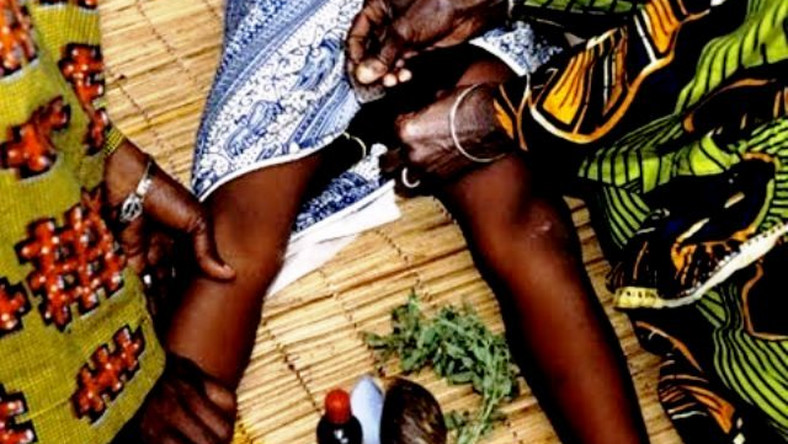
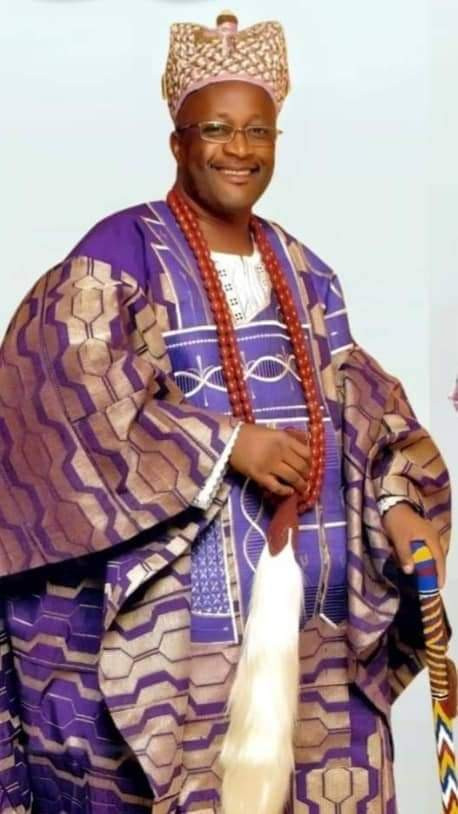
The people of Ilawe-Ekiti, Ekiti South West Local Government Area of Ekiti State, on Friday officially renounced the practice of Female Genital Mutilation (FGM).

Oba Adebanji Alabi, the Alawe of Ilawe-Ekiti, who is also the Chairman, Ekiti State Council of Traditional Rulers, described the act as unlawful and promised that the community would no longer be involved in the act.

Alabi spoke in Ilawe-Ekiti, during an event, organised by the state chapter of the National Orientation Agency (NOA), in conjunction with United Nations Children’s Education Fund (UNICEF) on FGM elimination.

“I want to declare today, on behalf of my people, that we will no longer be involved in the act of Female Genital Mutilation, because it is highly despicable and unlawful. Oba Alabi said.

“Henceforth, it is now a taboo for anyone to do it to our kids. I am surprised that at this age people are still into this act that has sent many of our children to early grave; and even those that survived it, are left impotent.’’

The state Director of NOA, Mr Dayo Famosaya, regretted that the FGM was on the increase in the state, especially in Ilawe community, describing it as an outdated act.

He assured that the agency would continue to collaborate with all relevant stakeholders in a bid to put an end to the menace in the state.

The UNICEF South West Consultant on FGM elimination, Mrs Aderonke Olutayo, disclosed that Ekiti State ranked third in FGM prevalence rate in the country.

Olutayo reiterated that the act was a violation of the fundamental rights of girls and women, and was compromising their health and psycho-social well-being.

She advised the government to demonstrate more political will in ending the act, by making budgetary provisions that would enhance advocacy.


Credit: LIB

Nicki Minaj recently got married to her husband Kenneth Petty in a private ceremony and the news now is that her wedding ring cost a whopping $1.1 M.

According to TMZ, Nicki’s husband made sure he got one of the best rings for his bride on their special day. The jeweler who made the ring said Kenneth handled the design, delivery and paid for it on his own.

The guys behind the beautiful ring everyone is talking about, Rafaello and Co revealed to TMZ that Kenneth commissioned them to make their wedding rings, working together on a design for several months.

Nicki Minaj’s custom bling features a 17-carat center with VVS2-clarity diamonds. According to them, there was no space for inscription on Nicki’s ring but Kenneth had the chance to do that on his ring, ‘Ken & Barbie.’

It would be recalled that a few days ago, Nicki Minaj announced that she was married after sharing a cryptic video on her Instagram page.


Credit: pulse.ng

She didn’t consider quitting — she even smiled as her finger was bandaged, before returning to the brutal military-style training.

“I’m happy, that’s why I am not crying. I’m trying to be an Akashinga girl,” the 22-year-old said.

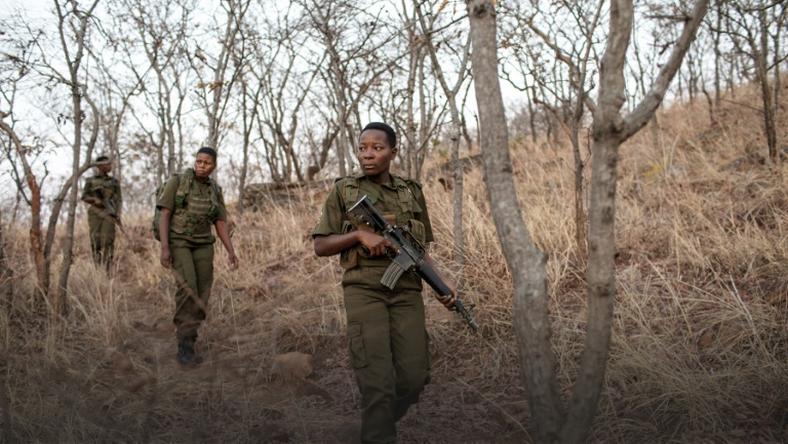
The rangers, armed and dressed in khaki combat gear, track and arrest poachers in five reserves, all former trophy hunting areas, encompassing 4,000 square kilometres (1,545 square miles) near the Zambian border in northern Zimbabwe.

If recruited, Mutero would become one of an elite few — out of 500 applicants, only 80 will make it into the ranks of the Akashinga, or “brave ones” in local dialect.

Being brave will certainly count in her job of helping to protect the wildlife against poachers who are often heavily armed.

But all the women are also “survivors”, selected for the ranger recruitment programme for having overcome adversity, often abuse, in their past.

Mutero married young and moved to South Africa with her husband and daughter, where she was physically abused by her mother-in-law.

She returned to rural Zimbabwe to raise her daughter alone and broke as her husband refused to send money.

“But now I am here to empower myself to take care of my child,” she said, proudly talking of the importance of the country’s wildlife and its conservation.

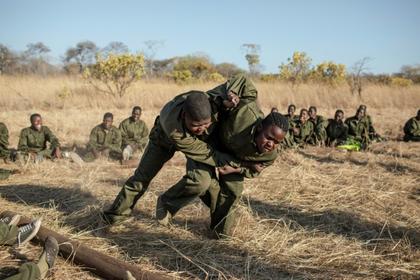
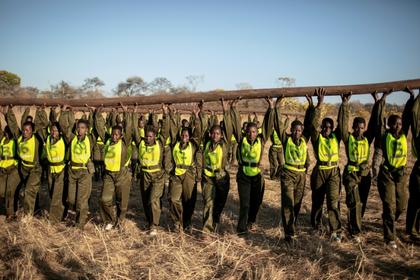
Mutero made it into the last 160 potential recruits, who faced a series of gruelling tests of their physical and mental strength in the Phundundu Wildlife Area.

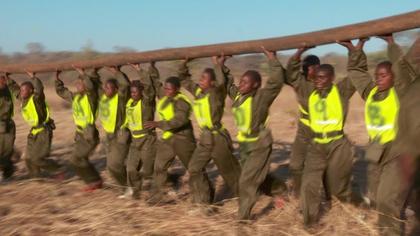
Over several days, the women raced under the beating sun, wrestled each other and a dozen even lifted a giant tree trunk over their heads.

Only the toughest make the cut.

‘The toughest’

Damien Mander, 39, a former military sniper in the Australian army who also worked in the private security sector in Iraq, started the programme in 2017 as part of the non-profit International Anti-Poaching Foundation that he founded.

“We were trying to create an opportunity for the most marginalised women in some of the toughest regions, in one of the poorest countries on the continent,” he said.

“They are all survivors of serious sexual assault, domestic violence, AIDS orphans, single mothers, abandoned wives.”

“We didn’t want great CVs, actually we wanted scrappers. People that knew what it was like to have to fight to survive, and that’s exactly what we got,” he told AFP.

“What we didn’t realise is we were getting the toughest.”

Hardships faced by the women in rural Zimbabwe also steel them for life on the frontline against poaching, says one of the trainers Paul Wilson, also a former soldier.

“These guys are used to walking a long way with a 20-litre bucket of water on their head, spending all day digging or hoeing in the field, carrying large amounts of firewood… these girls know how to work,” he said.

More than ‘biceps and bullets’

Mander said that his time in Iraq had helped him understand that “law enforcement isn’t about biceps and bullets”.

It is more about establishing relationships and longterm ties with communities, he said, adding the women also had the ability “to naturally de-escalate tension”.

All Akashinga rangers come from villages near the area they patrol, so they can work with the locals and have a vested interest.

“We have gone from having anti-poaching units fighting against the community, to having a community fight for what we believe in,” Mander said.

The women rangers plough up to 90 percent of their earnings into their families and local community, compared to 30 to 40 percent for men, he added.

“The biggest thing that we’ve seen is we haven’t had a single incidence of corruption with women,” he said.

‘Increasingly militarised’

It has been working.

Before the Akashinga started patrolling the area, around 8,000 elephants were killed there over 16 years.

Since they arrived two years ago, elephant poaching has dropped 80 percent, according to the International Anti-Poaching Foundation.

The women have made 115 arrests — without them firing a single shot.

But it is dangerous work.

“Conservation is becoming increasingly militarised,” Mander said.

“More and more poachers are coming in here with weapons and they are willing to kill elephants and the people that are protecting them.”

Mander said that he hopes to have “a small army of 1,000 women” protecting 20 reserves by 2025.

Lives transformed

Ranger Juliana Murumbi, a member of the first Akashinga class, said that she had held her own against men during specialised training to become an instructor earlier this year.

“I managed to challenge the men in physical training, in the long run, the push-ups, the sit-ups, the drags,” she said.

“So I think we are just the same because what they can do, I can do.”

Nyaradzo Auxilia, another ranger, said that the programme was “totally transforming the standard of life of all women” involved, including herself.

“My husband used to abuse me. I can just simply say he was an abusive man. He was very violent to me,” the 27-year-old said.

She fled with her child, and is now one of many Akashinga able to support themselves.

The rangers earn between $300 and $1,200 (270 euros and 1,100 euros) a month, depending on their role.

“They can now stand on their own. They can now not depend on someone else — they can move on without being abused or facing that cruelty from the men,” she said.

That’s a future that Mutero can now look forward to — despite the broken finger, she passed the test and next year will start the final six-month training programme to become an Akashinga ranger.


Credit: AFP, pulse.ng

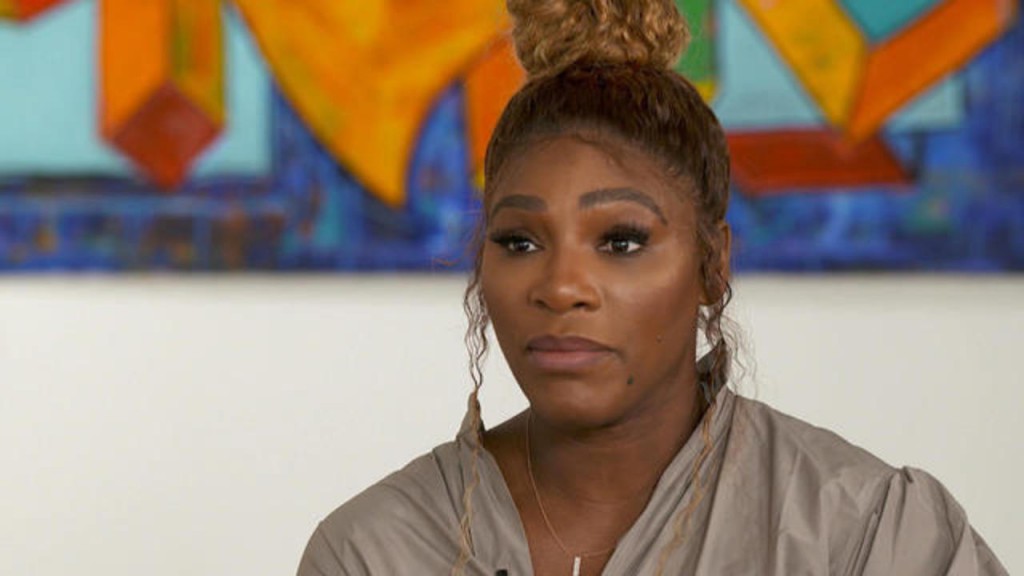
Serena Williams has become the National Ambassador of the Allstate Foundation Purple Purse program. They released a PSA which sheds light on financial abuse.

Serena enlightens women on how to recognise the signs of financial abuse inorder to end the cycle of abuse.

She said,

“I had no idea what financial abuse was. When I read that 99% of domestic violent cases do involve financial abuse, I feel like that was a really, really high number, and it’s shocking,” Williams told CBS News correspondent Jericka Duncan.

The National Network to End Domestic Violence says financial abuse occurs in nearly all domestic violence cases. Serena said she has seen the impact through a friend.

“A really close friend of mine was going through a situation that wasn’t really healthy for her, wasn’t healthy for her friends, or her family– and it was difficult to tell her. And then I realized, look, oh my goodness, she’s– all the signs that I was learning about with financial abuse, she was involved in. It was really intense,” Williams said.

Watch the video below:

https://youtu.be/00fN_IvrJ60


Credit: CBS News