Women of Rubies

Author

Esther Ijewere

Browsing


Says:”I have spent 8 years of my life working to make a difference in the lives of women and youths”

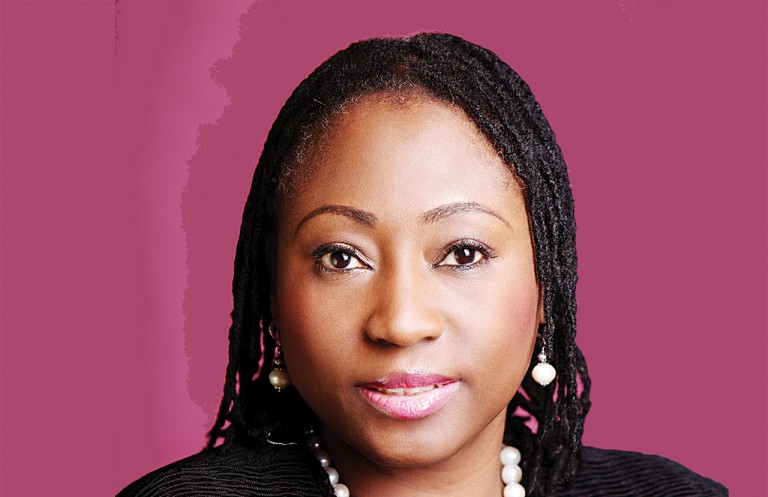
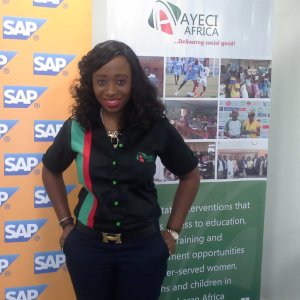
AYECI Africa is a non-profit organization on a mission to improve the prospects and living conditions of the most disadvantaged population in Africa, through a variety of interventions that expands access to education and employment opportunities. The founder, Ifeoma Adibe, didn’t set out to become all these. She loathed the idea of becoming a Polytechnic student because of the discrimination that exists between universities and polytechnics.She channeled her frustration into establishing ASPIRE , a student empowerment initiative. In this chat she talks about being tempted to give up, her eureka moment why she created AYECI and other issues.

Early childhood dream

Growing up as a young girl I recall nursing the ambition to one day becomes a beauty queen. I’ve always been fascinated by the world of beauty pageants, not solely because of the pageantry and glamour but I was drawn and inspired by the way beauty queens used their platform to address social issues and help those in need. Year after Year I remember keeping a journal of the reign several beauty queens and a portfolio of the social projects they were involved in. As a teenager, this experience helped me develop a strong sense of devotion for charitable work and fostered my interest to be part of the process of bringing hope and improving the quality of lives for those in need.

Today, I am a social entrepreneur, an advocate for women and child’s right . I may not be your regular beauty queen but I’m living out the ambition I nursed to help people in need become better.

Discovering my passion for charity

I developed a strong sense of passion for charitable work as far back as when I was 14years old. However, my work in advocacy and development didn’t start till I was about 18years as a freshman in Lagos State Polytechnic. At that point, heaven knows I would have given anything to not be part of that school system, I detested the school environment, didn’t want to associate with the students in it. Most heartbreaking was when I discovered that majority of the students who graduated from the Polytechnic were not given equal opportunities in the workplace no matter how good they were academically. They were usually treated as second rate graduates compared to students from the universities. I just wanted to be in Unilag, Uniport or University of Abuja.

My eureka moment

During my second semester as a freshman, I recall attending a personal development summit. After that session I told myself it would do me no good to continue hating on the polytechnic school system, I alone had the power to change my mindset and make something positive out of my situation.

This singular decision propelled me to start a student initiative on campus in 2006 called ASPIRE- African Students Partnership and Relevance. With a vision to help change the way undeserved students viewed themselves and also empower and engage them to take on the responsibility of driving social interventions in their school community. In less than 4years with the help of other team members, we grew the initiative to four campuses with over 400 student members. Managing the activities of ASPIRE and its growing student network was my first major role in youth development and advocacy. The effect this singular decision and corresponding actions had on students, led me to discover my passion for advocating for the rights of underserved young people and women.

Strong women inspire me

I don’t just have one person who has the greatest impact on me, except for Jesus Christ. His leadership quality, humanitarian attribute, teaching skill, the way he served the people who followed him, the way he loved and selflessly gave. Everything about his life and time on earth greatly impacts and continues to inspire me. Asides from him, stories of women in the bible like Queen Esther, Hannah; Deborah also has a great impact on me. Coming back home I’ve been greatly inspired by the works of several strong African women like: Liberian, Sara Kaba Jones of Face Africa, Kenyan; Dr Wanjiru Kamau-Rutenberg of Akili Dada, Nigerian Toyosi Akerele-Oginsiji of RISE, Nigerian; Toyin Saraki of Wellbeing Foundation, Nigerian; Esther Ijewere-Kalejaiye of Rubies Ink.

Inspiration behind the creation of AYECI

The inspiration behind the creation of AYECI Africa is to respond to the cry of the undeserved woman and young person seeking for opportunities to better their lives. We work to create an environment where every young person and woman without recourse to status gets access to the learning opportunities they need to realize their full potential. As an organization, we believe improved access to information, learning opportunities and meaningful engagement empowers people to fight poverty, inequality and contributes to the future success of their communities

Projects

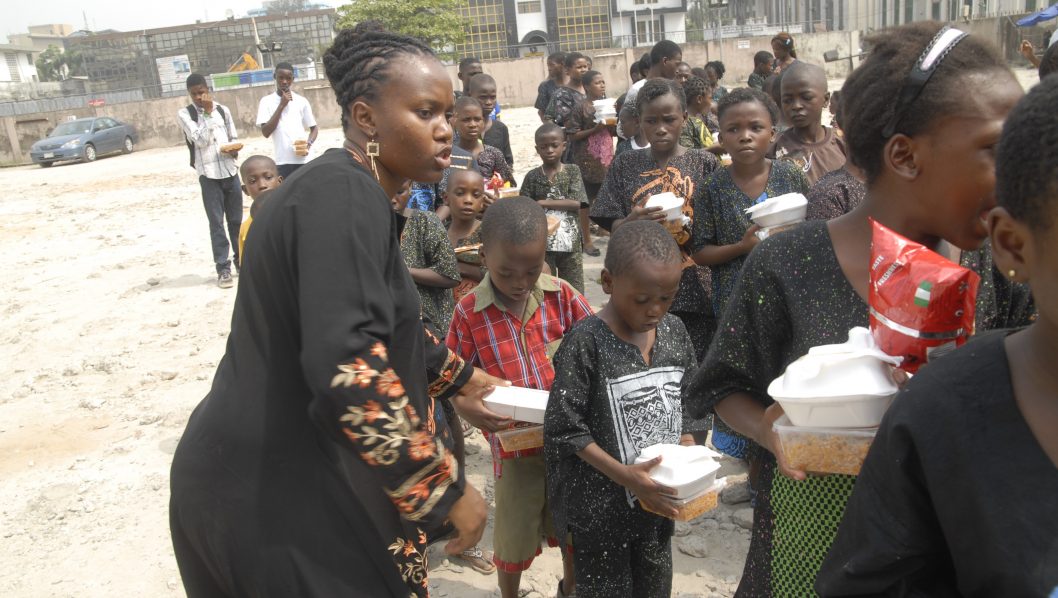
As an organization we’ve worked with several organizations to implement so many incredible projects. Our first funded projects: THE EDUCATE-A-COMMUNITY PROGRAM is a community based learning project that provides basic and functional literacy training and livelihood grants for educationally disadvantaged women and out-of-school youths. The program currently operates three learning centers in (Ikorodu, Isolo and Ijede) that serve over 220 learners. In 2015, we graduated 37 learners who completed 9months of literacy classes from our Ikorodu

learning center.In September 2014, we launched the #1MillionGiftofLiteracy Campaign a 5-year long campaign with the aim to increase the reading habits and literacy skills of 1,000,000 women and children across West Africa. We are currently leveraging the support of corporate organizations through an annual football charity activation (Play for Literacy) to help us meet our fundraising goals for the campaign. We’ve also succeeded in engaging celebrity advocates like Lami Phillips, Olori Supergal, JJC, to support our literacy campaign.

As part of our career development platform, we also organize an annual workplace mentorship program in collaboration with SAP to match fresh school leavers with corporate organizations for a 3weeks workplace mentorship that would help them make informed.

“I felt like giving up”

Yes, several times I have felt like giving up. When you work in a sector like mine, you always have to source for funding and defend every kobo spent. Often times it takes a lot to get the right kind of personnel to work with and resources to keep operation going. There are always setbacks that would make you want to throw in the towel. However, the fulfillment I get from empowering people and having to witness the t effect of the time and effort invested in their lives, their families and communities is a motivation that keeps me going. I like the thought of waking up and going into the world to do some good! One good deed everyday

Greatest reward

People’s measurement of achievement and reward differs. For me, I consider the number of lives as one of my greatest rewards. These rewards are ongoing and I’m excited to see how my work will continue to transform the lives of people in need.

Advice for budding social entrepreneurs


Building Networks of Entrepreneurs
I have various projects I am working on, but the most recent ones are my upcoming show and coaching programme for mumpreneurs. Over the years, I have built a network of entrepreneurs, entrepreneur associations and regulators like NASME (National Association of Small and Medium Scale Enterprises), TIC (Technology Incubation Centre), FIIRO (Federal Institute of Industry and Research Oshodi), and EDC (Enterprise Development Centre), among others. As a result, I have a body of knowledge that I know entrepreneurs need in order to get ahead. I already get calls and requests from people looking to start businesses and I tell them, “Ask me anything. If I don’t know, I at least know someone who does.” I am building a structure around that, and it will all be housed on my new website, mumpreneur.ng, so entrepreneurs do not have to grope in the dark anymore.

Empowering Entrepreneurs
Although I have a background in engineering, I have always loved the expression of anything through art. In my third year at the University of Lagos, I got a few friends together and we formed a group called “Kolo Manifest.” Lol! We started presenting plays about the struggles of being engineering students at our year-end dinners and events. It was unprecedented. Engineers were expected to be a certain way, nerdy and serious mostly. I wasn’t. This is my third year as a Global Entrepreneurship Week partner of the Enterprise Development Centre. Last year, I teamed up with the Spirit of Enterprise to do a N50,000 challenge for upcoming entrepreneurs. This year, however, I decided to step away from the norm and do something different. Entrepreneurship is stressful enough; we are out there building capacity and learning every day. Let’s just hang out and learn differently. You are more likely to remember a lesson you got from a movie or play than from some lecture. So, the question is, why not a play?

The challenge being asked: what do you do?
My first major challenge was defining what exactly I was doing. I did everything and anything. I just had the passion to share, to express myself and tell my story. It took a while to really see where this was going. I would go for networking events and when people asked, “What do you do?” I would sigh and not know quite where to start! Lol. How do you deliver an elevator pitch when you don’t even know how to define what you do?Secondly, no matter how passionate you are, if you are not making money, you will get frustrated. So my second challenge was streamlining and monetising my projects and activities. I met an amazing strategist recently and we have built a winning team. Watch out! Hehe….

Balancing it all
Balancing the home front and work is not a one-time achievement. It’s a journey, a process that I improve on every single day. I have built a process that works for me. I also have an amazing support system in my husband, parents and siblings. I must mention my nanny here; she has been with me almost five years. I have a whole blog post dedicated to my search for a nanny and how hectic it was. I used to try to do everything myself. I still do sometimes, but the truth is, it is not sustainable. A typical day for many mumpreneurs I know here is from breakfast, to school run, to business run, to maybe second-leg school run, then lunch, then homework, then dinner, then work when the kids are asleep, sleep, wake up, repeat! No wonder many women look older than their husbands!

Being one of 50 game changers in Nigeria
I recently received an Xceptional Women’s Role Models award for my contribution to enterprise. I didn’t see that coming; it was a great surprise and encouragement that confirmed the value of my work. I also got listed as one of the top 50 game changers in Nigeria by the Keniisplace blog. Another reward that is priceless and cannot be quantified is the joy in an entrepreneur’s face when they find a solution through me for something they have been struggling with for a while. An example is when I introduced someone to the Technology Incubation Centre where she was able to finally sort out her NAFDAC registration.Advice to women
Find out what makes you happy and do it! It’s your life.

Being Exceptional
I think one of the greatest assets I have is my positivity, I don’t take life too seriously. As a result, I am always (well almost always) happy. When you are in a happy place, you are unstoppable.

Dr Ada Igonoh’s heart-wrenching tale of steadfast faith while she was an Ebola patient, inspired many Nigerians to hold on to the power of miracles when faced with life’s daunting challenges. In this interview Dr Ada Igonoh shares her survival story, lessons learnt and why she is a woman of rubies

How it all began

On the 20th of July, Mr. Patrick Sawyer, a Liberian diplomat flew into Lagos from Monrovia. When he got to Lagos, it was discovered that he was unwell and weak. He was subsequently brought to First Consultants Medical Centre, Obalende, where I work. He was brought to our hospital because he was being hosted by ECOWAS and all ECOWAS staff in Lagos uses our hospital. When he got to the hospital, he was seen by the doctor on call who took his blood samples and tested for malaria which was positive. Mr. Patrick Sawyer denied contact with an Ebola patient or attending a funeral service within 3 weeks prior to his presentation at the hospital. Unknown to us, he had just buried his younger sister, Princess who died of Ebola in a Catholic hospital in Monrovia, Liberia. We couldn’t fully understand why he chose to hide such relevant information if he really wanted to be helped. We didn’t doubt that he knew he had Ebola at the time he came to our hospital because his behavior was odd. He was admitted as a case of malaria but was not responding to treatment, which made us begin to suspect that he may have Ebola. On the second day of his admission, I was the doctor on duty. He called to see a doctor that evening and I went into his room to see him. He complained that he had been stooling and vomiting that day. I noticed his IV bag was on the bed so I picked it up and hung it in the drip stand and left the room. I then washed my hands and informed Dr. Ameyo Adadevoh of the patient’s condition.

“I found him dead”

On the 22nd of July, 2014, we took blood samples to test for Ebola and informed the Lagos State and Federal Ministry of Health that we had a suspected case of Ebola. The patient then started mounting pressure on us to be released to attend an ECOWAS convention in Calabar. The hospital administration led by Dr. Ohiaeri refused to let him leave. On the 25th of July, 2014, after his condition worsened, I found him dead in his toilet and that was more or less the beginning of panic and anxiety. His result had come out the night before his death as positive for Ebola. He was cremated that same day according to WHO guidelines and the hospital discharged every single patient in the wards and was shut down for 2 months for decontamination.

Discovering I had Ebola

I had already begun to suspect that I may have contracted Ebola because I was ill and not responding to treatment. Slowly, my temperature started to rise and it was not until I had a fever and vomited and started stooling as well that I knew the reality of the matter. At the time, I was still very positive that it may not be Ebola and so when I was informed that I tested positive, I was shocked but not as shocked as I could have been if I didn’t suspect. I had peace that surpassed all understanding and I did not feel defeated by the news.

Having personal contact with Sawyer

I was terrified. I immediately started to recount my days with him while he was on admission. I kept searching my memory to be sure of how much close contact I had with him, all the while convincing myself that my contact with him was minimal and nothing to be so worried about, but I was wrong. It was such a tense period for me, because now it was a waiting game. I was required to wait for 21 days to heave a sigh of relief, but 8 days into my surveillance period of 21 days, I tested positive. I didn’t want to die and I knew how serious having Ebola was. People were dying every day in Liberia, Guinea and Sierra Leone.

Lessons learnt from the experience

I have learnt to always be thankful no matter the situation. I have learnt to appreciate life and to understand that only the living can live, life is not for the dead. This has affected my life in such as way that I live each day happily as much as possible. I value my family members more because they stuck by me throughout my ordeal. How many people would dare visit an Ebola patient? People are so afraid for their lives that they would rather pray for you at home. My family showed a great deal of optimism even in the face of death. I am grateful for my husband, mother, father and siblings. I have learnt to depend on God more than I ever did. He was and is my healer, my sustenance and my all in all. I have learnt to laugh more, play more, be more empathic, to not take life so seriously that i forget to enjoy it. I have decided not to live a life of mediocrity, because there’s a lot that I have to give and a lot that have been given to me. To whom much is given, much is expected.

My believe in God

Faith in God and his word made me believe I will be healed. I believed there was more to my life and that I was not going to die under that circumstance. I counted on God to see me through to the end and he did. Nothing else gave me assurance of life.

Faith over fear

Faith is the substance of things hoped for. The evidence of things not seen. I had to believe I would survive against all odds. The faith of the woman with the issue of blood in the bible made her whole. Without faith, it is impossible to please God, so if you go to God, you must believe that he is and that he is a rewarder of them that diligently seek Him. The word of God told me that God was interested in healing me. Not only was he interested in healing me, he was able and willing to do so too, all I had to do was believe. Jesus bore our sins when He died on the cross and he took whipping and beatings so that I can be free of sickness and disease. My faith was like a hedge around me, protecting me and giving me support.

The Psychological effects of losing my boss and colleagues

I was deeply hurt by the death of Dr. Adadevoh, Dr. Abaniwo, Nurse Ejelonu, Nurse Aide Ukoh and all the others who passed on but I have come to realize that God knows best no matter what.

Measures taken to stop the vomiting

I initially started taking Imodium to stop the diarrhea but when I got to the isolation centre, I was informed by the WHO doctor that I should stop taking the Imodium because I needed to let the viruses out. I was not given any drug to stop the vomiting. I was rather instructed to take at least 4.5 liters of Oral Rehydration Solution daily to keep up my fluid levels but even that was not sufficient sometimes because of the quantity of fluids I was losing, so I used my clinical knowledge to determine my intake. I counted my pulse regularly and monitored the color of my urine. If it was concentrated, it meant I had to increase my fluid intake until my urine became less concentrated. If I had a parched throat, I also drank more ORS.I studied Ebola online and learnt that dehydration was a main cause of death in Ebola, so I would usually take a bottle of ORS with me to the toilet to drink while stooling. I also had it by my bedside permanently for frequent gulps.

The miracle

I was overwhelmed with happiness when I discovered the virus had cleared from my system. I was overjoyed. It was a confirmation of God’s faithfulness.

Being a woman of rubies

Ruby is a precious gem usually very hard and expensive. A woman of rubies is a strong woman of substance, worth and priceless. I am a woman of worth, substance and I am priceless not because of my abilities ,but because of the God I serve.

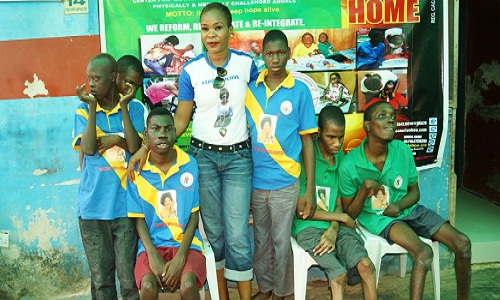
Adetoro Omoba’s tale reads like a movie script. She lost her mother at the age of three and also lost her dad some years later. Living life without the care and love of her mother pained her. The emotional and psychological needs of a motherless child made her to start caring for the motherless and less privileged in the society. Her pain has since been woven into a purpose. Out of her sore experience, she established the Adetoro Omoba Cares Home (ADOCA). ADOCA is a is a nongovernmental organization(NGO) geared towards the welfare of the poor, the rejected, the motherless, physically and mentally challenged and the less-fortunate ones in our .She shares her story of triumph and living without a mother’s love

Growing up without a mother

I lost my mum at the age of 3.My guardian was the one who raised me. He is a Christian and a very devoted man of God. While I was growing, I realized that the paradise of every child is connected to their mothers. I felt odd among my friends then because I see all of them in church and parties with their parents. I was raised in a CAC home where we were trained as if Jesus Christ will be coming next day. While growing up, I would tell my friends, I don’t want Jesus to come now because I want to grow old and build homes for the motherless children. I intended to give the love I couldn’t find to these children. I never knew there was anything like an orphanage.

Starting out

As God will have it, these experiences prepared me to be clear about what I would do when I grow old. I never knew I would be the one at the helm of affairs, giving care to the less privileged. In 2005, I lost my job with a Telecoms company I was working with. I had to look for another job in a school. While working there sometime in May 2005, an incident happened. Two women along the street where the school is located died. One of the teachers came into the staff room and announced that the young women had just passed on. When I heard it, it was as if something disconnected on my inside .The passion overwhelmed me again. Prior to this time, I had lost the drive .Two days later; two of the prefects came to me persuading me to help them establish a social group. As they were taking their leave, something just said to me: Instead of establishing a social group for them, why can’t you do something that will be focused on taking care of motherless children?” I shared the idea with the prefects and they fell in love with it .I also shared the idea with the proprietor of the school. He didn’t believe me at first, he said some teachers had tried doing something similar and they failed to do it .I now had to convince him by sharing my personal story of losing my mum at a tender age. He became convinced and told me to go and start. The deal was that if I can run it for 3months, he is going to support me with 30,000.We started in May 2005

Growth

The initiative grew beyond the school it started from .The students started telling their mothers about it. That same year, we gave two of the senior students scholarships for their NECO exams .We also supported students who have lost their mothers .The following term, what we were given became more than what we needed, so we had to start extending our scope. I decided that even if we don’t have the money to build the motherless homes, we can collaborate with the existing ones. So I and some of the students would visit the existing motherless homes like Little Saints Orphanages. The passion became so much that I couldn’t do something else.

Challenges

One of the challenges I face is the negative opinions of people .When we started, some people usually advise some of my staffs to get another job, saying the children they take care of, are aliens. People started segregating themselves from us as if we are running a shady deal. Last year, when we celebrated our nine years anniversary, we had a challenge with transportation. My team and I were waiting for the other caregivers to bring the children to the venue. Each time they get a bus and the driver sees the children, the driver zooms off saying they cannot give them a lift .The one that eventually gave them a lift was paid double of the amount he was supposed to be paid. People have stigmatized these angels .It’s like the society doesn’t love them. It hasn’t been easy financially, spiritually and otherwise. It’s been challenging. One thing that makes us happy is that God has been faithful and God has been making it easy.


Persisting against all odds

We are all humans. There are times that you will face some challenges and you will be like “God! What is happening”? But honestly I never felt like giving up. When some of our friends come here, it is either their love for me increases or reduces. A friend once suggested the idea of me relocating to the USA.As a result of the fact that I am a single mother and she also looked at the fact that I am doing all these alone without support from anywhere .I told her I can’t leave these children whom I call my angels.

Meeting these ‘Angels’

There has never been a time when we picked them on the street. All those we have met, came as a result of referrals .Some of them were brought by their parents and some have been abandoned by their parents as a result of their birth defect. We have 24 of them here, but we still have more than 40 that we ought to have admitted. As a result of space constraints, we couldn’t admit them.

Support from the government

We need support from the government. We are under Ogun state jurisdiction. This is the mathematics part of it, if you have 24 children here, 19 of them are usually from Lagos. ADOCA home is registered with the Corporate Affairs Commission and also registered with the State government, Abeokuta

Nigerians approach to philanthropy

It’s not as if we have all the support we need, but we need to be grateful for the little we have gotten so far. I want to say thank you to those individuals who have supported us so far. We haven’t gotten support   because we haven’t gotten much of media support. We need more of awareness creation .Recently a man saw us on Facebook; he sent us a message saying he will love to contribute his own bit. I never knew he is an Oba. We met him; he saw some of the things we have done and decided to give us one hectare of land .He gave us one hectare to build a much more comfortable apartment for the angels. It amazed us. Some of our donors are here in Nigeria and some are from USA.

Greatest reward

I will consider the one hectare of land as the greatest reward so far and also the media support from Orisun TV too. When we started out, we pay 15,000 for 5minutes TV interview. For the past one and half years, Orisun TV has been of great assistance. We haven’t had to pay.

In dire need of assistance

Our 10 years anniversary is coming up very soon .One of our major constraints is transportation .We lost one of our angels Tobi, because we couldn’t get quick transportation to the hospital. He died by the time we got to the hospital. It was a sad moment for us. We need kids’ wheelchair. We also need Physiotherapists that can volunteer to help these children .When we take them to churches, people don’t usually want to associate with them. On the flipside, some churches show us love whenever we take them there. People are usually surprised when they meet me.

Driving force

My driving force has always been God. Everything about my own personal life has always been God. My strength comes from all the challenges I have been through.

Being a Christian

God is a great God. He has his own way of weaving our lives .When my father died it wasn’t as if he left tons of properties for me .My father a introduced me to God at an early age. On his death bed he told me this: “If ever you want to let go of anything, never let go of love. The moment you start letting go of love, you will start dying and becoming lonely”

Final words

When you see these children as disabled it affects the way you treat them. I am using this medium to tell the people out there that we need to show love and respect these special ‘Angels.’ Majority of these children are suffering from birth defect. Before you condemn them, you should try and show them love .

Being a woman of rubies

There is a driving force within me that is bigger than me. Until you love yourself, you cannot love somebody else. The love I have for myself has made me love others .What makes me a woman of rubies is the fact that God has been helping me to make a positive impact in the lives of these ‘Angels’.

Ogo Maduewesi’s experienced a sour drift in 2005 with the arrival of the first light patch on her face. This occurrence transformed her life forever. Being afflicted with vitiligo isn’t a joking matter but Ogo has chosen to make lemonades out of the situation. Ogo’s organization, Vitiligo Support and Awareness Foundation (VITSAF) , is spearheading the first effort to tackle the challenges surrounding vitiligo in Nigeria. She is on a mission to create awareness and provide succor for individuals, living with vitiligo. Vitiligo, is a skin condition in which white patches of skin appear on different parts of the body especially exposed areas like the face and hands


Introduction

My name is Ogo Maduewesi. I am a typical Nigerian girl from the eastern part of the country. I do a lot of things at the same time. I just can’t leave my Vitiligo cause for any other thing .I believe you can talk about vitiligo and impact lives positively through it. I am one woman that believes so much in myself .I believe so much in inspiring others to bring out the best in them.


Discovery

I woke up one day in 2005 to discover a spot on my lip. I think about three weeks down the line I noticed another spot .When I saw it, I said to myself: “I need to do something about this”. After trying out what my physician gave me for a few months, instead of getting a positive feedback, I was getting more white patches. I now had to look for a dermatologist and that was how they diagnosed that I have vitiligo. That’s how I got to know.

My state of mind

Before I met the dermatologist, I met a family doctor. I spoke with him on phone and he didn’t understand what I was talking about. When he saw me, this was his first utterance:” This is not happening”. His reaction got me scared. I asked him: “What is not happening?” He asked me if I know the condition Michael Jackson had. I said I don’t know. He told me it’s called vitiligo. He gave me the spelling and told me to go and read about it. When I read it, as a typical Nigerian you know how religious we can be, I just rejected it and moved on. When I checked online, it was as if all the negative things written about it found me. I read up things like vitiligo not having a cure and one might turn white completely. I was just scared. When I got to the hospital, I wasn’t told I have vitiligo, I just saw them scribble vitiligo on the form. I went blank .I said to myself: “Why will this happen to me? You know a whole lot of things were going through my mind. It was not a good moment.


Moving from the sad state

After finding out that I have vitiligo, the experience I had in the hospital wasn’t good. A dermatologist came to take pictures of us and tried to tell me what I am living with. She just said you are not the first and you are not going to be the last. I met another lady that same day that was diagnosed and she just told me:” I am going back to the village that is where I think I will find help”. I told myself: “I don’t think the village is where I will find help for this.” It was not easy. The funny thing is most people living with it; don’t even know what they have. I was eager .I needed to see other people. I needed to share other people’s experience. I needed someone to tell me: “I have the same thing and this is how I have been coping” but I didn’t get that. I was looking for experiences to get myself encouraged, in the process I found myself encouraging others. We had a support group meeting with Femi Segun, may his soul in peace. I just wanted people living with it to share their experiences. That was how it all. True Love Magazine did an article on it in June 2008 .It was a huge one. People started making enquiries, sending mails and all that. I was working on myself because I wanted to live my life

My wake-up call

My pastor preached a message and said something that you should not give people the power to bring you down you should be in control of yourself. It just got to me that I have been giving people power over my emotions. So I took a bold step by wearing a spaghetti strap to Balogun market. Before then, I had never worn a spaghetti strap without a small jacket .I decided to do it to see if I will be able to withstand the comments. I worked round the market from one end to another and was just smiling all through. People were making their comments and my fellow Igbo guys were making their comments. When I finished walking around, I boarded the bus again and I said to myself: “So for real, I have been giving people the power to bring me down to decide what I wear, what I do and where I go at a particular point in time.” From that day, it was a huge turning point and I now said:”I have my life to live, you choose to stare at me, and it’s up to you”. These days I say to myself: “I want to sell confidence to whoever wants to buy”

Parents’ reaction

I called them on phone to tell them about it. My cousin told them something terrible about me that I have grown skinny and more like a walking dead. My father called and told me he wants to see me home the next day unfailingly .I told him I can’t make it because of my job’s commitment. My mum cried on phone, the news got to her. I travelled home in December of that year for the burial of one of my cousins who was part of the Sosoliso crash. I met my parents at the burial. Initially my experience with my dad wasn’t a good one .He couldn’t understand why I will be exposing myself while they are trying to shield me. While I was starting to talk about vitiligo, he just didn’t understand it. At first I listened to him and later I had to tell myself: “You need to live.” I didn’t pick my Dad’s call for 6 months because he wanted me to stop talking about vitiligo. Somehow, I didn’t know how it happened but he became my number one supporter. He became interested in my initiatives. My mother was heartbroken when in the midst of it; I went on low cut because she believed my braids will cover the vitiligo patches

What drives me?

I think one of the things that drive me is peace. Does that thing give you peace? Is it something you are comfortable and happy doing? Seeing smiles on the faces of people living with vitiligo drives me. I want to see them smile; I want to see them live. If not for the drive, I probably would have dusted my certificate and be involved in another cause .I want to see people with appearance challenges accepting themselves and living their life to the full irrespective of what the health community says or what the society says.

What breaks my heart

What breaks my heart when it comes to Vitiligo awareness is that the international community is yet to see it as something to give attention to. It’s not been easy I must tell you. I started this officially in 2009 and as at that time, we didn’t really have much people talking about vitiligo. We are doing the bit that we can but we need that recognition from the international community. In Nigeria, our health awareness goes in the direction of what the international community identifies with. It’s heartbreaking that there is a whole lot of works that we need to do .We don’t really have that kind of support. Recently I launched our crowd-funding project .Somebody told me that Nigerians don’t identify with things like this, that doesn’t mean we should not make efforts. We are not giving up hope


Vitiligo and my perception of life

It has changed my life completely. I have come to understand that humans are not who they are. What they say is not what they do. I have come to understand people for who they are. I have also come to understand that it’s not really about what the next person thinks, once I know what I am doing is right and legal. The typical human being always wants you to do something that will suit them. There is something I have noticed about the guys here. They try to bring a woman down at any given opportunity. When you don’t have a job, they use the opportunity to take advantage of you. Here, we don’t have the patience needed to get things started have come to understand that if there is something you want to do and you believe so much in, forget about what people will think.

Creating the Vitiligo Awareness and Support Foundation

My vitiligo foundation is created to share the experience I have had living with vitiligo .It’s to discuss what has worked and what hasn’t worked .Like I mentioned before, we created a support group without even knowing. That was how it started. I didn’t set out to start a foundation. I just found myself doing that and next thing is that we are found ourselves registering an organization.

Awards and achievements

I created a day set aside all over the world to put the spotlight on vitiligo. It’s called the World day of Vitiligo. Lagos State also sent me a commendation letter because I had sent them a letter for support .The recognition has been from individuals +

.I have been given Architects of the Future Award. I am an Ashoka Fellow and I made the Tech Women Programme, a US sponsored programme.


Being a woman of rubies

A woman of rubies is that damsel who believes in her strength. The crowd doesn’t move me. I am happy that I have been able to use the resources I have to create something. Accept yourself for whom you are. It is not easy, I know. If you set your mind to it, you can make it happen .As a woman don’t allow a man to be your yardstick of achievement.


When Bukky Shonibare, the Group CEO for the 555 Group, heard that the Chibok girls have been abducted, she could have decided to move on with her life and mind her own business; instead she decided to be part of those championing “Bring Back Our Girls Campaign”. It’s been emotionally and psychologically zapping for her, but instead of just ranting, she has dedicated every day since the abduction of these girls to advocating, writing articles, tweeting about the abducted girls, patiently waiting for their return. What makes this amazon remarkable is the fact that she has dedicated her time, money and resources to lend a voice to the plight of the victims of terrorism.

The Genesis

I was scrolling through my timeline on social media when I saw that girls had been abducted in North East, Nigeria. I didn’t know a place called ‘Chibok’ existed until the news started unfolding. For Bukky, the task of bringing back our girls is non negotiable and has to be done no matter the cost.

Identifying with the Chibok Girls

The first march of the #BringBackOurGirls movement, held on April 30th 2014, was one that gathered all agitators on this issue, of which I was one. We marched in the rain to the National Assembly to table our grievances. For me, joining the march on that day was my way of identifying with every girl that was abducted in and outside Chibok. I am a mother – what could the mothers be possibly going through? Fathers can be close to their daughters – what could these men be going through? Besides, I can relate with abuse and molestation, and how it can possibly turn one’s life around. So, the knowledge that they are with heartless miscreants with capacity to perpetrate just any inhumane act, including sexual exploitation and senseless killings, made my resilience stronger. I just want the relevant authorities to keep prioritizing the issue so as to ensure prompt action and result. Bottom line, that sheer sense of empathy that made me go out the first time still fuels me, and other campaigners, till date.”

Giving up on the cause? Never!

While my optimism was somewhat legitimately threatened in view of a protracted period of silence and inaction, giving up has never, and will never be, an option. I believe in the power of consistency. The same motive for continuing the day after the march (May 1, 2014), is the same that has kept me coming out; after all, it’s yet another day. Or how’s that day different from now if truly the motive is to have our girls back? Undeniably, hope has been severally dashed, with numerous failed expectations, but for me – and other campaigners, who know that for us to record a closure that is not only logical, but also worthy of a writable history, we must push and drive ourselves until a sensible outcome is reached. The numerous botched phantom ceasefire agreements, the ‘we-know-where-the-girls-are’ hype without actual rescue, the dashed hope that ensues after excitedly hearing or reading that another western government has pledged support, etc, are all sufficient reasons to think it is not worth it; but when I consider what is at stake if I give up; I realize that I would rather stay on the path of continuity and doggedness.

500 days without the Chibok girls

The sad reality that we hit 500 days without the girls returning was a very harsh one. I recall when we commemorated 30 days of abduction and then 100 days. That reality is rude! It slaps the very essence of humanity. How did we get to the point where young, innocent, and naïve girls – who have become a symbol of Nigeria’s systemic and institutional failure, would be abducted for months! I mean, it’s so sad. And now, we have had to experience those 100 days for 5 times. How long do we still have to wait? How much can a heart take?

Some Nigerians believe abduction never took place

The inability of several Nigerians to be empathetic in such a critical matter that bothers on our shared humanity is one that still beats me. To excuse or validate that sense of dismissiveness, several Nigerians have tried to interpret and box this abduction into a narrative that fits their stance. Unfortunately, that one thinks in such manner, and finds one or two more to think same, does not necessarily make that skewed narrative the truth. Till date, several Nigerians believe that abduction never took place. I find that heartbreaking because the more a large percentage of us denial or dismiss the possibility or the actual abduction, our ability to rally round – with one voice, one mind, for one cause, is eroded. And that is what happened to us. Several narratives in this direction emanated from blinded loyalists to the then ruling party and immediate past President. The abduction was, and still is, seen as politically and financially motivated. Some say we do this for political positions. At what expense? Lives of innocent girls? How cheap and sad! This same understanding caused slowness in taking relevant actions that requires urgency. Experts say that the action or inaction of the first 24 to 48 hours after abductionis a major determinant of the eventual outcome, positive or negative.

Handling criticism

I understand the power of focus! One reality I had to come to terms with is that not everyone is on the same page with us, and that alone is sufficient reasons to ensure adequate room for their opposing tantrums, lopsided interpretations, and baseless narratives. So, I have had to adjust expectations. However, as time goes by, my emotional immunity quotient is increased with the frequency and strength of these attacks. Truth is, it can sometimes get at me, but the picture of the anticipated future is worth bearing anything for. Besides, there is absolutely no mud thrown at us that can match what we have, by our dismissiveness and denial, caused the Chibok girls. No price, if any, is too much for this cause. Any of the Chibok girls – Hauwa, Kauna, Deborah, Amina, could have been my daughter, sister, niece, or cousin. If it were so, I would still be standing and waiting in anticipation for their return just as I do with the Chibok girls.

Looking back

I have always been drawn to the plight of others. 10 years ago, I started an NGO – The Light Foundation as a platform to cater for the plight of the downtrodden, based on different categories. Now, the campaign for the Chibok girls led to my desire to assist other victims of insurgency, especially the Internally Displaced Persons (IDPs). As a vehicle to drive support interventions, I conceptualized and birthed ‘Adopt-A-Camp’ (www.adoptacamp.org.ng).


Being a Woman of rubies

According to the mandate of the ‘Woman of Rubies’, three things are critical – virtue, value, and verve. I try to combine these three, even though I am not yet there. I am, like we all are, a work-in-progress. I am an imperfect being. However, I believe that exhibiting vigor in the face of the challenging advocacy for the Chibok girls is one that makes me a ‘Woman of Rubies.’ At some point, to guide what we do and don’t do, we developed a set of core values, which we all try to live by, consistently and unwaveringly. So, I am a ‘Woman of Rubies’ because I am consciously grooming myself to be virtuous, one that holds on to guiding principles, and one with vigor and a deep sense of enthusiasm.

Nigeria abounds with the story of unknown and unsung women making impact and creating change in their respective communities and spheres of influence. With little or no resources, they are taking the initiatives to illuminate the lives of others despite being engulfed in darkness. This is what women of rubies is about. It’s about telling the tales of unsung Nigerian heroines.

Today, we bring to you the story of Regoe Alfredo Durugo popularly called Mama Makoko. This woman with a heart of gold goes from house to house in Makoko community, a slum located in Lagos recruiting less privileged children to get an education. Every day she paddles her canoe with stubborn determination, taking children who hitherto are uneducated and illuminating their minds with formal education. For more than 25 years, she has been able to send more than 5000 children to school in the riverine Makoko.

This is her story!

I came into this community called Oko Agbon for evangelism not with the intention to educate the children. When I got here, I realized the level of education here is poor; this made me decide to start teaching these kids. This was around 1990. I have made some previous mistakes, I did not start here, I started in Bariga waterfront that was 1987, before I moved to this place. Getting here, I realized they need me here because the problems were just too much. As a result of my work, I get called different names like Mama Makoko, the light of Makoko, Mama Yaba, and Mama Nigeria.

Her driving force

What will make a woman take residence in Makoko where she is a stranger? She doesn’t know anyone, nor does she get paid for what she does.

“Education is the key to success and without education; one cannot move forward .This is my driving force. Somebody taught me and I believe that I need to teach another person. Since I have started this initiative, I have trained a lot of individuals. Some of them are married, some are in the university, some have graduated, and others gained informal education like hairdressing, tailoring, vulcanizing and so on. “The burden of providing education to these kids hasn’t been without its difficulties. Mama Makoko finds it difficult to sustain her initiative partly because she doesn’t have her own canoe and a school of her own.

Challenges

Due to the fact that it’s a riverine area, the challenges are more. I don’t have a canoe of my own; we don’t have a school of our own. The places we use as schools are community halls. Sometimes when we want to teach these children and there is a need for the community hall to be used, we have no choice than to take the children out for recreational activities. Another challenge is that parents don’t allow some of their kids to get education. Imagine a situation whereby a child will be in primary 3 or 4 and a parent will come and pick that child saying that child needs to hawk. It’s a herculean task for her to convince the parents of these children to give her the permission to educate them. Sometimes, she has to go as far as knocking from door to door, telling them the importance of getting their kids educated.

Convincing the parents of the kids

It’s not easy .Sometimes I go to their parents to convince them about the importance of education. Even if they have to eventually learn a trade, they still need to be educated.

Being Honored

Mama Makoko was honored last year at the 100 Unsung Heroes Project for her contributions to the Makoko community. She wasn’t exactly prepared for what she got at the epoch making event

“I wasn’t prepared for the award I got that day. The organizers told me they were directed by Dr. Obi Ezekwesili to come and capture our activities here. He said there will be a programme at a particular time and he will like to invite me. He didn’t tell me that I was going to be honored. When I got there, I was shocked and short of words.

Her testimony of impact: “Edu Slum”

Edu Slum has taken me far. I have gone round Nigeria through this initiative. People from America and all over the world write me that they want to come and teach along with me .Most of them don’t know that I am inside the slum .Sometimes, I tell them I am not ready, that when I am ready I will inform them. We just had to give the initiative a name so we called it Edu Slum, we are in the slum it’s a slum school.

Sustaining Edu Slum

People and families support me as I said earlier. John Walter, alumni of Unilag helped us with some items when he was graduating. He came with his team in a Coaster bus and organized an event for Edu Slum. They went from house to house sharing gifts items. A lot people came. Thank God I have gotten help. I have publishers who are backing me up, like Straightway Gate Publishers in Ibadan. When I went to Ibadan for a wedding, I was at their office. They gave me textbooks for the kids.

Reaching out to parents

This woman of rubies with a heart of gold doesn’t just teach the kids, she also extends it to their parents. Bearing in mind that it takes educated parents to allow their kids get an education.

I teach the parents too. I do afternoon sessions and evening session’s .I teach the fishermen and the fish sellers. I don’t get any support from the community; I was only given a hall. Sometimes, God will touch some of them to give us fresh fish, shrimps and crabs.

Just like an evangelist, she goes from one place in Makoko to another looking for kids to take to school.

“I see them on the road selling and tell them, “You are not selling anymore, now you are going to school. Join me in school tomorrow.

Counting on the Government

We need the government to help us build a hall, somewhere we can use as a school. I am also pleading with the government to provide us a land where we can build a proper school so these children can be more comfortable with what they are being taught. We need help. I am the one supporting them financially and providing them lunch. I am the one who also pays the teachers. It’s not been easy.

Being a woman of rubies

When I came to Makoko, I wasn’t as glamorous as this. Helping these kids has made me glamorous. Whenever these kids see me, they will start reciting the alphabets. They know me for what I do. My presence here makes them better. I am fulfilled.