

Building visibility online can create valuable opportunities for your career, business and personal brand. It can help the right people discover your expertise, connect with your work and consider you for partnerships, speaking engagements, media features and other opportunities.
However, increased visibility also brings increased exposure.
As your digital presence expands, more of your information, intellectual property, business activity and professional reputation become accessible online. Without the right safeguards, this growth can leave you vulnerable to impersonation, account breaches, scams, content theft and reputational damage.
Protecting your digital presence should therefore be part of your visibility strategy—not something you only consider after a problem occurs.
Why You Need to Protect Your Digital Presence
Your digital presence includes more than your social media accounts. It covers your website, email addresses, photographs, published content, payment platforms, business documents, online communities and the information people can find about you through search engines.
For many entrepreneurs and professionals, these assets support daily business operations. Losing access to an email account, website or social media platform can disrupt communication, affect revenue and damage relationships with customers or partners.
Digital security is not only a technical responsibility. It is also a business, visibility and reputation-management priority.
The stronger your presence becomes, the more intentional you must be about protecting the systems supporting it.
1. Strengthen Your Account Security
Weak or repeated passwords make it easier for unauthorized individuals to access multiple accounts.
Create strong and unique passwords for your email, website, banking, social media and payment platforms. A password manager can help you securely store and organize them without relying on memory.
Enable multi-factor authentication wherever it is available. This creates an additional layer of protection by requiring another form of verification before access is granted.
Your primary email account deserves particular attention because it is often connected to password resets and other important services. If someone gains access to it, several parts of your digital presence could become vulnerable.
2. Review Who Has Access to Your Platforms
As a business grows, founders often give employees, contractors, social media managers or service providers access to digital platforms.
This may be necessary, but access should be managed carefully. Give each person only the level of access required for their role. Where possible, use official team or administrator permissions instead of sharing your personal login details.
Review access regularly and remove anyone who is no longer working with your organization. Former employees, completed contracts, and inactive partnerships should not remain connected to important business accounts. Protecting your digital presence requires knowing who can access it at every stage.
3. Separate Your Personal and Professional Information
Visibility does not require sharing every part of your life. Decide which information supports your work and which details should remain private. Your home address, personal phone number, children’s information, travel plans and private routines do not need to be publicly accessible.
Consider using a professional email address, business phone number and registered business address where appropriate. Clear boundaries allow you to remain visible without making yourself unnecessarily vulnerable.
4. Protect Your Content and Intellectual Property
Your photographs, articles, videos, course materials, presentations, brand names and designs are valuable business assets.
Keep original copies of your work and records showing when it was created or published. Add appropriate copyright notices and watermarks where necessary. Maintain written agreements with designers, writers, photographers and other collaborators so ownership and usage rights are clearly understood.
Monitoring how your work appears online can also help you identify unauthorized use early. Visibility can increase the reach of your ideas, but documentation and proper protection help you retain control of those ideas.
5. Watch for Impersonation and Online Scams
Visible professionals and business owners may become targets for impersonation.
Someone may create a false account, use your photographs, contact people in your network or request money while pretending to represent you or your organization.
Search your name and business name regularly. Pay attention to unusual messages from followers, clients or partners. Encourage your audience to verify official communication through the contact details listed on your website.
If impersonation occurs, save screenshots, document the account details and report the activity through the appropriate platform.
6. Build Beyond Social Media
Social media is useful for reaching people, but it should not be the only place where your audience can find or contact you. Platforms can change their policies, restrict accounts or experience technical problems without warning. Build a website, email list, organized content archive and direct community alongside your social presence.
These owned platforms provide greater control over your audience, information and business continuity.
A strong visibility strategy expands your reach. A secure visibility strategy ensures your work can continue even when one platform becomes unavailable.
7. Prepare a Digital Response Plan
You should know what to do if an account is compromised, content is stolen or false information begins circulating. Keep records of your important account information, platform contacts, website provider and professional advisers. Determine who should be notified and who is authorized to speak on behalf of your organization.
Avoid responding publicly before understanding what happened. Preserve evidence, secure affected accounts and seek professional guidance where necessary. Your response during a digital incident can either protect or further damage the trust you have built.
Visibility and Security Must Grow Together
You should not have to choose between being visible and being safe. The goal is to build a digital presence that allows people to understand your value while protecting the accounts, information and reputation supporting your work. Security gives visibility a stronger foundation. It allows you to communicate, create and build opportunities with greater confidence.
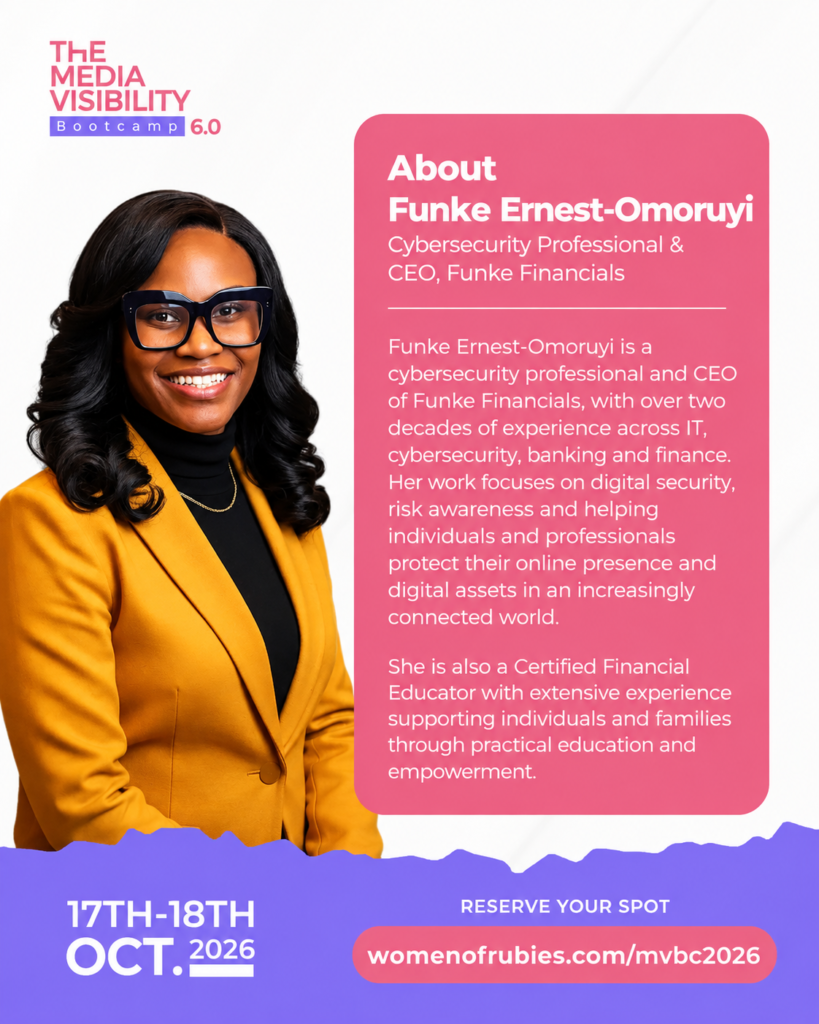
Meet Funke Ernest-Omoruyi
Funke Ernest-Omoruyi is a cybersecurity professional and CEO of Funke Financials, with more than two decades of experience across information technology, cybersecurity, banking and finance.
Her work focuses on digital security, risk awareness and helping individuals and professionals protect their online presence and digital assets in an increasingly connected world.
Funke will join the Media Visibility Bootcamp 6.0, where experienced speakers will share practical insights to help women strengthen their voices, communicate their expertise and build sustainable visibility.
The virtual bootcamp takes place on October 17–18, 2026, via Zoom.
Reserve your access at womenofrubies.com/mvbc2026.
Connect With Funke Ernest-Omoruyi
Follow Funke for insights on cybersecurity, financial awareness and protecting your digital presence.
- Instagram: @funkefinancials
- LinkedIn: Funke Ernest-Omoruyi
- Website: Funke Financials