
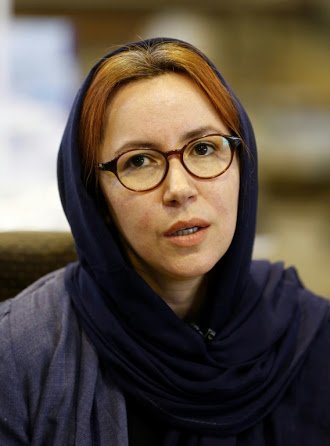
When Leila Daneshvar was a little girl, she used to sit on the floor of her father’s workshop, asking for small jobs.
“He was a mechanic, and I always had the most fun when I was in the garage with him,” She told AFP.“But in those days, there were no mechanical careers in Iran, so I went to college in India. Even there, I was the only girl in my year of 139 students. I had a hard time.”
But she persevered. Now 37, she runs her own company in Iran, making mobility equipment for hospitals and the elderly.
“I went to Europe and saw how disabled people live happy, independent lives. I wished my own people had this equipment, and I thought: ‘This doesn’t look complicated. I’m a mechanical engineer — I can do it.”
The breakthrough for the company, called KTMA and selling under the brand “Lord”, came in early 2016, just after Iran’s nuclear deal with world powers came into force, lifting international sanctions.
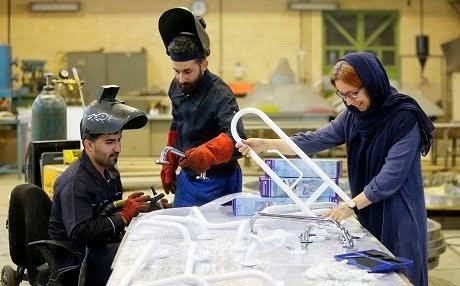
Within a couple of months, a Swedish investor, Anna Russberg, had agreed to buy 25 percent of the company, bringing much-needed business skills and capital.
“Leila had a reputation for quality production, which was practically unknown here. But I needed to turn the business upside-down,” said Anna.
“It worked. People could tell we were a good mix. We respect each other’s knowledge. She’s the engineer, I’m the businesswoman.”
Being women in Iran’s patriarchal business world could be tricky, but also an advantage.
“Hijab is difficult when you’re a manufacturer. You have to climb things, go below things,” said Leila, laughing.
“But being a woman has its advantages. Everyone remembers you.”
Anna added: “People don’t know how to treat us exactly, which is useful in negotiations.”
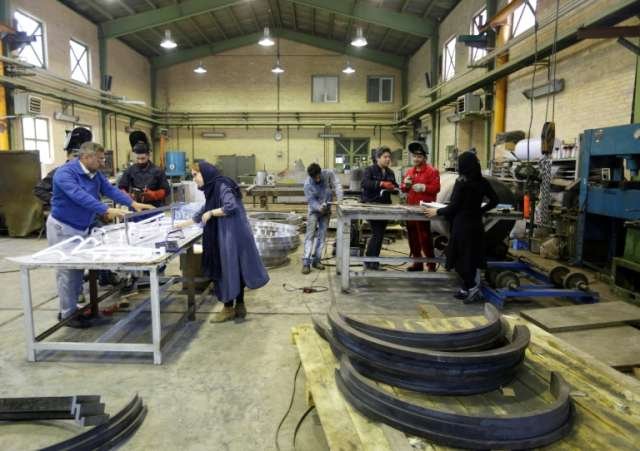
Things were looking up: low production costs meant they could charge five times less than foreign firms and they were doubling sales each year, finally landing a major contract with Qatari hospitals.
But then, President Donald Trump pulled the US out of the nuclear deal.
It soon became hard to import crucial raw materials, particularly stainless steel.
“We already had problems in getting raw materials… and now it’s impossible. Either I have to close the factory, or have to continue with much higher prices,” said Leila.
“We had to let four or five workers go last month because we couldn’t pay their salaries, and it breaks my heart.”
“These sanctions are not on the government, it’s on the people. I can give less to disabled people, to the elderly. Our saying was that we are providing European quality with affordable prices. Can I do that anymore? I don’t know.”
Anna remains positive.
“Iran has 10 million older or injured people who can use our product. With or without Trump, we still have a business,” she said.

“It’s a real pity. Being an investor in Iran is a rollercoaster — you take one step forward, three steps back. But it’s an amazing country with great opportunities,” Anna said.
Leila stays positive by remembering her father, who passed away last month.
“When I become weak and tired… I remember his strength,”
“There is no going back. Iran faces so many problems, but I learned from him that the strength is inside me, and my partner. When we believe we can do it, we will do it,” She said.
Credit: AFP, Pulse News

Comments are closed.