
Women of Rubies

Category

Interviews&profile

Category

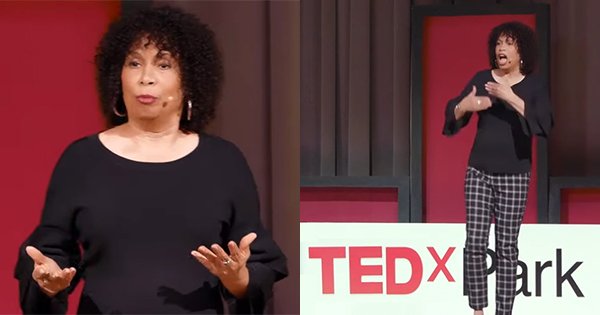
Meet Mariann Aalda, who in the early 1980’s made history as one of the first African American actresses to play a professional role as a criminal defense attorney in a major daytime television soap opera. She starred as DiDi Bannister in ABC’s Edge of Night, which at the time was watched by more than 10 million viewers daily. Now at 71-years old, she is still acting… and she’s on a mission to fight ageism and age discrimination.

In her recently released TEDx talk, Ageism Is a Bully…Stand Up to It!, Aalda equates vanquishing ageism with surmounting other forms of discrimination.

Watch Her Powerful TEDx Talk:
https://www.ted.com/talks/mariann_aalda_ageism_is_a_bully_stand_up_to_it

Aalda comments, “Like with racism and sexism, it’s going to take time, effort and a change of consciousness to totally eliminate ageism, but I think Black women are uniquely equipped to handle it because we’ve already learned how to navigate our way around the other two. In all words that end in ‘ism,’ the I-S-M stands for ‘I Subscribe Mentally,’ but we know how to cancel those subscriptions.”

Citing her drive to change the paradigm on women and aging, AARP has recognized Aalda twice as an Age Disruptor, including a 2017 AARP Studios mini-documentary about her reinvention as a standup comic performance artist.

About Marian Aalda

Aside from starring in Edge of Night from 1981 to 1984, her primetime success followed in sitcoms like Designing Women, Family Matters and The Royal Family, and on the big screen as rapper Kid’s clueless mom in the cult comedy, Class Act. But when roles became scarcer as she got older, she redirected her natural actor’s curiosity about human behavior and motivation into becoming a hypnotherapist.

Ironically, the positive suggestions she gave her clients prompted Aalda to return to her roots of live performing to become a positive change agent for older women – particularly women of color — who she saw as getting short shrift in TV and film.

Her life-affirming, solo comedy show, Gettin’ Old Is a B****…But I’m Gonna Wrestle That B**** to the Ground! broke a box-office record at the 2019 National Black Theatre Festival which attracts 60,000 visitors to Winston-Salem, NC, every other year.

Source: BlackNews

Dr. Kizzmekia S. Corbett, a viral immunologist working with the National Institute of Allergy and Infectious Diseases (NIAID), is taking the lead to develop a vaccine for the coronavirus.

Her work began back in January when researchers first learned how infectious and contagious COVID-19 really is. NI team was immediately formed to develop a safe and effective vaccine, and Dr. Corbett is very hands-on as she takes the charge.

According to The New York Times, Corbett and her team are working in Seattle and have already started running the first human trials of the vaccine.

Because the Coronavirus is similar to SARS, the team is currently using the same template for the SARS vaccine but swapping the genetic code to make it more palatable. Dr. Corbett calls the strategy “plug and play.”

Her background as a viral immunologist is very extensive. She has almost 10 years of research experience that entails elucidating mechanisms of viral pathogenesis and host immunity as they pertain to vaccine development.

She received a BS in Biological Sciences, with a secondary major in Sociology, in 2008. After one year of post-baccalaureate training at NIH, she enrolled at University of North Carolina at Chapel Hill (UNC), from where she obtained her PhD in Microbiology and Immunology in 2014.

Her dissertation research, “Dissecting Human Antibody Responses to Dengue Virus Infection”, garnered her several awards including a Doctoral Merit Award and induction into UNC’s Frank Porter Graham Honor Society. Notably, she also received a travel fellowship to complete part of her dissertation project in Sri Lanka.

Anne-Marie Imafidon, a 29-year-old genius, got admitted for her first degree by University of Oxford at the age of 15 – Before that university admission, she had passed her A-level exams at the age of 11, making the youngest ever to achieve that.

At 20, she bagged a Masters degree in mathematics and computer science from Oxford and worked known organisations like HP and Goldman Sachs Anne-Marie Imafidon is one of the few geniuses Nigeria is blessed with. Born in 1990, she passed her A-level in computing at the age of 11 and became the youngest girl to ever achieve that feat.

At the age of 15, she got in for a degree programme at the University of Oxford. Imafidon currently speaks six languages. Nine years after that, at 20, she obtained her master’s degree in mathematics and computer science from the University of Oxford.

She is currently the co-founder of STEM, a company that has helped more than 40,000 young people across Europe to explore the world of science and the whole tech community. Meanwhile, Legit.ng earlier reported that Bamisope Adeyanju, a human rights lawyer, and current masters student at Columbia University School of Law in New York City, has made the nation really proud.

She was awarded a whopping $50,000 scholarship by the global law firm called Baker Mckenzie. It should be noted that Bamisope finished from the Nigerian Law School in 2015. Afterwards, she worked with the Socio-Economic Rights and Accountability Project in Lagos where she was the head of a team that traced down a big sum N388.304 billion in London Paris Club Loan refunds.

Source : Legit News

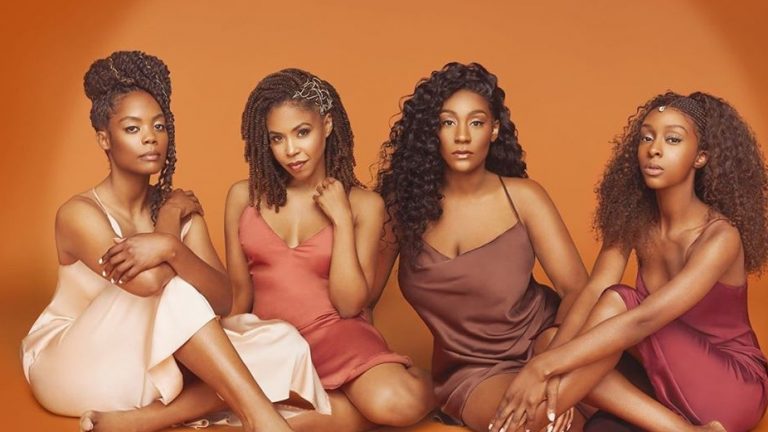
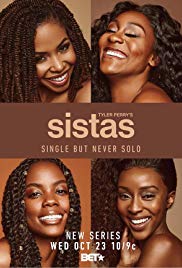
Tyler Perry faces critics concerning his new show Sistas that is currently on air.

Sistas is an American television comedy-drama series created, written and executive produced by Tyler Perry that first aired on October 23, 2019 on BET

With Perry stating that he is the sole writer of all his series that are currently on air.

Popular comedian Lil Rel Howery voiced his opinion on the issue:

“I love Tyler Perry and I’m proud of him, but I told myself I’m a say something because I don’t agree with that. I don’t understand,” he said, noting, “You can’t write a show called Sistas and you’re not a sista. So you don’t want no suggestions or nothing?”

“I know we talk a good game about ‘This is what I’m doing, I’m doing this, I’m doing that.’ Once again, I’m talking, but I’m putting my money where my mouth is,” he added. “I don’t have what he got yet, but as I climb up here, I’m a do even more of that. We gotta do better man. It’s all talk, but if you’re really on that, then give people jobs, bro. You can’t base nothing on one writers’ room, brother. That means you didn’t hire good writers. Find more writers! That’s just real.”

But the cast from Sistas are out against this as they dish out defence for him.

“I think it’s really important to remember that Tyler Perry puts Black women at the forefront in so many ways. “Sistas” comes from women in his life,” said costar Ebony Obsidian. “He may have sat there and written a script but it’s coming from Black women. So Black women’s fingerprints are all over this script.”

Baker also added, “He said at our premiere that he actually gave some of the women on his staff producer credits because he listened to them. He sat down and talked to them for a couple of hours and he was like, ‘I’m going to write this.”

Tyler Perry is known for his numerous movies portraying the stories of black women, their relationships and faith, examples like ‘ Diary of a mad black woman’, and the Madea collections

Fedex has named its newest CEO and she’s Ramon Hood, a woman who began as a receptionist at the same company, the newest CEO at FedEx, is the first Black woman to take the lead in the company’s history.

The company announced Wednesday, February 26, that former VP of operations, strategy, and planning is now CEO, bringing more than 28 years of company experience to her role. She will be overseeing the Custom Critical division.

She started with the company as a receptionist in 1991 when the company was still called Roberts Express.

Reacting to becoming the company’s CEO, Hood said: “I wasn’t thinking this was going to be my career and I’d be here for 28 years. I was a young mother. I wanted a job that had a stable shift that would allow me to do (college) courses as appropriate.”

Over the years, Hood has been responsible for innovative ideas that made her stand out from her peers. She climbed up the ladder of success in the company from heading subsidiary FedEx Truckload Brokerage to obtaining an officer position at FedEx Supply Chain in 2016. She then returned to FedEx Custom Critical for an executive position. She holds a bachelor’s degree in Business Management from Walsh University and Executive MBA from Case Western Reserve University.

In the early days as CEO, Hood is looking to gain useful insight from employees, customers and independent contractors driving for Custom Critical. She has created her famous “Ramona Roundtables,” which she is wrapping up this month and involved her talking with small groups of employees.

“The next thing I’ll be doing is going out and spending time with customers and independent contractors,” Hood said. “I’m defining that as my ‘listen and learn tour.’ “She also mentions that under her leadership, Custom Critical will be agile in addressing customer needs and using technology, all while “looking at things in ways we haven’t in the past.”

A brief history of her Journey

She started out in 1991 as a receptionist for the company, which at the time was called Roberts Express. She has always shown great potential in leadership and through the years was given various roles in operations, safety, sales, and more. Along the way, she admitted having been “pretty intentional and purposeful with gaining experience” in the company.

Over time, Hood began offering innovative and strategic ideas that distinguished her from her peers. For example, she was the one who initiated the program that allows FedEx Custom Critical employees to work from home in the early 2000s. She said, “At that time, it was not common to have call centers where you would have individuals working from home. I looked at our processes and the technology that we had, and I realized nothing was preventing us from that.”

Hood has climbed up the ladder of success from heading subsidiary FedEx Truckload Brokerage before moving to an officer position at FedEx Supply Chain in 2016. She then returned to FedEx Custom Critical for an executive position, a full-circle move after being a receptionist there years ago.

She brings more than 28 years of FedEx experience to her role, and holds a Bachelor’s degree in Business Management from Walsh University, as well as an Executive MBA from Case Western Reserve University.

Jenifer Sitamili is a poet, motivator, innovator and change maker from East Africa, Tanzania. She is presently a college student who has a passion for younger students and organize events where she has sessions with younger generations to help them become best versions of themselves.

1.Let’s meet you. Who is Jenifer….?

Jenifer is an ambitious young lady with a passion for writing who never allows her age to define her because she believes that age is just a number.

2. Who and what is your inspiration?

My inspiration is my mom who always reminds me to be myself and believe in what I do as well as all black girls who never let their age define them.

3. One accessory you can’t leave home without?

I can’t leave home without a wrist-watch because I love time management and I believe in working with time.

4. You are a motivational speaker and you have been to different schools to inspire and motivate girls. Any memorable experience and challenges?

Being in different schools made me meet a lot of girls with their own dreams and different life stories.

5. What do you do in your darkest moments?

I sing and dance

6. You had a project tagged “YOUTH ARISE WITH PUBLIC SPEAKING.” What was it about and what were you able to achieve with it?

YOUTH ARISE WITH PUBLIC SPEAKING is a platform which helps young girls and boys to stand up and speak for themselves and others about challenges, obstacles and ways to overcome them so as to achieve and fulfill their life desires and dreams.

7. You are an innovator. Can you share with us some of your innovations and innovative ideas?

During my secondary school days, I and my team were able to make products like pen pots, flower pots and cosmetics pots out of unwanted plastic bottles

8. What is that one thing you’ll like to change about yourself?

Nothing, I admire everything about myself and am grateful for being who I am.

9. What is the inspiration behind your writings and what do your poems border on?

Through my poems, I inspire youths to always stay true to themselves and be best versions of themselves and my poems border on different things like African culture, racism, love, as well plants protection.

10. If given the chance to be the President of Tanzania for a day, what will you change?

I will change the whole education system in Tanzania where I will let every child take what they have passion for from elementary school and grow up with it and not study many subjects as it is now.

11. You are a poet, motivator, innovator, agent of change and presently in college. How do you juggle all of these activities with your academics?

I’m good at managing my time, I write poems while am at college and carry out my social motivation work during holidays so that I can have enough time to spend in each category without affecting my time table.

12. Where do you see yourself/your brand in the next 5 years?

Actually, I think I’ll be in a stage where my poems and ideas will reach every person I target. With my hard work, I see myself being one of African authors who brought impact in people’s life and ideology.

13. If you were given the opportunity to address a group of girls five years younger than you, what will be your advice to them?

They should know what they want to do now and not in the future they should start working on their dreams now with the code of believing in themselves, knowing their value and power as girls.


Cornrows have become a crowd favorite for women of every culture in the last 10 years. Whereas it used to be worn by children, especially young African and African American girls, the style has become widely popular across women of all ages.

But many do not know the deep and rich history of the hairstyle that saved the lives of many. Moreover, they do not know of its role in the freedom struggles which have led to the liberties we now enjoy.

Rihanna wears cornrows

Cornrows have long been a facet of African beauty and life. In many African societies, braid patterns and hairstyles indicate a person’s community, age, marital status, wealth, power, social position, and religion. In the Caribbean, the style may be referred to as cane rows to represent “slaves planting sugar cane”, and not corn.

order to create a single line of raised row, creating the cornrow”.

Blackdoctor.org writes on the history of cornrows:

“Depictions of women with cornrows have been found in Stone Age paintings in the Tassili Plateau of the Sahara, and have been dated as far back as 3000 B.C. There are also Native American paintings as far back as 1,000 years showing cornrows as a hairstyle. This tradition of female styling in cornrows has remained popular throughout Africa, particularly in the Horn of Africa and West Africa.

Emperor of Ethiopia (1872–89)

Historically, male styling with cornrows can be traced as far back as the early nineteenth century to Ethiopia, where warriors and kings such as Tewodros II and Yohannes IV were depicted wearing cornrows.”

Now to its role during the Transatlantic Slave Trade:

During the Atlantic Slave Trade, many slaves were forced to shave their hair to be more ‘sanitary’ and to also move them away from their culture and identity.

But not all enslaved Africans would not keep their hairs cut. Many would braid their hairs tightly in cornrows and more “to maintain a neat and tidy appearance”.

Enslaved Africans also used cornrows to transfer and create maps to leave plantations and the home of their captors. This act of using hair as a tool for resistance is said to have been evident across South America.

It is most documented in Colombia where Benkos Bioho, a King captured from Africa by the Portuguese who escaped slavery, built San Basilio de Palenque, a village in Northern Colombia around the 17thcentury. Bioho created his own language as well as intelligence network and also came up with the idea to have women create maps and deliver messages through their cornrows.

“Since slaves were rarely given the privilege of writing material or even if they did have it, such kind of messages or maps getting in the wrong hands could create a lot of trouble for the people in question, cornrows were the perfect way to go about such things.

No one would question or think that one could hide entire maps in their hairstyle, so it was easy to circulate them without anyone finding out about it.”

Afro-Colombia, Ziomara Asprilla Garcia, further explained to the Washington Post in the article, Afro-Colombian women braid messages of freedom in hairstyles:

“In the time of slavery in Colombia, hair braiding was used to relay messages. For example, to signal that they wanted to escape, women would braid a hairstyle called departes. “It had thick, tight braids, braided closely to the scalp and was tied into buns on the top.

And another style had curved braids, tightly braided on their heads. The curved braids would represent the roads they would [use to] escape. In the braids, they also kept gold and hid seeds which, in the long run, helped them survive after they escaped.”

Garcia said with satisfaction that there has been a resurgence of braided hairstyles in Colombia in recent years. But this reality is not only evident in Colombia but all around the world.


Source: Face2FceAfrica

Lee Young love for Disney brought about the thought of having black girl Princesses.

She grew up watching Disney cartoons and movies and as she grew older, she found and joined the Disneybounding online community.

After joining the group, in 2017 she had the thought and even had someone sketch an African print mermaid skirt so she could  dress the part as Ariel of “The Little Mermaid.” 

Image Source: Madeline Barr Photography

 “It was all black girls and @followtheyellowbrickgirl (another member) had always wanted to do the Muses from Hercules. That was when #blackgirldisneymagic began. A year later we got together again and all bounded as different versions of Tiana (since she has so many outfits).

Later that same week I came up with our next idea. Since we were out of black Disney girls I said ‘why don’t we make the Disney girls black?’ I wanted to #disneybound as Disney princesses but in African Print

Getting 14 women on african to take on the various princess from Anna to Aurora wasn’t  easy.  

African Disney print princesses Image Source: Madeline Barr Photography

“It was important to see this through because when I came up with the idea, it was literally because our group had run out of black women Disney characters to portray,” she explained.  

Lee said she worked mostly through Instagram with the women to brainstorm and come up with ideas of how they wanted the outfits to look. The women decided that Black History Month would be the perfect time to showcase their Disney fashions with African prints and fabrics.  


It would make a bigger impact and really showcase the point of the idea,” she said about debuting during Black History Month.

The group got together on Disneyland Feb. 8 and really caught people’s attention. Folks stopped, took pictures of the African print princesses. Even Mickey Mouse, Donald Duck, Chip and Dale stopped in their tracks to talk with the princesses, the outlet reports.  

“At one point we finally had to leave Main Street because there were a lot of people staring and pointing as photos were being taken,” Young said. “All day guests were commenting on how beautiful and majestic we looked.”

The characters represented include: Aurora,Ariel, Snow White, Elsa, Anna, Rapunzel, , Merida, Vanellope, Belle, Tiana, Moana, Cinderella, Pocahontas, and Jasmine.  

The attention from the social media has bee amazing.

“The response has been overwhelming. I’m still in shock that it has gotten so much praise,” she told Atlanta Black Star. 

Lee intends for Black girls to be inspired by the courage of her creativity.  

“For all the little girls out there who still don’t see the representation they deserve or who are still told that their black/brown skin and kinky hair are undesirable, you are beautiful princesses. The standard of beauty is YOU! You can be a mermaid, you can be a boss lady, you can be a warrior, you can be an adventurer,” Young said. “Dream big and dream bold.” 

Click here for more photos

“When they called my name at the final, I didn’t believe it. I stepped forward and did the only thing I could do; smile. I spent the night anesthetized.”

In 2016, Ana Flávia Santos made history in Brazil as the first black model to win Brazil’s Ford Models contest after the competition’s 43 years of existence.

She and 15 other candidates that were drafted from various regions of the country contested together. Her win saw her getting a four-year contract with Ford Models in the amount of $150,000.

The  Brazil’s Super Model of The World competition is an annual event organised by Ford Models Brazil which was a steppingstone for notable world-class models like Adriana Lima, Chanel Iman and Nicole Trunfio.

The competition which is internationally recognized first held in 1980 by the co-founder of Ford models Eileen Ford and ever since the first one, different versions of the Super Model of The World competition have been staged around the world.

Santos is the daughter of an unemployed bricklayer and a general service assistant, born and raised in Mussurunga, a town on the outskirts of Salvador in Brazil.

Like most graduates, she searched for a job after school, but her experience portfolio failed her, so she resorted to seeking employment as a salesperson at the mall.

A friend told her about a modelling contest, but she paid little attention to it. However, her friend was insistent and submitted a picture she had on social media to a scout, Vinny Vasconcellus who reached out to her.

However, she responded after a month. According to Vinny, “The picture on the internet was old, I couldn’t see it right. When she went to the agency and I saw her in person, I said, ‘That’s it!’

“It was a girl who thought she was ugly because she was tall and thin, and stayed home embarrassed. On the same day, I took a photo, presented it to an agency in São Paulo and started the preparation.”

Vinny’s team began preparing Ana for the modelling world but first, she had to go through some lessons on aesthetics, psychological work and most importantly, catwalk lessons.

“It was a whole process that presented the leap for her, a crude stone, with not a notion of beauty. Then the thing flowed, and she started to have more self-esteem,” he said. Before the Super Model of The World competition, Santos’ debut on a runway was at Afro Fashion Day (AFD) to celebrate the Day of Black Consciousness.

On winning the Super Model of The World competition at the time, the model now 24/year old said “It was wonderful… I’m opening doors for other Black girls. I received lots of messages telling me that I was being an inspiration.”

She has walked many runways currently and done editorials and commercials for big names like Lacoste, Chloé, Harper’s Bazaar Brazil, Zara, and Dior.

“Would also be happy to do campaigns for other brands that I love like Chanel, Prada or Versace and walking for Off-White again.”


For full article click here

Aramide Akintimehin she earns a living as a primary school teacher with a 1st class degree in Economics.

Apart from using her certificate to work in a primary school, she also runs a free school for out-of-school children, Talent Mine Academy.

A 20-year-old first-class degree holder in Economics, Aramide Akintimehin, embraced a career in training future leaders by dedicating her life to teach primary school pupils.

She earns a living as a primary school teacher who also runs a free school for out-of-school children, Talent Mine Academy.

Aramide said she was prompted to embark on this journey because of the poor quality of education in public schools.

Legit.ng gathers that Aramide is also working on obtaining a diploma in Education from Babcock University.

In the course of impacting knowledge in these kids, the 20-year-old teacher also said she learns from them.

She narrated a scenario where she was unable to solve a verbal reasoning question which had already been solved by one of her pupils. She said the pupil explained to her how she arrived at the answer.

Aramide shared on her Instagram page: “We had Verbal Reasoning this morning and while trying to draft out the correct answers to the questions, I struggled with finding the answer to a particular question. I decided to check the notes of my kids to see if they attempted it because that question was a bit dicey.

“I finally got a hold of Rashidat’s note and there was the answer staring at me and the worst part was that I didn’t know how she arrived at the answer. I called her to explain to me how she got the answer. I got a better understanding and apparently, there was an error in the workbook. We corrected the error, I explained well to the class and everybody was happy I can imagine the confusion I would have brought to my kids if I didn’t keep my rep and pride one side to learn from a 9-year old.”

Source: Legit News