Category

Inspiration

Category
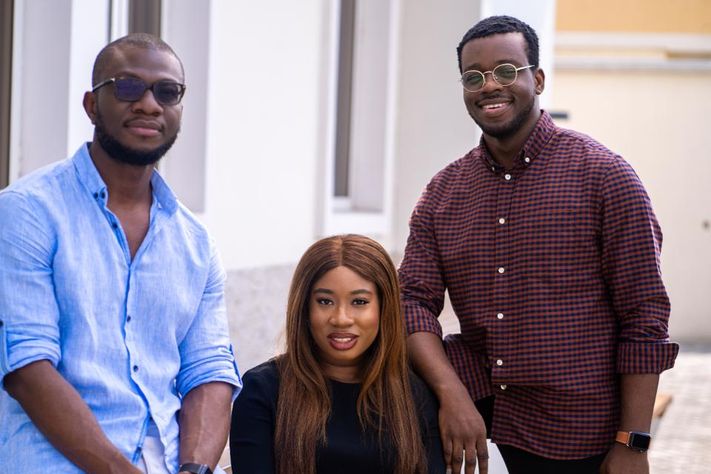
L-R, Adegoke Olubisi (CEO), Tito Ovia (Head, Public Growth Sector), Dimeji Sofowora (CFO), image credit: Forbes

Tito, like her cofounders – Goke Olubusi and Dimeji Sofowora – realised the need to improve healthcare systems in Africa, using technology and decided to establish Helium Health.

African hospitals have been operating  manually, from taking notes on paper about patients, all of which has resulted in a major lack in efficiency and accuracy, Sometimes the record are not properly taken or well stored which can result to loss.
This prompted the young Nigerian entrepreneurs Adegoke Olubusi, Tito Ovia, and Dimeji Sofowora to launch Helium Health, a healthcare technology provider working in several African countries.

The young trios are 2019 Forbes 30 Under 30 honorees, who recently secured a $10 million investment from a series of funding.

Impressively, Helium Health is already  used by 5,000 doctors, with data from 500,000 patients across West Africa and currently attends to over 145,000 visits from the region.

Tito and her co-founders have said their goal, with Helium Health, is to drive a technological revolution in African healthcare, not just in the medical records space, but every part of the industry.

At the beginning, they had to secure the trust. “You are twenty-something-year-old kids, you are not doctors, and you tell them you want to run their hospital,” said Olubusi.

Olubusi, who serves as the company’s CEO, added. “When we think about the extent of the challenges and problems that we can solve in the healthcare sector in Africa, there could be a million ways in which this can help us grow.”

“This new round means that we have more firepower to be able to expand the reach of our product way beyond Nigeria, Ghana and Liberia where we are now,”

“Imagine if a hospital sees a 1000 people a day,” Olubusi says. “How do you count a 1000 people every day with specific issues they need taken care of when you’re doing everything on paper?”

“The demand is incredible, we’ve had over 250 hospitals sign up,” Olubusi says. “More than half of them have never worked with us before.”

Olubusi, a Johns Hopkins graduate and  with his high school friend Dimeji Sofowora (CFO), and Tito Ovia (Head of Growth), whom he’s known since college. The three of them had studied abroad, had returned to Nigeria and were looking for a problem to solve. They decided to focus on healthcare because it was a sector that desperately needed modernization.

“It doesn’t matter if you’re rich or poor, if you get in an accident and there isn’t a strong emergency department, you will die,” Olubusi says. “Because of the COVID-19 situation, now these countries are having to face the harsh reality of not investing in their healthcare sector.”

We  love this.
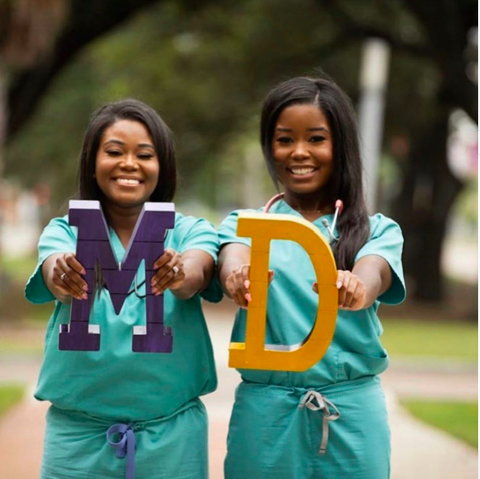
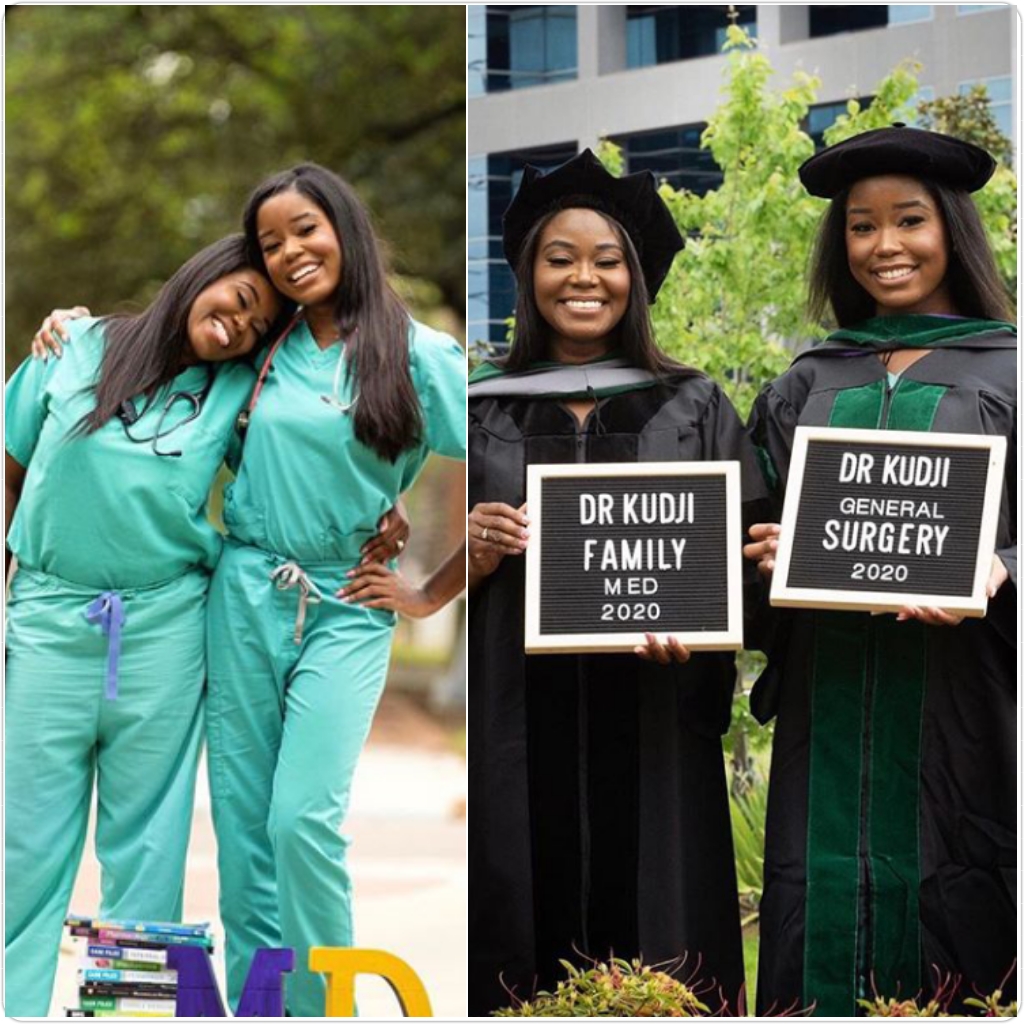
Cynthia Kudji, and her daughter, Jasmine have just graduated from medical school at the same time.

Dr.  Kudji, who’s originally from Ghana, West Africa is a single mom. She put her dreams of becoming a doctor on hold when she was pregnant with her daughter at just 23-years-old, then went on to become a nurse and worked as an RN and Nurse Practitioner for almost a decade before deciding to attend medical school.


Both are now graduates of the University of Medicine and Health Sciences (UMHS) St. Kitts and Maine and Louisiana State University (LSU), respectively, with medical degrees in Family Medicine for Cynthia and General Surgery for Jasmine.

In an interview with The UMHS Endeavor, Dr Kudjie explained that she initially had no plans to enter the medical field due to a lack of representation in the field.

“I remember when we were young there were TV shows like The Cosby Show and A Different World,” she said to UMHS. “Seeing African Americans in college or being successful was like firsts. So, for me, it wasn’t like ‘Oh, yes, I want to be a physician’. It was more like, ‘Oh, no, can I really do this? Or, ‘Am I smart enough to do it?”

Dr Kydjie and her daughter definitely had challenges as nontraditional students with Jasmine having to adjust to being so far from her mother.

“I think initially it was difficult because my mom and I have always been really close so I had to get used to the distance, we had to learn how to FaceTime and Skype each other, so we were Skyping each other every day and whenever I had struggles and she had struggles, we just had to learn to communicate from a distance,” the younger Dr. Kudji said. “But I think over time we figured it out.”

They both credit the support of close family and friends in addition to faculty members.

“I always tell people we laugh together, we study together, we cry together,” said Jasmine. “I think medical school is one of those experiences that you don’t truly understand until you’re in it. Sometimes people struggle to find someone who relates to their struggles, so for that person to be my mom was extremely helpful.”

Image source: Google


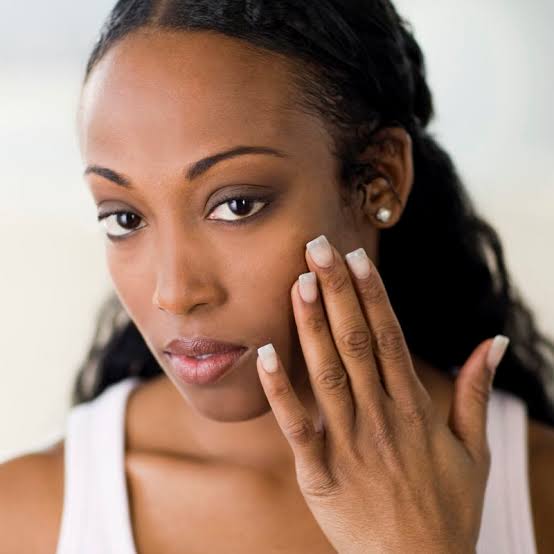
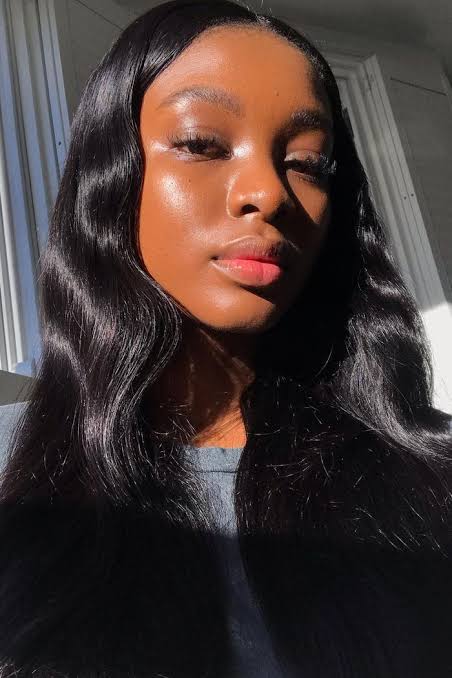
Skincare can be kept simple. You should follow a routine for the skin, one that suits its type. These are three basic tasks any skin type, for a busy morning routine.

Washing the face with cold water

For that glow after a night nap, wash you face with cold water. Even if you are not stepping out of the house, washing your face and keeping it clean, is the first step towards achieving a naturally-glowy look. This would not strip your skin to dryness and would give it a refreshing look.

Use a moisturizer

Right after a wash, you need a moisturizer to help seal in moisture. The best time to slather in a moisturizer is when your skin is damp, according to research from a Dermatology Academy. Moisturizing is not a night care routine alone. A face moisturising cream will be handy.

Don’t forget a Sunscreen

The next best thing you can do is apply some sunscreen. If you only had time for one skincare product each morning, it should have some amount of sunscreen. Shea butter acts as a natural sunscreen if you know it, or you might want a store bought sunscreen product which is fine and suitable to your taste. But ensure to keep it simple.

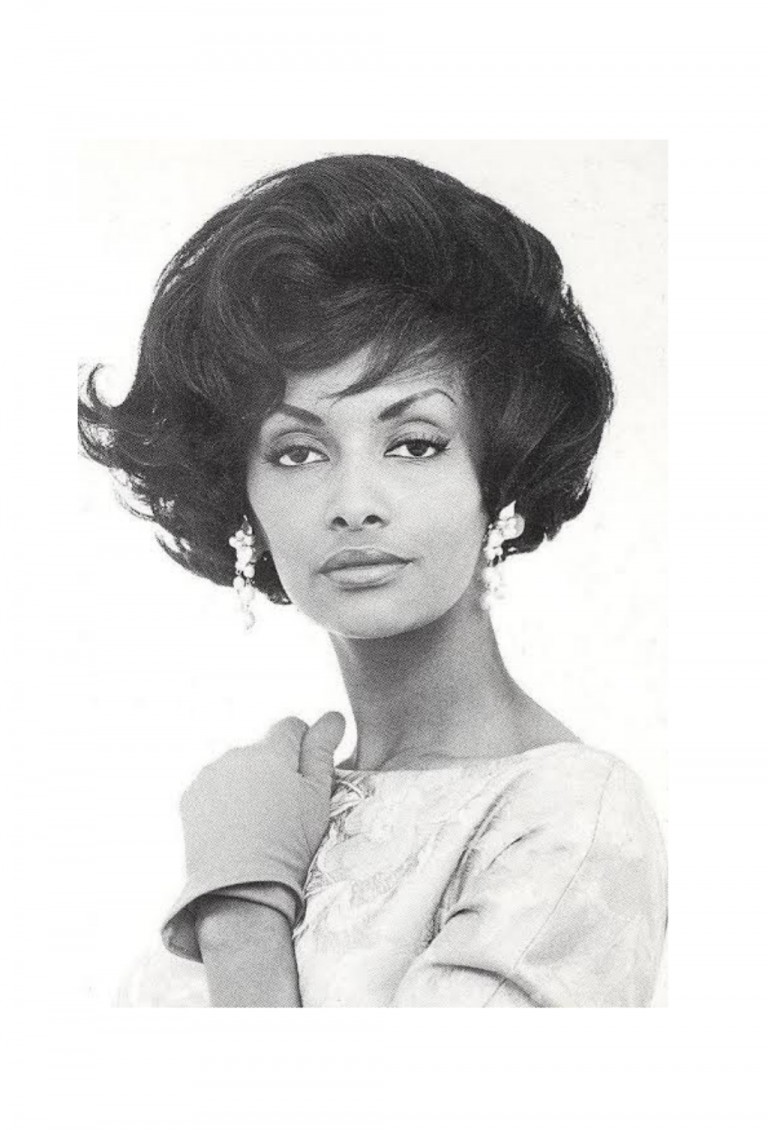
In the 1950s, Helen Williams made history in the United States when she became the first dark-skinned African-American fashion model to cross over into mainstream advertising.

Yet, it was the French who accepted her instead of the Americans who considered her to be “too dark.”

Williams would surmount the challenges that came with the color of her skin, rising to fame in Paris and New York in the late 1950s and early 1960s and paving way for other dark-skinned models.

Born in East Riverton, New Jersey in 1937, Williams studied dance, drama, and art before becoming a stylist at a New York photography studio.

There, her beauty caught the attention of Lena Horne and Sammy Davis Jr, who frequented the studio to do press shots. The two encouraged Williams, then 17, to take up fashion modeling.

And that was how she was able to break into a stereotyped industry like fashion in the 1950s, working with African-American magazines like Jet and Ebony.

But there was a problem – her dark skin color did not attract many industry folks in America, as non-white models were largely excluded from mainstream fashion. Even within the African-American modeling scene, ladies were expected to be light-skinned.

“I was too dark to be accepted,” Williams once recalled. Facing discrimination while trying to extend her career with other modeling houses, Williams moved to Paris in the 1960s, where she was embraced.

France had a different outlook on black beauty and soon enough, the African-American beauty was modeling for big fashion designers like Christian Dior and Jean Dessès.

“By the end of her tenure she was making a staggering $7,500 a year working part-time and had received three marriage proposals from her French admirers, one of whom kissed her feet and murmured, ‘I worship the ground you walk on, mademoiselle’,” writes arogundade.com

Williams later returned to America, hoping things had changed for models like her. But when she went searching for a new agent in New York City, she realized that there had not been any major change.

Told to wait two hours in the reception of one agency, she was later told that the agency already had a black model and she was not needed. Having had enough of the bias of the fashion industry, Williams took her case to the press.

Some influential media personalities took up her case, exposing the plight of black fashion models in the country and drumming home the need for change.

Eventually, the situation improved, especially for Williams, and she got booked for ads for major brands such as Loom Togs, Modess, and Budweiser.

Her rate also shot up to $100 an hour. Finally, the beautiful, talented and inspirational woman had broken the color barrier in the modeling industry. As more black models became more visible, cosmetic companies began doing a lot of research aimed at developing products for African-American women.

Retiring from modeling in 1970, Williams continued her career in fashion as a stylist. Her courage, however, paved the way for other black models like Naomi Campbell, Tyra Banks, Duckie Thot, among others.

At 25, Sinenhlanhla is the founder of Passcara and Partners Incorporated based in Durban, South Africa. Her firm focuses on family law and personal injury.

Sinenhlanhla Passcara Mthembu, completed law school and started working with a law firm but she’d always wanted to establish her own business so she quit her job and became her own boss. “It is hard based on my age. People see Law as a difficult field. It is a scary field and a man’s world but I took it as a challenge upon myself to do it.”

“I then decided that no matter what people are actually saying, I’m going for it regardless of my age and the challenges I may face,” she told Power FM.

“It was difficult from the point where I started my degree to where I am now. I don’t regret anything.” She is the only person running the law firm at the moment, according to reports.

The journey has not been so smooth, butwent it comes to market herself. But she is positive that word-of-mouth marketing from her clients will help her.

“What is hard in our field is marketing yourself. There is a thin line between marketing and touting. Touting is like when you are asking or begging for clients,” she said. “It makes it hard to market because you don’t want to cross that thin line that the [legal] council has put for us.”

Sinenhlanhla is also a content creator at Youtube, who shares beauty tips with her followers.

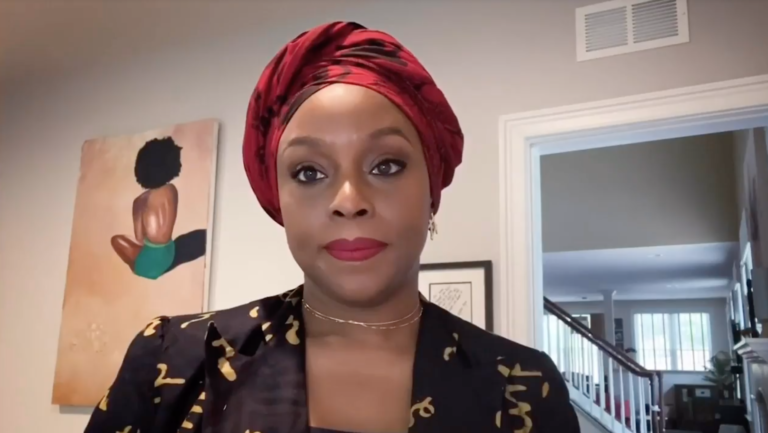
After 42 years, Chimamanda Ngozi Adichie has become the first black woman to deliver a Commencement Day speech at the University of Pennsylvania. Since 1978, was when then-US Secretary of Housing and Urban Development Patricia Harris did so.

The announcement was made by the Vice President and University Secretary Medha Narvekar.

“We are honored to bestow our highest degree on Chimamanda Ngozi Adichie and have her address our graduates at Penn’s 264th Commencement,” said President Amy Gutmann. “Her compelling narratives and absolutely fascinating commentary on complex cultural issues elevate the power of the individual voice.”

Chimamanda spoke virtually to the class of 2020, who chose her as their Commencement Day speaker, telling them about what strange times we live in.

These may be strange times – they certainly are for me – but I want to urge you to remember that there is so much to celebrate. You’ve done it. You’ve graduated. Congratulations.

She will be speaking physically to the UPenn class of 2020 on May 22 and 23, 2021, as those dates have been confirmed as the 264th Commencement Day event.

Watch her give her speech below:


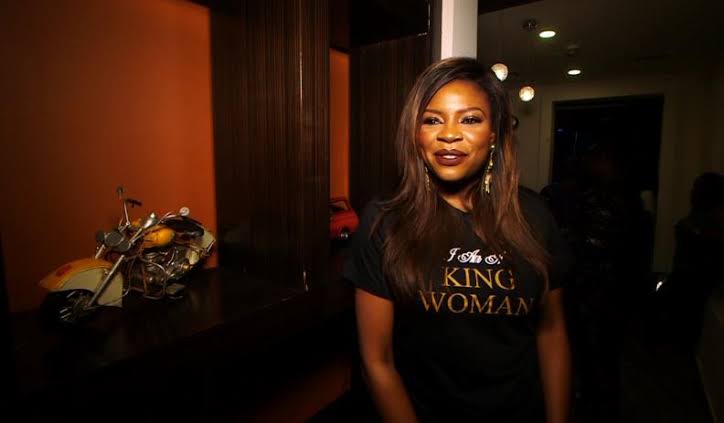
Hello WORriors, it’s #WomanCrushWednessday, and our Woman Crush is Kemi Adetiba!

She is a multi award winning movie director, cinematographer, music and video director known for excellent work in the industry, especially the blockbuster movies, ‘The Wedding Party’ and ‘King of boys’. Her works have made appearance in places like BET, Netflix, MTV base, Sound city Tv, amongst others.

Born in Lagos on January 8, 1980,  Adetiba started her journey into the media really young where she headlined two national television commercials for the detergent brand OMO, just like her father, Dele Adetiba, a veteran in the advertising and broadcast industries who played a pivotal role in the development in Nigeria.

In 2007, with a love for storytelling, the law graduate enrolled in the New York Film Academy. Her body of work includes music videos, commercials, television content and films.

The exceptional film-maker and music video director believes the year still holds many promises’. She came out clear with her opinion known through her Twitter and Instagram handles.

She said, “ I think 2020 still has more to offer. There is no pretending it is increasingly becoming harder and harder to remain positive in these peculiar times. It is very natural to want to simply throw your hands in the air and give permission for the year to throw you anywhere and anyhow it wills.

I know it seems unfair to be forced in the position where you have to choose between hunger or health for both yourself and your family, but alas, here we are and there is no running from it.”

She sermonised that lamenting about the situation will not make it disappear, and therefore advised we give it whatever it takes to live our normal lives. “Blinking hard or “woe is me” laments will not make it disappear. But if this THING will not play fair, then neither will we. The only thing sure about LIFE is CHANGE. And as long as you have breath… There is always HOPE!!! No one would have predicted an invisible virus would come shut down the entire world for half the year. This is what you call “humbling!!” But as long as the world is still spinning, we have an obligation to keep pushing,” she added.

She prophesied that when things go wrong, it is only those who spent time warming up, preparing that will gather the most nuts in the end.

She tweeted : “I think 2020 still has more to offer. My dad once said to me “What you lose on the stretch, you gain on the curve.” I pray there is more once we round this bend.”


By Pamela Mbata


Ready or not lots of things are changing. In this age, there is an exposure to every kind of information, lifestyle, culture and almost any system of doing things. One can not, but wonder and ask how positive or not it has been.

In the world of beauty and cosmetics, a tremendous change has swept through the land. Fashion keeps recycling while bringing innovative ways of doing things. Although some of what we see today has been done in the past, but new systems are emerging. For example:

  • Botox and plastic surgery, which has gained popularity amongst folks allover the world.
  • Advanced makeovers, women making up didn’t start today, but it is clearly advanced if you agree because more knowledge has been figured out, with the introduction of chemical based product on the counter and synthetic usage of materials.
  • Taking ‘Selfies’ was not a thing before  the early 2000’s but now it is so common and has been adopted as a norm for personal photography.

For women in particular, the pressure to keep up with what we see online has become a morbid cycle.

False representations and unrealistic standards

Tons of celebrities, influencers, models and brands, also use social media to sell and promote themselves by creating an image of perfection. They document their workout routines, eating habits, and other aspects of their lifestyle that contribute to the way they look. It can be all fake sometimes.

Whilst we may believe as we mindlessly scroll though such content, our subconscious is soaking it all up and before we know it, those perfectly formed bodies have become the standard by which we measure everything else.

Famous people and models on social media document their workout routines, eating habits, and other aspects of their lifestyle that contribute to the way they look. There is only one problem with this industry; it’s all fake.

Some have developed  mental heath issues, identity issues and even body dysmorphia trying to emulate the beauty standards that are simply unattainable.

An Instagram model can post a picture of herself in a bikini, showing off her taut stomach, holding up a weight loss tea supplement. Her caption reveals that said supplement is the secret to her honed physique.

This alone, sends a very dangerous message to millions of her followers, the majority of whom are impressionable young women.

It is spreading the idea that supplements, diet pills and detox teas are the best way to achieve her body type, when in reality, it could not be further from the truth.

More often than not, their looks are a combination of gym, plastic surgery and a generous amount of retouching.

Her job is to look perfect and promote merchandise. This creates an unrealistic beauty standard for all of her followers who believe that this product is their ticket to a perfect body.

In reality, a perfect body does not exist. An immense amount of planning, makeup and photo editing went into the final Instagram picture she posted. It’s designed to sell a product, not support a healthy lifestyle.

This leads to low self-esteem and negative thinking towards food , body acceptance and comparisons. It is incredibly important to teach young women and men that social media is not real life.

So, social media tells us that we need to be a beautiful person in order to be worthy which could not be further from the truth.

It is incredibly important to teach young women and men that social media is not real life. Trying to emulate this types of bodies can cause physical and psychological damage.

Fitness trainer Ottillia Giralico, based in Canada, has advised on what it takes to be healthy. According to her for any individual to stay healthy and fit, he or she must focus on staying fit, exercising a lot and, most importantly, engage in whatever makes them happy.

While enlightening the pubic, the Jamaican and Italian-bred stated the importance of health and fitness.

“I think the public should know that fitness is not only physical. There is fitness for your physical body, but also for your mind, heart, and soul.

“Its’ so easy to focus on the physical aspect of fitness and while you may be physically in great shape, your mind may not necessarily be on the same level.

“Exercise should apply to all realms. In order to be healthy as a whole being, focus on every form of fitness and exercise and do things that you truly enjoy.

“I don’t think that one can exist without the other. I think that in order to be healthy (physically, mentally and emotionally), fitness would have to be something that is consistent in ones’ life.

“And vice versa, one cannot be fit and perform fitness activities without having a healthy solid foundation to work with. For example, if someone is not healthy enough to get out of bed, then they obviously won’t be able to include fitness into their everyday lifestyle.

“Personally, fitness positively impacted my mental health. At difficult times I would turn to physical fitness to cope and relieve stress, and it helped me with feeling both physically and mentally stronger. Overcoming challenges in the gym while working out and lifting, felt like a metaphor for me overcoming challenges in life.”

On how she has coped with the pandemic, she added “Due to COVID-19, I haven’t been able to train clients face-to-face or be present in the gym at all. I train clients online.

“Overall, I feel hopeful, positive, and productive. However, there are moments where I feel down because the gym was an environment where I was able to truly identify as myself.

“However, COVID-19 has been a blessing for me because I’ve been able to work on so many other projects, including my business.”

Giralico speaking on her life philosophy said: “Be your best self and live your best life. To me this really means putting self-care first, and loving yourself.

“Once that is in place it becomes a lot easier to show love and compassion towards others. Love is always the answer. Also, putting your personal well being first will then allow you to be able to live life to the fullest, and enjoy every moment.”

The 29-year-old Ottillia Giralico, lost her parent at young age. Her only regret has been wasting her time in an unpleasant relationship.

The certified trainer and entrepreneur said: “My only regret would be the years that I lived while being unhappy. I was unhappy in my relationship, and career. This was something I settled with for years. It was only after I removed myself from certain situations, and put myself first that I was able to have a whole new and different perspective on things.

“I regret not knowing what I know now at an earlier age, and I regret not pursuing my passion and believing in myself at an earlier age.”

The graduate of Psychology and Sociology was able to pull through the challenges of life as an orphan, with the help of her grandparent.

“My mother was a very independent and strong woman. She taught and raised me to be the same. My grandmother and grandfather also played an integral role in my life, and were very strong resilient people who created an amazing life for the generations that followed after them.

“A strong upbringing and supportive family definitely helped me get through most of the challenges I encountered.”