Women of Rubies

Category

Inspiration

Category

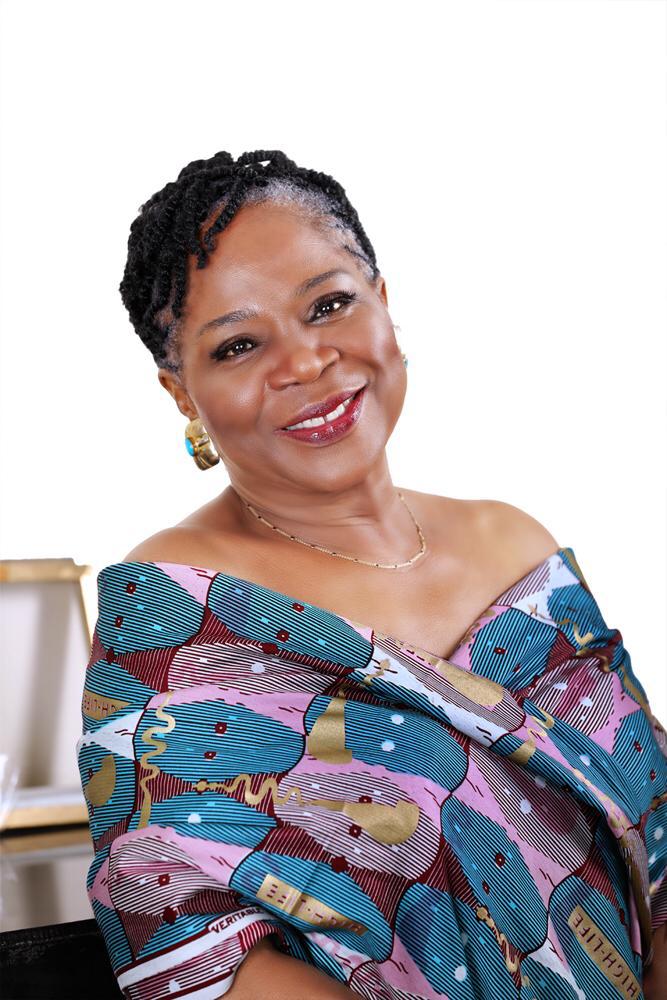
Onyeka Onwenu is a singer/songwriter, actress, human rights activist, journalist, and politician. Popularly called the Elegant Stallion, she is a former chairperson of the Imo State Council for Arts and Culture, as well as former DG, National Centre For Women Development (NCWD). She has won many national and international awards in recognition of her inspirational work in many fields. At the recent launch of her autobiography, My Father’s Daughter, she describes the book as a deeply personal account of her life and everything she has ever done. She tells TOBI AWODIPE of her introduction to feminism with her mother being the first role model of a liberated woman, how Nigerian youths are giving the nation hope with the #End SARS campaign, why more women must participate in decision-making and execution to stir growth and development.


Could tell us about your childhood? How would you say it shaped you into the woman you are today?
My childhood was idyllic, filled with the extraordinary love of an indulgent father, but too short-lived. It was filled with memories of good times and strewn with life’s lessons.

You recently released your autobiography, why did you decide that the time was right?
I think that the book decided for itself when to come out. If I had my way, it would have come out two years earlier, but situations and circumstances kept delaying its completion. I stopped worrying when I realised that each break afforded me the opportunity to better the book. It ended up being a case of all things working together for good.

You’ve been involved in music, journalism, politics, and so on, did you ever feel you had to sacrifice a parts of your life to succeed at all these?
Thank you for this huge compliment. I may not have planned my life that way, except that I took on opportunities as they presented themselves and dared to believe that I could give them my best shot. There is a whole lot more to be done. I will not limit the God who works in me; I am not able, but He is. I have never sacrificed one thing for the other. Like every other woman, I am simply multitasking. I can do many things at the same time and bring them together in some sort of harmony; it comes naturally to us.

In your book, you spoke about your contact with feminism and how your father’s life influenced your decision to join politics, tell us a bit about this?
I spoke about how my mum, Hope Onwenu, a strong Igbo woman (she had to be as she was widowed twice by age 37 and raising a family on her own) was for my siblings, a veritable role model of a liberated woman. She carried herself with a sense of self-worth, determination and grace. I was taught to carry myself in a similar manner. If that is feminism, then that’s what it is.

As an activist yourself, you must have felt some stirring within you regarding the recent #EndSARS protests sweeping the nation. What would you say to the youths and government respectively?
As a mother of young men and being of an older generation, you have no idea how proud of the Nigerian youth I am. I am familiar with their angst, their frustrations, and at some point, their hopelessness. I live with them; they are my children and wards. I have gone through the pains with them, in discussions and debates, arguments, and agreements, these topics have always been part of our interactions.

Some of us of an older generation had wondered if the youths would one day shake off their apathy and take back their destiny. Then one day, seemingly out of nowhere, the youths of Nigeria woke up. In the process, they taught us some greatly needed lessons. I am writing this today, but I have spent the last two days weeping and depressed for the mowing down of our beautiful children, right in front of our eyes. I am shocked and grieved beyond measure.

I never thought that our government would, in front of the whole world, take such an unwise retroactive measure, to kill in cold blood our unarmed youths, who are legitimately demanding a better life for us all. But something has happened with the #EndSARS campaign that can never be erased. There is hope still; I feel personally vindicated. The agitation and activism one has been engaged in for so long has not been in vain. The youths will yet save Nigeria or versions of it.

Having experienced the Civil War, do you fear that we might ever go down that path again with present happenings all over the country?
I have my fears about my country and my war experience informs that fear. We would not survive another, no country ever has. The question is this: do we have enough Nigerians who care to give peace a chance by doing the right things and giving us all an equal stake in this entity we call our country? That is what we need to ask ourselves right now.

As an advocate for social change, what are some ways young women can drive this even more in Nigeria today?
Instead of devising more ways to extract more obligatory commitments from women who are overstretched and hardly supported, I would rather we enable and allow them to participate in decision-making and execution. Believe me, we would witness remarkable growth and development in Nigeria.

You mentioned in your book that you experienced workplace harassment, what would you advice women that find themselves in that position?
I cannot assume to have an answer for everything. I just stated what I did and how I coped with workplace sexual harassment then. Perhaps, they can learn something from my experience. I said a firm ‘no’ and left the environment.

x

As a seasoned TV journalist, would you say the profession is friendly to women?
I never experienced any discrimination on account of my being a female journalist.

Tell us some of the challenges you faced when you ventured into politics, are women today still faced with these issues?
The challenges I face when I ventured into politics are well documented in my book, My Father’s Daughter. I recommend it highly to everyone.

As a Nigerian music icon and entertainer, are you satisfied with the state of the industry? What can we do to improve it?
The answer to this question should be a whole interview on its own and would require more than my contribution. Suffice to say that we have no functioning institutions and no government agencies with oversight functions really working. They have allowed the ones that exist, like COSON (a copyright collective society), to run amok. No one is in charge here and it shows.

Not many people know you married a Yoruba Muslim, is this something you generally don’t talk about?
I generally do not talk about my private life, but it was necessary for the authenticity of the book; it rests there. It was never hidden, but it was not for public consumption, only on demand.

Many women are going into activism today and are at the forefront of many protests, how does this make you feel?
It is lovely to see young women not allowing themselves to be kept down by the limited expectations of society and its rules. The women are awesome and it is a delight to watch them in their strength, boldness, and purposefulness. I am proud of every one of them.

What peculiar challenges would a woman that wants to venture into the entertainment industry today face?
The problems in the industry are not peculiar to women, except that would have to deal with the added pressure of sexual harassment and lack of respect from a society that does not appreciate the achievements of women. We only care they see them as sexual objects and not much else.

What is the importance of feminism to Nigerian women?
To me, feminism is the right to be myself, to believe in my self-worth, and to do my best work. These are the convictions that have allowed me to excel in anything I have the opportunity to do. Does it make me a productive member of society? Most definitely, yes!

What last words do you want to leave with people reading this?
Hopefully, these will not be my last words but my words for now. Keep striving; God’s got your back. Soar, no matter what. You are here for a purpose. Keep trying. I love you.

Source: Guardian

Do you sometimes feel you are not good enough, or think your best isn’t enough? This article is for you.

Confidence — it’s a powerful word and an even more powerful feeling. Can you remember a time in your life when you felt confident? A time when you felt unstoppable… on top of the world? Now imagine you could feel that way more often. What impact would that have on your health and well-being, your career, your relationships?

Not only does being confident feel good, it helps you seize potential opportunities, take more chances and make that big change or take the next step in your life and career. Life is crazy, busy and beautiful. Figuring out how to be more confident is just part of the journey.

So how to be more confident?

Lack of confidence can stem from many places.

Perhaps, growing up, your parents said a certain career was outside your reach and you could ‘never do that’. Or maybe you have a belief system that says ‘I could never start my own business, I’m not entrepreneurial’.

Perhaps you had a bad experience which opened the door for self-doubt to creep in. Or maybe your inner self-critic is telling you ‘you can’t’ or ‘you’re not good enough’. Maybe (ok, likely) you’re comparing yourself to someone else – a friend, colleague or spouse.

Or perhaps you feel there is something missing in your life – a relationship, the dream job, kids, a degree or title.

Here are 9 powerful ways to be more confident

1. Uncover What Gives You Confidence

This is personal, so it will vary from person to person. There’s no one size fits all approach to confidence and what works for one, won’t always work for another.

How can you figure out what gives you confidence? Think about a couple times in your life when you felt most confident. Now, think about what was it about those times that made you feel so empowered.

Was it the environment you were in? Something you were doing? A feeling you had? The more you get clear about this for yourself, the easier it will be to tap into when you need it.

2. Be True to You

One of the surest ways to lose confidence is try to be someone else. One of the best ways to build your confidence? Be true to yourself

When you’re trying to be someone you’re not, every part of you resists it. You are not everyone else. You are you. And the more you can understand who you are and what you value the stronger you will be.

When you stray away from who you are, you lose confidence because it’s ‘just not you’.

How?

Think about what makes you, uniquely you. Write it down. Think about what you value and what’s important to you. Write that down, too.

3. Stop Comparing Yourself

Nothing zaps your confidence more than comparing yourself to others. Especially now, with social media and the wonderful opportunity to judge yourself against so many others! Lack of confidence comes from a gap in where you see yourself and where you think you should be.

Imagine you are preparing to give a big presentation or speech. So you do your research, which includes watching some of the best speakers in the world doing their Ted Talks. Of course you are going to feel inferior.

How?

Stop comparing yourself to others. Just stop. If you still feel a compelling need to compare – compare yourself to yourself. Measure how far you’ve come. See how much improvement you’ve made. Acknowledge your wins and successes.

4. Realize You Are Enough

This may sound a little bit corny, but try it. This positive affirmation will resonate at a deep level and have a powerful effect on your subconscious.

How?

Every day for the next 21 days repeat this mantra “I am enough.” Don’t just say it, but feel it, deeply, at the core of who you are.

Want to get more specific? Replace ‘enough’ with whatever word you’d like to ‘be’. What would give you the most confidence?

I am brave. I am strong. I am smart. I am beautiful. I am confident. I got this.

5. Acquire New Skills

Since confidence is often directly linked to abilities, one of the best ways to build your confidence is to get new skills or experience and step out of your comfort zone.

Growing your skills will in turn grow your confidence. And please, as you work on building your skills and expertise, don’t mistake a lack of perfection for a lack of ability. No one is perfect. But if you’ve got a perfectionist bone in your body (like I do), it can make you think that just because you’re not the best, that you’re not good at all.

Make sure to check yourself – am I really not good at this, or am I not good as I want to be just yet?

How?

Ask yourself: Is there a specific area where you are lacking confidence? How can you expand your expertise in this area?

6. Change Your State

Changing your physical and mental ‘state’ is one of the quickest ways to access a feeling of confidence. To do this, you need to know what the state of ‘confidence’ looks, feels and sounds like for you.

How?

Here are a few strategies you can use to access that:

  • Remember – Think of a specific time, associated with feeling confident. Sink into that feeling deeply and moment by moment relive every detail.
  • Imagine – Imagine how you would feel if you were confident. How would you act? Feel? Be?
  • Modelling – Think about someone you know who exudes confidence. Imagine what that person would do.

7. Find Yourself a Cheerleader

Yes, while I understand confidence is a state from within, you can also boost your confidence by the people you choose to spend your time with.

How?

Make a concerted effort to surround yourself with others who provide encouragement, positivity, and inspiration.

Spend more time with people who ‘get you’ and see all of your greatness – and less time with those that zap your confidence or cause you to feel self-doubt.

8. Just Do It

When Nike came up with this slogan in the late 80’s, they knew just how to get the general population off their butts and moving. Turns out, this is a great strategy for being more confident too.

Action builds confidence and each step you take builds it further.

How?

Think of one step you could take right now that would get you moving in the right direction. Then Just Do It and see what happens. An incredible thing about human brain is that once it realizes something is working, it will keep that momentum going!

Final Thoughts

Being more confident starts with one thing — YOU.

YOU making the decision to take action. And when all else fails, YOU can make a choice.

YOU can choose to be confident. YOU can choose confidence over fear and self-doubt.

Your mind believes what you tell it. If you continue to tell yourself the story that you are not confident, you will believe it and your self-doubt will continue. But if you tell yourself you can do it, that you got this, your mind will believe that too.

Remember, fostering a strong sense of confidence is critical to experiencing overall levels of health, happiness and success.

And once you get started you’ll be unstoppable. Be brave. Be confident. You got this.

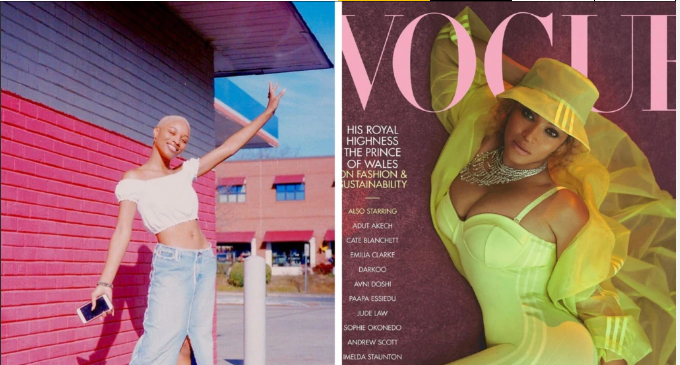
At 21-years-old, Kennedi Carter has made history as the youngest photographer to shoot a cover for British Vogue in its 104-year history. Carter had the privilege of photographing one of her musical idols, Beyoncé, for the December 2020 cover. The North Carolina native said she was shocked when she got the job.

“It feels like it dropped out of the sky,” Carter told British Vogue. “I’m 21… I haven’t really had many opportunities like this.”

Carter is a fine art photographer who describes her work as showcasing “overlooked beauties of the Black experience” and was handpicked by Vogue’s editor-in-chief Edward Enninful and Beyoncé, who asked for a woman of color specifically for the shoot. This isn’t the first time Queen B has had a hand in a historic Vogue cover; in 2018, she tapped 23-year-old Tyler Mitchell as her photographer. He became the first-ever Black photographer to shoot a Vogue cover in the publication’s 126-year history.

Although Carter’s aesthetic falls in line with Beyonce’s, especially with her recent Black Is King visual album, which uplifted the Blackness across the diaspora, Carter still felt shocked due to her perceived inexperience. She is younger than Irving Penn and David Bailey who’s first Vogue covers were 26 and 23, respectively.

“I thought I wouldn’t be able to do something at this level unless I was older, with many years in the game,” she told Vogue UK. “This is for people at the pinnacle of their careers.”

The senior African American studies major at the University of North Carolina at Greensboro told British Vogue that she didn’t let nerves get to her during the two-day shoot. She said she was going with the flow, having researched how the star worked and was surprised at how much control over the shoot Beyoncé gave her.

“I had underestimated how much she’s willing to submit herself to a vision and truly become someone else’s muse,” Carter said. Adding that the star’s ability to “control her own narrative” was something that she admired and that she was “just so, so nice.”

She said she appreciates the opportunity Beyoncé has given her and other artists that may not have been recognized without her platform.

“It’s really amazing that she’s using her influence to be able to give young artists this experience, and allowing their voices to be heard,” Carter told British Vogue. “She’s opening the door for others.”

Growing up, Carter didn’t expect to be a photographer; she’d only taken a photography class in high school because she thought it was going to be easy — it wasn’t. However, she kept at it and found her passion. She credits Dana Scruggs with getting her work in front of editors. Now that she has Beyoncé on her resume being noticed shouldn’t be a problem. But even with her newfound acclaim, she said she isn’t looking to leave her family in Durham to find a big city anytime soon. But she does plan to celebrate with them.

“I think we’ll just sit outside and make a little bonfire, the four of us,” She told British. “And I’ll invite my man.”

We can’t wait to see where you go from here, Kennedi! Congratulations!

Photo Credit: British Vogue/@internetbby Instagram

Tayo is an accountant who manages the payable and receivable functions of her workplace. When she started her career, her main career goal was to become a renowned CFO and thought-leader in the financial sector. She’s been with the organization for over 7 years on the same role. She approached me and complained about how she hasn’t progressed toward her goal in 7 years. I probed some more, but didn’t find anything tangible.

Coincidentally, I happened to know her line manager, and decided to ask about his individual team members and opinions about them. One thing that stood out from what he said: “Tayo does her job well but sticks only to her job description. When you give her something else that may push her to higher task, she complains that it is not her job description and she would rather stick to only what she knows.”

He also went further to say, “How will I help her grow in the finance space if she’s so rigid? I’ll rather pack the challenging work to someone else and leave her in her comfort zone.” I thought about this deeply and realized I’ve actually met people like that in the past. Outwardly, they sound like people who want to grow, but when they’re at work, they’re the ones filled with unnecessary complaints. Line managers notice it and avoid getting into any trouble with these people. They’ll rather smile with them and leave them in their rigid place. People join, learn more than them and eventually move on.

There are a lot of Tayos in the workplace and they are wondering why their mates are soaring and earning way higher while they are on a poor salary scale despite going to the same school and even having a higher GPA. As a career professional willing to grow, don’t get stuck with the mentality that everyone just wants to ‘use’ you. Sometimes, the exposure you get from these experiences will catapult you towards something greater.

I once had a team lead who used to pass flimsy work to me. That was when I just started my career. Within me, I’d grumble about how unnecessary tasks were being added to mine. Yet, I would do them without complaining or giving attitude. One day, I jokingly asked him why he gives me such tasks. He told me he’s deliberately doing it so that I can learn the ‘basics’.

Always learn to ask for feedback from your supervisor, at least every quarter. This will help you know how you need to get better. Let your team members and team lead see the burning passion in you to learn.

Go the extra mile and even if you’re not sure you can do it, take it, use Google, and then ask for help during the process. You’re building yourself. Learning to go the extra mile will definitely pay off for you in the long run.

I hope you have learned from Tayo’s story. I wish you the best in your career.

***

Photo Credit: Dreamstime 

You’re having one of those days or weeks. Nothing seems to be working, your motivation i gone  , and you’re daydreaming about quitting. Your confidence is running empty and you’re feeling worthless. Sounds like you? Then this article is just for you…Read On

First of all; Breathe, because we’ve all been there. Furthermore, I want to remind you that a high growth lifestyle comes with vulnerable emotions. You feeling this way does not say anything about your character or capability.

However, the longer you stay in a state of feeling worthless, the more clarity and momentum you start to lose. Because while feeling this way is normal, staying there becomes a choice.

In this article, you’re going to learn 7 things to remember and practical steps to help you come out the other side with more resolve and clarity, not less. Let’s dive in.

1. High Growth Equals High Vulnerability

You wouldn’t be reading this article if you weren’t someone committed to their personal and professional growth. And let’s be clear here—a high growth life requires dealing with messy emotions.

Why?

Well, for starters, you’re leaving your comfort zone. You’re working on yourself. You’re no longer a “talker” but someone who is actually doing it. It’s important to remember what you’re going through now is a natural part of growth.

2. You’re Exactly Where You Need to Be

One of the biggest misconceptions in psychology is that you should feel bad if you’re feeling bad. There couldn’t be anything further from the truth; ”negative” emotions are as healthy as positive ones. It is our reaction to negative emotions that can cause harm. But the emotion alone is a healthy and normal part of life.

3. There’s So Much That Is Working

Being in a vulnerable state can shift our awareness to stack all the ways life isn’t working for us. We think of the people who betrayed our trust. We think back to being fired after giving time and energy to an organization. We overanalyze a comment on social media and obsess over how our goals aren’t happening fast enough.

Remember, you woke up today—50,000 people didn’t. Your heart’s still beating to the tune of 2,000 gallons per day. You likely have access to shelter and clean water. This is a simple perspective shift that allows us to lower the bar on gratitude and remember what is working.

4. Contrast Creates Perspective

We live in a culture that emphasizes 24/7 positivity. We must present our best selves—we must find the ‘silver lining’ in every circumstance. And while these are great aspirations, they’re not real life.

Enter contrast in life—the experience of something different. Hard moments, unsettling emotions, and experiencing conflict in our lives all lead to a newfound perspective we wouldn’t have otherwise had access to.

With “contrast,” we ask better questions. We seek better answers. We ask for help, creating a deeper connection. We become empathetic to others’ struggles. We may even get an idea for a change in our lives that could only be accessed in the contrast.

With that said, stay curious. When we are curious about our emotions and what we’re going through, we are compassionate instead of judgmental. We stay open to new insights instead of labeling ourselves. All of these lead to healing.

5. Dig Into the Truth About You

Years ago, I started keeping a digital file that someone advised me to call “the truth about you.” It is a simple document where I keep screenshots, emails, comments on compliments, and reminders from those I respect.

We all have a folder in our minds where we can remember the truth about ourselves—the places we showed up and followed through. The accomplishment someone else is amazed by. The consistency we showed when it was easier to quit. You may not have this folder available, however, I highly recommend you start building it.

But even without it, remind yourself of the truth. To do so, you’ll have to transcend your current circumstances and emotional state and dig deeper.

6. This Is Why You Do the Work

If you’re reading this article, you’re interested in maximizing your potential and living a productive, fulfilling life. This means you have a toolkit at your disposal—practices, and actions that are designed exactly for what you’re going through right now.

Remember that the tough times are the best times to use these tools, whether meditation, time in nature, doing some journaling, or going for a long walk—don’t forget the power of these tools.

7. Breathe, Play, Lighten Up, Help Others

When you’re emotionally contracted, you also tend to be physically tense. Body language tends to be less open, shoulder slump forward. It’s easy to tighten up and even enter fight or flight.

We often forget we possess the number one tool to release overwhelm and get back to the center—our breath. By engaging in a breathing practice—taking some much-needed deep inhales or box breathing—you can manufacture a state of clarity and peace.

Another tool when you’re feeling worthless is to help someone else. It sounds crazy, right? We must focus on ourselves. We must fix the issue and do so now.

Oddly enough, by taking the focus off ourselves, we find healing. It doesn’t have to be anything grand—but encouraging an old friend, a random act of kindness, or dropping off snacks for a person on the street pays dividends.

All of these can create what psychologists call the “giver’s high,” and shift your perspective.[5]

Rukayat Sadiq, is  a software engineer with over 5 years successful experience leading engineering teams to build and deliver scalable software products in multiple languages and technologies.

The need to solve problems around her led Rukayat to study Electrical & Electronics Engineering. The same zeal also directed her the field of software engineering field where she has focused on working with teams to build software solutions targeted at the health, financial and educational sectors through her career.

Rukayat decided to go into software engineering after she realised what she could potentially build through computer programs having successfully written code to solve her engineering mathematics problems in her undergraduate days.

She currently works as a software engineer with Influitive – a Canadian based marketing technology firm.

She had worked as a Full Stack Software Engineer and Technical Team Lead, Senior Software Engineer at Andela, after completing the Andela Fellowship Program. At Andela, Rukayat also co-foounded and co-led the Andela’s Ladies-in-Tech group. She is also a co-organizer of the Lagos Women in Machine Learning and Data Science Group.

Rukayat holds a bachelors degree in Electrical and Electronics Engineering from the University of Ilorin and is completing her masters degree in Electrical and Computer Engineering from Carnegie Mellon University.

Rukayat was one of the women celebrated in Tech Cabal‘s Tech Women Lagos series, which profiled 50 women in the Lagos technology ecosystem from different backgrounds and at different stages of their technology careers.

We celebrate Rukayat for pursuing her dreams and inspiring others to do so and we’re rooting for her!

Source: Bellanaija

Omotoke Olowo   Olugbode is a passionate inclusive education advocate with over 5 years’ experience in education, community service, and advocating for children with disabilities. She is the Founder and CEO of The Autism Awareness Foundation, an organization that is focused on inclusive education for children living with disability especially children on the Autism spectrum disorders. She is also the CEO at Theraconnect an online mobile App that connects parents of children with special needs to the nearest and affordable therapist.

Omotoke holds a Bachelor Degree in Education (Educational Foundation and Counseling) from Obafemi Awolowo University and a certificate in Youth Mental Health First Aid in USA. She is a Mandela Washington fellow and a 2020 LEAP Africa SIP Fellow.

Omotoke has spoken at International conferences including, The Concordia Summit at the Grand Hyatt, Voice of women at Wagner College. She also had an internship opportunity with the Department of Behavioral Health and Intellectual Disability, Philadelphia, USA

Omotoke believes education is the bedrock of everything and without it she would not have been able to achieve all she has.

She shares her “Ruby Girl” story in this interview.

1. Who is Omotoke Olowo Olugbode?

Omotoke Olowo Olugbode is a passionate inclusive education advocate with over 5 years’ experience in education, community service, and advocating for children with disabilities. She is the Founder and CEO of The Autism Awareness Foundation, an organization that is focused on inclusive education for children living with disability especially children on the Autism spectrum disorder, while also raising awareness and advocacy in the community to change perspective and myths about Autism as she believes that each child counts and each child can learn irrespective of their disability, mental health or environment.

She is also the CEO at Theraconnect an online mobile App that connects parents of children with special needs to the nearest and affordable therapist.

Omotoke holds a Bachelor Degree in Education (Educational Foundation and Counseling) from Obafemi Awolowo University and a certificate in Youth Mental Health First Aid in USA. She is a Mandela Washington fellow, Outstanding Global Youth Ambassador for TheirWorld UK where numerous articles on her advocacy has been published, an Ashoka ChangemakerXchnage Fellow and a Robert Stiffing Alumni. She is also a 2020 LEAP Africa SIP Fellow.

She was awarded The Essex County Board of Chosen Freeholders New Jersey, and also awarded as International Associates on civic Leadership at Wagner College, New York.

Omotoke has spoken at International conferences including the MakeImpossiblePossible Summit at United Nations General Assembly, The Concordia Summit at the Grand Hyatt, Voice of women at Wagner College. She also had an internship opportunity with the Department of Behavioral Health and Intellectual Disability, Philadelphia, USA

2. ‎ What is The Autism Awareness Foundation (TAAF)?

The Autism Awareness Foundation is a not for profit organization that raises awareness about disability and inclusion of children with disability in the classroom and society while eradicating stigmatization and marginalization. We ensure children with disability especially children on the autism spectrum disorder get access to good and quality therapy for early intervention to function and get included in the school system as most children with disability are always denied access to inclusive and quality education.

The Autism Awareness Foundation started in 2017 as a not for profit where we create awareness for children on the Autism spectrum disorder, we have been involved in active teachers training and parental support group, due to our work expansion and experience we set up the social enterprise of THERACONNECT as physical connecting platform before thinking of the App. Currently, since May 2018, we have been involved in outsourcing over 50 therapist and special needs educators to parents, teachers and school.

3. What prompted you to start an inclusive education?

I am a Teacher by profession and I got into the Teaching sector as a zeal I have for Teaching which was further influenced by my friend who had a disability during my secondary school days, and I watched how he couldn’t get the adequate and efficient education during our school days.

Teachers would rather not have her in their classroom and she most often does not come to school at all. So, from there I developed a passion to become a teacher and a deep commitment for children living with disability so that I could be able to teach them in the classroom. After going through my University Education, I discovered that my Teachers then could not teach my friend because they do not have the knowledge and skills to teach children with disability.

The spark and motivation to start my Social Initiative come after reading an online article about a mother with a child with Autism, about how people refer to her child as being possessed, this brought back memories of my experience in secondary school with my friend.

Autism as a disability was strange to me and foreign, and as such I wonder if children in my community has this disability and they don’t have access to education.

I decided I want to advocate for children living with Autism because its disability in which a lot of parents and teachers are not familiar with and a lot of stigmatization and marginalization.

4. ‎ Apart from running an inclusive education that other thing to you into?

Apart from my NGO, The Autism Awareness Foundation, I am also an Innovator, I am currently working on an online App where parents can connect with Therapist without leaving their home which saves them stress, money and time.

I am a social Entrepreneur, I currently run a social enterprise called “The Sensory Place” that focuses on sensory materials, Toys and Montessori schools equipment for parents and schools owner while also consulting for schools on issues pertaining to inclusion in their classroom and connecting with therapist to schools and parents.

“We ensure children with disability especially children on the autism spectrum disorder get access to good and quality therapy for early intervention.”

5.How do you relax despite your busy schedule?

Netflix and gist is my friend when I am less busy. As a person who provide support in issues relating to mental health of parents and disabilities, I take my mental health seriously too, I know when I need to close my laptop, turn off my phone data, decline a speaking engagement and just relax, either with talking long hours on the phone with friends, watching amazing series on Netflix or just sleeping. I am more of an indoor person than outdoor.

“I decided I want to advocate for children living with Autism because its a disability in which a lot of parents and teachers are not familiar with and a lot of stigmatization and marginalization”.

6. ‎ What has the pandemic taught you?

The pandemic has taught me how to prioritize, most time we waste our time on things that are not really important but the pandemic has really taught me to cherish each moment, love people around and check on my families more. It awakened my sense of commitment and knowing how to show love to others too, even during the pandemic, I was still on long calls with parents on how they can support their kids at home in terms of therapy and achieving their milestones


7. ‎As a global youth figure, what has been your achievements on inclusion?

My achievement on inclusion has always come through my NGO, my impact has made over 100 parents accessed therapy for their children for early intervention, increase the awareness around autism spectrum disorder to over 5000 people in the community, through our annual Walk Aware Autism and trained over 1000 teachers on skills needed to include children on the spectrum in their classroom both online and physical training, with the advent of our online support for 30 parents as a form of continued training and counseling.

In all of this, my greatest achievement is when parents call me after their kids have been able to achieve a developmental milestone and when they get accepted in an inclusive school, the joy and smiles on parents at such moments always mean everything to me.

8. ‎What was growing up in a Nigerian home like for you? Did it in anyway contribute to everything you do now?

Growing up was a bit challenging but I grew up in a family full of love. Both my parents are quite loving and amazing people, my mum is the disciplinarian of the house while my dad condones me a lot, people will say it’s because we look alike.
I never had all I wanted while growing up but received love from sisters all the time, we shared everything and we could confide in each other.

Well, I will say my upbringing definitely contribute to what I do now, because I could feel what it means to be like one is unworthy or not enough. I understand the pain of women with children with disabilities in rural communities having being born and raised in one at Oworonshoki community, so yes my passion for setting up The Autism Awareness Foundation definitely stemed up from my own personal experience too.

9. ‎What are the challenges you faced when you became an inclusive educator? Do you still experience them? And also how were you able to overcome them?

Challenges are bound to happen, will happen and they still happen, one of the challenges I faced is the stigmatization and marginalization that comes with working with children with disability which is a big problem of acceptance and inclusion, another challenge is the myth associated with children with disability as a punishment from God as such most parents in my community prefer to keep their children at home and lock them inside rather than bring them out for assessment and therapy, as most schools won’t accept them and when schools finally accept them, other parents in the school sometimes withdraw their children from the school, saying they don’t want their children to catch the disability. And finally I am faced with the challenge of lack of trained teachers to facilitate learning in the classroom. I have been able to overcome these challenges through trainings and holding meetings with school owners to explain that disabilities are not contagious and children benefit more when they learn in inclusive settings.


10. ‎If you were to be the President of Nigeria for a day, what would you change?

If I were to be the president of Nigeria for a day, I would change the Educational sector. The Educational sector has become a shadow of itself and what it is supposed to achieve, most public schools lack trained teachers, use outdated curriculum and old teaching methods that does not facilitate independent and collaborative thinking on the part of students. Our graduates can’t even compete globally and our state of inclusive education is nothing to write home about especially with no therapist and special educators to facilitate learning. After changing the Educational sector, I will definitely reform and change the health sector, too much death, misdiagnosis and sometimes lack of doctors to train patient has led to more death than anything in recent years.

11. ‎Mention 3 women who inspire you and why?

One of the women who inspire me is Clare Henshaw, she runs Girls Inspired Foundation, she has gone off to inspire many girls and yet with an humble and kind spirit, I am surely learning humility from her.

Another woman that inspires me is Jasmine, Jasmine is a mother to a child on the autism spectrum disorder who I met in Philadelphia, despite her position she has constantly been reaching out to me on how to provide support for more mothers in Africa and especially Nigeria.
Lastly is my Mother, being a mother to four ladies without a boy child, I know we all know how the narrative would have been, but she have kept it all together, fireful and always there for us her children, she constantly teaches faith and trust in the most difficult time.


12. ‎Where do you see yourself in the next five years?

In the next five years, I see myself running The Sensory Place into a big social enterprise, settling up a safe center for therapy and play center for inclusion of children with special needs and disabilities while they also learn a skill through our coder dojo club. I see myself running different starts up into big businesses and ensuring that I am constantly giving back to the society. I also see myself in a place of policy advocacy and implementation at the government level to ensure policy reform on inclusive education and ensuring inclusion in the workplace where each child can truly count.


13. ‎If you were given the opportunity to address a group of young females five years younger than you, what will be your advice to them?

I will tell them to explore all the opportunity they have at their disposal, aim for the sky and land among the moon, dare the impossible and to keep showing up for themselves. I will tell them that impossible is nothing and they are born to do great and amazing things. They should never underestimate themselves and to keep shattering limits and breaking new grounds.

Commuting in Lagos, Nigeria is hard! It is stressful! And sometimes, not safe  Damilola Olokesusi decided to do something about it. She founded Shuttlers Logistics Company, a platform that allows professionals, companies, fun-seekers access comfortable, safe, efficient yet affordable transportation to and from work and around the city through bus-pooling.

Damilola decided to start the company after her sister was robbed by armed men disguised as public bus drivers, on her way to work. She and her cofounders Busola Majekodunmi, and Damilola Quadry put their savings together and launched the company, and as the business grew, they received grants from the World Bank, Airtel and Sahara Energy, and they were able to go from one to 22 routes.

Through the Shuttlers App, professionals book a seat in a route, pay a subscription, and track arrival and departure times of their rides: “comfortable air-conditioned buses and cars providing them with extra time to catch up on sleep, work or personal development time. Sharing with other professionals also give room for networking opportunities.”

Damilola’s Shuttlers has also launched SHE-MOVES, an initiative supported by the Ford Motor Company Fund and Ford Motor Company in partnership with Global Water Challenge (GWC). According to Ford, SHE-MOVES (Strengthen Her: Mobilizing Ventures for Social Innovation) is designed to provide “Whole-Person Leadership” development and promote access to mobility.

With Shuttlers, the initiative gives female professionals the opportunity to use their otherwise long commute time in traffic as a learning and development time .The project gives them access to online courses, mentors and peer-to-peer support for professional courses they might be interested in taking.

Damilola holds a bachelors degree in Chemical Engineering from the University of Lagos. She is a part of the Harambean Team for 2018 cohort; an Alliance for highly educated young African social, business and political entrepreneurs, attending leading universities in Asia, Europe and North America.

She won the Award for Digital and Tech award at the Women in Africa Contest in Morocco, Award for the Best Idea at the Aso Villa Demo Day and is also a Global Shaper of the World Economic Forum where she leads the Entrepreneurship and Innovation team and is also the Vice-Curator of the Lagos hub for 2019/2020.

In 2019, she was named in Forbes Africa’s 30 Under 30 list (Technology category).

We celebrate Damilola for providing a solution that will positively impact millions of people as well as making commuting to and from work a productive part of one’s day. We’re rooting for her and the team!

Source: Bellanaija

oNgozi Erondu, PhD MPH, is a global health and biosecurity advisor who has over a decade experience in epidemiology, public health and biosecurity.

Ngozi, a Google Scholar, holds a bachelors degree in Psychology, Biology from DePaul University and went on to bag a Masters in Public Health (MPH) degree University of Hawaii, John A. Burns School of Medicine.

After her masters degree Ngozi joined the Center for Disease Control and Prevention as a Public Health Prevention Service Fellow and then she joined a global consulting firm that provides expert services and support in strategic planning field epidemiology and surveillance, designing public health programs and developing monitoring and evaluation strategies and dashboard tools.

During her time at the consulting firm, Ngozi worked as a Research Fellow at the London School of Hygiene and Tropical Medicine while completing her doctoral training in public health policy and epidemiology. She them moved on to the World Health Organisation as a Consultant Technical Officer. She was also a field epidemiologist in the CDC ebola response in Guinea.

Between 2016 and 2018, she was an assistant professor at the London School of Hygiene and Tropical Medicine (LSHTM) where she had completed her doctoral training in public health policy and epidemiology prior.

Ngozi is a fellow of the John Hopkins Bloomberg School of Public Health Emerging Leaders in Biosecurity Initiative. In 2017, she was one of the people selected for The Aspen Institute’s New Voices Fellowship, a year-long media skills, communication and leadership program designed for standout development professionals.

In 2015, Ngozi and Betiel Hadgu Haile co-founded the Global Bridge Group — a global health and development consultancy company which provided services to inform and improve global health initiatives in resource-constrained countries, particularly in sub-Saharan Africa.

She’s currently a Senior Research Fellow at the Chatham House Centre for Global Health Security and was a Senior Public Health Advisor at Public Health England.

Ngozi is also the Chief Executive of Project Zambezi, a public-private-partnership improving drug distribution across Africa.

Ngozi is also an independent consultant, providing health systems research/training and monitoring and evaluation services. We celebrate her for being a force in global health and development and we’re rooting for her!

“Thursday is Thursday”

– Runtown

This was all we needed to reach our boiling point and take to the streets finally. This tweet woke up the youth in every state in Nigeria, and, subsequently, in countries across all habitable continents in the world.

This was the beginning of our journey to freedom, our journey to bring hope to the hundreds of families who had lost members to the Nigerian Police Force’s irrational brutality, especially the SARS unit. It was justice for the Iloanyas of the country.

The protest was the best thing I had experienced as a citizen of Nigeria. For the first time in my life, I was proud to be called a Nigerian, especially a Nigerian youth. We, the Soro Soke, Phone Pressing, Indomie, and Coconut Head Generation, were united. The religious and tribal and political lines that used to divide us were non-existent. The constant bickering on social media about gender was on hold; the Patriarchy FC and Feminist Coven sheath their swords as we all focused on a common goal: #EndSARS.

Young people in different states came out in numbers almost every day, sharing food, playing games, praying, and even practicing yoga while still demanding our rights. In all the days people protested across the country, nobody ever complained that a phone got stolen or a car vandalized; people returned lost phones and other items found. We cleaned up the streets each day, celebrity or not.

Our protest yielded the devil’s gift: the SARS unit got scrapped and was replaced with SWAT. Same people, different names. The protest continued, and we were met with more police brutality for protesting against police brutality. Jimoh Isiaq and many others died. Why would you use live ammunition on unarmed protesters? The aim is clear: sacrifice a few and let the rest cower in fear.

We ignored them and protested even harder. We demanded justice for the numbers added to their long list of atrocities. This was when the government decided to play the oldest hand in their playbook. They unleashed their greatest weapon – poverty.

Institutionalized poverty is the greatest asset of the average Nigerian politician. They use it to win elections, fight their enemies, and, in this case, win protests. The government deployed hoodlums to infiltrate the protest, to cause havoc, and blame it on us. These hoodlums attacked protesters, killing a few and injuring many others (RIP Anthony Unuode). They destroyed cars and other properties belonging to peaceful protesters. This carnage happened in the full glare of police officers and other security operatives.

Now, this is where it gets interesting. According to eyewitness videos, these hoodlums were transported with police vehicles, state-owned official buses and, the most shocking, a government-owned SUV complete with a well-dressed security officer. More videos have surfaced showing them being directed on what to destroy and what not to destroy because they belonged to ‘baba.’

One of the hoodlums graciously granted a peaceful protester an interview (celebrity things). He said they got paid N1500 to disrupt the protest by damaging government and individual properties. He also said he had been a victim of the SARS unit, and he had just been released from prison, but he needed the money.

Inmates in different state prisons were freed to discredit the #EndSARS protest and justify what later became the #LekkiMassacre. Military men attacked the most peaceful and fun protesters in the country who occupied the Lekki toll gate. They sat on the ground holding up the Nigerian flag, singing the national anthem while the military shot at them. The Nigerian flag was stained with the blood of the innocent. A courageous young woman, DJ Switch, got the events of that day on her Instagram Live. Many of us watched in horror as she and a few others tried to remove a bullet from the lap of one of our patriots, before he eventually died. Scores died, and the streets of Twitter are currently littered with pictures of missing persons.

Nigerian youths did not deserve what happened on 20-10-20. We were only asking that we stop getting extorted if we are lucky, or killed if we are not, by the police. Did it have to deteriorate to people dying like flies and people losing their homes and businesses?

When you release a beast to solve a problem, you create even greater problems, because you can’t tell the beast when to stop. These hoodlums have gone on a destruction spree, looting supermarkets and other businesses across the states. They have set fire to countless buildings and places. The country is in a state of chaos, and we don’t even know when it will end. I am sure these hoodlums were there peacefully during the protests, until they decided to use the weapon of poverty to pit them against their mates who were equally fighting for them.

Still, on this poverty thing, these people withheld palliatives meant for the citizens during the pandemic. Several warehouses have been discovered with thousands of food items stashed – I guess they were saving it to distribute during elections. They starve people to the point where they can buy their votes with a few packs of Indomie that were meant for them in the first place. One lawmaker justified keeping the palliatives intended for his constituents because he wanted to share it on his birthday, as per birthday giveaway abi souvenirs. They call us the Indomie generation, whereas they are the ones storing cartons of Indomie. Shame!

This country will not get better until we go to the grassroots and educate our brothers and sisters on the need to stop dancing to the tune of these wicked people in power. If not, they will continue to use them to sabotage our efforts for a better Nigeria.

The #EndSARS protest has played a significant role in unraveling the damage poverty and bad governance can cause in any society. It has shone more light on the fact that we are sitting on a keg of gun powder. The poorer the citizens are, the more dangerous it is for everyone. Some people in government have experienced this as some of their houses got raided and even burnt.

Dear Nigerian youth, we have started a movement that has gained international recognition. We cannot back down now. We must continue to demand justice for our brothers and sisters who have fallen due to police brutality. We must continue to fight for those who died protesting and the many whose lives were cut short on 20-10-20 and the days that followed. We must demand the punishment of the perpetrators of these heinous crimes against humanity. Most importantly, we have to take the campaign to the grassroots. We have to sensitize and ensure that our brothers and sisters who were paid  N1500, an amount that cannot buy a bucket of rice, begin to see the light. Let them know these people may have stolen their future but they can get it back, if not for themselves, then for their children unborn.

To all the people still protesting internationally, thank you. To the international press who covered what happened, thank you. To the Feminist Coalition, thank you. To all the celebrities and people across the world who lent their voices to our struggle, we love and appreciate you. Na who support us we go watch their film and stream their music.

To the Nigerian youth, thank you! May we continue to soro soke and demand for what is truly ours.

#EndSARS #EndSWAT #Endpolicebrutality #ENDbadgovernanceinNigeria.