Category

Career Gems

Category

South African President Cyril Ramaphosa on Wednesday cut the number of cabinet ministers from 36 to 28, in a move he said would tackle the country’s “bloated” government and improve efficiency.

South African President Cyril Ramaphosa trims the cabinet and appoints women to have the positions as he seeks to get the country back on track

AFPSouth African President Cyril Ramaphosa trims the cabinet and appoints women to have the positions as he seeks to get the country back on track

Half the new ministers are women, making South Africa one of the world’s few gender-balanced governments.

Ramaphosa announced the new line-up after he led the ruling African National Congress (ANC) party to victory in elections earlier this month.

He took office last year after the ousting of graft-tainted Jacob Zuma, who had expanded the number of ministerial posts in an alleged attempt to strengthen his patronage network.

“To promote greater coherence, better coordination and improved efficiency, we (are) reducing the number of ministers from 36 to 28,” Ramaphosa said in televised address to the nation.

“This is a significant move of downscaling our state. Many people believed our government… was bloated and this was agreed right across the board.”

In another dig at his predecessor, Ramaphosa said that the ANC had been re-elected with a mandate to end “state capture” — the term used to describe government corruption under Zuma.

“All South Africans are acutely aware of the great economic difficulties our country has been experiencing,” Ramaphosa said.

“It is therefore imperative… we place priority on revitalising our economy while exercising the greatest care in the use of public funds.”

“For the first time in the history of our country, half of all ministers are women,” he added.

Balance of factions

Naming his new slimline cabinet, Ramaphosa kept internationally-respected Finance Minister Tito Mboweni in place, as well as his controversial Deputy President David Mabuza.

Mabuza is seen as a pro-Zuma figure whose name has come up in media reports on alleged corruption and political killings when he was premier of the eastern province of Mpumalanga.

“The retention of Tito Mboweni as finance minister… will appease markets and result in a positive perception of cabinet,” said a briefing note from Peregrine Treasury Solutions, a South African investment company.

It added that keeping Mabuza as deputy president “indicated that President Ramaphosa had to compromise to appease the Zuma faction within the ANC.”

Ramaphosa’s close ally Pravin Gordhan was kept on as public enterprises minister, a key role as debt-laden state companies were at the centre of alleged graft schemes under Zuma.

“The cabinet announcement largely rewards the President’s supporters and seems a conservative selection without the injection of real fresh blood from the outside,” said analyst Daniel Silke on Twitter.

Ramaphosa, 66, an anti-apartheid activist who became a wealthy businessman, faces a tough battle to drive through reforms in a country suffering from chronic unemployment, racial tension and crime.

The ANC won the May 8 election with 57.5 percent of the vote, its smallest majority since it led the fight against the apartheid regime that was replaced by multi-racial democracy in 1994.

The party’s celebrated reputation was badly sullied under Zuma’s 2009-2018 rule as it was confronted by multiple corruption allegations and public anger over the failure to tackle post-apartheid inequality.

South Africa’s economy grew just 0.8 percent in 2018 and unemployment hovers at over 27 percent — soaring to over 50 percent among young people.

Credit: Pulse

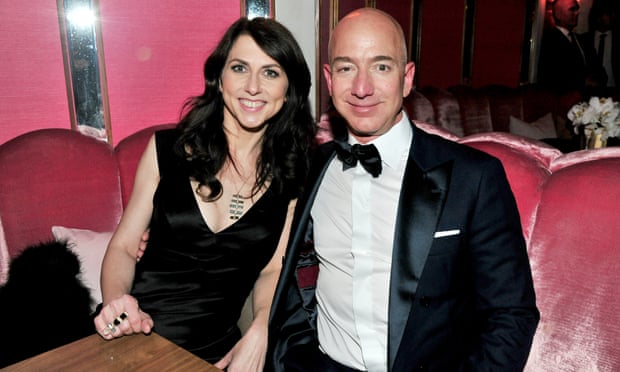
MacKenzie Bezos has pledged to give away at least half of her $35 billion fortune to charity as part of a movement started by Warren Buffett and Bill and Melinda Gates.

MacKenzie Bezos became one of the world’s wealthiest individuals following her recent divorce from Amazon CEO, Jeff Bezos.

Bezos joins Mark Zuckerberg, Richard Branson, and Robert F. Smith on the list of donors to Bill Gates and Warren Buffett’s initiative.

In a letter published by Giving Pledge, Bezos writes of having “a disproportionate amount of money to share” and credits “an infinite series of influences and lucky breaks we can never fully understand” for her wealth.

Bezos’ signature, alongside hedge fund billionaires David Harding and Paul Tudor Jones, Brian Armstrong chief executive of cryptocurrency company Coinbase, and WhatsApp’s co-founder Brian Acton, brings the total signatories to more than 200 people.

The Giving Pledge began in August 2010 when 40 of America’s wealthiest individuals made a commitment to give more than half of their wealth away. The scheme is described as an “open invitation for billionaires … to publicly dedicate the majority of their wealth to philanthropy”.

Although MacKenzie Bezos doesn’t list any particular causes she writes,

“MY APPROACH TO PHILANTHROPY WILL CONTINUE TO BE THOUGHTFUL. IT WILL TAKE TIME AND EFFORT AND CARE. BUT I WON’T WAIT. AND I WILL KEEP AT IT UNTIL THE SAFE IS EMPTY.”

Credit: fabwoman.ng

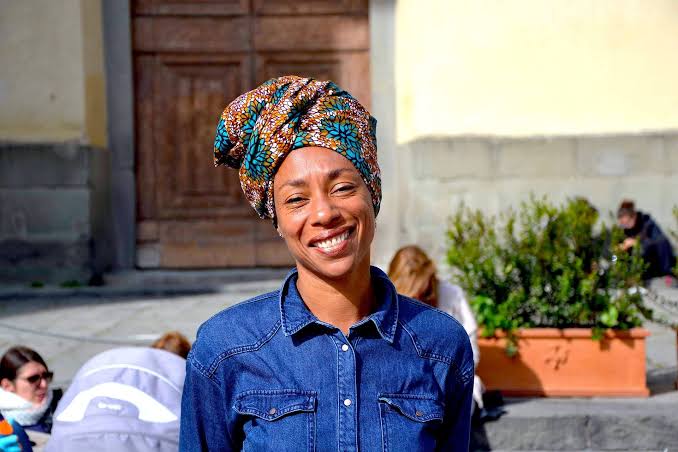
Nigerian born, Yemi Adenuga has been elected to Meath County Council as a Fine Gael councilor for the Navan area in the local elections.

Adenuga has also made history as being the first black woman elected to Meath County Council.

She is famed for appearing as the matriarch on the  British television reality program, Gogglebox, along with her husband, Nollywood star Deji Adenuga and their two daughters.

This new feat was shared by her husband in a series of videos posted on Facebook.

Adenuga has been making waves in her community, being on the board of Cultúr – an organization in Navan that “works with migrants, asylum seekers and refugees promoting equal rights and opportunities to develop an intercultural County Meath”.

She also runs Sheroes Global,  which is “a women development and support organization with a mission to build women & youth to become positive change agents through changing orientation and to build a positive mindset.

In an interview with the Irish Examiner, the newly elected official said:

“I’M DELIGHTED TO BE DECLARED THE FIRST MIGRANT COUNCILLOR IN MEATH AND I’M REALLY LOOKING FORWARD TO WORKING WITH THE COUNCIL ON ISSUES THAT AFFECT THE PEOPLE IN THE TOWN AND COUNTY. THIS IS A VICTORY NOT JUST FOR ME BUT FOR ALL WOMEN AND ETHNIC MINORITIES.”

Yemi Adenuga enjoyed a long broadcasting career in her homeland but moved to Ireland “for pastures new” almost 20 years ago.

Her husband, Deji Adenuga, has starred in over 200 films the over the last 25 years and flies over and back from Nigeria. They married in 1992.

Credit: fabwoman.ng

Nigeria’s OluTimehin Adegbeye has emerged winner of the 2019 Gerald Kraak Prize.

Adegbeye was awarded the prize for her submission, a nonfiction piece titled Mothers and Men. 

The announcement was made on Thursday, May 23, at the Gerald Kraak Prize ceremony in Johannesburg.

Asegbeye’s submission was described by the judges as “a sensitive memoir casting new light on questions of rape, secondary victimisation and motherhood.”

OluTimehin Adegbeye is a Nigerian writer, speaker, and activist whose work focuses on gender, women’s rights, sex, sexuality and sexual violence, urban poverty, and sustainable development. Her TED Talk, “Who Belongs in a City?”, was chosen by TED Lead Curator Chris Anderson as one of the ten most notable talks of 2017.

Adegbeye is a Carrington Youth Fellow and a Women Deliver Young Leader. Her writing has appeared in Latterly Magazine, Premium Times, This Is Africa, StyleMANIA, Essays Magazine, Klassekampen, and Women’s Asia 21, among others. 

Credit: LIB

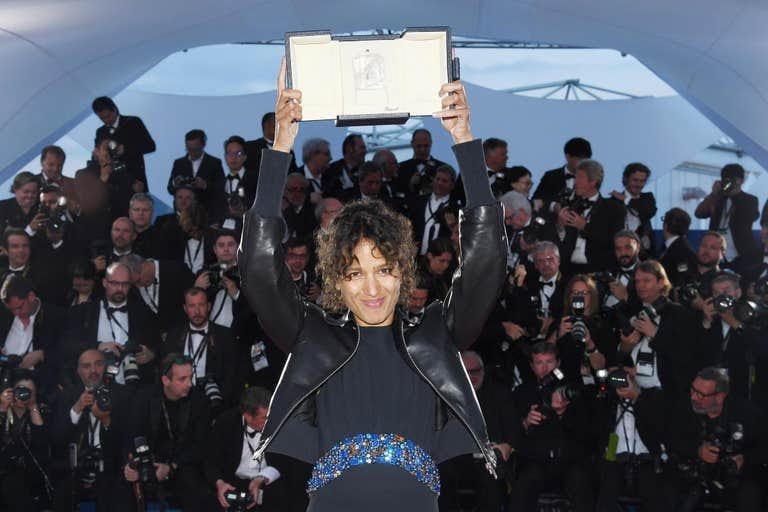
French-Senagalese director Mati Diop has become the first black female director to win an award in Cannes’ 72-year history. 

Diop took home the Grand Prix – the equivalent of a silver prize – for her film  Atlantics, a Senegalese drama about sexual politics among young migrants. 

The 36-year-old had previously said she was a “little sad” to make history as the first woman of African descent to even have a film screened at the festival.

“It’s pretty late and it’s incredible that it is still relevant,” she said at the time.

“My first feeling to be the first black female director was a little sadness that this only happened today in 2019.

”I knew it as I obviously don’t know any black women who came here before. I knew it but it’s always a reminder that so much work needs to be done still.”

She said she had had an “urgent need” to feel more represented on screen and see more people who look like her behind the camera, telling fresh stories.

“As a black woman I really missed black figures and black characters cruelly. And that’s also why I made this film: I needed to see black people on screen — huge, everywhere,” she laughed.

“It’s also something new. I can’t believe when I go to see a Jordan Peele movie… I can’t even believe what I’m feeling,” she said, referring to the Oscar-winning African-American film-maker behind “Get Out” and “Us”.

“I’m so excited, I’m looking at how many black people are in the room — I almost count them… it’s a little hysterical.”

Diop said Cannes as the world’s biggest film festival had the power to help transform the industry by knocking down barriers for previously excluded groups.

“Hopefully it will be more and more common that black people are in front of characters of the same colour. Inshallah (God willing),” she said.

David Byrd is known around the Tennessee capitol as “Coach.” It’s a throwback to the 24 years he spent coaching the Wayne County High School girls basketball team, before he was elected state representative in 2014. Byrd is such a beloved figure in his hometown of Waynesboro that the high school dedicated the basketball court in his name. He was re-elected for the second time with 78% of the vote last year — even after three women came forwardwith stories about how Byrd made sexual advances against them when they were teenagers and he was their coach in the 1980s.

One of the women, Christi Rice, revealed a recording she made of Byrd apologizing to her in a phone call. “I’ve punished myself so much for that,” Byrd said in the recording, though he doesn’t explain what he means by “that.” As the women came forward last March, Byrd did not explicitly deny the allegations against him. Instead, he issued a statement at the time noting that he hadn’t done anything wrong while in office, and said people should “question the motives of these three former students out of the hundreds of students I have coached.”

“Conduct over 30 years ago is difficult, at best, to recall, but as a Christian, I have said and I will repeat that if I hurt or emotionally upset any of my students I am truly sorry and apologize,” Byrd’s statement said. “I do not believe either of these ladies can show that they made a report to the authorities or received any subsequent mental health counseling for what they have alleged but, again, if my acts or omissions cause them distress I am truly sorry.” Byrd did not respond to requests for comment for this story.

Many public officials accused of sexual misconduct in the past two years either resigned or were voted out of office, events often celebrated as evidence of the power of victims coming forward. But for Byrd, a Republican from the most pro-Trump county in Tennessee, the situation has displayed a dramatically different scenario. Not only has Byrd stayed in office, he has enjoyed vocal defenses from multiple GOP colleagues. The American Conservative Union, the group best known for hosting the annual Conservative Political Action Conference, gave Byrd an award in February. (The group did not return Teen Vogue’s request for comment.) As a reporter waited in a hallway earlier this year to ask Byrd about the allegations, Kent Calfee, a GOP lawmaker, stopped to point out that Byrd “got re-elected by a huge number,” and asked, “Why don’t y’all get off of him?” Calfee did not return Teen Vogue’s request for comment.

Byrd was promoted to chair of an education subcommittee in January. When a group of female activists showed up at a committee hearing in February to protest Byrd’s promotion — each holding 8.5 by 11 inch pieces of paper in front of their chests with statements like “Resign Byrd” and “Survivor Against Byrd” — they were chastised by Jerry Sexton, a Republican state representative who also didn’t respond to a request for comment. “I think it’s a shame that you can pick certain individuals to pick out and demean,” Sexton said to them before state troopers escorted the women out of the hearing.

The activists, who were working with the Enough is Enough Voter Project, believe that a large reason why Byrd has not resigned is because of Glen Casada, who announced on Tuesday, May 21, that he plans to step down as Tennessee’s Speaker of the House in light of a controversies involving lewd and racistbehavior by one of his top aides and after a vote of no-confidence from his party. Casada ran ads through his political action committee last fall calling the accusations against Byrd “fake news.” He was captured on video in February downplaying the allegations against Byrd, and stated, “if I was raped, I would move.”

“Casada basically propped Byrd up,” Rice, one of Byrd’s accusers, told Teen Vogue. “I really feel like he would’ve resigned if not for him.” She has said that when she was 15, Byrd touched her inappropriately and kissed her multiple times, and told her he wanted to see her naked. Rice told her story to Tennessee Gov. Bill Lee in a private meeting in March, but he has refused to say what he thinks about Byrd.

The fact that Byrd remains in office without criticism from Republican leaders in Tennessee shows the limits of #MeToo in a conservative part of the South, especially in a small town where high school athletics reign supreme and even people who believe the women’s accusations are fearful of what would happen to them if they said so publicly.

“One person said to me that part of it is we’re a rural community,” Rice told Teen Vogue. “The only thing we really have is athletics and he was a successful basketball coach. That was our saving grace, what the community was known for, and for me to put a black mark on that was a horrible thing regardless of what happened.”

But the Enough is Enough activists won’t let that excuse stop them. They have vowed to keep the pressure on Tennessee lawmakers until Byrd is out of office, and in the past few months, they’ve shown what that looks like.

They stood outside the capitol in January dressed as characters from the “Handmaid’s Tale” with a banner reading “Casada Protects Men Who Abuse Women,” and a week later showed up at Bill Lee’s inauguration as governor holding large cut out letters spelling “Casada Protects Abusers.” In March, they read excerpts during breaks in committee hearings from a recording in which Byrd apologized to Rice for his actions when he coached her. A group of women sat outside of Lee’s office at the capitol in April until state troopers arrested five of them for refusing orders to leave. To make sure Lee knew what they wanted with their protest, they put up a billboard in the Nashville area demanding Lee call for Byrd’s resignation. At the end of April, they hounded lawmakers over their support for Byrd at events around the NFL draft, which was being held in the city. On Monday, May 20, the group purchased a new billboard ad calling for both Byrd and Casada to leave office.

Casada and the governor’s office did not respond to requests for comment by Teen Vogue. Neither did 16 other Republicans in the Tennessee legislature, who serve in leadership positions and on committees with Byrd, that were contacted for this story.

“It’s frustrating when you see a government that is just beating their chest on their religious and moral virtues and then they don’t want to address an issue on this magnitude,” Rice said. “It sets precedent, it sets a standard that other men can do this and get by with this. Political leaders should hold one another accountable — that’s the only way anyone is going to change this behavior.”

Rice explained to Teen Vogue that she decided to come forward after a couple of statements Byrd made. First, he expressed outrage over news in November 2017 that the University of Tennessee wanted to hire Greg Schiano as football coach. Schiano was accused offailing to report Jerry Sandusky’s molestation of children when they worked together at Penn State in the 1990s, though Schiano denies it.

Then in January 2018, the WSMV TV station ran a story revealing that Byrd was part owner of a juvenile detention facility where teens had alleged they were abused and received improper care. Byrd said “it is always important to look into allegations of misconduct, especially when it involves our children,” but the staff at the facility shouldn’t be “harassed by unsubstantiated claims.”

Rice felt like Byrd was being a hypocrite, so she decided to go public. She and two other women told their stories to WSMV that spring. Rice didn’t expect much to happen, but then Michele Dauber called her.

Dauber, a Stanford Law professor who led the successful effort to remove the judge who sentenced Brock Turner to sixmonths in jail (of which he served three months) for his sexual assault conviction, had launched the Enough is Enough Voter Action Project. She had gotten in touch with local activists and wanted to support an effort to make sure Byrd’s constituents knew about the sexual misconduct allegations. A group of local volunteers canvassed Byrd’s district with Enough is Enough organizers, going door-to-door to talk to people about Byrd.

“We weren’t asking people to vote Democrat, we were just asking people to leave that spot blank,” Kristina Richardson, a constituent of Byrd’s who canvassed in his district, told Teen Vogue. “We were telling them we’re bipartisan — it doesn’t matter if you’re Democrat or Republican or whatever, sexual abuse is unacceptable.”

Byrd was seemingly unfazed. After the allegations emerged, campaign contributions continued to roll in from private prison corporations, the Tennessee Bankers Association, housing and realty groups, and the Tennessee Education Association, according to public records. Casada, then the majority leader in the state house, helped out by running ads on social media claimingthat the women canvassing Byrd’s district were “socialist Democrats” who were bused in to “control our election,” which wasn’t true.

“Dude, I’m on a cattle farm next door — I’m not coming from anywhere like California,” Ashley Massey, another Enough is Enough activist from Byrd’s district, told Teen Vogue.

Still, it seemed like the attacks worked. According to Emily Tseffos, one of the Enough is Enough organizers, there were a couple people who stated “Oh, I know about you” and shut the door as soon as the canvassers mentioned Byrd’s name. Rice told Teen Vogue that people have privately admitted to her, “I’m rooting for you, but I can’t say anything in my position because I’ll lose all my business.”

The Enough is Enough activists said they weren’t entirely surprised that Byrd held onto his support and was re-elected. It’s such a heavily GOP district that Democrats usually don’t bother to run. Research has shown that liberals are more likely to condemn sexual harassment, while conservatives appear more likely to prioritize loyalty over social change. A majority of Republican men said in one national survey last October that they would vote for a candidate accused of sexual misconduct by multiple people.

Few lawmakers have called for Byrd’s resignation. One of these is is Gloria Johnson, a Democratic representative from Knoxville, Tennessee, and she said Casada found ways to get back at her for it. During debate in March over a controversial bill to ban abortions once a heartbeat is detected, Johnson stood with her hand up for 45 minutes in hopes of speaking and offering an amendment to add exceptions for rape and incest. Casada refused to call on her. She approached him afterward and asked why.

“It was because of my speaking out against Byrd,” Johnson told Teen Vogue. “He accused me of organizing a rally that took place when the women first went into the committee hearing.” Johnson had nothing to do with the organizing, but had sat near the activists during one of the hearings to offer her silent support, she said. “I had not nothing to do with organizing, but the speaker is incredibly retaliatory.”

Casada removed Byrd from his post as chair of the education administration subcommittee in late March, but continued to defend Byrd from the allegations. “I believe we have two sacred rights in this country,” Casada said at the time. “One, you are innocent until proven guilty, and two, the people make their will known at the voting box.”

“That is such a ridiculous argument to me — voters aren’t a jury,” Johnson told Teen Vogue. “There’s enough there to say this person should not be serving in the legislature, and they certainly shouldn’t have power over all the kids in the state.”

Casada decided to resign from his role as speaker in light of a separate controversy with his staff, but he has not announcedplans to vacate his legislative seat. In early May, local news outlets reported that Cade Cothren, who spent the past decade working for Casada in various roles, used cocaine in the legislature’s offices, exchanged vulgar texts about women with Casada, used the N-word and stated to friends in a text message that “black people are idiots.” Casada had previously defended Cothren, calling the texts between the two “locker room talk.”

By this point, Rice had tried for months to meet with Casada to talk about David Byrd. But in phone calls this month, recordings of which were obtained by Teen Vogue, Casada’s staff told Rice that she wouldn’t be allowed to bring a support person with her to a meeting with him.

“The only way the Speaker will meet with you is if it’s a one-on-one meeting, and we will have a female staff member present as well,” an aide for Casada told Rice in one call.

Casada’s office eventually relented and would allow Rice to bring someone, but according to the Enough is Enough organizers, they didn’t do so until it was too late.

With Casada stepping down from leadership, the activists hope they’re getting closer to pushing Byrd out of office.

“We’re glad Casada is being forced out,” Emily Tseffos said. “But three women say Byrd sexually molested them. He can’t stay in office. The GOP needs to finish the job and remove him.”

Credit: Teen Vogue

At its 318th graduation ceremony, Yale University presented honorary degreesto 11 individuals who have achieved distinction in their fields. Among them is Nigerian author Chimamanda Ngozi Adichie, and Zimbabwean entrepreneur and philanthropist Strive Masiyiwa.

Chimamanda was conferred a Doctor of Letters degree from the university, while Strive received a Doctor of Humane Letters degree.

This is Chimamanda’s second degree from the university. In 2008, she received a Master of Arts degree in African studies from Yale.

The degree from Yale is coming days after Chimamanda got two Doctor of Humane Letters honorary degrees from American University and Georgetown University.

On Chimamanda, Yale wrote:

Your stories of war, migration, home, and heartbreak bring the great richness and multiplicity of human experience to life. With courage and clarity, you call us to “do better” for women and girls, for ourselves and future generations around the globe.

In appreciation for your superb talent and leadership in literature and the public sphere, we are honored to present your second Yale degree, Doctor of Letters.

On Strive, Yale wrote:

You see opportunities others miss and demonstrate the courage of your convictions at every turn. Brave visionary, bold business leader, and devoted humanitarian, your innovation and generosity have transformed a continent and improved countless lives.

For inspiring us to tackle great challenges, lead with honor, and serve others, Yale is privileged to confer on you this Doctor of Humane Letters degree.

See the full list of honorands here.

Credit: Bella Naija

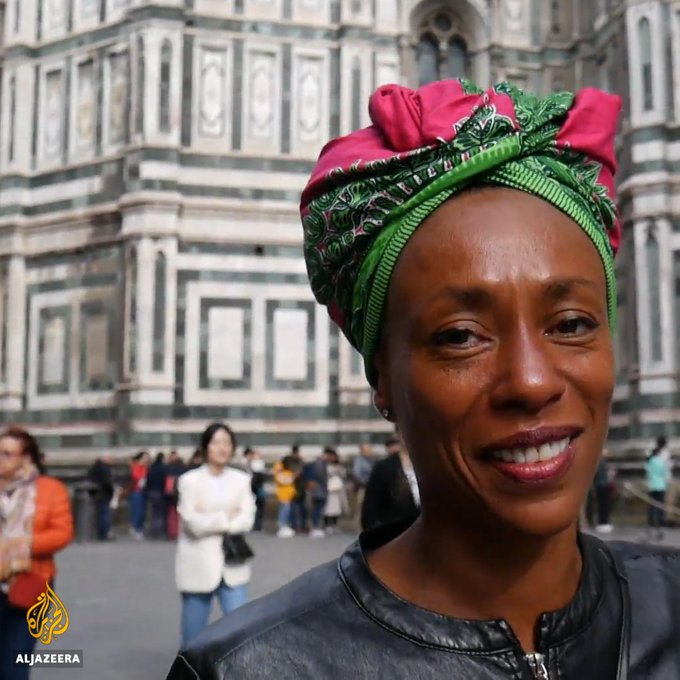
Antonella Bundu is the woman who’s running to become Mayor of Florence in Italy, becoming the first black woman to do so.

Born to a Florentine mother and a Sierra Leonean father, Bundu was chosen by a coalition of anti-fascist leftist parties.

She shares why she’s running and the changes she hopes to make with Al Jazeera.

Watch:

Embedded video

Al Jazeera English@AJEnglish

Meet Antonella Bundu – the first black woman to run for mayor in Italy’s Florence.3,5191:00 PM – May 21, 20191,483 people are talking about this

Credit: Bella Naija

A Nigerian woman, identified as Patience Ifediora has made history in Nottingham, United Kingdom.

Ifediora emerged as the first female of African heritage to become a Sheriff in the United Kingdom. She was a councilor of Aspley police station before she became the Sheriff of Nottingham.

Dr. Olusegun Oluwole shared her story on Twitter on Tuesday morning saying:

“History made today in #Nottingham, UK. As Patience Ifediora, Councillor of #Aspley emerges as the first female Sheriff of Nottingham of African heritage. Congrats Ma’am,” he said.

View image on Twitter

Dr. Olusegun Oluwole@Obalufon1

History made today in #Nottingham, UK. As Patience Ifediora, Councillor of #Aspley emerges as the first female Sheriff of Nottingham of African heritage. Congrats Ma’am @NGRPresident, @AsoRock, @NigeriaEmbassy, @GuardianNigeria, @nottslive, @NottinghamPost, @BBCNottingham.1,1967:50 PM – May 20, 2019 · Nottingham, England553 people are talking about thisTwitter Ads info and privacy

Credit: fabwoman.ng

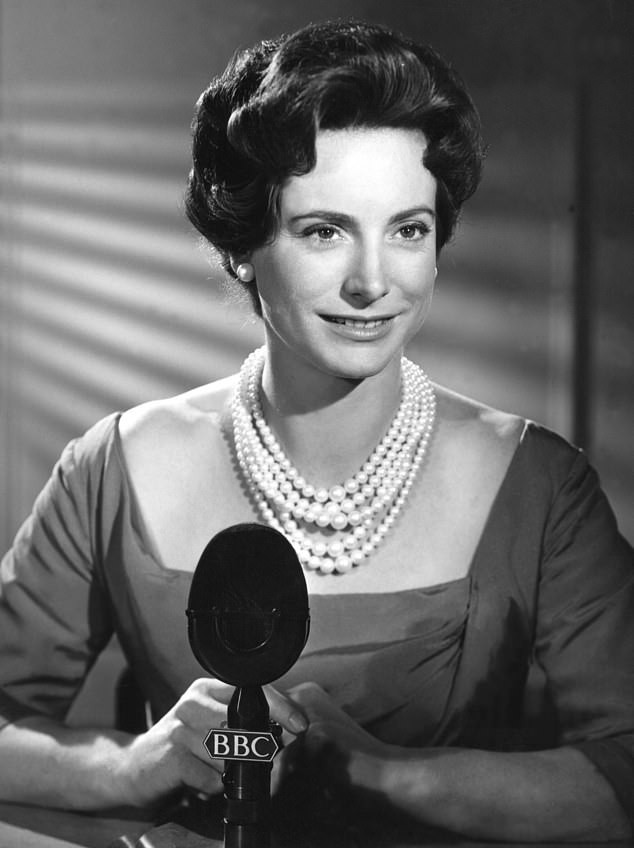
The first woman to read the news on the British Broadcasting Corporation (BBC), has died at the age of 93.


The broadcaster, Nancy ‘Nan Winton’ Wigginton, was taken to the hospital on May 8 following a fall at her home in Bridport, Dorset. Her condition worsened and she passed away at Dorchester County Hospital on Saturday, May 11. 

An inquest into her death was opened and closed at the coroner’s court in Bournemouth on Thursday. 

Winton who started reading the 6pm news in 1960 also read the weekly news bulletins on a Sunday evening.   

BBC

She also worked as a BBC TV continuity announcer and her other work included Panorama and Town and Around, a nightly magazine show.

After stepping down from reading the news, Winton remained a television and news reporter. She was also a regular panelist on the radio panel game show Treble Chance. 

According to Dailymail, on the day Winton was taken to hospital, aged 93, it was found she had fractured her femur. Surgery was carried out the next day.  She later suffered failure of the heart, respiratory system and kidneys. She was taken to critical care, but died in the ward.

A cause of death was given as congestive heart failure, hypertension and frailty of old age. 

A full inquest is scheduled to take place on January 29 next year.

Credit: LIB