
Women of Rubies

Category

Career Gems

Category

The President of the United States of America, Donald Trump announced that he and his wife, Melania both tested positive for the coronavirus.

This is coming months into a global pandemic and in the final stretch of his re-election campaign.

At 74 years old, Trump falls into the highest risk category for serious complications from the disease, which has killed more than 200,000 Americans and more than 1 million people worldwide. His infection with the disease could prove to destabilize in an already fraught political climate, and stock market futures tumbled on news of Trump’s infection.

“Tonight, @FLOTUS and I tested positive for COVID-19. We will begin our quarantine and recovery process immediately. We will get through this TOGETHER!” Trump tweeted shortly before 1 a.m. Friday. Later, the first lady wrote on Twitter that she and her husband were “feeling good.”


In a memo seen by CNN, the President’s physician, Sean Conley wrote that he received confirmation of the positive tests on Thursday evening.

The President and First Lady are both well at this time, and they plan to remain at home within the White House during their convalescence. The White House medical team and I will maintain a vigilant watch, and I appreciate the support provided by some of our country’s greatest medical professionals and institutions.

Rest assured I expect the President to continue carrying out his duties without disruption while recovering, and I will keep you updated on any further developments.

The President had said late Thursday night that he planned to quarantine after one of his closest aides, Hope Hicks, tested positive for the infection, bringing the disease into his innermost circle.

Expand Press has announced the publication of Onyeka Onwenu‘s memoir, My Father’s Daughter. The autobiography, set to be released on October 1, 2020, is a deeply personal account of the life of the iconic musician.

My Father’s Daughter chronicles Onwenu’s life as a musician, activist, wife, mother, and politician. In the autobiography, Onwenu’s formative contact with feminism and how her father’s life heavily influenced her decision to join politics is deftly explored.

Onwenu’s political philosophy cannot be divorced from the exemplary foundation laid by her father, Dixon Kanu (DK) Onwenu, who cared deeply about the development of Nigeria when politics was not a means to amass wealth. Through Onwenu’s lens, the communal lifestyle of the Igbos, as well as how family core values are intricately woven into personal ethics, are fully displayed.

Onwenu’s patriotism and love for Nigeria is quite palpable throughout the book. Little wonder that My Father’s Daughter will be officially released to coincide with the 60th year Independence Day celebration of the country.

She also reminisces on how the Nigerian Civil War of 1967 – 1970 scalded her teenage experience. The debilitating effects of the Biafran war, and how the family remained bound amidst the chaos are themes that Onwenu serves up in her book. The fragmentation, alienation, and displacement that permeated the Igbo community after the war were also delved into by Onwenu. From her experience of the war as a young woman, the paranoia deeply planted by the effects of the conflict is captured.

The one-time Television journalist documents her years in America, the culture clash, and the inevitable conflicts that are the products of being a migrant. She shares her experience of being sexually harassed in a workplace and how her decision to leave got her a job at the UN. There she crossed paths with a diplomat who encouraged her to drive social change in Nigeria.

The memoir covers her media experience. She talks about going back to post-war Nigeria, being confronted by the failing political system, and her tilt towards politics to fulfill her father’s legacy. She equally documents the challenges she faced as a politician. She uncovers the failing state of Nigerian politics, and it is surprising how some of the difficulties faced after independence are still prevalent in the current political clime of the country.

Onwenu also unravels how power corruption is not only restricted to the political system. She traces the foundational challenges faced by the Nigerian political system from the military era down to democracy.

Onwenu also explores her contribution to the budding Nigerian music industry of the 1980s. The reader is regaled with stories, the behind the scene happenings in the Nigerian Entertainment industry. She also exposes the exploitation of musicians by industry leaders and practitioners – an issue that still ravages artistes’ relationships with major industry partners in contemporary Nigeria. Artistes’ rivalry is also discussed by Onwenu and how unhealthy competitions led to numerous cracks. Her transition from a musician to an actor is also chronicled as well.

Onyeka Onwenu discusses her private life. On the marriage front, she explores the challenges women face and how she refused to shrink herself to accommodate anyone’s insecurities about her fame.

My Father’s Daughter is a memoir every young person must-read. Women, especially, will glean numerous lessons from her life experience since successful women in Nigeria rarely share their stories in a candid and vulnerable manner.

Onwenu’s life choices and her ability to transcend society’s playbook of how a woman should live serves as a learning curve for young women who are not afraid to chart their course. From her marital experience and her constant refusal to discuss her personal life, Onwenu shows that a woman’s worth is not predicated on her attachment to a man. Her blunt refusal to be seen as the weaker counterpart is rare in her generation, and in the lines of her book lies vital lessons young people can draw from.

Onwenu’s memoir is available for pre-order on Rovingheights website.

Kimora Lee Simmons and her two daughters, Ming and Aoki, are collaborating with HatchBeauty Brands to create a Baby Phat Beauty makeup line, according to The Daily News.

“I think it’s very important that right now—in this time of Black Lives Matter, that could be Brown lives matter…to be a young woman, certainly for Ming and Aoki, and for myself, to be a woman, a woman of color—to have your own brand,” Simmons tells Women’s Wear Daily.

Simmons surprised the fashion world by relaunching and revamping the streetwear brand and dropped a surprise on BabyPhat.com late last year in December.

At that time she stated, “When I created Baby Phat 20 years ago, it was because women—especially women of color—had no voice at all in the streetwear category,” Simmons tells Yahoo. “It’s in our DNA that this brand is created for women, by women—which was rare then and still is today once you really look closely at who truly owns and controls many womenswear brands on the market.”

The makeup line is launching a three-piece kit featuring a lip gloss, body lotion, and scented, shimmery body spray, which is retailing for $45 each. Three different versions of the products, reflecting the personalities of each woman, are also for sale.

“Divine is mine, obviously,” Simmons said. “Opulence is Ming, and Ethereal is Aoki, because she’s a free spirit. We are excited to dive into the beauty space with a unique multigenerational perspective.”

A portion of proceeds from sales of Baby Phat Beauty will be donated to Fair Fight, an organization working to promote fair elections, educate on election reform, and fight voter suppression.

Vogue.com has a new editor— Chioma Nnadi, replacing Stuart Emmrich, who announced his departure in June.

In her new role, Chioma will oversee all of Vogue’s digital content.

The fashion journalist and editor has made a tremendous impact in the fashion industry especially in recent times where she has been a powerful and notable voice in the fight for inclusivity and diversity within the industry.⁠

She started her career at the features desk of the Evening Standard Magazine in London, before moving to New York to write for Trace, an independent style magazine. She then went on to work as the Style Director at Fader and landed at Vogue as a fashion writer in 2010. Nnadi was named Fashion News Director in 2014 and has stayed in that position up until her newly announced promotion.

She studied English and French Literature at Manchester University.

In a statement, Chioma Nnadi said:

In these unprecedented times, it feels especially urgent and exciting to be telling stories. And now the touchpoints through which we communicate are more expansive than ever. Vogue has first and foremost been a place of discovery and I think in this moment it feels especially important to amplify the new voices in fashion and culture who are changing the zeitgeist.

“I am so thrilled that Chioma will be the new editor of Vogue.com,” said Anna Wintour, the editor-in-chief of Vogue and the artistic director of Condé Nast, said in an official release according to WWD. “Above all, we know her as someone who intuitively understands fashion and brings to it a genuine love of discovery. She looks in unexpected places and all over the world to find out who is doing the best work and who we should be celebrating now. I absolutely rely on her eye and her cosmopolitanism and her taste. Even better, she is forward-looking and understands that Vogue needs to reach new audiences and do so in new ways.”


Photo Creditnnadibynature

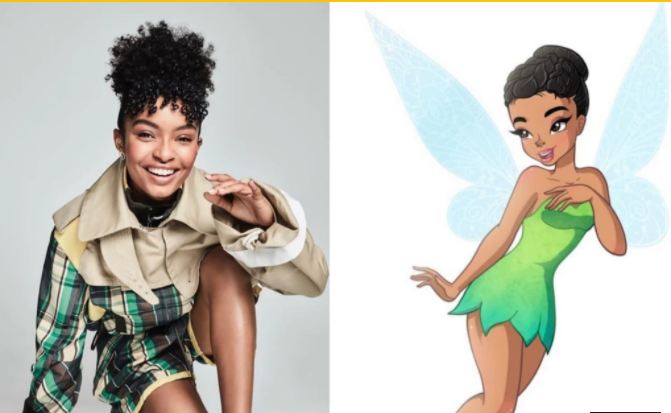
In this Observer Magazine, cover shoot TV girl, producer and all-around creative Issa Rae is lauded as the golden girl, who started as a comedy outsider, now she’s Hollywood’s hardest-working star. The Emmy-nominated and Golden Globe-nominated actress speak to Observer Magazine about her upcoming HBO film “Coastal Elites“, being the booked and busiest, the importance of legacy and more.

Her hit HBO show, “Insecure”, has indeed transformed her into the patron saint of black millennial creatives.

In the magazine, she shared how story growing up in Senegal and LA. Being “too black for white kids, too white for black kids”.

She grew up middle class, her father a Senegalese paediatric doctor and her mother a teacher. In childhood, her family moved a great deal, first to the primarily white suburb of Potomac, Maryland, then to Senegal, until they finally settled in LA. Issa was in the sixth grade then – an 11 year old. She was one of the only black girls in her elementary school in Potomac and then the only American girl in her elementary school in Senegal. She struggled to belong in each setting. When she started at a school in LA, attended by predominantly black and Latino students, she found herself the subject of the ballad of many black middle-class teens – “too black for white kids, too white for black kids”. When Tupac died in 1996, she attempted to find common ground with her mourning classmates and mispronounced his name, becoming a social pariah in the process.

Read some excerpts from her cover feature below:

On “Insecure”.

“It is a compliment and a burden that people take so much ownership over the show,” Rae says, “because there aren’t a lot of shows about us, so people feel like you have to tell all the stories that can be told, and if you don’t you’re failing us.”

On how sharing a name and face with her character on “Insecure”, has made privacy a priority.

“People have a lot of shit to say and I just don’t want it to be about me, unless it’s talking about my work,” she says. “People fill in the blanks about my own life because of the characters’ choices, but I’m fine with that. As long as it’s not my real shit and it’s wrong then talk away!”

On the upcoming film “Coastal Elites”.

“I actually had never heard the term ‘coastal elite’ until this movie so I’m just like, “What does this mean? Oh OK, it’s me.” Rae and her character, Callie, both live in LA, and they’re both “outraged by the current administration”.

“You see so much of the concentrated fuckery of this current president in one place,” she says. “Hopefully you’ll watch the movie and say, ‘This is not normal. I should be upset, I should be outraged.’ Satire or not, we’re living in this and to accept this is to be part of our own destruction.”

“Do I get burned out? Hell yeah!” she exclaims. “That was why I took a break last year because I didn’t really think about how to do everything and do everything well. But it’s not just me – I get a lot of credit, but I work with really great people.”

On the complicated diversity within Hollywood.

“It’s just another way to divide us, unfortunately,” she sighs. “Seeing Daniel Kaluuya in that Fred Hampton trailer, I was like, go the fuck ahead! You transformed, you’re an actor! Sometimes I’m pleasantly surprised when I’m watching white shit and I’m like, ‘Oh! The bitch is Australian? That’s so dope! I would have never known.’”

On her legacy.

“As far as legacy is concerned, I have so much to do,” she says. “And I’m fine with that, but it definitely keeps me up at night. My feet aren’t firmly planted just yet. I’m still walking, I’m still paying my dues, in a way that I’m not mad at. I want to earn being here.”

Read the full feature at the Observer Magazine

Credits:

Photographs: @daniellelevitt
Styling: @jasonrembert
Hair: @lovingyourhair
Makeup: @joannasimkin

For the first time, married women in Botswana will now be able to own lands independent of their husbands, following a new amendment to the 2015 Land Policy which prevented married women, widows and orphans from inheriting land or acquiring new land entirely.

President Mokgweetsi Masisi shared the news on Twitter and started off by saying that he was fulfilling the commitment he made during Botswana’s Democratic Party campaigns last year.

The Botswana Land Policy of 2015 was discriminatory against married women. Section 72 (iii) stated that since only one spouse can apply for a plot, the surviving spouse must as a right inherit their land allocations.

This clause did not give married women equal treatment with men and I am happy to report that this discriminatory subsection has since been repealed.


Historically, land that belonged to husbands followed patriarchal traditions of inheritance. A World Bank research shows in 40% of countries, women encounter a host of obstacles owning land, be it through skewed inheritance rights or restricted authority over assets.

This new policy will protect widows and orphans who may be the head of their households.

The Revised Botswana Land Policy of 2019 now gives married women the right to apply for land.

It reads thus:

“Each Motswana will be eligible for allocation of one residential plot at an area of their choice within the country, on both state land and tribal land. ”

Section 72 also of the Botswana Land Policy 2015 recognises that there are instances where some widows and orphans are compelled to head households and find themselves in an urgent need of land for residential purposes as a result of being denied access to their deceased husband’s or parents’ property.

However, the rights of these are protected in the law and Policy and encourage Local and Land Authorities as well as Non-Governmental Organisations to step up campaigns to educate women and orphans about their legally protected rights and offer them legal support to successfully claim their legitimate land right.


In 2015, the African Union addressed gender inequality as it pertains to land rights and stipulated that women should be allocated 30 per cent of land across Africa. However, even this meagre percentage has yet to be achieved. Zambia, Ethiopia and Uganda are a few of many African countries where land rights are still not afforded to married women.

Tsitsi Dangarembga and Maaza Mengiste have been shortlisted for the Booker Prize for fiction this year.

Zimbabwean novelist Tsitsi Dangarembga and Ethiopian-American author Maaza Mengiste’s two novels “This Mournable Body” and “The Shadow King” respectively, made it to the longlist among 13 contenders, which were selected from 162 novels by a panel of five judges. Now, they have also been shortlisted for the prize.

“The Shadow King is on #TheBookerPrize Shortlist!!!!!!!!!!!! I don’t know what to say. OH MY GOD! Elelelelelelelelelele” Mengiste shared on Twitter after finding out the news. 


The Booker Prize for fiction is a literary prize awarded each year for the best original novel written in English and published in the United Kingdom.

The Booker prize, has been won by three Africans, Nadine Gordimer, Ben Okri, and J. M. Coetzee. Africans who have been shortlisted are Marie NDiaye, Noviolet Bulawayo, Chigozie Obioma and Oyinkan Braithwaite. 

The winner of the 2020 Booker Prize receives £50,000 and can expect international recognition. The shortlisted authors each receive £2,500 and a specially bound edition of their book.

Dangarembga and Mengiste are the only two writers from Africa on the list of 6 authors. Other shortlisted authors include:

  • The New Wilderness” by Diane Cook
  • Burnt Sugar” by Avni Doshi 
  • Shuggie Bain” by Douglas Stuart
  • Real Life” by Brandon Taylor

Watch the shortlist announcement:

For many entrepreneurs, it is important to teach their children important lessons that they will be able to use one day in creating businesses to secure financial independence. For one Black woman entrepreneur, creating a new business was one way to create new opportunities for her daughter through their shared love of cosmetics.

Danielle and Samiah Pasha are the founders of The Beat House Cosmetics company that opened on Juneteenth earlier this year. The beauty brand offers an assorted collection of color eye shadow palettes, lipsticks, false eyelashes, and more. While Danielle serves as the brainchild and founder of the company, she enlisted the help of her 14-year-old daughter, Samiah, to work as the interim CEO while she was deployed in Afghanistan for three years.

“I am so blown away by all of the positive feedback I have received from everyone, it’s so surreal,” says Danielle in an interview with Black News. “I remember Facetiming my daughter, giving her instructions and tasks to help me out with the business in my absence and now we are partners!”

Samiah says while the job was hard, she was happy to have a chance to work with her mother, who also has a love for makeup, on her brand. “Most teenagers are irritated by their parents and wouldn’t dare want to work with them—I’m still irritated at times,” says Samiah in an interview with Black News. “But I remember missing my mom and not knowing when I would see her again, so I enjoy every second we get to spend together. Besides, I absolutely love makeup.”

Source: Blackenterprise

Meet 51-year old Lashawn Flowers and her 35-year old daughter, Shanita Vickers, the new owners of the only Black-owned gas station in Hollywood, Florida, and possibly the only Black-owned gas station in all of South Florida. As Shell franchisees, they are making history as women entrepreneurs and causing quite a stir on social media

Lashawn and her daughter, who both grew up in Deerfield Beach, Florida, began their roots in entrepreneurship as the owners of a local hair and nail salon called Girlz Collectionz and later a local bar and nightclub called Groove City Bar & Lounge, which is currently closed because of the pandemic. Having to pivot sparked the idea of purchasing a gas station.

“We actually purchased two Shell gas stations,” says Lashawn. “We were able to negotiate a two-for-one deal.”

She says the process of purchasing two franchises was not hard, but it was a fairly tedious process. After completing a credit application, she had to prove that financially she really did have the capital to complete the purchase. The whole process, however, took just three weeks.

Keeping it in the family

Lashawn says that she and her daughter are partners in this business, and are partners in their other businesses as well.

“I really value having a family-owned business because family is who you can trust,” she says. “My daughter, Shanita, is a wonderful mom of two beautiful children and also a phenomenal entrepreneur who is awesome to work with. We work well together because we understand each other.”

Hard work pays off

But having her daughter at her side doesn’t mean that she underestimates the value of hard work. “I don’t believe in failing in anything I do,” Lashawn adds. “If you don’t work your business, it won’t be a success. You absolutely must put in the hard work.”

Their work ethic is already paying off because they are already receiving on-air shout outs from the likes of Rickey Smiley, not to mention that their story has already gone viral on social media which has sparked a huge influx of new customers.

Their Shell gas station is located at 2501 North University Drive, Hollywood, FL 33034, and they are already planning to open their second gas station in early 2021 possibly in West Palm Beach.

Source: Black enterprise

The South African Police has said it arrested three men in connection with the shooting that led to the death of Actress Thandeka Mdeliswa.

DAILY POST had reported that the 34-year-old actress got shot after she waded into a heated argument her older brother had with two men at their family home.

The argument got violent as one of the men grabbed his friend’s gun and shot the actress.

The two men immediately fled the scene which led to a manhunt by the police.

However, the provincial police commissioner of Mpumalanga, Lt Gen. Mondli Zuma on Sunday said the arrested suspects aged 24, 27 and 29, will face charges of murder and unlawful possession of firearm.

He said he was glad that the suspects including the alleged murderer have been arrested.

NEWS:  BBNaija 2020: Money was never really my motivation – Kiddwaya

“We believe that their arrest will bring comfort to the family as they will be able to find closure on the matter.

“I would also like to commend the good work done by both teams in arresting the suspects.

“The three will appear in the Evander Magistrate’s Court on Monday,” Zuma said.