For generations, hair braiding has remained a highly skilled but largely manual process, one that can take several hours for clients and place significant physical strain on professional stylists.
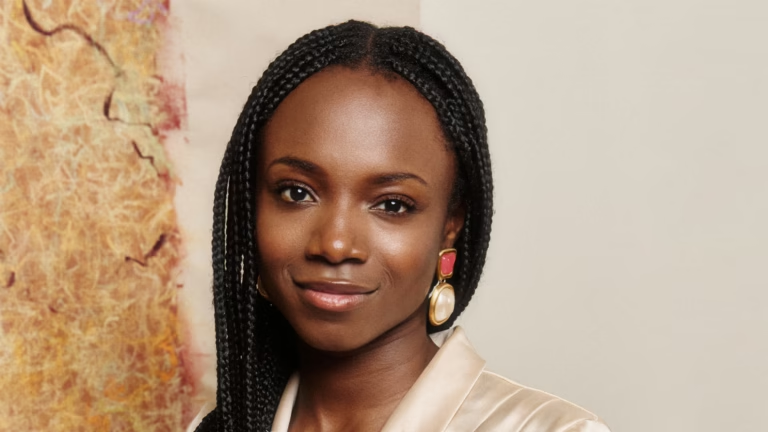
Now, Yinka Ogunbiyi, a Harvard-trained engineer and entrepreneur, is preparing to introduce technology that could change how the braiding industry operates.
Her robotics startup, HaloBraid, has raised $7 million in seed funding to bring its automated braiding assistant to market. The funding round was led by Seven Seven Six, the venture capital firm founded by Reddit co-founder Alexis Ohanian, with participation from Bling Capital and AlleyCorp.
The company’s first product is expected to begin rolling out in selected salons in September 2026. Rather than replacing hairstylists, HaloBraid is designed to work alongside them by completing the repetitive portion of braids that professionals begin by hand.
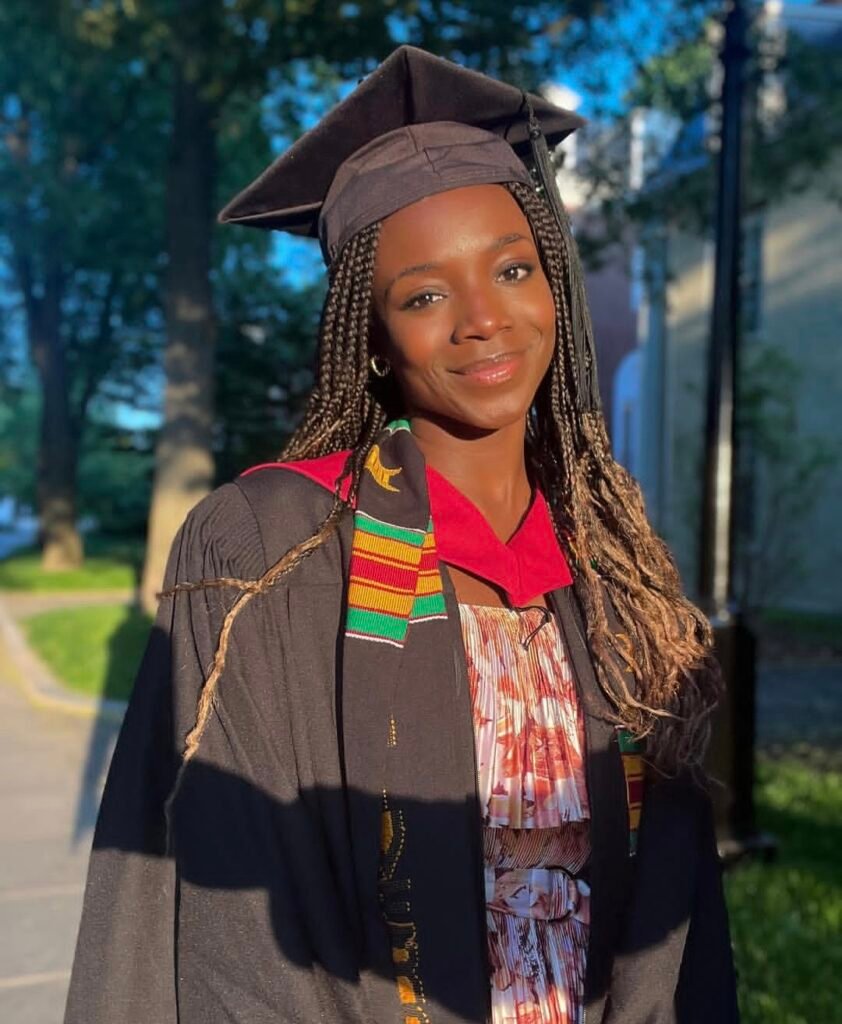
Who Is Yinka Ogunbiyi?
Yinka Ogunbiyi is the founder and CEO of HaloBraid and a graduate of Harvard’s joint Master of Science and Master of Business Administration in Engineering Sciences programme.
She graduated from the programme in 2023 and has since continued developing HaloBraid through Harvard’s entrepreneurship and innovation ecosystem.
Her journey demonstrates the power of combining engineering knowledge, cultural understanding and lived experience to solve a problem that has often been overlooked by mainstream technology companies.
How Yinka Ogunbiyi Developed the HaloBraid Idea
The idea for HaloBraid began during the 2020 lockdown in the United Kingdom. Unable to visit a salon, Ogunbiyi attempted to braid her own hair. The process reportedly took four days and led her to consider why such a repetitive and time-consuming task had not benefited from greater technological innovation.
With a background in mechanical engineering, she began exploring whether part of the braiding process could be automated while preserving the creativity, expertise and personal care professional stylists provide.
What began as a personal frustration eventually developed into a robotics company that has created hundreds of prototypes while working with hairstylists to refine the product. HaloBraid’s development has been shaped by feedback from the professionals expected to use it.
How Does HaloBraid Work?
HaloBraid is best described as a robotic braiding assistant, rather than a machine that independently completes an entire hairstyle.
The hairstylist remains responsible for preparing and parting the hair, adding extensions and beginning each braid by hand. Once the stylist has completed the initial section, the braid is transferred to the HaloBraid device, which finishes the repetitive three-strand braiding process.
The device is designed to assist with styles such as box braids and knotless braids. It does not currently add extensions, create parts or complete intricate cornrow patterns.
HaloBraid’s official website describes the technology as a braid-assist device that can help professional stylists complete braids in approximately half the usual time.
HaloBraid Raises $7 Million in Seed Funding
The $7 million seed investment represents an important milestone for both HaloBraid and the broader beauty technology industry.
The funding will help the company continue developing its device, expand testing, prepare for manufacturing and introduce the technology to professional salons.
It also signals growing investor interest in technology created specifically for markets and communities that have historically received limited attention from major technology companies.
Before securing its latest investment, HaloBraid received support through Harvard’s entrepreneurship programmes. The company won the $75,000 grand prize and crowd-favourite recognition at the 2023 Harvard Business School New Venture Competition. It later secured another $75,000 after winning the Alumni and Affiliates Open Track of Harvard’s 2025 President’s Innovation Challenge.
Access to capital remains important for women building and scaling innovative companies. Explore these funding opportunities for women entrepreneurs.
HaloBraid Is Designed to Support, Not Replace, Hairstylists
One concern that often accompanies the introduction of automation is whether technology will replace human workers. HaloBraid is being positioned differently.
Professional stylists will still make the creative and technical decisions involved in each hairstyle. They will prepare the client’s hair, create the parts, select the braid size, add extensions and begin every braid.
The device is intended to handle only the repetitive mechanical movement required to complete the length of the braid.
This distinction matters because hair braiding is more than a technical service. It is a skilled craft connected to culture, identity, creativity and relationships between stylists and their clients.
By reducing the most repetitive part of the process, HaloBraid could allow stylists to focus more on design, precision and the overall client experience.
Reducing the Physical Strain Experienced by Braiders
Professional braiding often requires stylists to repeat the same hand, wrist, shoulder and upper-body movements for several hours.
Over time, these repetitive movements can contribute to fatigue, discomfort and chronic pain. Harvard’s coverage of HaloBraid highlighted the company’s goal of reducing both braiding time and the physical demands experienced by professional stylists.
A tool that completes part of this repetitive work could make braiding more sustainable for professionals who serve several clients every week.
It could also help salons accommodate more appointments without requiring stylists to work longer hours or place additional pressure on their bodies.
What HaloBraid Could Mean for the Hair-Braiding Industry
The potential impact of HaloBraid goes beyond completing hairstyles more quickly.
For clients, shorter appointments could make protective hairstyles more convenient and accessible. People who previously needed to dedicate an entire day to getting their hair braided may be able to complete their appointments in significantly less time.
For stylists, faster appointments could create opportunities to serve additional clients and increase revenue while reducing physical strain.
The development also brings new attention to the economic significance of the textured-hair and professional-braiding industries sectors that have created businesses, careers and opportunities for generations of women.
Women of Rubies recently highlighted this entrepreneurial potential through the story of Mawusinu Jennifer Hodgson, who built Toronto’s first dedicated 24-hour braiding salon by responding to clients’ need for greater flexibility and convenience.
Both stories demonstrate that innovation does not always mean creating an entirely new industry. Sometimes, it means looking carefully at a familiar experience and discovering a better way to serve the people within it.

Innovation Inspired by Lived Experience
One of the most powerful aspects of Yinka Ogunbiyi’s story is that HaloBraid emerged from a problem she understood personally.
Her experience allowed her to recognize an opportunity that others may have overlooked. Her engineering background then gave her the foundation to begin creating a practical solution.
This is why representation remains essential in technology and entrepreneurship. When women from different cultures, communities and professional backgrounds participate in innovation, they bring new problems, perspectives and possibilities into the room. They do not simply join existing industries. They can also transform them.
Discover more women transforming technology in our feature on Black women in tech you should know about.
What Comes Next for HaloBraid?
HaloBraid is expected to begin appearing in selected salons in September 2026. According to Allure, thousands of stylists have already expressed interest in receiving or testing the device, particularly in major United States cities.
The salon rollout will provide an opportunity to see how the technology performs in everyday professional settings and how clients and stylists respond to it.
As the company grows, questions around accessibility, pricing, stylist training and the range of hairstyles the device can support will likely influence its long-term adoption.
For now, HaloBraid represents a bold step toward bringing robotics into an industry that has remained largely dependent on manual processes.
The Women of Rubies Takeaway
Yinka Ogunbiyi’s story reminds us that meaningful innovation often begins with paying attention. She experienced a challenge, questioned why it had remained unchanged and used her skills to begin building a solution.
Her journey also demonstrates why women need access to education, funding, networks, visibility and spaces where their ideas can be supported.
When women are empowered to develop solutions inspired by their own experiences, they can create products that improve lives, strengthen industries and open new economic opportunities. At Women of Rubies, we remain committed to amplifying women using leadership, innovation and entrepreneurship to transform their communities and industries.
Would you allow a robotic assistant to help your hairstylist complete your braids?